
Unraveling the Myths: Olmec Civilization Encounters with Early European Explorers

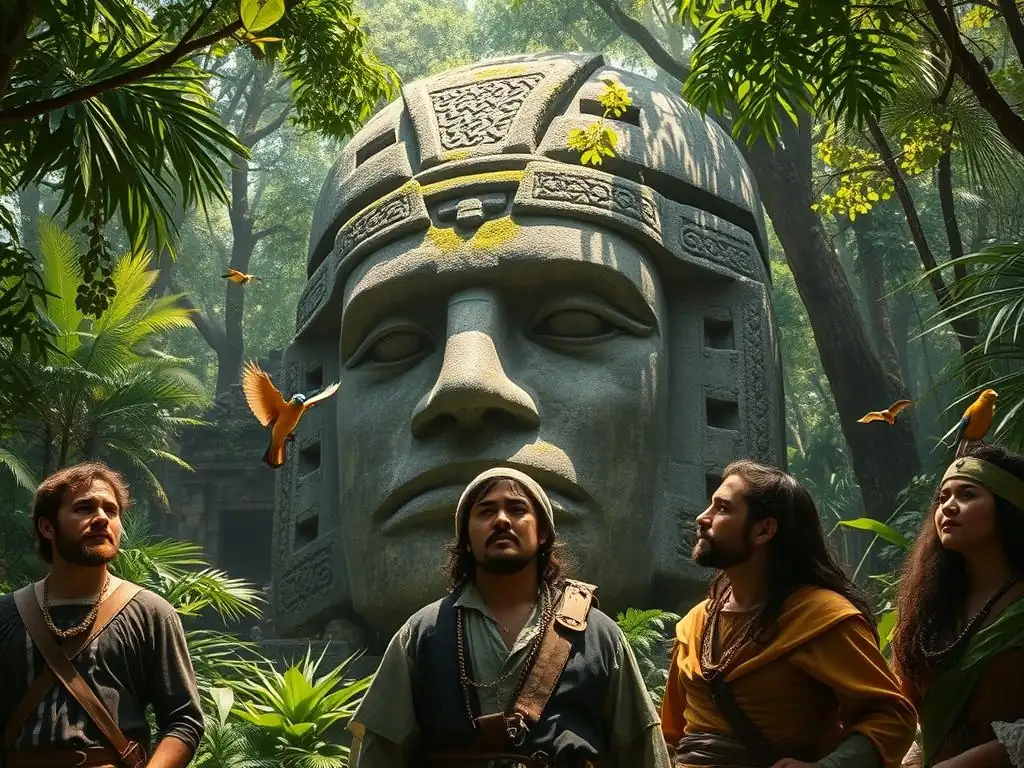
Welcome to Indigenous Civilizations of the Americas, where we embark on a journey through time to uncover the rich tapestry of cultures that flourished long before European explorers set foot on these shores. In our featured article, "Unraveling the Myths: Olmec Civilization Encounters with Early European Explorers," we dive deep into the fascinating world of the Olmec civilization—a society renowned for its monumental stone heads and complex societal structures. What secrets do their encounters with early European explorers hold?
Join us as we peel back the layers of history, revealing the achievements and enduring legacy of one of the Americas' earliest civilizations. Your exploration begins here!
The Olmec civilization, often regarded as the "mother culture" of Mesoamerica, thrived in the tropical lowlands of Mexico from approximately 1400 BCE to 400 BCE. This ancient society laid the foundations for many aspects of later Mesoamerican cultures, including the Maya and the Aztec.
As we explore the encounters between the Olmec civilization and early European explorers, it is crucial to shed light on the complexities of these interactions, which have often been shrouded in myth and misunderstanding. This article aims to unravel these myths by examining the Olmec society, their remarkable achievements, and the nature of European exploration in the region.
Introduction to the Olmec Civilization
Overview of the Olmec Society and Culture
The Olmec civilization is characterized by its unique artistic style, monumental architecture, and complex social structures. Centered in the Gulf Coast region of Mexico, particularly in the states of Veracruz and Tabasco, the Olmecs are known for their colossal stone heads and intricate jade carvings. Their society was organized into city-states, each ruled by elites who held significant political and religious power.
The Olmec culture was rich in symbolism and spirituality, with a pantheon of deities and a deep connection to the natural world. They engaged in trade with neighboring cultures, which facilitated the exchange of goods and ideas, further enriching their civilization. The influence of the Olmec can be seen in various aspects of later Mesoamerican cultures, indicating their significant role in shaping the region's history.
Key Achievements of the Olmec Civilization
The Olmec civilization is renowned for several key achievements that highlight their advanced understanding of art, science, and governance:
- Monumental Architecture: The Olmecs constructed impressive ceremonial centers, such as La Venta and San Lorenzo, featuring large pyramids and plazas that served as focal points for religious and political activities.
- Artistic Innovations: Their artistic contributions include not only the colossal heads but also intricate pottery, sculptures, and carvings that depict a variety of themes, ranging from deities to daily life.
- Early Writing and Calendar Systems: Although still a subject of debate, some scholars suggest that the Olmec may have developed one of the earliest forms of writing in Mesoamerica, as well as a calendar system that influenced later cultures.
- Agricultural Advances: The Olmecs practiced advanced agricultural techniques, including the cultivation of maize, beans, and squash, which supported their growing population and laid the groundwork for future agricultural societies in the region.
Early European Explorers and Their Encounters
Who Were the Early European Explorers?
The era of European exploration in the Americas began in the late 15th century, with explorers such as Christopher Columbus and Hernán Cortés leading the charge. However, it is essential to note that the Olmec civilization had already declined by this time, with the majority of their cultural legacy being inherited by later Mesoamerican civilizations.
Early European explorers were often driven by the pursuit of wealth, land, and the spread of Christianity. Their encounters with indigenous civilizations varied widely, from trade and diplomacy to conflict and conquest. Understanding these dynamics is crucial in contextualizing how the Olmec legacy was viewed by European explorers and how it influenced their perceptions of the Americas.
Timeline of European Exploration in Mesoamerica
The timeline of European exploration in Mesoamerica provides insight into the sequence of events that shaped the interactions between Europeans and indigenous civilizations, including the remnants of the Olmec culture:
- 1492: Christopher Columbus arrives in the Caribbean, marking the beginning of European exploration in the Americas.
- 1519: Hernán Cortés arrives in Mexico, leading to the eventual fall of the Aztec Empire in 1521. His encounters with indigenous peoples included references to the earlier Olmec civilization.
- 1530s-1540s: Other explorers and conquistadors, such as Francisco Pizarro and Pedro de Alvarado, continue to explore and conquer various regions of Mesoamerica, often referencing the cultural legacies left by the Olmec and other earlier civilizations.
Through this exploration of the Olmec civilization and their encounters with early European explorers, we can better understand the lasting impact of these ancient cultures and the complexities of their interactions with the outside world.
Myths Surrounding the Olmec Civilization and European Explorers
The relationship between the Olmec civilization and early European explorers is often clouded by misconceptions and myths. These myths stem from a combination of historical oversights, misunderstandings, and the narrative constructed by later European historians. Understanding these myths is essential to grasp the true nature of the Olmec civilization and its encounters with European explorers.
Myth 1: The Olmec Civilization Was Discovered by Europeans
One prevalent myth is that the Olmec civilization was "discovered" by Europeans in the 16th century. This notion implies that the Olmec culture was unknown until European explorers arrived. However, the Olmecs thrived in Mesoamerica long before European contact, particularly from approximately 1400 to 400 BCE. By the time Europeans arrived, the Olmec civilization had already declined, but its cultural legacy influenced subsequent Mesoamerican civilizations, such as the Maya and Aztecs. The idea of discovery overlooks the rich history of indigenous peoples and their civilizations that existed for millennia prior to European arrival.
Myth 2: European Explorers Had Significant Influence on the Olmec
Another myth suggests that European explorers had a profound influence on the Olmec civilization, altering its social structures, religions, and cultural practices. In reality, by the time European explorers like Hernán Cortés arrived in the 16th century, the Olmec civilization had already declined, with its major centers abandoned. The Olmecs were not present in significant numbers to interact with Europeans, nor did they experience the direct cultural exchanges seen in later periods with other indigenous groups. The myth of significant influence oversimplifies the complex dynamics of cultural interaction and overlooks the resilience of indigenous cultures.
Myth 3: The Olmec Civilization Was in Decline Before European Contact
The belief that the Olmec civilization was in a state of decline before European contact is another misconception. While it is true that the central Olmec sites, such as La Venta and San Lorenzo, saw decreased activity around 400 BCE, this decline does not correlate with European arrival, as the civilization had already transformed into different regional powers. The Olmec legacy continued to influence later cultures, proving that while they may have experienced political or social changes, their cultural and artistic contributions remained significant well into the periods of European contact.
The Reality of Olmec Civilization and European Interaction
Understanding the true nature of the Olmec civilization's encounters with early European explorers requires a nuanced perspective that goes beyond myths. The reality is shaped by the historical context and the cultural dynamics at play during the time of European arrival.
The State of the Olmec Civilization at the Time of European Arrival
By the time Europeans began their explorations in the early 16th century, the Olmec civilization had already experienced major transformations. The height of Olmec culture occurred over a millennium earlier, and significant urban centers had been abandoned. However, the influences of the Olmec civilization persisted in the cultural practices, art, and religious beliefs of later Mesoamerican societies. The legacy of the Olmecs is evident in the shared cultural traits among subsequent civilizations, indicating that although they were not as politically or economically dominant at the time of European arrival, their cultural impact endured.
Nature of Encounters Between Olmec and Early Explorers
The encounters between the Olmec civilization and early European explorers were minimal. By the time explorers set foot in Mesoamerica, the Olmec had largely transitioned into a historical influence rather than an active civilization. As a result, the nature of these encounters was limited. Some explorers, such as Cortés, encountered descendants of the Olmec culture in the form of later Mesoamerican societies, but direct interactions with the Olmec themselves were non-existent. The narratives constructed around these encounters often reflect more on European perceptions than on any real interaction with the Olmec.
Impact of European Exploration on Olmec Heritage
The impact of European exploration on the heritage of the Olmec civilization is complex. While the Olmecs themselves were not directly affected by European colonization, the subsequent erasure of indigenous histories in favor of European narratives led to a misunderstanding of the Olmec legacy. The destruction of many indigenous artifacts and sites during the colonial period further obscured the rich history of the Olmec civilization.
Consequently, the cultural heritage that remained was often misrepresented or undervalued in historical accounts. The challenge today is to reclaim and accurately represent the history of the Olmec civilization and acknowledge its profound contributions to the broader narrative of indigenous civilizations in the Americas.
Legacy of the Olmec Civilization Post-Contact
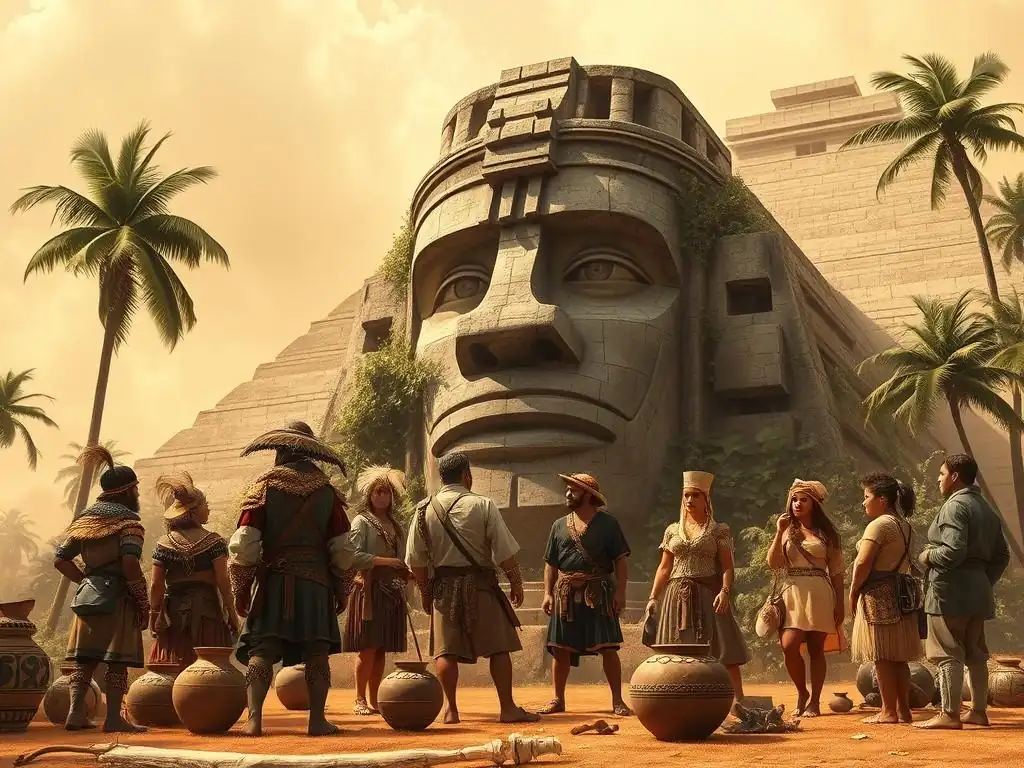
The Olmec civilization, often regarded as the "mother culture" of Mesoamerica, left a profound legacy that continued to resonate long after European explorers first set foot on the American continent. Although the Olmec civilization declined around 400 BCE, its cultural, artistic, and societal influences persisted and were absorbed into subsequent Mesoamerican civilizations such as the Maya and Aztec.
One of the most significant aspects of the Olmec legacy is their monumental art, particularly the colossal heads carved from basalt, which have become iconic symbols of ancient Mesoamerican culture. These artistic achievements influenced the stylistic developments of later cultures, showcasing the Olmec's advanced understanding of sculpture and their ability to mobilize labor for significant projects.
Moreover, the Olmec's complex societal structures, including their religious practices and political organization, laid the groundwork for future civilizations. Their innovations in agriculture, including the cultivation of crops like maize and beans, were vital for sustaining larger populations and facilitating urbanization in Mesoamerica. Despite European colonization efforts to erase indigenous histories, the foundational elements established by the Olmec have endured, shaping the identity and cultural practices of indigenous peoples to this day.
How European Exploration Changed Perceptions of the Olmec
The arrival of European explorers in the Americas drastically altered perceptions of indigenous civilizations, including the Olmec. Initially, European accounts often framed indigenous cultures through a lens of misunderstanding and prejudice, depicting them as primitive or barbaric. This skewed perspective overshadowed the rich history and sophisticated achievements of the Olmec civilization.
As explorers began documenting their encounters, many were struck by the grandeur of Olmec artifacts and architecture. However, their interpretations frequently dismissed the Olmec's cultural significance, attributing their accomplishments to mythical figures or mischaracterizing them as the work of "lost" civilizations. The narratives constructed by these early explorers contributed to a long-standing myth that portrayed the Olmec merely as a precursor to later cultures rather than recognizing their unique contributions and agency.
This shift in perception paved the way for a broader misunderstanding of indigenous civilizations, which often continued into modern scholarship. The challenge for historians and educators today is to reframe these narratives, emphasizing the Olmec as a vital and innovative culture that played a crucial role in the development of Mesoamerican societies.
The Continued Relevance of Olmec Contributions to Mesoamerican Culture
The contributions of the Olmec civilization to Mesoamerican culture remain relevant and influential, evident in various aspects of contemporary indigenous practices and beliefs. For instance, the Olmec's advancements in agricultural techniques laid the foundation for the agricultural systems that sustained civilizations for centuries. Their cultivation of staple crops continues to be a crucial aspect of Mesoamerican diets.
Culturally, the Olmec's artistic styles and iconography have been preserved and adapted by descendant communities, infusing their own identities while honoring their ancestral heritage. Elements of Olmec mythology and religious practices have also been integrated into the spiritual lives of modern Mesoamerican peoples, reflecting a continuity of cultural expression that defies the disruptions caused by colonization.
Furthermore, archaeological research continually uncovers new insights into Olmec society, further solidifying their importance in the historical narrative of the Americas. This ongoing exploration highlights the need to recognize the Olmec not just as a historical entity, but as a lasting influence that continues to shape cultural identities in the region.
Conclusion: Debunking Myths for a Better Understanding
The myths surrounding the Olmec civilization and their interactions with early European explorers present significant challenges to understanding the true nature of indigenous cultures. By debunking these misconceptions, we can foster a more nuanced appreciation of the Olmec and their enduring legacy.
The Importance of Accurate Historical Narratives
Accurate historical narratives are essential for acknowledging the complexity and richness of indigenous civilizations. Misrepresentations and oversimplifications can lead to a distorted understanding of the past, perpetuating stereotypes and undermining the cultural significance of the Olmec.
Historians and educators must strive to present a more balanced view that honors the achievements and contributions of the Olmec civilization while contextualizing their experiences within the broader framework of Mesoamerican history. This approach not only serves to correct historical inaccuracies but also empowers contemporary indigenous communities to reclaim their narratives and heritage.
Encouraging Further Exploration of Indigenous Cultures
Encouraging further exploration of indigenous cultures is crucial for fostering respect and understanding. Engaging with the complex histories of civilizations like the Olmec invites us to recognize the diverse contributions of indigenous peoples throughout history.
Promoting educational initiatives that focus on indigenous perspectives and histories can help dismantle the myths that have long been embedded in popular narratives. By highlighting the resilience and innovation of the Olmec civilization, we can inspire a deeper appreciation for the richness of indigenous cultures and their ongoing influence in today's world.
References
The study of the Olmec civilization and its interactions with early European explorers is enriched by a variety of sources that encompass archaeological findings, historical analyses, and cultural studies. Understanding these references is vital for anyone interested in this significant period of Mesoamerican history. Below are notable sources that provide insight into the Olmec civilization and their encounters with European explorers.
Suggested Reading on Olmec Civilization and European Exploration
-
“The Olmec World: Ritual and Rulership” by Christopher A. Pool
This book offers an in-depth analysis of Olmec society, its ritual practices, and the socio-political structures that governed their civilization. Pool’s work is crucial for understanding how these aspects shaped the Olmec's legacy.
-
“1491: New Revelations of the Americas Before Columbus” by Charles C. Mann
Mann’s work discusses the complex societies that existed in the Americas prior to European contact, including the Olmec. It provides valuable context for the exploration of how European explorers interacted with indigenous cultures.
-
“The Olmecs: America's First Civilization” by Richard A. Diehl
Diehl presents a comprehensive overview of the Olmec civilization, detailing their achievements and contributions to later Mesoamerican cultures. This book is essential for grasping the foundational role of the Olmec in the region.
-
“Mesoamerican History and Culture: A Critical Overview” by John P. Schmal
This critical overview provides insights into the broader Mesoamerican context, including European exploration and its impact on indigenous societies, making it a useful companion to the study of the Olmec.
Key Academic Works on Mesoamerican History
-
“The Collapse of Ancient States and Civilizations” edited by Norman Yoffee and George L. Cowgill
This anthology examines the various factors that led to the decline of ancient civilizations, including the Olmec. It includes contributions that contextualize the Olmec within the greater narrative of Mesoamerican history.
-
“The Conquest of New Spain” by Bernal Díaz del Castillo
As a firsthand account of the Spanish conquest, this work provides critical insights into the interactions between European explorers and indigenous peoples, shedding light on the broader implications for civilizations like the Olmec.
-
“Mesoamerican Archaeology: Theory and Practice” by Susan Toby Evans
This book synthesizes archaeological theory and practice, focusing on Mesoamerican cultures, including the Olmec. It serves as a foundational text for understanding archaeological perspectives on European encounters.
-
“Olmec Art and Archaeology in Mesoamerica” by Andrew C. McCafferty and David C. Grove
This work delves into the artistic and archaeological contributions of the Olmec civilization, providing essential context for their cultural legacy in relation to European exploration.
These references are valuable for anyone seeking a deeper understanding of the intricate relationships between the Olmec civilization and European explorers, as well as the broader Mesoamerican context during a transformative period in history.
- Introduction to the Olmec Civilization
- Early European Explorers and Their Encounters
- Myths Surrounding the Olmec Civilization and European Explorers
- The Reality of Olmec Civilization and European Interaction
- Legacy of the Olmec Civilization Post-Contact
- Conclusion: Debunking Myths for a Better Understanding
- References
- What was the significance of the Olmec civilization in pre-Columbian America?
- How did European explorers first encounter the Olmec civilization?
- What are some common myths associated with the Olmec civilization?
- How did the Olmec civilization influence later cultures in Mesoamerica?
- What lasting impacts did the Olmec civilization have on modern understanding of indigenous cultures?
Frequently Asked Questions
What was the significance of the Olmec civilization in pre-Columbian America?
The Olmec civilization is often regarded as the "mother culture" of Mesoamerica, known for its impressive artistic achievements and the development of early forms of writing and calendar systems.
How did European explorers first encounter the Olmec civilization?
European explorers did not directly encounter the Olmec civilization as it had declined by the time of European contact, but their influence can be traced through archaeological findings and the oral histories of later cultures.
What are some common myths associated with the Olmec civilization?
Common myths include misconceptions about their migration patterns and cultural contributions, often overshadowed by more prominent cultures like the Aztecs and Mayans despite their earlier achievements.
How did the Olmec civilization influence later cultures in Mesoamerica?
The Olmec civilization set the groundwork for later Mesoamerican cultures through its artistic styles, religious practices, and the establishment of urban centers, which were emulated by cultures such as the Maya and Aztecs.
What lasting impacts did the Olmec civilization have on modern understanding of indigenous cultures?
The Olmec civilization provides crucial insights into the development of complex societies in the Americas and highlights the importance of preserving indigenous history, challenging the narratives established by European explorers.
Final Reflection: Bridging the Past Between the Olmec Civilization and European Explorers
The encounters between the Olmec civilization and early European explorers reveal a profound narrative that resonates with today's discussions on cultural exchange and historical interpretation. As we navigate an increasingly interconnected world, understanding these early interactions not only sheds light on the complexities of our shared history but also prompts us to reconsider the narratives that have shaped our perceptions of indigenous cultures. The story of the Olmec civilization, often overshadowed by later historical events, serves as a powerful reminder of the rich tapestry of human experience that predates modern exploration.
Cultural exchanges, such as those between the Olmec and European explorers, continue to influence our understanding of identity and heritage in contemporary society. The legacy of the Olmec civilization, with its intricate art, advanced societal structures, and spiritual beliefs, challenges us to appreciate the depth of indigenous histories that have often been marginalized. As historian David Carrasco aptly stated, To understand the past is to understand ourselves.
This perspective invites us to reflect on how the narratives we choose to emphasize shape our collective consciousness and identity.
As we move forward, I encourage you to embrace the lessons of the Olmec civilization and their encounters with European explorers. Take a moment to reflect on how these historical interactions inform your understanding of cultural diversity and mutual respect today. Consider how you can contribute to a more inclusive narrative that honors the complexities of our past while fostering dialogue and understanding in our present. By doing so, we not only honor the legacy of the Olmec civilization but also pave the way for a future where all voices are heard and valued.
Explore the Truth Behind Olmec Encounters!
Thank you for delving into the fascinating world of the Olmec civilization and their encounters with early European explorers! Your journey through history has equipped you with new insights about this rich culture and its profound impact. Now, it's time to take action and connect with these historical narratives on a deeper level.
- Dive deeper: Explore our recommended readings on ancient civilizations to enhance your understanding of the Olmec and other indigenous cultures.
- Share your thoughts: Discuss these intriguing myths with friends or family and reflect on how they shape our perceptions today.
- Connect with us: Join our community by subscribing to our newsletter to receive updates, articles, and additional information about indigenous histories.
What aspect of Olmec history do you find most surprising or intriguing, and how might it influence our view of indigenous cultures today?