
Maya Hieroglyphics: Stories of Creation and Cosmology Embedded in Stone

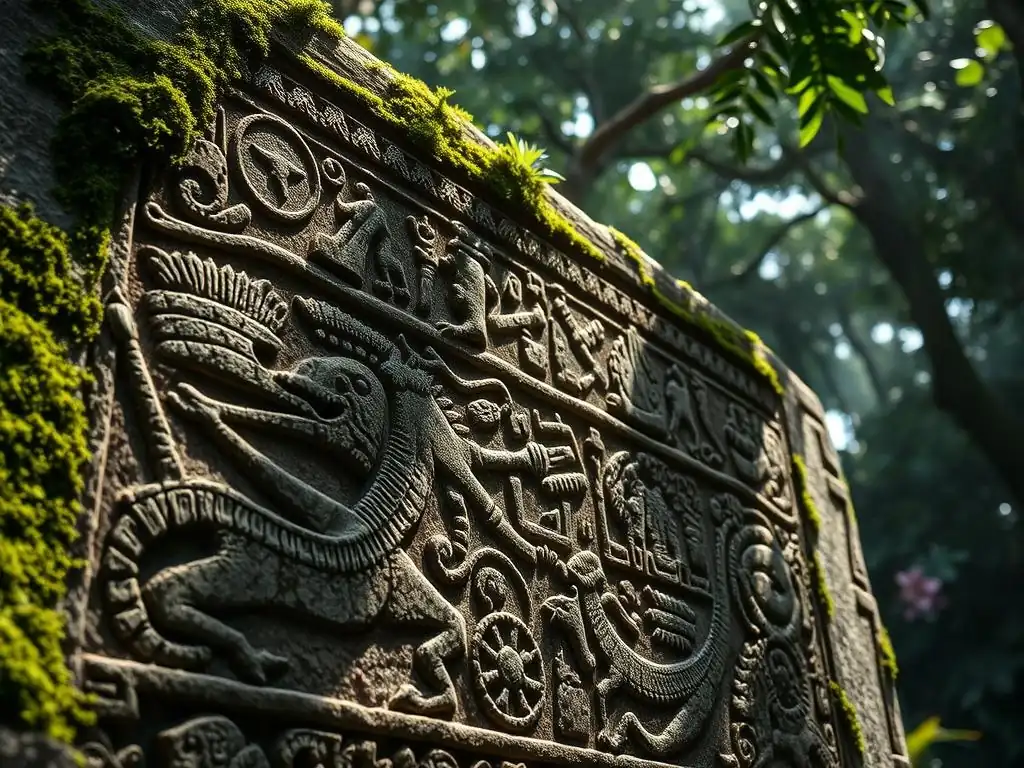
Welcome to Indigenous Civilizations of the Americas, where we invite you to embark on a fascinating journey through the rich tapestry of indigenous cultures that flourished long before European contact. Delve into the intricate world of Maya hieroglyphics and creation stories, where each symbol resonates with the profound beliefs and cosmology of the Maya civilization.
As you explore this captivating article, prepare to uncover the secrets embedded in stone, revealing how these ancient narratives shaped their society and continue to influence our understanding of their remarkable legacy. Join us in celebrating the enduring impact of these vibrant cultures and their stories that still echo through time.
- Introduction to Maya Hieroglyphics and Creation Stories
- The Origins of Maya Hieroglyphics
- Creation Stories in Maya Cosmology
- Symbolism Embedded in Maya Hieroglyphics
- The Connection Between Maya Hieroglyphics and Cosmology
- Preservation and Interpretation of Maya Hieroglyphics
- The Legacy of Maya Hieroglyphics and Creation Stories
- Conclusion: The Enduring Impact of Maya Hieroglyphics and Creation Stories
- Frequently Asked Questions
- Final Reflection: The Enduring Legacy of Maya Hieroglyphics and Creation Stories
- Uncover the Secrets of Maya Hieroglyphics!
Introduction to Maya Hieroglyphics and Creation Stories
The ancient Maya civilization, renowned for its remarkable contributions to art, science, and culture, has left an indelible mark on the history of the Americas. Among the most fascinating aspects of Maya culture is their intricate system of writing known as Maya hieroglyphics.
This unique script served not only as a means of communication but also as a vessel for their creation stories and cosmological beliefs, deeply embedded in the very fabric of their society. Through the study of these hieroglyphics, we are afforded a glimpse into the rich tapestry of Maya life, revealing narratives that illuminate their understanding of the universe, the divine, and humanity's place within it.
In this article, we will explore the significance of Maya hieroglyphics and how they articulate creation stories, uncovering the profound relationships between language, culture, and spirituality in one of the most advanced civilizations of the pre-Columbian Americas.
Understanding Maya Hieroglyphics
Maya hieroglyphics is a sophisticated writing system that combines logograms and syllabic symbols, allowing for the expression of complex ideas and narratives. The script comprises over 800 distinct glyphs, each representing sounds, concepts, or words. This intricate system was predominantly inscribed on temples, monuments, and codices, serving various purposes from documenting historical events to portraying mythology and religious beliefs.
- Key Characteristics of Maya Hieroglyphics:
- Logograms: Symbols that represent entire words or concepts.
- Syllabic glyphs: Characters that correspond to specific sounds, similar to letters in the alphabet.
- Contextual Variations: Glyphs can change meaning based on their placement, allowing for nuanced storytelling.
The artistry involved in crafting these hieroglyphics is equally impressive. The glyphs often feature elaborate designs, integrating elements of nature, mythology, and the divine. These inscriptions not only convey information but also reflect the Maya's aesthetic values and their reverence for the stories they tell.
The Importance of Creation Stories in Maya Culture
Creation stories hold a central place in Maya cosmology, serving to explain the origins of the world, humanity, and the gods. These narratives, often depicted through hieroglyphics, articulate the Maya's understanding of life cycles, the balance of nature, and the interplay between the spiritual and physical realms.
- Core Themes in Maya Creation Stories:
- The Creation of Humanity: Many stories detail the trials faced by the gods in their attempts to create beings who could worship them, leading to the eventual emergence of humankind.
- Cosmic Order: Creation myths often emphasize the establishment of order from chaos, illustrating the importance of balance in the universe.
- Divine Interventions: The narratives frequently recount the gods' interactions with humans, reflecting the belief in a world where the divine and mortal realms are intertwined.
By examining these creation stories through the lens of Maya hieroglyphics, we gain insight into how the Maya perceived their world and their place within it. The stories not only serve to educate but also to reinforce cultural values and social norms, ensuring that the lessons of the past continue to resonate through generations.
Maya hieroglyphics and the creation stories they encapsulate are vital to understanding the complexities of Maya society, their worldview, and their enduring legacy in the history of the Americas.
The Origins of Maya Hieroglyphics
Historical Context of Maya Writing Systems
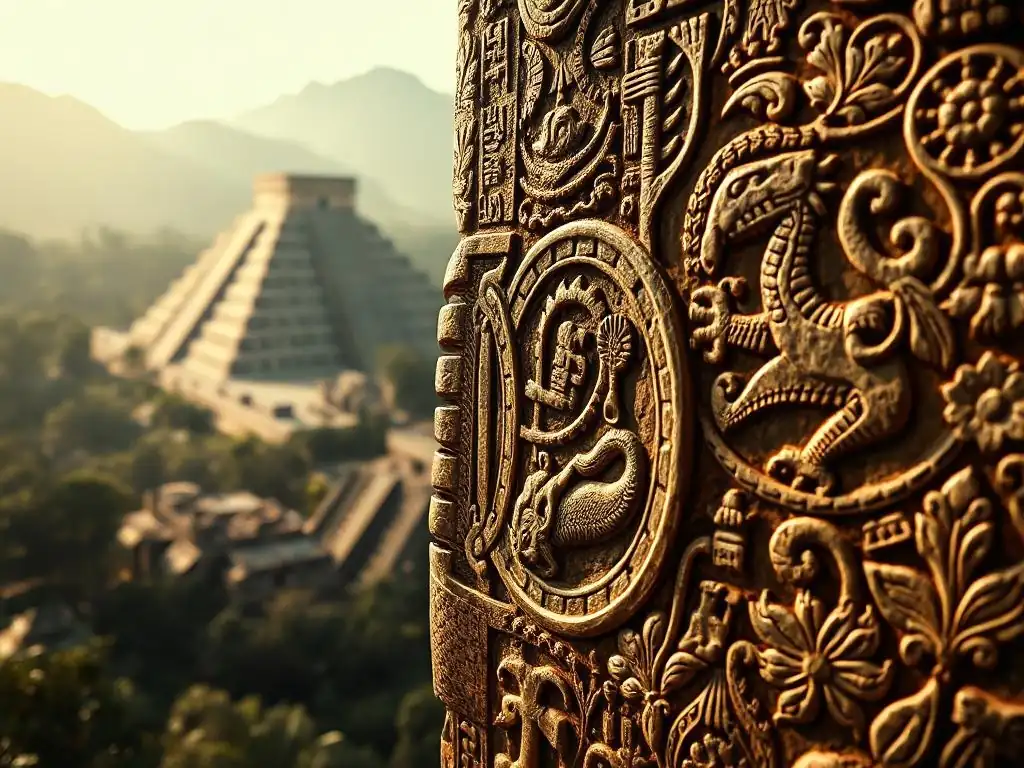
Maya hieroglyphics, one of the most sophisticated writing systems in the ancient Americas, emerged around 300 BCE and flourished until the Spanish conquest in the 16th century. This intricate system was not merely a means of communication but a profound reflection of Maya culture, cosmology, and spirituality.
The historical context of Maya writing is deeply intertwined with the rise of complex societies in Mesoamerica. As the Maya civilization progressed, so did their need for a system to record their history, rituals, and achievements. The earliest inscriptions can be found on pottery and monuments, revealing that writing was used for both administrative purposes and to commemorate significant events, such as royal births, victories in battle, and divine interactions.
Key Features of Maya Hieroglyphics:
- Logograms and Syllabograms: Maya hieroglyphics consisted of both logograms (symbols representing words or morphemes) and syllabic elements. This dual nature allowed for complex expressions of language.
- Cultural Significance: The use of hieroglyphics was not limited to communication; it was also a way to connect with the divine. Many texts included creation stories that described the origins of the world and the role of gods in shaping human destiny.
- Preservation: The Maya used various media for their inscriptions, including stone monuments, codices made from bark paper, and ceramics. The durability of stone engravings has allowed many texts to survive to this day, offering insights into Maya thought and society.
Development and Evolution of Maya Glyphs
The development of Maya glyphs is a fascinating journey that showcases the evolution of an advanced civilization. Initially, the scripts were relatively simple, but over time, they became more intricate and stylized, reflecting the sophistication of Maya society.
Stages of Development:
- Early Glyphs (300 BCE - 100 CE): The earliest forms of Maya writing were primarily logographic, where symbols represented whole words. These glyphs were often utilized in ceremonial contexts, highlighting their sacred nature.
- Classic Period (250 - 900 CE): During this time, the glyphs evolved significantly. The introduction of phonetic elements allowed for more complex sentence structures and the recording of more abstract concepts. Monumental inscriptions became prevalent, often serving as political propaganda or divine mandates.
- Postclassic Period (900 - 1500 CE): In this era, there was a shift in the use of hieroglyphics. The glyphs became more stylized, and there was a decline in the production of monumental texts. However, codices flourished, preserving crucial narratives, including creation stories.
Notable Achievements:
- Codices: The Maya created folding books made from bark paper, which contained detailed illustrations and hieroglyphic text. The Dresden Codex, for example, is one of the few surviving pre-Columbian books that detail astronomical events and rituals.
- Creation Stories: Many hieroglyphic inscriptions include references to the Maya creation myth, which speaks of the gods’ attempts to create humanity from maize. This story is central to Maya identity and reflects their agricultural roots.
Through this evolution, Maya hieroglyphics encapsulated the essence of their civilization—its spirituality, achievements, and intricate understanding of the cosmos. The stories embedded in stone continue to resonate today, offering a glimpse into a world where creation and culture were deeply interwoven.
Creation Stories in Maya Cosmology
Overview of Major Maya Creation Myths
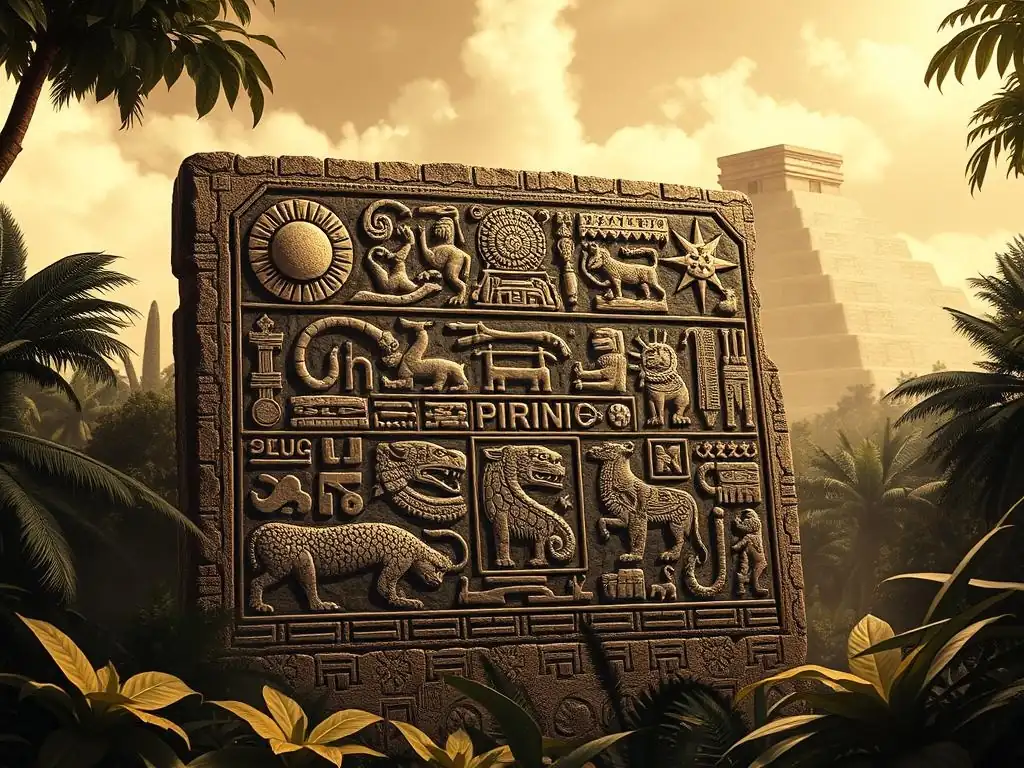
Maya cosmology is rich with diverse narratives that explain the origins of the world, humanity, and the gods. These creation myths are intricately woven into the fabric of Maya society, reflecting their beliefs, values, and understanding of the universe. Two of the most significant creation stories include the Popol Vuh and the Book of Chilam Balam, each providing insights into the Maya worldview.
- The Popol Vuh: This foundational text recounts the creation of the world by the gods Tepeu and Gucumatz (or Kukulkan). They deliberated in the darkness before bringing forth the Earth, plants, and animals. After multiple failed attempts to create humans, they finally succeeded by molding them from maize, which became a staple of Maya sustenance.
- The Book of Chilam Balam: This collection of texts, originating from various towns, includes prophetic writings and historical accounts. Among its narratives are descriptions of creation, emphasizing the significance of sacred sites and rituals in maintaining balance within the cosmos.
- The Hero Twins: Another important aspect of Maya creation stories involves the adventures of the Hero Twins, Hunahpú and Xbalanqué, who face the lords of the underworld, Xibalba. Their trials and ultimate triumph reflect themes of resurrection and the cyclical nature of life.
These myths not only serve as religious texts but also function as historical documents that preserve the cultural identity and collective memory of the Maya civilization.
Significance of the Popol Vuh in Maya Lore
The Popol Vuh stands as the most revered text in Maya literature, often referred to as the "Maya Bible." Its significance extends beyond mere storytelling; it encapsulates the essence of Maya spirituality, ethics, and societal structure.
- Cultural Identity: The Popol Vuh acts as a cornerstone of Maya identity, providing a sense of continuity and belonging. It emphasizes the connection between the people and their land, as well as their ancestral heritage.
- Philosophical Insights: The text explores profound philosophical themes, such as the nature of existence, the relationship between humanity and divinity, and the importance of balance in the universe. These ideas continue to influence contemporary Maya thought.
- Ritual Practices: The stories within the Popol Vuh are often linked to specific rituals and ceremonies. For example, maize, being central to the creation of humans, is revered in agricultural practices and festivities, highlighting the text's enduring influence on Maya life.
- Historical Context: Compiled in the 16th century after the Spanish conquest, the Popol Vuh preserves pre-Columbian beliefs while integrating elements of European thought. It serves as a vital historical document, reflecting the resilience of the Maya culture in the face of colonization.
Other Key Texts and Their Contributions to Creation Stories
Aside from the Popol Vuh, various other texts contribute to the understanding of Maya creation stories, each providing unique perspectives and insights.
- The Book of Chilam Balam: This compilation contains numerous accounts of creation, prophecies, and rituals. It highlights the importance of various deities and the sacredness of certain locations, offering glimpses into the Maya's spiritual landscape.
- The Annals of the Cakchiquels: This narrative recounts the origins of the Cakchiquel people and their relationship with the gods. It emphasizes the significance of lineage and divine ancestry, intertwining historical events with creation themes.
- Codices: The surviving Maya codices, such as the Dresden Codex, also depict creation myths through their elaborate illustrations and glyphs. These codices serve as visual representations of the cosmos and the divine order, reinforcing the narratives found in the textual traditions.
- Local Variations: Different Maya communities have their own creation stories, which may diverge from the central narratives. These local myths enrich the overall understanding of Maya cosmology, showcasing the diversity within the shared cultural framework.
The exploration of Maya hieroglyphics and creation stories reveals a complex and sophisticated worldview that emphasizes the interconnection between the divine, humanity, and nature. Each text and narrative contributes to a deeper understanding of the values and beliefs that sustained the Maya civilization for centuries.
Symbolism Embedded in Maya Hieroglyphics
Maya hieroglyphics serve as a complex visual language, rich in symbolism that conveys profound meanings related to the cosmos, deities, and the natural world. These hieroglyphs are not merely decorative; they encapsulate the beliefs and values of the Maya civilization, reflecting their understanding of creation and existence.
The symbols used in Maya hieroglyphics can be categorized into several themes, including mythological concepts, cosmological elements, and social structures. Each glyph holds multiple layers of meaning, often intertwining historical accounts with spiritual narratives. For instance, the representation of the World Tree symbolizes the connection between heaven, earth, and the underworld, illustrating the Maya's view of the universe as a living entity.
Moreover, these symbols were often used in monumental inscriptions, pottery, and codices, where they played a crucial role in recording historical events and religious rituals. Notably, the way these symbols are arranged can also signify their importance within the narrative they convey, with certain glyphs taking precedence over others to highlight key aspects of creation stories. This intricate visual language invites scholars and enthusiasts alike to delve deeper into the narrative traditions of the Maya, revealing a wealth of knowledge embedded in stone.
Decoding the Symbols: Visual Language of the Maya
To decode Maya hieroglyphics, one must understand the dual nature of this writing system, which combines both logograms (symbols that represent words) and syllabic signs (symbols that represent sounds). This complexity allows for a rich tapestry of narratives to emerge, particularly in the context of creation stories.
The process of decoding involves several steps:
- Identifying Logograms: Logograms are unique symbols that represent entire words. For example, the glyph for K’in represents the sun or day and is often associated with creation themes.
- Understanding Syllabic Signs: Syllabic glyphs represent sounds and can be combined to form words. An understanding of the phonetic components helps in reconstructing the spoken language of the Maya.
- Contextual Analysis: The placement of glyphs within a panel or text is crucial. Their arrangement can indicate the sequence of events or highlight significant deities involved in creation myths.
- Cross-referencing: Scholars often cross-reference glyphs with archaeological findings and contemporary Maya language to ensure accurate interpretations. This interdisciplinary approach enriches the understanding of the texts.
By employing these methods, researchers have begun to unearth the intricacies of Maya creation stories, revealing how these narratives not only explain the origins of the world but also establish the relationship between humans and the divine.
The Role of Animals and Nature in Creation Stories
Animals and nature are central to Maya creation stories, embodying the sacred connections between the earthly realm and the cosmos. Various glyphs depict animals that hold significant spiritual meanings, acting as messengers or representations of deities. For example, the Jaguar is often associated with power and the underworld, while the Quetzal symbolizes beauty and life.
In many creation narratives, animals play pivotal roles in the formation of the world. The Popol Vuh, a sacred text of the K'iche' Maya, recounts how the gods created animals before humans, wishing to populate the earth with beings that could speak and praise them. However, the animals' inability to articulate led to their eventual creation of humanity.
Nature also features prominently, with elements such as water, earth, and sky being depicted in glyphs that narrate the cyclical nature of existence. For instance, the act of bloodletting was believed to nourish the earth and maintain cosmic balance, showcasing the Maya's deep reverence for natural elements.
The interplay between animals, nature, and the divine within these stories illustrates a holistic worldview where every component of life is interconnected. This perspective continues to resonate in contemporary Maya culture, demonstrating the lasting impact of these creation stories on their identity and spirituality.
The Connection Between Maya Hieroglyphics and Cosmology
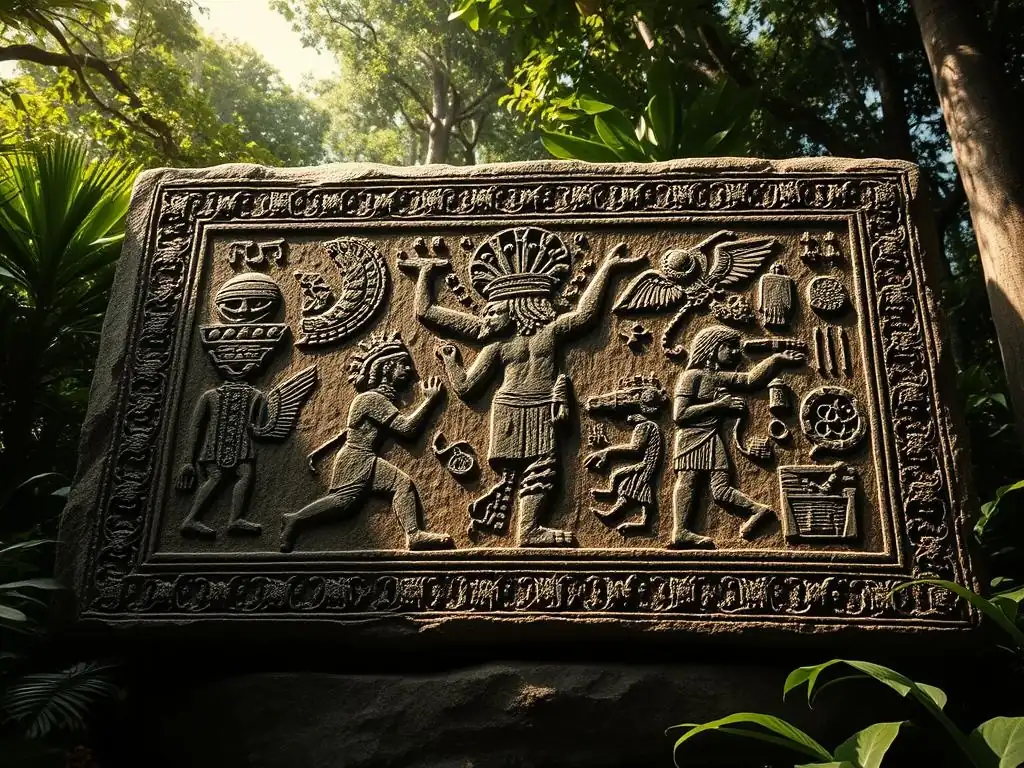
Maya hieroglyphics serve as a crucial key to understanding the intricate worldview and cosmology of the Maya civilization. These symbols, meticulously carved into stone monuments, pottery, and codices, encapsulate not only historical events but also profound spiritual beliefs and creation stories that define the Maya understanding of the universe. The hieroglyphic writing system is a complex amalgamation of logograms and syllabic signs that convey meanings on multiple levels, making it a rich source for interpreting Maya cosmological concepts.
The relationship between these hieroglyphics and cosmology is evident in the way certain glyphs are recurrently associated with creation narratives. For instance, specific glyphs represent deities, celestial bodies, and key moments in mythological history, reflecting the Maya belief in a world infused with spiritual significance. This connection can be illustrated through monumental inscriptions that recount the origins of the world, the creation of humanity, and the roles of gods in maintaining cosmic order.
How Creation Stories Reflect Maya Worldview
Creation stories in Maya culture are not mere tales; they are foundational narratives that reflect the civilization's profound relationship with nature, the cosmos, and the divine. Central to these stories is the Popol Vuh, a sacred text that recounts the creation of the world and the emergence of the first humans. The narratives articulated in the Popol Vuh highlight the significance of maize, a staple crop, emphasizing the Maya belief in their deep connection to the land.
In the Popol Vuh, the creation of humanity is depicted through a series of trials and errors by the gods who attempted to create beings that could worship them. The final successful creation of humans from maize symbolizes not only sustenance but also the spiritual bond between the Maya people and their environment. This reflects a holistic worldview where the physical and spiritual realms are intertwined, illustrating how creation stories serve as a lens through which the Maya understood their existence and purpose.
| Key Elements of Maya Creation Stories | Description |
|---|---|
| Deities | Gods play central roles in creation narratives, influencing the world and humanity. |
| Nature | The environment, especially maize, is integral to identity and spirituality. |
| Cyclical Time | Creation myths often depict time as cyclical, aligning with natural cycles and rituals. |
The Interplay Between Myth and Daily Life in Maya Society
In Maya society, the boundaries between myth and daily life were often blurred, with creation stories influencing various aspects of existence. Rituals, agriculture, and governance were deeply rooted in the cosmological beliefs articulated through hieroglyphics. For example, agricultural practices were often aligned with celestial events, reflecting the Maya’s understanding of time and the seasons as influenced by their gods.
Rituals dedicated to deities featured prominently in everyday life, signifying the importance of maintaining harmony with the cosmos. Hieroglyphic inscriptions on temples and ceremonial sites often commemorated these rituals, emphasizing their role in sustaining the universe and ensuring prosperity. This interplay also extended to the political realm, where rulers often claimed divine lineage or favor, using hieroglyphics to legitimize their power and connect their reign to the cosmic order.
- Influence on Agriculture: Seasonal rituals, aligned with the creation stories, dictated planting and harvesting times.
- Religious Ceremonies: Regular ceremonies were conducted to honor gods, ensuring balance and favor in daily life.
- Political Legitimacy: Rulers utilized hieroglyphics to connect their authority with divine will, embedding creation stories into governance.
Maya hieroglyphics are a vital conduit for understanding the civilization's creation stories and cosmology. These narratives not only reflect the Maya worldview but also illustrate how deeply intertwined their mythological beliefs were with daily life, sustaining their culture and identity long after the fall of their great cities.
Preservation and Interpretation of Maya Hieroglyphics
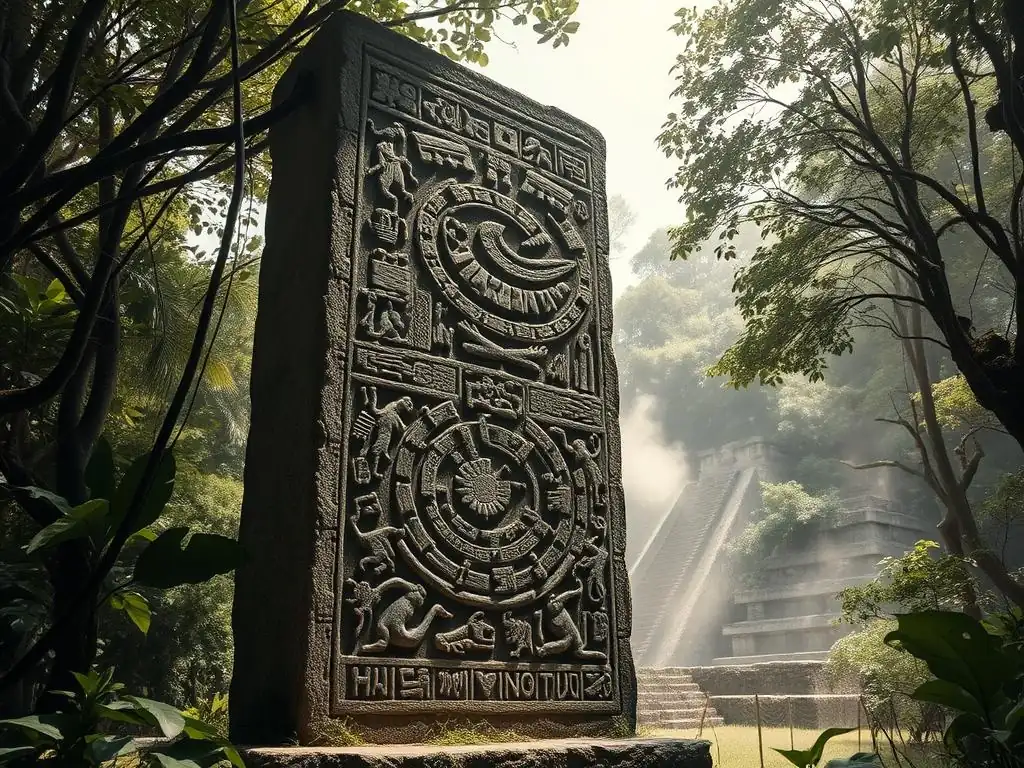
The preservation and interpretation of Maya hieroglyphics are vital in understanding the rich tapestry of Maya civilization. These intricate symbols, carved into stone monuments, pottery, and codices, serve as a window into the beliefs, history, and cosmology of the Maya people. The ongoing efforts to decipher these glyphs have revealed complex narratives, including creation stories that outline the Maya worldview and their understanding of the universe.
Archaeological Discoveries and Their Impact on Understanding
Archaeological discoveries have played a pivotal role in uncovering the significance of Maya hieroglyphics. Notable finds, such as the ruins of Tikal, Palenque, and Copán, have yielded numerous stelae and altars inscribed with glyphs that narrate historical events and mythological tales. These inscriptions often detail royal lineages, conquests, and rituals, providing a richer context for understanding the social and political structures of Maya society.
In the 20th century, the discovery of the Dresden Codex, one of the few surviving pre-Columbian books, greatly advanced our comprehension of Maya hieroglyphics. This codex contains astronomical data, calendrical information, and rituals, all illustrated with vivid images and glyphs. Scholars have utilized the codex to decipher not only the language but also the creation stories that are integral to Maya cosmology. For example, the codex illustrates the Maya creation myth, revealing their belief in the earth's formation and the gods' role in shaping humanity.
Additionally, the work of epigraphers—scholars specializing in the study of inscriptions—has been crucial in piecing together fragmented stories. Advances in technology, such as 3D scanning and digital imaging, have enhanced the visibility of faded glyphs on ancient artifacts, allowing for more precise analysis and interpretation.
Challenges in Translating Maya Glyphs and Stories
Despite significant progress, translating Maya glyphs presents numerous challenges. The Maya script is logosyllabic, meaning it incorporates both logograms (representing words) and syllabic signs (representing sounds). This complexity makes it difficult to establish a comprehensive understanding of the language, as the same glyph can have multiple meanings depending on its context.
Moreover, the loss of cultural context poses another hurdle. Many glyphs are deeply embedded in the religious and social practices of the Maya, making their translations ambiguous without a thorough understanding of these cultural elements. For instance, various creation stories might intertwine with specific rituals, requiring translators to grasp the broader cultural significance to accurately interpret the glyphs.
Efforts are ongoing to standardize the transliteration of Maya hieroglyphs, but inconsistencies remain. Different scholars may interpret the same glyph in varying ways, leading to debates within the academic community. The need for collaboration among linguists, archaeologists, and cultural historians is paramount to overcome these challenges.
While the preservation and interpretation of Maya hieroglyphics remain fraught with complexities, the insights gained from archaeological discoveries and the relentless pursuit of translation continue to enrich our understanding of Maya creation stories and their profound cosmological significance.
The Legacy of Maya Hieroglyphics and Creation Stories
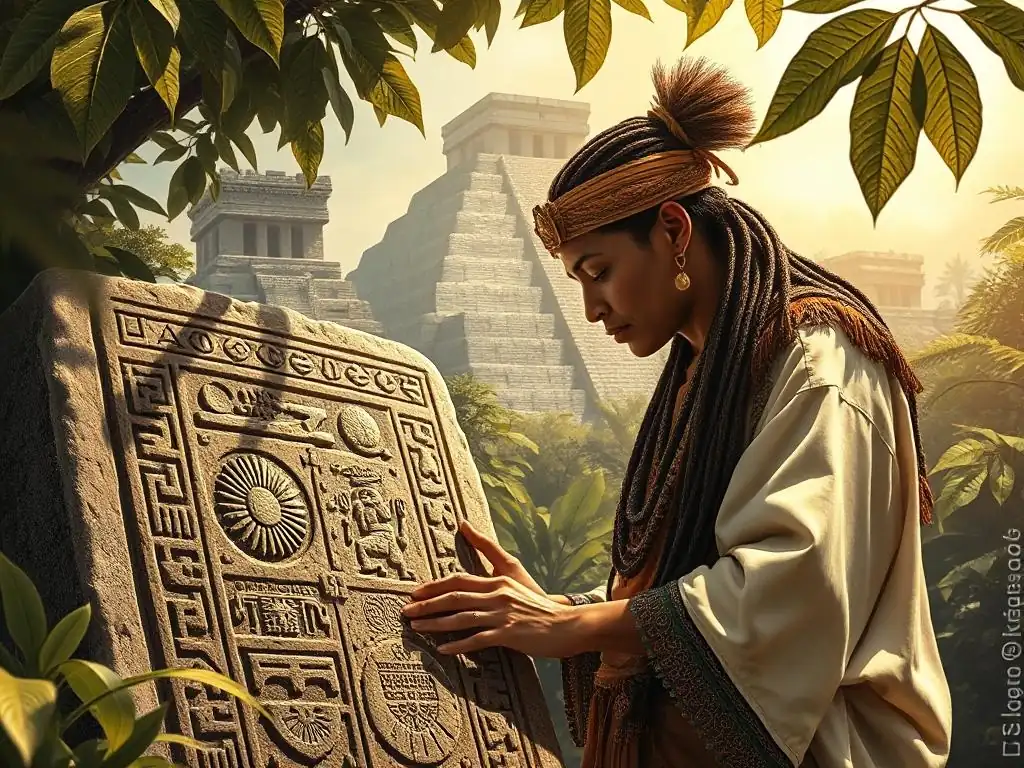
Maya hieroglyphics represent not only a sophisticated writing system but also a profound cultural legacy that continues to resonate through the ages. These intricate symbols encapsulate the Maya's creation stories, cosmological beliefs, and historical narratives, deeply embedding their understanding of the universe into stone. The legacy of these hieroglyphics extends beyond mere communication; they serve as a bridge connecting the past with contemporary understanding of Maya identity and spirituality.
The stories etched in stone recount the origins of the world and the gods that shaped it, offering insight into the Maya worldview. The Popol Vuh, one of the most significant texts derived from these hieroglyphics, narrates the creation of humanity and the trials of the Hero Twins, providing a rich context for understanding the Maya's spiritual heritage. As scholars and descendants of the Maya continue to study and interpret these texts, they unlock not only ancient wisdom but also affirm their cultural identity in a modern context.
Influence on Modern Indigenous Cultures
The influence of Maya hieroglyphics extends into contemporary indigenous cultures, particularly in Guatemala and southern Mexico, where the descendants of the Maya continue to honor their ancestors' traditions. The symbolism found in hieroglyphics informs various aspects of modern life, including art, storytelling, and rituals.
- Cultural Revival: Many modern Maya communities engage in cultural revival efforts, emphasizing the importance of traditional knowledge and practices. This revival includes teaching the younger generations about their history through the stories preserved in hieroglyphics, ensuring that their cultural identity remains vibrant.
- Artistic Expression: Modern artists draw inspiration from ancient hieroglyphics, incorporating these symbols into contemporary artwork. This fusion of old and new not only honors traditional aesthetics but also serves as a means of storytelling, reflecting current social and political realities.
- Linguistic Continuity: The languages spoken by contemporary Maya peoples often retain elements from their ancient counterparts. Scholars have noted how the preservation of these languages plays a crucial role in maintaining the meanings of the hieroglyphics, allowing for a deeper connection to the past.
- Cultural Education: Many organizations focus on educating both Maya and non-Maya audiences about the significance of hieroglyphics and their creation stories. Workshops, exhibitions, and cultural events create spaces for dialogue, fostering understanding and appreciation of Maya heritage.
The Importance of Preserving Maya Heritage
Preserving Maya heritage is essential for several reasons, particularly in the context of globalization and cultural homogenization. The knowledge embedded in Maya hieroglyphics is not merely historical; it carries insights into sustainable living, spirituality, and community governance that are relevant today.
- Historical Significance: The hieroglyphics provide invaluable information about the Maya civilization, including their social structures, economic practices, and environmental adaptations. Understanding these aspects can inform contemporary discussions about sustainability and cultural resilience.
- Cultural Identity: For many Maya descendants, their heritage is a source of pride and identity. The preservation of hieroglyphics allows them to maintain a connection with their ancestors and to assert their cultural identity in a world that often marginalizes indigenous voices.
- Academic Research: Ongoing research into Maya hieroglyphics contributes significantly to the fields of archaeology, anthropology, and linguistics. Scholars use these ancient texts to gain insights into human history and the complexities of societal development.
- Educational Initiatives: Various initiatives aim to integrate the study of Maya hieroglyphics into educational curricula, promoting a broader understanding of indigenous knowledge systems. These programs not only benefit Maya students but also enrich the educational landscape for all learners.
The legacy of Maya hieroglyphics and their creation stories is a testament to the enduring strength of indigenous cultures. Preserving this heritage is not just about safeguarding the past; it is about fostering a future where these narratives continue to inspire and guide generations to come.
Conclusion: The Enduring Impact of Maya Hieroglyphics and Creation Stories
The intricate art of Maya hieroglyphics is not just a means of communication; it serves as a vital link to understanding the rich tapestry of Maya civilization. These symbols encapsulate creation stories, cosmology, and the cultural identity of the Maya people.
The enduring impact of these hieroglyphics can be seen in the way they provide insights into the Maya worldview, their relationship with nature, and their understanding of the cosmos. By studying these ancient texts, scholars gain a deeper appreciation for how the Maya articulated their beliefs about creation and existence, which were often intertwined with their daily lives and social structures.
The stories told through Maya hieroglyphics reflect a sophisticated understanding of time and space. For example, the Popol Vuh, a foundational text of Maya mythology, employs hieroglyphics to convey creation narratives that highlight the interplay between gods, humans, and the natural world. Such narratives are not merely historical accounts; they serve as moral and ethical guides, illustrating the consequences of actions and the importance of harmony with the universe. This symbolic language remains a crucial aspect of cultural heritage for the Maya and offers valuable lessons for contemporary society.
The Role of Maya Hieroglyphics in Understanding Indigenous Civilizations
Maya hieroglyphics play a pivotal role in understanding the broader context of indigenous civilizations in the Americas. As a complex writing system, it reflects the intellectual and artistic achievements of the Maya, showcasing their ability to convey sophisticated concepts through visual symbols. The hieroglyphs capture a range of ideas, from political events to astronomical observations, and provide insight into the societal structures that governed the lives of the Maya.
- Cultural Identity: The inscriptions found on monuments and codices reveal how the Maya defined themselves in relation to their environment, ancestors, and deities. This cultural identity remains pronounced in modern Maya communities, where traditional beliefs and practices are interwoven with contemporary life.
- Historical Record: Maya hieroglyphics serve as a historical record, documenting significant events, rulers, and lineage. By analyzing these inscriptions, researchers can reconstruct the political landscape of ancient Maya city-states and their interactions with neighboring cultures.
- Cosmological Insights: The hieroglyphs also provide valuable insights into Maya cosmology. They illustrate how the Maya understood celestial bodies, seasonal cycles, and agricultural practices, emphasizing the importance of these elements in their creation stories and daily existence.
In this way, the study of Maya hieroglyphics extends beyond linguistics; it is a window into the vibrant and complex world of the Maya civilization, revealing their philosophies, practices, and the legacy they left for future generations.
Future Research Directions in Maya Studies
The field of Maya studies is continually evolving, with new discoveries and methodologies reshaping our understanding of this ancient civilization. Future research directions in the study of Maya hieroglyphics and creation stories may include:
- Technological Advancements:
- The use of advanced imaging techniques and 3D modeling to analyze inscriptions that are difficult to decipher.
- Digital humanities initiatives that aim to create comprehensive databases of Maya texts for easier access and analysis.
- Interdisciplinary Approaches:
- Collaboration between linguists, archaeologists, and anthropologists to provide a more holistic view of Maya civilization.
- Exploring the intersections between hieroglyphics and other forms of Maya art and culture, such as pottery and architecture.
- Cultural Continuity:
- Investigating how contemporary Maya communities preserve and reinterpret their hieroglyphic heritage in modern contexts.
- Understanding the impact of globalization on the transmission of traditional knowledge related to creation stories.
- Comparative Studies:
- Comparing Maya hieroglyphics with other indigenous writing systems in the Americas to identify common themes and differences.
- Examining how creation stories from different cultures inform our understanding of human experience and cosmology.
The future of Maya studies promises to deepen our appreciation for the intricacies of Maya hieroglyphics and the enduring significance of their creation stories, ultimately enriching our understanding of indigenous civilizations as a whole.
Frequently Asked Questions
What are Maya hieroglyphics?
Maya hieroglyphics are a complex writing system used by the Maya civilization, consisting of logograms and syllabic symbols that record their history, culture, and creation stories.
How did the Maya use hieroglyphics to convey creation stories?
Maya hieroglyphics were often inscribed on temples, monuments, and ceremonial artifacts, illustrating their creation myths and cosmological beliefs, which reflect their understanding of the universe.
What significance do creation stories hold in Maya culture?
Creation stories are fundamental in Maya culture, as they provide insights into their belief systems, societal structure, and the interconnectedness of life, nature, and the cosmos.
Where can I find examples of Maya hieroglyphics?
Examples of Maya hieroglyphics can be found in various archaeological sites across Mesoamerica, including famous locations like Palenque, Tikal, and Copán, where they are beautifully preserved.
How have Maya hieroglyphics influenced modern understanding of Maya civilization?
The study of Maya hieroglyphics has greatly enhanced our understanding of their history, achievements, and social organization, revealing a rich tapestry of cultural narratives and traditions that continue to resonate today.
Final Reflection: The Enduring Legacy of Maya Hieroglyphics and Creation Stories
Maya hieroglyphics are not just ancient symbols; they are a profound testament to the rich tapestry of human creativity and belief. In today's world, where stories shape our understanding of existence, the intricate narratives embedded in these glyphs remind us of our shared quest for meaning and connection. The exploration of creation stories through the lens of Maya hieroglyphics reveals not only the cultural depth of the Maya civilization but also their timeless relevance in our contemporary search for identity and purpose.
The influence of Maya hieroglyphics extends far beyond the pages of history; it resonates within our cultural consciousness, inviting us to reflect on our own creation stories. These ancient texts serve as a bridge to understanding the cosmos and our place within it. As we navigate a world filled with diverse narratives, we can draw inspiration from the wisdom encapsulated in these glyphs. The stories we tell shape the world we live in.
This quote encapsulates the essence of how narratives, like those found in Maya hieroglyphics, continue to mold our perceptions and values today.
As we conclude our exploration of Maya hieroglyphics and their creation stories, I invite you to reflect on the narratives that shape your own life. Consider how the stories you hold dear influence your understanding of the world and your place in it. Let the lessons from the Maya inspire you to seek out and share your own stories of creation, fostering a deeper connection with yourself and others. Embrace the power of storytelling as a means to explore the cosmos of your existence and contribute to the ongoing tapestry of human experience.
Uncover the Secrets of Maya Hieroglyphics!
Thank you for diving deep into the fascinating world of Maya hieroglyphics! You've journeyed through rich stories of creation and cosmology, and now it's time to take that knowledge further. Embrace the wisdom of this ancient civilization and explore the wonders that await.
Here are a few exciting ways you can bring the magic of Maya hieroglyphics into your daily life:
- Start your own research project on Maya symbols and their meanings. Choose a glyph that resonates with you personally and delve into its significance.
- Join a local or online community interested in indigenous cultures. Share your findings, swap stories, and expand your understanding together.
- Create a piece of art inspired by Maya hieroglyphics. This can be a drawing, painting, or even digital art that reflects the beauty and depth of their stories.
What aspect of Maya cosmology inspires you the most, and how will you incorporate it into your own life?