
Hieroglyphics and Power: How the Maya Used Writing to Maintain Authority

Welcome to Indigenous Civilizations of the Americas, where we invite you to embark on a captivating journey through the rich tapestry of indigenous cultures that flourished long before European contact. In our featured article, “Hieroglyphics and Power: How the Maya Used Writing to Maintain Authority,” we delve into the intricate world of Maya hieroglyphics and authority, revealing how this remarkable writing system was not just a means of communication, but a powerful tool for governance and social order.
As you explore, prepare to uncover the profound achievements and enduring legacies of these vibrant societies that continue to shape our understanding of history today. Your adventure into the depths of the Maya civilization begins here—let's turn the page together!
- Introduction to Maya Hieroglyphics and Authority
- The Role of Writing in Maya Society
- Understanding Maya Hieroglyphics
- Historical Context of Maya Writing Systems
- The Use of Hieroglyphics in Political Power
- Case Studies of Hieroglyphics and Authority
- Conclusion: The Lasting Impact of Maya Hieroglyphics on Authority
- Frequently Asked Questions
- Final Reflection: The Enduring Legacy of Maya Hieroglyphics and Authority
- Unlock the Secrets of Ancient Authority!
The Maya civilization, renowned for its remarkable achievements in art, architecture, and astronomy, also wielded a sophisticated system of writing known as Maya hieroglyphics. This intricate script was not merely a means of communication but served as a vital tool for maintaining authority and governance within their society.
The interplay between writing and power in the Maya world reveals much about how these indigenous peoples organized their communities, recorded their history, and asserted their dominance. This article delves into the significance of Maya hieroglyphics and how it was employed as a mechanism of authority, providing insights into the cultural and political landscape of one of the most influential civilizations of pre-Columbian America.
Overview of Maya Civilization
The Maya civilization flourished in Mesoamerica for over two millennia, with its peak occurring between 250 and 900 CE. This period, known as the Classic era, saw the development of city-states adorned with monumental architecture, elaborate ceremonial centers, and a rich tapestry of cultural practices. The Maya were not a monolithic group but rather a collection of diverse city-states such as Tikal, Palenque, and Copán, each with its own rulers, customs, and dialects.
Key characteristics of the Maya civilization include:
- Advanced Agriculture: Utilizing techniques like slash-and-burn farming, the Maya cultivated crops such as maize, beans, and squash, which supported large populations.
- Architectural Innovations: The construction of pyramids, palaces, and observatories that reflect their sophisticated understanding of mathematics and astronomy.
- Social Hierarchy: A complex class system where nobility, priests, and commoners played distinct roles, with the elite wielding significant power and influence.
Maya society was deeply intertwined with their beliefs and practices, where religion and governance were inseparable. The ruling class often claimed divine right, using writing as a means to legitimize their authority through historical records, royal decrees, and sacred texts.
Importance of Writing in Ancient Cultures
Writing systems have always played a crucial role in the development and maintenance of complex societies. In the case of the Maya, hieroglyphics served multiple functions that extended beyond mere documentation. The significance of writing in ancient cultures can be highlighted through several key aspects:
- Record Keeping: Writing allowed the Maya to document their history, including the accomplishments of rulers, significant events, and genealogies, which helped reinforce the legitimacy of their authority.
- Religious Texts: Many hieroglyphs were used in religious contexts, inscribing sacred ceremonies and mythological narratives that connected the rulers to the divine, thereby consolidating their power.
- Political Communication: Hieroglyphics served as a means of communication among the elite, facilitating governance and the administration of city-states by issuing laws, treaties, and diplomatic correspondence.
The Maya hieroglyphic system, with its intricate symbols and ideograms, was a powerful tool that not only preserved their culture but also ensured the continuity of their political and religious ideologies. Through this exploration, we can better understand how writing functioned as a cornerstone of authority in the Maya civilization, shaping their identities and sustaining their societal structures.
The Role of Writing in Maya Society
Communication and Record-Keeping
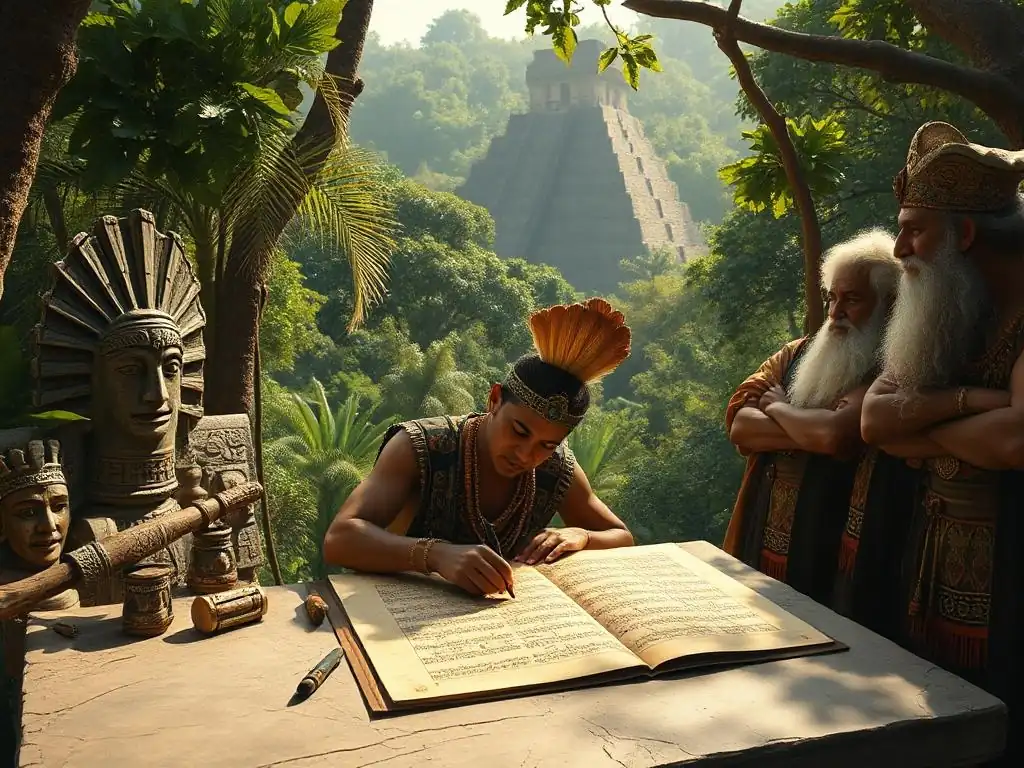
Maya hieroglyphics served as a crucial medium for communication among the various city-states of the Maya civilization. This writing system, which comprised over 800 distinct glyphs, enabled the Maya to convey complex ideas and information across vast distances. The versatility of these symbols allowed for the recording of historical events, religious texts, and astronomical data, fostering a shared cultural heritage among the Maya people.
-
Historical Documentation:
The Maya meticulously documented significant events such as royal births, military victories, and religious ceremonies. These records were inscribed on monuments, stelae, and pottery, ensuring that important narratives were preserved for future generations. For instance, the inscription at the Temple of the Inscriptions in Palenque chronicles the reign of King Pakal, highlighting the use of writing as a means to legitimize authority and commemorate achievements.
-
Religious Significance:
Writing also played a vital role in the Maya's religious practices. Sacred texts, often composed in hieroglyphics, detailed rituals and the mythology of the gods. The Popol Vuh, a foundational myth of the K'iche' Maya, exemplifies how written language served to transmit spiritual beliefs and cultural values, reinforcing societal norms.
-
Astronomical Records:
The Maya were skilled astronomers, and their hieroglyphics allowed them to document celestial events and cycles. By recording lunar and solar eclipses, as well as the movements of planets, the Maya could align their agricultural practices with the cosmos, demonstrating the intertwining of daily life and celestial observation.
Hieroglyphics as a Tool for Governance
The use of Maya hieroglyphics extended beyond mere communication; it was a powerful instrument for governance and the assertion of authority. Writing facilitated the administration of city-states and the consolidation of power among the elite.
-
Legitimizing Authority:
Rulers utilized hieroglyphics to legitimize their reigns and assert their divine right to govern. Inscriptions on monuments often included titles, lineage, and divine associations, reinforcing the ruler's status. By showcasing their accomplishments in writing, leaders could strengthen their authority and command respect from their subjects.
-
Administrative Control:
The complexity of Maya society necessitated an organized bureaucratic system, and writing was indispensable for record-keeping. Hieroglyphics were employed to track tributes, manage resources, and document trade agreements. This meticulous record-keeping enabled rulers to maintain control over their territories and ensure the smooth functioning of their administrations.
-
Diplomatic Relations:
Hieroglyphics also played a role in diplomacy. Written agreements and treaties were inscribed to formalize alliances and resolve conflicts. The ability to communicate effectively through writing allowed Maya leaders to negotiate terms and maintain peace with neighboring city-states, illustrating the strategic importance of hieroglyphics in governance.
In conclusion, Maya hieroglyphics and authority were intrinsically linked, with writing serving as a vital tool for communication, record-keeping, and governance. The multifaceted role of hieroglyphics not only facilitated the administration of Maya society but also reinforced the legitimacy and power of its rulers.
Understanding Maya Hieroglyphics
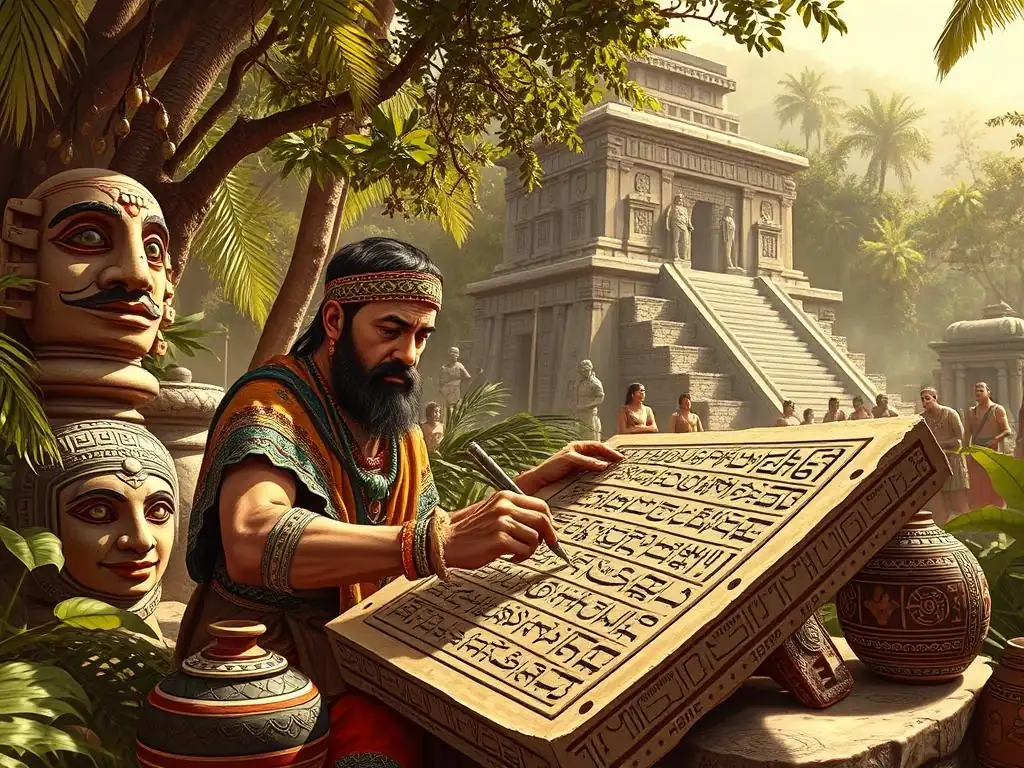
Maya hieroglyphics represent one of the most advanced writing systems of the ancient world, combining logographic and syllabic elements that enabled the Maya civilization to document their complex history, rituals, and governance. The writing system is not merely a means of communication but a pivotal tool for exercising authority and maintaining social order. In understanding Maya hieroglyphics, one gains insight into the intricate relationship between writing, power, and cultural identity among the Maya people.
Structure and Symbols of Maya Writing
The structure of Maya hieroglyphics is multifaceted, consisting of over 800 distinct signs or glyphs. These glyphs can be categorized into two main types:
- Logograms: These symbols represent words or concepts. For instance, the glyph for "water" or "house" conveys specific meanings without the need for phonetic representation.
- Syllabic Signs: These glyphs represent sounds, similar to letters in the Latin alphabet. They are used to form phonetic components of words and are crucial for spelling out names and titles.
Maya hieroglyphics were often inscribed on various mediums, including stone monuments, pottery, and codices made from bark paper. The inscriptions were typically arranged in a block format, and readers would decode the text from left to right or top to bottom, depending on the context.
The symbols themselves are rich in meaning and can convey complex ideas. For example, the glyph for a ruler might incorporate elements that symbolize divine authority and legitimacy, emphasizing the ruler's connection to the gods. This symbolic layer adds depth to the written word, reinforcing the authority of those who wield it.
Maya hieroglyphics served as a fundamental mechanism for asserting and maintaining authority within Maya society. The ability to read and write hieroglyphics was often restricted to the elite, particularly priests and nobles, creating a knowledge hierarchy that reinforced social stratification.
- Political Propaganda: Rulers utilized hieroglyphics to propagate their legitimacy and divine right to govern. Inscriptions on stelae (stone monuments) often detailed the rulers’ achievements, military victories, and divine lineage, reinforcing their status as chosen leaders. This strategic use of writing helped to consolidate power and deter dissent.
- Religious Significance: Writing was also integral to religious practices. Hieroglyphics were employed in rituals and ceremonies, documenting events that connected the Maya to their gods. The interplay between religion and politics meant that the written word served as a bridge between the divine and earthly authority, further elevating the status of rulers.
- Historical Record: The Maya created detailed historical records through hieroglyphics, chronicling dynasties, wars, and societal changes. This historical documentation not only served practical governance purposes but also functioned as a tool for legitimizing current rulers by linking them to the revered past.
Maya hieroglyphics were not just a method of communication but a profound expression of power and authority. The structure and symbols of this writing system facilitated the governance of complex societies, while the strategic use of these glyphs allowed rulers to maintain control and influence over their people. Understanding this relationship between writing and authority provides critical insight into the workings of Maya civilization and its enduring legacy.
Historical Context of Maya Writing Systems
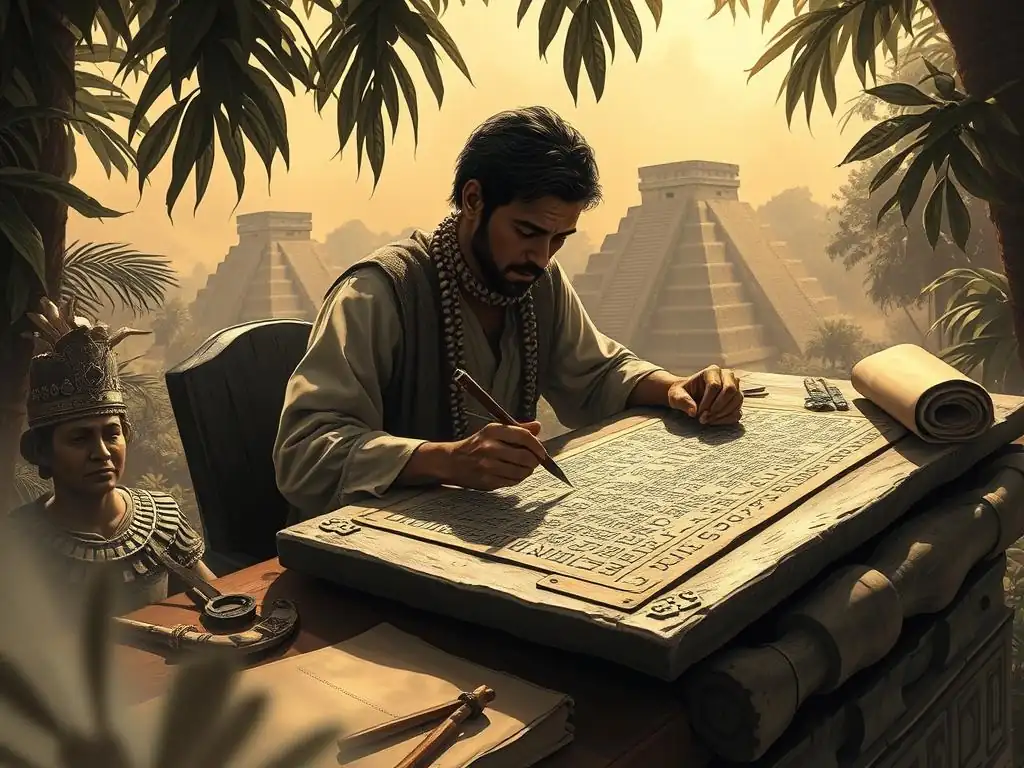
The development of writing systems in Mesoamerica represents a significant milestone in the history of human communication. Among these systems, Maya hieroglyphics stands out not only for its complexity but also for its deep-rooted connection with authority and governance. The Maya civilization, which flourished from around 2000 BCE to the Spanish conquest in the 16th century, utilized this sophisticated writing system to document their history, religion, and political structures.
Development of Maya Hieroglyphics
Maya hieroglyphics, a combination of logograms and syllabic symbols, began to emerge around 300 CE, coinciding with the rise of the Maya city-states in the Classic period. This intricate writing system was primarily used by the elite class, including rulers and priests, who were responsible for its creation and interpretation. The earliest examples of Maya writing can be found on pottery, monuments, and stelae, showcasing the civilization's achievements in art and architecture.
-
Structure of the Writing System:
- Logograms represent entire words or concepts.
- Syllabic signs denote specific sounds, allowing for a more flexible expression of language.
This duality made Maya hieroglyphics exceptionally versatile, enabling scribes to convey complex narratives and administrative records.
-
Cultural Significance:
The act of writing was profoundly intertwined with the Maya worldview. Writing was seen not just as a tool for communication but as a means to connect with the divine. Inscriptions often recorded the accomplishments of rulers, tying their authority to the gods and reinforcing their status within society.
-
Preservation and Decipherment:
The decline of the Maya civilization led to the loss of many hieroglyphic texts, but some survived on monuments and codices. The decipherment of these hieroglyphics has revealed a wealth of information about the Maya's political and social structures, showcasing how writing was employed to legitimize power and control over resources.
The interplay between Maya hieroglyphics and authority is evident in the way writing was used to establish and maintain political power. As the Maya civilization evolved, so did their methods of governance, with writing playing a crucial role in legitimizing rulers and documenting their achievements.
-
Ritual and Governance:
- Rulers often commissioned inscriptions that celebrated military victories, divine lineage, and monumental constructions. This not only solidified their authority but also served to communicate their power to the populace.
- Religious texts, inscribed in hieroglyphics, linked earthly authority to cosmic forces, reinforcing the belief that rulers acted on behalf of the gods.
-
Administrative Control:
The use of hieroglyphics extended to bureaucratic functions, such as the recording of tribute, land ownership, and trade agreements. This documentation was vital for maintaining order and control over the vast territories governed by the Maya. By keeping detailed records, rulers could efficiently manage resources and ensure loyalty among their subjects.
-
Cultural Identity:
The preservation and use of hieroglyphics became a symbol of Maya identity. As external forces threatened their sovereignty, the written word served as a means of cultural resilience. The ability to read and write hieroglyphics became associated with power, creating a distinct class of literate elites who upheld the traditions and governance of the Maya civilization.
The development of Maya hieroglyphics was not merely a linguistic advancement but a fundamental aspect of the society's structure. Through the intricate use of writing, the Maya established and maintained authority, demonstrating the profound impact of written language on their civilization's governance and cultural identity.
The Use of Hieroglyphics in Political Power
Royal Inscriptions and Public Monuments
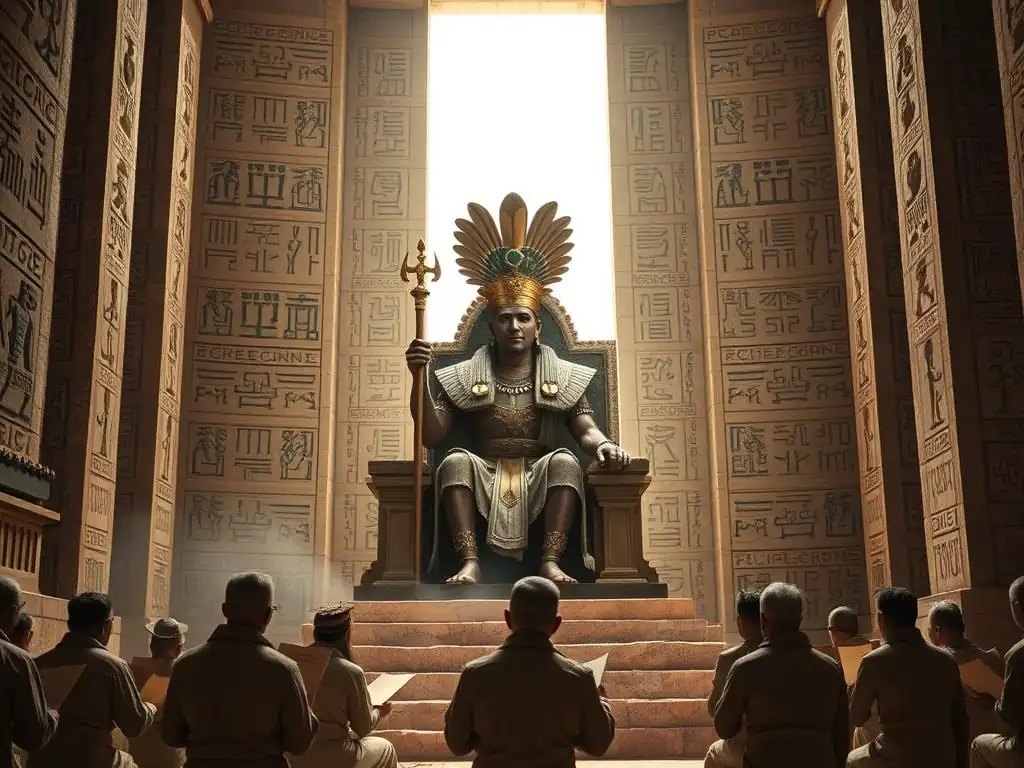
Maya hieroglyphics served as a crucial tool for the expression and reinforcement of political power. Royal inscriptions, often found on stelae, altars, and other public monuments, were integral in communicating the achievements and divine legitimacy of rulers. These inscriptions typically chronicled significant events, such as military victories, royal marriages, and the ascension to power.
- Content of Inscriptions: The inscriptions often included titles, accolades, and the names of the rulers, highlighting their connections to the gods and their responsibilities to the people. By documenting their lineage and divine blessing, Maya rulers legitimized their authority and justified their rule.
- Public Display: The strategic placement of these monuments in public spaces ensured visibility, allowing the messages to reach a wide audience. For example, a stela might be erected in a central plaza, making it a focal point for gatherings and ceremonies. This visibility played a significant role in reinforcing the ruler’s image and the power of the state.
- Cultural Significance: The act of inscribing hieroglyphics itself was laden with cultural significance. It was not merely a method of record-keeping; it symbolized the connection between the ruler and the cosmic order. The Maya believed that writing had supernatural power, and through hieroglyphics, rulers could communicate their divine right to govern.
In addition to royal inscriptions, the use of hieroglyphics in Maya art further served to propagate authority and reinforce the social hierarchy. Maya art, which includes pottery, murals, and sculpture, often integrated hieroglyphics to convey political messages and assert the power of the elite.
- Artistic Narratives: The incorporation of hieroglyphics within visual narratives allowed Maya artists to tell stories of power, conquest, and divine favor. For example, murals depicting royal ceremonies often included glyphs that detailed the events, thus reinforcing the ruler's status and achievements.
- Symbolism and Imagery: The use of specific symbols alongside hieroglyphics created a complex interplay between text and imagery. Certain motifs, such as the image of a ruler holding a spear or engaging in a ritual, were often accompanied by glyphs that reaffirmed their authority and connection to the gods. This dual representation of power solidified the ruler's authority in both the visual and textual realms.
- Ritual Context: Maya art was often created within a ritual context, meaning that the hieroglyphics served not only as a record but also as a means of reinforcing social norms and values. The public consumption of these artworks during ceremonies would have reinforced the societal structure, as the populace would be reminded of the power dynamics and the divine mandate of their rulers.
Maya hieroglyphics were more than just a writing system; they were an essential vehicle for the articulation and maintenance of authority. Through royal inscriptions and propaganda in art, the Maya effectively used their writing to shape political landscapes and assert their power, leaving a lasting legacy that continues to be studied and revered today.
Example 1: The Hieroglyphic Stairway at Copán
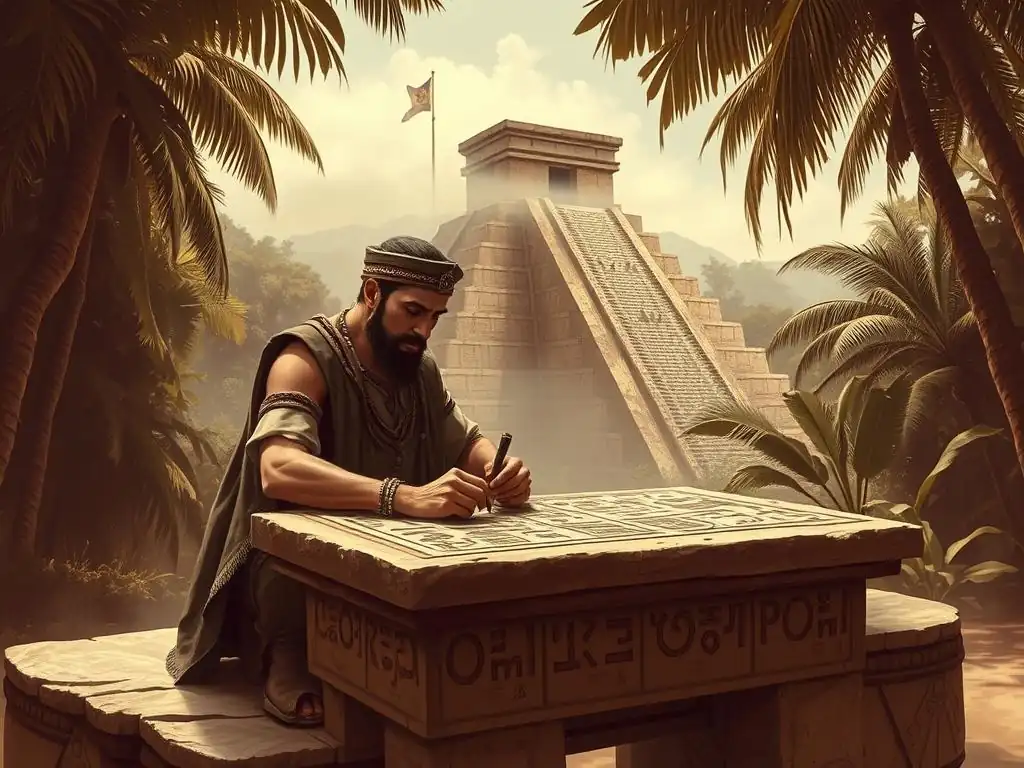
The Hieroglyphic Stairway at Copán is one of the most significant examples of Maya hieroglyphics and authority, showcasing the intricate relationship between writing and political power. This monumental staircase, composed of 63 steps, features over 2,000 individual glyphs that narrate the history of the Copán dynasty.
Political Significance
The stairway serves as a powerful political tool, emphasizing the legitimacy of rulers and their divine right to govern. Each step recounts important historical events and accomplishments of the kings, effectively reinforcing their authority and connection to the gods. For instance, the inscriptions detail the ascension of rulers, military victories, and significant rituals, which were crucial in maintaining the social hierarchy.
Interpretation Challenges
Deciphering the glyphs has proven challenging due to the complexity of the Maya writing system. Scholars have identified various symbols representing names, dates, and titles, but many glyphs remain ambiguous. Despite this, the Hieroglyphic Stairway stands as a testament to the Maya's sophisticated understanding of how to wield writing as a means of control and influence.
Example 2: The Tablet of the 96 Glyphs from Tikal
The Tablet of the 96 Glyphs, discovered in Tikal, is another exemplary case illustrating how Maya hieroglyphics were used to exercise authority. This stela is adorned with a wealth of inscriptions that chronicle the reign of a specific ruler and his divine connection to the cosmos.
Divine Authority Representation
The tablet highlights the ruler's relationship with the supernatural, suggesting that their authority was sanctioned by the gods. This divine endorsement was crucial for maintaining power, as it legitimized their rule in the eyes of the populace. The glyphs recount the ruler's lineage, his achievements, and his roles in religious ceremonies, reinforcing the idea that governance was intertwined with spiritual duty.
Lasting Impact on Maya Society
The inscriptions on the Tablet of the 96 Glyphs not only served immediate political purposes but also left a legacy for future generations. By documenting their history through hieroglyphics, the Maya ensured that their narratives were preserved, fostering a collective identity and continuity of power. This practice of recording history became essential in solidifying authority and shaping societal norms.
Both the Hieroglyphic Stairway at Copán and the Tablet of the 96 Glyphs from Tikal illustrate the profound connection between Maya hieroglyphics and authority. These monumental inscriptions were not merely decorative; they were vital instruments for maintaining social order, legitimizing power, and recording the rich history of the Maya civilization.
Summary of Key Points
Maya hieroglyphics served as a powerful tool for maintaining authority within the Maya civilization. Through a complex system of symbols and signs, the Maya were able to document their history, convey religious beliefs, and assert political power. Key points regarding the impact of Maya hieroglyphics on authority include:
- Documentation of Power: Hieroglyphics allowed the Maya elite to record significant events, such as battles, treaties, and royal lineages. This documentation not only solidified their power but also legitimized their rule in the eyes of the populace.
- Religious Significance: The sacred nature of many hieroglyphs meant that writing was not merely a practical tool but also a spiritual one. The ability to read and write hieroglyphics conferred a divine authority, as it was believed that only the elite could communicate with the gods through written words.
- Political Influence: Inscriptions on monuments and stelae served as public declarations of authority. By showcasing their accomplishments and divine favor through hieroglyphic writing, rulers were able to reinforce their status and influence over their subjects.
- Cultural Identity: The hieroglyphic system was not only a means of communication but also a crucial aspect of Maya identity. It fostered a shared culture and history that united the Maya people, further enhancing the authority of their leaders through a collective sense of belonging.
The Legacy of Maya Writing in Indigenous Cultures
The influence of Maya hieroglyphics extends beyond their immediate historical context and continues to resonate in contemporary indigenous cultures. The legacy of Maya writing can be observed in various ways:
- Cultural Revival: Today, many Maya communities are actively working to preserve their ancestral languages and writing systems. Efforts to revive the understanding and use of hieroglyphics contribute to a renewed sense of identity and pride among descendants of the Maya civilization.
- Scholarly Research: Ongoing studies of Maya hieroglyphics have provided valuable insights into the social, political, and religious structures of ancient Maya society. This body of knowledge helps to contextualize the complexities of indigenous cultures in the Americas and their contributions to human history.
- Artistic Inspiration: The intricate designs and symbols of Maya hieroglyphics have inspired contemporary artists and writers, who draw on these ancient traditions to create new works. This connection to the past allows for a continuous dialogue between ancient and modern expressions of culture.
- Intercultural Dialogue: The recognition of the significance of Maya hieroglyphics has fostered greater appreciation for the diversity of indigenous cultures. By understanding the role of writing in maintaining authority and identity, there is an opportunity for deeper intercultural engagement and respect for indigenous knowledge systems.
The study of Maya hieroglyphics and authority reveals the profound ways in which writing was intertwined with power dynamics in the Maya civilization. The lasting impact of this ancient system continues to be felt in contemporary societies, reflecting the enduring legacy of the Maya in the broader narrative of indigenous cultures across the Americas.
Frequently Asked Questions
What are Maya hieroglyphics?
Maya hieroglyphics are a complex writing system used by the ancient Maya civilization, consisting of logograms and syllabic signs that recorded their history, rituals, and daily life.
The Maya utilized their writing system to assert their political power, document significant events, and legitimize their rulers, reinforcing their social hierarchy and governance.
What is the significance of Maya hieroglyphics in understanding their culture?
Maya hieroglyphics provide essential insights into the political, religious, and social aspects of Maya life, revealing how they viewed their world and their place within it.
Are there any modern efforts to understand Maya hieroglyphics?
Yes, there are ongoing archaeological and linguistic studies aimed at deciphering Maya hieroglyphics, which continue to uncover the rich history and cultural achievements of the Maya civilization.
How did colonization impact the legacy of Maya hieroglyphics?
Colonization led to the destruction and disruption of many indigenous cultures, including the Maya, causing a significant loss of their written records and hindering the understanding of their historical authority and achievements.
The intricate relationship between Maya hieroglyphics and authority remains profoundly relevant today, as it highlights the power of language and symbols in shaping societies. In our modern world, where communication is often reduced to fleeting digital messages, the Maya's deliberate use of writing to assert control and convey complex narratives serves as a powerful reminder of the enduring influence of written language. The ability to document history, assert power, and communicate ideologies through symbols is not just a relic of the past; it is a fundamental aspect of how we understand and navigate our own social structures.
Maya hieroglyphics were not merely a means of communication; they were a tool of governance and identity that continues to resonate in contemporary discussions about power dynamics and cultural heritage. The legacy of the Maya's sophisticated writing system challenges us to consider how we wield language today. As author and historian David Carrasco once said, "> The stories we tell shape our realities." This observation underscores the ongoing influence of written narratives in defining authority and identity, reminding us that the stories we choose to tell—or omit—can significantly impact our cultural landscape.
As we reflect on the lessons from the Maya's use of hieroglyphics, let us be inspired to recognize the power of our own words and symbols in shaping the world around us. I invite you to consider how you can harness the lessons of the past to assert your voice in the present. Whether through writing, art, or other forms of expression, your ability to communicate can influence and inspire others. Embrace the power of your narrative, and remember that, like the Maya, you too have the capacity to shape authority and identity in meaningful ways.
Thank you for exploring the fascinating world of Maya hieroglyphics with us! We hope this article has illuminated the powerful role that writing played in sustaining authority within ancient civilizations. Now, it’s time to take that knowledge and put it into action!
Here are a few steps you can take to deepen your understanding and engage with this remarkable history:
- Dive Deeper: Read a book or watch a documentary about Maya culture and their unique writing systems to enrich your knowledge!
- Share Your Insights: Discuss your newfound knowledge with friends or on social media—let's spread the wonder of the Maya together!
- Join the Conversation: Participate in a local or online forum focused on indigenous civilizations to connect with others who share your interests.
What aspect of Maya culture intrigues you the most, and how might it influence our understanding of authority in contemporary society?