
The Role of Agriculture in Olmec Social Structure and Economy


Welcome to Indigenous Civilizations of the Americas, a portal into the rich tapestry of cultures that flourished across the continent long before European contact. Here, we delve into the fascinating world of the Olmec civilization, uncovering the pivotal role that agriculture played in shaping their social structure and economy. As you journey through this exploration, prepare to discover how the innovations of the Olmecs not only sustained their communities but also laid the groundwork for future civilizations.
What secrets lie within their agricultural practices? Join us as we unveil the intricate connections between Olmec agriculture and society, and ignite your curiosity about these remarkable cultures.
Introduction to Olmec Agriculture and Society
The Olmec civilization, often regarded as the "Mother Culture" of Mesoamerica, holds a significant place in the history of indigenous societies in the Americas. Flourishing between 1200 and 400 BCE in present-day Mexico, the Olmecs developed complex social structures and economies that were deeply intertwined with their agricultural practices. This article delves into the pivotal role of agriculture in shaping Olmec society, examining how farming not only provided sustenance but also influenced social hierarchies, trade networks, and cultural developments. By understanding Olmec agriculture and society, we uncover the foundational elements that contributed to the civilization's enduring legacy.
Overview of Olmec Civilization
The Olmec civilization is characterized by its remarkable achievements in art, architecture, and social organization. Known for their colossal stone heads and intricate jade carvings, the Olmecs established one of the earliest complex societies in Mesoamerica. Their urban centers, such as San Lorenzo and La Venta, served as hubs of political and religious activity. The social structure of the Olmecs was hierarchical, with an elite class that likely controlled agricultural production and trade, thus reinforcing their power and influence over the broader community.
Importance of Agriculture in Pre-Columbian Societies
Agriculture was a cornerstone of many pre-Columbian societies, providing the necessary food resources to support growing populations. For the Olmecs, agriculture was not only vital for sustenance but also a means of establishing social and economic stability. The ability to cultivate crops allowed for surplus production, which facilitated trade and interaction with other cultures. Additionally, agricultural practices were often intertwined with spiritual beliefs, as many societies viewed farming as a sacred act connected to their deities and the cycles of nature.
The Foundations of Olmec Agriculture
Geographic and Environmental Factors Influencing Agriculture
The Olmecs inhabited a region characterized by fertile alluvial plains and a favorable climate, which significantly influenced their agricultural practices. The Gulf Coast's tropical environment provided ample rainfall and rich soil, ideal for cultivating crops. Notably, the Olmecs utilized techniques such as slash-and-burn agriculture and irrigation systems to maximize their yield. These methods allowed them to adapt to the challenges posed by their environment, ensuring a reliable food supply.
Key Crops Cultivated by the Olmecs
The Olmecs cultivated a variety of crops that were essential to their diet and economy. Among the most significant were:
- Maize (Corn): The staple of Mesoamerican diets, maize served as a fundamental food source and was often used in religious rituals.
- Beans: A crucial protein source, beans complemented maize in nutritional value and were frequently grown alongside it in intercropping systems.
- Squash: This versatile crop was utilized in various ways, from food to medicinal uses, and was another staple of the Olmec diet.
- Cacao: Highly valued for its use in ceremonial beverages, cacao played a role in trade and social rituals.
The integration of these crops into their agricultural system not only supported the Olmec population but also laid the groundwork for their complex social structure and economic interactions.
Olmec agriculture played a pivotal role in shaping the social structure of their civilization. The development of agricultural techniques allowed for the cultivation of staple crops such as maize, beans, and squash, which formed the backbone of the Olmec diet. This agricultural foundation enabled the Olmec society to transition from small, nomadic groups to more complex, settled communities. As a result, a clear social hierarchy emerged, differentiating roles and responsibilities based on agricultural production and management.
The surplus generated from agriculture not only supported larger populations but also facilitated the emergence of specialized roles within the society. The concentration of resources in specific areas led to the establishment of political and religious leaders who could exercise authority over agricultural production and distribution. Consequently, the Olmec social structure became increasingly stratified, with landowners, farmers, and laborers occupying distinct positions within the community.
Agricultural Surplus and Its Impact on Social Hierarchies
The agricultural surplus produced by the Olmec significantly influenced the development of social hierarchies. With abundant food supplies, the Olmec were able to support larger populations and create a more complex social structure. This surplus allowed certain families or individuals to gain wealth and power, leading to the establishment of elite classes within Olmec society.
As agricultural productivity increased, so too did the need for organized governance to manage resources effectively. Leaders emerged who had the authority to allocate land, oversee crop production, and ensure the distribution of food. This created a clear division between the ruling elite and the working populace, with the elite enjoying privileges and access to resources that were not available to the lower classes. This stratification laid the groundwork for enduring social hierarchies that would characterize the Olmec civilization.
Division of Labor in Olmec Agricultural Practices
The division of labor was a fundamental aspect of Olmec agricultural practices. As agricultural methods evolved, different roles emerged within the community. Tasks were divided among individuals based on skills, age, and gender. Men typically engaged in heavy labor, such as land preparation and harvesting, while women often played crucial roles in planting, maintaining crops, and managing household gardens.
This division of labor not only increased agricultural efficiency but also reinforced social roles within the Olmec community. Each member's contribution was essential for sustaining the society, and this interdependence fostered collaboration and a sense of community. Additionally, the specialization of labor allowed for the development of other skills and crafts, contributing to the overall economic and cultural richness of Olmec society.
Role of Women in Olmec Agriculture and Society
Women held vital positions in Olmec agriculture and society, often responsible for key agricultural tasks that were essential for the community's sustenance. In addition to managing household gardens, women were involved in the processing of food, including the preparation of maize-based dishes, which were staples in the Olmec diet. Their contributions were crucial not only for food security but also for the cultural practices surrounding food preparation and consumption.
Despite the patriarchal structure that often defined ancient civilizations, the role of women in agriculture allowed them to wield significant influence within their households and communities. They often played a central role in decision-making processes related to crop management and family resources. This involvement highlights the importance of women's contributions to the economic stability and social fabric of Olmec society.
Economic Systems Supported by Olmec Agriculture
Olmec agriculture served as the foundation for various economic systems that sustained their civilization. The ability to produce surplus food allowed the Olmec to engage in trade and establish networks that extended beyond their immediate communities. This agricultural productivity was integral to the growth and stability of Olmec economic systems.
Trade Networks Established Through Agricultural Production
The surplus generated by Olmec agriculture facilitated the establishment of extensive trade networks. The Olmec were able to exchange their agricultural products, such as maize and cacao, for other goods and resources that were not locally available. This trade network extended to neighboring cultures, allowing for cultural exchange and the spread of ideas, technologies, and agricultural practices.
The Olmec's strategic location along trade routes further enhanced their ability to connect with other civilizations. They became intermediaries in the exchange of goods, which not only enriched their economy but also solidified their status as a dominant cultural force in the region. These trade networks played a crucial role in the dissemination of Olmec culture and agricultural innovations across Mesoamerica.
Barter System: Exchange of Goods and Services
The Olmec economy was primarily based on a barter system, where goods and services were exchanged directly without the use of currency. Agricultural products formed the basis of this system, with surplus crops serving as valuable commodities for trade. Farmers would trade their excess produce for items such as tools, textiles, and pottery, which were essential for daily life.
This barter system not only facilitated economic transactions but also strengthened social ties within and between communities. It encouraged cooperation and interdependence among different groups, fostering relationships that were vital for social cohesion. The reliance on agriculture for trade underscored its importance in the Olmec economy and the relationships formed through these exchanges.
The Role of Agriculture in the Development of Olmec Cities
Agriculture was instrumental in the development of Olmec cities, which emerged as central hubs of political, religious, and economic activity. The ability to produce surplus food allowed for the concentration of populations in urban areas, leading to the establishment of complex societies characterized by monumental architecture and sophisticated governance systems.
Cities like San Lorenzo and La Venta became centers for trade and cultural exchange, attracting people from surrounding regions. The agricultural base not only supported the urban population but also provided the resources necessary for the construction of ceremonial centers, which played a significant role in Olmec religious and social life. The growth of these cities is a testament to the profound impact of agriculture on the overall development of the Olmec civilization and its enduring legacy in Mesoamerican history.
Rituals and Beliefs Surrounding Agriculture in Olmec Society
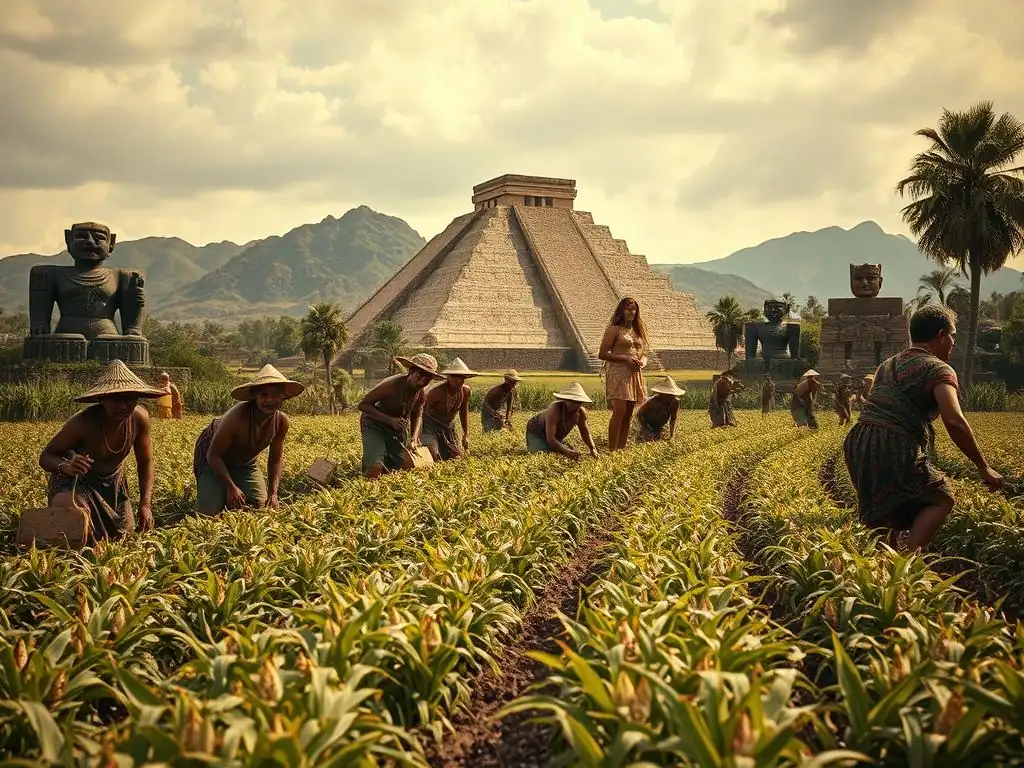
Agriculture was not just a means of sustenance for the Olmec civilization; it was deeply intertwined with their spiritual beliefs and cultural practices. The Olmecs revered the land and the natural cycles that governed their agricultural activities, leading to a rich tapestry of rituals and ceremonies that honored the earth's bounty. These practices were essential in ensuring successful harvests and maintaining the balance between nature and society.
The Olmecs believed that their agricultural productivity was directly linked to their relationship with the deities they worshipped. They performed various rituals, such as offering sacrifices, to appease these gods and gain favor for their crops. The sacredness of the land was reflected in their agricultural practices, where farming was seen as a communal activity that reinforced social cohesion and cultural identity.
Agricultural Deities and Their Significance
The Olmec pantheon included several deities associated explicitly with agriculture. Among these, God E, often depicted with maize-related attributes, was a prominent figure. This deity symbolized fertility, growth, and the life-giving properties of the earth. Worshipping God E involved elaborate ceremonies where offerings of food, flowers, and sometimes even blood sacrifices were made to ensure a fruitful harvest.
Another important deity was the Rain God, who was crucial for agricultural success in a region that experienced fluctuating precipitation. The Olmecs believed that this deity controlled the rains essential for crop growth. Rituals to honor the Rain God included invoking rain through chants and dances, often timed with the planting season to ensure that the crops received adequate moisture.
To celebrate the agricultural calendar, the Olmecs held festivals that marked significant agricultural milestones, such as planting and harvest time. These events were characterized by communal gatherings, feasting, and ritualistic performances that included music and dance. The most notable festival was likely the Harvest Festival, which celebrated the successful gathering of crops and involved offerings to the deities, thanking them for their blessings.
The ceremonies often featured symbolic acts, such as the ceremonial planting of seeds, which represented renewal and fertility. These festivals were not only a means to express gratitude but also served to reinforce social ties within the community, as people came together to celebrate their shared agricultural achievements.
Challenges Faced by Olmec Agriculture
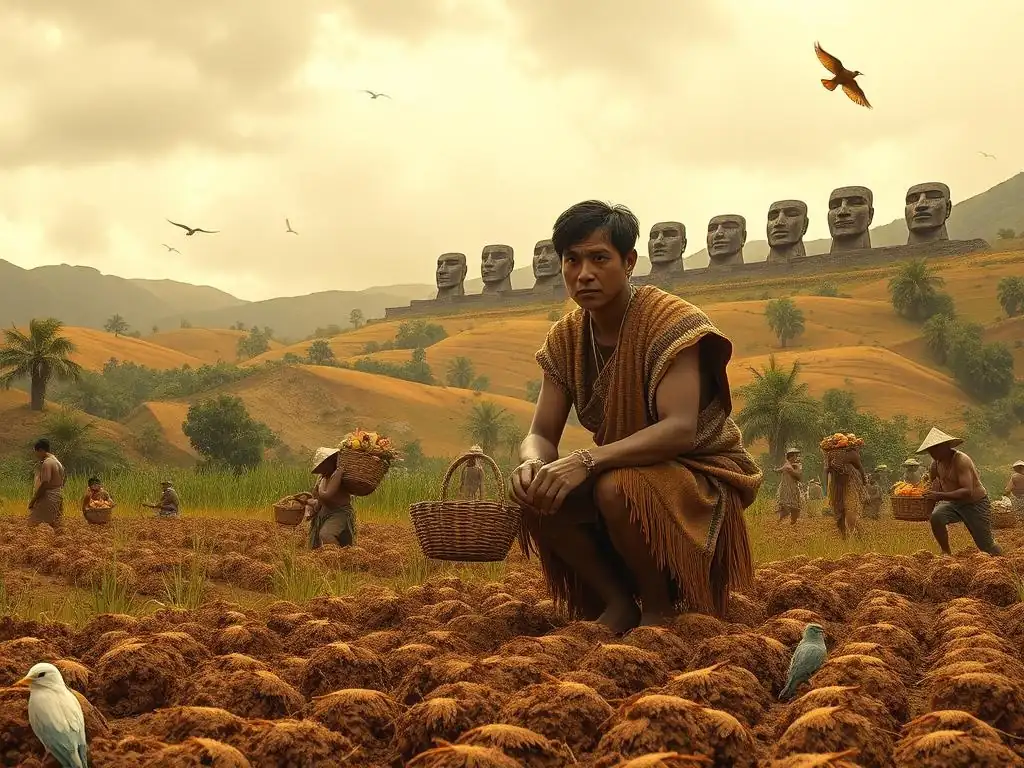
Despite the rich agricultural practices of the Olmec civilization, they faced numerous challenges that threatened their farming systems and, by extension, their society. Environmental factors and socio-political issues played significant roles in shaping their agricultural landscape.
Environmental Factors: Droughts and Floods
The Olmec region was characterized by a complex environment, with both fertile river valleys and areas prone to natural disasters. Droughts posed a severe threat to crops, leading to potential food shortages and social unrest. On the other hand, heavy rainfall and flooding could devastate fields, wash away topsoil, and disrupt the planting and harvesting cycles. The Olmecs had to develop adaptive strategies, such as irrigation systems and crop rotation, to mitigate these environmental challenges and ensure the sustainability of their agriculture.
Socio-Political Issues Affecting Agricultural Practices
The Olmec society was structured around a hierarchy that influenced agricultural practices. Political leaders often controlled land distribution, which could lead to inequalities in access to resources. Disputes over land ownership and conflicts between different factions within Olmec society could disrupt agricultural production. Additionally, the need for labor to maintain large agricultural plots meant that socio-political stability was crucial. Any upheaval could jeopardize the labor force required for farming, further complicating the agricultural landscape.
Olmec agriculture was deeply embedded in their social structure and economy, reflecting not only the need for sustenance but also their cultural beliefs and the challenges faced in a dynamic environment. The interplay between agriculture, society, and the environment shaped the Olmec civilization, leaving a lasting legacy in the history of indigenous cultures in the Americas.
The Legacy of Olmec Agriculture on Later Civilizations
The Olmec civilization, often referred to as the "mother culture" of Mesoamerica, laid the groundwork for agricultural practices that would significantly influence subsequent civilizations in the region. The innovations and methods developed by the Olmecs in farming not only increased agricultural productivity but also shaped the social and economic structures of later Mesoamerican societies.
One of the most notable legacies of Olmec agriculture is the cultivation of staple crops such as maize, beans, and squash, often referred to as the "Mesoamerican triad." This agricultural foundation provided essential nutrients and supported population growth, fostering urbanization and the development of complex societies. The techniques pioneered by the Olmecs, including the use of irrigation and raised-field farming, were adopted and adapted by civilizations such as the Maya and the Aztecs, which further refined these practices to enhance agricultural yields.
Influence on Mesoamerican Agricultural Practices
The Olmec's advanced agricultural methods had a profound influence on the farming techniques of later Mesoamerican cultures. They were among the first to practice systematic agriculture in the region, transitioning from a hunter-gatherer lifestyle to settled farming communities. This shift allowed for the development of permanent settlements and the cultivation of diverse crops.
Key practices included:
- Irrigation Systems: The Olmecs implemented irrigation to manage water resources effectively, which later civilizations also adopted to combat the seasonal droughts common in the region.
- Crop Rotation and Diversification: The Olmecs understood the importance of rotating crops to maintain soil fertility, a practice that was crucial for sustainable agriculture.
- Terracing: In hilly regions, the Olmecs built terraces to maximize arable land and minimize soil erosion, techniques that were later seen in Incan agriculture.
These agricultural innovations not only facilitated food security but also supported the social stratification characteristic of Mesoamerican societies, leading to the establishment of political hierarchies and trade networks.
The Lasting Impact of Olmec Economic Systems
The economic systems developed by the Olmecs had lasting impacts on trade and economic practices across Mesoamerica. Their agricultural surplus allowed for the growth of trade networks that extended across vast distances. The Olmecs were known to have traded valuable goods such as jade, obsidian, and agricultural products, which contributed to their wealth and social complexity.
The emergence of a class of elites, supported by agricultural surplus, established a model that would be replicated by later civilizations. The integration of agriculture into the economy facilitated the rise of specialized crafts and the division of labor, further enhancing economic productivity and social organization.
As the Olmec civilization waned, their economic practices left an indelible mark on subsequent cultures, influencing trade routes and agricultural practices that would persist for centuries.
Conclusion: The Integral Role of Agriculture in Olmec Society
Agriculture was not just a means of sustenance for the Olmecs; it was a cornerstone of their entire society. The integration of agricultural practices into their social structure influenced every aspect of Olmec life, from their economy to their cultural outputs.
Summary of Key Points on Olmec Agriculture and Social Structure
- Foundation of Society: Agriculture provided the essential resources that supported the growth of Olmec cities and their complex social hierarchies.
- Innovation: The Olmecs pioneered agricultural techniques that became the foundation for later Mesoamerican cultures.
- Economic Systems: Their agricultural surplus enabled trade and the rise of a social elite, establishing economic models that would influence future civilizations.
Reflection on the Importance of Understanding Olmec Agricultural Practices in Historical Context
Understanding the agricultural practices of the Olmec civilization is crucial for appreciating the broader context of Mesoamerican history. Olmec agriculture was not merely a backdrop for their achievements but a driving force that shaped their society and laid the groundwork for the cultures that followed. By studying these practices, we gain insight into the resilience and adaptability of indigenous civilizations in the Americas, highlighting the significance of agriculture in human development and social organization. The legacy of Olmec agriculture serves as a testament to the ingenuity of early civilizations and their lasting impact on the history of the Americas.
- Introduction to Olmec Agriculture and Society
- The Foundations of Olmec Agriculture
- The Influence of Olmec Agriculture on Social Structure
- Economic Systems Supported by Olmec Agriculture
- Rituals and Beliefs Surrounding Agriculture in Olmec Society
- Agricultural Deities and Their Significance
- Festivals and Ceremonies Related to Crop Cycles
- Challenges Faced by Olmec Agriculture
- The Legacy of Olmec Agriculture on Later Civilizations
- Conclusion: The Integral Role of Agriculture in Olmec Society
- What were the main agricultural practices of the Olmec civilization?
- How did agriculture influence Olmec social structure?
- What were some key achievements of the Olmec related to agriculture?
- How did the Olmec interact with surrounding cultures through agriculture?
- What lasting impacts did Olmec agriculture have on future civilizations?
Frequently Asked Questions
What were the main agricultural practices of the Olmec civilization?
The Olmec agriculture primarily revolved around the cultivation of maize, beans, and squash, often referred to as the Mesoamerican triad. These crops were essential for sustaining their society and economy.
Agriculture played a pivotal role in shaping the Olmec social structure by creating a surplus that allowed for specialization of labor. This led to the development of hierarchies and complex communities.
The Olmecs were known for their advanced irrigation techniques and the construction of terraced fields, which significantly improved crop yields and supported their growing population.
How did the Olmec interact with surrounding cultures through agriculture?
The Olmec engaged in trade of agricultural products, which fostered relationships with neighboring cultures and helped spread agricultural techniques and crops throughout Mesoamerica.
What lasting impacts did Olmec agriculture have on future civilizations?
The agricultural practices established by the Olmec laid the foundation for subsequent Mesoamerican civilizations, influencing their farming methods and contributing to the region's cultural heritage.
Final Reflection: The Enduring Legacy of Olmec Agriculture and Society
The intricate relationship between agriculture and social structure in Olmec civilization remains profoundly relevant today. As we navigate modern challenges such as food security and sustainable practices, understanding how the Olmec utilized agricultural innovations to shape their society offers invaluable insights. The Olmec's ability to cultivate their land not only sustained their population but also laid the groundwork for complex social hierarchies and economic systems, illustrating that agriculture is not merely a means of survival but a cornerstone of societal development.
Clearly, the impact of Olmec agriculture extends far beyond its time, influencing contemporary agricultural practices and social organization. The lessons learned from their methods of crop cultivation and resource management resonate in today's discussions about sustainable farming and community resilience. As historian Michael D. Coe once noted, The Olmec were the first to understand the importance of agriculture in creating a stable society.
This observation underscores the ongoing relevance of the Olmec's agricultural practices and their role in shaping social dynamics, reminding us that the roots of our current societal structures can often be traced back to ancient innovations.
As we reflect on the significance of Olmec agriculture and society, I invite you to consider how these historical lessons can inform our actions today. How can we apply the principles of sustainable agriculture and community building to our own lives? By embracing the wisdom of the past, we can cultivate not only our lands but also our communities, fostering a more interconnected and resilient future. Let us honor the legacy of the Olmec by striving for a society that values sustainable practices and nurtures the bonds that hold us together.
Unearth the Rich Legacy of Olmec Agriculture!
Thank you for diving into the fascinating world of the Olmec civilization with us! Your interest today has unlocked insights into the vital role that agriculture played in their social structure and economy. Now, let's turn that knowledge into action and engagement!
Here’s how you can continue exploring this captivating topic:
- Join our community! Subscribe to our newsletter to receive intriguing stories and the latest research on Indigenous civilizations directly to your inbox.
- Uncover more! Delve into related articles about the agricultural practices of other ancient cultures and their impact on global social systems.
- Share the knowledge! Engage in discussions with friends or on social media about how agriculture influenced not just the Olmecs, but all Indigenous societies.
As you reflect on these actions, we’d love to hear your thoughts: In what ways do you think agriculture has shaped the identities of Indigenous cultures throughout history?