
The Agricultural Innovations of Cahokia: How a Culture Thrived on the Mississippi

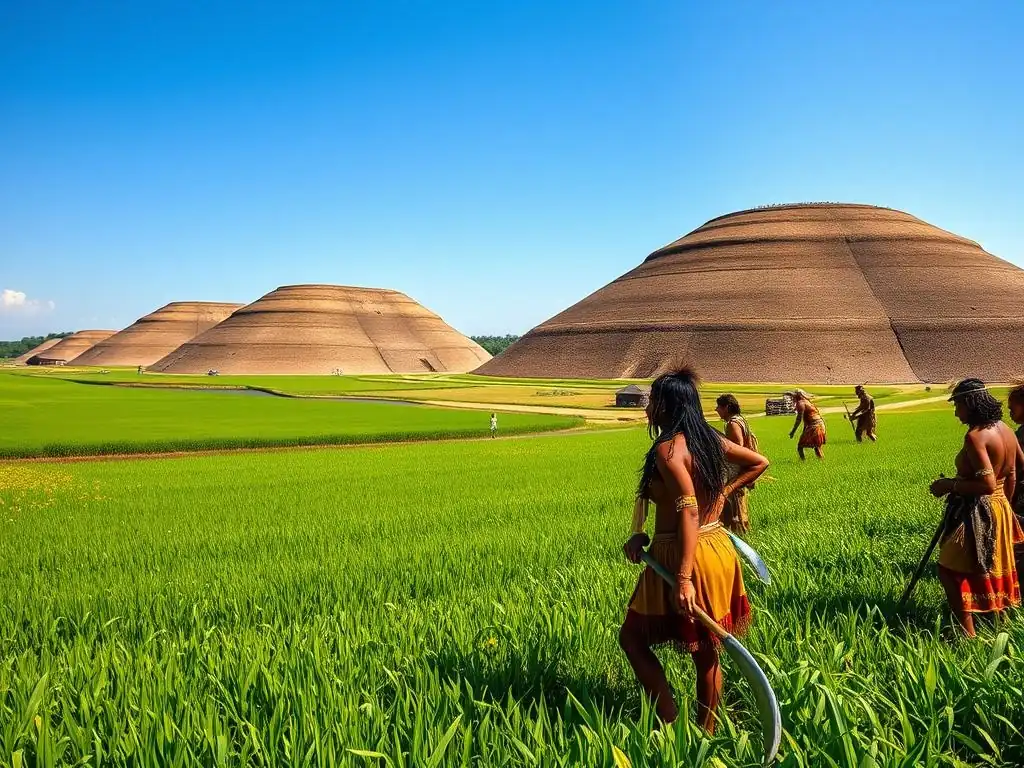
Welcome to Indigenous Civilizations of the Americas, where we delve into the rich tapestry of cultures that flourished long before European arrival. Prepare to embark on a journey through time as we uncover the Cahokia agricultural innovations history—a testament to human ingenuity and adaptation. Did you know that the Cahokia civilization, nestled along the mighty Mississippi, developed groundbreaking farming techniques that not only sustained their society but also influenced future generations?
Join us as we explore the secrets of their success and the profound impact they had on the Americas. The story of Cahokia awaits, inviting you to discover the innovations that shaped a vibrant civilization!
Introduction to Cahokia Agricultural Innovations
The agricultural innovations of Cahokia represent a remarkable chapter in the broader narrative of indigenous cultures in the Americas. Situated near the confluence of the Mississippi, Missouri, and Illinois rivers, Cahokia emerged as one of the most sophisticated urban centers among pre-Columbian societies, flourishing between approximately 600 and 1400 CE.
This article delves into the intricate agricultural practices that not only supported the population of Cahokia but also enabled the city to thrive as a bustling hub of trade, culture, and innovation. By exploring the Cahokia agricultural innovations history, we uncover the ingenuity and adaptability of a civilization that harnessed its environment to achieve sustainability and growth long before European contact.
Overview of Cahokia's Historical Context
Cahokia was a vibrant metropolis that housed tens of thousands of inhabitants at its peak. Its historical context is essential to understanding the magnitude of its agricultural innovations. The city was characterized by monumental earthen mounds, complex social structures, and extensive trade networks that spanned vast regions. The rise of Cahokia coincided with significant climatic changes that affected the environment, necessitating innovative agricultural techniques to support its population.
- Cultural Influences: Cahokia was influenced by earlier cultures, including the Adena and Hopewell, which laid the groundwork for its agricultural practices.
- Population Growth: As the population swelled, so too did the demands on agriculture, prompting advancements in farming techniques.
Importance of Agriculture in Cahokia Culture
Agriculture was the backbone of Cahokia's economy and social structure. The ability to produce surplus food not only sustained the population but also facilitated trade and the development of complex social hierarchies.
- Surplus Production: The cultivation of staple crops allowed for surplus production, which was essential for supporting larger populations and fostering trade relationships.
- Cultural Significance: Agricultural practices were often intertwined with spiritual and cultural beliefs, reflecting the deep connection the Cahokians had with their land.
The Foundations of Cahokia's Agricultural Practices
The agricultural practices of Cahokia were shaped by a combination of geographic, environmental, and social factors that contributed to their sophisticated techniques and crop selection.
Geographic and Environmental Factors Influencing Agriculture
Cahokia's location on the fertile floodplains of the Mississippi River provided a unique advantage for agricultural development.
- Soil Fertility: The alluvial soil deposited by seasonal floods enriched the land, making it ideal for farming.
- Water Availability: Proximity to rivers ensured easy access to water for irrigation, especially during drier periods.
Key Crops Cultivated by the Cahokia People
The Cahokians cultivated a variety of crops, with certain staples playing a pivotal role in their diet and economy.
- Maize (Corn): The primary crop, maize was central to Cahokian agriculture, providing essential calories and nutrients.
- Beans and Squash: These companion crops complemented maize and contributed to a balanced diet, often referred to as the "Three Sisters."
- Other Crops: Additional crops included sunflowers, tobacco, and various wild plants that supplemented their agricultural output.
Farming Techniques and Tools Used in Cahokia
The Cahokians employed advanced farming techniques and tools that demonstrated their ingenuity and adaptability in agricultural practices.
- Mound Agriculture: They utilized raised beds and mounds to improve drainage and extend the growing season.
- Irrigation Practices: Early irrigation techniques, such as channeling water from rivers, helped optimize crop yields.
- Agricultural Tools: The Cahokians crafted tools from wood, bone, and stone, including hoes and digging sticks, which enhanced their farming efficiency.
Through these innovative practices, the Cahokians not only sustained their civilization but also laid the groundwork for future agricultural societies in the Americas. The legacy of their agricultural innovations continues to resonate, illustrating the profound connection between culture, environment, and sustainability.
Major Agricultural Innovations of the Cahokia Civilization
The Cahokia civilization, which thrived in the fertile floodplains of the Mississippi River from around 600 CE until the 1400s, showcased remarkable agricultural innovations that allowed them to sustain a large population. These innovations were critical in transforming Cahokia into one of the largest pre-Columbian cities in North America. The civilization developed advanced techniques in farming, land management, and crop cultivation that not only supported their community but also laid the groundwork for trade and cultural exchange.
One of the most notable aspects of Cahokia's agricultural innovations was their ability to adapt their practices to the diverse environments of the Mississippi Valley. They cultivated a variety of crops, including maize, beans, and squash, often referred to as the "Three Sisters," which complemented each other nutritionally and contributed to soil fertility. The integration of these crops into their agricultural practices exemplifies the sophistication of Cahokian farming techniques.
Introduction of Mound Building for Agriculture
Mound building was a hallmark of Cahokian culture, serving both ceremonial and practical purposes. These mounds were not merely monuments but were strategically constructed to enhance agricultural productivity. Certain mounds were designed to elevate crops above the floodplain, protecting them from seasonal flooding and providing better drainage.
Additionally, the mounds often served as platforms for various community activities, including agricultural festivals and rituals that celebrated the harvest. The strategic positioning of these mounds also allowed for optimal sunlight exposure and wind protection, further enhancing crop yields. The integration of mound building into their agricultural practices illustrates the Cahokians’ deep understanding of their environment and their ability to manipulate it to their advantage.
Crop Rotation and Sustainable Farming Practices
Sustainability was a crucial element of the Cahokia agricultural system, and they employed crop rotation as a method to maintain soil fertility and prevent depletion. By rotating different crops in the same fields, they minimized the risk of pest infestations and soil degradation. This practice ensured that the soil remained rich in nutrients, allowing them to produce abundant harvests year after year.
In addition to crop rotation, the Cahokians utilized companion planting techniques, particularly with the Three Sisters—maize, beans, and squash. Each of these crops served a specific function: maize provided a structure for beans to climb, beans enriched the soil with nitrogen, and squash spread across the ground, suppressing weeds and retaining moisture. This interdependence among crops exemplified their sophisticated understanding of ecological relationships and sustainable agriculture.
Irrigation Methods and Water Management Techniques
Cahokia's location along the Mississippi River provided ample water resources, which the inhabitants ingeniously managed through various irrigation methods. They constructed canal systems and ditches to control water flow and distribute it evenly across their fields. These systems not only mitigated the effects of drought but also managed excess water during the rainy season, protecting crops from flooding.
The Cahokians also implemented techniques to enhance soil moisture retention, such as building raised beds and using organic matter to improve soil structure. These methods showcased their advanced understanding of hydrology and agricultural engineering, enabling them to cultivate crops efficiently in a dynamic environment.
The Impact of Cahokia Agricultural Innovations on Society
The agricultural innovations of Cahokia had a profound impact on their society, influencing economic growth, social structures, and trade dynamics. By harnessing the land's potential through innovative farming techniques, the Cahokians established a robust agricultural economy that supported a thriving urban center.
Economic Growth Driven by Agricultural Surplus
The ability to produce surplus crops was a central driver of Cahokia's economic prosperity. As agricultural innovations increased productivity, the surplus allowed for the development of a complex economy that included trade and resource distribution. Surplus crops were not only essential for feeding the large population but also served as a form of currency, facilitating trade with neighboring communities.
This economic growth fostered specialization in various crafts and trades, leading to the emergence of a diverse marketplace where goods were exchanged. The agricultural surplus provided the foundation for a vibrant economy that supported not only the Cahokians but also their trade partners.
Social Structure and Labor Division in Cahokia Farming
The agricultural innovations in Cahokia contributed to a complex social structure characterized by a division of labor. As farming became more productive, it allowed for the specialization of tasks, with certain individuals focusing on farming while others engaged in trade, craft production, or leadership roles.
This division of labor led to the emergence of social hierarchies, where those who controlled agricultural resources often held significant power. The stratification of society was reflected in the construction of elaborate mounds and public works, which signified the wealth and influence of elite classes within Cahokia.
Trade Networks Established Through Agricultural Production
Cahokia's agricultural surplus facilitated the establishment of extensive trade networks that connected them with distant communities across the continent. The ability to produce excess crops and goods enabled the Cahokians to engage in trade with groups as far away as the Great Lakes and the Gulf Coast.
These trade networks were not only vital for economic exchange but also for cultural interaction, allowing for the sharing of ideas, technologies, and goods. The agricultural innovations of Cahokia thus played a crucial role in shaping their society and extending their influence across the Americas, leaving a lasting legacy that would impact subsequent generations.
Legacy of Cahokia's Agricultural Innovations
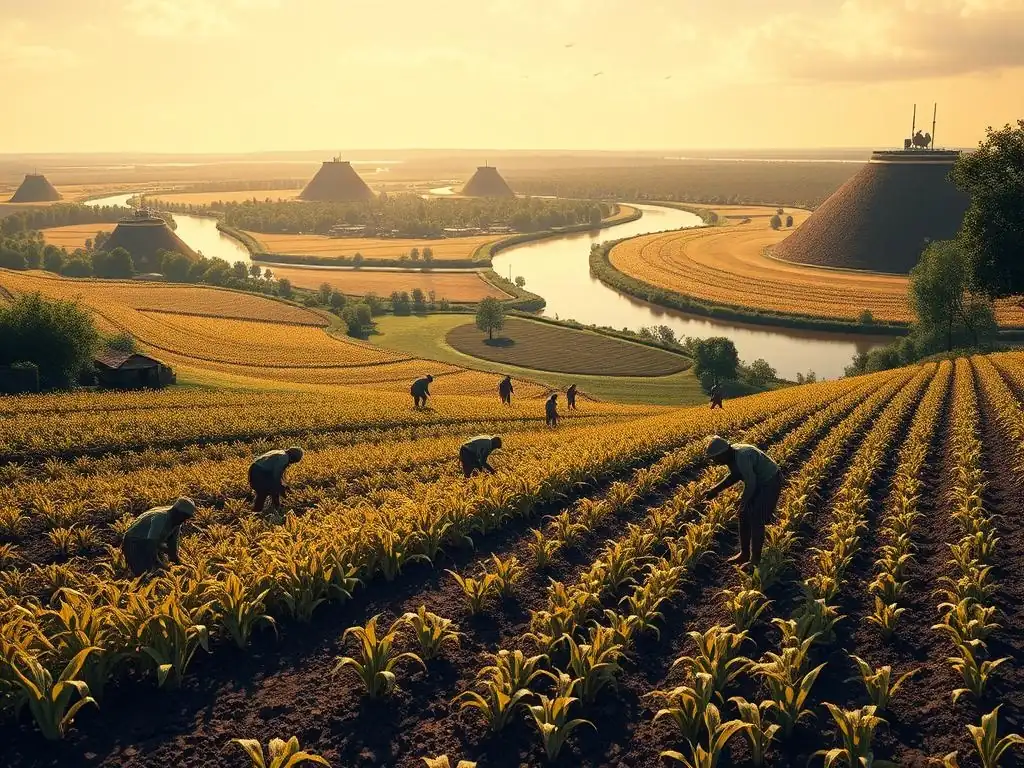
The agricultural innovations developed by the Cahokia civilization have left an indelible mark on the landscape of indigenous agricultural practices in North America. The Cahokians were adept at manipulating their environment to create a sustainable agricultural system that supported a large urban population. Their legacy is not only evident in the physical remnants of their farming techniques but also in the cultural practices that persisted long after their decline. The extensive use of raised fields, complex irrigation systems, and crop diversification are just a few examples of how Cahokia's agricultural innovations shaped the agricultural landscape.
The Cahokians primarily cultivated maize, beans, and squash—often referred to as the "Three Sisters"—which formed the backbone of their diet. This method of intercropping not only maximized yields but also improved soil fertility and pest resistance. The knowledge and practices surrounding these crops would influence neighboring tribes and cultures, contributing to the agricultural diversity seen across the Americas.
Influence on Future Indigenous Agricultural Practices
The innovative agricultural methods of Cahokia had a significant and lasting influence on indigenous agricultural practices that emerged in subsequent centuries. Neighboring tribes adopted and adapted techniques such as mound building, which facilitated drainage and temperature moderation for crops. Additionally, the knowledge of crop rotation and companion planting propagated by the Cahokians informed agricultural practices throughout the Midwest and beyond.
Through trade networks, the techniques and technologies developed in Cahokia spread to other regions, enriching the agricultural practices of various tribes. The emphasis on sustainable farming practices promoted by the Cahokians remained integral to the agricultural ethos of many indigenous cultures, emphasizing harmony with nature and resource conservation.
Archaeological excavations at Cahokia have unearthed numerous artifacts and features that provide insights into the agricultural practices of this complex society. Evidence of large-scale corn cultivation has been found in the form of pollen samples and phytoliths, which indicate a sophisticated understanding of crop farming and management.
Furthermore, the discovery of extensive canal systems and storage pits highlights the community's advanced engineering capabilities in agricultural irrigation and food preservation. These archaeological findings not only illuminate the technological prowess of the Cahokians but also underscore the social organization required to support such extensive agricultural endeavors. The artifacts recovered, including tools and pottery, further enrich our understanding of the daily lives of Cahokian farmers.
The Role of Cahokia Agriculture in the Study of Indigenous Cultures
Cahokia's agricultural practices are pivotal in the broader study of indigenous cultures in the Americas. They serve as a case study for understanding the interplay between agriculture, urbanization, and social complexity. The advancements in agriculture allowed Cahokia to become one of the largest pre-Columbian cities in North America, with a population estimated to be in the tens of thousands at its peak.
The examination of Cahokia's agricultural systems also provides insight into how environmental adaptations can lead to cultural innovation and societal development. As scholars continue to explore the relationship between agriculture and indigenous identity, Cahokia stands out as a model for understanding the intricate connections between environment, economy, and culture.
Conclusion: The Lasting Impact of Cahokia Agricultural Innovations
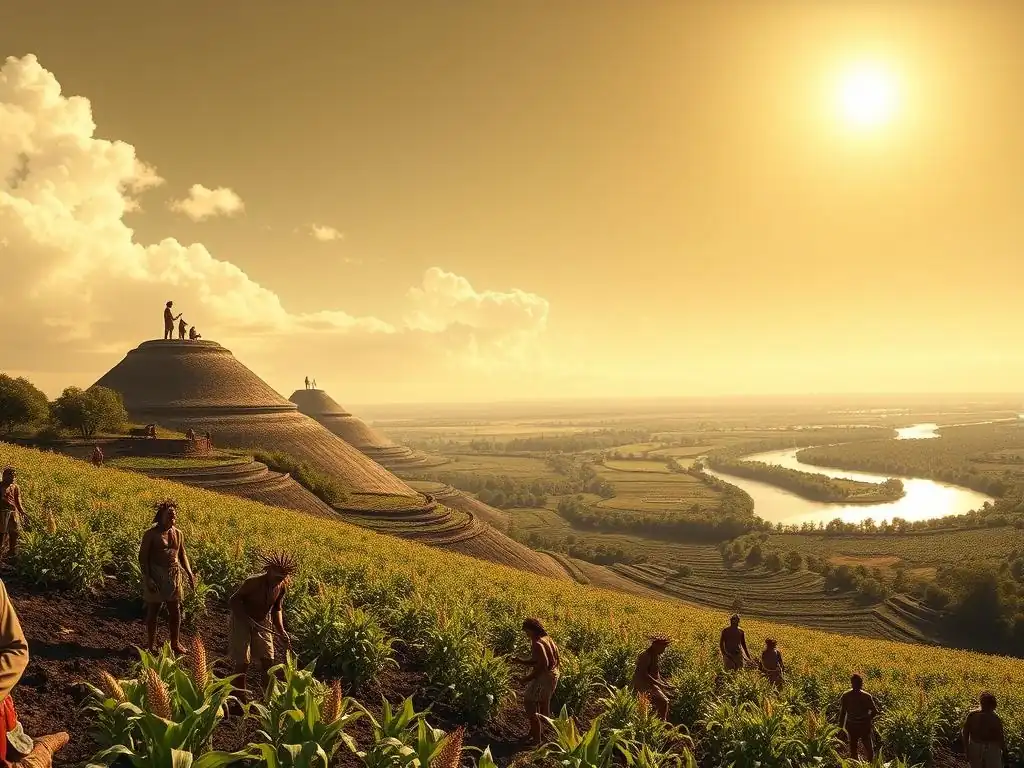
The agricultural innovations of Cahokia have a profound and lasting impact on both indigenous and contemporary agricultural practices. By developing techniques that harnessed the natural environment, the Cahokians established a framework for sustainable agriculture that resonates with modern ecological principles.
Their ability to cultivate diverse crops, manage resources, and build complex societal structures based on agricultural productivity is a testament to their ingenuity. The legacy of these practices continues to be felt, as many indigenous communities today still utilize traditional agricultural knowledge that traces its origins back to Cahokia.
Reflection on the Significance of Cahokia's Agricultural History
Cahokia's agricultural history is significant not only for its technological advancements but also for its contributions to understanding the broader narrative of indigenous resilience and adaptation. The innovations developed by the Cahokians represent a sophisticated response to environmental challenges and social needs, showcasing the ingenuity of a civilization that thrived for centuries.
Reflecting on this history encourages a deeper appreciation for the complexities of indigenous agricultural practices and their relevance in today’s discussions about food security and sustainable agriculture. Cahokia serves as a reminder of the rich agricultural heritage that shaped the Americas long before European contact.
Future Research Directions in Cahokia Studies
Future research directions in Cahokia studies should focus on a multidisciplinary approach that integrates archaeology, anthropology, and environmental science. By utilizing advanced technologies such as remote sensing and GIS, researchers can uncover more about the agricultural landscape of Cahokia and its surrounding regions.
Moreover, a renewed focus on indigenous knowledge systems and contemporary agricultural practices can provide valuable insights into sustainable farming methods and cultural preservation. Collaborative projects with indigenous communities may also enhance understanding and appreciation of Cahokia's agricultural legacy, ensuring that this vital part of history continues to be honored and studied.
References and Further Reading on Cahokia Agricultural Innovations History
To gain a deeper understanding of the agricultural innovations and practices of the Cahokia civilization, several key sources and scholarly works provide valuable insights. Here are some recommended readings and references:
-
Books:
-
Cahokia: City of the Sun by Charles M. Hudson
This book offers an extensive overview of Cahokia's culture, including its agricultural practices, social structure, and significance within the broader context of Native American history.
-
The Cahokia Atlas: A Historical Atlas of Cahokia by Thomas E. Emerson et al.
A comprehensive resource that includes maps, illustrations, and detailed descriptions of Cahokia's agricultural landscapes and innovations.
-
-
Journal Articles:
-
"Agricultural Practices and Innovations in Cahokia" by David A. Baerreis, published in American Antiquity
This article analyzes the farming techniques employed by the Cahokia people, highlighting their crop varieties and methods of cultivation.
-
"Cahokia's Rise and Fall: A Study of Socioeconomic Changes" by Susan Alt, published in Journal of Anthropological Archaeology
This study explores the relationship between agricultural innovations and the sociopolitical dynamics of Cahokia, providing an in-depth look at how agricultural practices influenced the civilization's development.
-
-
Online Resources:
-
Cahokia Mounds State Historic Site [Official Website]
This site provides historical context, visitor information, and educational resources related to the Cahokia Mounds, including their agricultural practices.
-
The Cahokia Project [University of Illinois]
An initiative that aims to study and promote awareness of Cahokia's history, featuring research papers and findings related to its agricultural innovations.
-
-
Documentaries and Multimedia:
-
Cahokia: The Forgotten City (PBS Documentary)
This documentary explores the rise and fall of Cahokia, shedding light on its agricultural practices and their impact on the civilization's growth.
-
-
Thesis and Dissertations:
-
"The Agricultural Evolution of Cahokia and Its Impact on Urban Development" by Jennifer L. Smith, University of Chicago
A detailed thesis that examines the agricultural strategies of Cahokia and their influence on urban planning and society.
-
Exploring these resources will enrich your knowledge of the Cahokia civilization's agricultural innovations, their historical significance, and their lasting impact on indigenous cultures in the Americas.
- Introduction to Cahokia Agricultural Innovations
- The Foundations of Cahokia's Agricultural Practices
- Major Agricultural Innovations of the Cahokia Civilization
- The Impact of Cahokia Agricultural Innovations on Society
- Legacy of Cahokia's Agricultural Innovations
- Influence on Future Indigenous Agricultural Practices
- Archaeological Discoveries Related to Cahokia Agriculture
- The Role of Cahokia Agriculture in the Study of Indigenous Cultures
- Conclusion: The Lasting Impact of Cahokia Agricultural Innovations
- Reflection on the Significance of Cahokia's Agricultural History
- Future Research Directions in Cahokia Studies
- References and Further Reading on Cahokia Agricultural Innovations History
- What were the main agricultural innovations of Cahokia?
- How did Cahokia's location influence its agricultural practices?
- What crops were primarily cultivated by the Cahokians?
- How did Cahokia's agricultural practices impact its society?
- What is the lasting impact of Cahokia's agricultural innovations today?
Frequently Asked Questions
What were the main agricultural innovations of Cahokia?
Cahokia was known for its advanced farming techniques, including the use of crop rotation and intensive gardening. These practices allowed for sustainable food production that supported a large population.
How did Cahokia's location influence its agricultural practices?
Situated near the Mississippi River, Cahokia benefited from fertile soil and ample water supply, which were crucial for agriculture. This strategic location facilitated the development of a thriving agricultural economy.
What crops were primarily cultivated by the Cahokians?
The Cahokians primarily grew maize (corn), alongside beans and squash, known as the Three Sisters. These crops were essential to their diet and supported their socioeconomic structure.
How did Cahokia's agricultural practices impact its society?
The agricultural innovations in Cahokia led to population growth and the establishment of a complex societal hierarchy. This growth fostered the development of trade networks and cultural exchanges with neighboring communities.
What is the lasting impact of Cahokia's agricultural innovations today?
Cahokia's practices laid the groundwork for modern agricultural methods in the region. Their innovations are studied for insights into sustainable farming and the importance of biodiversity in agriculture.
Final Reflection: The Enduring Legacy of Cahokia's Agricultural Innovations
Cahokia's agricultural innovations not only shaped the landscape of their time but continue to resonate in our contemporary discussions about sustainable farming and community resilience. The ingenuity of the Cahokian people in harnessing the Mississippi River's resources and developing advanced agricultural techniques serves as a powerful reminder of how human creativity can thrive in harmony with nature. Their legacy challenges us to rethink our relationship with the land and inspires us to adopt practices that honor both our heritage and our future.
The impact of Cahokia's agricultural practices extends far beyond their historical context, influencing modern agricultural methods and community dynamics. As we face pressing global challenges such as climate change and food security, the lessons from Cahokia remind us of the importance of innovation rooted in ecological understanding. The greatest danger in times of turbulence is not the turbulence; it is to act with yesterday's logic.
This quote resonates with the need to embrace new ideas and adapt our approaches, just as the Cahokians did centuries ago.
As you reflect on the agricultural innovations of Cahokia, consider how these lessons can be applied in your own life and community. What steps can you take to promote sustainable practices and foster a deeper connection with the land around you? Embrace the spirit of innovation that defined Cahokia, and let it inspire you to cultivate not only crops but also a culture of resilience and stewardship for future generations.
Unveil the Secrets of Cahokia's Agricultural Genius!
Thank you for exploring the incredible agricultural innovations that allowed Cahokia to flourish along the Mississippi River! You've taken a step into the rich history of Indigenous civilizations, gaining insights into their sustainable practices and community-building strategies. Now, it's time to put that knowledge into action!
Here’s how you can dive deeper into the world of Cahokia and connect with this extraordinary heritage:
- Explore local agricultural practices: Visit a community farm or garden in your area to see innovative sustainable methods in action. Learn, share, and apply these techniques in your own gardening!
- Share the knowledge: Spread the word about Cahokia’s innovations by discussing these fascinating practices with friends or sharing this article on social media. Let others in on this captivating story!
- Engage with local history: Attend a workshop or lecture on Indigenous agriculture or sustainable practices. Connect with experts and fellow enthusiasts who share your passion!
Which agricultural innovation from Cahokia resonates with you the most, and how might it inspire your own practices today?