


The Legacy of Cahokia's Art: How These Ancient Works Continue to Inspire Today
🌟 The Cahokia ancient art legacy endures, showcasing the ingenuity and creativity of a sophisticated civilization. Today, these remarkable works continue to…
Read article
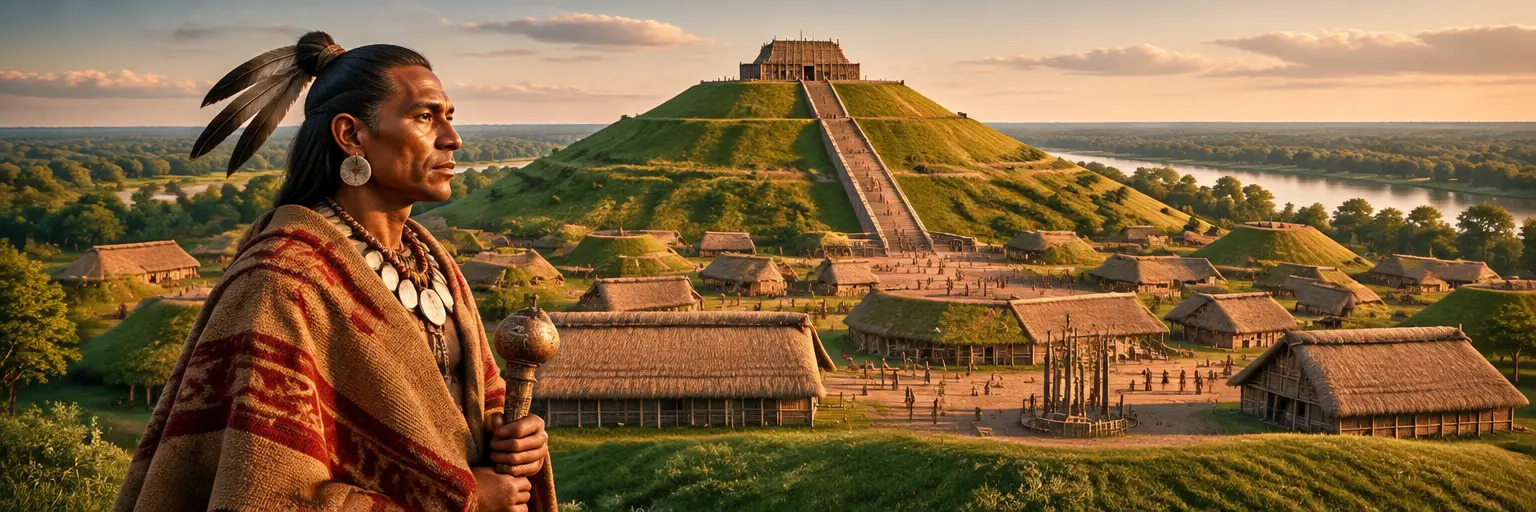
Cahokia Culture explores one of the most advanced and influential indigenous civilizations of North America, thriving near present-day St. Louis between 1050 and 1350 CE. This remarkable society built massive earthen mounds, some towering over 100 feet, and supported a population of up to 20,000—larger than London at the time. Discover their sophisticated political structures, astronomical alignments at Woodhenge, and vibrant artistic traditions in shell, copper, and pottery. Delve into their agricultural innovations in maize cultivation, long-distance trade networks spanning the continent, and enduring religious cosmology centered on the sun and underworld. Understand the architectural marvels like Monks Mound, and examine how European contact and conquest ultimately transformed and dispersed their descendants. This category reveals the ingenuity, resilience, and complex social organization of the Mississippian peoples, offering a deeper appreciation of their lasting legacy in the heart of America.
🌟 The Cahokia ancient art legacy endures, showcasing the ingenuity and creativity of a sophisticated civilization. Today, these remarkable works continue to…
Read article
🌍 Discover the fascinating Cahokia building techniques history, showcasing the innovative materials and methods used by this advanced indigenous culture. Uncover how…
Read article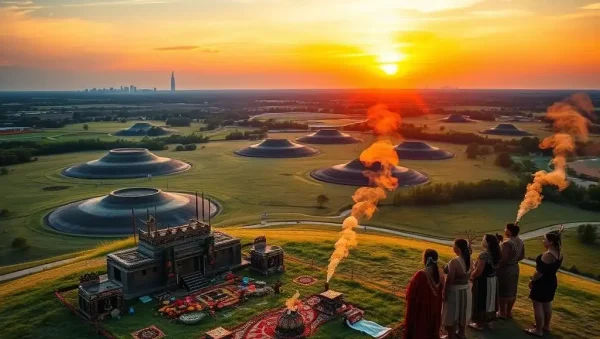
🌍 Delve into the rich tapestry of Cahokia indigenous culture and beliefs, exploring the complex pantheon of deities and ancestral figures that…
Read article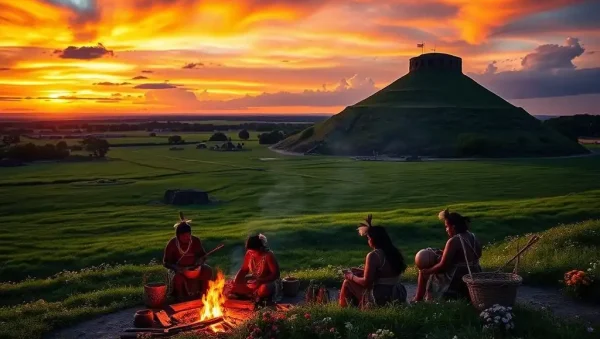
Cahokia’s origins reveal a tapestry of indigenous cultural influences that shaped one of North America’s most remarkable civilizations. This exploration uncovers the…
Read article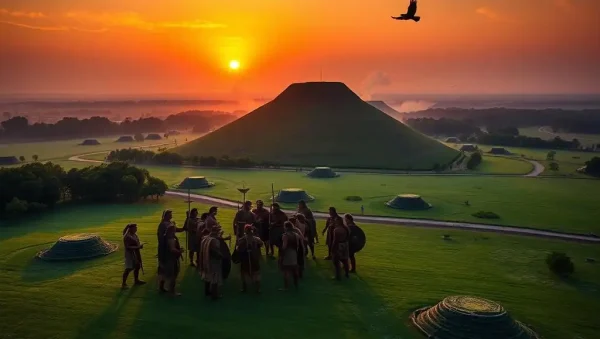
The intricate dynamics of Cahokian governance and warfare strategies reveal how political alliances shaped the power structures of this influential civilization, showcasing…
Read article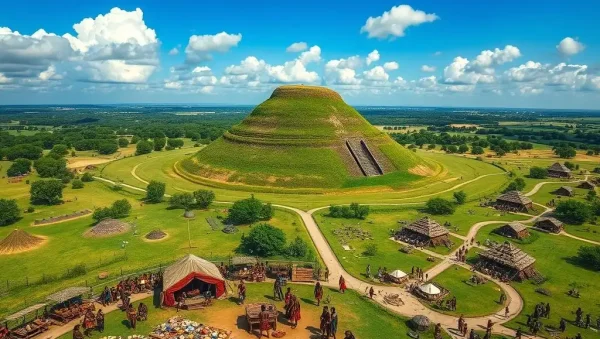
🌍 Cahokia trade networks history reveals the intricate web of commerce that fueled the prosperity of this ancient civilization. By connecting diverse…
Read article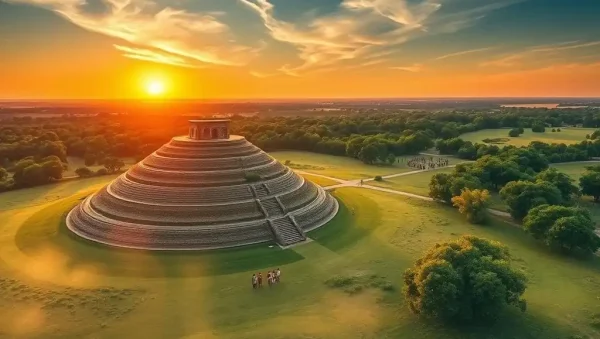
🌅 Cahokia indigenous astronomical knowledge reveals how this advanced civilization aligned its monumental architecture with celestial events, showcasing their deep understanding of…
Read article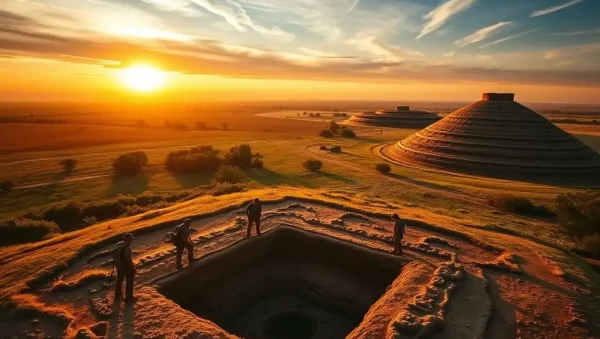
Cahokia afterlife beliefs and myths reveal a rich tapestry of indigenous views on death and rebirth, highlighting the profound spiritual connections that…
Read article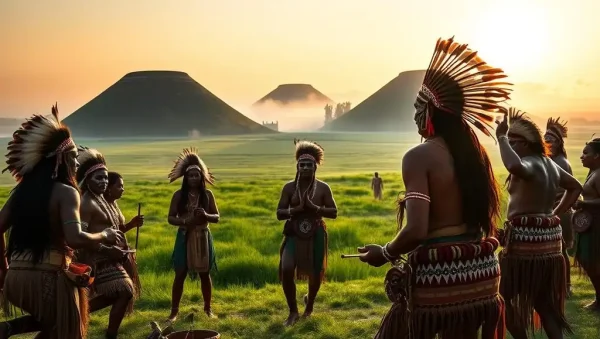
Cahokia indigenous rituals and ceremonies reveal the profound spirituality of this ancient society. Through vibrant practices and communal gatherings, the Cahokians connected…
Read article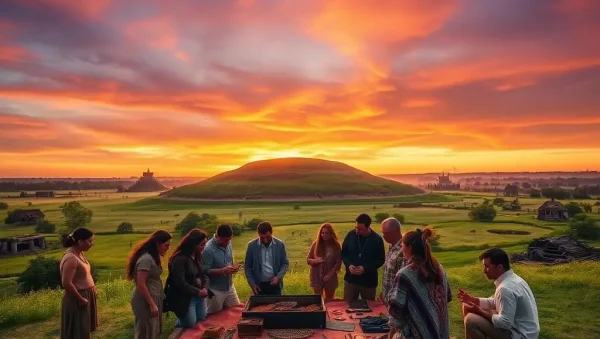
🌍 The Cahokia indigenous political structures stand out among pre-Columbian societies, showcasing complex governance, trade networks, and social stratification. This article explores…
Read article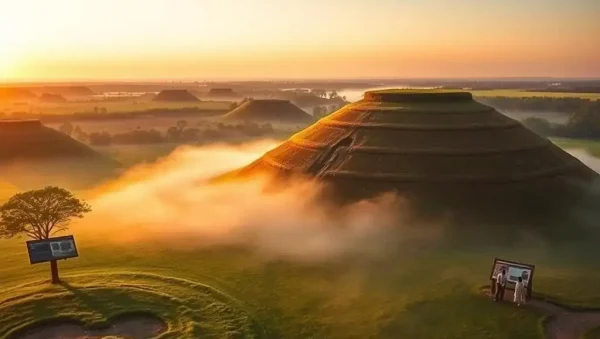
🌍 The Cahokia Mound Builders history reveals a sophisticated society that created monumental earthen structures, showcasing their architectural prowess and cultural significance.…
Read article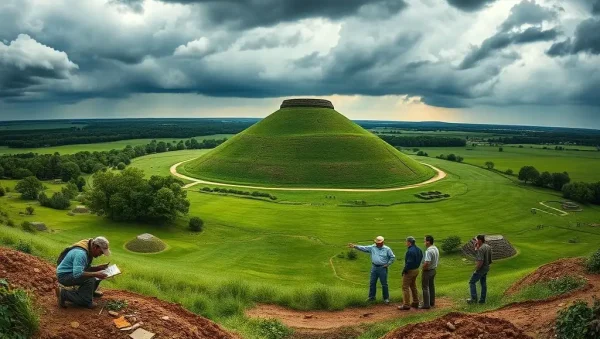
🌍 The Cahokia civilization decline theories explore the complex factors leading to the fall of this once-thriving society. By examining environmental changes,…
Read articleDelve into the fascinating world of the Cahokia Culture, the most advanced pre-Columbian civilization north of Mexico. This category within Indigenous Civilizations of the Americas uncovers the rise, brilliance, and eventual decline of a society that built monumental earthen pyramids, fostered complex trade networks, and influenced a vast region. From its mysterious origins to its devastating contact with Europeans, this resource provides an SEO-rich, detailed examination of Cahokia’s political, artistic, agricultural, and spiritual life, offering a comprehensive view of a truly remarkable indigenous legacy.
This subcategory traces the dramatic and often tragic interactions between Cahokian descendants and European explorers, beginning in the 16th century. Readers will learn about the devastating impact of introduced diseases, such as smallpox, which decimated populations, and the ensuing social collapse. It also covers the French and Spanish expeditions into the Mississippi Valley, their accounts of surviving mound-building peoples, and how colonial pressures, trade disruptions, and forced displacement ultimately erased the distinct Cahokian identity. Expect a focused narrative on how external contact accelerated an already declining civilization.
Here, we analyze primary sources from Jesuit missionaries and conquistadors, detailing their observations and the cultural misunderstandings that shaped early relations. You’ll explore how the once-thriving urban center of Cahokia, abandoned by 1400 CE, left a landscape of sacred mounds that later tribes and Europeans interpreted differently. The subcategory underscores the resilience of indigenous communities, who adapted and persisted despite conquest, and highlights the role of archaeological evidence in reconstructing a history often omitted from colonial records. This is essential reading for understanding the long-term consequences of European arrival on Native American societies.
The Art and Culture subcategory reveals the sophisticated aesthetic and symbolic world of the Cahokians through their pottery, shell carvings, copper ornaments, and stone figurines. Expect to see how artisans crafted remarkable Mississippian culture artifacts, including the famous "Birdman" tablets and carved effigy pipes. These items were not merely decorative; they communicated status, religious beliefs, and clan affiliations. Readers will explore the use of mica, marine shell, and copper, materials traded from distant regions, and understand the role of art in reinforcing the authority of the elite and the cohesion of the community.
This section also delves into the cultural practices of feasting, gaming, and public ceremonies, which were central to Cahokian life. You’ll discover the significance of the chunkey game, a stone-rolling sport with deep ritual meaning, and the use of elaborate costumes and body paint. We examine the iconography shared across the Mississippian world, suggesting a common religious and political ideology. By analyzing these artistic expressions, the subcategory provides a vibrant picture of daily life, social hierarchy, and the enduring creativity of a people who expressed their worldview in every crafted object.
Here, readers will uncover the complex chieftainship system that governed Cahokia, likely a centralized theocracy led by a paramount chief who wielded both political and spiritual power. Evidence suggests a hierarchical society with a ruling elite, subordinate chiefs, and a commoner class, organized around kinship lines and tribute obligations. This subcategory explains how labor was mobilized to construct massive mounds and palisades, indicating strong centralized authority. You’ll also learn about the settlement hierarchy, with Cahokia as the primate center controlling a network of smaller towns and farmsteads across the American Bottom.
We explore archaeological interpretations of leadership, such as the burial of high-status individuals in Mound 72, adorned with exotic goods and accompanied by human sacrifices. This evidence points to a ruler with considerable spiritual and coercive power. The governance model also involved trade alliances and diplomatic relationships with distant groups, creating a sphere of influence. The subcategory discusses theories on how power was legitimized through religious ideology, ancestor veneration, and control over surplus resources, providing a balanced view of both the achievements and the inequalities inherent in Cahokian political life.
Dive into the prehistory of Cahokia, tracing its origins from small Late Woodland villages to a sprawling metropolis around 1050 CE, in a phenomenon known as the "Big Bang" of Mississippian culture. This subcategory outlines the timeline, from the early Emergent Mississippian period through the Sterling phase of peak population and influence, to the gradual decline and final abandonment. Readers will discover how climate change, agricultural intensification, and social reorganization catalyzed this urban explosion. We also examine the evidence for migration, suggesting that diverse groups coalesced at Cahokia, drawn by its economic and spiritual magnetism.
We provide a critical analysis of archaeological theories on Cahokia’s decline around 1350-1400 CE, including resource depletion, political factionalism, and environmental degradation. This section contextualizes Cahokia within the broader Mississippian culture, showing its influence spreading from the Great Lakes to the Gulf Coast. Learn about key excavation sites like Mound 72 and Monks Mound, and how modern techniques, such as radiocarbon dating and soil analysis, have refined our understanding. This is the foundational narrative for anyone seeking a chronological and causal account of how a North American city rose, thrived, and transformed into a sacred memory.
This subcategory showcases the monumental urban planning of Cahokia, featuring the largest earthen mound in North America, Monks Mound, which rises in four terraces to over 100 feet. Expect a detailed look at the city’s layout, with a central plaza, wooden palisades, and over 120 smaller mounds used for elite residences, temples, and burial platforms. We analyze the engineering skills required to move over 50 million cubic feet of earth using only woven baskets and human labor. Readers will appreciate the sophisticated astronomy, as the Woodhenge—a circle of red cedar posts—was aligned to solstices and equinoxes, marking agricultural and ceremonial calendars.
Urbanism extended beyond the core, with suburban areas of thatched homes, gardens, and craft workshops covering nearly six square miles. We explore the construction techniques of wattle-and-daub buildings, the design of granaries, and the defensive network of palisades rebuilt several times. This section also discusses how the built environment reflected social status and spiritual cosmology, with the cardinal alignment of mounds mirroring the cosmos. By examining both iconic structures and domestic architecture, you will understand how Cahokia functioned as a true pre-industrial city, a testament to human planning and collective effort.
The agricultural foundation of Cahokia is explored here, primarily centered on the Three Sisters—maize, beans, and squash—which supported a dense population. Readers will learn about intensive farming techniques, including the use of raised fields, floodplain agriculture along the Mississippi River, and supplemental foraging for nuts, fish, and game. The surplus production of maize allowed for specialization in crafts and the maintenance of a large, non-farming elite. This subcategory details the storage systems, such as elevated granaries, and how agricultural cycles were integrated with religious festivals like the Green Corn Ceremony.
Economically, Cahokia was a vibrant trading hub, connected to a vast exchange network spanning the continent. Expect insights into the trade of copper from the Great Lakes, shell from the Gulf of Mexico, obsidian from the Rockies, and mica from the Appalachians. We analyze the role of the chief as the redistributor of wealth and the use of certain goods as markers of prestige. This subcategory also examines local craft production of pottery, textiles, and stone tools, and how the economy supported skilled artisans, creating a complex web of production, exchange, and consumption that sustained one of ancient America’s most prosperous centers.
Discover the empirical knowledge of the Cahokians in this subcategory, which highlights their astronomical, mathematical, and engineering innovations. The most prominent achievement is the Woodhenge calendar, a circular arrangement of posts used to track solar alignments accurately. This allowed priests to predict seasons, schedule planting and harvests, and orchestrate major ceremonies. We also detail their sophisticated knowledge of building materials, including clay mixing for mound stability and the use of timber for structural support. Readers will explore how their geometry is evident in the precise right angles and cardinal alignments of mound placements.
Beyond astronomy, we consider Cahokia’s hydro-engineering, such as drainage systems and the management of floodplains for agriculture. Their botanical knowledge included selective breeding of corn varieties adapted to northern climates, a significant scientific feat. The subcategory also touches on medicine, suggesting use of medicinal plants like blackberry and mint, as evidenced by residue analysis. These achievements demonstrate that Cahokia was not merely a primitive settlement but a center of active intellectual pursuit, applying observational science to solve practical problems and enhance religious life, placing them among the most scientifically advanced cultures of their era.
This subcategory unveils the spiritual cosmology of Cahokia, rooted in a complex belief system that interpreted the world in three tiers: upper world (sky), middle world (earth), and lower world (underworld). Readers will explore the Southern Cult or Southeastern Ceremonial Complex, characterized by shared motifs like the falcon, serpent, and hand-eye symbol. We discuss the mortuary practices revealed in Mound 72, including mass burials, retainers sacrificed to accompany elites, and the use of exotic materials, indicating beliefs in an afterlife and a powerful ancestor cult. The role of the priests and shamans in mediating between worlds is also examined.
The mythology of the Mississippian peoples, passed down through oral traditions, is reconstructed from historical accounts and iconography. Expect narratives of a creator diety and culture heroes, such as the "Morning Star" and "Red Horn," who often traveled between worlds. This subcategory explains the cosmological significance of Monks Mound as an axis mundi, connecting earthly rulers to celestial powers. We also analyze the practice of earth renewal ceremonies and the symbolic importance of fire and water. By understanding Cahokian religion, you will grasp the ideological glue that held a diverse population together and motivated their awe-inspiring collective works.
At its height, around 1100-1200 CE, Cahokia was home to an estimated 10,000 to 20,000 residents within the central city, with up to 50,000 people in the surrounding region. This made it larger than London or Paris at that time, a testament to its advanced agricultural and social systems.
The decline is attributed to a combination of environmental degradation, flooding, soil exhaustion, and social unrest. Mound construction and deforestation changed local hydrology, while potential political factionalism and a changing climate may have undermined the elite's authority, leading to gradual abandonment by around 1400 CE.
Yes, Monks Mound is the largest earthen structure at Cahokia, named after Trappist monks who later farmed nearby. The original builders were indigenous Cahokians who constructed it using layers of clay, silt, and sand, demonstrating remarkable engineering without wheels or beasts of burden.
Woodhenge was a circle of large red cedar posts, rebuilt several times, used as a solar observatory. By tracking sunrise positions, priests could determine equinoxes and solstices, predicting seasonal changes crucial for planting and holding religious festivals, pinpointing a precise astronomical calendar.
While direct contact is unconfirmed, archaeological evidence shows shared cultural traits like pyramid mounds and maize agriculture. However, most similarities likely developed independently or through down-the-line trade networks. Artifacts from the Gulf of Mexico, such as seashells, reached Cahokia, indicating long-distance exchange, but no direct Mesoamerican imports have been found.