
The Impact of European Technology on Inca Warfare

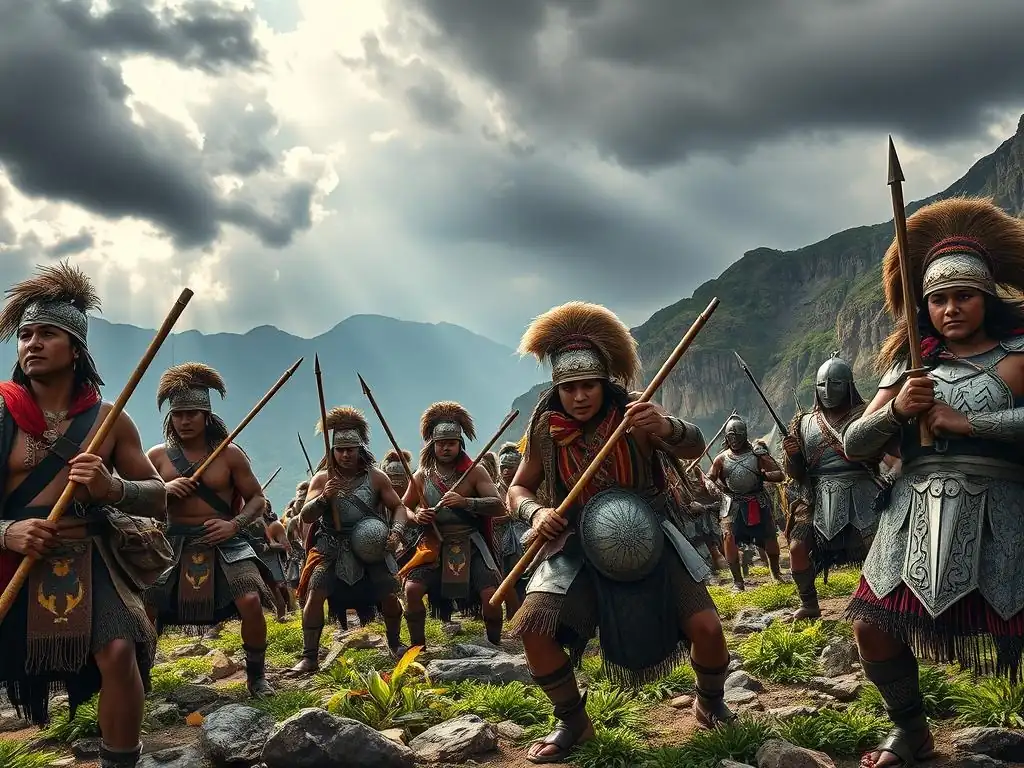
Welcome to Indigenous Civilizations of the Americas, where the rich tapestry of pre-colonial cultures unfolds before your eyes. Dive into the fascinating world of the Inca Civilization, a society renowned for its ingenuity and resilience. In our featured article, "The Impact of European Technology on Inca Warfare," we unravel how the intersection of cultures shaped the battlefield strategies of the Incas and altered their legacy.
What innovations did the Incas adopt, and how did these changes influence their society? Join us as we explore these compelling narratives and discover the enduring significance of indigenous achievements. Your journey into the heart of the Americas begins here!
The clash of cultures during the era of European colonization brought about profound changes in the Americas, particularly in the realms of warfare. One of the most significant encounters occurred between the European conquerors and the Inca Empire, a civilization renowned for its sophisticated societal organization and formidable military prowess.
This article delves into the impact of European technology on Inca warfare, exploring how advancements in weaponry, tactics, and military organization altered the traditional methods of conflict employed by the Incas. By examining the interplay between these two cultures, we gain insight into the broader consequences of European contact and conquest on indigenous civilizations, highlighting the complexities of power dynamics, resistance, and adaptation during this pivotal moment in history.
Introduction to Inca Warfare
Overview of Inca Warfare Practices
The Inca Empire, which flourished from the early 15th century until the Spanish conquest in the 16th century, had a rich tradition of warfare that was integral to its expansion and maintenance of power. Inca warfare was characterized by several key elements:
- Military Organization: The Inca military was organized into units known as "ayllu," which allowed for efficient mobilization and coordination during conflicts.
- Tactics: The Incas often employed strategies such as surprise attacks and the use of terrain to their advantage. They were skilled in both offensive and defensive maneuvers.
- Weapons and Armor: Traditional Inca weapons included clubs, slings, and spears, while their armor consisted of padded cotton and metal elements, showcasing their resourcefulness in utilizing available materials.
Importance of Technology in Warfare
Technology played a crucial role in shaping the effectiveness of Inca military operations. The Incas demonstrated innovation in their warfare practices, using engineering to construct fortifications and roads that facilitated troop movements. However, their technology was largely limited to the materials and knowledge available within their environment. The arrival of Europeans introduced new technological advancements that would significantly alter the landscape of Inca warfare.
European Contact and Its Consequences
Initial Encounters Between Europeans and the Inca
The first encounters between the Spanish conquistadors and the Inca Empire were marked by a combination of curiosity and hostility. In 1532, the Spanish, led by Francisco Pizarro, captured the Inca leader Atahualpa, setting off a chain of events that would lead to the collapse of the Inca Empire. The initial interactions revealed stark contrasts in military capabilities, with the Spanish utilizing horses, firearms, and steel weapons that were unfamiliar to the Incas.
Overview of European Military Technology
European military technology during the 16th century was advanced compared to that of the Incas. Key components included:
- Firearms: The introduction of guns and cannons gave Europeans a significant advantage, allowing them to engage enemies from a distance.
- Steel Weapons: European swords and pikes, crafted from steel, were more durable and lethal than the traditional Inca weaponry.
- Cavalry: The use of horses in battle changed the dynamics of warfare, as mounted soldiers could maneuver quickly and strike with devastating impact.
Understanding the profound effects of European technology on Inca warfare not only sheds light on the specific military tactics employed during the conquest but also illustrates the broader implications of cultural exchange and conflict during this crucial period in history.
Key European Technologies Influencing Inca Warfare
The arrival of Europeans in the Americas introduced a range of technologies that significantly impacted Inca warfare. These advancements transformed the way battles were fought, altering both offensive and defensive strategies. The most notable European technologies included firearms, cannons, advanced armor, horses, and cavalry tactics. Each of these innovations presented new challenges for the Inca, who had previously relied on traditional methods of warfare that emphasized large infantry formations and the use of indigenous weaponry.
Firearms and Cannons: A Game Changer
One of the most significant European technologies was the introduction of firearms, including muskets and pistols, as well as cannons. These weapons had a profound impact on the dynamics of warfare. The noise, smoke, and destructive capabilities of cannons could demoralize troops and breach fortifications that were previously considered impenetrable. The Spanish conquistadors, equipped with such firearms, could strike fear into the hearts of their Inca adversaries. The speed and range of these weapons allowed European forces to engage effectively from a distance, disrupting traditional Inca battle formations that relied heavily on close combat.
The effectiveness of firearms was further amplified by the training and discipline of European soldiers, who were often better prepared than the Inca warriors, who were accustomed to different forms of combat. This mismatch in military technology and training highlighted the vulnerabilities of the Inca forces during encounters with European armies.
Armor and Defensive Technologies
European advancements in armor also played a crucial role in the evolution of warfare. The conquistadors wore metal armor that provided significant protection against the traditional weapons used by the Inca, such as slings, clubs, and arrows. In contrast, the Inca warriors primarily used cotton armor, which was less effective against European weaponry. The durability of European metal armor allowed Spanish soldiers to sustain injuries that would have incapacitated their Inca counterparts, giving them a distinct advantage in battles.
Additionally, the use of shields and helmets made from iron or steel further enhanced the effectiveness of European soldiers in combat. This technological disparity forced the Inca to reconsider their approach to warfare, as their traditional methods became increasingly ineffective against an enemy that could withstand more damage.
Horses and Cavalry Tactics
The introduction of horses revolutionized military tactics on the battlefield. The mobility and speed provided by cavalry units allowed European forces to execute flanking maneuvers and rapid advances, which were largely unfamiliar to the Inca. Cavalry could strike quickly and retreat before the Inca could mount a coordinated response. This led to a significant shift in Inca military strategy, which had to adapt to counter the advantages of mounted troops.
Moreover, the psychological impact of horses on Inca warriors cannot be understated. Many Inca soldiers had never encountered horses before, and their sheer size and speed were intimidating. The combination of advanced cavalry tactics and the psychological advantage provided by horses contributed to the effectiveness of European military campaigns against the Inca.
The Adaptation of Inca Warfare Strategies
As European technologies began to dominate the battlefield, the Inca were compelled to adapt their warfare strategies to counter these new challenges. This adaptation involved incorporating European military techniques, changing their weaponry and tactics, and reorganizing their military structure.
Incorporation of European Military Techniques
The Inca recognized the effectiveness of European military formations and tactics. They began to adopt strategies such as the use of infantry in more organized and disciplined formations, similar to the European style of warfare. By learning from their encounters with Spanish forces, the Inca sought to improve their own tactics through observation and adaptation. This included the integration of firearms, albeit in a limited capacity, as they attempted to replicate the success of their adversaries.
The collaboration between Inca military leaders and Spanish advisors also played a role in this adaptation. Some Inca leaders sought to understand European tactics better, leading to a hybridization of traditional Inca strategies with European methods.
Changes in Weaponry and Tactics
The availability of European firearms prompted the Inca to modify their weaponry. Although they lacked the means to produce advanced European firearms at scale, they began to incorporate captured weapons into their arsenal. This included the use of muskets and, to some extent, cannons, which they would utilize in battles where they could secure a European supply.
In terms of tactics, the Inca adapted their battle strategies to exploit the terrain and their knowledge of local geography. They often engaged in guerrilla warfare, utilizing ambushes and surprise attacks to mitigate the advantages held by European forces. This shift towards more unconventional tactics highlighted the Inca's resilience and adaptability in the face of overwhelming odds.
Impact on Inca Military Organization
The integration of European technologies and tactics fundamentally altered the structure of Inca military organization. The need for specialized troops who could handle firearms and cavalry units led to a reorganization of the Inca army. New ranks and positions were developed to accommodate the changes in warfare, and training programs were instituted to prepare soldiers for the new realities of battle.
The emphasis on coordination and discipline became paramount as the Inca sought to create a more effective fighting force capable of contending with European armies. This transformation, while born out of necessity, demonstrated the Inca's ability to evolve and respond to foreign threats, highlighting a dynamic aspect of their military history.
Case Study: A Major Battle Affected by European Technology
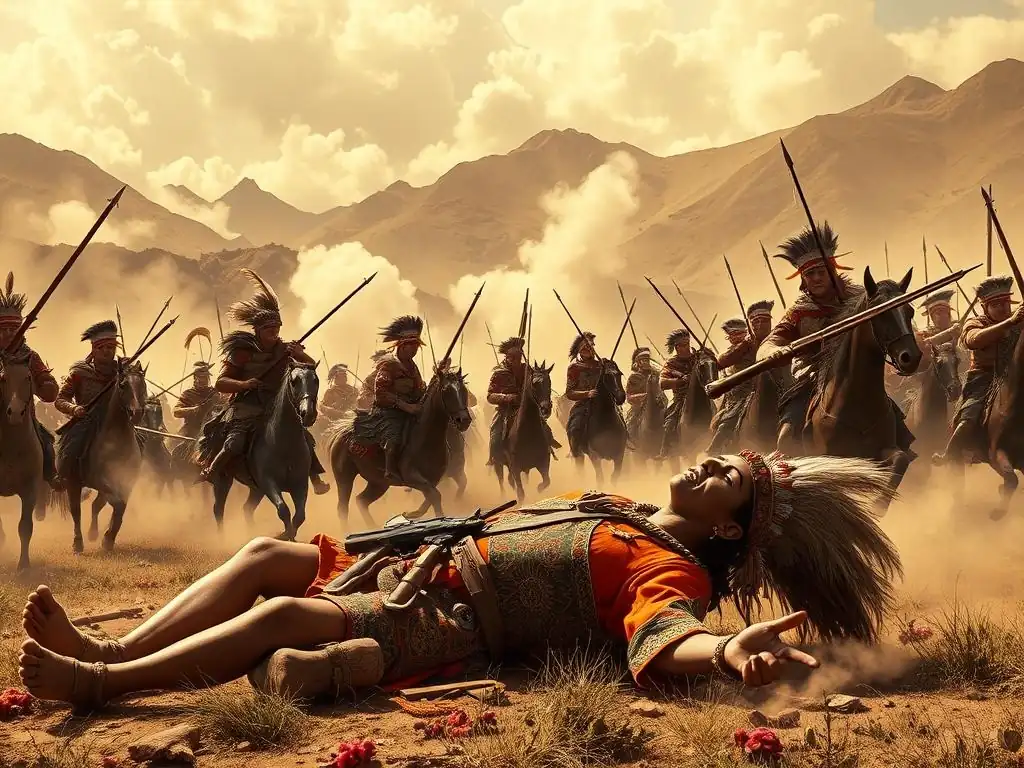
The battle of Cajamarca in 1532 stands out as a critical event where European technology significantly impacted Inca warfare. This confrontation marked a turning point in the history of the Inca Empire, showcasing the stark contrasts between the indigenous military strategies and the advanced weaponry brought by the Spanish conquistadors.
Context of the Battle
The battle occurred during the Spanish conquest of the Inca Empire, a time marked by internal strife within the Inca leadership. Following the death of Emperor Huayna Capac, a civil war erupted between his sons, Atahualpa and Huáscar, which weakened the empire's ability to respond to external threats. The Spanish, led by Francisco Pizarro, capitalized on this instability. When Pizarro and his men arrived in Cajamarca, they were initially met with curiosity rather than hostility. However, the Spanish had a strategic advantage, having planned an ambush to capture Atahualpa, who was in the city with a substantial retinue.
Technologies Employed by Both Sides
The differences in technology between the two sides were stark and played a crucial role in the battle's outcome. The Spanish forces utilized firearms, such as arquebuses and cannons, which, despite their inaccuracy, created psychological terror among the Inca warriors. Additionally, the Spanish cavalry, equipped with horses, offered mobility and speed that the Inca lacked.
In contrast, the Inca warriors primarily relied on traditional weapons such as slings, wooden clubs, and stone-tipped spears. They also employed tactics like mass formations and strategic retreats, which had proven effective in previous conflicts. However, against the advanced weaponry and tactics of the Spanish, these methods fell short.
Outcomes and Consequences for the Inca Civilization
The battle culminated in a decisive victory for the Spanish, resulting in the capture of Atahualpa. This not only led to a dramatic shift in power but also initiated a rapid decline of the Inca Empire. The consequences were profound: the Spanish imposed their governance, exploited resources, and initiated a campaign of conversion to Christianity. The loss of leadership and subsequent chaos weakened the Inca societal structure, leading to the fragmentation of their civilization. The introduction of European technology thus not only altered the immediate military landscape but also set the stage for long-term colonial dominance.
The Long-term Effects of European Technology on Inca Warfare
The implications of European technology on Inca warfare extended far beyond the battlefield at Cajamarca, reshaping the very fabric of Inca society and its military practices in the years that followed.
Shifts in Power Dynamics
The introduction of European military technology significantly shifted power dynamics within the Inca Empire. As Spanish forces continued their conquests, the disparity in technological advancement led to the consolidation of Spanish power and the disintegration of Inca authority. Indigenous groups that had previously been rivals or allies of the Incas began to reassess their positions, often choosing to side with the Spaniards for their military superiority. This shift not only altered alliances but also dismantled the once-unified structure of Inca governance, leading to a period of fragmentation and instability.
Influence on Future Conflicts
The technological influence of the Spanish did not end with the conquest of the Inca. In the years that followed, many indigenous groups began to adopt European military techniques and weaponry. This adaptation was a direct response to the need for self-defense against European encroachments. Firearms, cavalry tactics, and even fortification strategies became integrated into the warfare of many indigenous peoples in the Americas, leading to a series of conflicts characterized by the blending of traditional and European methods.
Cultural Changes within Inca Society
The impact of European warfare technology extended into the cultural realm as well. The defeat and subsequent colonization led to significant changes in Inca social structures, religious practices, and cultural identities. The once-dominant military ethos of the Incas was challenged, as their traditional practices and technologies were overshadowed by European dominance.
Furthermore, the psychological effects of the Spanish conquests instilled a sense of fear and vulnerability within the remaining Inca populace, leading to shifts in cultural expressions and values. The incorporation of European elements into Inca life, such as the adoption of new military strategies and technologies, marked a profound transformation in their historical narrative.
Conclusion
The intersection of European technology and Inca warfare marked a profound transformation in the dynamics of military conflict during the early encounters between the two cultures. The introduction of European weaponry, tactics, and strategies not only altered the course of Inca warfare but also left an indelible mark on the legacy of indigenous military practices.
The effectiveness of firearms, armor, and mounted cavalry gave Spanish forces a significant advantage, ultimately leading to the rapid decline of the Inca Empire. However, it is crucial to recognize the resilience and adaptability of the Inca, who, in their efforts to defend their civilization, employed innovative strategies that reflected their own technological capabilities and cultural values.
Summary of the Impact of European Technology on Inca Warfare
The arrival of Europeans in the Americas introduced a series of technologies that dramatically changed the landscape of Inca warfare. Key impacts include:
- Firearms and Artillery: The Spanish brought guns and cannons, which had a psychological effect on Inca soldiers and were superior to traditional Inca weaponry such as slings and clubs. The noise, power, and lethality of firearms created a new paradigm in battlefield tactics.
- Cavalry Tactics: The use of horses by Spanish conquistadors transformed combat dynamics. The speed and mobility of cavalry units allowed for flanking maneuvers and charges that the Inca, who relied more on infantry formations, struggled to counter effectively.
- Military Organization: European military strategies emphasized discipline and structured formations, which contrasted with the more fluid and adaptable tactics of Inca forces. This difference often led to disarray among Inca troops when faced with the disciplined Spanish formations.
Ultimately, these technological advancements not only facilitated the conquest of the Inca Empire but also exemplified a broader theme of technological disparity between European and indigenous forces during this era.
Reflection on the Legacy of Inca Warfare Technology
The legacy of Inca warfare technology is a testament to the ingenuity and adaptability of indigenous cultures. Despite the overwhelming challenges posed by European advancements, the Inca demonstrated remarkable resilience. They adapted their tactics to incorporate some elements of European technology, such as the use of captured firearms and the strategic organization of their armies in response to Spanish tactics.
Moreover, the impact of European technology on Inca warfare serves as a reflection of broader themes in history, including the consequences of technological exchange and the complexities of cultural interactions. While the immediate effects led to the downfall of the Inca Empire, the principles of warfare developed during this period influenced subsequent generations and their own military strategies, shaping the historical landscape of the Americas.
References
Key Texts and Resources on Inca Warfare and Technology
- "The Conquest of the Incas" by John Hemming - A comprehensive account of the Spanish conquest that details the technological and tactical aspects of warfare.
- "Inca Warfare" by John H. Rowe - A focused study on military practices within the Inca Empire, providing insights into their strategies and technologies.
- "Firearms and the Impact on Native American Warfare" by Jonathan D. Spence - An exploration of how European firearms influenced indigenous warfare across the Americas, including the Inca.
Further Reading on European Contact with Indigenous Civilizations
- "1491: New Revelations of the Americas Before Columbus" by Charles C. Mann: - Offers a broader view of indigenous civilizations prior to European contact, setting the context for the encounters that followed.
- "The Spanish Conquest of Peru" by Tzvetan Todorov - Analyzes the cultural exchanges and conflicts between Spanish and Inca societies during the conquest.
- "The Inca: Empire of Blood and Gold" by David M. Jones: - Provides insights into the Inca civilization's structure and the consequences of European interactions.
These texts contribute to a deeper understanding of the complexities surrounding Inca warfare technology and the impact of European contact on indigenous civilizations.
- Introduction to Inca Warfare
- European Contact and Its Consequences
- Key European Technologies Influencing Inca Warfare
- The Adaptation of Inca Warfare Strategies
- Case Study: A Major Battle Affected by European Technology
- The Long-term Effects of European Technology on Inca Warfare
- Conclusion
- References
Frequently Asked Questions
What were the main technologies used by the Incas in warfare?
The Incas employed a variety of technologies such as stone weaponry, sling shots, and advanced fortifications. These innovations contributed significantly to their military effectiveness.
How did European technology influence Inca warfare?
European technologies, particularly firearms and metal armor, had a profound impact on Inca warfare. The superior firepower and protection offered by European weapons often overwhelmed traditional Inca tactics.
Did the Incas have any unique warfare strategies?
Yes, the Incas utilized unique strategies such as guerrilla tactics and psychological warfare. Their understanding of the terrain allowed them to execute effective ambushes against their enemies.
What was the role of the Inca military in society?
The Inca military was not only a defense force; it also played a vital role in expansion and control over conquered territories. Military service was often tied to social status and resource distribution.
How did Inca warfare technology evolve over time?
Inca warfare technology evolved through adaptation and integration of various methods, including the adoption of certain European techniques following encounters with colonizers, which influenced their traditional practices.
Final Reflection: The Lasting Legacy of Inca Warfare Technology
The intersection of European technology and Inca warfare is a profound reminder of how innovation can reshape the course of history. As we reflect on the impact of European advancements in weaponry and tactics on Inca warfare, it becomes clear that these interactions not only altered the dynamics of conflict but also set the stage for the complex cultural exchanges that followed. The lessons learned from this historical moment resonate today, illustrating the power of technology to influence societies in both beneficial and detrimental ways.
The influence of European technology on Inca warfare is a testament to the adaptability and resilience of cultures in the face of change. The Inca Empire, known for its sophisticated societal structures and military strategies, found itself at a crossroads when confronted with foreign innovations. This clash of technologies serves as a poignant reminder of how societies can evolve through external influences. As historian John Hemming noted, The Incas were not merely victims of European conquest; they were active participants in a complex exchange of ideas and technologies.
This observation underscores the importance of recognizing the agency of cultures in historical narratives, as well as the ongoing impact of technological evolution on societal development.
As we move forward, let us take a moment to reflect on how the lessons from Inca warfare technology can inform our understanding of modern conflicts and technological advancements. Consider how you can apply the insights gained from this historical analysis in your own life.
Whether it’s embracing innovation while honoring cultural heritage or recognizing the implications of technology in contemporary society, we each have a role to play in shaping a future that respects the lessons of the past. Embrace the opportunity to learn from history, and let it inspire you to navigate the complexities of our ever-evolving world with wisdom and awareness.
Unveil the Influence: Take Action on the Legacy of Inca Warfare!
Thank you for exploring the fascinating interplay between European technology and Inca warfare. This investigation not only enhances your understanding of history but also connects us to the remarkable achievements of indigenous civilizations. Now, let’s transform that knowledge into meaningful actions!
- Engage with your community: Organize a discussion group or workshop focused on the impact of technology in historical contexts. Share insights and encourage others to contribute their perspectives.
- Explore further: Delve into various resources, documentaries, or books about the Inca Empire and European exploration. Start with works that examine indigenous strategies and resilience.
- Share the knowledge: Utilize social media to inform your friends and followers about your discoveries. Create a post that highlights an intriguing fact about the intersection of technology and indigenous cultures.
How do you believe the innovations introduced by Europeans might have altered the strategic decisions made by the Incas? Share your thoughts below!