
The Evolution of Mayan Art Styles Through the Classic and Postclassic Eras

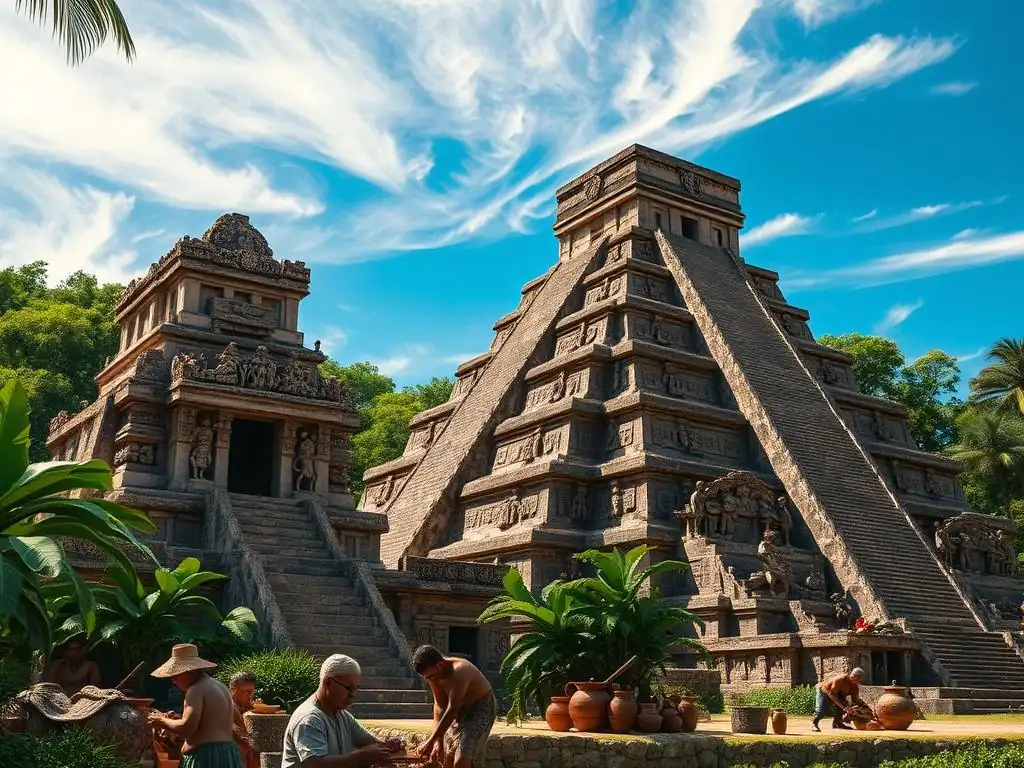
Welcome to Indigenous Civilizations of the Americas, where we invite you to embark on a fascinating journey through the rich tapestry of cultures that flourished across the continents long before European contact. Here, we delve deep into the achievements and legacies of these remarkable societies, with a special focus on the Mayan art styles history. In our featured article, "The Evolution of Mayan Art Styles Through the Classic and Postclassic Eras," discover how artistry and tradition intertwined to reflect the vibrant spirit of the Mayan civilization.
Unravel the stories behind the strokes and patterns, and let your curiosity guide you to explore the intricate connections that shaped the Americas. The past is waiting to be uncovered—dive in!
Introduction to Mayan Art Styles History
The history of Mayan art styles is a fascinating journey that reflects the evolution of one of the most advanced civilizations in the Americas. The Maya, known for their sophisticated societal structure, monumental architecture, and intricate art, inhabited a vast region that includes present-day Mexico, Belize, Guatemala, and parts of Honduras and El Salvador.
This article delves into the rich tapestry of Mayan art, exploring its evolution from the Classic Era (circa 250-900 AD) to the Postclassic Era (circa 900-1500 AD). By understanding the nuances of Mayan art styles history, we gain insight into the cultural, religious, and social dynamics that shaped these vibrant communities over centuries.
Overview of Mayan Civilization and Art
The Mayan civilization, which emerged around 2000 BC, is renowned for its achievements in various fields, including mathematics, astronomy, and writing. However, it is their artistic expressions that provide a unique window into their worldview.
- Key Aspects of Mayan Society:
- Hierarchical Structure: The society was organized into city-states, each ruled by a king who was often viewed as a divine figure.
- Religious Beliefs: Religion played a crucial role, influencing art that depicted gods, rituals, and cosmological themes.
- Agricultural Economy: Agriculture, particularly maize cultivation, was central to their economy and influenced many artistic themes.
Mayan art is characterized by its diversity and complexity, encompassing various forms such as sculpture, pottery, murals, and textiles. Each piece serves not only as a decorative object but also as a narrative medium, conveying stories, beliefs, and historical events.
Importance of Art in Mayan Culture
Art in Mayan culture was not merely an aesthetic endeavor; it held profound significance. It functioned as a medium for communication and expression, bridging the gap between the divine and the earthly realms.
- Functions of Mayan Art:
- Religious Significance: Many artworks depict gods and mythological scenes, serving as offerings or ceremonial objects.
- Historical Documentation: Artworks often commemorate significant events, leaders, and achievements, acting as historical records.
- Social Identity: Art played a role in reinforcing social hierarchies and cultural identity, with distinct styles emerging in various regions.
The intricate designs and symbols found in Mayan art provide valuable insights into their society's values, beliefs, and historical context.
The Classic Era of Mayan Art Styles
Defining the Classic Era in Mayan History
The Classic Era is a pivotal period in Mayan history marked by significant developments in art, architecture, and society. Spanning from approximately 250 AD to 900 AD, this era saw the height of city-state power and cultural flourishing.
- Key Features of the Classic Era:
- Urbanization: Major city-states such as Tikal, Calakmul, and Palenque emerged as centers of political and cultural life.
- Artistic Advancements: Innovations in artistic techniques led to more complex and sophisticated artworks.
- Increased Trade: Trade networks expanded, facilitating the exchange of goods and artistic influences across regions.
This period is characterized by monumental architecture, elaborate tombs, and significant advancements in sculptural techniques, which collectively highlight the grandeur of Mayan civilization.
Characteristics of Classic Mayan Art
Classic Mayan art is distinguished by its remarkable craftsmanship and thematic richness. Artists employed a variety of materials and techniques to create works that were both visually stunning and symbolically significant.
- Common Characteristics:
- Realism and Detail: Sculptures and carvings exhibit a high degree of realism, capturing the intricacies of human expression and anatomy.
- Use of Color: Polychrome pottery and murals employed vibrant colors, often with symbolic meanings.
- Religious Themes: Many artworks depict gods, rituals, and cosmological beliefs central to Mayan religion.
The meticulous nature of Classic Mayan art reflects the civilization's dedication to artistic excellence and its deep connection to spiritual and cultural narratives.
Iconography in Classic Mayan Art
Iconography plays a crucial role in understanding Classic Mayan art, as it conveys complex meanings through symbols and motifs.
- Key Iconographic Elements:
- Deities and Mythological Creatures: Artworks often feature gods associated with agriculture, fertility, and the underworld.
- Royal Imagery: Kings and queens are frequently depicted in ceremonial contexts, emphasizing their divine right to rule.
- Symbolic Motifs: Elements such as the jaguar, corn, and celestial bodies are prevalent, representing various aspects of Mayan cosmology and daily life.
Through these iconographic elements, Classic Mayan art not only showcases artistic talent but also serves as a vital component of the civilization's cultural identity and religious practices.
Transition to the Postclassic Era in Mayan Art
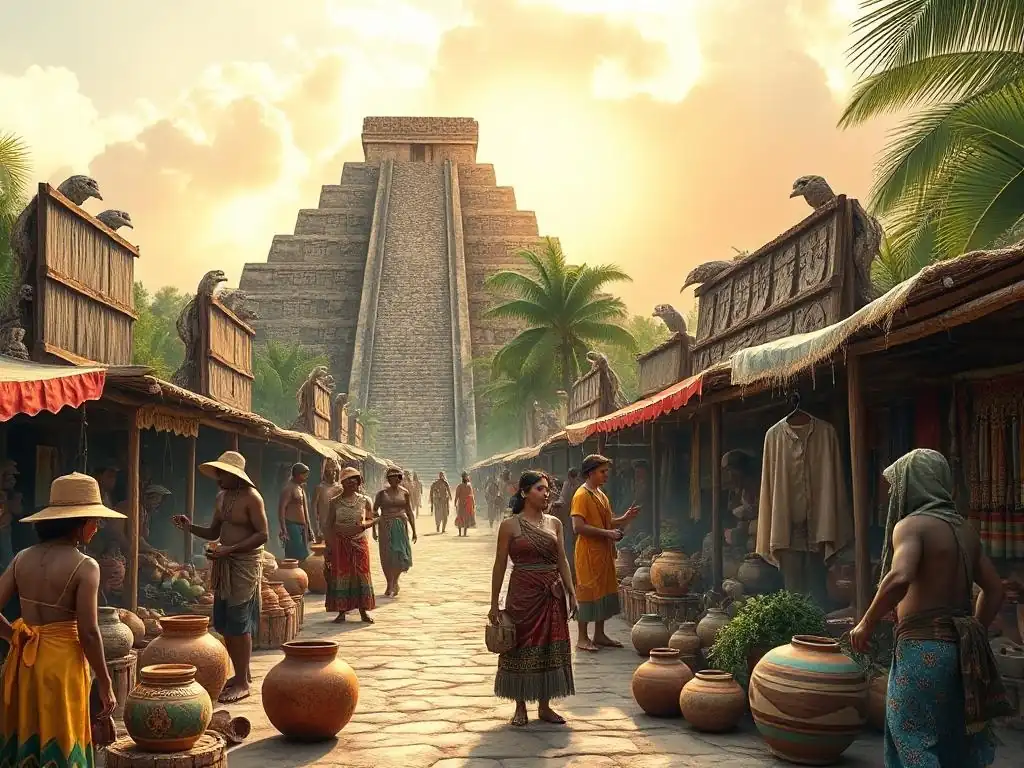
The transition from the Classic to the Postclassic era in Mayan art signifies a pivotal moment in the development of this civilization's cultural expression. This period, which roughly spans from 900 AD to the arrival of the Spanish in the 16th century, reflects significant socio-political changes, including the decline of major city-states and the rise of new power centers, particularly in the northern Yucatan Peninsula.
As the Classic Maya civilization began to fragment, many of their artistic traditions evolved, adapting to the shifting cultural landscape. The once-dominant cities, such as Tikal and Palenque, experienced declines, leading to a dispersion of populations and the emergence of new artistic hubs. This transition not only marked a change in the themes and techniques of Mayan art but also influenced the broader cultural practices of the Maya as they navigated through altered political and social frameworks.
Understanding the Shift from Classic to Postclassic
The shift from Classic to Postclassic Mayan art can be understood through various lenses, including political upheaval, environmental changes, and cultural exchanges. The Classic era was characterized by monumental architecture and intricate relief sculptures that celebrated the divine and royal lineage. However, as the Postclassic era took shape, there was a noticeable shift towards more pragmatic and utilitarian forms of art.
Art produced during this period often reflected the immediate needs and realities of the communities. For example, while Classic art focused on the glorification of rulers and deities, Postclassic art began to include themes of warfare, trade, and the everyday lives of the Maya. This shift illustrates a broader cultural transition where the Maya adapted their artistic expressions to align with their evolving societal values and needs.
Factors Influencing Changes in Art Styles
Several factors contributed to the transformation of Mayan art styles during the transition from the Classic to the Postclassic era.
- Political Changes: The collapse of major city-states led to new power dynamics, which influenced artistic patronage and themes. New rulers sought to legitimize their power through art that reflected their achievements and conquests.
- Economic Shifts: Trade routes became more prominent, and as the Maya engaged in extensive commerce, art began to reflect the influences of neighboring cultures. This resulted in the incorporation of new materials and styles.
- Cultural Interactions: Increased interactions with other Mesoamerican cultures, such as the Toltecs, introduced new artistic motifs and techniques, leading to a fusion of styles that defined Postclassic art.
Art Styles in the Postclassic Era
Postclassic Mayan art is marked by distinct characteristics that differentiate it from the Classic period. This era saw a diversification of artistic forms, materials, and themes, reflecting the dynamic changes within Mayan society.
Key Characteristics of Postclassic Mayan Art
Postclassic Mayan art is characterized by several key features:
- Simplified Forms: Compared to the intricate details of Classic art, Postclassic art often employs more straightforward, stylized representations.
- Iconography: There is a notable increase in the depiction of warfare, rituals, and the afterlife. This reflects the changing priorities and values of Mayan society.
- Use of New Materials: Artists started to incorporate different materials such as ceramics and metal, expanding the range and functionality of their artworks.
- Regional Variations: Art styles began to vary significantly across different regions, influenced by local customs and interactions with other cultures.
Comparison of Classic and Postclassic Art Styles
The comparison between Classic and Postclassic Mayan art reveals a clear evolution in both form and function:
| Feature | Classic Era Art | Postclassic Era Art |
|---|---|---|
| Themes | Divine, royal, and mythological | Warfare, trade, and daily life |
| Style | Detailed and intricate | Simplified and stylized |
| Materials | Stone, stucco, and elaborate murals | Ceramics, metal, and diverse media |
| Cultural Influence | Insular, focused on local traditions | Eclectic, reflecting broader Mesoamerican interactions |
| Function | Ceremonial and political | Practical and community-oriented |
This comparative analysis underscores how the Maya adapted their art to align with their changing realities, reflecting an ongoing dialogue between tradition and innovation throughout their history. The legacy of these art styles continues to inform our understanding of Mayan culture and its historical significance in the Americas.
The Legacy of Mayan Art Styles
The legacy of Mayan art styles is a testament to the rich cultural heritage and sophisticated artistic practices of the Maya civilization, which flourished in Mesoamerica from approximately 250 to 900 CE during the Classic period and continued into the Postclassic period. This artistic legacy encompasses a wide range of creative expressions, including pottery, sculpture, mural painting, and textile arts. Each of these mediums showcases distinct styles that evolved over centuries, reflecting the changes in societal, religious, and political landscapes.
Central to the legacy of Mayan art is its intricate iconography, which often conveys complex narratives and cosmological beliefs. The use of symbolic imagery, such as gods, animals, and human figures, not only served aesthetic purposes but also played a crucial role in religious rituals and the recording of historical events. The development of hieroglyphic writing in conjunction with visual arts allowed the Maya to document their history and cosmology, preserving their cultural identity for future generations.
As the Maya civilization transitioned from the Classic to the Postclassic era, art styles adapted to reflect new influences and societal shifts. The incorporation of elements from neighboring cultures, along with the emergence of new themes and techniques, illustrates the dynamic nature of Mayan artistic expression. This adaptability ensured that Mayan art remained relevant and continued to resonate within the broader context of Mesoamerican art history.
Impact of Mayan Art on Future Generations
The impact of Mayan art on future generations is profound and multifaceted. Even after the decline of the Maya civilization, their artistic traditions influenced subsequent cultures in the region. The techniques and stylistic elements developed by the Maya were absorbed and adapted by later Mesoamerican societies, including the Aztecs and other indigenous groups. This cultural transmission illustrates the enduring legacy of Mayan art and its role in shaping the broader narrative of indigenous art in the Americas.
Moreover, the revival and reinterpretation of Mayan art in contemporary times demonstrate its lasting significance. Modern Maya artists draw inspiration from ancient styles, techniques, and themes, incorporating them into their work while also addressing current social and political issues. This fusion of traditional and contemporary elements not only highlights the resilience of Mayan culture but also serves as a means of cultural revitalization, allowing younger generations to connect with their heritage.
The global recognition of Mayan art has also prompted increased interest in its preservation. Museums and cultural institutions around the world feature Mayan artifacts, raising awareness of the civilization's artistic achievements and fostering appreciation for indigenous cultures. This heightened visibility encourages ongoing research and scholarship, ensuring that the history and richness of Mayan art continue to inspire and educate.
Preservation of Mayan Art and Culture
The preservation of Mayan art and culture is crucial for maintaining the identity and heritage of contemporary Maya communities. Efforts to protect and conserve ancient artworks, such as murals, sculptures, and pottery, are essential for understanding the artistic practices and historical contexts of the Maya civilization. Archaeological sites across Mesoamerica, such as Tikal, Palenque, and Copán, feature remarkable examples of Mayan art that have been meticulously studied and preserved.
In addition to physical preservation, there is a growing emphasis on the cultural preservation of Mayan traditions, languages, and artistic practices. Various organizations and community initiatives work to document and revitalize traditional art forms, ensuring that they are passed down through generations. Workshops, educational programs, and cultural festivals celebrate Mayan art and culture, fostering a sense of pride and continuity among contemporary Maya populations.
Furthermore, digital technology plays a significant role in the preservation of Mayan art. The use of 3D modeling, virtual reality, and digital archiving allows for the documentation and sharing of Mayan artworks, making them accessible to a global audience. This technological approach not only aids in conservation efforts but also encourages a deeper understanding of the cultural significance of Mayan art in both historical and contemporary contexts.
Conclusion: Understanding Mayan Art Styles History
Understanding the history of Mayan art styles is essential for appreciating the complexity and depth of the Maya civilization. Through the study of their artistic expressions, we gain insight into their social structures, religious beliefs, and historical narratives. The evolution of Mayan art from the Classic to the Postclassic era reveals how artistic practices adapted to changing circumstances, reflecting the resilience and creativity of the Maya people.
The Significance of Studying Mayan Art in Cultural Context
Studying Mayan art within its cultural context allows us to grasp its significance beyond mere aesthetics. Art served as a vital medium for communication, storytelling, and the expression of identity. The intricate designs and symbols found in Mayan artifacts convey messages about the cosmos, the divine, and the human experience. By examining these artworks through the lens of cultural practices, rituals, and historical events, we can better appreciate their role in shaping the Maya worldview and their contributions to the broader tapestry of indigenous cultures in the Americas.
Final Thoughts on the Evolution of Mayan Artistic Expression
The evolution of Mayan artistic expression is a fascinating journey that reflects the ingenuity and adaptability of the Maya civilization. From the sophisticated iconography of the Classic period to the innovative adaptations of the Postclassic era, Mayan art has left an indelible mark on the cultural landscape of Mesoamerica. As we continue to explore and celebrate this rich artistic heritage, it becomes clear that Mayan art styles are not just relics of the past but living expressions of a vibrant culture that persistently influences and inspires.
- Introduction to Mayan Art Styles History
- Overview of Mayan Civilization and Art
- Importance of Art in Mayan Culture
- The Classic Era of Mayan Art Styles
- Transition to the Postclassic Era in Mayan Art
- Art Styles in the Postclassic Era
- The Legacy of Mayan Art Styles
- Conclusion: Understanding Mayan Art Styles History
Frequently Asked Questions
What are the main periods in Mayan art history?
The Mayan art history is typically divided into two main periods: the Classic Era (250-900 AD) and the Postclassic Era (900-1500 AD). Each period showcases distinct art styles and techniques.
How did Mayan art reflect their culture?
Mayan art served as a reflection of their societal values, beliefs, and achievements. It often depicted religious themes and rituals, showcasing their complex cosmology and relationship with deities.
What materials were commonly used in Mayan art?
Mayan artists utilized a variety of materials, including jade, ceramics, and stucco. These materials allowed for the creation of elaborate sculptures, pottery, and murals that illustrated their artistic skills.
What are some notable achievements in Mayan art?
Key achievements in Mayan art include the development of intricate pottery designs, monumental architecture, and detailed stelae that recorded historical events. These works highlight the sophistication of their aesthetic practices.
How does Mayan art influence contemporary culture?
The legacy of Mayan art styles continues to influence modern artists and cultures, with elements of design and symbolism being integrated into contemporary art, fashion, and architecture, celebrating their enduring cultural significance.
Final Reflection: The Enduring Legacy of Mayan Art Styles
The exploration of Mayan art styles history reveals not only the aesthetic evolution of a remarkable civilization but also underscores the profound cultural narratives that continue to resonate today. As we delve into the intricate designs and symbolic meanings embedded in Mayan art, we uncover a rich tapestry that reflects the values, beliefs, and societal structures of its time. The evolution of these styles serves as a testament to the creativity and resilience of the Mayan people, reminding us that art is not merely a reflection of beauty but a powerful medium for storytelling and cultural identity.
Mayan art has left an indelible mark on the cultural landscape, influencing contemporary artists and scholars alike. The intricate carvings, vibrant murals, and ceremonial artifacts continue to inspire a deeper understanding of the Mayan worldview and its connection to nature, spirituality, and community. Art is the most beautiful of all lies.
This quote encapsulates the essence of how Mayan art transcends time, inviting us to engage with its beauty while contemplating the truths it conveys about human experience and existence.
As we reflect on the lessons drawn from the evolution of Mayan art styles, let us embrace the call to honor and preserve cultural heritage in our own lives. Consider how you can incorporate the values of creativity, storytelling, and cultural appreciation into your daily practices.
Whether through supporting local artists, exploring diverse art forms, or simply taking a moment to appreciate the beauty around you, each action contributes to a richer understanding of our shared human experience. The legacy of Mayan art is not just a historical account; it is an invitation for us to create, connect, and celebrate the diverse narratives that shape our world today.
Unveil the Rich Legacy of Mayan Art!
Thank you for joining us on this journey through the fascinating evolution of Mayan art styles! We hope you found value in understanding how these artistic expressions shaped and reflected the vibrant culture of the Maya civilization. Now, it's time to take action and deepen your appreciation for this incredible heritage.
Here are some ways you can engage further:
- Visit a local museum or online gallery that showcases Mayan art—experience its beauty firsthand and discover more about its significance.
- Share your thoughts about Mayan artistry on social media! Use the hashtag #MayanArtLegacy to connect with others who are passionate about this rich cultural heritage.
- Participate in a community discussion or workshop focused on indigenous art to gain diverse perspectives and encourage cultural dialogue.
What aspect of Mayan art resonates with you the most, and how do you plan to incorporate this newfound knowledge into your daily life?