
The Inca Quipu: An Intricate RecordKeeping System of Ancient Peru


Welcome to Indigenous Civilizations of the Americas, where we delve into the rich tapestry of cultures that flourished long before European shores were sighted. Here, you'll uncover the remarkable achievements and societal structures of indigenous peoples, with a spotlight on the Inca quipu recordkeeping system—a fascinating method of communication and recordkeeping that reflects the ingenuity of ancient Peru. What secrets did these intricate strings hold? Join us on this journey to discover the profound legacy of these civilizations and their enduring impact on today's world. Explore further to unlock the mysteries that lie within!
The Inca civilization, one of the most remarkable indigenous cultures of the Americas, developed a sophisticated record-keeping system known as the Inca quipu. This intricate method of information storage utilized knotted strings and cords to convey numerical and narrative data, serving as a vital tool for administration, accounting, and communication across the vast expanse of the Inca Empire.
Unlike written language, the quipu was a unique form of record-keeping that reflected the rich tapestry of Inca society, including its economic practices, social structures, and cultural traditions. In this article, we will delve into the complexities of the Inca quipu system, exploring its historical significance, functionality, and the enduring legacy it has left on our understanding of pre-Columbian civilization in South America.
Understanding the Inca Quipu System
The Inca quipu (or khipu) is characterized by its use of colored cords and various knots tied at different intervals. Each color and knot type represented specific information, allowing the Incas to maintain records of everything from agricultural production to military organization. The quipu was a practical response to the absence of a written language, showcasing the ingenuity of the Inca people in finding alternative means to record and transmit information.
Components of the Quipu
The quipu consisted of several key components, including:
- Main Cord: The primary string from which other cords hang.
- Pendant Cords: Secondary cords that branch off the main cord, used to convey specific categories of information.
- Knots: Various types of knots—single, long, or complex—represent numerical values or data points.
- Color Coding: Different colors indicated different types of data or significance, such as resource types or regions.
The Role of Quipu in Inca Society
Quipus played a crucial role in the administrative and economic systems of the Inca Empire. They were used for:
- Taxation Records: Tracking tributes paid by various regions.
- Census Data: Keeping records of the population for labor and military service.
- Resource Management: Maintaining detailed accounts of agricultural yields and inventory.
In a society that thrived on organization and efficiency, the Inca quipu was indispensable for governance and resource allocation.
Legacy and Modern Interpretations
Despite the fall of the Inca Empire, the quipu continues to fascinate scholars and historians. Recent research has attempted to decode the quipu, revealing insights into Inca culture and administration. The study of quipus challenges conventional notions of literacy and record-keeping, highlighting the sophistication of indigenous civilizations in the Americas. Today, the quipu stands not only as a testament to the ingenuity of the Inca people but also as an enduring symbol of their rich cultural heritage and complexity.
- Understanding the Inca Quipu System
- The Role of Quipu in Inca Society
- Legacy and Modern Interpretations
Introduction to the Inca Quipu Recordkeeping System

The Inca quipu recordkeeping system was a vital aspect of the administrative and cultural fabric of the Inca Empire, which flourished in the Andean region of South America from the early 15th century until the Spanish conquest in the 16th century. This unique method of recording information through a series of knotted strings exemplifies the ingenuity and adaptability of the Inca civilization.
The quipu (or "khipu" in Quechua) served multiple purposes, from maintaining census data to tracking tribute and resources. Unlike written language, the quipu relied on an intricate system of knots, colors, and string placements, enabling the Incas to communicate complex information without the need for a written alphabet. This innovative approach not only highlights the sophisticated nature of Inca society but also illustrates how they managed vast territories and populations efficiently.
Overview of the Inca Civilization
The Inca civilization, known for its remarkable achievements in architecture, agriculture, and governance, was the largest empire in pre-Columbian America. Centered in what is now Peru, the Incas expanded their territory across modern-day Ecuador, Bolivia, Chile, and Argentina.
Key features of the Inca civilization include:
- Political Organization: The Inca Empire was a centralized state ruled by the Sapa Inca, who was considered a divine figure. The empire was divided into four regions, each managed by a governor to ensure efficient administration.
- Engineering Marvels: The Incas are renowned for their advanced engineering skills, exemplified by the construction of extensive road networks, agricultural terraces, and monumental structures such as Machu Picchu and Sacsayhuamán.
- Agricultural Innovation: The Incas utilized sophisticated agricultural techniques, including irrigation systems and the cultivation of diverse crops, such as potatoes and quinoa, which supported their large population.
Importance of Recordkeeping in Inca Society
Recordkeeping was essential for maintaining the complex structure of Inca society. The quipu served various critical functions, including:
- Census and Population Control: The Incas conducted regular censuses to monitor their population. Quipus were used to record demographic information, such as the number of people in each community, which helped in resource allocation and tributes.
- Tribute and Resource Management: The quipu system was instrumental in tracking the collection of tributes from conquered peoples. Each knot and color represented different types of goods, allowing for meticulous resource management across the empire.
- Historical Records and Communication: Quipus were also used to document historical events and important decisions made by the Sapa Inca. Although the exact meanings of specific knots remain partially understood, the quipu enabled the transmission of important information across the vast empire.
The Inca quipu recordkeeping system was a sophisticated method that played a crucial role in the administration and daily life of the Inca civilization. Its unique design reflects the innovative spirit of the Incas and underscores the significance of effective communication in managing one of the largest empires in history.
Understanding the Inca Quipu

Definition of Quipu
The Inca quipu, a remarkable recordkeeping system, served as a vital tool for the administration and communication of the Inca Empire. This intricate device consisted of a series of colored strings and knots, which encoded numerical and possibly narrative information. The word "quipu" originates from the Quechua language, meaning "knot". Unlike a traditional written language, the quipu conveyed information through a complex arrangement of knots tied on strings of varying lengths and colors, allowing for a form of recordkeeping that was both practical and sophisticated.
The primary purpose of the quipu was to maintain records, particularly for accounting purposes, such as tracking tributes, census data, and resource management. Different types of knots represented various numeric values, while the colors and placement of the strings may have carried additional contextual meaning, reflecting the multifaceted nature of Inca society.
Materials Used in Quipu Construction
Quipus were crafted using a variety of materials, primarily sourced from the natural environment of the Andes. The key components included:
- Cotton: Often used for its softness and durability, cotton strings were commonly employed in quipu construction.
- Wool: The wool from llamas and alpacas provided a robust alternative, with fibers that could withstand the rigors of time and handling.
- Dyes: Natural dyes extracted from plants and minerals were utilized to color the strings, conveying different meanings. Colors such as red, yellow, blue, and green were particularly significant, with each hue potentially representing different categories of information.
The construction of a quipu was a meticulous process, as the quality of the materials directly affected the longevity and clarity of the records. Inca artisans demonstrated exceptional skill, often hand-spinning and dyeing the fibers to create the perfect combination for their recordkeeping needs.
Types of Knots and Their Meanings
The knots used in quipu construction were not merely decorative; they were the fundamental units of information. Understanding the various types of knots and their meanings is crucial for deciphering the quipu's significance. The primary types of knots include:
- Single Knot: Typically used to represent a single unit or item, this basic knot served as the foundation of the quipu's numerical system.
- Long Knot: This knot indicated a larger quantity, often representing ten or more units. The length of the knot symbolized the magnitude of the number.
- Figure-Eight Knot: Used to denote a specific category or type of item, this complex knot added a layer of meaning beyond mere quantity.
- Double Knot: Indicating the completion of a count or a transition to a new category, the double knot signified an important change in the recorded data.
In addition to these basic types, the positioning of knots along the strings and the combination of colors further enriched the information encoded in each quipu. Scholars believe that while the precise meanings of many knots remain a mystery, the quipu system exemplifies the Inca's sophisticated approach to recordkeeping and communication.
Understanding the intricacies of the Inca quipu recordkeeping system reveals the advanced administrative capabilities of the Inca civilization and highlights their unique cultural approach to information management.
The Functionality of the Inca Quipu Recordkeeping System
The Inca quipu recordkeeping system was a sophisticated method used by the Inca civilization to manage information and data in a society that relied heavily on oral tradition. This unique system utilized a series of knotted strings, which served as a medium for recording and conveying various types of information. Understanding the functionality of the quipu reveals the complexity and ingenuity of the Inca civilization's approach to recordkeeping.
Quantitative Data Representation
One of the primary functions of the Inca quipu was to represent quantitative data. The structure of the quipu allowed for the recording of numerical values through a series of knots tied on colored strings. Each knot type and its position on the string indicated different numerical values, enabling the Inca to keep track of vital statistics such as:
- Population counts: Quipus were used to record census data, helping the Inca govern their vast empire by keeping track of the number of people in various regions.
- Resource inventories: The quipu served as an effective tool for managing resources, recording quantities of agricultural products, livestock, and other goods necessary for the economy.
- Tribute and taxation: The Inca used quipus to document tributes paid by conquered peoples, ensuring that the empire collected the appropriate amounts of resources.
The knots were categorized into two main types: simple knots and complex knots. Simple knots typically represented single units or numbers, while complex knots indicated larger values or groupings of items.
Qualitative Information Encoding
In addition to quantitative data, the Inca quipu recordkeeping system encoded qualitative information. This aspect of the quipu illustrates the versatility of the system in capturing non-numerical data. The following elements were often encoded:
- Historical accounts: Some quipus served to record significant historical events, including battles, treaties, and notable achievements of leaders.
- Cultural narratives: The quipu could also encapsulate stories and traditions integral to the Inca identity, preserving their rich cultural heritage.
- Administrative information: Quipus were useful for tracking administrative details such as land ownership, labor distribution, and societal roles.
The qualitative encoding within the quipu was characterized by the use of different string colors and knot arrangements. Color coding often indicated specific categories of information, allowing for easier interpretation by those trained in reading the quipu.
Comparison with Other Ancient Recordkeeping Methods
When comparing the Inca quipu recordkeeping system to other ancient recordkeeping methods, several unique features emerge.
| Feature | Inca Quipu | Cuneiform (Mesopotamia) | Hieroglyphics (Egypt) |
|---|---|---|---|
| Medium | Knotted strings | Clay tablets | Stone and papyrus |
| Numerical Representation | Knots on strings | Numerical symbols | Symbols and numerals |
| Qualitative Data Encoding | Yes (via color and knot types) | Limited (mostly numeric) | Yes (extensive use of symbols) |
| Accessibility | Limited to trained recordkeepers | Accessible to scribes | Accessible to the educated elite |
The Inca quipu is particularly notable for its ability to convey both quantitative and qualitative data through a tactile and visual medium, contrasting sharply with the more text-heavy methods of cuneiform and hieroglyphics. Cuneiform, primarily used for administrative and legal documentation in ancient Mesopotamia, relied on writing and was less flexible in terms of encoding diverse types of information. Similarly, Egyptian hieroglyphics were rich in symbolism but primarily focused on religious and monumental contexts.
The Inca quipu recordkeeping system stands out as a remarkable example of innovation in data management, merging numerical and qualitative information in an intricate, practical format that was essential for governance and cultural preservation in the Inca civilization.
The Role of Quipu in Inca Administration
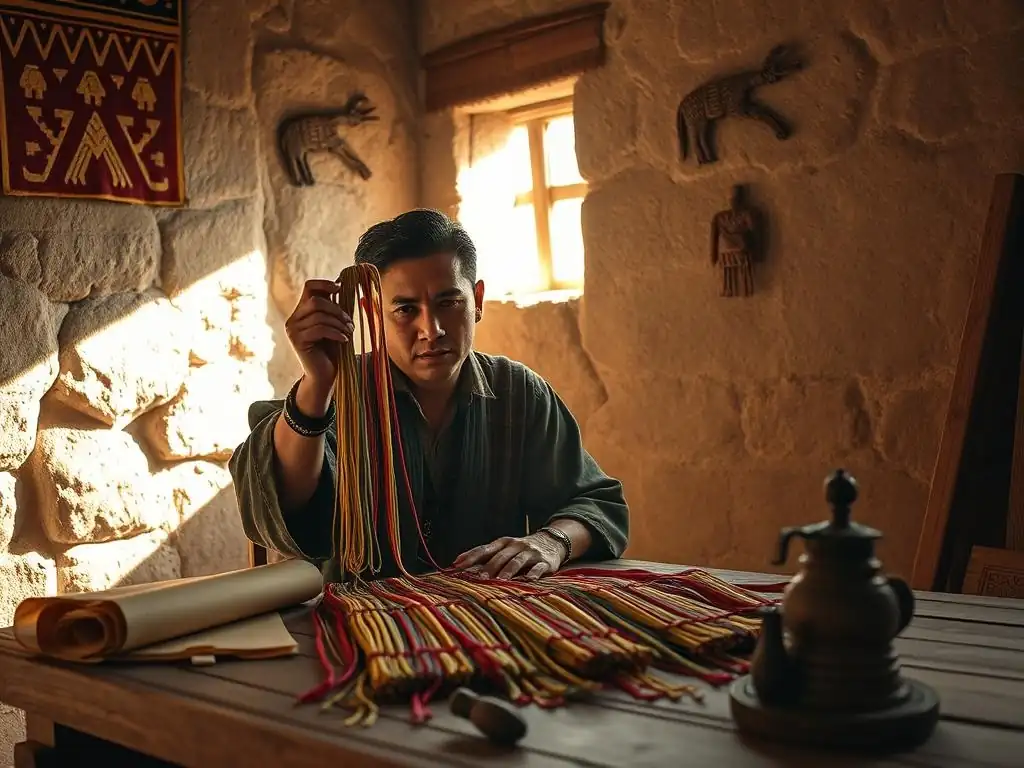
Quipu as a Tool for Taxation and Resource Management
The Inca quipu recordkeeping system was fundamental in managing the vast resources of the Inca Empire. Quipus, which comprised colored strings tied in knots, served as an efficient means to document various aspects of the economy, particularly taxation and resource allocation.
- Taxation Records: The quipu recorded tributes paid by different communities, detailing quantities of goods such as textiles, agricultural products, and precious metals. Each knot and color represented specific information, allowing administrators to easily assess what was owed by each region.
- Resource Allocation: The Inca utilized quipus to maintain detailed records of agricultural output, livestock numbers, and storage facilities. This information enabled effective distribution of resources, ensuring that regions with surplus could support areas experiencing shortages.
- Centralized Control: By employing quipus, the Inca administration could centralize control over resources, quickly respond to shortages, and plan for future needs. This system was crucial for sustaining the empire’s large population and facilitating trade between diverse ecological zones.
The effectiveness of the quipu in taxation and resource management was not just a matter of recordkeeping; it represented a sophisticated understanding of economics and logistics that enabled the Inca to maintain a thriving empire across challenging terrains.
The Use of Quipu in Census and Population Control
Quipu also played a vital role in conducting censuses and managing the population within the Inca Empire. This recordkeeping system was essential for understanding demographic changes and planning for the needs of the populace.
- Census Data: The quipu was used to document the number of men, women, and children in each community. This information was critical for various administrative functions, including labor allocation for state projects such as road construction and agricultural production.
- Population Movements: By keeping track of population shifts through quipu records, the Inca could respond to migrations, whether due to environmental changes or other factors. This adaptability was essential for maintaining social stability and resource distribution.
- Social Structure Insights: Quipus provided insights into the social hierarchy of Inca society. Different colors and knot patterns could indicate social roles or statuses within communities, giving administrators a clearer picture of the societal structure.
Through these census and population control mechanisms, the Inca were able to effectively manage their vast empire, ensuring that all groups were accounted for and that resources were allocated according to demographic needs.
Quipu in Military Organization and Logistics
The military organization of the Inca Empire was another area where the quipu recordkeeping system proved invaluable. The complexities involved in managing armies and logistics required precise documentation and strategic planning.
- Troop Deployment Records: Quipus recorded the number of soldiers available for campaigns, including details about their equipment and readiness. This information allowed military leaders to effectively strategize deployments and mobilizations.
- Logistics and Supply Chains: The Inca frequently utilized quipus to manage logistics, including the transportation of goods and supplies necessary for military campaigns. Records detailing supplies such as food, textiles, and weapons ensured that troops were well-equipped and sustained during campaigns.
- Military Campaign Planning: The ability of the quipu to convey complex information in a compact format allowed for efficient planning of military operations. Leaders could quickly assess strengths and weaknesses, enabling them to make informed decisions on troop movements and engagements.
The quipu was not merely a recordkeeping tool; it was an integral component of the Inca military strategy, demonstrating the advanced organizational capabilities of this remarkable civilization. Through the quipu, the Inca were able to coordinate their military efforts effectively, contributing to their dominance in the Andean region.
Interpretation and Deciphering of the Inca Quipu

The Inca quipu, a remarkable record-keeping system, remains one of the most enigmatic aspects of Inca civilization. Comprised of colored, knotted strings, quipus served various functions, including accounting, census data, and possibly storytelling. However, the precise interpretation of these intricate knots and their meanings poses significant challenges for researchers.
Challenges in Understanding Quipu
Deciphering the Inca quipu presents a multitude of challenges, primarily due to the lack of written records that accompany these artifacts. Key issues include:
- Lack of a Rosetta Stone: Unlike hieroglyphics, which benefited from the discovery of the Rosetta Stone, quipus lack a direct reference point that could provide insight into their meanings.
- Variability of Knots: The quipu system utilized a variety of knots and colors, each potentially signifying different values or categories. This variability complicates the establishment of a standard interpretation.
- Contextual Dependence: The meaning of a quipu may depend heavily on its context, including the cultural and social circumstances under which it was created. This situational variability makes it difficult to apply a singular interpretation across different quipus.
- Loss of Knowledge: Much of the knowledge regarding the quipu was lost during the Spanish conquest, and the subsequent colonization led to the suppression of indigenous knowledge systems. This loss poses a significant barrier to modern understanding.
Contributions of Modern Researchers
Despite these challenges, modern researchers have made significant strides in interpreting the Inca quipu. Their efforts include:
- Interdisciplinary Approaches: Scholars from various fields such as anthropology, archaeology, and linguistics collaborate to develop a more comprehensive understanding of quipus. This interdisciplinary approach fosters diverse perspectives that enrich interpretations.
- Technological Advancements: The use of technology, including computer modeling and statistical analysis, has enabled researchers to analyze quipus more effectively. For example, algorithms can help identify patterns and correlations within the knots.
- Field Studies: Ongoing excavations and studies of quipu artifacts in Peru and surrounding regions continue to yield new insights. Researchers closely examine the physical characteristics of quipus, such as their materials and construction techniques, to glean contextual information.
- Reviving Indigenous Knowledge: Some researchers collaborate with contemporary indigenous communities to restore traditional knowledge about quipu. These collaborations often reveal new interpretations that may align more closely with the original uses of quipus.
Case Studies of Quipu Interpretations
Several case studies illustrate the varied interpretations of the Inca quipu, showcasing the complexity and potential meanings behind these artifacts:
- The Quipu of Tambo Colorado: This quipu, discovered at the archaeological site of Tambo Colorado, has been examined for its potential to record census data. Analysis suggests that specific knots represent numerical values corresponding to population counts of different communities.
- Quipu from the Inca Capital of Cusco: A quipu from Cusco has been studied for its possible use in agricultural recordkeeping. Researchers hypothesize that the knots may encode information about crop yields and agricultural cycles, reflecting the economic practices of the Inca.
- The Quipu of the Chancas: This case highlights a quipu associated with the Chanca people, who were rivals of the Incas. The quipu's unique knotting style has led some researchers to suggest that it conveys historical narratives or territorial claims, emphasizing the cultural diversity within Andean societies.
Through these case studies, the intricate nature of the Inca quipu recordkeeping system is further illuminated, revealing a complex tapestry of information that continues to intrigue and challenge scholars today.
Cultural Significance of the Inca Quipu

The Inca quipu, an intricate record-keeping system, served not only as a practical tool for administration but also held profound cultural significance within Inca society. This unique system, composed of colored cords and knots, was utilized to convey information and maintain records of various aspects of Inca life, including census data, tribute collections, and agricultural production. However, its importance extended beyond mere data management; it was deeply embedded in the cultural and social fabric of the Inca civilization.
Quipu in Inca Religious Practices
Quipu played a crucial role in the religious practices of the Inca civilization. The Incas believed that numerical records and their inherent meanings were tied to their spiritual beliefs. For example, certain colors and knot types were associated with specific deities or rituals. The priests and religious leaders were often the primary custodians of quipus, utilizing them to keep track of offerings, ceremonial events, and the calendar of religious festivals.
- Symbolism of Colors: Different colors represented various aspects of Inca spirituality. For instance:
- Red could symbolize life and vitality.
- White often represented purity and the divine.
- Black might be linked to the underworld or ancestors.
- Ritualistic Use: During important ceremonies, quipus were sometimes employed to recount historical events or the achievements of past rulers, reinforcing collective memory and identity among the people.
The integration of quipu into religious practices illustrates how the Inca viewed their record-keeping not merely as a bureaucratic tool but as a vital component of their spiritual life, intertwining administrative and sacred functions.
The Legacy of Quipu in Indigenous Cultures
The legacy of the Inca quipu extends beyond the fall of the Inca Empire into contemporary indigenous cultures. After the Spanish conquest, many indigenous peoples adapted quipu for their own needs, blending traditional practices with new influences. This adaptability has allowed the quipu to persist in various forms across different regions.
- Cultural Resilience: Indigenous communities have continued to use knotted strings as a form of communication and record-keeping. For instance:
- In some Andean communities, descendants of the Incas still create and utilize quipu-like devices for storytelling or preserving historical knowledge.
- Academic Interest: The study of quipu has garnered attention from anthropologists and historians, leading to a resurgence of interest in understanding its complexity and significance. Efforts are being made to document and preserve the knowledge associated with quipu, ensuring that this legacy is not lost to time.
As a result, the Inca quipu serves as a symbol of resilience and continuity, representing a rich tapestry of indigenous knowledge and cultural identity that remains relevant today.
Modern Day Relevance of Quipu
In contemporary times, the Inca quipu has gained recognition not only as an artifact of historical interest but also as a source of inspiration for various fields, including art, education, and technology.
- Artistic Expression: Artists have been inspired by the visual complexity of quipu, creating modern interpretations that explore themes of communication and memory. This artistic engagement fosters a deeper appreciation for indigenous heritage among broader audiences.
- Educational Initiatives: Quipu has become a focal point in educational programs aimed at teaching about the history and culture of the Inca civilization. Workshops and classes that involve hands-on quipu-making encourage learners to connect with the past in a tangible way.
- Technological Analogies: The principles behind the quipu have even found parallels in modern data storage and coding systems. Its unique method of encoding information through knots and colors offers insights into alternative ways of organizing and interpreting data.
The Inca quipu record-keeping system stands as a testament to the ingenuity of the Inca civilization and its enduring impact on indigenous culture. Its cultural significance, legacy, and modern relevance underscore the importance of preserving and understanding this remarkable system, ensuring that the knowledge and practices of the past continue to inspire future generations.
Conclusion: The Inca Quipu and Its Impact on Recordkeeping
Summary of Key Points
The Inca quipu recordkeeping system is a remarkable example of how an ancient civilization developed a sophisticated method for managing information, essential for administration and communication. Here are some key points to summarize its significance:
- Complexity and Design: The quipu consisted of colored, knotted strings that represented numeric and qualitative data. The arrangement of knots and their colors conveyed specific meanings, allowing for detailed recordkeeping.
- Administrative Tool: The Inca utilized the quipu primarily for accounting purposes, tracking census data, resource inventory, and agricultural production. This system was vital for managing the vast territory of the Inca Empire.
- Cultural Significance: Beyond mere recordkeeping, the quipu held cultural importance, serving as a medium for storytelling and preserving history. The oral traditions of the Inca were often complemented by the visual information provided by the quipu.
- Loss of Knowledge: With the arrival of Spanish colonizers, much of the knowledge surrounding the quipu was lost, as European systems of writing and recordkeeping supplanted the indigenous methods.
The Lasting Influence of the Inca Quipu Recordkeeping System on Future Civilizations
The influence of the Inca quipu recordkeeping system extends beyond the boundaries of the Inca Empire, impacting future civilizations in several ways:
- Inspiration for Other Cultures: The innovative approach of using knotted strings for recordkeeping inspired various indigenous groups across the Americas. Similar systems, albeit simpler, emerged in other regions, showing the adaptability and importance of non-written forms of communication.
- Modern Recognition: Today, the quipu is recognized as a significant achievement in the history of information management. Modern scholars and historians study quipus to understand Inca society better and explore alternative methods of recordkeeping that do not rely on written language.
- Interdisciplinary Studies: The study of quipus has encouraged interdisciplinary research, merging fields such as anthropology, archaeology, and linguistics. This has led to broader discussions about how different cultures develop systems to manage information and the various forms that these systems can take.
- Legacy of Non-Literate Societies: The Inca quipu serves as a testament to the capabilities of non-literate societies to maintain complex records. It challenges the notion that advanced recordkeeping is solely linked to written language and highlights the ingenuity of indigenous peoples.
The Inca quipu recordkeeping system not only played a crucial role in the administration of the Inca Empire but also left a lasting legacy that continues to inform our understanding of ancient cultures and their methods of communication and recordkeeping. Its intricate design and functionality illustrate the sophistication of indigenous civilizations and their ability to innovate within their cultural contexts.
Frequently Asked Questions
What is the Inca quipu recordkeeping system?
The Inca quipu is an intricate system developed by the Inca civilization to record information using colored strings and knots, serving as a highly effective means of communication and recordkeeping.
How did the Inca quipu function?
The Inca quipu functioned by utilizing various types of knots and colors on strings to represent numbers and other data, allowing the Incas to manage resources, population, and important events.
What were the main uses of the Inca quipu?
The Inca quipu was primarily used for administrative purposes, such as tracking tribute and census data, but it also played a role in historical narratives and storytelling within Inca society.
Is the Inca quipu still relevant today?
While the Inca quipu system itself is not used today, it remains an important subject of study for understanding Inca culture and their sophisticated means of communication and recordkeeping.
Can the Inca quipu be fully deciphered?
The Inca quipu has not been fully deciphered, as the meanings of many knots and configurations remain ambiguous, making it an ongoing area of research for historians and archaeologists.
Final Reflection: The Enduring Legacy of the Inca Quipu Recordkeeping System
The Inca quipu recordkeeping system serves as a profound reminder of the ingenuity and complexity of ancient civilizations. In a world where digital records dominate, the quipu's intricate knots and vibrant threads reveal a unique form of communication and data management that resonates with our current need for effective information organization. This ancient system not only highlights the sophistication of the Inca Empire but also challenges us to reconsider how we document and preserve our histories today.
The impact of the quipu extends beyond its historical context; it continues to influence our understanding of cultural expression and recordkeeping. The quipu embodies a rich tapestry of knowledge, weaving together the threads of language, mathematics, and memory. As we explore the significance of this system, we recognize its role in shaping identity and community among the Incas. The quipu is not just a record; it is a story, a legacy, and a testament to the human capacity for innovation.
This ongoing appreciation for the quipu encourages us to celebrate diverse methods of communication and to acknowledge the value of different perspectives in our modern world.
As we reflect on the lessons of the Inca quipu, I invite you to consider how you document your own experiences and knowledge. What stories do you weave into your life, and how can you share them with others? Embrace the creativity and resourcefulness that the quipu represents, and let it inspire you to create your own unique recordkeeping practices. Remember, every thread of your story contributes to the rich tapestry of human history, and it is through these connections that we can foster understanding and appreciation for our shared past.
Unveil the Secrets of Quipu – Take Action Today!
Thank you for diving into the fascinating world of the Inca Quipu with us! Your interest in this complex and ingenious record-keeping system showcases the rich heritage of Indigenous civilizations. Now that you've explored its historical significance, it’s time to take action and deepen your connection!
- Create your own Quipu: Gather colorful strings and threads to craft a modern interpretation of this ancient tool. Share your creation on social media using the hashtag #IncaQuipuArt!
- Explore Quipu in-depth: Visit local museums or browse online resources to discover exhibits and articles that highlight the significance of Quipu in Inca culture.
- Tell a friend: Share your newfound knowledge about Quipu with friends or family to spark engaging conversations about ancient civilizations.
What insights have you gained about communication in ancient cultures by connecting the past with our modern world?