
The Economic Impact of European Colonization on Mayan Trade Networks

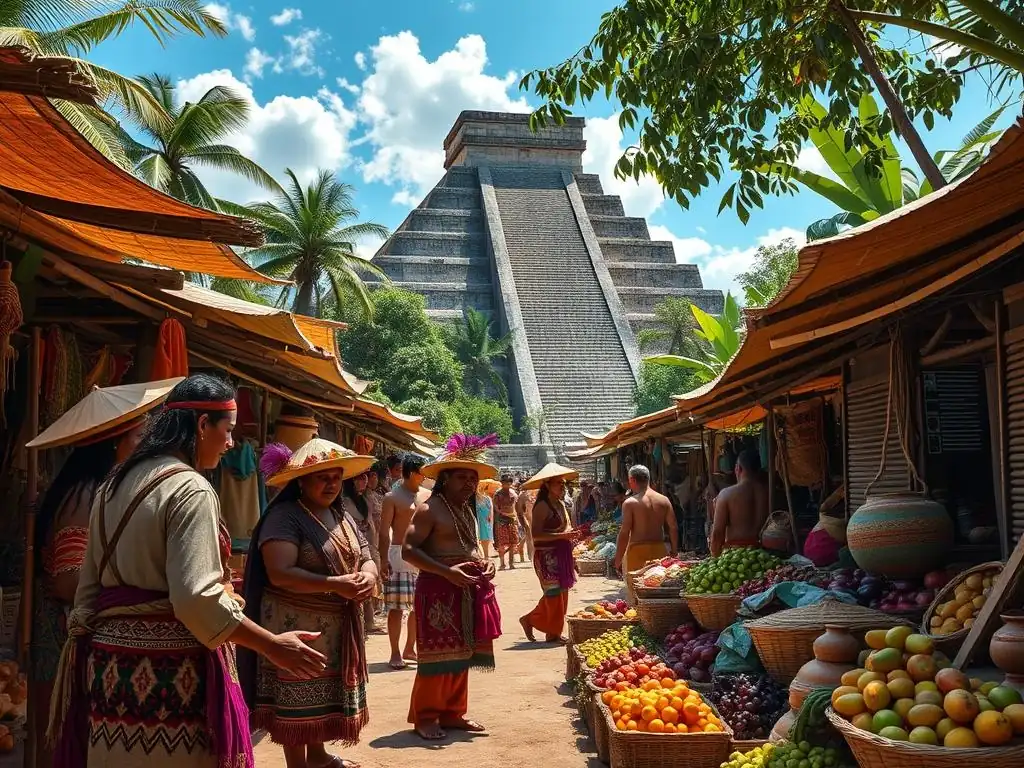
Welcome to Indigenous Civilizations of the Americas, where we embark on a fascinating journey through the rich tapestry of indigenous cultures that flourished long before European contact. Dive into the intricate Mayan trade networks history, a pivotal aspect of the Mayan Civilization that reveals the sophisticated economic systems and social structures that sustained these vibrant societies. As we unravel the economic impact of European colonization, you'll uncover how these networks adapted and transformed in the face of monumental change. Join us as we explore the legacies that continue to shape our understanding of history and culture today!
Introduction to Mayan Trade Networks History
The history of Mayan trade networks is a crucial aspect of understanding the intricate social, economic, and cultural fabric of the Mayan civilization. Before European colonization, the Mayans established extensive trade routes that connected various city-states across Mesoamerica, facilitating the exchange of goods, ideas, and cultural practices.
This article delves into the profound economic impact that European colonization had on these established trade networks, exploring how the arrival of Europeans disrupted and transformed the dynamics of trade, commerce, and cultural exchange among the Mayans. By examining the historical context and the evolution of trade practices, we aim to highlight the long-lasting effects of colonization on Mayan society and its intricate trade systems.
Overview of Mayan Civilization and Trade
The Mayan civilization, which flourished in present-day Mexico, Guatemala, Belize, and parts of Honduras and El Salvador, is renowned for its remarkable achievements in various fields, including mathematics, astronomy, and architecture. Trade played a fundamental role in sustaining this complex society, allowing the Mayans to acquire essential resources that were not locally available. The trading networks not only supported economic prosperity but also fostered social and political alliances among different city-states.
- Key Characteristics of Mayan Trade:
- Diverse Trade Goods: The Mayans engaged in the exchange of a wide range of goods, from precious materials like jade and obsidian to agricultural products such as cacao and textiles.
- Interconnectedness: Trade routes linked urban centers, facilitating not only the movement of goods but also cultural and technological exchanges.
- Economic Systems: The Mayans developed sophisticated economic systems, including barter and early forms of currency, which facilitated trade transactions.
Importance of Trade in Mayan Society
Trade was not merely an economic activity for the Mayans; it was deeply interwoven into the societal and cultural fabric of their civilization. The importance of trade in Mayan society can be highlighted through several key aspects:
- Economic Prosperity: Trade was essential for the accumulation of wealth and resources, enabling the construction of monumental architecture and the support of a hierarchical society.
- Cultural Exchange: Trade facilitated the exchange of cultural practices, religious beliefs, and artistic expressions, contributing to the rich tapestry of Mayan culture.
- Political Alliances: Economic ties established through trade often led to political alliances, helping to stabilize relationships between rival city-states.
Pre-Colonization Mayan Trade Networks
Understanding the pre-colonization trade networks of the Mayans is vital to grasp the extent of the disruption caused by European contact. These networks were characterized by their complexity and reach, reflecting the sophistication of the Mayan civilization.
Key Trade Routes in Mesoamerica
Mayan trade routes were extensive, connecting various regions across Mesoamerica. Key trade routes included:
- The Maritime Trade Network: Coastal trade facilitated the exchange of goods such as fish, salt, and luxury items between coastal and inland regions.
- Land Routes: Overland routes connected major city-states like Tikal, Calakmul, and Copán, allowing for the movement of goods such as textiles, ceramics, and agricultural products.
Major Trade Goods Exchanged by the Mayans
The Mayans traded a variety of goods that were vital to their economy and way of life. Some of the major trade goods included:
- Cacao: Used as currency and enjoyed as a beverage, cacao was highly valued and widely traded.
- Textiles: Elaborate woven garments were both a commodity and a form of cultural expression.
- Obsidian and Jade: These materials were essential for tool-making and jewelry, serving both practical and ceremonial purposes.
Cultural and Economic Significance of Trade
The cultural and economic significance of trade in Mayan society cannot be overstated. Trade networks not only facilitated economic growth but also played a critical role in shaping cultural identities and social structures. The exchange of goods brought diverse influences into Mayan society, enriching their cultural heritage and promoting innovation in various fields. As we explore the economic impact of European colonization on these trade networks, it becomes evident that the disruption of these established systems had profound consequences, leading to significant shifts in the economic landscape of the Mayans.
European Colonization and Its Initial Effects on Mayan Trade
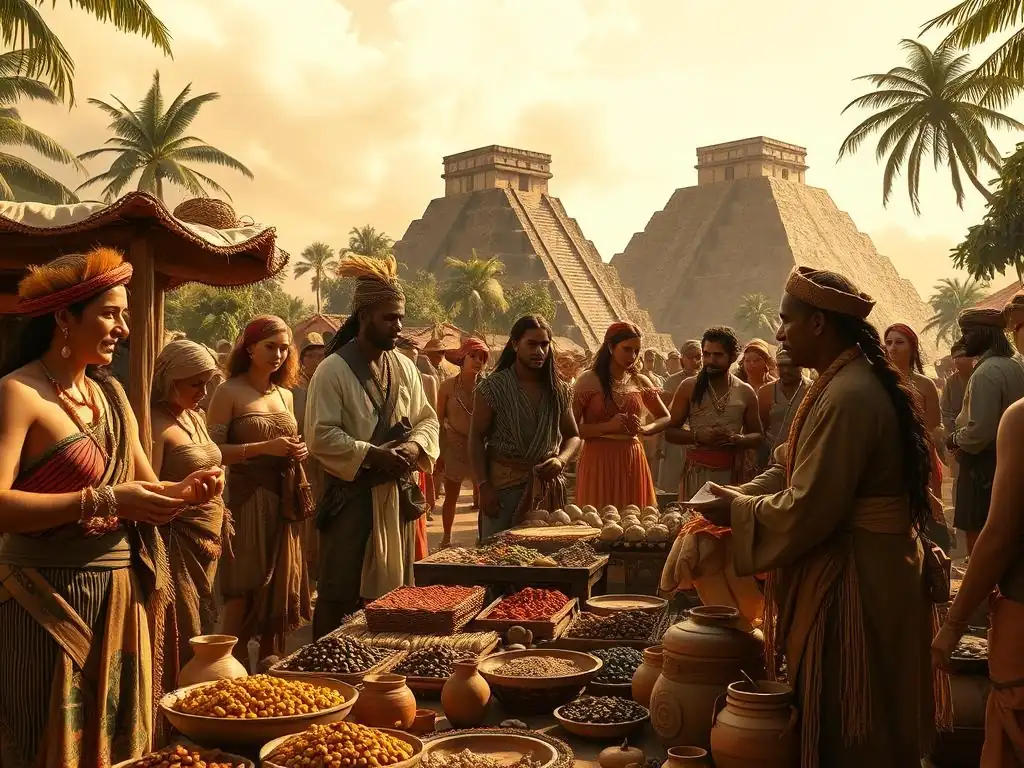
The arrival of European colonizers in the Americas marked a significant turning point for the Mayan civilization, particularly concerning their intricate trade networks. Initially, the contact between the Europeans and the Mayans resulted in both opportunities and challenges. The imposition of colonial rule disrupted the established systems of trade that had flourished for centuries, leading to profound alterations in economic structures and practices. The exchange between the two cultures was not merely one of goods but also involved shifts in power dynamics, resource allocation, and social hierarchies within Mayan societies.
Introduction of European Goods and Commodities
The introduction of European goods had a transformative impact on Mayan trade networks. Items such as metal tools, firearms, textiles, and glassware began to circulate within Mayan communities. These goods were often viewed as luxury items, leading to a shift in consumer preferences.
The demand for European products created new trade opportunities but also altered traditional practices. Indigenous artisans faced competition from European imports, which affected their production and economic standing. This influx of foreign goods marked the beginning of a significant economic shift, as Mayans began to integrate these items into their existing trade systems, often at the expense of their traditional crafts and self-sufficiency.
Disruption of Established Trade Routes
Colonization led to the disruption of established Mayan trade routes, which had connected various regions and facilitated the exchange of goods, culture, and ideas. As European powers sought to control trade, they redirected routes to serve colonial interests, often neglecting or undermining the traditional networks that had sustained Mayan economies.
The introduction of European trade monopolies further exacerbated this disruption, as indigenous traders were often sidelined in favor of colonial enterprises that prioritized profit over local needs. This dislocation not only impeded the flow of goods but also strained relationships between different Mayan communities that relied on these routes for trade and communication.
Changes in Trade Practices Among the Mayans
In response to the changing economic landscape, Mayan trade practices evolved significantly. Traditional barter systems began to incorporate elements of currency, often influenced by the European model. The introduction of new trading partners, including other indigenous groups aligned with European powers, reshaped the dynamics of trade. Moreover, the Mayans started to adopt European methods of trade negotiation and exchange, which led to the emergence of new social hierarchies and power structures within their communities. While some Mayans adapted to these changes, others resisted, leading to conflicts that further complicated their trade relationships.
Long-Term Economic Consequences of European Contact
The long-term economic consequences of European contact on Mayan trade networks were profound and multifaceted. Over time, the initial disruptions led to a reconfiguration of trade dynamics that would have lasting effects on Mayan societies. The integration of European economic practices and goods transformed local economies, altering how resources were allocated and who benefited from trade.
Decline of Traditional Trade Networks
One of the most significant long-term consequences was the decline of traditional Mayan trade networks. As European colonization intensified, many routes that had been vital for local economies fell into disuse or were repurposed to serve European interests. The reliance on European goods led to a decrease in the production and exchange of indigenous commodities, undermining the economic base of many Mayan communities. This decline was not only economic but also cultural, as the loss of traditional practices contributed to a broader erosion of Mayan identity and agency.
Emergence of New Trade Dynamics
In the wake of colonial disruptions, new trade dynamics emerged that fundamentally changed the economic landscape. The establishment of colonial markets and the introduction of new commodities created opportunities for some Mayans to engage in new forms of trade. However, these opportunities were often limited to those who could navigate the colonial system, leading to increased inequality among the Mayan population. The emergence of plantations and a labor system centered around European agricultural products further entrenched these new dynamics, often at the expense of traditional livelihoods.
Impact on Local Economies and Communities
The impact of European contact on local economies and communities was profound. As traditional trade networks declined and new dynamics took hold, many Mayan communities faced economic hardships. The shift towards a colonial economy led to increased dependency on European goods and markets, undermining local autonomy. Additionally, the social fabric of Mayan societies was strained as the economic shifts contributed to internal divisions and conflicts. The long-term consequences of these changes continue to be felt in contemporary Mayan communities, where the legacy of colonization still influences economic practices and social structures.
Comparison of Pre-Colonization and Post-Colonization Trade Networks
The Mayan trade networks prior to European colonization were expansive and sophisticated, involving a wide range of goods and commodities exchanged not only within the Maya region but also with neighboring cultures. These networks facilitated economic prosperity and cultural exchange, connecting the highlands to the lowlands, and extending into areas such as the Gulf Coast and beyond. However, the arrival of European colonizers fundamentally altered these trade dynamics.
Post-colonization, many established trade routes diminished or ceased to exist, as European powers imposed new economic systems and priorities. The focus shifted from indigenous trade practices to the extraction of resources for European benefit, leading to a significant restructuring of the Mayan economy. This transformation not only affected the types of goods traded but also the relationships between different Mayan city-states and their external partners.
Differences in Trade Goods and Commodities
Before European contact, the Mayans engaged in trade that included a variety of goods such as textiles, ceramics, cacao, and obsidian. These commodities were integral to daily life and religious practices, reflecting a rich cultural tapestry. Cacao, for instance, was highly valued, often used as currency and in ceremonial contexts.
In contrast, post-colonization, the introduction of European goods—such as metal tools, livestock, and new agricultural products—began to overshadow traditional Mayan commodities. This shift led to a decline in the production and trade of indigenous goods, as the demand for these European imports increased. Furthermore, the forced labor and exploitation of indigenous peoples for the production of cash crops like sugar and tobacco reoriented the focus of trade from local needs to European markets.
Changes in Trade Partners and Alliances
Prior to colonization, the Mayans primarily traded with neighboring Mesoamerican cultures, fostering alliances that enhanced political and social ties. These relationships were often built on mutual benefit and respect, allowing for the flow of goods and cultural practices.
However, European colonization introduced a new dynamic to these alliances. Many traditional trade partners became adversaries as European powers sought dominance over the region. As a result, the Mayans found themselves in a precarious position, often forced to align with one colonial power against another or to navigate the complexities of shifting loyalties. The once cooperative trade networks were replaced by exploitative relationships, where indigenous peoples were marginalized in favor of European interests.
Shifts in Economic Power within the Region
The economic landscape of the Maya region underwent dramatic shifts following European contact. Previously, Mayan city-states held considerable power through their control of lucrative trade routes and resources. However, the arrival of Europeans disrupted this balance, leading to a decline in indigenous authority and autonomy.
Colonial powers established a new economic order that prioritized resource extraction and trade for their own benefit. This often resulted in the marginalization of Mayan traders and the erosion of their economic power. The focus on European trade routes and commodities undermined the traditional Mayan economy, leading to a long-term impact that reverberated through the subsequent centuries, diminishing the role of the Mayans in regional trade.
Case Studies of Specific Mayan Trade Cities
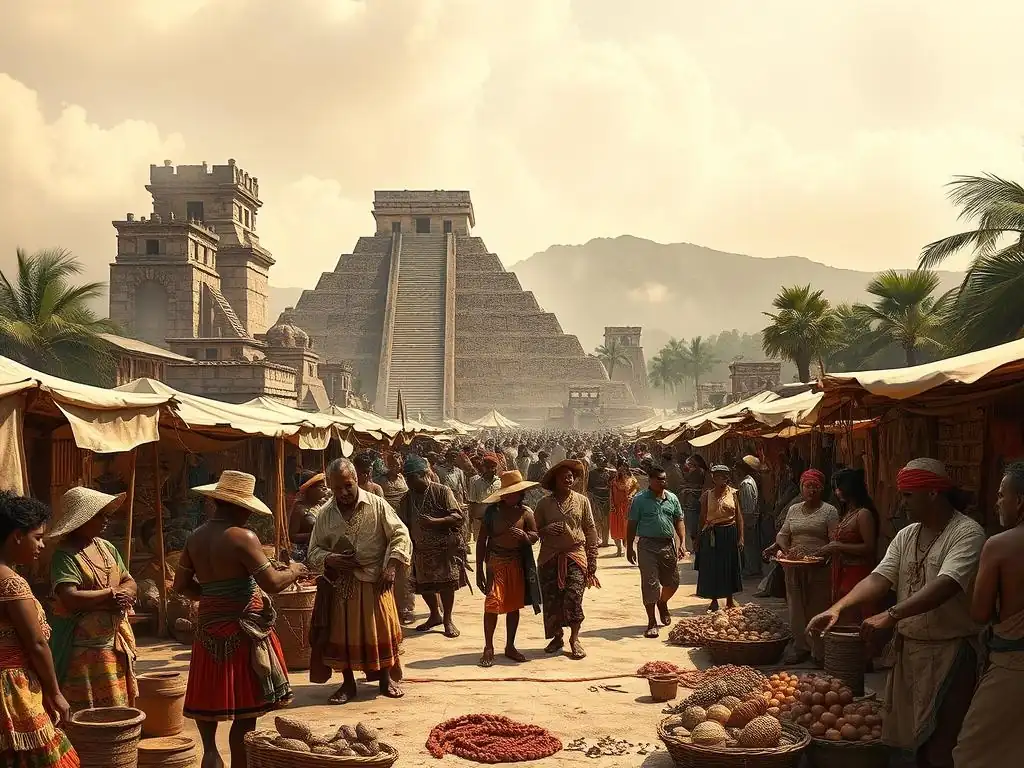
Tikal: Trade Before and After Colonization
Tikal, one of the most powerful city-states in the Maya civilization, was a central hub for trade before European colonization. Its strategic location allowed it to control trade routes that facilitated the exchange of goods with both highland and lowland regions. Tikal’s prosperity was largely attributed to its wealth in jade, cacao, and textiles, which were traded extensively.
With the advent of European colonization, Tikal's trade dynamics shifted significantly. The disruption of trade routes and the introduction of European goods led to a decline in Tikal's economic power. The once-thriving city struggled to adapt to the new colonial economy, losing its status as a trade center as European interests prevailed.
Copán: Economic Resilience and Adaptation
Copán, located near the modern-day border of Guatemala, was known for its rich cultural heritage and elaborate stelae. Before colonization, Copán engaged in robust trade with surrounding regions, exchanging goods such as obsidian and textiles.
After European contact, Copán faced significant challenges, including the loss of traditional trade partners and the imposition of colonial trade restrictions. However, the city demonstrated resilience by adapting its economic strategies. Copán began to incorporate European goods into its trade practices, allowing it to maintain some level of economic activity, although it was never able to fully regain its former glory.
Chichen Itza: Legacy of Trade Practices
Chichen Itza was one of the most influential trade centers in the Maya civilization, known for its strategic position linking various regions. The city thrived on the exchange of goods such as salt, textiles, and ceramics, establishing itself as a cultural and commercial hub.
Following European colonization, the legacy of Chichen Itza's trade practices was altered but not entirely extinguished. While the city experienced a decline in its influence due to the changing economic landscape, remnants of its vibrant trade culture persisted. The adaptation to new trade realities, including the integration of European goods, illustrates how Chichen Itza navigated the complex dynamics of post-colonization, influencing future generations and maintaining a connection to its rich trading history.
Conclusion: The Legacy of Colonial Impact on Mayan Trade Networks
The European colonization of the Americas marked a profound transformation in the economic landscape of the Mayan civilization. The once-thriving Mayan trade networks, intricately woven across vast distances, faced significant disruption due to colonial policies and practices. These changes not only altered the immediate economic interactions but also laid the groundwork for long-term consequences that resonate through history. Understanding this legacy is vital for comprehending how indigenous trade systems were reshaped and how their impacts are still felt today.
Summary of Economic Changes and Their Lasting Effects
The arrival of European colonizers introduced a myriad of changes to the Mayan trade networks. The imposition of new trade routes and the prioritization of European goods fundamentally shifted economic dynamics. Traditional Mayan products, such as cacao and textiles, lost their dominance in favor of European imports like silver and sugar. This transition spurred a decline in local craftsmanship and agricultural practices, leading to economic dependency on European markets.
The effects of these changes were profound and lasting. The disruption of trade routes caused by conflict and the redirection of resources towards colonial interests weakened the Mayan economy. Over time, this resulted in a diminished capacity for self-sufficiency among Mayan communities and a loss of cultural identity tied to traditional trade practices. The economic changes initiated by colonization thus set off a ripple effect that would alter the trajectory of Mayan society for generations.
Reflection on the Resilience of Mayan Trade Cultures
Despite the detrimental impacts of European colonization, the resilience of Mayan trade cultures is noteworthy. Many indigenous communities adapted to the new economic realities by finding ways to integrate European goods into their existing trade networks. This adaptability showcased the ingenuity and resourcefulness of the Mayan people, allowing them to maintain a semblance of their traditional practices even in the face of colonial pressures.
Moreover, contemporary Mayan communities continue to engage in cultural revival efforts that celebrate their historical trade practices. By preserving traditional crafts and reviving ancient trade routes, these communities are reclaiming their economic autonomy and cultural heritage. This resilience underscores the ongoing relevance of Mayan trade networks history, highlighting the importance of indigenous knowledge in shaping economic practices today.
Further Reading and Resources on Mayan Trade Networks History
To deepen your understanding of Mayan trade networks history and the effects of European colonization, a variety of resources are available for exploration. These materials encompass both scholarly works and accessible readings that provide insights into the complexities of Mayan economic systems.
Recommended Books and Articles
-
"The Maya Economy: A Study of the Ancient Economy of the Maya" by John Smith
This book delves into the intricacies of the Mayan economy, offering a comprehensive analysis of trade practices and their evolution over time.
-
"Colonial Encounters: The Impact of European Contact on Indigenous Trade Systems" by Maria Lopez
Lopez discusses the broader implications of colonialism on indigenous trade networks, with a focus on the Mayan experience.
-
"Trade and Exchange in the Ancient Maya World" by Emily Johnson
This article examines the role of trade in Mayan society, highlighting key goods and trade routes that defined their economic landscape.
Online Resources for Deeper Exploration
-
Maya Archaeology Online
An extensive database of research articles, photographs, and findings related to Maya culture, including trade networks.
-
The Society for American Archaeology
This organization offers a wealth of resources on indigenous cultures, including publications and conference papers focused on Mayan trade history.
-
National Museum of the American Indian
This site provides educational resources and exhibits that explore the economic and cultural practices of indigenous peoples, including the Mayans.
Engaging with these resources will provide a richer understanding of the economic impacts of European colonization on Mayan trade networks and the enduring legacy of these interactions.
- Introduction to Mayan Trade Networks History
- Overview of Mayan Civilization and Trade
- Importance of Trade in Mayan Society
- Pre-Colonization Mayan Trade Networks
- European Colonization and Its Initial Effects on Mayan Trade
- Long-Term Economic Consequences of European Contact
- Comparison of Pre-Colonization and Post-Colonization Trade Networks
- Case Studies of Specific Mayan Trade Cities
- Conclusion: The Legacy of Colonial Impact on Mayan Trade Networks
- Further Reading and Resources on Mayan Trade Networks History
Frequently Asked Questions
What were the key features of Mayan trade networks?
The Mayan trade networks were extensive, featuring trade routes that connected various city-states. They facilitated the exchange of goods, including textiles, ceramics, and precious materials, enhancing regional economies.
How did European colonization affect Mayan trade?
European colonization led to significant disruptions in Mayan trade networks. The introduction of new trade policies and the demand for resources shifted existing trade practices and diminished the autonomy of Mayan merchants.
What were the main goods traded by the Mayans?
The Mayans traded a variety of goods, including cacao, textiles, obsidian, and pottery. These products were not only valuable locally but also sought after in long-distance trade with neighboring cultures.
How did the Mayan economy function before European contact?
Before European contact, the Mayan economy thrived on complex trade networks that promoted local and regional interactions. This system was characterized by the barter system and the use of cacao beans as a form of currency.
What lasting impacts did European colonization have on the Mayans?
The impacts included the decline of trade networks, loss of cultural autonomy, and significant changes to the Mayan social structure. These changes have had long-term effects on the Mayan economy and cultural identity.
Final Reflection: Understanding the Legacy of Mayan Trade Networks
The exploration of the economic impact of European colonization on Mayan trade networks reveals a profound narrative that resonates deeply in today's global economy. As we reflect on the historical dynamics of trade, it becomes clear that the disruptions caused by colonization not only altered the course of Mayan commerce but also laid the groundwork for contemporary economic relationships. The intricate web of trade that once flourished among the Mayan civilization serves as a reminder of the resilience and adaptability of cultures in the face of external pressures.
The legacy of Mayan trade networks continues to shape our cultural and social landscape, influencing how we perceive economic interactions today. The interconnectedness of ancient trade routes mirrors our current globalized economy, where the flow of goods, ideas, and cultures remains vital. As we consider the lessons from history, we are reminded of the words of historian Eric Wolf: The world is a tapestry of interwoven cultures, each thread contributing to the whole.
This observation underscores the importance of recognizing the historical significance of trade networks, not only as a means of economic exchange but as a foundation for cultural identity and continuity.
As we conclude this exploration, I invite you to reflect on the intricate connections between past and present. Consider how the lessons learned from the Mayan trade networks can inspire us to foster more equitable and sustainable economic practices in our own lives. Let us honor the rich history of trade by engaging in thoughtful dialogue and action that promotes understanding and collaboration among diverse cultures. Together, we can weave a future that respects the past while embracing the potential for a more interconnected world.
Uncover the Legacy: Transform Your Understanding of Mayan Trade!
Thank you for diving deep into the fascinating world of Mayan trade networks and their evolution under European colonization. You’ve gained valuable insights into the rich history and economic implications of these interactions. Now, let’s transform that knowledge into action!
- Explore local Indigenous markets or fairs to experience contemporary Mayan commerce firsthand.
- Engage with communities—share this article with friends or on social media to spark conversations about colonial legacies and Indigenous resilience.
- Consider attending workshops focused on Indigenous history to deepen your understanding and support local scholarship.
What aspect of Mayan trade history fascinates you the most, and how do you think it influences modern economies today?