
Symbols of Power: Decoding Tiahuanaco Religious Iconography

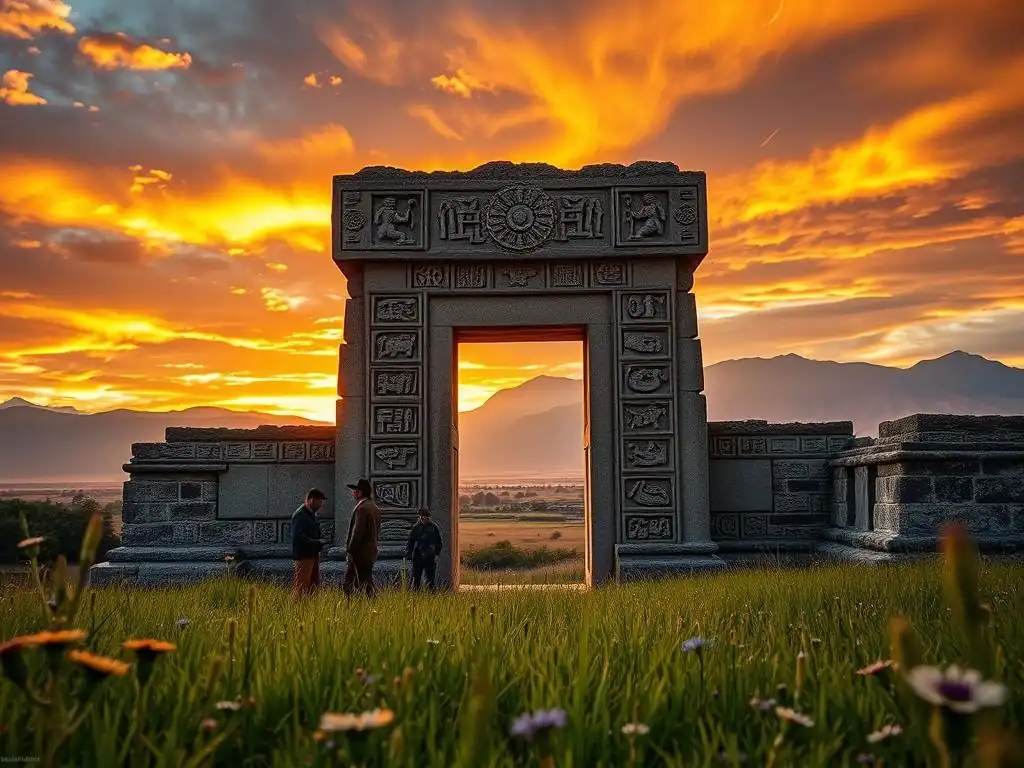
Welcome to Indigenous Civilizations of the Americas, where we delve deep into the rich tapestry of cultures that flourished on this continent long before European contact. Here, you will embark on a journey through time, exploring not only the remarkable achievements of these societies but also their enduring legacies. In our featured article, "Symbols of Power: Decoding Tiahuanaco Religious Iconography," we invite you to uncover the profound significance behind the Tiahuanaco religious symbols that reveal the spiritual and societal structures of one of the most influential civilizations in the Andes.
Ready to unlock the mysteries of the past? Join us as we illuminate the intricate beliefs that shaped a culture still revered today.
- Introduction to Tiahuanaco Religious Iconography
- Historical Context of Tiahuanaco Civilization
- Key Tiahuanaco Religious Symbols
- Decoding the Iconography of Tiahuanaco
- The Influence of Tiahuanaco Religious Symbols on Modern Indigenous Cultures
- Conclusion: The Legacy of Tiahuanaco Religious Iconography
-
Frequently Asked Questions
- What is Tiahuanaco known for in terms of religious symbols?
- How do Tiahuanaco religious symbols relate to their society?
- What are some prominent Tiahuanaco religious symbols?
- How did Tiahuanaco's religious practices influence other cultures?
- Why is understanding Tiahuanaco religious symbols important today?
- Final Reflection: Unveiling the Depth of Tiahuanaco's Religious Symbols
- Unveil the Mysteries of Tiahuanaco's Iconography!
Introduction to Tiahuanaco Religious Iconography
The Tiahuanaco civilization, one of the most remarkable indigenous cultures of the Americas, flourished around Lake Titicaca in present-day Bolivia from approximately 300 AD to 1000 AD. This society is renowned for its advanced architectural marvels, agricultural innovations, and rich spiritual beliefs. At the heart of Tiahuanaco’s cultural expression lies its religious iconography, a complex array of symbols that convey profound meanings and reflect the society's worldview.
By examining these Tiahuanaco religious symbols, we can gain valuable insights into their rituals, beliefs, and societal structures, emphasizing the civilization's significance long before European contact. This article aims to decode Tiahuanaco religious iconography, exploring the intricate web of meanings embedded within their symbols and shedding light on their enduring legacy.
Understanding the Importance of Symbols in Tiahuanaco Culture
Symbols are crucial in any culture, serving as visual representations of beliefs, values, and social structures. For the Tiahuanaco people, religious symbols were not merely decorative; they held deep spiritual significance and played a vital role in rituals and community life.
- Expression of Beliefs: Tiahuanaco religious symbols often embodied their beliefs in the divine, the cosmos, and the afterlife. For instance, the Staff God, a prominent figure in their iconography, symbolizes authority and connection to the divine, representing the duality of life and death.
- Social Cohesion: These symbols fostered a sense of identity and unity among the Tiahuanaco people. By utilizing shared symbols in their art and architecture, they reinforced community bonds and cultural continuity.
- Ritualistic Utilization: Many symbols were crucial in ceremonial practices. The incorporation of specific motifs in pottery, textiles, and monumental architecture often coincided with significant ritual events, emphasizing their religious importance.
In this context, understanding these symbols allows us to appreciate the intricate relationship between religion, society, and identity within Tiahuanaco culture.
Overview of Tiahuanaco Religious Symbols Explained
The Tiahuanaco civilization produced a rich tapestry of religious symbols, each with multifaceted meanings. Here are some of the most significant symbols and their interpretations:
| Symbol | Description | Meaning |
|---|---|---|
| Staff God | Depicted as a figure holding two staffs, often shown with a beard, and a prominent headdress. | Represents authority, duality, and the divine. |
| Chacana | Also known as the Inca Cross, it features a stepped pattern resembling a cross. | Symbolizes the connection between the earthly and spiritual realms. |
| Feline Imagery | Often represented in ceramics and textiles, showcasing jaguars or other big cats. | Represents strength, power, and the spiritual world. |
| Sun and Moon | Commonly depicted in various forms, often together in religious art. | Symbolizes the duality of life, fertility, and the passage of time. |
These symbols are essential to understanding Tiahuanaco religious beliefs and practices, revealing how they perceived their world and the forces that governed it. By decoding these symbols, we not only honor the legacy of Tiahuanaco culture but also enrich our understanding of the broader indigenous experience in the Americas.
Historical Context of Tiahuanaco Civilization
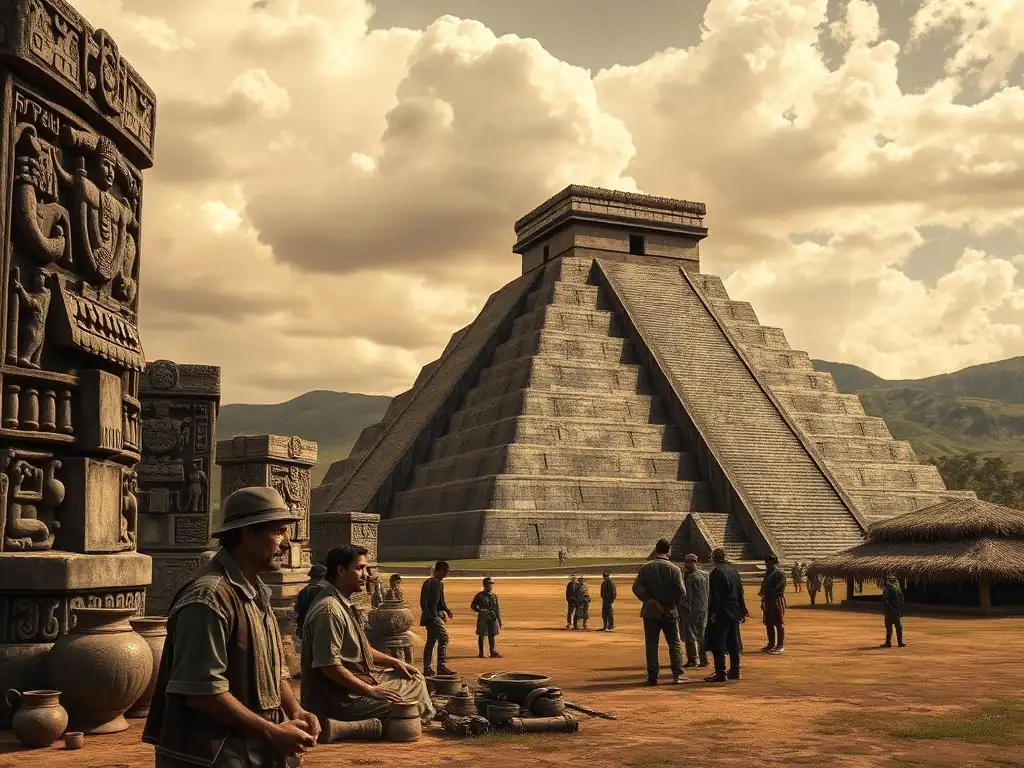
The Tiahuanaco civilization, flourishing from approximately 400 to 1000 CE, represents one of the most remarkable indigenous cultures in the Andes. Its geographic location near the southern shore of Lake Titicaca, in present-day Bolivia, provided a strategic advantage for trade and cultural exchange. Tiahuanaco became a melting pot of various ethnic groups and cultural influences, establishing itself as a vital hub in pre-Columbian history.
The Rise of Tiahuanaco: A Cultural Hub in the Andes
The rise of Tiahuanaco is attributed to several factors, including its advanced agricultural practices, architectural innovations, and extensive trade networks. The civilization developed sophisticated farming techniques, such as raised-field agriculture, which allowed for effective crop cultivation in the high-altitude environment. This agricultural surplus supported a growing population and facilitated the emergence of a complex social structure.
- Architectural Achievements: Tiahuanaco is renowned for its monumental structures, including the Akapana Pyramid and the Gateway of the Sun. These constructions not only demonstrate advanced engineering skills but also reflect the civilization's religious and political ideologies. The precision of stone-cutting techniques and the use of large, interlocking stones reveal a deep understanding of both materials and aesthetics.
- Trade Networks: The strategic location of Tiahuanaco enabled it to become a central point for trade routes connecting the highlands and lowlands of the Andes. Artifacts from distant regions have been discovered at Tiahuanaco, indicating a vibrant exchange of goods, ideas, and cultural practices. This exchange contributed to the richness of Tiahuanaco's religious iconography and rituals.
- Social Structure: Tiahuanaco's society was likely hierarchical, with a ruling elite that controlled resources and religious practices. The presence of elite burials and ceremonial centers suggests that religion played a critical role in governance and social cohesion. Rituals and ceremonies were integral to maintaining the power dynamics within the community.
These elements combined to create a vibrant cultural hub that would leave a lasting legacy on the Andean region. The Tiahuanaco civilization's influence can be seen in later cultures, particularly the Inca, who adopted and adapted many of Tiahuanaco's religious symbols and practices.
Influences on Tiahuanaco Religious Practices
The religious practices of Tiahuanaco were shaped by a confluence of indigenous beliefs, environmental factors, and interactions with neighboring cultures. Understanding these influences is crucial for decoding Tiahuanaco religious symbols and their significance.
- Nature and Cosmology: The Tiahuanaco worldview was deeply intertwined with their environment. The Andean landscape, especially the sacred Lake Titicaca, played a pivotal role in their cosmology. Water, mountains, and agricultural cycles were central to their spiritual beliefs, often represented in their religious iconography. Symbols such as the Andean cross (or Chakana) reflect their connection to the cosmos and the earth.
- Cultural Exchange: Tiahuanaco was not isolated; it was part of a broader network of cultural exchange throughout the Andes. Influences from other civilizations, including the Wari and the Aymara, contributed to the complexity of Tiahuanaco's religious practices. This interaction is evident in shared iconography and religious motifs, which highlight a blending of beliefs across regional boundaries.
- Rituals and Ceremonies: Rituals were an essential aspect of Tiahuanaco's religious life, often involving offerings, feasting, and elaborate ceremonies. These practices served to honor deities, ancestors, and the natural world. The use of sacrificial symbols in their iconography indicates a belief in the necessity of offerings to maintain balance and favor from the divine.
- Political and Religious Intertwining: In Tiahuanaco, religion and politics were closely linked. The ruling elite often served as intermediaries between the people and the gods, using religious symbols to legitimize their authority. Iconographic representations of rulers and deities often overlapped, reinforcing the idea that political power was divinely sanctioned.
The Tiahuanaco civilization's rich religious tapestry, characterized by its symbols and rituals, reflects a profound understanding of their environment and society. By exploring these influences, we can better appreciate the complexity of Tiahuanaco religious symbols and their enduring significance in Andean culture.
Key Tiahuanaco Religious Symbols
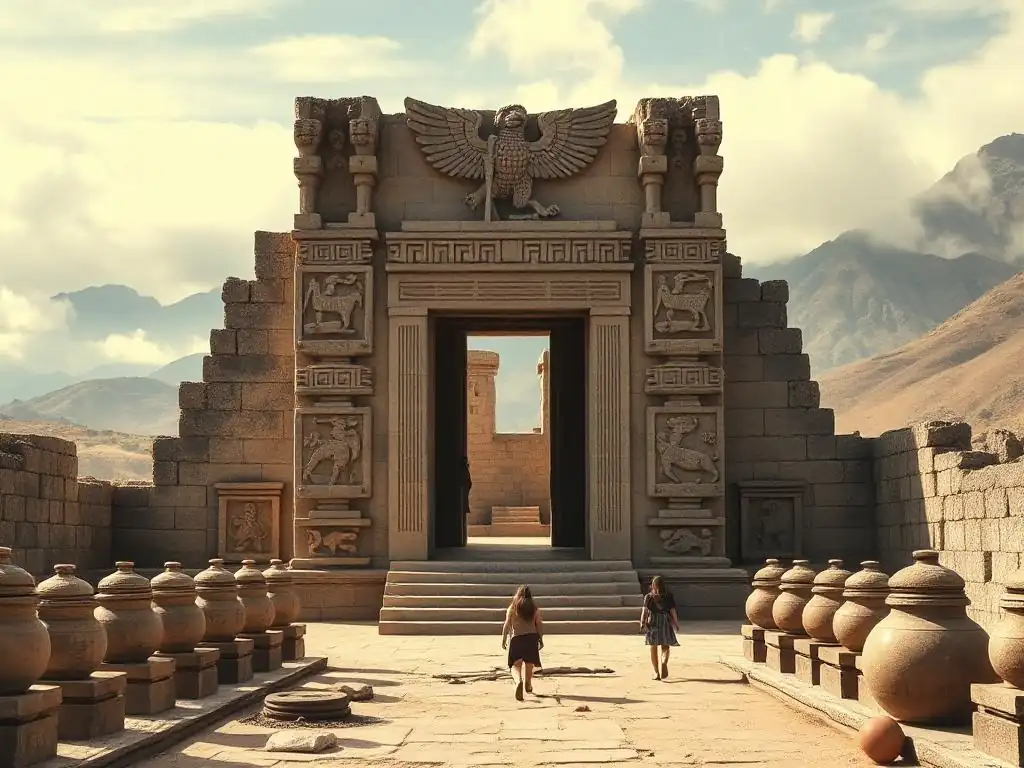
The Tiahuanaco civilization, known for its remarkable achievements in architecture, agriculture, and social organization, also possessed a rich tapestry of religious symbols that played a critical role in their spiritual and cultural identity. The religious iconography of Tiahuanaco was not merely decorative; it was deeply intertwined with their beliefs, cosmology, and societal structure. Understanding these symbols provides insight into the values and priorities of this ancient culture.
The Staff God: Significance and Representation
One of the most prominent symbols in Tiahuanaco religious iconography is the Staff God, often depicted holding a staff and surrounded by various elements that signify power and authority. This deity is frequently associated with creation, agriculture, and governance, reflecting the integral role that divine authority played in the Tiahuanaco society.
- Iconography: The Staff God is usually represented with a distinct headdress and facial features that can be interpreted as a blend of human and supernatural traits. The presence of the staff often symbolizes control over natural forces, suggesting that the Staff God was seen as a mediator between the spiritual and earthly realms.
- Cultural Influence: The significance of the Staff God extends beyond Tiahuanaco. Similar representations can be found in other Andean cultures, indicating a shared religious belief system that influenced various societies across the region. This cross-cultural exchange underlines the importance of the Staff God as a central figure in Andean mythology.
- Archeological Evidence: Artifacts such as pottery, stone carvings, and textiles featuring the Staff God provide evidence of its widespread veneration. These items not only showcase the artistic skills of the Tiahuanaco people but also serve as crucial data points for understanding their religious practices.
The Puma: Symbolism of Power and Strength
The Puma stands as another vital symbol within Tiahuanaco religious iconography, embodying strength, power, and the fierce nature of the Andean landscape. This majestic animal was revered not only for its physical prowess but also for its spiritual significance.
- Representation in Art: In Tiahuanaco art, the Puma is often depicted in a stylized manner, showcasing its powerful physique and dynamic movements. The use of geometric patterns in these representations emphasizes the connection between the animal and the cosmos, suggesting that the Puma held a place within the broader framework of Andean spirituality.
- Mythological Associations: The Puma is frequently linked to themes of protection and guardianship. It is believed that this animal could traverse different realms, acting as a guide for souls and a protector of the earth. This duality highlights the complex relationship Tiahuanaco people had with the natural world.
- Cultural Resonance: The symbolism of the Puma extends beyond the Tiahuanaco civilization, as it is also a significant figure in other Andean cultures, such as the Inca. The continuity of the Puma as a symbol of power across these civilizations underscores its importance in the region's cultural heritage.
The Condor: Spiritual Connections and Meaning
The Condor is another key symbol in Tiahuanaco religious iconography, representing transcendence, freedom, and the connection between the earth and the heavens. This majestic bird is often associated with the sun and the spiritual realm, making it a powerful symbol in Tiahuanaco beliefs.
- Symbol of the Heavens: The Condor is frequently depicted soaring in the sky, symbolizing the ability to transcend earthly limitations. This representation underscores the belief in a spiritual journey that connects the living with the divine.
- Role in Mythology: In Tiahuanaco mythology, the Condor is often seen as a messenger between humans and gods. It is believed that the Condor carried prayers and offerings to the heavens, acting as a vital link in the spiritual communication process.
- Artistic Depictions: Tiahuanaco artisans created intricate representations of the Condor in various forms, including sculptures and textiles. These artistic expressions not only highlight the importance of the Condor in Tiahuanaco culture but also serve as a testament to the civilization's advanced artistic techniques.
The religious symbols of Tiahuanaco, such as the Staff God, Puma, and Condor, reveal a rich and complex belief system that was intricately woven into the fabric of daily life. Each symbol carries profound meanings that reflect the values, cosmology, and cultural identity of the Tiahuanaco civilization, making them essential elements in understanding their legacy.
The Sun and Moon: Duality in Tiahuanaco Beliefs
The Sun and Moon held profound significance in Tiahuanaco religion, embodying the duality that was central to their cosmology. These celestial bodies were not merely astronomical entities; they represented a balance of opposing forces that governed both the physical and spiritual realms. The Tiahuanaco people viewed the Sun as a symbol of life, warmth, and growth, while the Moon was associated with night, intuition, and the cycles of life. This dualistic perspective is reflected in their art, architecture, and rituals.
In Tiahuanaco society, the Sun was revered as a supreme deity. Known as "Inti," the Sun god was considered the source of prosperity and fertility. Agricultural practices were closely linked to solar cycles, with rituals conducted to ensure a bountiful harvest. Temples and ceremonial sites, such as the famous Kalasasaya, were aligned with solar events, highlighting the importance of the Sun in their daily lives and spiritual practices. The image of the Sun often appeared in Tiahuanaco iconography, depicted with anthropomorphic features, radiating beams, and surrounded by ceremonial motifs.
Conversely, the Moon, referred to as "Mama Quilla," played a complementary role within Tiahuanaco cosmology. She was seen as a protector of women and the keeper of time, governing the lunar calendar that dictated agricultural and social activities. The Moon’s phases were believed to influence fertility, both in crops and human life. The Tiahuanaco people crafted intricate stone carvings and pottery that depicted lunar symbols, often showcasing the Moon in conjunction with the Sun, reinforcing the idea of balance and harmony within their belief system.
The interplay between the Sun and Moon in Tiahuanaco religion illustrates the broader theme of duality, where each entity held its own significance while simultaneously relying on the other for balance. This relationship resonates in various aspects of Tiahuanaco culture, including their mythologies, where stories often revolve around the conflict and reconciliation between solar and lunar forces. This cosmic duality not only informed their religious practices but also shaped their understanding of the world around them, making the Sun and Moon integral symbols within Tiahuanaco's rich tapestry of beliefs.
Decoding the Iconography of Tiahuanaco
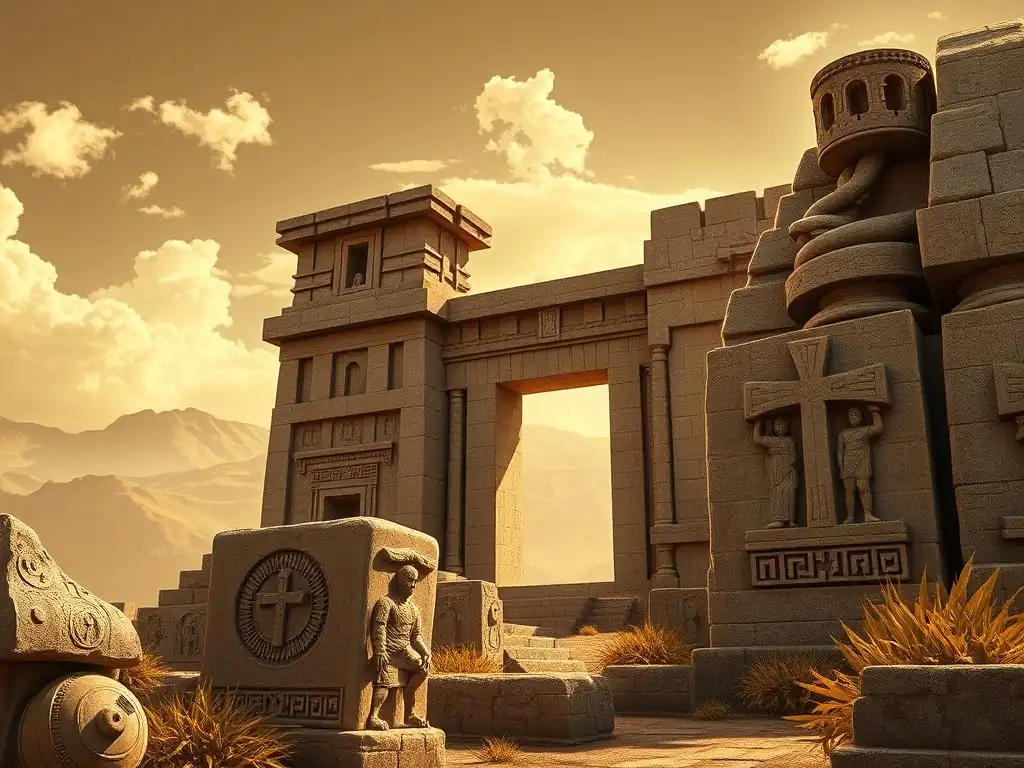
Analyzing Petroglyphs and Stone Carvings
The petroglyphs and stone carvings of Tiahuanaco serve as a vital conduit for understanding the complex belief systems and societal values of this ancient civilization. These artworks, etched into rock surfaces and monumental structures, provide insight into the Tiahuanaco worldview, cosmology, and religious practices.
-
Symbolic Representations:
The carvings often depict deities, animals, and geometric patterns, each of which holds specific meanings. For instance, the Staff God, a prominent figure in Tiahuanaco iconography, is frequently shown wielding a staff and surrounded by other symbolic representations that signify power and authority. The use of anthropomorphic forms, blending human and animal traits, reflects the interconnectedness of nature and spirituality in Tiahuanaco beliefs.
-
Cultural Context:
The significance of petroglyphs extends beyond mere decoration; they were integral to rituals and ceremonies. Many petroglyphs are located near sacred sites, suggesting they played a role in religious observances. These carvings can be interpreted as narratives of creation, depicting the origins of the Tiahuanaco people and their relationship with the divine.
-
Techniques and Materials:
The methods used to create these petroglyphs involved chiseling and polishing, showcasing the advanced craftsmanship of Tiahuanaco artisans. The choice of materials, often local stone, indicates a deep connection to the land and its resources, further embedding these symbols within the cultural identity of the community.
The Role of Architecture in Religious Symbolism
Architecture at Tiahuanaco is not just a testament to engineering prowess but a profound expression of religious symbolism. The layout and design of various structures reflect the civilization's spiritual beliefs and social hierarchy.
-
Temple of the Sun:
This prominent structure is aligned with the solstices, emphasizing the importance of celestial events in Tiahuanaco religion. The temple served as a site for solar worship, illustrating how architecture can encapsulate astronomical knowledge and religious devotion.
-
Pumapunku Complex:
Renowned for its precise stonework and massive blocks, Pumapunku is believed to have been a ceremonial center. The architectural elements, such as doorways and platforms, are thought to symbolize portals to the spiritual world. Some scholars assert that these structures were designed to facilitate communication with the gods, showcasing the intersection of architecture and spirituality.
-
Symbolism in Layout:
The overall urban planning of Tiahuanaco, with its central plazas and surrounding temples, reflects a cosmos ordered by religious principles. Each element within the city was strategically placed to align with celestial bodies, reinforcing the idea that architecture was a physical manifestation of Tiahuanaco's religious beliefs.
Ritual Objects: Tools and Symbols of Worship
Ritual objects found within Tiahuanaco sites provide significant insights into the ceremonial practices and religious beliefs of this ancient culture. These items were not merely functional; they were imbued with spiritual significance and often served as conduits between the physical and spiritual realms.
-
Ceremonial Vessels:
Elaborately decorated pottery and vessels were used in rituals, often filled with offerings for the gods. The designs on these vessels typically feature religious symbols and motifs that represent fertility, agricultural cycles, and ancestral veneration. The presence of such items highlights the importance of communal rituals in reinforcing social cohesion and cultural identity.
-
Sculptural Artifacts:
Stone sculptures, such as the Chacana (the Andean cross), symbolize the interconnectedness of the three realms: the upper world, the earthly plane, and the underworld. These artifacts often served as focal points in rituals, guiding participants through complex spiritual journeys.
-
Musical Instruments:
Instruments like flutes and drums played a significant role in Tiahuanaco worship. The sounds produced were believed to invoke deities and create a sacred atmosphere essential for effective prayer and offerings. Music was not merely an accompaniment but a vital aspect of spiritual expression.
Tiahuanaco religious symbols explained through petroglyphs, architecture, and ritual objects reveal a sophisticated understanding of spirituality that permeated every aspect of their society. These elements combined to create a rich tapestry of beliefs that has left a lasting legacy on the cultural landscape of the Andes.
The Influence of Tiahuanaco Religious Symbols on Modern Indigenous Cultures
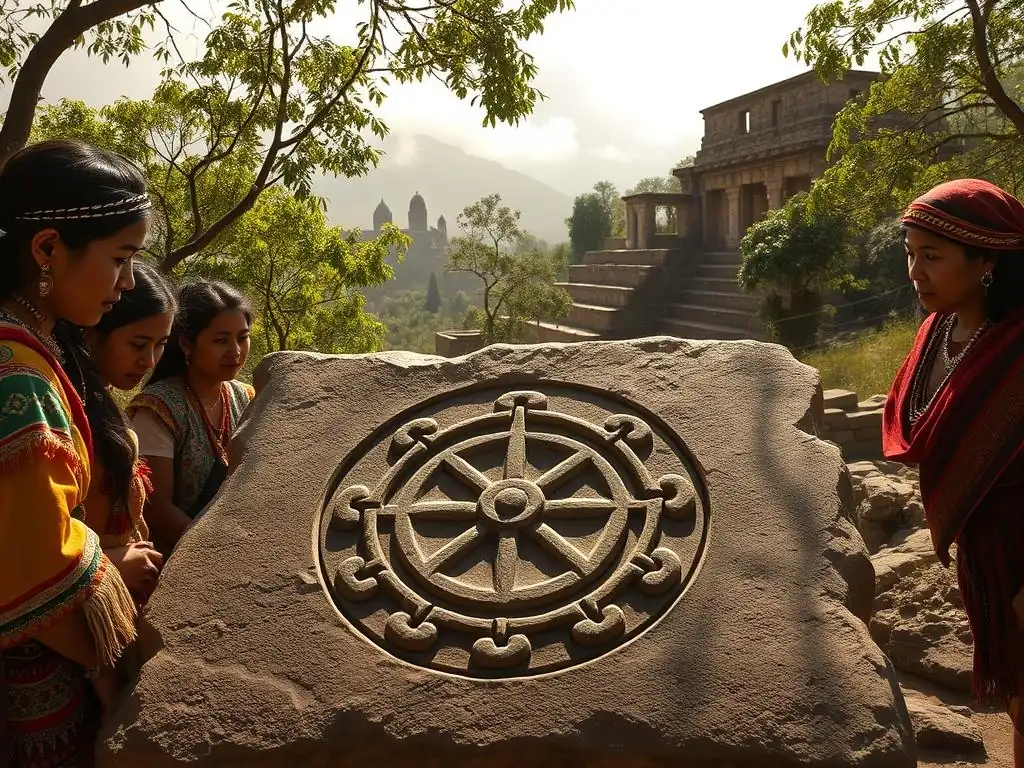
The religious symbols of Tiahuanaco, a pre-Columbian civilization that flourished near Lake Titicaca, have left an indelible mark on contemporary indigenous cultures in the Andes. These symbols not only convey the spiritual beliefs and cosmology of the Tiahuanaco people but also serve as cultural touchstones that have persisted through centuries of change. Understanding the influence of these symbols today requires an exploration of their continuity in modern practices and interpretations.
Continuity of Symbolism in Contemporary Practices
The Tiahuanaco civilization is renowned for its intricate iconography, which often combines natural elements with human figures, reflecting a deep connection to the environment and spirituality. Many of these symbols continue to resonate within modern indigenous communities, where they are integrated into ceremonies, art, and daily life.
- Ceremonial Uses:
- Rituals: In many indigenous communities, Tiahuanaco symbols are incorporated into rituals aimed at honoring ancestors and nature. For example, the use of the staff god symbol, representing authority and spiritual power, can be seen in various Andean ceremonies.
- Offerings: Contemporary practices often involve offerings that include symbolic items reminiscent of Tiahuanaco iconography, such as miniature models of the Puerta del Sol (Gate of the Sun).
- Artistic Expressions:
- Textiles: Traditional weaving techniques often feature Tiahuanaco motifs, connecting contemporary artistry with ancestral heritage.
- Sculpture: Modern artists frequently draw inspiration from Tiahuanaco stone carvings, creating sculptures that echo the ancient style while addressing contemporary themes.
- Community Identity:
- Cultural Festivals: Events celebrating indigenous heritage often showcase Tiahuanaco symbols, reinforcing community identity and continuity. These festivals serve as platforms for education and cultural pride, emphasizing the historical significance of these symbols.
Case Studies: Modern Interpretations of Tiahuanaco Religious Symbols
Several indigenous communities have adapted Tiahuanaco religious symbols in unique ways, demonstrating their relevance in today's society. Below are specific case studies that illustrate these modern interpretations.
- Aymara Communities:
- In Aymara culture, the Andean cross (or Wiphala) is closely associated with Tiahuanaco religious symbols. It represents the four elements and the interconnectedness of life. Modern Aymara festivals often incorporate this symbol as a representation of unity and resistance against cultural erasure.
- Kallawaya Healers:
- The Kallawaya, traditional healers in the Andes, utilize Tiahuanaco motifs in their medicinal practices. They believe that these symbols possess healing powers and invoke the ancestors' guidance during rituals. The integration of Tiahuanaco iconography into their practices illustrates a blend of ancient wisdom with contemporary medicinal beliefs.
- Artisan Markets:
- Artisan markets in Bolivia frequently feature crafts that include Tiahuanaco designs, promoting both economic sustainability and cultural preservation. Craftspeople often explain the significance of these symbols to tourists, fostering a greater appreciation for indigenous history and its modern implications.
The Tiahuanaco religious symbols are not merely relics of the past; they continue to shape and influence modern indigenous cultures in significant ways. Through their integration into contemporary practices, these symbols serve as vital links to ancestral traditions, affirming the enduring legacy of Tiahuanaco in the cultural landscape of the Andes.
Conclusion: The Legacy of Tiahuanaco Religious Iconography
The religious iconography of Tiahuanaco represents a profound aspect of the civilization's cultural identity and its socio-political structure. The symbols and motifs found in Tiahuanaco's art and architecture serve not only as aesthetic expressions but also as vehicles of meaning, encapsulating the beliefs, rituals, and hierarchies that defined the society. By examining these symbols, we gain insight into the spiritual and communal life of the Tiahuanaco people, revealing their connections to the cosmos, nature, and the divine.
Reflection on the Importance of Understanding Tiahuanaco Symbols
Understanding Tiahuanaco religious symbols is crucial for several reasons:
- Cultural Preservation: The Tiahuanaco civilization thrived between 300 and 1000 CE, and its symbols offer a glimpse into a world that shaped the identity of its people. Preserving this knowledge fosters appreciation for indigenous cultures and helps combat historical erasure.
- Interconnectedness of Beliefs: The iconography reflects the interconnectedness of Tiahuanaco beliefs with other Andean cultures. For instance, motifs such as the "Staff God" and the "Sun God" reveal shared spiritual themes across the region, highlighting the fluidity and exchange of ideas among ancient civilizations.
- Socio-Political Insights: Symbols often served as markers of authority and power. Understanding how these symbols functioned within the society’s hierarchy can provide valuable insights into the governance and social structures of Tiahuanaco. For example, the use of certain motifs in elite burials suggests a complex relationship between spirituality and political legitimacy.
- Modern Relevance: Today, these symbols continue to resonate within contemporary indigenous communities. They serve as a source of identity, cultural pride, and resistance against colonial narratives. By decoding these symbols, we can better appreciate their ongoing significance and relevance.
Future Research Directions in Tiahuanaco Religious Studies
As scholars continue to decode Tiahuanaco religious symbols, several promising research directions emerge:
- Cross-Cultural Comparisons: There is a need for comparative studies that examine Tiahuanaco iconography alongside other Mesoamerican and Andean cultures. Such research can illuminate the shared and divergent elements of religious practices and beliefs.
- Archaeological Advances: Ongoing archaeological excavations and advancements in technology can yield new findings related to Tiahuanaco symbols. For example, the use of ground-penetrating radar and 3D modeling can help uncover hidden structures and artifacts, offering fresh perspectives on the spatial organization of religious sites.
- Linguistic Analysis: Investigating the linguistic dimensions of Tiahuanaco symbols could uncover deeper meanings and contextual nuances. Analyzing ancient texts and inscriptions alongside iconographic evidence may reveal how language and imagery interacted within religious practices.
- Community Engagement: Collaborating with contemporary indigenous communities can provide valuable insights and interpretations of Tiahuanaco symbols. Engaging with living traditions allows researchers to understand the symbols' meanings and significance in a modern context.
- Interdisciplinary Approaches: Incorporating insights from anthropology, art history, and religious studies can enrich the understanding of Tiahuanaco religious iconography. An interdisciplinary framework can facilitate a holistic comprehension of the cultural, social, and spiritual dimensions of these symbols.
The study of Tiahuanaco religious symbols is not only essential for understanding the past but also for recognizing the enduring legacy of indigenous cultures in shaping contemporary identities. As research progresses, the richness of Tiahuanaco's religious iconography continues to captivate scholars and enthusiasts alike, promising new discoveries and deeper appreciation of this remarkable ancient civilization.
Frequently Asked Questions
What is Tiahuanaco known for in terms of religious symbols?
Tiahuanaco is known for its complex religious iconography that reflects the spiritual beliefs and social structures of its civilization, showcasing symbols that represent power, fertility, and the cosmos.
How do Tiahuanaco religious symbols relate to their society?
The religious symbols of Tiahuanaco are deeply intertwined with their social hierarchies and political power, illustrating how leaders used iconography to reinforce their authority and connect with the divine.
What are some prominent Tiahuanaco religious symbols?
Prominent symbols include the Staff God, the Sun, and zoomorphic figures like the condor, each representing various aspects of nature, deities, and cultural beliefs.
How did Tiahuanaco's religious practices influence other cultures?
Tiahuanaco's religious practices and symbols significantly influenced neighboring cultures, spreading artistic styles and rituals that emphasized a shared spiritual heritage across the Andes.
Why is understanding Tiahuanaco religious symbols important today?
Understanding these religious symbols is crucial for appreciating the cultural richness of indigenous civilizations, offering insights into their worldviews and how they shaped contemporary Andean identity.
Final Reflection: Unveiling the Depth of Tiahuanaco's Religious Symbols
The exploration of Tiahuanaco's religious iconography reveals not only the rich tapestry of ancient beliefs but also their enduring significance in today's world. As we delve into the intricate symbols that once held immense power and meaning, we uncover a profound connection to our own spiritual and cultural identities. The legacy of Tiahuanaco's religious symbols serves as a reminder that understanding our past can illuminate our present and guide our future.
The impact of Tiahuanaco's religious symbols extends far beyond their historical context; they continue to resonate within contemporary society, shaping cultural narratives and spiritual practices. The intricate designs and meanings behind these symbols invite us to reflect on our own beliefs and values, fostering a deeper appreciation for the diversity of human expression.
As the renowned anthropologist Victor Turner once said, “Symbols are not just things; they are the means by which we understand our world.” > This insight underscores the importance of engaging with the symbols of Tiahuanaco, as they offer a lens through which we can better comprehend our own cultural landscapes.
As we conclude this exploration, I invite you to reflect on the power of symbols in your own life. Consider how the meanings we attach to various symbols shape our identities and influence our actions. Embrace the lessons from Tiahuanaco's rich iconography and allow them to inspire you to seek deeper connections with your own cultural heritage. In doing so, we not only honor the past but also empower ourselves to create a more meaningful future, one where the symbols we cherish continue to guide us on our journey of self-discovery and understanding.
Unveil the Mysteries of Tiahuanaco's Iconography!
Thank you for exploring the fascinating world of Tiahuanaco's religious iconography! We hope you gained valuable insights into the symbols that defined this ancient civilization's spiritual practices. Now, it’s time to take that knowledge and engage with it actively!
Here’s how you can deepen your understanding and connection to this incredible heritage:
- Dive deeper into your research: Visit your local libraries or reputable online resources to explore more about Tiahuanaco and its enduring influence on indigenous cultures.
- Share your newfound knowledge: Start a conversation with friends or family about the significance of Tiahuanaco—exchanging perspectives fosters a richer understanding!
- Join a community group: Find local or online forums dedicated to indigenous studies. Connecting with others who share your interests can lead to new and valuable insights!
What aspect of Tiahuanaco's iconography captivates you the most, and why? We encourage you to share your thoughts and initiate a meaningful conversation!