
The Role of Quipus in Inca Economy: Counting Livestock and Resources


Welcome to Indigenous Civilizations of the Americas! Here, we embark on a fascinating journey through the rich tapestry of indigenous cultures that flourished across the Americas long before European influence. In this exploration, we delve into the Inca economy and the intriguing usage of quipus—a sophisticated system of knotted strings that served as a vital tool for counting livestock and managing resources.
Discover how these remarkable societies not only thrived but also left a lasting impact on history. Join us as we unravel the complexities of their achievements and unveil the secrets of their vibrant cultures. Dive deeper to learn more about the ingenious ways the Incas navigated their world!
Introduction to Inca Economy and Quipus Usage
The Inca Empire, known for its vast territory and sophisticated culture, thrived in the Andean region of South America before the arrival of European colonizers. Central to the functioning of this expansive society was the Inca economy, a complex system that relied heavily on agriculture, trade, and labor.
One of the most remarkable tools employed in this economy was the quipu, a unique system of knotted strings that served as a means of record-keeping and communication. This article delves into the essential role of quipus in the Inca economy, particularly in counting livestock and managing resources, highlighting their significance in maintaining the stability and efficiency of Inca society.
Overview of Inca Economy
The Inca economy was primarily based on agrarian practices, with extensive agricultural terraces and irrigation systems that enabled the cultivation of various crops, including maize, potatoes, and quinoa. The economy was also characterized by a system of mit'a (labor tax), where citizens contributed labor to state projects, including farming, construction, and military service. This collective effort ensured that resources were efficiently managed and distributed across the empire.
- Key Features of the Inca Economy:
- Agriculture: Central to sustaining the population.
- Trade: Facilitated the exchange of goods and resources.
- Labor Systems: The mit'a system ensured labor availability for public works.
The management of such a vast and diverse economy necessitated an effective means of tracking resources, livestock, and labor contributions, which is where quipus became invaluable.
Importance of Quipus in the Inca Society
Quipus played a critical role in the administration of the Inca economy. They provided a visual and tactile method for recording data, enabling officials to keep track of livestock, agricultural production, and labor contributions. This system was particularly vital in a society where literacy was not based on written language but rather on a complex system of knots and strings.
- Functions of Quipus:
- Record-Keeping: Enabled accurate counting of resources.
- Communication: Served as a tool for conveying economic information across regions.
- Administrative Control: Helped maintain order and efficiency within the extensive empire.
The use of quipus allowed the Inca rulers to effectively administer their resources, ensuring that the needs of the population were met and that the economy remained robust.
The Quipu System: An Overview
Definition of Quipus
A quipu (or khipu) is an intricate system of colored strings and knots used by the Inca and other Andean cultures for record-keeping and communication. Each quipu was unique, with specific meanings assigned to different colors, knot types, and string arrangements. This system was crucial for managing the complex socio-economic structures of the Inca Empire.
Components of Quipus: Knots and Strings
Quipus were composed of several key components:
- Main Cord: The primary string from which other strings hang.
- Subsidiary Strings: Additional strings attached to the main cord, each representing different data points.
- Knots: Varied types of knots (e.g., single, double, long) indicated different numerical values or categories of information.
The arrangement and type of knots, along with the color of the strings, provided a rich tapestry of information that officials could interpret for economic decisions.
Historical Context of Quipus in Inca Culture
Historically, quipus emerged as a vital tool in the Inca culture, particularly as the empire expanded in the 15th century. With an increasing population and territory, the need for an efficient administrative system grew. Quipus became essential for the Inca state, allowing for the organization and management of resources necessary to support their society.
- Key Historical Points:
- Expansion of the Empire: Quipus were crucial during territorial conquests.
- Administrative Efficiency: Allowed the central government to maintain control over distant provinces.
- Cultural Significance: Represented a unique form of knowledge and record-keeping distinct to the Andean civilization.
Quipus were not merely tools for counting; they were fundamental to the Inca economy, serving as a sophisticated method of information management that enabled the empire to thrive for centuries. Their complexity and functionality reflect the ingenuity of the Inca civilization and its approach to governance and resource management.
Quipus as a Tool for Economic Management
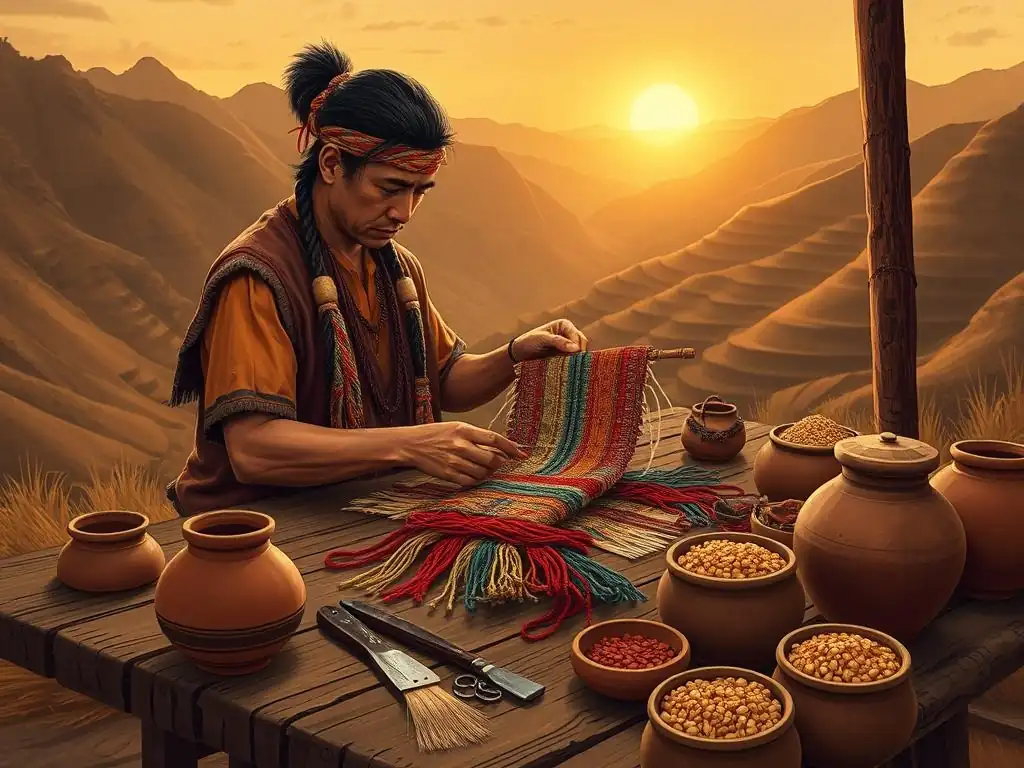
Quipus, an intricate system of knotted strings, were pivotal to the Inca economy, serving as an essential tool for economic management. The Inca Empire, which thrived without a written language, relied heavily on quipus for record-keeping and communication of numerical data. Each quipu consisted of cords of various colors, lengths, and knot types, which represented different categories of information related to the economy, such as counting livestock, tracking resources, and managing tribute obligations.
The quipu system allowed the Inca administration to maintain a sophisticated understanding of their economic landscape. By using this method, the Incas could efficiently monitor resource allocation, control trade activities, and sustain their vast empire. The ability to track inventory and labor through quipus contributed significantly to the centralization of the economy and facilitated the distribution of goods and services across the diverse regions of the empire.
Counting Livestock: A Case Study
One of the most crucial applications of quipus was in counting livestock, which represented a significant economic asset for the Inca people. Livestock, including llamas and alpacas, was essential not only for transportation and wool but also for as a source of food and labor. Inca officials utilized quipus to accurately record and manage the number of animals owned by different communities and households.
For example, a specific quipu might have been created to represent a particular herd. Different colored cords could signify different types of livestock, while the knots would indicate the quantity. This method allowed for quick assessments of livestock populations and facilitated decisions related to breeding, trade, and resource distribution. The systematic approach to livestock counting exemplifies how quipus were central to the functioning of the Inca economy and the management of agricultural resources.
Resource Management through Quipus
Beyond livestock, quipus played a vital role in managing various resources within the Inca Empire. The ability to record different types of resources, from grains to textiles, allowed the Incas to maintain control over their agricultural output and ensure that supplies could meet the demands of their population.
Quipus could be used to document the harvest yields from different regions, enabling the central government to allocate resources effectively. This meticulous record-keeping was vital during times of famine or resource scarcity, as it allowed for strategic planning and distribution to affected areas. By employing quipus for resource management, the Incas demonstrated an advanced understanding of agricultural economics that contributed to their empire's resilience and adaptability.
The Significance of Quipus in Inca Society
Quipus were not merely tools of economic management; they held substantial significance within Inca society as a whole. Their importance extended beyond counting and record-keeping, influencing various aspects of Inca life, culture, and governance.
As a unique form of communication, quipus facilitated the transmission of information across vast distances, connecting remote communities with the central administration. This ability to convey critical information swiftly helped maintain cohesion within the empire and fostered a sense of unity among diverse groups.
Quipus and Record Keeping
Record keeping was integral to the Inca administration, and quipus served as the primary method for documenting essential data. The Incas utilized quipus to track census data, tribute payments, and labor contributions, which were vital for the functioning of their complex society.
The knots and the arrangement of cords provided a visual representation of information that could be interpreted by trained quipu keepers. This unique system allowed the Incas to maintain meticulous records of their population and resources, ensuring that the empire operated smoothly. The effectiveness of quipus in record keeping exemplifies the Inca's innovative approach to governance and economic management.
Quipus as a Communication Tool
In addition to their role in record keeping, quipus acted as a communication tool between various levels of Inca administration. They served as a means to convey messages, instructions, and reports, allowing local leaders to communicate with the central authority effectively.
This system of communication was crucial for maintaining order and organization across the vast empire, as it enabled the swift relay of information regarding economic conditions, resource needs, and administrative decisions. The use of quipus as a communication tool highlights their multifaceted role in Inca society, transcending mere economic applications.
The Role of Quipu Keepers in Inca Administration
Quipu keepers, or the individuals trained in the art of interpreting and creating quipus, played a vital role in the Inca administration. These skilled individuals were responsible for the maintenance, creation, and interpretation of quipus, ensuring that the vast amounts of data were accurately documented and relayed.
Quipu keepers often held prestigious positions within the Inca society, as their knowledge and skills were essential for the effective functioning of the empire. They acted as intermediaries between the common people and the ruling elite, facilitating communication and record-keeping that was essential for governance. The significance of quipu keepers underscores the importance of this unique system in maintaining the complexity and efficiency of the Inca economy and administration.
Challenges and Limitations of Quipus Usage

While quipus served as an essential tool for the Inca economy, their usage was not without challenges and limitations. One significant issue was the complexity of the system itself, which made it difficult for individuals outside of specialized roles to interpret and utilize effectively. The reliance on color, knot type, and position required extensive training and understanding, creating barriers to widespread comprehension. Furthermore, the quipu system primarily focused on numerical data, leading to potential oversights in capturing qualitative aspects of resources and societal needs.
Another challenge was the preservation of quipus. Made from plant fibers, these records were susceptible to decay and damage from environmental factors. As a result, many quipus may have been lost over time, leading to gaps in historical records and economic data. This fragility raises questions about the reliability of quipus in providing a complete picture of Inca economic practices.
Interpretation Issues in Quipu Records
The interpretation of quipus presents a significant challenge, as the meanings behind the knots and their arrangements are not fully understood. Scholars have debated whether quipus conveyed purely numerical information or if they included narrative elements. The lack of a Rosetta Stone-like key for quipus means that much of their potential meaning remains elusive.
Moreover, different regions and communities may have developed unique interpretations or variations of the quipu system. This regional diversity could lead to inconsistencies in data recording, making it difficult for central authorities to maintain uniformity in economic tracking. The potential for misinterpretation of the records could have serious implications for resource management and economic planning within the Inca Empire.
Limitations in Quantifying Resources
While quipus were effective for counting and recording livestock and resources, their limitations become apparent when considering the broader economic landscape. Quipus excelled in capturing quantitative data; however, they struggled to quantify the qualitative aspects of resources, such as the condition of livestock or the quality of agricultural produce. This lack of qualitative data could hinder effective decision-making regarding resource allocation and management.
Additionally, the focus on livestock and tangible goods may have excluded other critical economic factors, such as labor force availability, seasonal variations in resource availability, and trade dynamics with neighboring societies. As a result, the quipu system, while innovative, may not have provided a holistic understanding of the Inca economy, limiting its effectiveness in economic planning and strategy.
The Legacy of Quipus in Indigenous Economies
The legacy of quipus extends beyond the Inca Empire, influencing subsequent indigenous cultures and their economic practices. The innovative approach to record-keeping demonstrated by quipus laid the groundwork for future generations to develop their own methods of tracking resources and managing economies.
As contact between various indigenous groups continued, elements of the quipu system may have been adapted and integrated into other cultures, leading to a rich tapestry of record-keeping practices across the Americas. This legacy highlights the importance of indigenous knowledge systems in shaping economic practices and promoting sustainable resource management.
Influence of Quipus on Later Indigenous Record Keeping
The influence of quipus on later indigenous record-keeping systems is evident in various cultures that followed the Inca Empire. Many indigenous groups adopted similar knot-based or symbolic systems to manage their resources, allowing them to maintain economic stability and continuity in their communities.
These adaptations illustrate how the principles underlying quipus—such as the need for precise record-keeping and the importance of resource management—persisted in indigenous cultures. As a result, quipus can be viewed as a catalyst for broader innovations in economic organization among indigenous populations throughout the Americas.
Modern Insights into Quipus and Inca Economic Practices
Contemporary research into quipus has provided valuable insights into the economic practices of the Inca civilization. Archaeological discoveries and advancements in technology, such as computer modeling and pattern recognition, have allowed researchers to analyze quipus more effectively. These modern techniques have contributed to a better understanding of how quipus functioned within the broader context of Inca society.
By examining the quipu system, scholars can glean insights into the intricacies of Inca economic practices, including resource allocation, labor management, and trade networks. This ongoing research highlights the importance of quipus in not only preserving historical records but also in informing our understanding of indigenous economies and their adaptability in the face of changing circumstances. The legacy of quipus continues to resonate in contemporary discussions about indigenous knowledge systems and their relevance in today's world.
Conclusion: The Enduring Importance of Quipus in Understanding Inca Economy
The quipu system stands as a remarkable testament to the ingenuity of the Inca civilization, providing invaluable insights into their economic structures and daily life. As a sophisticated method of record-keeping, quipus enabled the Incas to manage resources, conduct trade, and account for livestock with impressive precision. Through colored strings and intricate knots, the quipu served not only as a tool for counting but also as a means of documenting the flow of goods and services, reflecting the complex socio-economic framework of the Inca Empire.
Recap of Quipus and Their Role in Economic Structures
Quipus, often described as a form of knotted record-keeping, were essential for the administration of the vast Inca Empire. Each quipu could represent different categories of data, such as livestock numbers, agricultural yields, and tribute owed to the crown. The use of different colors and knot types allowed for a nuanced understanding of economic transactions and resource management.
The centralization of the economy was greatly facilitated by quipus, as they streamlined the collection of taxes and the distribution of goods. In an empire that spanned diverse environments, from the Andes mountains to coastal regions, quipus helped maintain an organized system of resource allocation, ensuring that provisions reached various communities efficiently. This capability was crucial in an economy that relied heavily on agriculture and pastoralism, highlighting the quipu's role as a backbone of economic stability.
Final Thoughts on the Inca Economy and Quipus Usage
The study of quipus is indispensable for understanding the Inca economy and its complexities. The functionality of quipus transcends basic counting; they encapsulate a broader narrative of how the Incas organized their society, managed resources, and maintained control over vast territories. As researchers continue to unravel the intricacies of quipu records, they reveal a sophisticated economic system that was both adaptive and resilient.
The significance of quipus extends beyond mere economic documentation. They symbolize the intellectual achievements of the Inca civilization and their unique approach to mathematics and record-keeping. As we explore the legacy of the Inca Empire, quipus remain a critical focal point, illuminating the ways in which indigenous cultures developed innovative solutions to meet their societal needs long before European contact reshaped the continent. Understanding quipus is essential for appreciating the sophisticated nature of the Inca economy and the enduring impact of indigenous practices in the Americas.
- Introduction to Inca Economy and Quipus Usage
- Overview of Inca Economy
- Importance of Quipus in the Inca Society
- The Quipu System: An Overview
- Quipus as a Tool for Economic Management
- Counting Livestock: A Case Study
- Resource Management through Quipus
- The Significance of Quipus in Inca Society
- Challenges and Limitations of Quipus Usage
- The Legacy of Quipus in Indigenous Economies
- Conclusion: The Enduring Importance of Quipus in Understanding Inca Economy
Frequently Asked Questions
What were quipus and their significance in the Inca economy?
Quipus were complex knot-based recording systems used by the Inca to manage and track resources. They played a crucial role in the administration and economy, allowing for efficient counting of livestock and goods.
How did the Inca utilize quipus for counting livestock?
The Inca used quipus to maintain detailed records of livestock, including numbers and types. Each knot and color represented specific data points, enabling effective management of agricultural and pastoral resources.
Were quipus used for purposes other than economic tracking?
Yes, quipus also served cultural and historical purposes, such as recording stories and events. While primarily economic tools, their versatility allowed them to be used in various aspects of Inca life.
How did the Inca economy function without a written language?
The Inca economy thrived through oral traditions and systems like quipus. This allowed them to maintain accurate records and communicate complex information without a formal written language.
What impact did quipus have on Inca society?
Quipus significantly enhanced administrative efficiency and resource management, contributing to the stability and growth of the Inca Empire. Their use demonstrates the sophistication of Inca civilization in handling economic matters.
Final Reflection: The Enduring Legacy of Quipus in the Inca Economy
The intricate relationship between quipus and the Inca economy remains profoundly relevant today, as it highlights the innovative ways societies have managed resources and information. The quipus, with their unique system of knots and colors, were not merely tools for counting livestock and resources; they represented a sophisticated understanding of data management that resonates with our current digital age. In an era where data is often viewed as the new currency, the Inca's approach to resource tracking through quipus serves as a reminder of the timeless importance of effective information systems.
Culture and economy are inextricably linked, and the quipus exemplify how a society can thrive through ingenuity and adaptability. The legacy of the Inca economy, with its reliance on quipus, continues to influence modern discussions around resource management and economic sustainability. As historian Maria Rostworowski noted, The quipu was not just a tool for counting; it was a vital part of the Inca identity and their way of life.
This observation underscores the significance of quipus beyond mere functionality, highlighting their role in shaping the cultural fabric of the Inca civilization.
As we reflect on the lessons from the Inca economy and the usage of quipus, let us consider how we can apply these insights to our own lives. Embrace the power of organization and clarity in managing your resources, whether they are financial, personal, or communal.
Just as the Incas thrived by harnessing the potential of their quipus, we too can cultivate a more sustainable and efficient future by learning from their example. Take a moment to reflect on your own systems of counting and managing what matters most to you, and consider how you can innovate in your approach to resource management.
Unveil the Secrets of Quipus for Empowering Change!
Thank you for diving into the fascinating world of Quipus and their significant role in the Inca economy. You've uncovered how these remarkable tools can offer insights into resource management and community organization. Now, it's time to take the next step and engage with this rich history!
Here’s how you can immerse yourself further:
- Explore More: Read additional literature on ancient civilizations to deepen your understanding of indigenous practices and innovations.
- Share Your Knowledge: Discuss this topic with friends or on social media to spark interest in indigenous histories and cultures.
- Get Creative: Create your own version of a Quipu! Use yarn and beads to document a personal project or experience from your life.
How can understanding ancient methods like Quipus inspire new ideas for managing resources in today’s world?