
Rulers and Priests: Understanding the Dual Power Structure in Ancient Societies

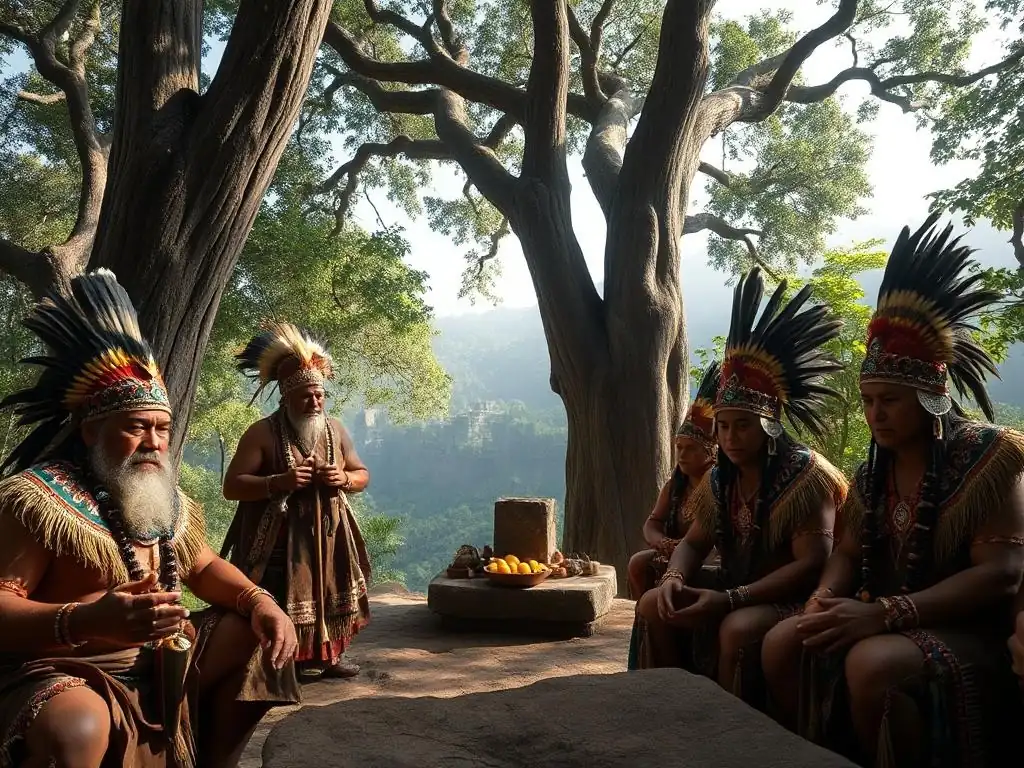
Welcome to Indigenous Civilizations of the Americas, where we invite you to embark on a fascinating journey through the rich tapestry of pre-colonial cultures that shaped the continent long before the arrival of Europeans. In our featured article, “Rulers and Priests: Understanding the Dual Power Structure in Ancient Societies,” we delve into the intricate indigenous power structures in America, revealing how authority and spirituality intertwined to govern complex societies.
Join us as we uncover the remarkable achievements and enduring legacies of these vibrant civilizations, sparking your curiosity about the profound impacts they continue to have today. Dive deeper to discover the stories that await!
Introduction to Indigenous Power Structures in America
The indigenous cultures of the Americas were rich and varied, characterized by complex social hierarchies and power dynamics that evolved over millennia. Among these dynamics, the dual power structure comprising rulers and priests played a crucial role in shaping the governance and spiritual life of ancient societies.
This article delves into the intricate relationships between political leaders and religious authorities, exploring how these figures not only wielded power but also influenced the cultural and societal frameworks of their respective civilizations. By understanding these indigenous power structures in America, we gain valuable insights into the achievements and legacies of societies that thrived long before European contact.
Overview of Ancient Societies in the Americas
The Americas were home to a wide array of indigenous civilizations, each with its own unique social structures and belief systems. From the highly structured empires of the Aztecs and Incas to the decentralized tribes of North America, these societies displayed an impressive diversity in governance and social organization.
- Key Characteristics:
- Hierarchical Structures: Most societies were organized into classes, often including rulers, priests, artisans, and laborers.
- Cultural Practices: Rituals, traditions, and oral histories played a significant role in maintaining social order and identity.
- Economic Systems: Trade and agriculture were often managed through a centralized authority, influencing power dynamics.
This complex web of social classes laid the groundwork for understanding the significant roles that rulers and priests played within these civilizations.
Significance of Rulers and Priests in Social Hierarchies
Rulers and priests formed the backbone of governance and spirituality in many indigenous societies. Their interdependent roles were essential for maintaining order, both in the political realm and within the spiritual lives of the people.
- Rulers typically held authority over land, resources, and the populace, making decisions that affected the community's survival and prosperity.
- Priests, on the other hand, were responsible for the spiritual well-being of the society, conducting ceremonies and rituals that reinforced cultural values and societal norms.
This duality not only highlights the complexity of indigenous power structures but also illustrates how these societies navigated the challenges of governance and belief systems.
The Role of Rulers in Indigenous Civilizations
Rulers in ancient indigenous societies were more than mere political figures; they were often seen as divinely appointed leaders whose authority was legitimized by both governance and spirituality. Understanding their roles provides insight into how these civilizations functioned and thrived.
Functions and Responsibilities of Political Leaders
The responsibilities of rulers in indigenous civilizations were multifaceted, encompassing a range of governance-related tasks that ensured the stability and growth of their societies.
- Key Functions:
- Resource Management: Rulers were tasked with overseeing the distribution of resources, including food, land, and labor.
- Military Leadership: Many rulers also acted as military leaders, defending their territories and expanding their influence through warfare.
- Legal Authority: They established laws and norms, often guided by the counsel of priests, to maintain social order.
Through these functions, rulers played a pivotal role in shaping the political landscape of their civilizations.
Examples of Powerful Rulers in Ancient America
Throughout history, several rulers have emerged as significant figures in the annals of indigenous American civilizations. Their legacies offer valuable insights into the nature of power dynamics and governance.
- Mochica of the Moche Civilization: Known for their advanced irrigation systems and impressive architecture, the rulers of the Moche civilization wielded significant power, directing both labor and resources towards monumental projects.
- Topiltzin Quetzalcoatl: A revered figure in Aztec mythology, Topiltzin exemplified the intertwining of political and religious authority, showcasing how rulers often embodied both governance and spirituality.
These examples illustrate how rulers were not only political leaders but also central figures in the cultural and spiritual life of their societies.
The Influence of Rulers on Governance and Society
The impact of rulers on indigenous governance and societal structures was profound. Their decisions and actions shaped the course of civilization, influencing everything from social norms to economic practices.
- Policy Implementation: Rulers had the power to enact policies that could lead to advancements in agriculture, trade, and technology.
- Cultural Integration: The rulers often played a key role in integrating diverse cultures within their realms, fostering unity and cooperation among different groups.
- Religious Endorsement: By aligning themselves with religious authority, rulers were able to legitimize their power, ensuring loyalty and compliance from the populace.
Through their influence, rulers helped to create resilient societies capable of adapting to the challenges of their environment.
By exploring these dynamics, we can gain a deeper appreciation for the indigenous power structures in America and their lasting impact on history and culture.
The Role of Priests in Indigenous Cultures
In many indigenous cultures of the Americas, priests held significant status and influence, acting as intermediaries between the divine and the community. Their roles extended beyond mere religious duties; they were key figures in maintaining cultural traditions, rituals, and the moral fabric of society. Priests were often tasked with conducting ceremonies that marked important life events, seasonal changes, and agricultural cycles. Their extensive knowledge of the spiritual world and the rituals associated with it established them as essential leaders within their communities.
Priests were also responsible for the preservation of sacred texts and oral traditions. This knowledge not only included religious teachings but also encompassed historical narratives that shaped societal values. As custodians of this information, priests played a pivotal role in educating the next generations, ensuring that cultural identity was maintained and passed down through centuries.
Spiritual Authority and Influence of Religious Leaders
The spiritual authority of priests often transcended their religious obligations, granting them significant influence over other societal aspects, including politics and economics. Within various indigenous societies, priests were seen as chosen by the gods, which elevated their status and allowed them to wield considerable power. This authority was often reflected in their involvement in political decisions, where they acted as advisors to rulers or even held positions of political leadership themselves.
For instance, among the Maya civilization, priests were integral to the ruling elite, participating in governance and influencing major state decisions. Their ability to interpret the will of the gods often shaped laws and policies, intertwining spiritual beliefs with daily governance. This spiritual influence fostered a society where religious observance and political allegiance were closely linked, reinforcing the power of both priests and rulers.
The Intersection of Religion and Politics
The intersection of religion and politics in indigenous cultures created a unique governance structure where spiritual and temporal power coexisted. In many cases, rulers relied on priests to legitimize their authority, as the divine endorsement from religious leaders helped secure loyalty from the populace. Political leaders would often participate in religious ceremonies to demonstrate their piety and connection to the divine, further blurring the lines between governance and spirituality.
Additionally, the intertwining of these two realms enabled societies to establish a cohesive social order. The shared values and norms derived from religion provided a framework for political stability and social cohesion. In many indigenous cultures, law and morality were heavily influenced by religious doctrine, allowing priests to play a crucial role in shaping the legal landscape of their societies.
Rituals and Their Impact on Social Order
Rituals conducted by priests served as vital mechanisms for reinforcing social order within indigenous communities. These ceremonies often celebrated agricultural cycles, historical events, and communal milestones, fostering a sense of unity among participants. By engaging in communal rituals, individuals strengthened their social bonds and affirmed their collective identity.
Moreover, rituals had the power to communicate societal values and expectations. They often included moral teachings that guided behavior and reinforced community standards. The participation of both rulers and priests in these rituals further emphasized their collaborative roles in maintaining social harmony, as they collectively embodied the spiritual and political ideals of their people.
The Dual Power Structure: Rulers and Priests Working Together
The dual power structure characterized by the collaboration between rulers and priests was a hallmark of many indigenous civilizations in the Americas. This partnership not only facilitated effective governance but also reinforced the societal framework that upheld cultural integrity and stability.
Cooperation Between Political and Spiritual Leaders
In indigenous societies, the cooperation between political and spiritual leaders was essential for addressing the needs and challenges of the community. Rulers often sought the counsel of priests on matters of governance, including agricultural planning, conflict resolution, and community welfare. This collaborative approach allowed for a balanced decision-making process that incorporated both secular and spiritual perspectives.
The mutual respect between rulers and priests also fostered an environment where each could assert their authority without undermining the other. Rulers, by aligning themselves with religious practices and respecting spiritual traditions, enhanced their legitimacy. Conversely, priests, by supporting rulers and providing spiritual guidance, contributed to political stability and social order.
The Benefits of a Dual Power Structure in Governance
The dual power structure brought numerous benefits to indigenous societies, promoting effective governance and social cohesion. By combining spiritual and political authority, these societies were able to create a comprehensive leadership model that addressed both the material and spiritual needs of the community.
- Enhanced Legitimacy: The partnership between rulers and priests provided a robust framework for legitimizing authority, ensuring that leaders were viewed as divinely sanctioned figures.
- Conflict Resolution: The integration of spiritual principles in political decision-making helped mediate conflicts, as leaders could invoke religious values to guide their actions.
- Cultural Preservation: This collaboration facilitated the preservation of cultural traditions and practices, reinforcing community identity through shared rituals and beliefs.
Examples of Societies with Successful Dual Power Dynamics
Several indigenous civilizations exemplified the successful integration of rulers and priests within their governance structures:
- The Maya Civilization: In Maya society, the king, often seen as a divine figure, collaborated closely with priests. Major decisions regarding warfare, agriculture, and public rituals were made collectively, ensuring a harmonious balance of power.
- The Aztec Empire: In the Aztec society, the Emperor was not only a political leader but also a high priest. This dual role allowed him to conduct vital religious ceremonies that reinforced his authority and the unity of the empire.
- The Inca Empire: The Inca rulers, known as Sapa Inca, were considered the 'children of the sun' and worked in tandem with priests to maintain the religious practices that legitimized their rule over the vast empire.
These examples illustrate how the dual power structure of rulers and priests was instrumental in shaping the governance, culture, and social dynamics of ancient indigenous civilizations across the Americas.
Conflicts Between Rulers and Priests
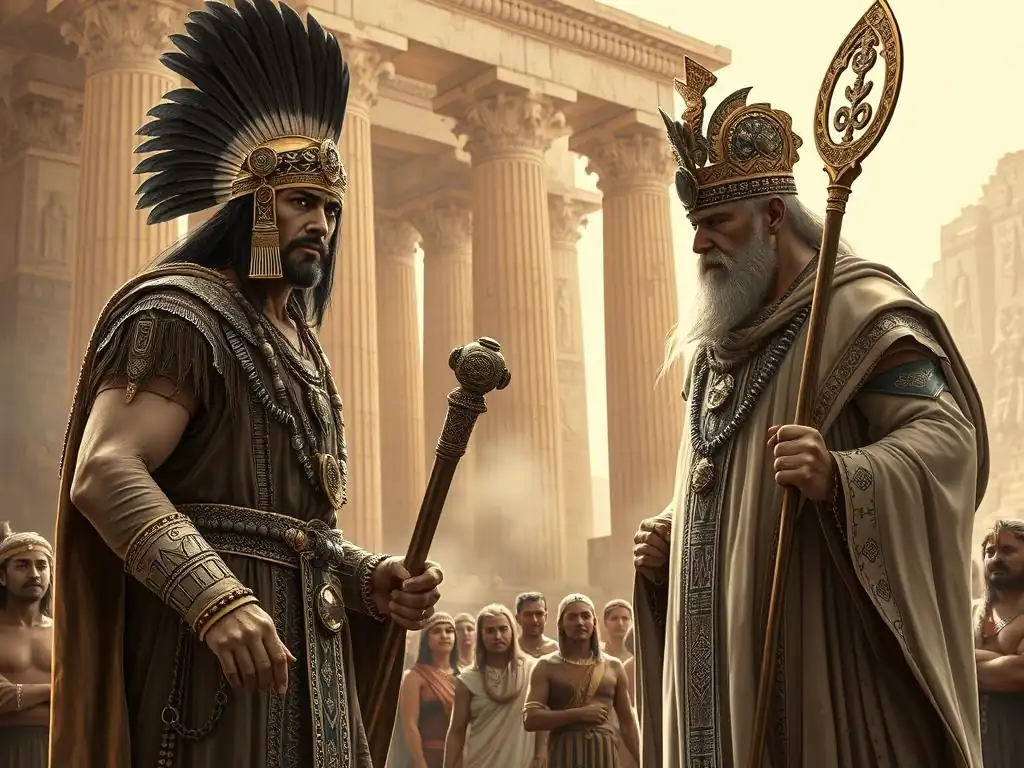
In many ancient indigenous societies of the Americas, a notable dual power structure emerged, characterized by the interplay between ruling authorities and religious leaders. This dynamic often led to conflicts, as both groups sought to assert their influence over the populace. Rulers, typically associated with military power and governance, aimed to maintain control through political means, while priests held sway over spiritual matters, possessing the ability to influence public belief and cultural practices.
Disagreements frequently arose over issues such as land use, resource allocation, and the interpretation of divine will. For example, in Mesoamerican civilizations like the Aztecs and Maya, rulers depended on priests to legitimize their authority through religious rituals, but priests sometimes challenged rulers when their interpretations of the gods contradicted the rulers' decisions. Such tensions could escalate into power struggles, and the outcomes often had significant repercussions for the societies involved.
Power Struggles in Indigenous Societies
Power struggles between rulers and priests manifested in various ways across different indigenous cultures. In the Inca Empire, the Sapa Inca was considered a divine figure, yet the priesthood held substantial influence, particularly in matters related to agriculture and rituals. The priests' ability to control the calendar and dictate agricultural practices meant they could sway public opinion and potentially undermine the ruler’s authority if their interests diverged.
Similarly, among the Pueblo peoples of the Southwest United States, conflicts arose between political leaders and religious leaders, particularly during droughts or times of famine. When the political leadership failed to secure resources, the religious leaders might gain prominence by proposing alternative spiritual solutions or rituals aimed at restoring balance, thereby challenging the political hierarchy.
Consequences of Tensions Between Rulers and Priests
The consequences of tensions between rulers and priests were multifaceted and could lead to both societal stability and upheaval. On one hand, these conflicts could foster checks and balances within the power structure, ensuring that neither rulers nor priests could dominate completely without considering the needs and beliefs of the community. This balance was crucial for maintaining social cohesion during challenging times.
On the other hand, unresolved tensions could lead to civil strife, coups, or the decline of entire civilizations. In extreme cases, the overthrow of a ruler by a powerful priesthood could result in significant shifts in governance and societal organization. For instance, in some cases, the rise of priestly classes led to the establishment of theocratic societies, where religious law superseded civil law, fundamentally altering the structure of power.
The Legacy of Indigenous Power Structures in America
The indigenous power structures established in ancient societies of the Americas have left a profound legacy that continues to influence modern indigenous cultures. Understanding these historical dynamics is essential for appreciating the complexities of contemporary tribal governance and spiritual practices.
Lasting Impact on Modern Indigenous Cultures
Many modern indigenous cultures retain elements of the dual power structure seen in their ancient predecessors. Community leaders often work collaboratively with spiritual leaders to navigate contemporary issues, reflecting the historical importance of balancing authority and spirituality. In nations like the Navajo Nation, traditional governance incorporates both secular and spiritual dimensions, demonstrating how historical power structures have adapted to modern contexts while preserving cultural integrity.
Furthermore, the respect for elders, which stems from historical practices where both rulers and priests were often seen as wise figures, still plays a crucial role in community decision-making today. This continuity underscores the importance of historical contexts in understanding present-day indigenous governance.
Comparative Analysis: Indigenous Power Structures vs. European Models
When comparing indigenous power structures in America to their European counterparts, several key differences emerge. Indigenous societies often featured a more integrated approach to governance, where spiritual and political leaders collaborated closely, reflecting a holistic worldview. In contrast, European models typically emphasized a clearer separation between church and state, where secular rulers held dominion over religious institutions.
Additionally, while European monarchies often derived their power from hereditary succession and conquest, many indigenous cultures operated on principles of consensus and communal decision-making. This distinction highlights the diversity of governance models and the sophisticated nature of indigenous power structures, which were tailored to the needs and values of their societies.
Reflections on the Importance of Understanding These Structures Today
Recognizing the complexities of indigenous power structures is vital for fostering respectful relationships between indigenous communities and wider society. Understanding these historical frameworks can inform current discussions about sovereignty, self-governance, and cultural preservation.
Today, as indigenous communities continue to advocate for their rights and recognition, acknowledging the historical significance of rulers and priests in shaping their societal structures can foster better dialogue and collaboration. It is essential for policymakers, educators, and the public to appreciate and respect the historical roots of contemporary indigenous governance to support the ongoing resilience and thriving of these cultures.
The dual power structure of rulers and priests in ancient indigenous societies of the Americas was a defining characteristic that shaped their social, political, and spiritual frameworks. This intricate relationship highlights how leadership and religious authority were intertwined, establishing a unique governance model that was both effective and culturally resonant. Rulers often derived their legitimacy from the religious institutions, while priests maintained their influence through their connections with political leaders. This symbiotic relationship allowed for a coherent societal structure where spiritual beliefs and governance were aligned.
Furthermore, the role of these dual authorities contributed to the stability and cohesion of their societies. By integrating religious practices with political governance, rulers were able to unify diverse groups under a common spiritual framework, fostering a sense of identity and belonging among the people. This was particularly evident in civilizations such as the Aztecs and the Maya, where monumental architecture and elaborate rituals underscored the power held by both rulers and priests.
Moreover, the legacy of this dual power structure can still be observed today in various indigenous communities. The historical emphasis on the roles of rulers and priests serves as a reminder of the importance of leadership and spirituality in maintaining social order and cultural identity.
Summary of Key Points on Indigenous Power Structures in America
- Intertwined Authority: Rulers and priests often held complementary roles, with political leaders relying on spiritual authority to legitimize their power and priests gaining influence through their ties to governance.
- Cohesive Societal Framework: This dual system fostered unity among diverse groups, creating a shared cultural identity through religious practices and political governance.
- Historical Examples: Civilizations such as the Aztecs and Maya exemplify the significance of this power structure, illustrating how it shaped their political systems, religious practices, and social organization.
- Cultural Continuity: The roles of rulers and priests have persisted in various forms in contemporary indigenous societies, reflecting the ongoing relevance of these historical power structures.
The Ongoing Relevance of Rulers and Priests in Indigenous Societies
The historical roles of rulers and priests continue to resonate within modern indigenous communities. Many indigenous groups maintain a deep-seated respect for spiritual leaders, who often play pivotal roles in community decision-making and cultural preservation. These leaders may not wield political power in the traditional sense, but their influence is critical in guiding moral and ethical standards within the community.
Additionally, the revival of indigenous practices and beliefs has led to a renewed interest in the roles of these historical figures. In many cases, contemporary indigenous leaders draw inspiration from the past, blending traditional governance with modern practices to address current societal challenges. This integration of ancient wisdom with contemporary issues underscores the adaptability and resilience of indigenous cultures.
In essence, while the contexts may have changed, the significance of rulers and priests remains a vital aspect of indigenous identity. Their historical legacy continues to inform social structures, cultural practices, and community governance, ensuring that the lessons of the past are woven into the fabric of contemporary indigenous life.
- Introduction to Indigenous Power Structures in America
- The Role of Rulers in Indigenous Civilizations
- The Role of Priests in Indigenous Cultures
- The Dual Power Structure: Rulers and Priests Working Together
- Conflicts Between Rulers and Priests
- The Legacy of Indigenous Power Structures in America
- Conclusion: The Significance of Rulers and Priests in Social Classes
- What are the primary power structures in ancient indigenous societies of the Americas?
- How did the role of rulers differ from that of priests in these cultures?
- What impact did these power structures have on indigenous civilizations?
- How did European colonization affect the indigenous power structures?
- Why is it important to study the indigenous power structures in America?
Frequently Asked Questions
What are the primary power structures in ancient indigenous societies of the Americas?
Ancient indigenous societies often featured a dual power structure comprising rulers and priests, where political authority and spiritual leadership were intertwined.
How did the role of rulers differ from that of priests in these cultures?
Rulers were primarily responsible for governance and military leadership, while priests managed religious rituals and maintained social order through spiritual guidance.
What impact did these power structures have on indigenous civilizations?
The dual power structure facilitated a balance between secular and spiritual authority, ensuring stability and cohesion within communities, which was crucial for their socio-political development.
How did European colonization affect the indigenous power structures?
European colonization disrupted indigenous power structures by imposing foreign governance models, often undermining traditional roles of rulers and priests, leading to significant cultural shifts.
Why is it important to study the indigenous power structures in America?
Understanding these power structures reveals insights into the complexity of indigenous societies, their achievements, and their lasting impact on contemporary cultures in the Americas.
Final Reflection: The Enduring Legacy of Dual Power Structures
The exploration of indigenous power structures in America reveals a profound truth about the interplay between governance and spirituality in ancient societies. Today, as we navigate complex social hierarchies and power dynamics, understanding how rulers and priests coexisted and influenced each other offers invaluable insights into our contemporary world. The dual power structure not only shaped the governance of ancient civilizations but also laid the groundwork for the cultural and spiritual identities that persist in many indigenous communities today.
The impact of these ancient power dynamics continues to resonate in our cultural landscape, reminding us of the intricate relationship between authority and belief systems. As we witness modern movements advocating for indigenous rights and recognition, it becomes clear that the legacy of rulers and priests is not merely historical but a living narrative that informs current struggles for power and representation. To understand the past is to understand the present; the stories of our ancestors are woven into the fabric of our identity.
As you reflect on the lessons drawn from the dual power structures of ancient societies, consider how these insights can inform your own understanding of leadership and community. Embrace the wisdom of the past to inspire your actions today, recognizing that each of us plays a role in shaping the future. Whether through advocacy, education, or personal reflection, let the lessons of rulers and priests guide you in fostering a more equitable and spiritually aware society.
Unveil the Secrets of Ancient Power Dynamics!
Thank you for diving into the fascinating world of rulers and priests! By understanding their dual power structure, you've gained valuable insights into the intricate societies of ancient civilizations. Now, it’s time to take action and deepen your connection with this compelling history.
Here’s how you can continue your journey:
- Explore more! Discover additional articles on the rich traditions and governance of ancient civilizations; you might be surprised by what you learn!
- Share your insights with friends and family — spark conversations about the significance of dual power structures in both ancient and modern contexts.
- Engage in our community! Join discussions in our forums to exchange ideas and interpretations of ancient power dynamics with fellow enthusiasts.
Which aspect of the relationship between rulers and priests intrigues you the most, and how do you see these dynamics reflected in today’s societies?