
The Connection Between the Toltecs and Other Mesoamerican Cultures

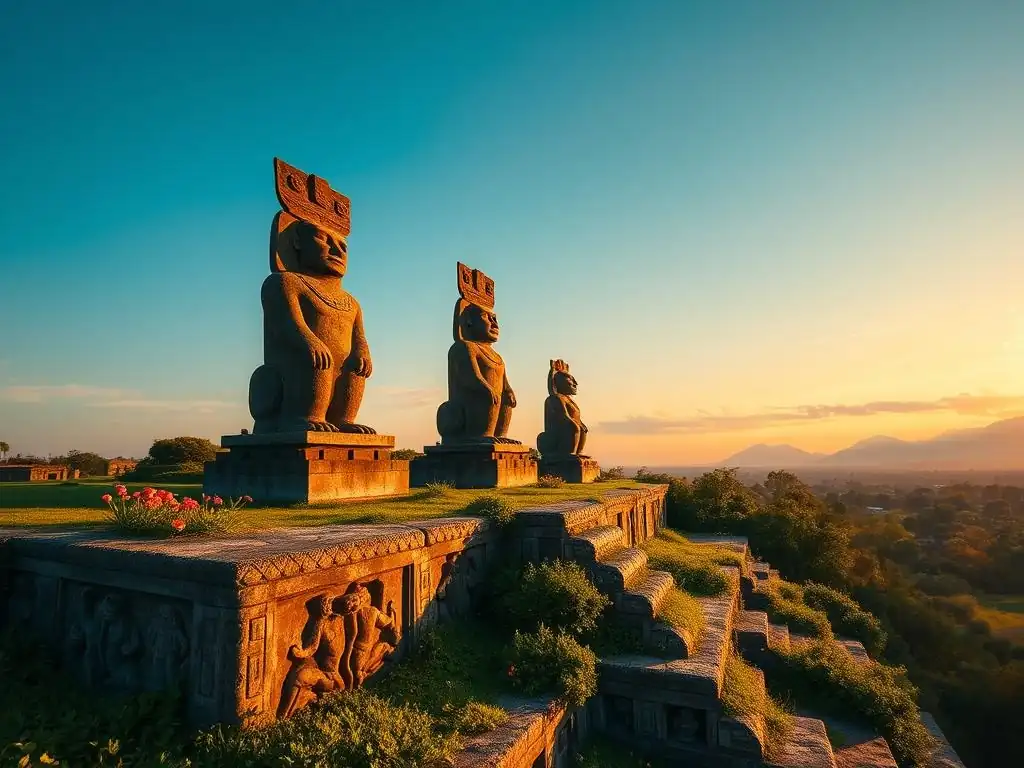
Welcome to Indigenous Civilizations of the Americas, where we invite you to embark on a journey through the rich tapestry of cultures that flourished long before European contact. In our featured article, "The Connection Between the Toltecs and Other Mesoamerican Cultures," we delve into the fascinating world of the Toltecs—a pivotal civilization whose innovations and societal structures influenced their contemporaries and descendants.
Discover the profound achievements and contributions of these remarkable peoples, and explore how their legacy continues to shape our understanding of history. Your adventure into the heart of Mesoamerican heritage begins here—let's uncover the stories that have shaped the Americas!
Introduction to the Toltecs and Mesoamerican Cultures
The Toltecs, a prominent civilization in Mesoamerica, played a crucial role in the cultural tapestry of the region prior to European contact. Their influence extended beyond their immediate geographical boundaries, impacting various neighboring cultures and laying foundational elements for future societies.
Understanding the connection between the Toltecs and other Mesoamerican cultures is vital, as it reveals not only the richness of indigenous heritage but also the intricate relationships that existed among different civilizations. This article will delve into the Toltec civilization, its historical context, and its interactions with other cultures in Mesoamerica, shedding light on the enduring legacy of the Toltecs in the broader historical narrative.
Overview of the Toltec Civilization
The Toltec civilization, often associated with the city of Tula, flourished between the 10th and 12th centuries CE. Known for their impressive architectural achievements, such as pyramids and intricate sculptures, the Toltecs were also skilled artisans and warriors. Their society was characterized by:
- Religion and Mythology: The Toltecs are often linked to the deity Quetzalcoatl, the feathered serpent, who played a significant role in their religious practices.
- Economy: The Toltec economy was diverse, relying on agriculture, trade, and tribute from conquered regions. Key crops included maize, beans, and chili peppers.
- Artistic Contributions: They produced remarkable artworks, including stone carvings and pottery, which reflected their beliefs and societal values.
The legacy of the Toltecs extends beyond their own civilization, influencing later cultures such as the Aztecs, who revered them as cultural forebears.
Importance of Mesoamerican Cultures in History
Mesoamerican cultures, including the Toltecs, the Maya, and the Aztecs, played a pivotal role in shaping the historical landscape of the Americas. These civilizations contributed significantly to:
- Cultural Development: The complex social structures, religious systems, and artistic expressions of Mesoamerican cultures laid the groundwork for future societies.
- Technological Innovations: Advances in agriculture, mathematics, and astronomy were crucial for the development of urban centers and trade networks.
- Intercultural Exchange: The interactions among various cultures facilitated the exchange of ideas, goods, and technologies, enriching the entire region.
By studying the connections between the Toltecs and other Mesoamerican cultures, we gain a deeper appreciation of the intricate web of relationships that defined this vibrant historical period.
Historical Context of the Toltecs
Understanding the Toltecs requires a look into their historical context, which provides insights into their rise and influence in Mesoamerica.
Timeline of the Toltec Civilization
The timeline of the Toltec civilization can be mapped out as follows:
| Period | Description |
|---|---|
| 900 CE | Emergence of the Toltec civilization in central Mexico. |
| 950-1150 CE | Height of Toltec power and cultural influence. |
| 1150 CE | Decline of the Toltec civilization; Tula begins to fade. |
| Post-1150 CE | Influence on later cultures, particularly the Aztecs. |
This timeline highlights the significant phases in the development of the Toltec civilization and its eventual decline, while also emphasizing its lasting impact on subsequent cultures.
Geographic Location of the Toltecs in Mesoamerica
The Toltecs were primarily located in central Mexico, with their capital city, Tula, situated approximately 50 miles north of modern-day Mexico City. This strategic location allowed the Toltecs to control key trade routes and interact with various neighboring cultures. Their territory encompassed diverse environments, from arid plains to lush valleys, which facilitated agricultural productivity and resource availability.
Key geographic features include:
- Mountain Ranges: The Toltecs utilized the surrounding mountains for defense and as sources of materials.
- Rivers: Proximity to rivers supported irrigation and agriculture, essential for sustaining their population.
- Trade Networks: The location enabled robust trade with other Mesoamerican cultures, fostering economic and cultural exchanges.
The geographic positioning of the Toltecs not only contributed to their economic strength but also facilitated their cultural exchanges with other civilizations, making them a pivotal player in Mesoamerican history.
Cultural Influences Between the Toltecs and Other Mesoamerican Societies
The Toltecs, who emerged as a powerful civilization around the 10th century CE, were significantly influenced by earlier Mesoamerican cultures. Their society was not formed in isolation but was the result of a complex interplay of cultural exchanges with various neighboring civilizations. This section explores the profound connections between the Toltecs and other Mesoamerican cultures, highlighting the influences that shaped their societal structures, artistic expressions, and belief systems.
The Influence of the Olmecs on the Toltecs
The Olmec civilization, often regarded as the "Mother Culture" of Mesoamerica, laid foundational elements that would later permeate Toltec society. Dating back to around 1400 BCE, the Olmecs were known for their colossal head sculptures and intricate jade work.
- Artistic Techniques: The Toltecs adopted and adapted many artistic styles from the Olmecs, particularly in their use of stone carving and monumental architecture. The iconic "Atlantean" figures at Tula, the Toltec capital, showcase the influence of Olmec iconography.
- Social Organization: The hierarchical structures observed in Olmec society influenced the Toltecs' governance and social stratification, emphasizing centralized authority and religious leadership.
- Religious Practices: Elements of Olmec religious rituals, especially those related to maize and fertility, can be traced in Toltec ceremonies, indicating a continuity of spiritual beliefs across these cultures.
The Impact of the Teotihuacan Civilization on Toltec Culture
Teotihuacan, flourishing from about 100 BCE to 650 CE, significantly impacted the Toltecs, especially in urban planning and religious practices.
- Urban Architecture: The Toltecs inherited architectural styles that echoed those of Teotihuacan, such as the construction of pyramids and ceremonial complexes. The layout of Tula exhibits similarities to the grid-like structure of Teotihuacan.
- Cultural Exchange: Trade routes established during the height of Teotihuacan facilitated the flow of goods, ideas, and cultural practices. The Toltecs engaged in extensive trade, which included the exchange of obsidian, textiles, and spiritual artifacts.
- Religious Syncretism: The Toltecs absorbed various deities and cosmological ideas from Teotihuacan, leading to a syncretic blend of religious practices that would characterize their spiritual life.
Relationships with the Maya: Shared Practices and Beliefs
The Toltecs maintained relationships with the Maya, exchanging ideas and practices that enriched both cultures.
- Art and Architecture: The influence of Maya artistic styles is evident in Toltec murals and sculptures, where intricate depictions of deities and mythological scenes reflect shared narratives.
- Calendar Systems: Both the Toltecs and Maya utilized similar calendrical systems, which played a crucial role in agricultural practices and religious observances. This shared understanding of time and cycles fostered a deeper communal spirituality.
- Mythological Narratives: There are notable overlaps in mythology, particularly surrounding creation stories and hero myths, which reflect a mutual reverence for nature and the cosmos.
Religious and Spiritual Connections
The religious landscape of the Toltecs was rich and multifaceted, deeply intertwined with the spiritual practices of other Mesoamerican cultures. This section delves into the religious frameworks that connected the Toltecs to their Mesoamerican counterparts.
Toltec Religion and Its Mesoamerican Roots
Toltec religion was deeply rooted in the spiritual traditions established by earlier civilizations.
- Polytheism: Like many Mesoamerican cultures, the Toltecs worshipped a pantheon of gods, each representing various aspects of nature and human experience. This polytheistic framework can be traced back to Olmec and Teotihuacan influences.
- Ritual Importance: Rituals played a central role in Toltec society, encompassing everything from agricultural ceremonies to complex rites involving human sacrifice, mirroring practices found in other Mesoamerican cultures.
- Shamanistic Practices: The Toltecs also incorporated shamanistic elements, drawing from the spiritual practices of the Olmecs and Maya, which involved communication with the spirit world and the use of hallucinogenic substances during rituals.
Deities and Mythologies Shared Among Mesoamerican Cultures
The shared deities and mythologies among Mesoamerican cultures highlight the interconnectedness of these societies.
- Quetzalcoatl: One of the most significant deities revered by the Toltecs was Quetzalcoatl, the feathered serpent god, who also held importance in other cultures, including the Maya and Aztecs. His mythology reflects themes of creation, civilization, and the duality of life and death.
- Cultural Syncretism: The blending of myths is evident in similar creation narratives across different cultures, often emphasizing the connection between gods, humans, and the natural world.
- Symbolism: Shared symbols, such as the jaguar and the maize deity, demonstrate a common cultural language among the Toltecs and their Mesoamerican peers, reinforcing their shared beliefs and values.
Ritual Practices: A Comparative Analysis
Examining the ritual practices of the Toltecs in comparison to other Mesoamerican cultures reveals both unique characteristics and shared traditions.
- Ceremonial Centers: The Toltecs, like the Maya and Teotihuacan, constructed grand ceremonial centers where rituals were performed. These sites served as focal points for community gatherings and religious observances.
- Human Sacrifice: While the practice of human sacrifice was common in several Mesoamerican cultures, the Toltecs developed unique methods and contexts for these rituals, often linked to their cosmological beliefs and agricultural cycles.
- Festivals and Celebrations: The Toltec calendar was filled with festivals that not only honored deities but also marked agricultural events. These celebrations often mirrored those of neighboring cultures, fostering a sense of unity and shared identity in the region.
Through these intricate relationships and influences, the Toltecs emerged as a unique civilization, deeply connected to the broader tapestry of Mesoamerican cultures. Their legacy, characterized by a blend of traditions and innovations, continues to intrigue scholars and enthusiasts alike.
Artistic Expressions and Architectural Contributions
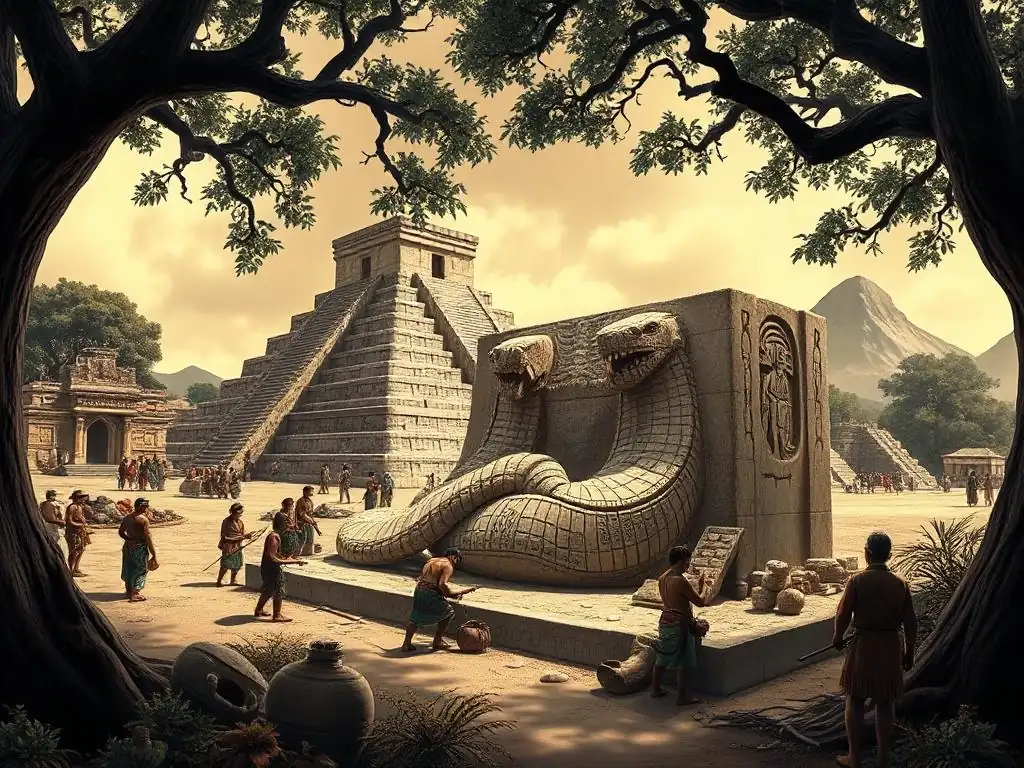
The Toltecs are often celebrated for their significant contributions to the artistic and architectural landscape of Mesoamerica. Their distinct styles and innovations not only reflected their own cultural identity but also influenced neighboring civilizations, creating a rich tapestry of shared artistic heritage across the region.
Toltec Art: Styles and Symbolism
Toltec art is characterized by its intricate designs and profound symbolism, often depicting deities, warriors, and elements of nature. One of the most recognizable forms of Toltec art is the use of stone carvings, particularly in the creation of monumental sculptures that adorned temples and public spaces.
The Chac Mool, a reclining figure with a specific posture, is a prime example of Toltec artistry and is believed to represent a sacrificial figure, positioned to receive offerings. The use of jaguar motifs and feathered serpents in their artworks symbolizes power and divine connection, affirming the Toltecs’ belief in the spiritual significance of nature.
In addition to sculpture, the Toltecs excelled in pottery and textiles, showcasing vibrant colors and complex patterns that tell stories of their mythology and daily life. This rich artistic expression reflects the Toltecs' worldview and their connection to the cosmos, showcasing how art served not only as decoration but also as a means of cultural storytelling.
Architectural Innovations: Pyramids and Temples
Toltec architecture is renowned for its monumental structures, particularly the impressive pyramids and temples that served both religious and civic purposes. The Pyramid of Quetzalcoatl, located in the ancient city of Tula, exemplifies their architectural prowess. This pyramid features a unique layout with a series of platforms and terraces, demonstrating advanced engineering techniques.
The temples built by the Toltecs were often adorned with intricate carvings and reliefs, illustrating their deities and significant historical events. The architectural style, marked by the use of large stone blocks and decorative columns, influenced subsequent cultures, including the Aztecs, who adopted many Toltec building practices.
Moreover, the alignment of Toltec structures with solar and celestial events indicates their advanced understanding of astronomy and its integration into their architectural designs. This not only served practical purposes but also reinforced their spiritual beliefs, highlighting the connection between the physical and metaphysical realms.
Cross-Cultural Artistic Influences in Mesoamerica
The artistic achievements of the Toltecs did not exist in isolation; rather, they were part of a broader Mesoamerican cultural exchange. As a central power in the region, the Toltecs interacted with various neighboring cultures, facilitating the exchange of artistic techniques, styles, and motifs.
For instance, the influence of Olmec and Teotihuacan art can be seen in Toltec sculptures and pottery. The adaptation of these styles reflects a dynamic interplay between cultures, where the Toltecs assimilated and reinterpreted elements from earlier civilizations, creating a unique artistic language.
Additionally, the spread of Toltec artistry can be traced through trade routes, which allowed for the dissemination of their artistic motifs across Mesoamerica. This cross-cultural influence enriched the artistic traditions of many cultures, leading to a shared visual heritage that continued to evolve long after the height of the Toltec civilization.
Economic and Trade Relations
The economic structure of the Toltec civilization was intricately linked to their trade relations with neighboring Mesoamerican cultures. Their strategic location allowed them to become a central hub for trade, fostering economic ties that were vital for their prosperity and cultural exchange.
Trade Networks of the Toltecs
The Toltecs established extensive trade networks that connected them with distant regions, facilitating the exchange of goods, ideas, and cultural practices. These networks were not only crucial for obtaining essential resources but also played a significant role in the spread of Toltec influence across Mesoamerica.
Goods such as obsidian, textiles, and pottery were commonly traded, with the Toltecs exporting high-quality items that were in demand among neighboring cultures. The development of these trade routes illustrates the Toltecs' advanced understanding of commerce and their ability to navigate complex economic systems, establishing themselves as key players in Mesoamerican trade.
Mesoamerican Trade Routes and Their Impact on the Toltecs
Mesoamerican trade routes were vital arteries for commerce, linking the Toltecs to various cultures such as the Mixtecs, Zapotecs, and later the Aztecs. These routes facilitated the exchange of not only material goods but also cultural and technological knowledge, which significantly impacted the development of the Toltec civilization.
The trade routes allowed for the influx of luxury items, such as cacao and precious metals, which contributed to the wealth and status of the Toltec elite. Furthermore, the interaction with other cultures through these routes fostered a sense of shared identity and cultural exchange, influencing the Toltecs’ artistic and architectural innovations.
Resources Exchanged Between the Toltecs and Neighboring Cultures
The Toltecs engaged in a vibrant exchange of resources with their neighbors, which played a crucial role in their economic stability. Key resources traded included:
- Obsidian: A critical material for tools and weapons, the Toltecs were known for their high-quality obsidian products.
- Cacao: Highly valued in Mesoamerican culture, cacao was often used as currency and for ceremonial purposes.
- Textiles: The Toltecs produced intricate textiles that were traded widely, showcasing their craftsmanship and artistic skills.
This reciprocal exchange not only enriched the Toltec economy but also strengthened their ties with other cultures, contributing to a complex web of interdependence that characterized the Mesoamerican landscape. The integration of different resources and cultural elements through trade further solidified the Toltecs' position as a pivotal civilization in the region.
Conclusion: The Legacy of the Toltecs in Mesoamerican History
The Toltecs left an indelible mark on the fabric of Mesoamerican history, influencing a multitude of cultures that followed their rise to prominence. Emerging around the 10th century CE, they are often credited with the synthesis of earlier cultural elements and the development of new artistic and architectural styles that became benchmarks for subsequent civilizations, particularly the Mexica (Aztecs). The Toltec civilization's focus on militarism, trade, and a complex pantheon of gods created a social and cultural environment that shaped the trajectory of Mesoamerican societies.
Their legacy is reflected not just in the physical remnants of their cities, such as Tula with its iconic warrior statues, but also in the cultural narratives that permeated through time. These narratives often idealized the Toltecs as a golden age of civilization, contributing to the Mexica's identity and aspirations. The reverberations of Toltec influence can be seen in religious practices, artistic motifs, and the socio-political structures of later cultures. This impact underscores the significance of the Toltecs within the broader context of Mesoamerican history.
Lasting Impacts on Subsequent Mesoamerican Civilizations
The impacts of Toltec civilization on later Mesoamerican cultures are profound and multifaceted. As the Mexica rose to power, they integrated many Toltec elements into their society:
- Art and Architecture: The distinctive styles of Toltec sculpture and monumental architecture influenced the Mexica and other groups. The use of serpentine motifs, for example, became prominent in Mexica temple designs.
- Religious Practices: The Toltecs' pantheon and religious rituals were absorbed and adapted by later civilizations. The Mexica revered Quetzalcoatl, a key Toltec deity, and attributed to him a central role in their own mythology.
- Political Structures: The Toltec's militaristic and trade-oriented governance model served as a template for later empires. The emphasis on warfare and tribute systems can be traced to Toltec practices.
This blend of influence illustrates how the Toltecs acted as cultural intermediaries, facilitating the exchange of ideas, technologies, and traditions that shaped Mesoamerican civilization.
The Toltecs in Modern Cultural Context
In contemporary discussions, the Toltecs are often romanticized as symbols of a lost pre-Columbian civilization, embodying ideals of wisdom and artistic achievement. Modern interpretations of Toltec culture have emerged in various forms, including:
- Cultural Revitalization: Indigenous movements in Mexico have sought to reclaim and celebrate Toltec heritage, emphasizing its significance in Mexican identity and cultural history.
- Literary and Artistic Representations: The Toltecs have inspired numerous works of fiction, art, and music, often portraying them as wise sages or formidable warriors.
- Spiritual Practices: Some New Age spiritual movements draw on Toltec philosophy, particularly in concepts of personal transformation and the pursuit of knowledge, although these interpretations may diverge significantly from historical realities.
These modern representations reflect an ongoing fascination with the Toltecs, highlighting their enduring influence on contemporary culture.
References and Suggested Readings
Key Texts on Toltec Civilization
-
"The Toltecs: A History of Their Society" by John P. Schmal
An in-depth exploration of Toltec society, examining their cultural, political, and religious systems.
-
"The Toltec Legacy: A Cultural History" by Elizabeth Baquedano
This work discusses the Toltecs' impact on subsequent Mesoamerican civilizations and their role in shaping cultural narratives.
-
"Tula: The Toltec Capital" by David Carrasco
A detailed study of the archaeological site of Tula, shedding light on its significance in Toltec history.
Recommended Resources on Mesoamerican Cultures
-
"Mesoamerican Civilizations: A History" by Richard E. W. Adams
A comprehensive overview of the various cultures that flourished in Mesoamerica, including the Toltecs.
-
"The Aztecs: A Very Short Introduction" by David Carrasco
Offers insights into the Mexica culture while contextualizing the influences of earlier civilizations like the Toltecs.
-
"Ancient Mesoamerica: A Comparison of the Cultures" by Arthur A. Demarest
This book provides a comparative analysis of Mesoamerican cultures, highlighting the interconnectedness of their histories.
These resources will enrich your understanding of the Toltecs and their pivotal role in the tapestry of Mesoamerican history.
- Introduction to the Toltecs and Mesoamerican Cultures
- Historical Context of the Toltecs
- Cultural Influences Between the Toltecs and Other Mesoamerican Societies
- Religious and Spiritual Connections
- Artistic Expressions and Architectural Contributions
- Economic and Trade Relations
- Conclusion: The Legacy of the Toltecs in Mesoamerican History
- References and Suggested Readings
Frequently Asked Questions
What were the main achievements of the Toltecs in Mesoamerica?
The Toltecs are known for their advanced architecture, including pyramid building and intricate stone carvings. They significantly influenced later cultures through their artistic and religious practices.
How did the Toltecs influence other Mesoamerican cultures?
The Toltecs set the foundation for many Mesoamerican cultures, particularly the Aztecs, who adopted their religious beliefs, architectural styles, and social organization, creating a lasting legacy.
What role did religion play in Toltec society?
Religion was central to Toltec life, with a focus on deities such as Quetzalcoatl. Their religious practices influenced neighboring cultures and were integral to their social structure.
Were the Toltecs the only civilization in Mesoamerica?
No, the Toltecs were one of many civilizations in Mesoamerica, including the Olmecs, Maya, and Aztecs, each contributing uniquely to the region's rich cultural tapestry.
How can I learn more about Toltecs and Mesoamerican cultures?
For a deeper understanding, explore resources on Indigenous civilizations, visit museums showcasing Mesoamerican artifacts, or read scholarly articles that discuss their history and impact.
Final Reflection: The Enduring Legacy of the Toltecs in Mesoamerican Cultures
The exploration of the Toltecs and their intricate connections with other Mesoamerican cultures reveals a profound truth: our understanding of history is not merely a collection of facts, but a tapestry woven from the threads of shared beliefs, practices, and legacies. Today, as we navigate a world increasingly defined by cultural exchange and globalization, the lessons from the Toltecs remind us of the importance of recognizing and honoring our interconnectedness. The wisdom of the past is not just a relic; it serves as a guiding light for our present and future.
Cultures do not exist in isolation; they evolve through interaction and influence. The Toltecs, with their rich traditions and philosophies, have left an indelible mark on the cultural landscape of Mesoamerica, shaping the identities of subsequent civilizations. As we reflect on their contributions, we see echoes of their artistry, spirituality, and societal structures in the cultures that followed. The past is never dead. It's not even past.
- William Faulkner. This quote encapsulates the essence of how the Toltecs continue to resonate within the cultural narratives of today, reminding us that history is alive and ever-present in our lives.
As you contemplate the connections between the Toltecs and other Mesoamerican cultures, I invite you to consider how these ancient lessons can inform your own life. Reflect on the importance of community, shared values, and the wisdom that transcends time. Let the legacy of the Toltecs inspire you to forge connections in your own journey, fostering a deeper understanding of the cultures that shape our world. Embrace the richness of our shared history, and carry forward the lessons of unity and respect for diversity as we move into the future together.
Unveil the Rich Legacy of Mesoamerican Cultures!
Thank you for diving into the fascinating connections between the Toltecs and other Mesoamerican civilizations! Your exploration of this unique heritage opens the door to understanding the vibrant tapestry of indigenous history. Now, let’s take the next step in your journey.
- Delve deeper into the Toltec legacy by visiting a local museum or exploring online resources that showcase artifacts and historical insights.
- Share your newfound knowledge with friends or on social media—your passion can inspire others to appreciate these ancient cultures!
- Engage with like-minded enthusiasts by joining forums or local cultural groups to discuss Mesoamerican history and exchange perspectives.
What aspect of Toltec or Mesoamerican culture has sparked the most curiosity in you? We invite you to share your thoughts and reflections below!