
The Role of Mathematical Principles in the Political Systems of Indigenous Societies

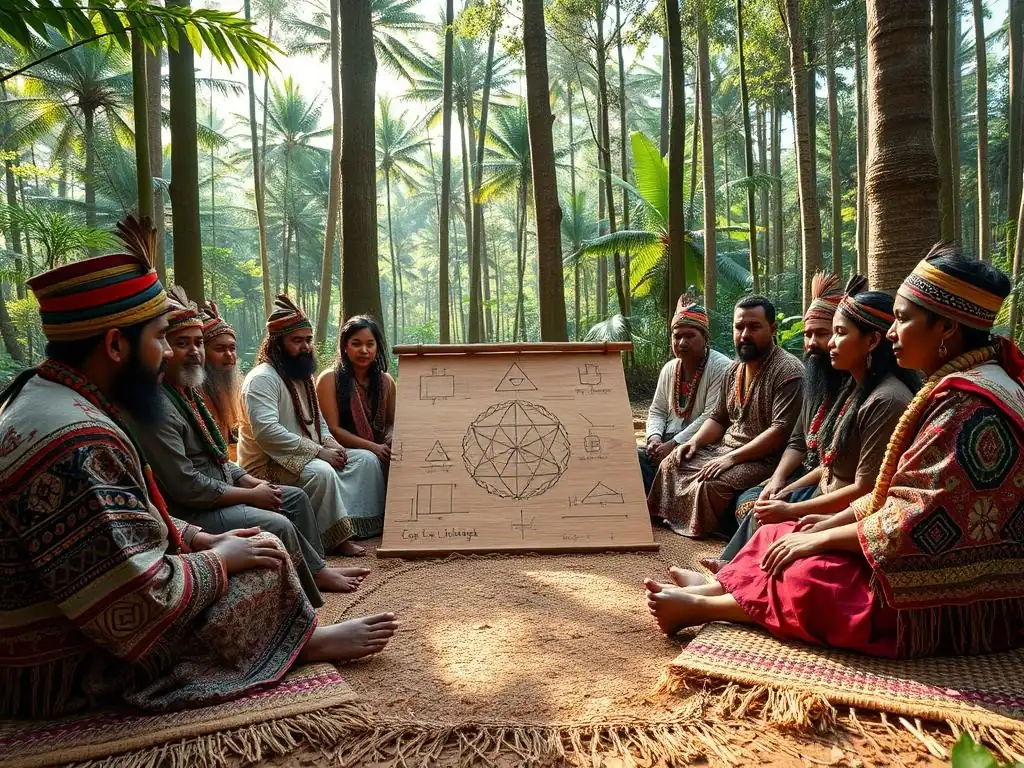
Welcome to Indigenous Civilizations of the Americas, where we invite you to embark on an enlightening journey through the rich tapestry of indigenous cultures that flourished long before European colonization. This site delves deep into the remarkable achievements and sophisticated societies that shaped the Americas, highlighting the often-overlooked indigenous political systems mathematics that served as the backbone of these communities. Are you curious about how mathematical principles influenced governance and societal structures?
Join us as we uncover the intricate connections between numbers and leadership in our featured article, "The Role of Mathematical Principles in the Political Systems of Indigenous Societies." Your exploration begins here!
- Introduction to Indigenous Political Systems and Mathematics
- Historical Context of Mathematics in Indigenous Societies
- Key Mathematical Principles in Indigenous Political Systems
- Case Studies of Indigenous Societies Using Mathematics in Governance
- The Impact of Indigenous Political Systems on Modern Governance
- Conclusion: The Legacy of Mathematics in Indigenous Political Systems
- Frequently Asked Questions
- Final Reflection: The Intersection of Mathematics and Indigenous Political Systems
- Embrace the Power of Mathematics in Indigenous Governance!
Introduction to Indigenous Political Systems and Mathematics
Indigenous political systems across the Americas are rich and varied, reflecting the diverse cultures, languages, and environments of their peoples. These systems were not merely functional structures for governance; they were deeply intertwined with the spiritual, social, and economic life of the communities. One fascinating aspect of these indigenous political systems is the application of mathematical principles, which played a pivotal role in governance, resource management, and societal organization. This article will explore how mathematics influenced indigenous political systems, highlighting the intricate relationships between numbers, governance, and community well-being.
Overview of Indigenous Political Systems
Indigenous political systems were diverse and adapted to the unique contexts of their communities. Here are some key characteristics:
- Decentralized Governance: Many indigenous societies operated on decentralized systems, where local leaders held significant power. This led to a variety of political structures, including councils of elders, chiefdoms, and confederacies.
- Consensus Decision-Making: Decision-making often involved communal discussions and consensus rather than majority rule, ensuring that all voices were heard and respected.
- Cultural Context: Political systems were often influenced by cultural beliefs and practices, with leaders typically chosen based on wisdom, experience, and community respect rather than solely on hereditary lines.
- Role of Rituals: Governance was frequently intertwined with spiritual beliefs, where rituals and ceremonies were essential for legitimizing leadership and decisions.
Understanding these systems provides insight into how indigenous societies organized themselves and interacted with their environments, paving the way for sustainable governance practices.
Importance of Mathematics in Governance
Mathematics played a crucial role in shaping the political landscape of indigenous societies. Here are some ways in which mathematical principles were applied:
- Resource Allocation: Indigenous communities used mathematical concepts to manage resources effectively, such as calculating agricultural yields, estimating population sizes, and distributing land fairly.
- Calendar Systems: Many cultures developed sophisticated calendar systems based on astronomical observations, which were crucial for agricultural planning, ceremonial events, and seasonal governance.
- Trade and Economics: Mathematics facilitated trade relations by enabling precise measurements and calculations, allowing for fair exchanges and the development of complex economic systems.
- Social Organization: Mathematical models were often employed to understand and organize social hierarchies, kinship ties, and community roles, ensuring stability and cohesion within societies.
The integration of mathematical principles into governance not only enhanced the efficiency of political systems but also reinforced the cultural identities of indigenous communities, demonstrating that mathematics was not merely a tool but a vital part of their societal fabric.
Historical Context of Mathematics in Indigenous Societies

Mathematics, as a systematic study of numbers, shapes, and patterns, has deep roots in the indigenous societies of the Americas. Before European colonization, these cultures developed sophisticated mathematical systems that were essential for various aspects of daily life, including trade, agriculture, and governance. The mathematical principles integral to indigenous political systems reflect a profound understanding of numerical relationships and their applications.
The mathematical practices among indigenous peoples were not merely abstract endeavors; they were deeply intertwined with their social structures and governance. For instance, community leaders often employed mathematical concepts to organize labor, allocate resources, and maintain social order. As a result, mathematics served as both a tool for practical administration and a framework for broader societal values and relationships.
Early Mathematical Concepts in Indigenous Cultures
Indigenous cultures across the Americas, from the Maya in Mesoamerica to the Inca in the Andes, exhibited remarkable mathematical sophistication. Many of these societies utilized a base-20 (vigesimal) system, which was particularly prevalent among the Maya. They developed a complex numerical system that included the concept of zero, allowing for advanced calculations and astronomical observations.
Examples of Mathematical Concepts:
- Maya Mathematics: The Maya used a combination of dots and bars to represent numbers. For example:
- A dot represented one unit.
- A bar represented five units.
- A shell symbol represented zero.
- Inca Quipu: The Inca developed a unique counting system using knotted strings, known as quipu. This system enabled them to keep detailed records of resources, population, and tribute, showcasing an innovative approach to mathematics in governance.
- Calendar Systems: Many indigenous societies created intricate calendar systems based on astronomical observations, integrating mathematical principles to predict seasonal changes and agricultural cycles.
These early mathematical concepts were foundational to the political organization of these societies, facilitating decision-making processes and the management of communal resources.
Integration of Mathematics in Political Structures
Mathematics played a crucial role in shaping the political frameworks of indigenous societies. It enabled leaders to devise strategies for resource allocation, conflict resolution, and social organization. The integration of mathematical principles into political systems can be observed through various mechanisms:
- Resource Management:
- Indigenous leaders utilized mathematical calculations to estimate agricultural yields, ensuring that food supplies were adequate for the population.
- The Inca, for instance, implemented a system of ayllu (community cooperation) that relied on mathematical assessments of land and labor distribution.
- Taxation and Tribute Systems:
- Many indigenous cultures established tribute systems where communities would contribute resources based on population size and agricultural output. Mathematics facilitated the fair assessment of these contributions.
- The Aztecs employed a numerical system to calculate tribute owed by various provinces, promoting efficiency in governance.
- Conflict Resolution:
- Mathematical principles were applied in the negotiation of treaties and conflict resolution. Leaders often used numerical assessments to determine the terms of agreements, ensuring clarity and fairness.
- Social Hierarchies:
- Social structures were often organized numerically, with roles and responsibilities assigned based on mathematical divisions of labor. This organization reinforced the stability and efficiency of indigenous political systems.
The application of mathematics in these political structures not only underscores the intellectual achievements of indigenous societies but also highlights their lasting impact on governance practices. By recognizing the significance of mathematics within indigenous political systems, we gain a deeper appreciation for the complexity and sophistication of these cultures, which continue to influence contemporary perspectives on governance and community organization.
Key Mathematical Principles in Indigenous Political Systems

Indigenous political systems across the Americas harnessed various mathematical principles to manage resources, delineate land, and organize societal structures. These mathematical applications were not merely abstract concepts; they were deeply integrated into the governance practices of diverse cultures, reflecting a profound understanding of mathematics' role in societal stability and organization.
Arithmetic and Resource Allocation
Arithmetic played a crucial role in the management of resources among indigenous societies. From the Inca Empire to the Mississippian cultures, indigenous peoples utilized basic arithmetic operations to ensure fair distribution and optimal utilization of resources.
- Inventory Management: Indigenous leaders often maintained detailed counts of resources such as crops, livestock, and communal tools. This inventory management relied heavily on addition and subtraction to track surpluses and deficits over time.
- Trade Systems: Arithmetic facilitated trade dynamics between different tribes and nations. For instance, the Maya developed complex systems for barter, which included calculating the value of goods exchanged based on quantity and quality, ensuring equitable transactions.
- Population Estimates: Leaders used arithmetic to estimate population sizes for military and labor purposes. Accurate population counts allowed for better planning in resource allocation and social organization.
Detailed assessments of resource allocation not only optimized the use of available materials but also reinforced social contracts among community members, fostering a sense of accountability and interdependence.
Geometry and Land Division
Geometry was instrumental in the division and management of land, which was vital for agriculture and settlement. Different cultures employed geometric principles to create equitable land distribution systems.
- Land Surveying: The Inca, for example, utilized geometric techniques to survey vast expanses of land in the Andes. They employed simple geometric shapes to define property boundaries and allocate agricultural plots, ensuring that each family received a fair share of arable land.
- Urban Planning: The urban centers of the Maya, such as Tikal and Calakmul, were constructed with precise geometric layouts. The arrangement of temples, plazas, and residences reflected an understanding of space and geometry that facilitated social interaction and governance.
- Territorial Markings: Many indigenous groups used geometric patterns to signify territorial claims. These markings served not only as physical boundaries but also as mathematical representations of community identity and ownership.
The integration of geometric principles into land management systems underscores the sophistication of indigenous governance models, where spatial awareness and mathematical reasoning coalesced to create sustainable societies.
Calendrical Systems and Governance
Calendrical systems among indigenous societies were not merely tools for tracking time; they were critical components of governance that intertwined mathematics with cultural practices.
- Maya Calendar: The Maya civilization developed intricate calendrical systems based on complex mathematical calculations involving cycles of time. Their Long Count calendar allowed for the tracking of historical events and planning for agricultural cycles, which were essential for governance and societal organization.
- Ceremonial Timing: Many indigenous groups aligned political decisions and ceremonial events with specific dates determined by their calendars. This mathematical precision ensured that governance was in harmony with natural cycles, reinforcing the legitimacy of leaders and their decisions.
- Astronomical Observations: Indigenous societies often incorporated astronomical events into their calendrical systems, using mathematics to predict solar and lunar cycles. This knowledge was crucial for agricultural planning and societal rituals, which in turn influenced political power structures.
The intricate relationship between calendrical systems and governance illustrates how indigenous political systems mathematics were deeply embedded in the very fabric of social, cultural, and political life, showcasing a sophisticated understanding of time and its implications for community dynamics.
Case Studies of Indigenous Societies Using Mathematics in Governance
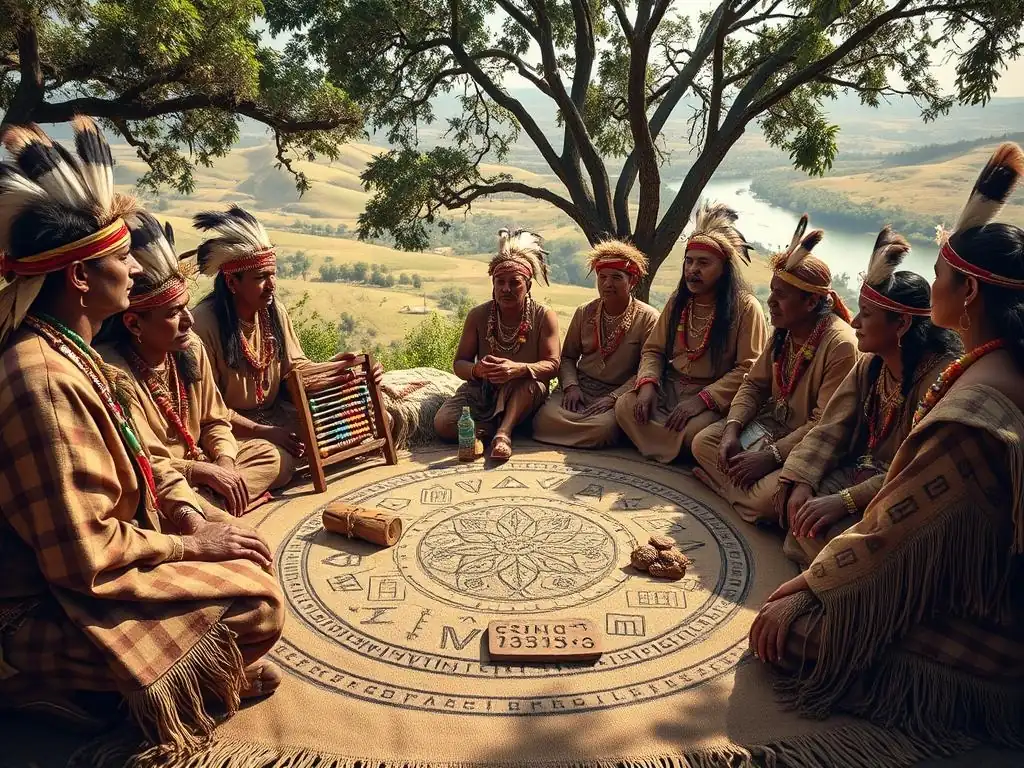
The Maya Civilization: Mathematics and Political Organization
The Maya civilization, which flourished in Mesoamerica from approximately 250 to 900 CE, is renowned for its sophisticated mathematical system and the significant role it played in their political organization. The Maya developed a vigesimal (base-20) numeral system that was intricately linked to their calendrical and agricultural practices.
Mathematics was not merely an abstract pursuit for the Maya; it was fundamental to their governance. Political leaders relied on mathematical calculations for several critical functions:
- Calendar Management: The Maya used their advanced calendar systems, including the Tzolk'in (260-day) and Haab' (365-day) calendars, to plan agricultural activities, religious ceremonies, and political events. The synchronization of these calendars was vital for governance, ensuring that societal events aligned with agricultural cycles.
- Tribute Systems: The Maya employed mathematical principles to calculate tribute and taxation. Accurate assessments of resources and population sizes allowed rulers to implement fair tribute systems. This ensured economic stability and fostered loyalty among their subjects.
- Construction and Astronomy: Architectural projects, such as pyramids and temples, required precise measurements and calculations. The Maya used mathematics to align structures with celestial events, reinforcing the connection between governance, religion, and the cosmos.
The impact of these mathematical applications in political organization is evident in the documentation found in codices and inscriptions, where rulers often recorded their achievements, including the successful management of resources and tribute.
The Inca Empire: Engineering and Administrative Structures
The Inca Empire, which reached its zenith in the 15th century, is another remarkable example of indigenous political systems mathematics. The Incas demonstrated an exceptional understanding of mathematics, which was pivotal in their engineering feats and administrative efficiency.
Key aspects of their mathematical applications include:
- Quipu (Khipu): A unique system of knotted strings, quipu served as a record-keeping tool for the Incas. Each knot and its placement encoded numerical data, allowing for the tracking of census information, tribute collection, and resource management. This sophisticated data management system played a crucial role in maintaining the empire's vast administrative structure.
- Agricultural Engineering: The Incas are renowned for their advanced agricultural techniques, including terrace farming. Mathematical principles guided the design of irrigation systems and the construction of terraces, ensuring optimal use of arable land in the Andean mountains. This engineering prowess was essential for sustaining a large population and supporting the political structure.
- Road System: The extensive Inca road system, known as the Qhapaq Ñan, facilitated communication and trade across the empire. Mathematics was integral in planning and constructing these roads, which connected remote areas to the central government. The efficiency of this network reinforced the political control of the Incas over their territories.
The application of mathematics in the Inca Empire illustrates how indigenous political systems mathematics was not only a tool for governance but also a means of unifying and managing a diverse population across vast geographic regions.
North American Tribes: Mathematical Approaches to Consensus
In North America, various Indigenous tribes employed mathematical principles in their political systems, particularly in decision-making processes. These practices highlight the communal nature of governance and the emphasis on consensus.
Some notable examples include:
- Consensus Decision-Making: Many tribes, such as the Haudenosaunee (Iroquois Confederacy), utilized a consensus model that incorporated mathematical reasoning. When making decisions, tribal leaders would often engage in lengthy discussions where members would present their viewpoints. The use of tally systems or counting methods allowed leaders to gauge the support for various proposals quantitatively, facilitating a balanced and fair decision-making process.
- Land and Resource Management: Indigenous tribes often employed mathematical calculations for land distribution and resource management. Understanding the geography and seasonal patterns enabled tribes to allocate land for hunting, fishing, and agriculture effectively. This ensured that resources were utilized sustainably, contributing to the community's long-term welfare.
- Trade Networks: The establishment of trade agreements among tribes involved mathematical assessments of resources, distances, and populations. By employing basic mathematical principles, tribes could negotiate fair trade practices that benefited all parties involved, strengthening intertribal relationships.
The mathematical approaches to consensus in North American tribes underscore the importance of collaborative governance, demonstrating that indigenous political systems mathematics was intricately woven into the fabric of community life and decision-making processes.
The Impact of Indigenous Political Systems on Modern Governance
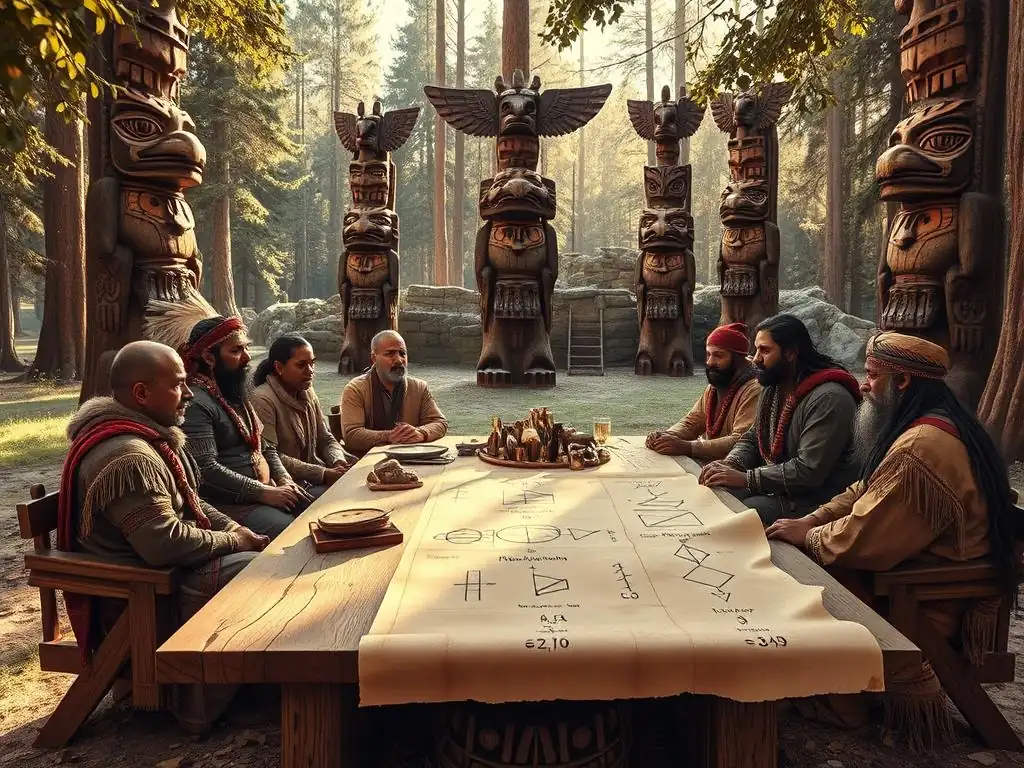
Indigenous political systems have profoundly influenced modern governance structures, showcasing the intricate relationship between mathematics and societal organization. The mathematical principles that underpinned these systems allowed for efficient resource management, equitable distribution of power, and effective conflict resolution. For instance, many indigenous societies utilized advanced counting systems and geometric concepts to establish frameworks for decision-making, tribal council structures, and land allocation.
One of the most notable examples is the Iroquois Confederacy, which implemented a sophisticated form of governance that emphasized consensus-building and collective decision-making. Their political model relied heavily on mathematical principles to create a system that balanced power between various tribes, ensuring that no single group could dominate the others. The Confederacy's use of a representative council can be seen as a precursor to modern democratic systems, illustrating how indigenous governance models have shaped contemporary political thought.
Additionally, the Mayan civilization exhibited advanced mathematical knowledge, using it not only for astronomical calculations but also for structuring their political hierarchy. Their intricate calendar systems and numerical representations influenced governance by enabling precise timing for agricultural practices, rituals, and political events, which were critical for maintaining societal order and stability.
Lessons from Indigenous Mathematics in Contemporary Politics
Indigenous mathematical concepts offer valuable lessons that can be applied to contemporary political systems. The emphasis on holistic approaches, sustainability, and community involvement in indigenous governance highlights the importance of incorporating diverse perspectives into modern decision-making processes.
Key Lessons Include:
- Consensus Decision-Making: Many indigenous societies prioritize consensus over majority rule, fostering a sense of unity and shared responsibility. This approach can be beneficial in contemporary politics, where divisive partisan politics often lead to gridlock.
- Resource Management: Indigenous mathematical principles often reflect a deep understanding of local ecosystems, promoting sustainable practices that are essential in today's context of climate change and environmental degradation.
- Cultural Inclusivity: Recognizing and integrating indigenous knowledge and practices can enhance governance by respecting cultural diversity and addressing the needs of marginalized communities.
- Systems Thinking: Indigenous political systems often employ a systems-thinking approach, considering the interconnections between various societal elements. This perspective can enhance policy-making in a world that increasingly requires interdisciplinary solutions.
By adopting these indigenous mathematical lessons, modern political systems can strive for greater inclusivity, sustainability, and effectiveness.
The Relevance of Indigenous Governance Models Today
The relevance of indigenous governance models in today's political landscape cannot be overstated. As contemporary societies grapple with issues such as inequality, environmental crises, and social fragmentation, the principles embedded in indigenous political systems provide a framework for addressing these challenges.
Relevant Aspects of Indigenous Governance Models:
- Decentralization: Many indigenous systems are characterized by decentralized authority, allowing for local governance that can respond more effectively to community needs.
- Community Engagement: Indigenous political structures often involve significant community participation, ensuring that decisions reflect the collective will and wisdom of the people.
- Adaptive Strategies: Indigenous societies have historically shown resilience and adaptability in governance, qualities that are crucial for modern systems facing rapid changes.
- Intergenerational Responsibility: The emphasis on stewardship and responsibility to future generations in indigenous cultures can inform contemporary policies aimed at long-term sustainability.
The integration of indigenous political systems and their mathematical foundations into modern governance can lead to more robust, equitable, and sustainable societies. By learning from these rich traditions, contemporary political structures can evolve to better serve the needs of all people.
Conclusion: The Legacy of Mathematics in Indigenous Political Systems
The integration of mathematical principles within indigenous political systems reveals a profound legacy that extends beyond mere numbers. These principles were not only utilized for administrative efficiency but also played a significant role in the governance and societal organization of various indigenous cultures across the Americas. From the intricate calendrical systems of the Maya to the complex accounting methods of the Inca, mathematics served as a foundational element in decision-making processes, resource management, and social stratification.
The mathematical methodologies employed by these societies were deeply intertwined with their cultural practices and beliefs. They often reflected a sophisticated understanding of their environment, community dynamics, and the need for sustainable governance. This multifaceted approach highlights how indigenous political systems mathematics was not merely a tool but an integral part of their identity and societal structure.
Summary of Key Insights
- Mathematical Frameworks in Governance: Indigenous societies utilized advanced mathematical concepts to establish governance structures, manage resources, and create societal hierarchies. For instance, the use of the base-20 system by the Maya allowed for complex calculations that informed agricultural planning and taxation.
- Calendrical Systems: The Maya civilization's intricate calendrical systems demonstrate how mathematics was essential for agricultural cycles and religious ceremonies, impacting their political and social organization. These systems enabled leaders to make informed decisions based on astronomical observations and seasonal changes.
- Record Keeping and Accounting: The Inca employed quipu, a system of knotted strings, which served as an accounting tool for managing resources and population. This method illustrates how mathematics facilitated the administration of a vast empire and maintained economic stability.
- Cultural Significance: Mathematics in indigenous political systems was not just about practicality; it was also tied to cultural expression and identity. Mathematical concepts were often embedded in mythology, art, and social rituals, emphasizing their importance beyond mere computation.
Future Research Directions on Indigenous Political Systems and Mathematics
The exploration of indigenous political systems mathematics remains a rich field for future research. Scholars can delve into several promising directions:
- Interdisciplinary Studies: Collaborative efforts between anthropologists, mathematicians, and historians can yield deeper insights into how mathematical practices shaped governance and societal structures in indigenous cultures.
- Comparative Analysis: Comparative studies of different indigenous groups can highlight unique mathematical approaches and their effects on political organization, allowing for a broader understanding of indigenous governance.
- Impact of Colonization: Investigating how European colonization disrupted existing mathematical practices and political systems can provide a clearer picture of the resilience and adaptation of indigenous societies.
- Preservation of Knowledge: Efforts to document and preserve traditional mathematical practices within indigenous communities can contribute to cultural heritage and education, ensuring that these valuable systems are not lost to history.
- Application of Modern Mathematics: Examining how contemporary indigenous communities apply traditional mathematical principles in modern governance can offer insights into sustainable practices and innovative solutions to current challenges.
By pursuing these avenues, researchers can further illuminate the pivotal role that mathematics has played in indigenous political systems, enriching our understanding of their cultures and contributions to human civilization.
Frequently Asked Questions
What are indigenous political systems?
Indigenous political systems refer to the governance structures and decision-making processes established by various indigenous cultures in the Americas, which often emphasize community involvement and consensus.
How did mathematics influence indigenous political systems?
Mathematics played a crucial role in indigenous political systems by facilitating trade, resource management, and the organization of social structures, helping leaders make informed decisions based on quantitative assessments.
What achievements in mathematics did indigenous cultures attain?
Indigenous cultures made significant contributions to mathematics, including the development of calendars, agricultural techniques, and architectural designs, which were integral to their political and social organization.
How did indigenous societies use mathematics in governance?
Indigenous societies utilized mathematical principles to establish tribal boundaries, manage resources, and create systems for taxation or tribute, ensuring a stable and organized governance framework.
What is the lasting impact of indigenous mathematical practices?
The lasting impact of indigenous mathematical practices can be seen in modern governance and cultural preservation, where their concepts of measurement and resource management continue to influence contemporary societies.
Final Reflection: The Intersection of Mathematics and Indigenous Political Systems
The exploration of mathematical principles within indigenous political systems reveals a profound connection that remains relevant today. As we navigate an increasingly complex world, understanding the foundational structures of governance in indigenous societies can illuminate innovative approaches to modern political challenges. The realization that mathematics is not merely a tool for calculation but a framework for organizing societal values and relationships is a striking testament to the intelligence embedded in these systems.
Cultural narratives and social structures are deeply intertwined with the mathematical principles that govern indigenous political systems. The ongoing influence of these principles can be seen in contemporary movements advocating for indigenous rights and self-determination. As we reflect on this, it becomes clear that the wisdom of indigenous governance models offers valuable insights into creating equitable and sustainable societies. Indigenous knowledge systems are not just relics of the past; they are living frameworks that can guide us into the future.
As we conclude this exploration, I invite you to reflect on how the lessons drawn from indigenous political systems can inspire your own understanding of governance and community. Consider how you might integrate these mathematical principles into your life, whether in decision-making processes, community engagement, or advocating for social justice. Embrace the opportunity to learn from these rich traditions and recognize the potential for mathematics to shape not just political systems, but the very fabric of our societies.
Embrace the Power of Mathematics in Indigenous Governance!
Thank you for exploring the fascinating intersection of mathematical principles and political systems in Indigenous societies with us! Your engagement with these concepts enriches our understanding of history and culture. Now, it's time to turn this knowledge into action and delve deeper into this rich topic.
Here's how you can contribute and expand your exploration:
- Dive Deeper: Research how specific mathematical concepts have influenced decision-making processes in your community. Look for local resources or literature that discuss the application of these principles in contemporary governance.
- Share Your Insights: Write about the mathematical foundations you've discovered on social media or your personal blog. Initiate discussions within your network about the significance of Indigenous wisdom and practices.
- Connect with Others: Join a forum or community group focused on Indigenous governance and mathematics. Collaborate with fellow enthusiasts to celebrate and promote the integration of these essential principles in modern society.
What unique perspectives can you share about the role of mathematics in shaping the governance of Indigenous cultures that might inspire others?