
From Teotihuacan to Tikal: The Evolution of Astronomical Knowledge in Mesoamerica

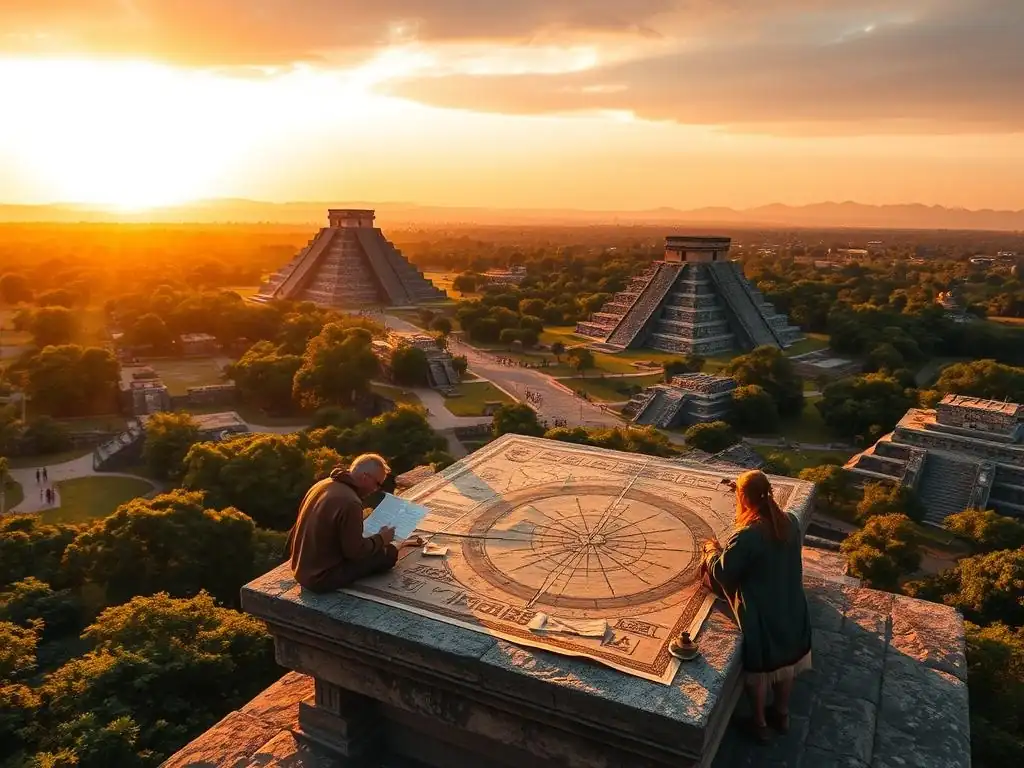
Welcome to Indigenous Civilizations of the Americas, where we invite you to embark on a captivating journey through the rich tapestry of indigenous cultures that flourished long before European contact. Our exploration begins with the fascinating topic of Mesoamerican astronomical knowledge evolution, where ancient civilizations like Teotihuacan and Tikal unlocked the secrets of the cosmos. Discover how their profound understanding of the stars not only influenced their societies but also left an enduring legacy that resonates to this day.
Prepare to be amazed as you uncover the achievements and innovations that shaped the world of these remarkable peoples. Dive deeper into this extraordinary narrative and let your curiosity guide you!
Introduction to Mesoamerican Astronomical Knowledge Evolution
Mesoamerican civilizations, such as the Maya and the inhabitants of Teotihuacan, exhibited a profound understanding of astronomy that played an essential role in their daily lives, religious practices, and agricultural cycles. This article delves into the evolution of Mesoamerican astronomical knowledge, exploring how these ancient cultures developed sophisticated systems to observe celestial bodies, track time, and predict seasonal changes. By tracing the journey from the monumental city of Teotihuacan to the great Maya city of Tikal, we uncover the complexities of astronomical practices and their impact on future generations.
Overview of Mesoamerican Civilizations and Their Astronomical Practices
Mesoamerican societies were rich in diversity, each contributing unique perspectives and techniques to the field of astronomy. Notable civilizations, such as the Olmec, Maya, and Zapotec, shared a deep reverence for the cosmos, which was reflected in their architectural designs, calendars, and mythologies.
- Olmec Civilization: Often regarded as the "mother culture" of Mesoamerica, the Olmecs laid the groundwork for astronomical observations, utilizing the movement of celestial bodies to inform agricultural practices.
- Maya Civilization: The Maya took astronomical knowledge to unprecedented heights, developing complex calendars and observatories that allowed them to predict solar and lunar eclipses with remarkable accuracy.
The methods of observation in Mesoamerican societies included:
- Naked-eye astronomy: Utilizing the human eye to track celestial events.
- Solstices and equinoxes: Marking the changing of seasons, crucial for agricultural planning.
- Celestial calendars: Creating intricate calendars to align agricultural activities with celestial events.
Importance of Astronomy in Mesoamerican Cultures
Astronomy was not merely a scientific pursuit in Mesoamerican cultures; it was intertwined with their spiritual beliefs and societal structures. The movements of celestial bodies were often interpreted as messages from the gods, influencing everything from the timing of rituals to the selection of leaders.
- Religious Significance: Celestial events were often seen as omens, guiding decisions in governance and warfare.
- Agricultural Planning: Accurate knowledge of astronomical cycles was vital for determining planting and harvesting seasons, ensuring food security.
The integration of astronomical knowledge into daily life reinforced community bonds and cultural identity, allowing these civilizations to thrive for centuries.
The Role of Teotihuacan in Astronomical Development
Teotihuacan, one of the largest and most influential cities in ancient Mesoamerica, played a pivotal role in the advancement of astronomical knowledge. Its layout and architecture were not only designed for urban functionality but also for astronomical observation.
Teotihuacan: A Center of Astronomical Learning
Teotihuacan's significance as a center of astronomical learning is evidenced by its impressive structures and urban planning. The city's alignment with celestial events suggests that its inhabitants possessed advanced knowledge of astronomy, which they utilized for both practical and ceremonial purposes.
- Pyramid of the Sun: This monumental structure aligns with the sun's path, indicating its importance in solar worship and calendar systems.
- Pyramid of the Moon: Similarly aligned, this pyramid showcases the community's deep connection to lunar cycles.
Key Astronomical Structures and Their Functions
Several key structures within Teotihuacan served specific astronomical functions:
| Structure | Function |
|---|---|
| Pyramid of the Sun | Solar observations and ceremonial gatherings |
| Pyramid of the Moon | Lunar observations and rituals |
| Temple of the Feathered Serpent | Celestial alignments and astronomical events |
These structures reflect the city's architectural ingenuity and its inhabitants' commitment to understanding the cosmos.
Influence of Teotihuacan on Later Civilizations
The astronomical knowledge developed in Teotihuacan had a lasting impact on subsequent Mesoamerican civilizations, particularly the Maya. As trade routes expanded and cultural exchanges flourished, the sophisticated astronomical practices of Teotihuacan were disseminated throughout the region.
- Cultural Exchange: Artifacts and texts found in later Maya sites indicate the adoption of Teotihuacan's astronomical principles.
- Legacy of Knowledge: The Maya built upon these foundations, leading to their own remarkable advancements in astronomy, evidenced by their complex calendars and observatories.
The evolution of Mesoamerican astronomical knowledge is a fascinating journey that highlights the interplay between culture, science, and spirituality. From the monumental city of Teotihuacan to the grandeur of Tikal, the legacy of these ancient civilizations continues to inspire and inform our understanding of the cosmos today.
Transition from Teotihuacan to Tikal
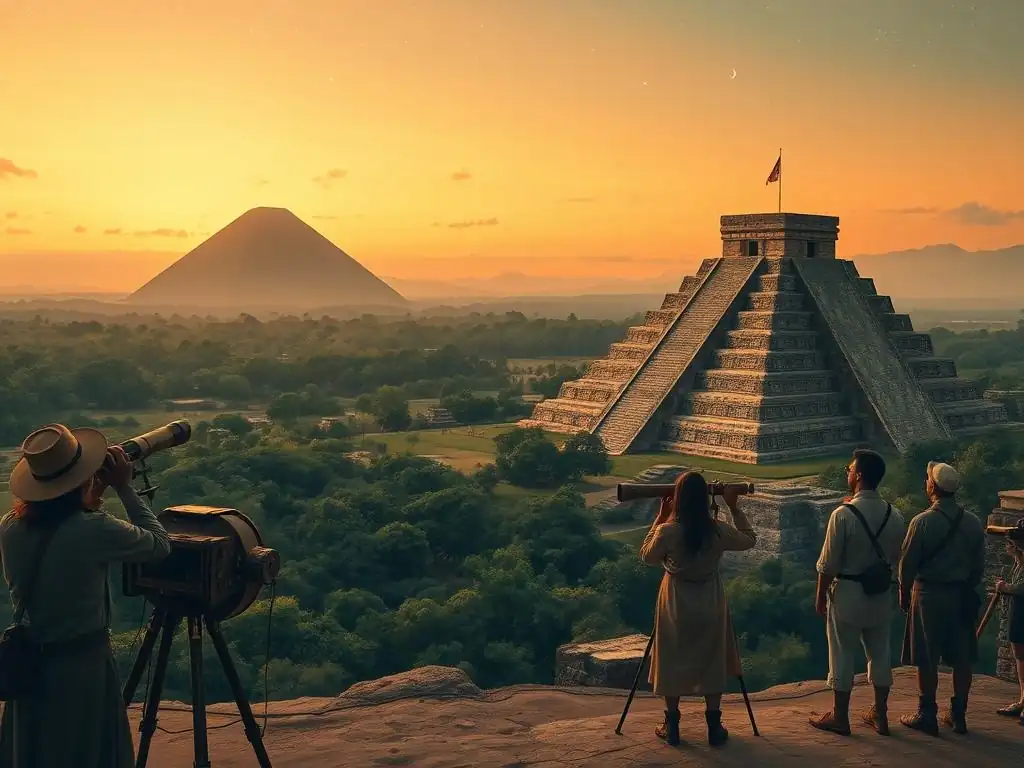
The transition from Teotihuacan to Tikal represents a pivotal moment in the evolution of Mesoamerican astronomical knowledge. Teotihuacan, often regarded as one of the most influential urban centers of ancient Mesoamerica, flourished from approximately 100 CE to 650 CE and laid the groundwork for subsequent civilizations, including the Maya. After the decline of Teotihuacan, which was characterized by internal strife and resource depletion, Tikal emerged as a dominant cultural and political power in the Maya region. This transition facilitated the transfer and transformation of astronomical knowledge, as Tikal adopted, adapted, and expanded upon the practices established at Teotihuacan.
The relationship between these two centers can be seen in their shared architectural styles, religious practices, and astronomical observations. While Teotihuacan's influence was marked by monumental structures aligned with celestial events, Tikal built upon these foundations, incorporating sophisticated astronomical calculations into their urban planning and ceremonial life. Understanding this transition is essential for grasping how Mesoamerican astronomical practices evolved and diversified in the wake of Teotihuacan's decline.
Historical Context: The Fall of Teotihuacan
The fall of Teotihuacan around the 7th century CE marked a significant turning point in Mesoamerican history. Several factors contributed to this decline, including:
- Internal Conflict: Evidence suggests that Teotihuacan experienced social unrest and violent upheaval. The destruction of key structures and the burning of neighborhoods indicate a breakdown in societal cohesion.
- Environmental Stress: The city's rapid population growth placed immense pressure on local resources. Deforestation, soil degradation, and drought likely exacerbated these stresses, leading to food shortages and further unrest.
- Shifts in Trade Routes: Teotihuacan was a major trade hub, and as trade routes shifted due to changing political and economic dynamics, the city may have lost its status and influence, contributing to its decline.
The aftermath of Teotihuacan's fall created a vacuum in Mesoamerican leadership, allowing cities like Tikal to rise to prominence. In this context, Tikal not only inherited astronomical knowledge but also reinterpreted it to suit the needs and beliefs of its own society.
Emergence of Tikal as an Astronomical Center
Tikal began to assert itself as a leading astronomical center during the Late Classic period, particularly from the 7th to the 9th centuries CE. The city's rulers recognized the importance of astronomy for agricultural planning, ritual practices, and political legitimacy. Key factors in Tikal's emergence included:
- Strategic Location: Situated in the heart of the Petén region, Tikal had access to vital resources and trade networks, enabling it to thrive economically and culturally.
- Architectural Innovations: The construction of impressive pyramids and temples, such as Temple I and Temple II, showcased Tikal's commitment to astronomical alignment and observation. These structures were often oriented towards significant celestial events, reinforcing the connection between their architecture and astronomy.
- Integration of Knowledge: Tikal's scholars and priests actively engaged with the astronomical traditions inherited from Teotihuacan while developing their own systems of celestial observation, leading to advancements in calendars and celestial predictions.
Through these developments, Tikal became a hub of Mesoamerican astronomical knowledge, influencing neighboring regions and later Maya cities.
Cultural Exchange and Continuity in Astronomical Practices
The transition from Teotihuacan to Tikal was not merely a replacement of one culture by another; rather, it involved a complex interplay of continuity and change in astronomical practices. Cultural exchange played a vital role in this process, characterized by:
- Shared Knowledge: Tikal adopted many astronomical techniques and calendar systems from Teotihuacan, modifying them to fit its own cultural context. This exchange of ideas fostered an environment of innovation and adaptation.
- Interconnectedness: The networks established by Teotihuacan facilitated communication and interaction among various Mesoamerican cultures, allowing for the dissemination of astronomical knowledge across regions.
- Ritual Continuity: Many astronomical practices, including the observation of solstices and equinoxes, continued in Tikal, reflecting a deep reverence for celestial phenomena that transcended individual city-states.
These elements of cultural exchange and continuity highlight how Tikal built upon the foundations laid by Teotihuacan, ensuring the survival and evolution of Mesoamerican astronomical knowledge.
Tikal's Contributions to Mesoamerican Astronomical Knowledge
Tikal's contributions to Mesoamerican astronomical knowledge are profound and multifaceted, reflecting a sophisticated understanding of celestial phenomena and their implications for society. The city's advancements can be categorized into several key areas:
Major Astronomical Structures in Tikal
Tikal is home to several monumental structures that were specifically designed for astronomical observation. Notable examples include:
- Temple I (Temple of the Great Jaguar): This iconic structure is aligned with the sunrise during the winter solstice, demonstrating the Maya's understanding of solar cycles.
- Temple II (Temple of the Mask): Located adjacent to Temple I, this structure also has astronomical alignments, particularly to significant celestial events.
- Acropolis of Tikal: The layout of this complex reflects careful planning based on astronomical observations, indicating the importance of celestial events in the city's religious and political life.
These structures not only served ceremonial purposes but also acted as observatories for tracking celestial movements.
Calendar Systems and Their Astronomical Significance
Tikal developed advanced calendar systems that were deeply intertwined with astronomical observations. Key features include:
- The Tzolk'in: A 260-day ceremonial calendar that combined astronomical and agricultural cycles. It played a crucial role in ritual events and agricultural planning.
- The Haab': A 365-day solar calendar that helped Tikal's inhabitants track seasonal changes and agricultural cycles.
- Long Count Calendar: This system allowed for longer historical records, reflecting significant celestial events and their impact on society.
The integration of these calendars into daily life underscores the significance of astronomical knowledge in shaping Tikal's cultural identity.
Notable Astronomical Achievements at Tikal
Tikal’s astronomical achievements are remarkable, showcasing the civilization's deep understanding of the cosmos. Some notable accomplishments include:
- Eclipses and Celestial Events: Tikal’s priests were able to predict solar and lunar eclipses, reflecting a sophisticated grasp of celestial mechanics.
- Planetary Movements: The Maya at Tikal meticulously observed the movements of Venus and other celestial bodies, which were integrated into their mythology and used to inform warfare and agricultural practices.
- Astronomical Codices: Tikal was likely involved in the creation of codices that recorded astronomical events, demonstrating their commitment to documenting and understanding celestial phenomena.
These achievements not only highlight Tikal's role as a center of astronomical knowledge but also its influence on the broader Mesoamerican cultural landscape. Through their innovations in astronomy, the people of Tikal contributed significantly to the rich tapestry of Mesoamerican civilization, leaving a lasting legacy that echoes through history.
Comparative Analysis: Teotihuacan vs. Tikal Astronomical Knowledge
The study of astronomical knowledge in Mesoamerica reveals remarkable similarities and distinctive differences between two prominent civilizations: Teotihuacan and Tikal. Both societies developed sophisticated astronomical practices that significantly influenced their cultures and the surrounding regions. However, the methods they employed and the purposes of their celestial observations varied greatly, reflecting their unique environmental contexts and sociopolitical structures.
Similarities in Astronomical Practices
Teotihuacan and Tikal shared several foundational practices in their astronomical observations. Both civilizations were keen observers of celestial events, notably the movements of the sun, moon, and stars. They constructed monumental structures aligned with astronomical phenomena, such as solstices and equinoxes, illustrating their advanced understanding of celestial cycles.
- Calendar Systems: Both societies utilized intricate calendar systems that combined solar and lunar cycles, enabling them to predict agricultural seasons and ceremonial events accurately.
- Architecture: Structures like the Pyramid of the Sun in Teotihuacan and the Temple of the Inscriptions in Tikal were strategically designed to align with celestial events, showcasing the significance of astronomy in their architectural planning.
- Ritual Practices: Celestial events were often integrated into religious rituals, with both cultures viewing the heavens as a source of divine guidance and influence over earthly affairs.
Differences in Approaches to Astronomy
While Teotihuacan and Tikal exhibited similarities in their astronomical practices, their approaches diverged in significant ways.
- Focus on Celestial Bodies: Teotihuacan emphasized the sun and its cycles, often associating it with agricultural fertility and state power. In contrast, Tikal placed a greater emphasis on the moon and Venus, incorporating these celestial bodies into their mythology and political narratives.
- Institutional Structures: The centralized nature of governance in Teotihuacan led to a more uniform application of astronomical knowledge across the city, whereas Tikal's political fragmentation allowed for a more diverse interpretation and application of astronomical practices among its various ruling dynasties.
- Cultural Integration: In Teotihuacan, astronomy was more closely tied to state ideology and monumental architecture, while Tikal integrated astronomical knowledge into its dynastic history, employing it to legitimize the power of its rulers.
Impact on Mesoamerican Civilization
The astronomical knowledge of Teotihuacan and Tikal had profound effects on the broader Mesoamerican civilization.
- Cultural Exchange: The astronomical practices of both cities facilitated cultural exchange and interaction among neighboring regions, contributing to the diffusion of knowledge and techniques across Mesoamerica.
- Agricultural Development: The sophisticated calendar systems developed by both civilizations allowed for improved agricultural planning, which was vital for sustaining large populations and supporting societal complexity.
- Religious Practices: The integration of astronomy into religious practices reinforced the connection between celestial phenomena and human affairs, shaping the spiritual landscape of Mesoamerican societies and influencing their worldviews.
Legacy of Mesoamerican Astronomical Knowledge
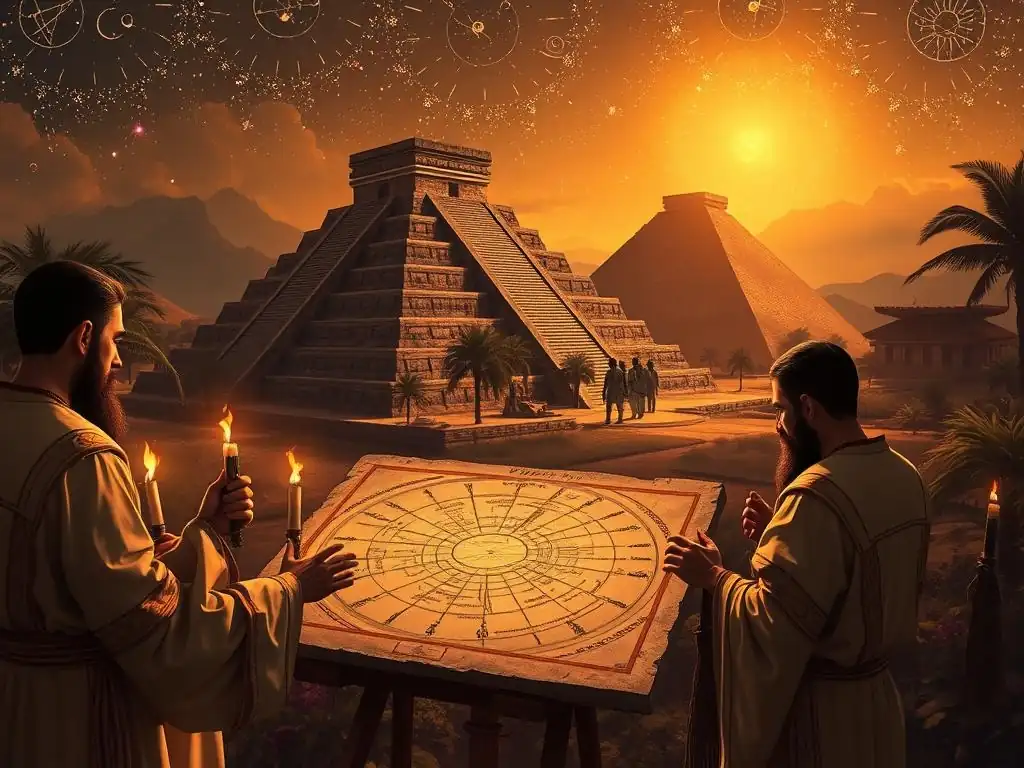
The legacy of Mesoamerican astronomical knowledge extends far beyond the civilizations of Teotihuacan and Tikal, influencing later cultures and contemporary understandings of astronomy.
Enduring Influence on Later Cultures
The astronomical achievements of Mesoamerican civilizations laid foundational concepts that influenced subsequent cultures, including the Maya and Aztecs.
- Cultural Continuity: Many astronomical practices and calendars were preserved and adapted by later civilizations, demonstrating a continuity of knowledge that transcended the collapse of individual city-states.
- Integration into Mythology: Later cultures incorporated Mesoamerican astronomical knowledge into their mythologies, often elevating celestial bodies to divine status, which reinforced their cultural narratives and societal structures.
The Role of Astronomy in Mesoamerican Identity
Astronomy played a crucial role in shaping the identity of Mesoamerican societies, serving as a tool for both governance and cultural expression.
- Symbol of Power: Rulers leveraged astronomical knowledge to assert authority, often claiming divine connections through celestial phenomena, thereby legitimizing their rule.
- Cultural Cohesion: Shared astronomical beliefs and practices fostered a sense of community and identity among diverse groups, unifying them under common celestial frameworks that transcended local differences.
Modern Scientific Perspectives on Mesoamerican Astronomy
Contemporary scholarship has begun to appreciate the sophistication of Mesoamerican astronomical knowledge, recognizing its significance within the broader context of global scientific history.
- Interdisciplinary Studies: Researchers from various fields, including archaeology, anthropology, and astronomy, collaborate to uncover the complexities of Mesoamerican astronomical practices, revealing their advanced methodologies and insights.
- Technological Contributions: Modern technology, such as satellite imagery and computer modeling, has allowed scientists to analyze ancient sites and calendar systems in ways that were previously impossible, enhancing our understanding of how these civilizations engaged with the cosmos.
Through these explorations, the enduring legacy of Mesoamerican astronomical knowledge continues to illuminate the rich tapestry of human achievement in understanding our place in the universe.
Conclusion: The Evolution of Mesoamerican Astronomical Knowledge
The evolution of Mesoamerican astronomical knowledge represents a rich tapestry interwoven with cultural significance, scientific inquiry, and practical applications. From the monumental city of Teotihuacan, where the alignment of structures suggests an advanced understanding of celestial bodies, to the sophisticated astronomical practices observed in Tikal, Mesoamerican civilizations demonstrated an impressive capacity to integrate astronomical observations into their daily lives, agricultural practices, and spiritual beliefs.
Understanding this evolution not only highlights the ingenuity of these societies but also underscores the lasting impact they have had on contemporary astronomical study and cultural heritage. The methods and tools developed during these periods laid foundational practices that resonate through time, influencing later societies and even modern astronomy.
Summary of Key Developments from Teotihuacan to Tikal
- Teotihuacan's Celestial Alignments:
- The construction of the Pyramid of the Sun and the Pyramid of the Moon reflects an intricate understanding of solar cycles, suggesting that Teotihuacan inhabitants meticulously observed celestial movements.
- Calendar Systems:
- The development of complex calendar systems, such as the 260-day Tzolk'in and the 365-day Haab', allowed civilizations to track agricultural seasons and religious ceremonies accurately.
- Tikal's Astronomical Observatories:
- Tikal’s architectural structures served as observatories, enabling the Maya to monitor celestial events, including solstices and lunar cycles, fostering a deeper comprehension of their environment.
- Art and Iconography:
- Astronomical knowledge was often depicted in murals and carvings, showcasing the importance of celestial bodies in mythology and daily life, thus embedding this knowledge into the cultural identity of the societies.
- Integration with Agriculture:
- The alignment of agricultural practices with astronomical events, such as planting and harvesting schedules based on lunar phases, illustrates the practical application of their astronomical understanding.
Reflection on the Importance of Understanding Mesoamerican Astronomy
Understanding Mesoamerican astronomy extends beyond mere historical curiosity; it provides insight into how ancient civilizations perceived their world and interacted with their environment. By studying their astronomical practices, we gain a greater appreciation for the complexity of their societies, their innovations in mathematics and observation, and their spiritual connections to the cosmos. This knowledge also fosters respect for indigenous cultures and their contributions to global knowledge systems, encouraging a more inclusive narrative in the history of science.
Mesoamerican astronomical knowledge serves as a reminder of humanity's enduring quest to understand the universe. By recognizing the sophistication of these ancient systems, we can acknowledge the rich heritage of indigenous knowledge that continues to inform modern scientific thought and cultural practices.
References for Further Exploration of Mesoamerican Astronomy
Recommended Books and Articles
- "The Maya and Their Calendar" by Anthony Aveni: This book delves into the intricacies of the Maya calendar systems and their astronomical significance.
- "Mesoamerican Astronomy: A Comprehensive Study" by John W. Fox: An in-depth exploration of the astronomical practices across various Mesoamerican cultures.
- "Skywatchers of Ancient Mexico" by Anthony Aveni: This work highlights the astronomical observations and practices of ancient Mexican civilizations, including the Maya and Aztecs.
Resources for Studying Mesoamerican Civilizations
- Mesoamerican Research Centers: Institutions like the National Institute of Anthropology and History (INAH) in Mexico offer extensive resources and publications on Mesoamerican cultures.
- Online Databases: Websites such as JSTOR and Project MUSE provide access to academic papers and research articles focusing on Mesoamerican astronomy and civilizations.
- Documentaries and Educational Videos: Platforms like YouTube and educational streaming services feature documentaries that visualize the astronomical achievements of Mesoamerican societies, enhancing understanding through visual storytelling.
- Introduction to Mesoamerican Astronomical Knowledge Evolution
- Overview of Mesoamerican Civilizations and Their Astronomical Practices
- Importance of Astronomy in Mesoamerican Cultures
- The Role of Teotihuacan in Astronomical Development
- Transition from Teotihuacan to Tikal
- Tikal's Contributions to Mesoamerican Astronomical Knowledge
- Comparative Analysis: Teotihuacan vs. Tikal Astronomical Knowledge
- Legacy of Mesoamerican Astronomical Knowledge
- Conclusion: The Evolution of Mesoamerican Astronomical Knowledge
- References for Further Exploration of Mesoamerican Astronomy
- What is the significance of Mesoamerican astronomical knowledge?
- How did the civilizations of Teotihuacan and Tikal contribute to astronomical knowledge?
- What role did observatories play in Mesoamerican societies?
- How did cultural exchanges influence astronomical knowledge in Mesoamerica?
- What impact did European colonization have on Mesoamerican astronomical knowledge?
Frequently Asked Questions
What is the significance of Mesoamerican astronomical knowledge?
Mesoamerican astronomical knowledge was crucial for agriculture, calendar systems, and religious ceremonies, showcasing the advanced understanding of celestial movements among these civilizations.
How did the civilizations of Teotihuacan and Tikal contribute to astronomical knowledge?
Both Teotihuacan and Tikal were pivotal in developing astronomical calendars and their architectural structures were often aligned with celestial events, reflecting their sophisticated understanding of the cosmos.
What role did observatories play in Mesoamerican societies?
Observatories served as essential tools for tracking celestial bodies, enabling civilizations to create accurate calendars and predict agricultural cycles, which were vital for their survival.
How did cultural exchanges influence astronomical knowledge in Mesoamerica?
Cultural exchanges between different Mesoamerican societies facilitated the sharing of astronomical techniques and beliefs, leading to a more refined understanding of the cosmos and its significance in daily life.
What impact did European colonization have on Mesoamerican astronomical knowledge?
European colonization led to the suppression of indigenous astronomical practices and knowledge, resulting in the loss of valuable insights into their scientific achievements and cultural heritage.
Final Reflection: The Timeless Legacy of Mesoamerican Astronomical Knowledge
The evolution of Mesoamerican astronomical knowledge is not just a relic of the past; it is a profound testament to humanity's quest for understanding the cosmos. Today, as we navigate an increasingly complex world, the insights gleaned from ancient civilizations like Teotihuacan and Tikal remind us of the intricate relationship between culture, science, and the universe. These ancient astronomers laid the groundwork for our current understanding of celestial phenomena, and their legacy continues to resonate in our modern exploration of the stars.
The impact of Mesoamerican astronomical knowledge extends far beyond historical significance; it shapes our cultural identity and informs contemporary scientific practices. The meticulous observations and sophisticated calendars developed by these civilizations reflect a deep connection to the natural world, encouraging us to appreciate the rhythms of life and the cosmos. As the renowned astrophysicist Carl Sagan once said, "> We are made of star-stuff. We are a way for the universe to know itself." This quote encapsulates the enduring influence of Mesoamerican astronomy, reminding us that our origins are intertwined with the very fabric of the universe.
As we reflect on the lessons of the past, let us embrace the spirit of inquiry and wonder that defined Mesoamerican astronomers. I invite you to explore your own relationship with the cosmos—whether through stargazing, studying celestial patterns, or simply contemplating the vastness of the universe. By doing so, we honor the wisdom of those who came before us and inspire future generations to continue the journey of discovery. The evolution of astronomical knowledge in Mesoamerica is not just history; it is a call to engage with the universe and our place within it.
Unveil the Wonders of Mesoamerican Astronomy!
Thank you for exploring the fascinating journey of astronomical knowledge in Mesoamerica through this article! Your interest in these ancient civilizations not only enriches your understanding but also honors their remarkable contributions to science and culture. Now, let's take the next steps to deepen your connection to this enthralling subject.
- Dive deeper by reading about the specific astronomical techniques used by the Maya and Aztecs in our detailed guide.
- Share your insights! Join our community forum to discuss how ancient astronomy influences modern scientific understanding.
- Consider visiting a local museum or virtual exhibit that showcases artifacts and astronomical alignments from Mesoamerican cultures.
What new perspectives on the universe do you think we can gain from studying the ancient skies of Mesoamerica? We invite you to share your thoughts!