
Mathematical Symbolism in Andean Art: Numbers and Patterns in Cultural Expressions


Welcome to Indigenous Civilizations of the Americas, where we delve into the rich tapestry of cultures that flourished long before European contact. Here, you will uncover the intricate layers of Andean art, particularly its mesmerizing mathematical symbolism—a vivid expression of the societies that harnessed numbers and patterns to reflect their world. As we explore the remarkable achievements and advancements of these civilizations, you'll find yourself captivated by the profound connections between art, mathematics, and cultural identity. Join us on this enlightening journey and discover how these ancient expressions continue to influence our understanding of the past.
- Introduction to Andean Art and Mathematical Symbolism
- Historical Context of Mathematical Symbolism in Andean Art
- Key Elements of Andean Art Mathematical Symbolism
- Case Studies of Andean Artworks Featuring Mathematical Symbolism
- The Influence of Andean Mathematical Symbolism on Modern Art
- Conclusion: The Legacy of Andean Art Mathematical Symbolism
- Frequently Asked Questions
- Final Reflection: The Enduring Legacy of Mathematical Symbolism in Andean Art
- Unveil the Beauty of Andean Mathematics in Art
Introduction to Andean Art and Mathematical Symbolism
The Andean region, rich in history and cultural diversity, is renowned for its impressive artistic expressions that reflect the intricate relationship between mathematics, nature, and spirituality. Andean art mathematical symbolism is not merely an aesthetic pursuit; it encapsulates the complex worldview of indigenous peoples who once thrived in this vibrant landscape.
This article delves into the profound significance of mathematical patterns and numerical representations within Andean art, revealing how these elements served as a medium for communicating cultural values, societal structures, and a deep connection with the cosmos. As we explore the artistic achievements of the Andean civilizations, we uncover the layers of meaning embedded in their creations, illustrating the sophisticated understanding of mathematics that these cultures possessed long before external influences arrived.
Overview of Andean Art and Culture
Andean art is characterized by its diversity and richness, stemming from various civilizations such as the Nazca, Moche, Tiwanaku, and Inca. Each culture contributed unique styles and techniques to the region's artistic tapestry, often utilizing local materials like textiles, ceramics, and metalwork.
- Key Features of Andean Art:
- Textiles: Renowned for intricate patterns and vibrant colors, textiles were not just functional; they conveyed social status, identity, and cultural narratives.
- Ceramics: Often adorned with symbolic motifs, ceramics served both practical and ceremonial purposes, showcasing the artisans' skills and the civilization's beliefs.
- Architecture: Monumental structures, such as Machu Picchu and the temples of Tiwanaku, reflect advanced engineering and an understanding of their environment.
The cultural expressions found in Andean art are not isolated; they are deeply intertwined with the everyday lives and cosmologies of the people. Mathematical concepts are often embedded in these artistic forms, revealing a sophisticated understanding of geometry and spatial relationships.
Importance of Mathematical Symbolism in Indigenous Cultures
Mathematical symbolism in Andean art serves as a crucial lens through which we can understand the indigenous worldviews. The use of numbers and patterns reflects not only aesthetic choices but also societal values, religious beliefs, and ecological understanding.
- Cultural Significance of Mathematical Patterns:
- Symbolism of Numbers: Specific numbers held sacred meanings; for instance, the number 3 often represented the three realms of existence: the sky, the earth, and the underworld.
- Patterns in Nature: Artists drew inspiration from natural phenomena, translating them into geometric designs that mirrored the world around them, thus reinforcing a sense of harmony and balance.
- Mathematical Precision: The application of symmetry and proportion in art showcases an advanced grasp of mathematical principles, revealing the intellectual achievements of Andean civilizations.
Through these mathematical expressions, we gain insight into the rich cultural narratives that shaped the Andean peoples, allowing us to appreciate their contributions to the broader landscape of human achievement and understanding.
Historical Context of Mathematical Symbolism in Andean Art

The historical context of mathematical symbolism in Andean art is deeply intertwined with the cultural, social, and economic practices of ancient Andean civilizations, such as the Incas, Nazcas, and Moche. These societies exhibited advanced understanding and application of mathematical principles, reflected vividly in their artistic expressions.
Andean civilizations flourished in a region characterized by diverse landscapes ranging from mountains to coastal plains, which necessitated innovative solutions for agriculture, architecture, and urban planning. The use of mathematical symbolism in art can be seen as an extension of their practical needs, showcasing their ingenuity in problem-solving and community organization.
The Role of Mathematics in Andean Societies
Mathematics played a crucial role in the daily lives of Andean societies. It was not merely an abstract concept but a practical tool employed in various aspects of life, including:
- Agricultural Planning: The Andean peoples developed sophisticated agricultural techniques, utilizing terraces and irrigation systems. Mathematical calculations were essential for measuring land, determining crop rotations, and optimizing yields.
- Architecture and Engineering: The construction of monumental architecture, such as Machu Picchu and the Nazca Lines, demanded precise mathematical knowledge in geometry and measurement. The alignment of structures with celestial bodies also indicates advanced mathematical understanding.
- Trade and Resource Management: The Andean civilizations engaged in extensive trade networks. Mathematical principles were essential for trade calculations, resource allocation, and inventory management.
- Calendrical Systems: The ability to track time was vital for agricultural cycles and religious ceremonies. The Andean calendar system, which incorporated lunar and solar cycles, reflects the mathematical knowledge embedded in their cultural practices.
Evidence of Mathematical Concepts in Andean Artifacts
Numerous artifacts from Andean civilizations illustrate the integration of mathematical concepts in artistic forms. Some notable examples include:
- Textiles: Andean textiles are renowned for their intricate patterns that often incorporate geometric shapes and symmetry. These designs reveal an understanding of mathematical concepts such as tessellation and symmetry. For instance, the use of repetitive geometric forms in weaving demonstrates precise calculations and planning.
- Pottery: Ceramics from cultures like the Moche and Nazca often display complex motifs, including spirals, polygons, and fractal patterns. These designs not only served aesthetic purposes but also reflect mathematical principles, such as the Fibonacci sequence, which can be observed in the proportions of certain designs.
- Architecture: Structures such as the Sacsayhuamán fortress exhibit advanced engineering that relies on geometric precision. The interlocking stonework demonstrates knowledge of angles and stability, with many designs reflecting mathematical proportions.
- Geoglyphs: The Nazca Lines are perhaps the most famous example of mathematical symbolism in Andean art. These massive geoglyphs, visible only from the air, feature geometric shapes, animals, and plants, showcasing not only artistic expression but also the mathematical prowess required to design and construct them accurately.
The mathematical symbolism in Andean art is a testament to the sophisticated understanding of mathematics that these civilizations possessed. Through their artistic expressions, they not only created visually stunning works but also encoded complex mathematical ideas that continue to inspire and intrigue researchers today.
Key Elements of Andean Art Mathematical Symbolism

Andean art is a rich tapestry that intertwines visual expression with mathematical concepts, showcasing the profound understanding of geometry and numerical symbolism within ancient Andean cultures. This section delves into the key elements that exemplify how Andean civilizations integrated mathematical principles into their artistic creations, resulting in a unique form of expression that is both aesthetically pleasing and rich in meaning.
Patterns and Geometry in Andean Art
The use of geometric patterns in Andean art is not merely decorative; it serves a deeper purpose that often reflects the worldview and spiritual beliefs of the indigenous peoples.
- Geometric Shapes: Common shapes such as triangles, squares, and circles dominate Andean textiles, pottery, and architecture. These shapes often represent natural elements and cosmic forces, illustrating the connection between the material and spiritual worlds.
- Symmetry and Repetition: Many Andean designs exhibit symmetry and repetitive patterns, which can signify balance and harmony. For example, the Nazca Lines in Peru exemplify large-scale geometric designs that are believed to hold astronomical significance.
- Fractal Geometry: Some scholars argue that Andean art incorporates fractal patterns. These are self-similar structures that recur at different scales, a concept that resonates with the Andean understanding of nature's interconnectedness.
- Color and Geometry: The strategic use of color in conjunction with geometric forms enhances the visual impact of Andean art. Bright colors often delineate patterns, creating a vivid contrast that draws the viewer’s attention and emphasizes the underlying mathematical structure.
Numerical Representations in Art and Architecture
Numerical symbolism plays a significant role in Andean artistic expression, often serving to convey deeper meanings and cultural significance.
- The Number Three: Frequently appearing in Andean art, the number three is associated with various triadic concepts such as the three realms of existence: the upper (sky), middle (earth), and lower (underworld) worlds. This triadic representation can be seen in ceremonial architecture, such as the pyramids of Túcume.
- The Number Seven: This number holds great importance in Andean cosmology, often linked to the seven directions in space (north, south, east, west, above, below, and the center). Artistic depictions may incorporate seven entities or motifs to represent this comprehensive worldview.
- Mathematical Arrangements: In architecture, the layout of structures often follows numerical ratios that reflect an understanding of spatial relationships. For instance, the precise alignment of Machu Picchu demonstrates sophisticated planning based on mathematical principles.
Symbolic Meanings of Numbers in Andean Cultures
The cultural significance attributed to numbers in Andean societies goes beyond mere counting; it embodies a cosmological framework that informs social structure, spirituality, and art.
- Cultural Numerology: Different numbers carry distinct meanings. For example, the number four is often associated with the four cardinal points and represents stability and order in Andean thought. This can be observed in the layout of agricultural terraces that follow a quadrangular pattern.
- Ritualistic Uses: Numbers are often invoked in rituals and ceremonies, with specific quantities believed to attract favorable outcomes. For instance, offerings may be made in groups of seven or nine to honor deities or ancestors.
- Mythological Associations: Many Andean myths incorporate numerical symbolism, where numbers represent significant events or characters. This narrative technique enriches the storytelling aspect of Andean art, allowing viewers to engage with the cultural heritage on a deeper level.
The mathematical symbolism in Andean art is an intricate interplay of geometry, numerical representation, and symbolic meaning. These elements not only enhance the aesthetic appeal of artistic creations but also serve as a reflection of the complex cultural and spiritual frameworks that defined Andean civilizations. Understanding these key elements allows for a richer appreciation of the profound legacy that these cultures have left behind.
Case Studies of Andean Artworks Featuring Mathematical Symbolism
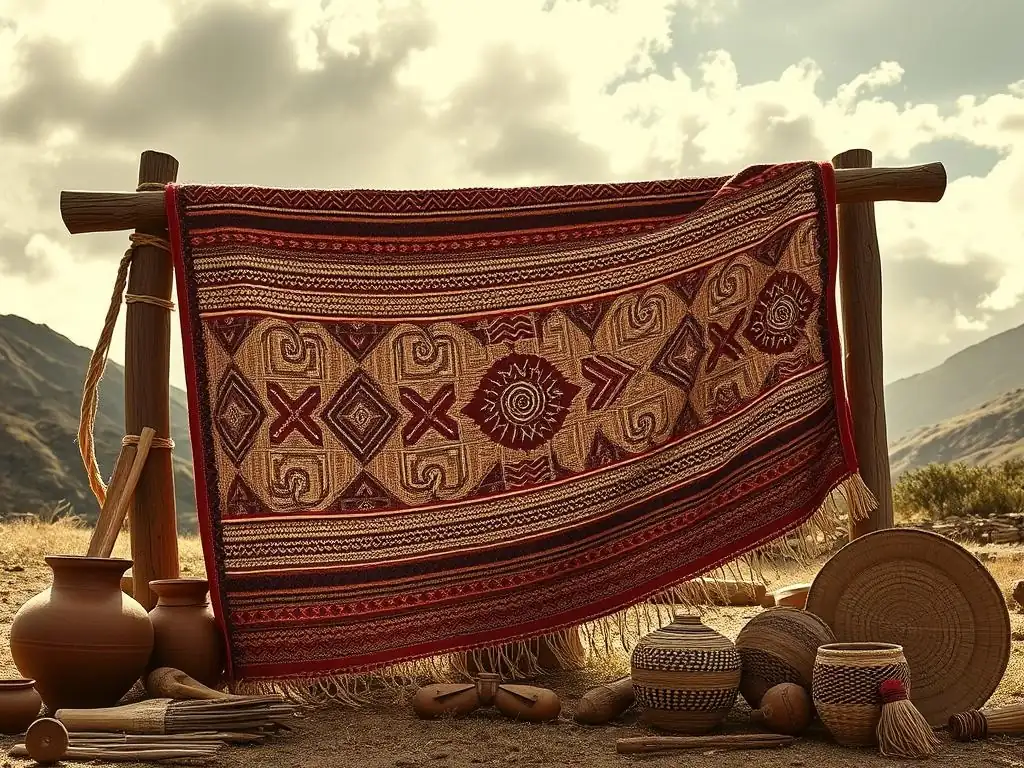
Analysis of "The Inca Sun God" and Its Mathematical Elements
The Inca Sun God, known as Inti, is a prominent figure in Andean art that showcases intricate mathematical symbolism. One of the most notable aspects of this representation is the use of geometric patterns and symmetrical designs that reflect the Inca's advanced understanding of mathematics.
- Geometric Symmetry: The sun's rays are often depicted in a radial pattern, demonstrating the principles of symmetry and proportion. This radial design not only serves a decorative purpose but also symbolizes the sun's central role in Inca cosmology and agriculture, as it was believed to provide life and sustenance.
- Fibonacci Sequence Influence: Some scholars suggest that the arrangement of elements around the sun god’s visage corresponds to the Fibonacci sequence, a mathematical pattern that appears in nature. This indicates a sophisticated grasp of numerical relationships by the artisans who created these works.
- Cultural Integration: The mathematical elements embedded in the representation of Inti are not merely aesthetic; they are deeply intertwined with the spiritual beliefs of the Incas. The precision in design signifies a connection between the divine and the earthly, illustrating how mathematics was not only a tool for artisans but also a language of the cosmos.
Examination of "Nazca Lines" and Its Cultural Significance
The Nazca Lines, a series of large geoglyphs etched into the desert floor of southern Peru, present an extraordinary example of Andean art infused with mathematical symbolism. These lines, which depict various animals, plants, and geometric shapes, reveal a complex understanding of spatial relationships and geometry.
- Geometric Precision: The Nazca Lines are characterized by their precise alignments and proportions. For instance, the giant hummingbird design spans over 300 feet, showcasing not only artistic skill but also mathematical planning to maintain proportions when viewed from above.
- Astronomical Alignments: Some researchers suggest that the lines may have served astronomical purposes, aligning with celestial bodies during solstices and equinoxes. This indicates a sophisticated knowledge of astronomy and geometry, as the creators of the Nazca Lines likely employed mathematical calculations to achieve these alignments.
- Cultural Reflection: The significance of the Nazca Lines extends beyond their mathematical intricacies; they are believed to hold ritualistic and religious meanings, potentially serving as pathways for ceremonial practices. The integration of mathematics in these geoglyphs emphasizes the importance of numerical symbolism in Nazca culture, reinforcing their connection to the cosmos and nature.
Exploring "Mochica Pottery" and Its Use of Patterns
Mochica pottery is renowned for its elaborate designs and intricate patterns, making it a significant aspect of Andean art that showcases mathematical symbolism. The craftsmanship evident in Mochica ceramics reflects a deep understanding of geometry and proportions.
- Pattern Repetition: The use of repeated geometric patterns is a hallmark of Mochica pottery. These patterns often include spirals, zigzags, and other shapes that not only enhance the aesthetic appeal but also demonstrate a keen awareness of symmetry and balance in design.
- Mathematical Ratios: The artisans employed specific ratios and proportions in their pottery designs, which can be analyzed mathematically. For instance, the ratio of height to width in certain vessels is consistent, indicating a systematic approach to their craft.
- Symbolic Meanings: The mathematical patterns found in Mochica pottery are often imbued with cultural significance, representing various deities, animals, and natural elements. This blend of mathematics and symbolism illustrates how the Mochica civilization integrated numerical concepts into their artistic expressions, reflecting their worldview and societal values.
The study of Andean art mathematical symbolism reveals a rich tapestry of cultural expression that is deeply rooted in the mathematical understanding of the time. The artworks not only serve as aesthetic representations but also as reflections of the sophisticated knowledge systems of the Andean civilizations.
The Influence of Andean Mathematical Symbolism on Modern Art

Continuation of Traditional Practices in Contemporary Art
The rich tradition of Andean art mathematical symbolism continues to resonate within contemporary artistic practices. Artists today draw inspiration from the intricate geometric patterns and numerical systems that were prevalent in ancient Andean civilizations, such as the Inca and Tiwanaku. These cultures employed a sophisticated understanding of mathematics, often manifested in their textiles, pottery, and architecture, which artists are now reinterpreting in modern contexts.
One prominent example is the use of textile weaving. Traditional Andean weavers utilized specific mathematical principles, such as symmetry and repetition, to create visually striking designs. Contemporary artists, like Elena Poma and Cecilia Villegas, are revitalizing these techniques, integrating them with modern materials and themes. Through their works, they maintain a dialogue with ancestral knowledge while exploring contemporary issues such as identity, globalization, and cultural preservation.
Moreover, the application of numerical symbolism in contemporary art serves as a bridge connecting the past with the present. Artists often incorporate numbers that held significance in Andean societies, such as the sacred number 3, which represents the three realms of existence: the upper world, the earthly realm, and the underworld. This numerical representation not only enriches the artwork but also deepens the viewer's understanding of Andean cosmology and its relevance today.
Influence of Andean Patterns in Global Artistic Movements
Andean mathematical symbolism has transcended geographic boundaries, influencing various global artistic movements. The geometric patterns and vibrant colors found in Andean textiles have inspired artists across the world, leading to a resurgence of interest in indigenous design principles.
For instance, the Minimalist Movement of the late 20th century found parallels in Andean art's emphasis on simplicity and geometric clarity. Artists like Donald Judd and Agnes Martin have been noted for their use of repetitive forms and patterns that echo the mathematical precision characteristic of Andean art. The minimalist approach to composition can be seen as a modern reflection of the ancient Andean aesthetic, where each element is thoughtfully placed to create harmony.
Additionally, the Latin American art scene has embraced Andean influences, fostering a unique fusion of tradition and modernity. Artists such as Oswaldo Guayasamín have incorporated Andean symbols and themes into their works, creating pieces that resonate with both local and international audiences. This blend of influences has sparked a broader appreciation for indigenous artistic practices, encouraging a revival of interest in the mathematical and cultural significance behind the art.
The enduring influence of Andean mathematical symbolism on modern art not only preserves traditional practices but also enriches global artistic movements, fostering a deeper appreciation for the complexities of indigenous cultures within contemporary frameworks. This ongoing dialogue between past and present highlights the significance of Andean art mathematical symbolism in shaping not only local identities but also global artistic narratives.
Conclusion: The Legacy of Andean Art Mathematical Symbolism
The legacy of Andean art mathematical symbolism is a testament to the profound connection between mathematics and cultural expression in pre-Columbian societies. This legacy not only reflects the advanced understanding of numerical systems and geometric patterns among the Andean civilizations but also showcases their ability to imbue everyday objects with deeper meanings. The intricate designs found in textiles, pottery, and architecture serve as a rich tapestry of knowledge, symbolizing cosmological beliefs, social hierarchies, and agricultural practices.
Summary of Key Points on Andean Art and Mathematics
- Integration of Mathematics in Art: Andean art is characterized by the use of geometric shapes and patterns that often reflect mathematical principles. These elements were not merely decorative; they conveyed significant cultural narratives and societal values.
- Numerical Systems: The Andean civilizations, notably the Incas and their predecessors, developed sophisticated numerical systems, such as the quipu. This knotted string device was used for record-keeping and communication, illustrating a functional application of mathematical symbolism in daily life.
- Geometric Patterns: The recurring geometric motifs in Andean textiles and pottery are not only aesthetically pleasing but also serve a symbolic purpose. For example, the use of the Fibonacci sequence in certain designs reflects an understanding of natural patterns, signifying harmony and balance in the universe.
- Cultural Significance: The mathematical symbolism present in Andean art is deeply intertwined with the region's spirituality and worldview. Many designs are thought to represent agricultural cycles, deities, and the cosmos, highlighting the importance of mathematics in understanding and interacting with the environment.
The Impact of Andean Cultural Expressions on Future Generations
The mathematical symbolism embedded in Andean art has had a lasting impact that extends beyond its immediate cultural context.
- Cultural Preservation: The intricate designs and numerical symbolism of Andean art serve as a means of cultural preservation, allowing contemporary Andean communities to connect with their ancestral heritage. By studying these symbols, new generations can gain insights into their history and identity.
- Influence on Modern Art: The aesthetic principles derived from Andean mathematical symbolism continue to inspire modern artists, who draw upon these ancient motifs to create contemporary works that resonate with indigenous themes and philosophies. This cross-generational dialogue fosters a renewed appreciation for indigenous cultural expressions.
- Educational Framework: The exploration of mathematical concepts within Andean art provides a unique educational framework that can be utilized in classrooms. By integrating art and mathematics, educators can engage students in a holistic understanding of these disciplines, promoting interest in both fields.
- Research and Scholarship: The ongoing study of Andean mathematical symbolism contributes to a broader understanding of indigenous knowledge systems. Scholars continue to investigate how these ancient practices can inform current mathematical education and cultural studies, further enriching the academic landscape.
The legacy of Andean art mathematical symbolism is a profound reflection of the interconnectedness of culture, mathematics, and art. As we continue to explore and appreciate these cultural expressions, we also honor the ingenuity and creativity of the Andean civilizations, ensuring that their contributions remain a vital part of our global heritage.
Frequently Asked Questions
What is the main focus of the article on Andean art?
The article explores mathematical symbolism in Andean art, highlighting how numbers and patterns reflect the cultural expressions of indigenous societies.
Why is mathematical symbolism important in Andean art?
Mathematical symbolism is crucial as it reveals the sophistication of Andean cultures in artistic and social expressions, showcasing their understanding of geometry and patterns.
How did Andean civilizations use numbers in their art?
Andean civilizations incorporated numbers and geometric patterns into their artworks to convey spiritual and cultural meanings, linking art with their mathematical knowledge.
Can you give examples of Andean art that features mathematical symbolism?
Examples include textiles, pottery, and architecture that exhibit intricate patterns and designs, often representing cosmological or mythological themes.
What lasting impact did Andean art have on modern cultures?
The mathematical symbolism found in Andean art continues to influence contemporary artistic practices and cultural expressions, reflecting the rich heritage of these indigenous civilizations.
Final Reflection: The Enduring Legacy of Mathematical Symbolism in Andean Art
Mathematical symbolism in Andean art is not merely a relic of the past; it is a vibrant thread woven into the fabric of contemporary cultural identity. As we explore the intricate patterns and numerical significance embedded in Andean artistic expressions, we uncover a profound connection between mathematics and spirituality that continues to resonate today. The ability of these symbols to convey complex ideas and emotions speaks to their timeless relevance in our increasingly complex world.
The influence of mathematical symbolism in Andean art extends beyond aesthetics; it shapes our understanding of cultural heritage and identity. The patterns and numbers found in textiles, pottery, and architecture serve as a testament to the ingenuity and creativity of Andean civilizations. As we reflect on this rich cultural tapestry, we are reminded of the words of renowned anthropologist Alfred K. Ziegler: Art is the most beautiful of all lies; it is the truth that we can only glimpse through the veil of numbers and patterns.
This observation highlights how the mathematical underpinnings of Andean art offer a deeper insight into the worldview of its creators, enriching our appreciation of their legacy.
As we conclude this exploration of Andean art's mathematical symbolism, I invite you to reflect on how these lessons can be applied in your own life. Consider the patterns and structures that shape your experiences and beliefs. Embrace the idea that, like the artists of the Andes, you can find beauty and meaning in the connections between numbers, patterns, and the world around you. Let this reflection inspire you to seek out the hidden symbols in your own journey, fostering a deeper understanding of yourself and the cultural narratives that surround you.
Unveil the Beauty of Andean Mathematics in Art
Thank you for diving into the fascinating world of mathematical symbolism in Andean art! You’ve discovered how numbers and patterns play a vital role in cultural expressions, reflecting the profound connection between mathematics and creativity. Now, let’s take this exploration a step further!
Here are some engaging actions you can take right now:
- Dive deeper into your understanding by researching specific Andean artworks that incorporate mathematical patterns. Consider visiting local exhibitions or exploring online galleries that showcase these remarkable pieces.
- Share your newfound knowledge with friends or family! Write a post on social media highlighting your favorite aspect of Andean mathematical art—this could spark an interesting conversation!
- Join a community group or forum focused on indigenous art and culture. Connect with others who appreciate the intricate beauty of these mathematical expressions.
What unique pattern or symbol resonates with you the most, and how can you draw inspiration from it in your life or work?