
Celestial Navigation: How Indigenous Cultures Used Mathematics to Traverse the Skies

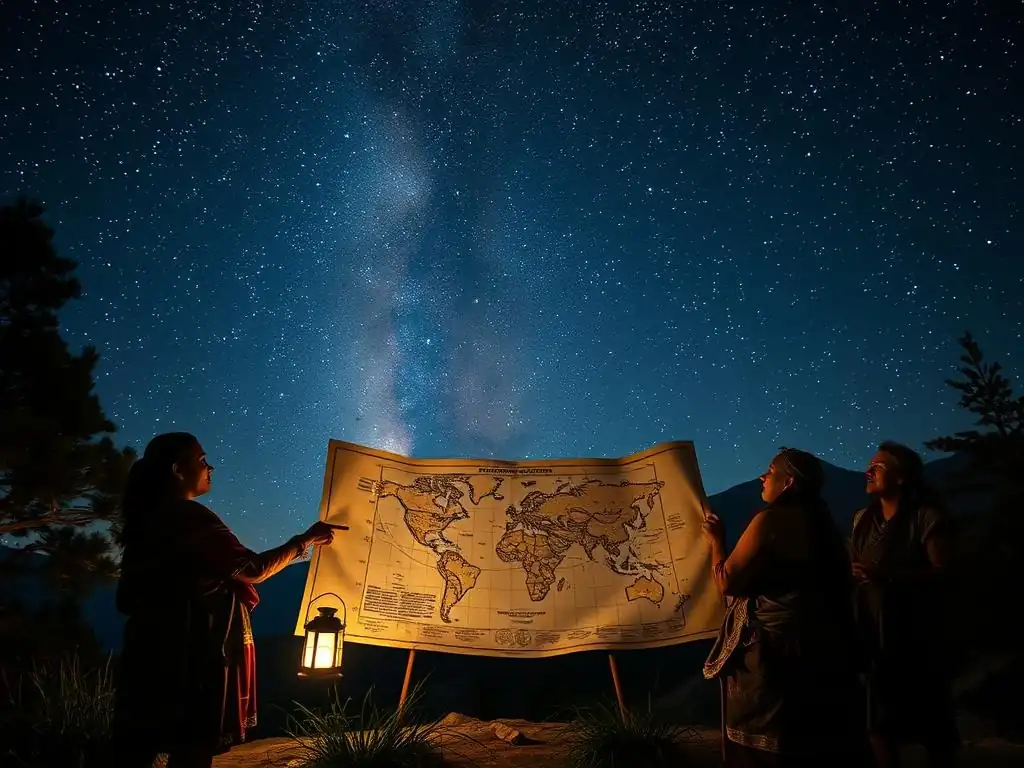
Welcome to Indigenous Civilizations of the Americas! Here, we embark on a captivating journey through the rich tapestry of indigenous cultures that flourished across the Americas long before European contact. Our focus today shines a spotlight on the fascinating world of Indigenous celestial navigation techniques, revealing how these remarkable societies harnessed their profound understanding of mathematics and astronomy to traverse the vast skies.
Prepare to be inspired by their ingenuity and wisdom as you delve deeper into their achievements and the enduring legacy they left behind. What secrets of the cosmos did they unveil? Join us as we explore this intriguing subject and much more!
- Introduction to Indigenous Celestial Navigation Techniques
- Historical Context of Indigenous Celestial Navigation
- Mathematical Foundations of Indigenous Celestial Navigation
- Techniques and Tools Used in Indigenous Celestial Navigation
- The Impact of Indigenous Celestial Navigation on Exploration
- Myths and Realities of Indigenous Celestial Navigation
- Conclusion: The Legacy of Indigenous Celestial Navigation Techniques
-
Frequently Asked Questions
- What are Indigenous celestial navigation techniques?
- How did indigenous cultures use mathematics in navigation?
- What impact did celestial navigation have on indigenous societies?
- Are there modern applications of indigenous navigation techniques?
- Why is it important to study indigenous cultures and their navigation methods?
- Final Reflection: The Timeless Wisdom of Indigenous Celestial Navigation
- Embark on Your Journey Through the Stars!
Indigenous cultures across the Americas developed sophisticated celestial navigation techniques that enabled them to traverse vast landscapes and waterways with remarkable precision. Long before the advent of modern technology, these civilizations harnessed their profound understanding of the cosmos, utilizing the stars, the sun, and the moon as guiding lights.
The integration of mathematics into their navigation practices not only highlights their intellectual achievements but also underscores their deep connection to the natural world. This article delves into the various indigenous celestial navigation techniques, emphasizing the mathematical systems that underpinned these remarkable practices and their enduring impact on our understanding of astronomy.
Indigenous celestial navigation involved intricate knowledge of astronomical phenomena, often passed down through generations via oral traditions. Among the diverse cultures in the Americas, different methods and interpretations emerged, shaped by local environmental factors and cultural beliefs.
- Constellations and Star Patterns:
- Many indigenous groups, such as the Navajo and the Inuit, recognized specific constellations that served as navigational aids.
- For example, the North Star (Polaris) was a crucial reference point for many tribes, guiding them in the northern hemisphere.
- Solar and Lunar Cycles:
- The movements of the sun and moon were also vital for navigation.
- Cultures like the Maya utilized the sun's position during solstices and equinoxes to determine seasonal changes, which in turn influenced their navigation and agricultural practices.
- Cultural Significance:
- Celestial navigation was not merely a practical skill; it held profound spiritual significance.
- Many indigenous peoples viewed the stars as ancestors or deities, intricately linking their navigation practices to their cosmology.
Importance of Mathematics in Astronomy for Indigenous Peoples
Mathematics played a pivotal role in the astronomy and navigation techniques of indigenous cultures. These societies developed complex mathematical systems that were essential for accurately measuring distances, angles, and time.
- Geometric Principles:
- Indigenous navigators often employed geometric principles to chart their courses. For instance, they used angles formed by celestial bodies to determine their position relative to the earth.
- Astronomical Calendars:
- Many cultures, such as the Inca and the Maya, created detailed calendars based on celestial events. These calendars were mathematical in nature, involving cycles that dictated not only navigation but also agricultural and ceremonial activities.
- Innovative Techniques:
- Techniques such as triangulation, where the positions of multiple celestial bodies are used to create a navigational fix, demonstrate the indigenous understanding of mathematical concepts long before formal education systems emerged.
The indigenous celestial navigation techniques are a testament to the rich mathematical knowledge and astronomical understanding possessed by these cultures. By exploring these techniques, we gain insight into how indigenous societies not only navigated the physical world but also understood their place within the cosmos.
Ancient Civilizations and Their Relationship with the Sky
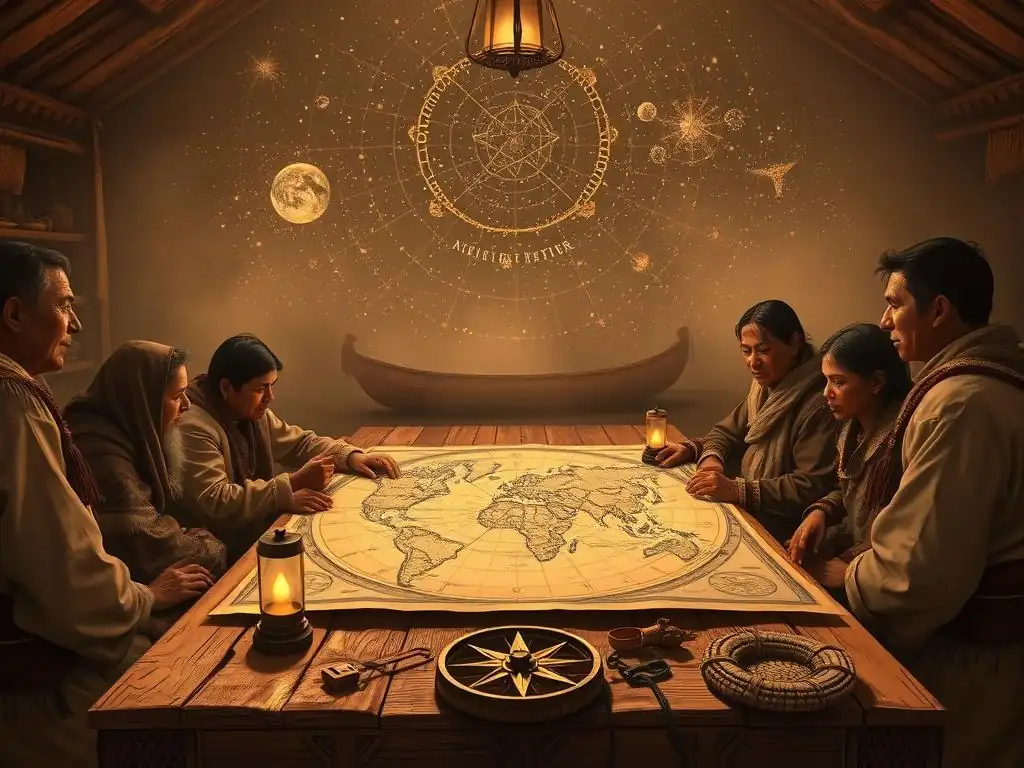
For many indigenous cultures across the Americas, the sky was much more than a vast expanse; it was a vital component of their daily lives, agricultural practices, and spiritual beliefs. The observation of celestial bodies enabled these civilizations to not only navigate vast landscapes but also to mark the passage of time and predict seasonal changes critical for agriculture.
In regions such as Mesoamerica, the Maya developed a sophisticated understanding of astronomy. They meticulously recorded the movements of celestial bodies, including the sun, moon, and stars, as evidenced by their complex calendars. The Maya's Dresden Codex, one of the oldest surviving books from the Americas, contains detailed astronomical tables that demonstrate their advanced mathematical systems. For example, they calculated solar eclipses and the synodic periods of planets, showcasing their deep understanding of celestial mechanics.
Similarly, the Inca civilization utilized celestial navigation as a tool for both practical and religious purposes. The Inca built monumental structures aligned with astronomical events. For instance, the Temple of the Sun in Cusco is believed to have been oriented to capture the sun’s rays during the summer solstice, reflecting the importance of solar cycles in their agricultural calendar. The Inca also employed the Southern Cross constellation to navigate the Andes, demonstrating their reliance on the stars for orientation in their extensive roadway system.
Several key indigenous cultures across the Americas are recognized for their unique and effective celestial navigation techniques, each adapting their practices to their environments and needs.
- The Polynesians: Although not strictly part of the Americas, Polynesian navigators are often referenced for their remarkable skills in celestial navigation. They relied on the stars, sun, and moon, using a system of wayfinding that included memorizing star paths, observing ocean currents, and recognizing the behavior of birds. This knowledge allowed them to traverse vast ocean distances.
- The Maya: Known for their intricate calendar systems, the Maya employed celestial movements to guide agricultural and ceremonial events. Their ability to predict lunar phases and solar eclipses was a testament to their advanced mathematical calculations and observations. The Maya also utilized a form of triangulation, where they would align their observations of the stars with terrestrial landmarks, aiding in both navigation and the construction of sacred sites.
- The Inuit: In the Arctic regions, the Inuit used celestial navigation in conjunction with land-based markers and the natural environment. They observed the position of the sun and stars during different seasons to guide their hunting expeditions and navigate the treacherous icy landscapes. The use of the North Star was particularly significant for maintaining direction during long journeys.
- The Navajo: The Navajo people integrated celestial navigation into their cultural practices, using the stars to tell stories and guide their movements across the desert. They identified specific constellations that corresponded with seasons, which informed their agricultural activities and ceremonial events.
- The Coast Salish: Indigenous tribes from the Pacific Northwest, such as the Coast Salish, used the stars and the moon to navigate coastal waters. Their knowledge of the tides and currents, combined with celestial observations, provided them with the skills necessary for fishing and hunting along the shores.
These cultures illustrate the diverse and innovative ways indigenous peoples across the Americas utilized celestial navigation techniques, showcasing a profound relationship between mathematics, the cosmos, and daily life. Their understanding of the natural world and the skies above not only reflects their survival strategies but also emphasizes their rich cultural heritage that continues to influence modern navigation practices today.
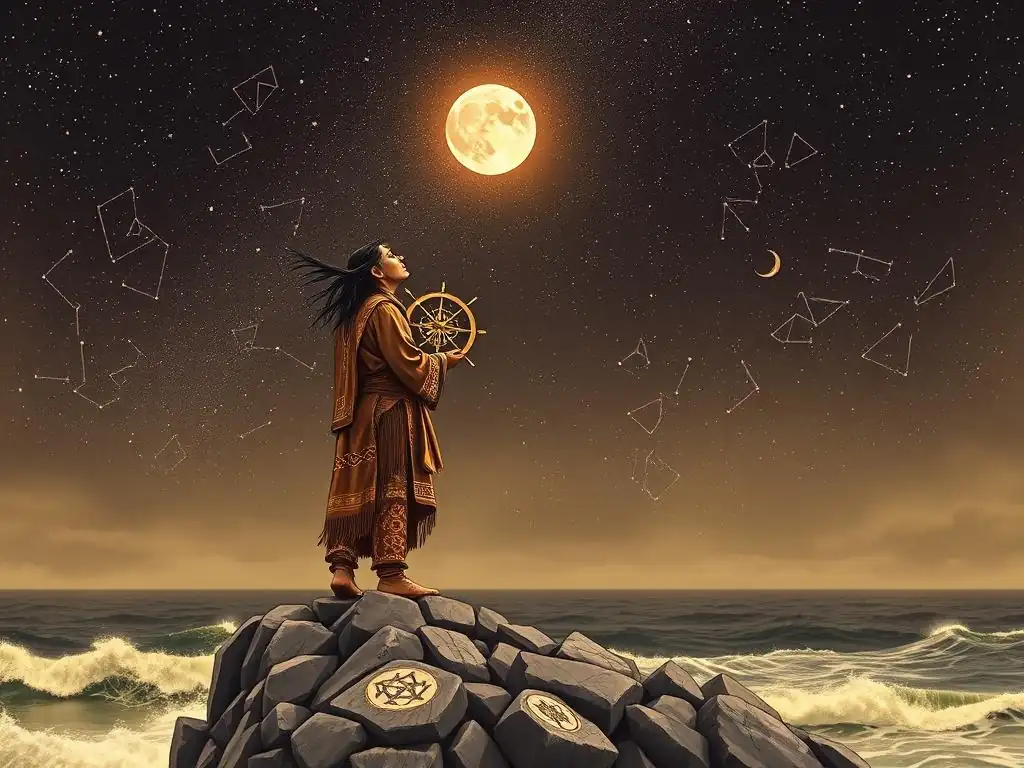
Geometry played a crucial role in the celestial navigation techniques employed by various indigenous cultures throughout the Americas. These communities developed sophisticated methods to determine their position and direction using the stars, the sun, and the moon, relying heavily on geometric principles.
- Angles and Triangulation:
- Indigenous navigators utilized angles to measure the position of celestial bodies relative to the horizon. By identifying specific stars and their angles above the horizon at different times of the year, they could triangulate their position.
- Example: The Inca civilization used the observation of the Southern Cross constellation to set their agricultural calendar, which was essential for planting and harvesting.
- Geometric Shapes and Patterns:
- Many indigenous cultures linked the shapes of constellations to their navigation practices. For instance, the Maya recognized geometric patterns in the night sky that corresponded to their land formations.
- Task List:
- Identify key constellations used by indigenous navigators.
- Study the geometric shapes formed by these constellations.
- Explore the cultural significance of these shapes in navigation.
Understanding Celestial Coordinates and Their Application
Indigenous cultures developed their own systems of celestial coordinates, which allowed them to navigate vast distances with remarkable precision. These systems were often based on a deep understanding of the movement of celestial bodies.
-
Celestial Sphere Concept:
- The indigenous navigators visualized the sky as a celestial sphere, where stars and planets were projected onto a dome surrounding the Earth. They calculated their positions based on this model, which helped in determining direction and distance.
- Example: The Navajo people utilized this celestial sphere to align their structures and ceremonial sites.
-
Use of Ecliptic and Zenith:
- Many cultures tracked the ecliptic, the apparent path of the sun across the sky. By marking significant solar events like solstices and equinoxes, they could establish a reliable calendar and navigation points.
- Table of Key Celestial Events:
Event Date (Approx.) Significance Winter Solstice December 21 Marks the shortest day of the year Summer Solstice June 21 Marks the longest day of the year Spring Equinox March 21 Day and night are equal in length Fall Equinox September 23 Marks the transition to winter
Astronomy and Mathematics: A Symbiotic Relationship
The relationship between astronomy and mathematics in indigenous cultures showcases their advanced understanding of both fields. Mathematics was not merely a tool but a language through which they expressed their astronomical observations.
- Mathematical Systems:
- Indigenous peoples created unique mathematical systems that included counting methods, geometric shapes, and spatial reasoning. These systems were intricately tied to their astronomical observations, which were essential for navigation.
- Example: The Olmec civilization is known to have used a base-20 counting system, which influenced their astronomical calculations.
- Cultural Significance:
-
The integration of mathematics and astronomy was deeply rooted in the spiritual and cultural life of indigenous societies. Navigational techniques were often imbued with stories and myths, reflecting their understanding of the universe.
-
Block Quote:
The stars are not just points of light; they are our ancestors, guiding us through the night.
— An Indigenous Elder
-
The exploration of indigenous celestial navigation techniques reveals a rich tapestry of knowledge where geometry, celestial coordinates, and mathematical principles intertwined to create advanced navigational strategies. This understanding not only facilitated travel but also reinforced cultural identities and spiritual beliefs.
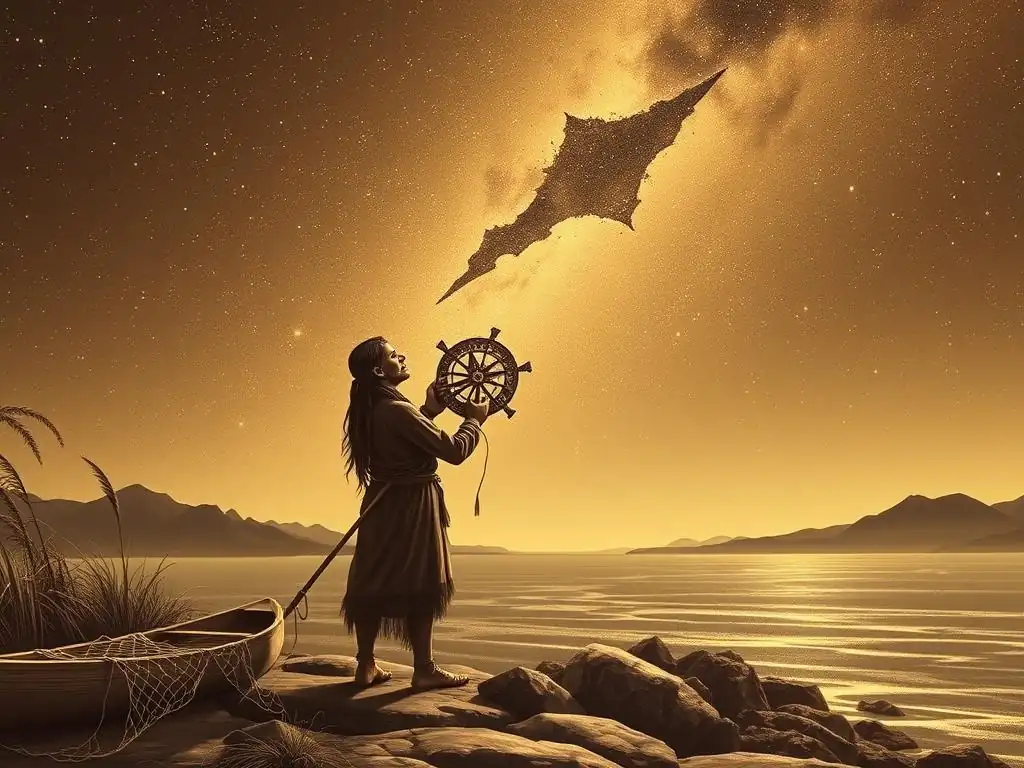
Indigenous celestial navigation techniques relied heavily on the observation and interpretation of celestial bodies, particularly stars, to guide travelers across vast oceans and land. Different cultures developed unique systems based on their geographical location, but the fundamental principles remained remarkably consistent.
- Constellations: Indigenous navigators identified specific constellations that were visible in their respective regions. For instance, the North Star (Polaris) served as a crucial reference point for many northern hemisphere cultures, as it remained fixed in the sky and indicated true north.
- Seasonal Changes: Navigators also tracked seasonal changes in the positions of stars. The shift of constellations at different times of the year helped them understand when to embark on voyages or when to return home. For instance, the appearance of certain stars would signal the beginning of specific seasons, guiding agricultural practices as well.
- Cultural Significance: Many indigenous cultures imbued celestial bodies with spiritual significance, integrating astronomy with mythology. This connection not only aided navigation but also reinforced cultural identity and storytelling traditions. For example, the Māori of New Zealand used the Matariki (Pleiades) cluster to mark the start of the new year, which was essential for their navigation and agricultural cycles.
Indigenous navigators utilized a variety of instruments and methods to enhance their celestial navigation skills. These tools were often developed from the natural environment and included both tangible instruments and learned techniques.
- Stick Charts: In the Marshall Islands, navigators crafted stick charts made from palm fronds and shells to represent ocean swells and currents. These charts visually depicted the relationship between islands and the stars, acting as a navigational aid when out at sea.
- Sun Compasses: Some indigenous cultures employed simple yet effective sun compasses to determine direction. By observing the sun's shadow cast by a stick at noon, navigators could ascertain cardinal directions based on the sun's position throughout the day.
- Wind and Wave Patterns: In addition to celestial bodies, navigators also paid close attention to wind and wave patterns. Knowledge of these elements allowed them to adjust their course in real-time while navigating, demonstrating a deep understanding of their environment.
- Oral Traditions: Knowledge of celestial navigation was often passed down through generations via oral traditions. Stories and songs encapsulated navigational techniques, ensuring that essential skills were preserved within the community.
Case Study: Polynesian Wayfinding Techniques
Polynesian wayfinding techniques represent a pinnacle of indigenous celestial navigation, showcasing sophisticated methods that enabled long-distance ocean voyages across the Pacific. Navigators from cultures such as the Hawaiians, Tahitians, and Easter Islanders developed an intricate understanding of their maritime environment.
- Star Paths: Polynesian navigators memorized star paths, understanding how different stars would rise and set in relation to their intended destination. They used a technique known as "star compass," which involved a mental map of the sky divided into sectors corresponding to the cardinal points.
- Canoe Design: The design of their canoes also played a crucial role in navigation. Polynesian voyaging canoes were built for speed and stability, allowing navigators to make precise adjustments based on their observations of the stars and the sea.
- Horizon and Landfall: Experienced navigators were adept at recognizing specific landmarks on the horizon, even from great distances. This skill, combined with their celestial knowledge, allowed them to navigate with remarkable accuracy.
- Cultural Revitalization: Today, there is a resurgence of interest in Polynesian navigation, as modern practitioners seek to revive these ancient techniques. Initiatives like the Hōkūleʻa voyage aim to demonstrate the efficacy of these indigenous celestial navigation techniques while honoring the cultural heritage of the Polynesian people.
Indigenous celestial navigation techniques represent an extraordinary blend of mathematics, astronomy, and cultural wisdom. Through their keen observations of the stars and the natural world, these civilizations forged paths across oceans and landscapes, leaving a profound legacy that continues to inspire navigators and scholars alike.
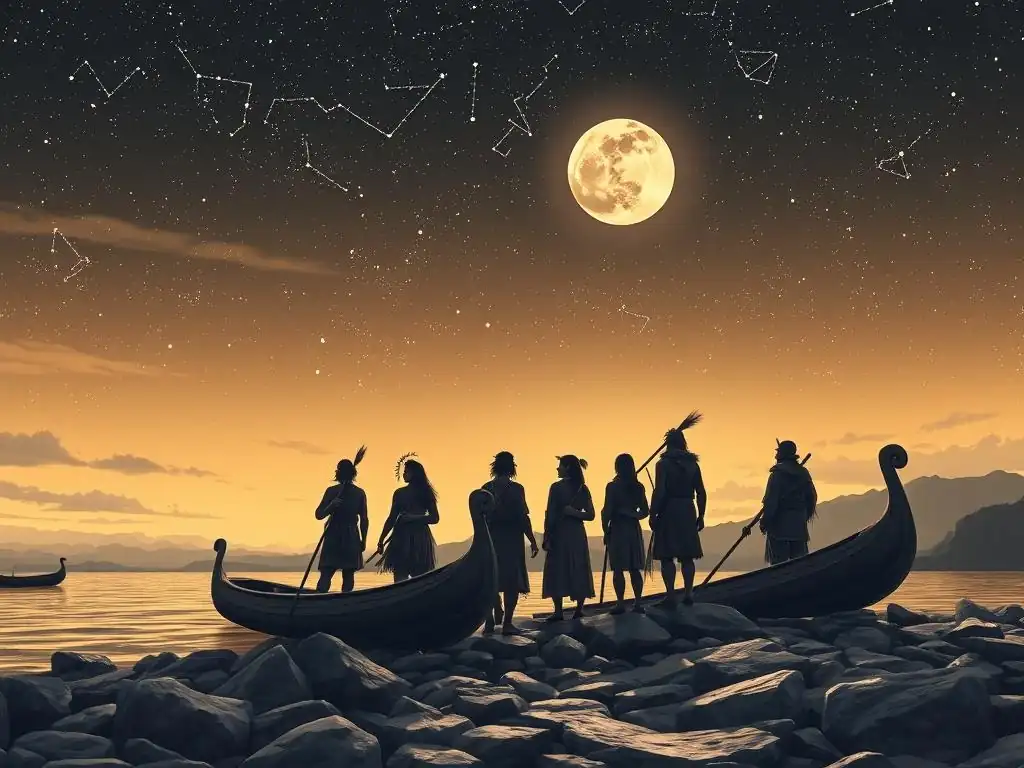
Indigenous cultures across the Americas developed sophisticated celestial navigation techniques that enabled them to traverse vast oceans and navigate intricate landscapes. These techniques were deeply intertwined with their understanding of the stars, planets, and natural phenomena. For instance, the Polynesians, although not from the Americas, inspired many indigenous navigators in coastal regions. They relied on a combination of stellar observations and oceanic patterns to guide their canoes across the Pacific Ocean.
Similarly, the Norse explorers who interacted with Indigenous peoples in North America often noted the advanced navigation skills of the local tribes. The Inuit of the Arctic regions, for example, utilized the position of the sun and stars to travel over ice and sea, demonstrating an intricate understanding of their environment. They would observe the sun's trajectory and make adjustments based on seasonal changes, showcasing their adaptability and knowledge.
The Maya civilization also excelled in celestial navigation. They meticulously charted the movements of celestial bodies and incorporated this knowledge into their agricultural practices and ceremonial calendars. The Maya’s ability to predict solar and lunar eclipses is a testament to their advanced understanding of astronomy. Their codices, such as the Dresden Codex, reveal detailed astronomical calculations that were crucial for navigation and timekeeping.
The celestial navigation techniques developed by Indigenous cultures have had a lasting impact on modern astronomy and navigation. Many contemporary navigational practices can trace their roots back to these ancient methods. For example, the use of star compasses—in which navigators align themselves with celestial bodies—has been increasingly recognized in maritime navigation circles. This practice is not just a historical curiosity but serves as a reminder of the rich knowledge systems that existed long before modern tools were developed.
Indigenous navigators understood the importance of environmental cues, such as ocean currents, wind patterns, and the behavior of wildlife. These observations contributed to a holistic understanding of navigation that is increasingly relevant in today's discussions about sustainable practices. As modern astronomers and navigators seek to reconcile technology with traditional knowledge, the insights gleaned from Indigenous celestial navigation techniques are invaluable.
Furthermore, the preservation and revitalization of Indigenous astronomical knowledge are gaining momentum in academic circles. Researchers are beginning to integrate these ancient techniques into educational curricula, emphasizing the importance of Indigenous contributions to the field of astronomy. For instance, programs that promote Indigenous astronomy not only honor the heritage of these cultures but also provide a more comprehensive understanding of the universe.
This resurgence highlights the potential for collaboration between Indigenous knowledge keepers and modern scientists, fostering a mutual respect for different ways of knowing and understanding the cosmos. As Indigenous celestial navigation techniques gain recognition, they not only enrich our understanding of the past but also inform future explorations and innovations in navigation and astronomy.
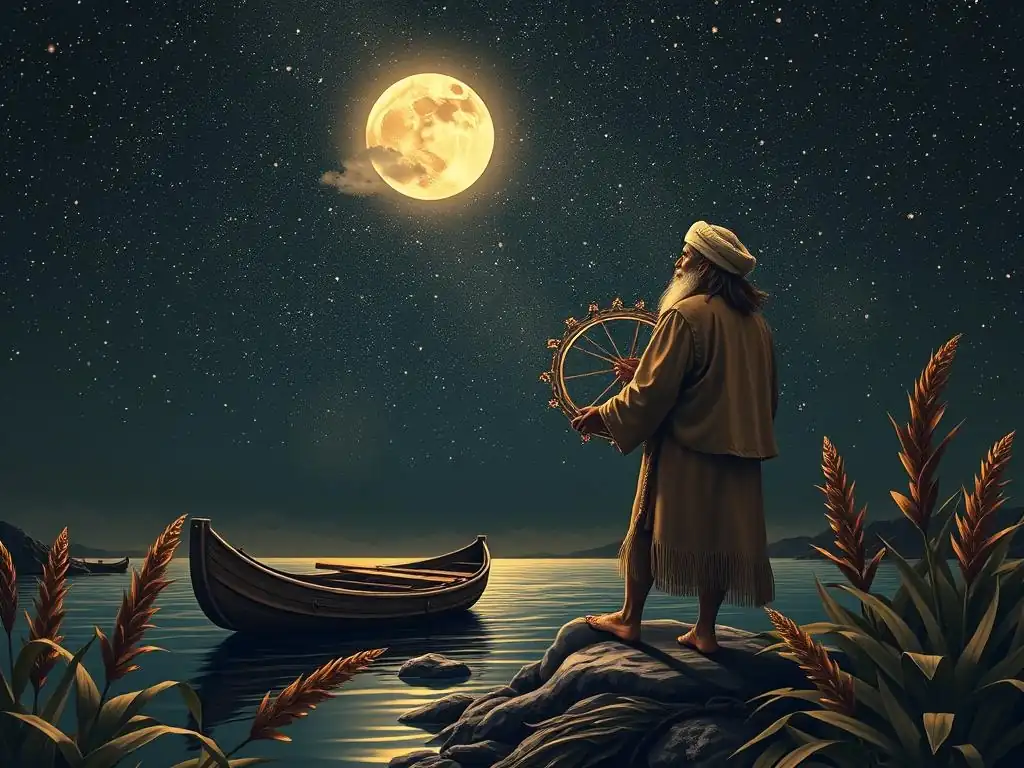
Many misconceptions surround the indigenous celestial navigation techniques used by various cultures across the Americas. One prevalent myth is that these methods were rudimentary and lacked sophistication. In reality, indigenous peoples developed complex systems of navigation that were deeply rooted in their understanding of astronomy, geography, and environmental cues.
- Simplistic Methods: It is often assumed that indigenous navigators relied solely on visual observations without any systematic approach. However, many cultures employed intricate techniques that combined observational astronomy with mathematical principles. For instance, the Polynesians used the positions of stars, sun, and moon in conjunction with ocean swells and winds to chart their courses across vast distances.
- Limited Knowledge of the Cosmos: Another misconception is that indigenous peoples had a limited understanding of celestial bodies. On the contrary, many cultures maintained extensive knowledge of the night sky, recognizing patterns and cycles that informed their agricultural practices, seasonal migrations, and navigational routes.
- Lack of Mathematical Framework: Some believe that indigenous navigation was devoid of mathematical systems. Yet, many indigenous cultures utilized sophisticated mathematical concepts, including geometry and trigonometry, to calculate angles and distances. For example, the ancient Maya developed a calendar system based on celestial events that reflected a high level of mathematical precision.
Clarifying the Reality: The Complexity and Accuracy of Indigenous Methods
The reality of indigenous celestial navigation techniques reveals a rich tapestry of knowledge and skill that underscores the ingenuity of these cultures. Far from being simplistic, these methods were often complex and varied significantly between different indigenous groups.
- Astronomical Observations: Indigenous navigators closely observed celestial bodies, including stars, planets, and constellations. For example, the Inca civilization relied heavily on the Andean constellations, using them to guide their agricultural practices and ceremonial events. Their detailed observations allowed them to establish a reliable calendar that aligned with seasonal changes.
- Mathematical Precision: Many indigenous cultures employed mathematical systems that allowed them to navigate with remarkable accuracy. The use of angles and distances enabled navigators to plot courses that minimized travel time and maximized safety. The Inuit, for instance, understood the importance of the sun's position in relation to the horizon, using this knowledge to navigate icy terrains effectively.
- Cultural Significance: Navigation was not merely a practical skill; it was also imbued with cultural significance. Celestial bodies often held spiritual meanings, influencing rituals and community practices. The connection between navigation and spirituality can be seen in the way the Navajo incorporate celestial navigation into their oral traditions, reflecting a deep-seated respect for the cosmos.
The indigenous celestial navigation techniques exemplify a profound knowledge of mathematics and astronomy that challenges the common misconceptions surrounding these practices. The complexity and accuracy of these methods reveal the sophisticated understanding that indigenous cultures had of their environment, allowing them to traverse vast landscapes and oceans long before European colonization.
The legacy of Indigenous celestial navigation techniques is profound, showcasing the rich tapestry of knowledge and wisdom that Indigenous cultures developed over centuries. These techniques were not merely practical methods for navigation; they embodied a deep understanding of the cosmos, nature, and the interconnectedness of all things. Indigenous peoples across the Americas utilized a variety of celestial bodies, including the sun, moon, stars, and even constellations, to guide their journeys, whether across vast oceans or through dense forests.
The methods employed varied significantly among different cultures, reflecting their unique environments and experiences. For instance, the Polynesians, often cited as masters of celestial navigation, relied heavily on the stars, using specific constellations to determine their latitude and direction. Similarly, the Inuit people of the Arctic utilized the sun's position and the patterns of the Northern Lights, while the Maya incorporated astronomical observations into their agricultural practices, demonstrating the integration of navigation with daily life.
The techniques of Indigenous celestial navigation have left a lasting influence on contemporary navigation and astronomy. Modern navigational systems have roots in the principles established by Indigenous cultures, emphasizing the importance of observation and understanding of natural phenomena. For example, the use of wayfinding methods, such as those practiced by the Hawaiian navigators, has inspired contemporary sailors to adopt a more holistic approach to navigation that integrates technology with traditional knowledge.
Moreover, the resurgence of interest in Indigenous knowledge systems has led to a greater appreciation for the precision and accuracy of these ancient techniques. Today, many academic and cultural institutions are recognizing the significance of Indigenous celestial navigation, integrating it into educational curricula and research initiatives. This revival not only honors the legacies of Indigenous peoples but also enhances our understanding of astronomy as a whole.
| Technique | Description | Example Culture |
|---|---|---|
| Star Path Navigation | Using constellations to guide travel by sea | Polynesian Navigators |
| Seasonal Observation | Tracking the sun’s path for agricultural planning | Maya |
| Celestial Bodies Mapping | Identifying patterns in the night sky for navigation | Inuit |
The Importance of Preserving Indigenous Knowledge in Our Modern World
Preserving Indigenous knowledge, particularly in the context of celestial navigation techniques, is crucial in our modern world. This knowledge not only serves as a testament to the ingenuity of Indigenous cultures but also provides valuable insights into sustainable practices, environmental stewardship, and holistic living.
The loss of such knowledge poses a significant threat to cultural identity and community cohesion among Indigenous peoples. Therefore, efforts to document and share these techniques are essential. Collaborative projects that involve Indigenous elders, scholars, and community members can help ensure that this knowledge is passed down to future generations. Additionally, integrating Indigenous celestial navigation into broader educational frameworks can foster a greater appreciation for cultural diversity and the interconnectedness of all knowledge systems.
By recognizing and valuing Indigenous celestial navigation techniques, we not only honor the achievements of Indigenous civilizations but also enrich our collective understanding of humanity's relationship with the cosmos. As we navigate the complexities of the modern world, these ancient practices offer timeless wisdom that can guide us toward a more sustainable and harmonious future.
Frequently Asked Questions
Indigenous celestial navigation techniques refer to the methods used by various indigenous cultures to navigate using the stars, sun, and moon. These techniques were crucial for traversing vast landscapes and waterways.
Indigenous cultures applied mathematical principles such as geometry and astronomy to determine their position and direction. This allowed them to create accurate maps and navigate effectively across their territories.
Celestial navigation fostered trade, exploration, and cultural exchange among indigenous societies. It helped establish trade routes and facilitated connections between distant communities, enriching their cultures.
Yes, modern navigators and researchers are revisiting indigenous navigation techniques to enhance understanding of environmental stewardship and sustainable travel. These techniques offer valuable insights into navigational practices that are often overlooked.
Studying indigenous cultures and their navigation methods helps us appreciate their achievements and contributions to human knowledge. It promotes cultural preservation and encourages respect for the diversity of human experiences.
In an age dominated by technology and modern navigation systems, the ancient art of Indigenous celestial navigation techniques remains profoundly relevant today. As we grapple with the challenges of climate change and the disconnection from our natural surroundings, it is crucial to recognize the wisdom embedded in these traditional practices. They not only offer a sustainable approach to navigation but also remind us of our intrinsic connection to the cosmos and the environment.
The influence of Indigenous celestial navigation techniques extends far beyond the stars; it shapes our cultural identity and fosters a deeper understanding of our place in the universe. These techniques serve as a testament to the ingenuity and resilience of Indigenous cultures, showcasing their profound relationship with nature. As we continue to explore the skies, we must honor the knowledge passed down through generations. > “To know the stars is to know the land, and to know the land is to know ourselves.” This quote encapsulates the essence of how these navigational practices intertwine with identity and belonging.
As we reflect on the lessons of Indigenous celestial navigation, I invite you to consider how you can integrate these teachings into your own life. Take a moment to look up at the night sky and appreciate the stories and wisdom it holds. Whether it’s through learning about the stars, understanding the cycles of nature, or simply slowing down to observe the world around you, let these ancient practices inspire you to navigate your own journey with intention and awareness. Embrace the call to reconnect with the cosmos and honor the traditions that have guided countless generations before us.
Embark on Your Journey Through the Stars!
Thank you for taking the time to explore the fascinating ways Indigenous cultures utilized mathematics for celestial navigation. You’ve gained insight into an ancient practice that connects us to our ancestors and the cosmos. Now, it’s your turn to reflect on these incredible techniques and embrace their wisdom.
Here are a few actionable steps you can take to deepen your understanding and honor this profound knowledge:
- Try your hand at stargazing: Use a night sky app to identify constellations and practice navigating your surroundings based on their positions.
- Engage in community discussions: Share your newfound knowledge and experiences with friends or join a local group focused on astronomy and Indigenous history.
- Create a personal navigation map: Chart your local area using celestial markers, drawing inspiration from Indigenous practices, and reflect on the connection between land and sky.
What discoveries have you made while exploring the night sky and its relationship with Indigenous navigation practices? Share your thoughts below!