
Trade and Economy
Explore the sophisticated Trade and Economy of Indigenous civilizations across the Americas, where vibrant trade networks spanned thousands of miles, connecting diverse peoples through the exchange of goods, ideas, and innovations. From the Pacific coast to the Atlantic shores, these economies were built on resource distribution, sustainable practices, and remarkable handicrafts and production—from intricate textiles and pottery to obsidian tools and cacao. Delve into the economic systems that underpinned powerful empires like the Aztec, Maya, and Inca, as well as the resilient communities of North America, revealing how trade fueled cultural exchange, social hierarchy, and technological advancement. Discover the legacy of these ancient marketplaces, tribute systems, and redistributive economies that shaped the continent long before European contact, offering invaluable insights into sustainable commerce and community resilience.
Trade and Economy in Indigenous Civilizations of the Americas
Before European contact, Indigenous peoples across the Americas developed sophisticated economic systems that sustained vast populations, connected distant regions, and fostered cultural exchange. From the sea-to-sea trade routes of the Pacific Northwest to the agricultural surplus economies of the Andes and Mesoamerica, these systems were not primitive barter arrangements but complex, organized networks involving specialized production, standardized currencies, and regional interdependence. Explore how trade shaped political alliances, how resources were managed sustainably, and how handicrafts reflected both utility and spiritual meaning.
🌐 Trade Networks
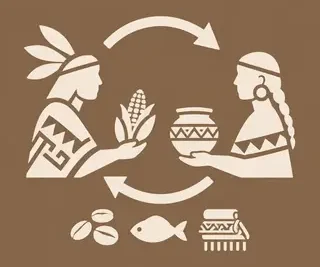
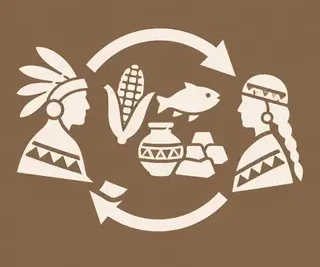
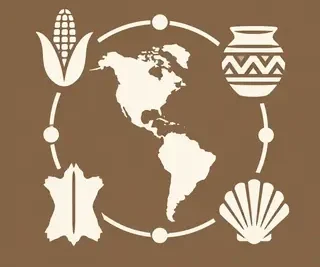
Long-distance trade networks were the lifeblood of pre-Columbian economies, linking coastal fishing communities with highland agricultural centers and desert mining regions. The Inca Empire’s road system (Qhapaq Ñan) spanned over 40,000 kilometers, enabling the movement of goods like coca, maize, and precious metals. In Mesoamerica, the Aztec pochteca (professional merchants) operated trade routes stretching from Central America to the Gulf Coast, exchanging exotic feathers, cacao, and jade. These networks also carried ideas—religious iconography, technological innovations like irrigation, and even linguistic influences—across thousands of miles, proving that indigenous economies were globally connected in their own hemisphere.
⚖️ Resource Distribution
Resource distribution was never random; it was governed by ecological knowledge and centralized planning. The Inca state maintained vast storehouses (qullqa) that redistributed food during famines, while the Mississippian chiefdoms along the Mississippi River managed maize surpluses to support urban centers like Cahokia. Coastal peoples like the Chumash of California used shell bead currency to distribute resources along the Pacific coast, while Andean societies relied on ayllu kinship groups for communal land management. This ensured that no single region monopolized essentials, creating resilience against climate variability and enabling population growth that rivaled contemporary European cities.
🪡 Handicrafts and Production
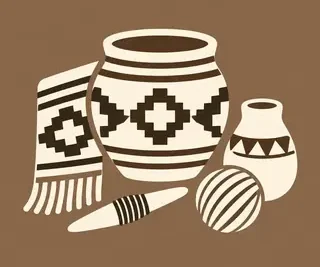
Production was not just economic—it was cultural identity. Indigenous artisans created goods that were traded widely, from Maya cotton textiles dyed with cochineal crimson to Inca quipus (knotted cord records) that were both administrative tools and high-status items. The Hopewell culture (Ohio Valley) crafted obsidian blades and copper ornaments, some found thousands of miles away in the Gulf of Mexico. Specialized workshops existed in cities like Tenochtitlan, where feather-workers and goldsmiths produced luxury items for nobles and export. These handicrafts were not just commodities; they carried spiritual significance, with many objects believed to embody supernatural forces, and their production was often inseparable from ritual calendars and community labor.
📊 Economic Systems
Contrary to the myth of pure barter, many indigenous economies used standardized currencies, including cacao beans in Aztec markets, copper bells in the Andes, and dentalium shells along the Northwest Coast. The Aztec tianquiztli (marketplaces) operated on strict schedules, with official prices and judges, while the Inca used a labor tax (mit’a) rather than money, mobilizing workers for state projects like terraces and temples. Reciprocity was core: Andean ayni (mutual aid) and Mesoamerican calpulli systems ensured that surplus was shared. These systems were capable of managing complex fiscal records, as evidenced by quipu accounting, and they sustained empires for centuries without the environmental collapse seen in some later colonial economies.
Frequently Asked Questions
Did indigenous peoples use money before European contact?
Yes, but not universally. The Aztecs used cacao beans and cotton cloaks (quachtli) as currency, while the Chumash and Inca used shell beads and labor obligations respectively. However, many economies relied on reciprocity and tribute rather than coin-based money, with value tied to social relationships and ritual meanings rather than abstract exchange.
How did the Inca manage such a large empire without writing or currency?
The Inca used a quipu, a system of knotted cords, to record numbers and services. They also implemented the mit’a labor tax, where citizens worked state lands and projects in cycles. This allowed for centralized resource distribution, warehouse management, and census-taking without traditional money or written records, relying instead on decimal-based knot representation and oral tradition.
What were the main trade goods in the Americas before 1492?
Staples included maize, potatoes, quinoa, cacao, salt, obsidian, turquoise, copper, feathers, shells, and textiles. Exotic items like Macaw feathers from the Amazon reached Mexico, while Pacific salmon was traded inland along river systems. Precious stones like jade from Guatemala and gold from Colombia traveled thousands of kilometers via relay trade routes.
Were indigenous economic systems sustainable?
Many were remarkably sustainable due to practices like terracing, crop rotation, and agroforestry. The Maya managed wetlands with raised fields, while the Inca maintained large-scale mitigation reservoirs for droughts. However, some urban centers like Cahokia and Teotihuacan faced environmental pressures, but natural climate shifts and internal conflicts often played larger roles than resource overuse.
How did trade affect indigenous political power?
Control of trade routes often translated into political dominance. The Aztec Empire extracted tribute from conquered regions, while the Inca redistributed luxury goods to loyal nobles. Maritime trade in the Pacific Northwest fostered powerful chieftainships, and the Mississippian elite controlled access to exotic materials like shell and mica, reinforcing social hierarchies and religious authority.