Handicrafts and Production: The Economic Soul of Indigenous America
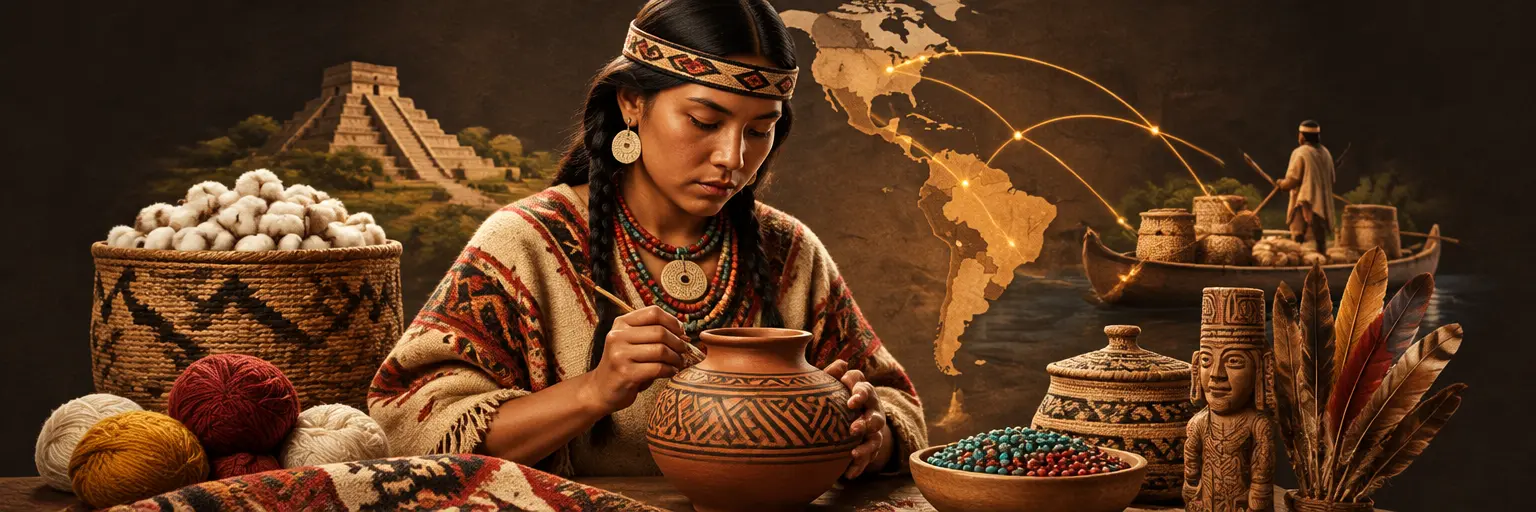
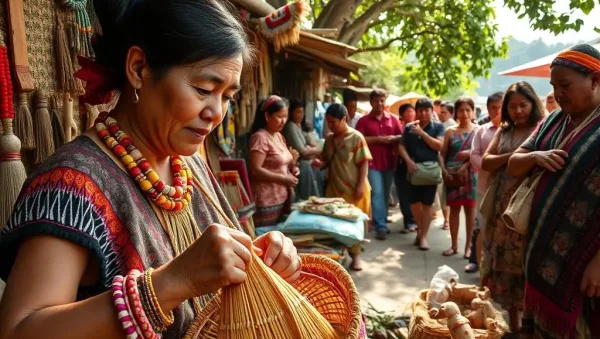
Explore the vibrant world of handicrafts and production within the Trade and Economy of pre-Columbian indigenous civilizations. This subcategory uncovers how Native American societies transformed raw materials into functional art, luxury goods, and trade commodities. From intricate Andean textiles to Mesoamerican obsidian tools, production methods were as diverse as the cultures themselves, reflecting deep ecological knowledge, social hierarchies, and spiritual beliefs. Here, we reveal the behind-the-scenes labor, specialized workshops, and regional innovations that powered ancient economies and connected vast trade networks across the Americas.
🧵 Textile Weaving and Dyeing Technologies
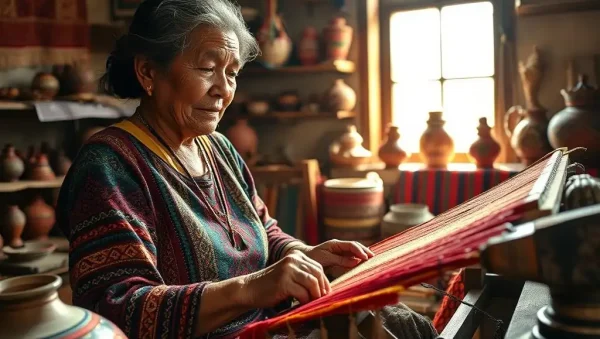
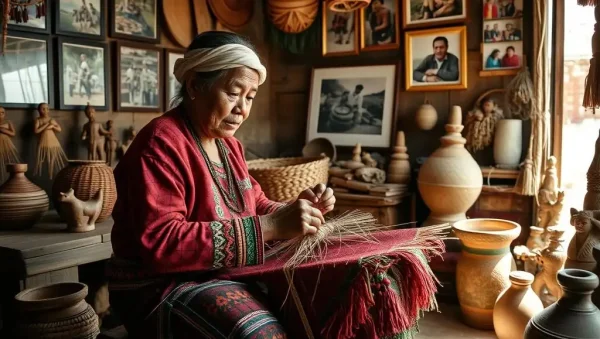
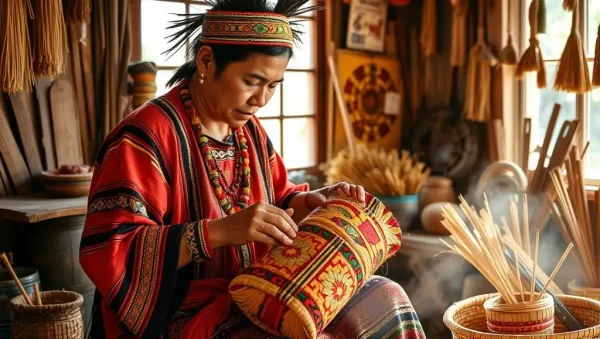
Textile production was arguably the most widespread and technically advanced handicraft, with the Andes leading in complexity. Indigenous weavers used backstrap looms and vertical looms to create cotton, alpaca, and vicuña fabrics, often incorporating over 200 distinct natural dyes from plants, insects, and minerals. The Paracas and Nazca cultures produced embroidered mantles with intricate iconography, while the Inca standardized state-owned textile workshops (aqllawasi) that supplied military and religious elites.
Beyond aesthetics, textiles functioned as currency, tribute, and social status markers in many societies. In Mesoamerica, the Aztec tribute system demanded specific woven goods from conquered provinces, making cloth a political tool. Dyeing processes, such as the prized cochineal red derived from cactus insects, were closely guarded secrets passed through lineages. Modern archaeological and chemical analyses reveal that some pigments, like Maya blue, were engineered with extraordinary precision, demonstrating scientific sophistication in everyday production.
🪨 Lithic Tool Crafting and Obsidian Trade
Stone tool production, or lithic technology, formed the backbone of daily survival and long-distance trade. The most prized material was obsidian, a volcanic glass that produced razor-sharp edges superior to steel. Major quarries like Teotihuacan’s Pachuca source and Guatemala’s El Chayal became economic hubs, with workshops specializing in core-blade reduction, projectile points, and ceremonial eccentric flints. Craftsmen used percussion and pressure flaking to create standardized blades, some only a few millimeters thick, used for everything from hunting to surgical procedures.
Trade in obsidian connected distant regions, as evidenced by the widespread distribution of specific geochemical signatures across the Americas. Similarly, basalt and jade were crafted into manos, metates, and ritual objects. In the U.S. Southwest, the Hohokam developed sophisticated canal irrigation to produce agricultural surplus, but their lithic industry also involved specialized arrowhead manufacture for regional exchange. The skill required was immense—apprenticeships lasted years—and errors were common, leaving debitage that modern archaeologists use to map ancient production areas.
🏺 Ceramic Pottery and Regional Styles
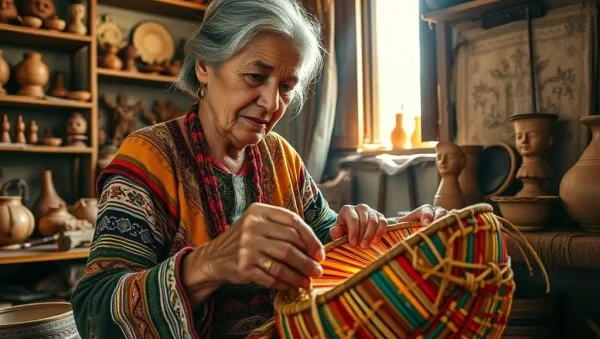
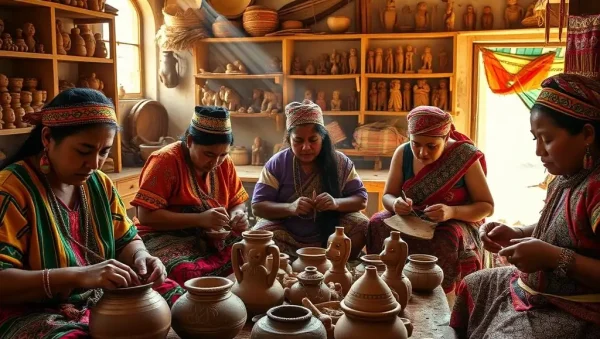
Ceramics were not just storage vessels; they were canvases for cultural identity and economic specialization. Every major civilization developed distinct clays, tempers, and firing techniques. The Moche of Peru produced stirrup-spout bottles with lifelike portrait heads and erotic scenes, while the Mimbres of the Southwest painted black-on-white bowls with geometric and narrative designs. Production was often seasonal, aligned with agricultural cycles, and used open pits or simple kilns reaching temperatures of 800–1000°C.
Potters managed complex supply chains for raw clay, pigments, and fuel. In the Amazon, some groups added caraipe bark ash to prevent cracking, a technique that influenced modern ceramics research. The Ancestral Puebloans created corrugated culinary ware and highly burnished polychrome serving pieces, which were distributed through Chaco Canyon’s road network. Ceramic styles often spread as markers of political alliances, and their analysis helps archaeologists trace migration and trade routes, showing that production was both a household craft and an industrial-scale enterprise.
🪵 Wood, Bone, and Shell Carving
Less durable than stone or ceramic, wood, bone, and shell objects reveal incredible artistry and ecological adaptation. The Northwest Coast peoples (e.g., Haida, Tlingit) carved monumental cedar totem poles and sea-going canoes using adzes and shark-skin sandpaper, while the Calusa of Florida used shell tools to create intricate drinking cups and tools. In the Andes, Inca artisans carved keros (drinking vessels) from hardwood and produced spondylus shell ornaments, which had ritual and exchange value from Ecuador to Bolivia.
Bone was used for needles, harpoons, and flutes, with the Iroquois manufacturing wampum belts from purple and white quahog shells—a currency and diplomatic record. In the Arctic, Thule and later Inuit carved ivory from walrus tusks into toggling harpoons and amulets, showcasing micro-engineering for harsh environments. These handicrafts were often produced in gender-specific roles, yet they shared a common trait: the use of local raw materials transformed with specialized knowledge passed down orally, creating goods that were both utilitarian and charged with spiritual meaning.
🏆 Metalworking and Precious Ornaments
Metalworking emerged independently in the Andes (gold, silver, copper) and Mesoamerica (copper, gold alloys), reaching peak sophistication in the Muisca and Mixtec cultures. Artisans used lost-wax casting, hammering, and annealing to produce tumbaga (gold-copper alloys) objects, such as the famous El Dorado raft. In Peru, the Sicán culture mass-produced arsenic-bronze tools and ornaments, smelting in wind-drafted furnaces. These metals were not merely decorative—they were symbols of cosmic power, authority, and tribute, often buried with elites or offered to sacred springs.
Trade in metal objects extended thousands of kilometers. The Inca required gold dust as tribute from conquered regions, while Aztec craftsmen worked imported copper from the west to create bells, tweezers, and axes. Contrary to myth, the continent was not "Stone Age"—metallurgy was widespread, albeit not for weapons due to material properties. Recent archaeometric studies show that gilding techniques, such as electrochemical depletion gilding, were invented independently in Colombia, demonstrating high-level chemical knowledge. These precious handicrafts remain pinnacles of human creative achievement.
Frequently Asked Questions
What was the most valuable handicraft in pre-Columbian trade?
Obsidian and fine textiles were the most traded and prized. Obsidian offered unmatched cutting edges, while camelid fiber textiles, especially in the Andes, served as currency and status symbols. Gold and spondylus shell also held high value, but textile and lithic goods had broader daily economic significance across regions.
Did indigenous societies have specialized artisan classes?
Yes. In the Inca and Aztec empires, full-time specialists existed, supported by state or noble patronage. Aztec tolteca and Inca aqllawasi workers produced luxury goods exclusively. In less stratified societies, like the Iroquois, craft production was part-time but nonetheless highly skilled, often gender-based but not class-restricted.
How did indigenous artisans achieve such fine finishes without modern tools?
They relied on obsidian scrapers, sandstone polishers, and plant abrasives like horsetail reed. For pottery, burnishing with smooth stones and controlled kilns maintained high temperatures. For metal, they used stone hammers and annealing cycles, sometimes with organic acids for surface treatments. Knowledge of material properties was empirical and refined over millennia.
Were handicrafts used as currency or just goods?
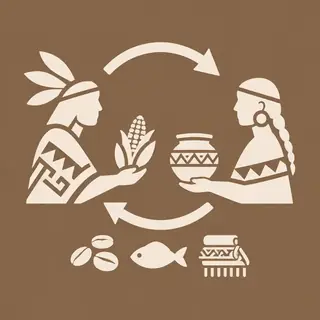
In many regions, yes. Cacao beans, mantles, and copper bells functioned as currency in Mesoamerica. In the Andes, textiles and spondylus shells were used for tribute and barter. Wampum belts in the Northeast served as mnemonic records and exchange units, not just ornaments. Thus, production was tightly linked to economic value systems.
How can I see examples of these handicrafts today?
Many museums house collections, including the Museo Larco (Peru), National Museum of Anthropology (Mexico City), and the Smithsonian’s National Museum of the American Indian. Online databases like the Digital Archaeological Record offer high-resolution images. For hands-on experience, cultural centers in Peru, Mexico, and the U.S. Southwest offer live demonstrations of weaving and lithic knapping.