
How the Andean Civilizations Used Mathematics for Trade and Economic Management


Welcome to Indigenous Civilizations of the Americas, where we embark on an enlightening journey through the rich tapestry of indigenous cultures that flourished long before European contact. Here, you'll uncover the incredible achievements and sophisticated societies that shaped the Americas.
In our featured article, "How the Andean Civilizations Used Mathematics for Trade and Economic Management," we delve into the fascinating intersection of mathematics and commerce, revealing how these remarkable civilizations utilized numerical systems to enhance their trade networks and economic stability. Prepare to be intrigued as we unveil the profound impact of these innovations and encourage you to explore the depths of their legacy!
- Introduction to Andean Civilizations and Mathematics
- The Role of Mathematics in Trade Among Andean Civilizations
- Economic Management Practices in Andean Civilizations
- The Influence of Mathematics on Social Structures
- Case Studies: Specific Examples of Mathematics in Trade
- Conclusion: Lasting Impact of Andean Civilizations Mathematics on Trade
-
Frequently Asked Questions
- What were the primary Andean civilizations known for in terms of mathematics?
- How did mathematics facilitate trade in Andean societies?
- What role did geometry play in Andean civilization's trade practices?
- How did the use of mathematics impact economic management in Andean civilizations?
- Are there modern implications of the mathematical practices of Andean civilizations?
- Final Reflection: The Enduring Legacy of Andean Civilizations in Mathematics and Trade
- Unveil the Secrets of Andean Mathematical Mastery!
Introduction to Andean Civilizations and Mathematics
The Andean civilizations, encompassing a rich tapestry of cultures such as the Inca, Moche, and Nazca, represent some of the most advanced societies that flourished in the Americas prior to European colonization. These civilizations not only established complex social structures and impressive architectural feats but also developed sophisticated systems of knowledge, particularly in mathematics.
The application of mathematics in Andean societies was not merely for academic pursuits; it served as a foundational tool for trade and economic management, enabling these cultures to thrive in their diverse environments. In this article, we will delve into how mathematics played a pivotal role in the economic activities of Andean civilizations, illuminating the intricate connections between numerical understanding and trade practices.
Overview of Andean Civilizations
The Andean region, characterized by its towering mountains and varied climate, was home to several prominent civilizations that made significant contributions to human development. From the early agricultural societies to the expansive Inca Empire, these cultures showcased remarkable ingenuity in managing resources and conducting trade.
- Key Civilizations:
- Inca: The largest empire in pre-Columbian America, known for its extensive road networks and sophisticated administrative systems.
- Moche: Renowned for their impressive pottery and irrigation techniques, which facilitated agricultural surplus.
- Nazca: Famous for the enigmatic Nazca Lines and their advanced agricultural practices.
These civilizations utilized a variety of mathematical concepts to optimize agricultural production, manage trade routes, and maintain records of transactions. Their understanding of mathematics was deeply intertwined with their cultural practices, influencing everything from architecture to the scheduling of agricultural cycles.
Importance of Mathematics in Ancient Societies
Mathematics served as a vital instrument for the Andean civilizations, aiding in various aspects of daily life and governance. The ability to quantify and calculate was essential for effective trade and economic management.
- Applications of Mathematics:
- Trade Management: Accurate measurements and calculations were crucial for fair trade practices. This included weighing goods, measuring land, and ensuring consistent pricing.
- Agricultural Planning: The Andean peoples employed mathematical principles to optimize irrigation systems and crop rotation, ensuring sustainable agricultural yields.
- Record Keeping: The use of quipus, a system of knotted strings, exemplified their innovative approach to record-keeping, enabling them to track inventory, tribute, and population data effectively.
The mathematical advancements of Andean civilizations were not only impressive in their complexity but also instrumental in fostering economic growth and stability. Understanding these mathematical practices offers valuable insights into how these societies functioned and thrived in a challenging environment.
The Role of Mathematics in Trade Among Andean Civilizations
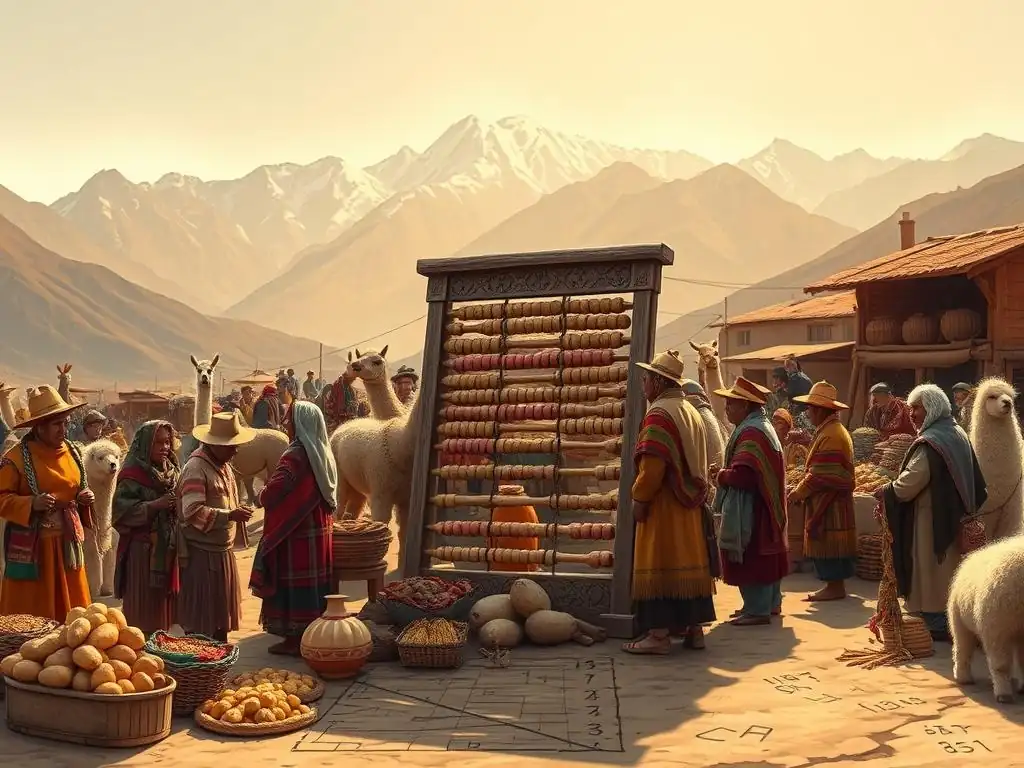
Mathematics played a pivotal role in the economic systems of the Andean civilizations, influencing trade practices and management. The use of mathematical concepts allowed these societies to effectively navigate complex trade networks, enhance their economic transactions, and manage resources efficiently. The integration of mathematics into trade practices not only facilitated daily commerce but also contributed to the broader socio-economic structures of these ancient cultures.
Understanding Trade Networks in the Andes
The Andean civilizations, particularly the Inca Empire, developed extensive trade networks that spanned vast geographical areas, connecting various communities and resources. These networks were characterized by:
- Regional Trade: Different regions specialized in the production of specific goods, such as textiles in the highlands and agricultural products in the valleys. This specialization necessitated the exchange of goods, which was heavily reliant on mathematical principles to ensure fair and efficient transactions.
- Long-Distance Trade: The Incas engaged in long-distance trade with neighboring cultures, exchanging luxuries and essential goods. Mathematics was essential in calculating distances and determining the optimal routes for trade caravans.
- Resource Management: Knowledge of seasonal changes and resource availability allowed traders to make informed decisions about when and where to trade. Mathematical models helped predict resource fluctuations, thus optimizing trading outcomes.
The sophistication of these trade networks exemplified the advanced understanding of mathematics within Andean civilizations, which was crucial for economic stability and growth.
How Mathematics Facilitated Trade Transactions
Mathematics was integral to the execution of trade transactions in the Andes, providing the necessary tools for quantifying goods, valuing trade, and ensuring equitable exchanges. The following aspects highlight how mathematics facilitated these transactions:
- Record Keeping: The Andean peoples developed systems to record trade transactions, often using quipus—knotted strings that functioned as a counting device. These records allowed traders to keep track of quantities and values exchanged over time.
- Bartering Systems: In a barter system, establishing fair trade ratios was essential. Mathematics enabled traders to calculate equivalent values based on the goods being exchanged, ensuring that trades were mutually beneficial.
- Market Organization: Mathematical principles were applied to organize marketplaces, determining how many merchants and customers could engage in trading simultaneously, thus maximizing efficiency.
Counting Systems Used in Trade
The Andean civilizations employed various counting systems that were crucial for trade operations. These systems included:
- Quipu: A sophisticated counting system using colored strings and knots, quipus allowed traders to record numerical data related to goods, transactions, and inventory. Each knot and its position conveyed specific quantitative information, making quipus an effective tool for trade management.
- Base Systems: Different Andean cultures used base-10 and base-20 counting systems, which enabled them to perform calculations related to trade more efficiently. This flexibility in counting systems allowed merchants to adapt to various trading scenarios.
Measurement Units for Goods and Services
To facilitate trade, the Andean civilizations established standardized measurement units for various goods and services. Key aspects include:
- Weight and Volume: Goods were often measured using standardized weights (such as stones) and volume measures (such as containers). This standardization ensured that trades were equitable and minimized disputes over quantities.
- Distance: The measurement of distance was critical for planning trade routes. The Andean civilizations developed systems to quantify distances between trading posts, which aided in logistical planning and route optimization.
- Time: Understanding time was also essential for trade, especially in aligning market days and seasonal trading practices. Mathematical calculations helped traders anticipate the best times for trading activities based on agricultural cycles and resource availability.
The integration of mathematics into trade practices among the Andean civilizations demonstrates their innovative thinking and the importance of quantitative skills in economic management. Through sophisticated counting systems and standardized measurements, these civilizations not only enhanced their trade efficiency but also laid the groundwork for complex economic structures that would influence future generations.
Economic Management Practices in Andean Civilizations

Agricultural Mathematics and Resource Allocation
The Andean civilizations, particularly the Incas, displayed a sophisticated understanding of mathematics that was integral to their agricultural practices and resource management. Their agricultural system relied heavily on precise calculations to optimize crop yields, manage irrigation systems, and allocate land effectively.
Key Agricultural Techniques
- Terracing: The Andean people developed extensive terrace farming systems, which required careful measurement of land area and slope to maximize arable land while preventing soil erosion.
- Crop Rotation: By utilizing mathematical principles, they could calculate the best times to rotate crops seasonally, ensuring soil fertility and sustainable farming practices.
The calculations involved in these techniques were crucial for the survival of their societies, allowing them to support large populations through efficient food production.
The Use of Quipus in Economic Management
Quipus, a unique system of knotted strings, served as a pivotal mathematical tool in the economic management of Andean civilizations. These intricate devices were not only a form of record-keeping but also a means of conveying numerical information, essential for trade and resource allocation.
Structure and Function of Quipus
Quipus consisted of a main cord from which various colored strings hung. Each knot and its position carried specific meanings, representing numerical values or categories.
- Knot Types: Different types of knots (single, double, long, and short) indicated various numerical values, allowing for a complex yet efficient encoding of information.
- Color Coding: The colors of the strings could signify different categories of data, such as types of resources or the location of storage.
The structure of quipus facilitated quick calculations and assessments, enabling Andean leaders to manage resources effectively across vast territories.
Quipus as a Tool for Economic Record-Keeping
The use of quipus was essential for maintaining economic stability within Andean civilizations. They served as a reliable method for tracking trade transactions, inventory levels, and taxation.
- Trade Documentation: Quipus allowed traders to keep records of goods exchanged, quantities, and values, streamlining trade processes across the expansive Inca Empire.
- Resource Management: By recording agricultural output and livestock counts, quipus provided crucial data for managing food supplies and planning for future harvests.
In essence, the mathematical sophistication embodied in the quipu system exemplifies how Andean civilizations utilized mathematics as a foundational tool for economic management, contributing significantly to their longevity and societal complexity.
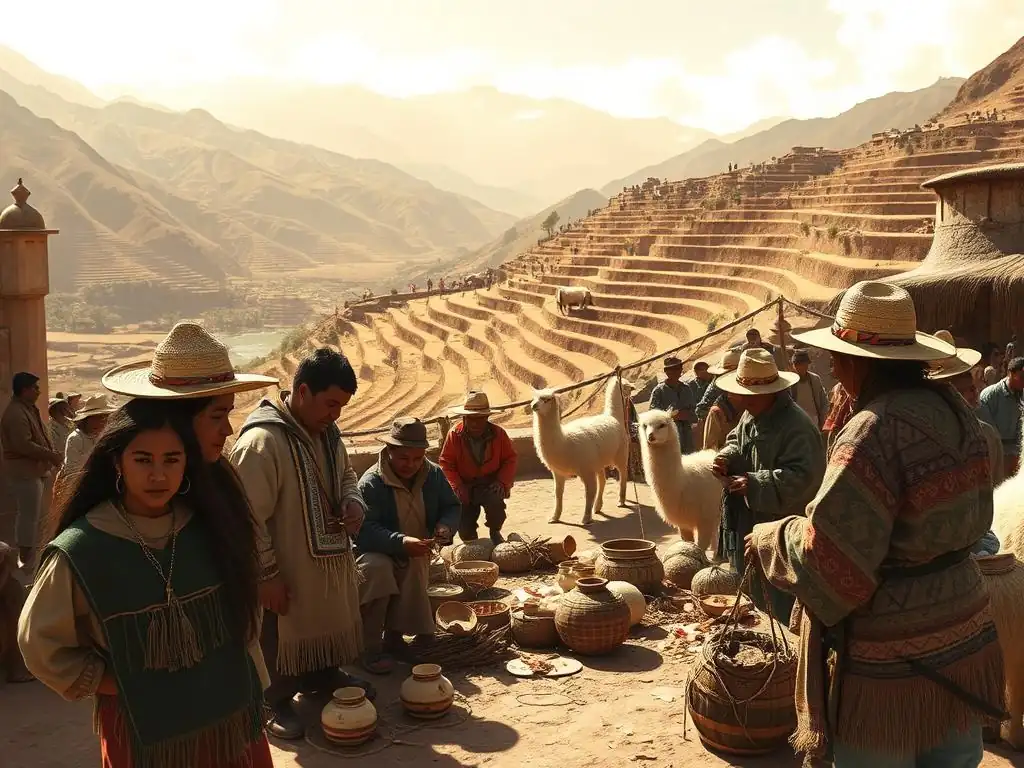
Mathematics played a crucial role in shaping the social structures of the Andean civilizations, particularly in the context of trade and economic management. The intricate mathematical systems developed by these cultures were not merely abstract concepts; they were deeply intertwined with their daily lives, governance, and social organization. This influence can be observed in various aspects of their hierarchical systems and the distribution of economic roles.
Hierarchical Systems and Economic Roles
In Andean civilizations, such as the Inca Empire, social hierarchy was profoundly influenced by mathematical understanding. The society was structured in distinct tiers, where the ruling elite, religious leaders, and commoners each had specific roles and responsibilities. This hierarchy was not only social but also economic, where mathematics facilitated the management and distribution of resources.
-
Quipus as a Tool for Economic Management:
The use of quipus, a system of knotted strings, was paramount in recording numerical data, including trade transactions, agricultural yields, and labor allocation. Each knot and its positioning represented different numerical values, allowing for complex accounting without written language. This system enabled leaders to track resources efficiently, ensuring that the hierarchical structure maintained control over economic activities.
-
Trade Networks and Measurement Systems:
The Andean civilizations established extensive trade networks that required precise measurements for goods. Mathematics allowed for the standardization of measurements, which was essential for fair trade practices. For instance, the use of standardized units for textiles, agricultural products, and metalwork ensured that trade was equitable, reinforcing the social hierarchy where the elite controlled the most valuable resources.
-
Labor Distribution and Tribute Systems:
The organization of labor was also mathematically based, where the population was divided into groups according to their skills and the demands of the state. Tribute systems, which required communities to contribute resources to the ruling class, were recorded mathematically to ensure compliance and accountability. This systematic approach to labor distribution reflected the intricate relationship between mathematics and the economic roles within the society.
The interplay between mathematics and social organization in the Andean civilizations extended beyond mere economic management, influencing cultural practices and community cohesion.
-
Cultural Significance of Numbers:
Numbers held cultural significance in Andean societies, often associated with spiritual beliefs and rituals. For example, certain numbers were considered sacred and were used in ceremonies, reinforcing the social fabric of the community and its connection to the divine. This cultural reverence for mathematics underscored its importance in maintaining social order.
-
Education and Knowledge Transmission:
The transmission of mathematical knowledge was crucial in sustaining social organization. Elders and leaders were responsible for teaching the younger generations about trade practices, resource management, and the significance of mathematics in their culture. This educational system ensured that mathematical skills were preserved and adapted over time, fostering a well-organized society capable of complex economic interactions.
-
Mathematics in Governance:
Governance in the Andean civilizations relied heavily on mathematical principles for decision-making and resource allocation. Leaders utilized mathematical models to analyze population data, agricultural productivity, and economic needs, allowing for informed governance that addressed the community's necessities. This reliance on mathematics reinforced the legitimacy of the ruling class, as effective governance was directly tied to their mathematical acumen.
The influence of mathematics on the social structures of the Andean civilizations was profound. From trade practices to governance, the mathematical systems developed by these cultures played a vital role in shaping their societies, ensuring that economic management was efficient and equitable. Understanding this relationship provides valuable insights into the complexities of Andean civilizations and their enduring legacy.
Case Studies: Specific Examples of Mathematics in Trade
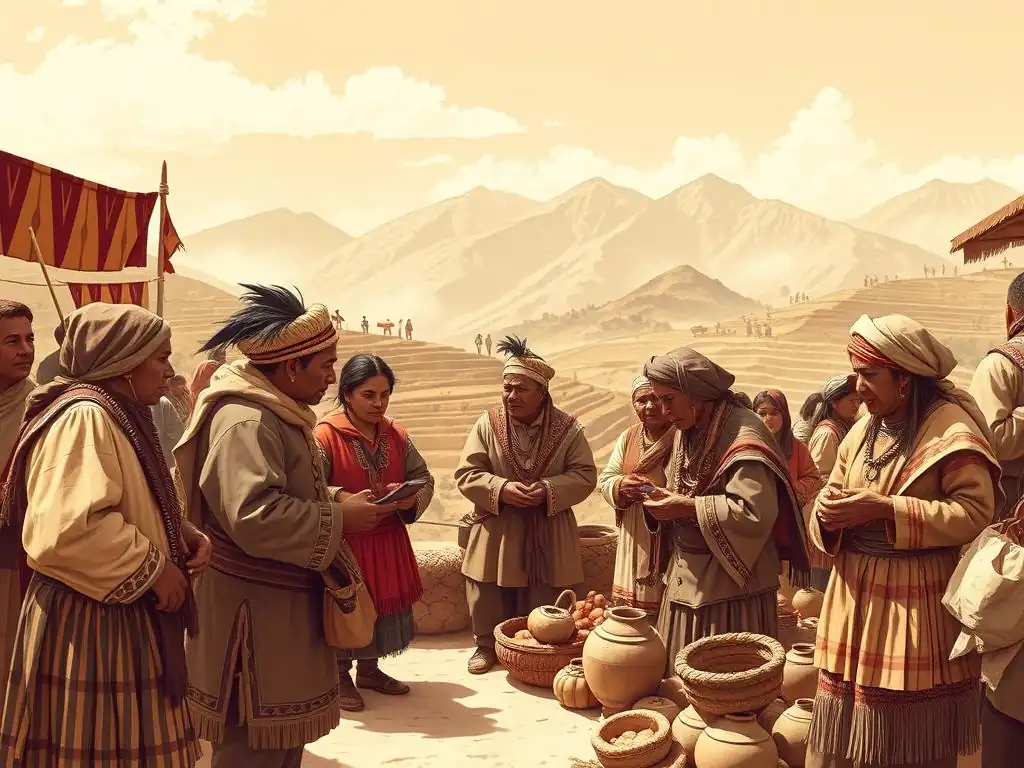
Trade Practices of the Inca Empire
The Inca Empire, one of the most significant Andean civilizations, utilized mathematics extensively to manage trade and economic activities across its vast territory. The Incas had a sophisticated system of accounting and trade regulation, which was crucial for their centralized economy. One of the primary tools for this was the quipu, a knotted-string device that served as a record-keeping mechanism.
- Quipu Functionality: The quipu consisted of different colored strings and knots that represented various numerical values and categories. For instance, the position of knots along the string could denote quantities, while the colors might indicate types of goods or regions. This allowed for efficient tracking of resources such as textiles, food, and precious metals.
- Standardized Units of Measure: The Incas established standardized units of measure for trade, such as the "cupa," which was a specific volume used to measure agricultural products. This standardization ensured fairness and consistency in trade transactions across different regions.
- Market Regulation: The Incas also implemented mathematical principles to regulate markets. Each province had designated officials who monitored trade practices and ensured that prices reflected the local supply and demand. Surveillance of trade practices was essential in maintaining economic stability throughout the empire.
Through these practices, the Incas not only facilitated trade but also strengthened their economy by ensuring that resources were allocated efficiently and equitably.
Regional Variations in Mathematical Applications for Trade
While the Inca Empire represents a prominent example of mathematical applications in trade, various Andean cultures exhibited regional differences in their mathematical practices.
- Aymara Communities: In the Aymara regions, communities used a different approach to trade management. They employed a base-10 counting system, which simplified calculations and transactions. This system was particularly effective for trading agricultural products, where quantities could be easily converted and compared.
- Nazca Civilization: The Nazca civilization also had unique mathematical practices, particularly in the realm of land measurement. They created geometric designs in the Nazca Desert, which are believed to have served as agricultural markers. The geometric precision required to create these large-scale designs indicates that the Nazca had a solid understanding of geometry, which likely aided their agricultural planning and trade practices.
- Moche Society: The Moche civilization utilized a form of barter system that required precise calculations of value among goods. Their artisans crafted intricate pottery and textiles, and a sophisticated understanding of ratios and proportions was needed to balance trade between different goods, ensuring that exchanges were perceived as fair by all parties involved.
While the Inca Empire's practices dominated the landscape of Andean trade mathematics, other regional variations displayed diverse applications of mathematical principles tailored to local needs and resources. This rich tapestry of mathematical applications underscores the ingenuity and adaptability of Andean civilizations in managing trade and economic systems.
Conclusion: Lasting Impact of Andean Civilizations Mathematics on Trade
Summary of Key Points
The Andean civilizations, particularly the Inca Empire, showcased remarkable mathematical skills that played a crucial role in their trade and economic management. Key points regarding their use of mathematics in trade include:
- Quipu System: The Andean civilizations developed a sophisticated recording system known as quipu, which utilized knotted strings to convey numerical information. This system allowed for the efficient tracking of goods, resources, and trade routes.
- Measurement and Calculation: Advanced techniques for measuring land and calculating agricultural yields were employed. This facilitated fair trade practices and equitable distribution of resources among communities.
- Trade Networks: The Andean civilizations established extensive trade networks that relied on mathematical principles for logistics. They calculated distances, weights, and the value of goods exchanged, ensuring that trade was conducted smoothly.
- Economic Planning: Mathematics was integral to economic planning, allowing leaders to make informed decisions regarding resource allocation, taxation, and tribute collection.
Reflection on the Legacy of Andean Mathematical Practices in Trade
The mathematical practices of the Andean civilizations have left a profound legacy that extends beyond their historical context. The ability to quantify and manage resources effectively laid the groundwork for economic systems that resonate today.
- Cultural Continuity: Many of the mathematical concepts and practices developed by the Andean civilizations have influenced contemporary indigenous communities. Traditional methods of trade and resource management, rooted in ancient practices, continue to be relevant in modern economic activities.
- Influence on Modern Mathematics: The innovative use of non-written mathematical systems, such as quipu, challenges conventional notions of mathematics being solely tied to written language. This inspires ongoing research into alternative mathematical systems and their applications in various cultures.
- Sustainability and Resource Management: The Andean emphasis on sustainability in resource management serves as a model for contemporary practices. As global societies grapple with issues of sustainability, the lessons derived from Andean mathematical practices offer valuable insights into efficient resource management.
The Andean civilizations' mathematics was not merely a tool for trade and economic management; it was a cornerstone of their societal structure, influencing their legacy and the way we understand mathematics in the context of culture and economics today. The profound impact of these practices continues to be felt, highlighting the importance of preserving and studying indigenous mathematical traditions.
Frequently Asked Questions
What were the primary Andean civilizations known for in terms of mathematics?
The Andean civilizations, such as the Inca, developed sophisticated mathematical systems for trade and economic management, including the use of quipo for record-keeping.
How did mathematics facilitate trade in Andean societies?
Mathematics enabled Andean societies to measure quantities, assess values, and keep accurate records, which were essential for efficient trade practices across vast distances.
What role did geometry play in Andean civilization's trade practices?
Geometry was important for land measurement and resource allocation, allowing Andean civilizations to optimize their trade routes and manage agricultural production effectively.
How did the use of mathematics impact economic management in Andean civilizations?
By employing mathematics, Andean civilizations could effectively organize labor, manage resources, and maintain economic stability, which supported their thriving economies.
Are there modern implications of the mathematical practices of Andean civilizations?
The mathematical practices of Andean civilizations offer insights into how ancient societies managed trade and resources, influencing modern understanding of economic systems and sustainable practices.
Final Reflection: The Enduring Legacy of Andean Civilizations in Mathematics and Trade
The intricate relationship between mathematics and trade in Andean civilizations remains profoundly relevant today. As we navigate a world increasingly driven by data and economic complexity, understanding how these ancient societies utilized mathematical concepts for trade and economic management offers invaluable insights. Their innovative approaches not only facilitated commerce but also laid the groundwork for sophisticated economic systems that resonate in our modern practices.
Clearly, the influence of Andean mathematics extends beyond historical curiosity; it shapes our understanding of economic interactions and cultural exchanges. The ability of these civilizations to harness mathematical principles for trade exemplifies a remarkable blend of practicality and creativity. As noted by historian John H. Rowe, “The Andean civilizations were not just passive recipients of mathematical knowledge; they were active innovators, transforming their environment through the application of mathematics.” This observation highlights the ongoing relevance of their contributions, reminding us that the past continues to inform our present and future.
As we reflect on the lessons from Andean civilizations, I invite you to consider how you can apply these principles in your own life. Think about the ways in which mathematics and strategic thinking can enhance your personal and professional endeavors. Whether it’s through budgeting, planning, or engaging in trade, the legacy of these ancient societies encourages us to embrace the power of mathematics as a tool for growth and innovation. Let their example inspire you to explore new avenues for economic management and to appreciate the profound connections between culture, mathematics, and trade in shaping our world.
Unveil the Secrets of Andean Mathematical Mastery!
Thank you for diving into the fascinating world of Andean civilizations and their remarkable use of mathematics in trade and economic management! Your interest in this rich history reveals just how interconnected culture and commerce can be. Now, it’s time to take those insights and transform them into action!
Here are some ways you can further explore this intriguing topic:
- Dive Deeper: Research the mathematical techniques used by Andean civilizations, such as the quipu, and discover how they shaped their economic systems.
- Join the Conversation: Share your thoughts and insights on social media or in discussion forums. Engage with fellow enthusiasts and exchange knowledge about the mathematical brilliance of indigenous cultures.
- Visit a Museum or Exhibition: Look for local exhibits that focus on Andean culture or mathematical achievements. Experiencing artifacts firsthand can deepen your understanding!
As you reflect on these actions, consider this: How might the mathematical innovations of the Andean civilizations inspire modern economic practices today? Join the discussion and share your ideas!