
Andean Mathematics in the Context of Global Indigenous Knowledge: Parallels and Differences


Welcome to Indigenous Civilizations of the Americas, where we embark on a fascinating journey through the rich tapestry of indigenous cultures that flourished long before European contact. Dive into our featured article on Andean indigenous mathematics history, where we uncover the remarkable advancements made by Andean civilizations in the realm of mathematics. Explore how these ancient mathematical systems not only reflect the ingenuity of their societies but also draw intriguing parallels and distinctions with other global indigenous knowledge.
Prepare to be inspired by the profound legacy of these cultures and their lasting impact on the world as we know it today. Your exploration begins here—let the discoveries unfold!
- Introduction to Andean Indigenous Mathematics History
- Historical Context of Andean Indigenous Mathematics
- Key Features of Andean Indigenous Mathematics
- Comparisons with Global Indigenous Knowledge Systems
- The Legacy of Andean Indigenous Mathematics Today
- Conclusion: The Significance of Andean Indigenous Mathematics History
-
Frequently Asked Questions
- What are the main achievements of Andean indigenous mathematics?
- How does Andean mathematics compare to other indigenous cultures?
- What role did Andean mathematics play in their societies?
- How has the history of Andean mathematics influenced modern studies?
- Why is it important to study Andean indigenous mathematics today?
- Final Reflection: Embracing the Legacy of Andean Indigenous Mathematics
- Unveil the Secrets of Andean Mathematics!
Introduction to Andean Indigenous Mathematics History
The study of Andean indigenous mathematics history reveals a rich tapestry of numerical systems and mathematical practices that flourished among the diverse cultures of the Andes before European colonization. This fascinating exploration not only highlights the intellectual achievements of indigenous peoples but also situates their mathematical knowledge within a broader context of global indigenous knowledge.
By examining the parallels and differences between Andean mathematics and other ancient mathematical systems, we can appreciate the unique contributions of these civilizations to the field of mathematics. This article delves into the intricate world of Andean mathematics, shedding light on its historical significance and its enduring legacy.
Overview of Indigenous Mathematics in the Andes
The indigenous civilizations of the Andes, including the Incas, Nazcas, and Tiwanakus, developed sophisticated mathematical concepts that were integral to their societies. Their mathematical practices were not merely abstract pursuits; they were deeply intertwined with daily life, agriculture, architecture, and trade.
- Numerical Systems: The Andean peoples utilized a base-10 numerical system, which included specific words for numbers and sophisticated methods for calculation.
- Quipu: One of the most remarkable inventions of Andean mathematics is the quipu, a system of knotted strings used for record-keeping and data management. This device allowed for the storage and transmission of numerical information, playing a crucial role in administration and trade.
- Geometric Knowledge: The Andean civilizations also demonstrated advanced understanding of geometry, evident in their architectural achievements, such as the precise construction of structures like Machu Picchu and the geometric patterns found in textiles.
By examining these aspects, we can see that Andean indigenous mathematics was not only a tool for survival and governance but also a reflection of the cultural identity and intellectual heritage of these societies.
Importance of Studying Andean Mathematics
Studying Andean mathematics is essential for several reasons:
- Cultural Heritage: Understanding the mathematical practices of the Andes contributes to a greater appreciation of the cultural heritage of indigenous peoples and their innovative approaches to problem-solving.
- Global Mathematics: By recognizing the contributions of Andean mathematics to global mathematical knowledge, we can foster a more inclusive narrative that values diverse perspectives and methodologies.
- Educational Insights: Integrating Andean mathematics into contemporary educational frameworks can provide unique insights into alternative mathematical concepts, promoting critical thinking and a deeper understanding of mathematical principles.
- Preservation of Knowledge: As modern society increasingly relies on technology, studying ancient mathematical systems highlights the importance of preserving indigenous knowledge and ensuring that it is not lost to history.
The exploration of Andean indigenous mathematics history opens a window into the intricate and sophisticated world of pre-Columbian civilizations, showcasing their remarkable achievements and lasting impact on both their societies and the broader realm of mathematics.
Historical Context of Andean Indigenous Mathematics

Origins of Mathematics in Andean Civilizations
The history of Andean indigenous mathematics can be traced back thousands of years to the early civilizations of the region. The evidence of mathematical practices among these cultures is found in archaeological sites, artifacts, and the remains of sophisticated societies like the Moche, Nazca, and later, the Incas.
- Early Counting Systems:
- The earliest mathematical systems were primarily focused on counting and measurement. The use of knotted strings, known as quipus, demonstrates a complex understanding of numerical systems that were employed for record-keeping and accounting.
- Quipus consisted of colored strings with various knotted configurations, which represented numbers and even complex information, suggesting that Andean cultures had a sophisticated grasp of numerical representation.
- Geometric Knowledge:
- The Andean civilizations also displayed an understanding of geometry, as seen in their architectural designs and agricultural layouts.
- Structures like the sacred geometry of temples and ceremonial sites reflect an intrinsic knowledge of spatial relationships and geometric principles.
- Agricultural Practices:
- Agricultural innovations, including the construction of terraced fields and irrigation systems, required significant mathematical planning. The ability to calculate land area, water flow, and seasonal cycles underscores the practical application of mathematics in everyday life.
Influential Cultures: The Incas and Their Mathematical Practices
The Incas, one of the most prominent Andean civilizations, significantly advanced mathematical practices. Their achievements in this domain can be categorized into several key areas:
- Quipus as a Mathematical Tool:
- The Incas perfected the use of quipus for administrative purposes. They utilized these devices to manage resources, taxation, and census data, demonstrating an organizational structure rooted in mathematical principles.
- Each knot and color represented specific data, allowing for sophisticated record-keeping without a written language.
- Architectural Precision:
- The construction of impressive structures such as Machu Picchu and Sacsayhuamán required precise measurements and mathematical calculations, showcasing their advanced engineering skills.
- The Incas employed methods akin to modern surveying techniques, suggesting a deep understanding of mathematics applied to architecture.
- Calendrical Systems:
- The Inca calendar was based on astronomical observations, which necessitated a strong understanding of cycles and timekeeping. Their ability to predict agricultural seasons tied directly to their mathematical knowledge.
- This calendar was used to organize agricultural activities, religious ceremonies, and social events, emphasizing the integral role of mathematics in societal functions.
The Role of Mathematics in Andean Society and Economy
Mathematics played a crucial role in the economic and social structures of Andean civilizations. Its influence can be observed in various aspects:
- Trade and Resource Management:
- The ability to measure distances, quantities, and values was essential for trade among different communities. Mathematics facilitated the management of resources, enabling efficient trade networks across the vast Andes.
- The Incas, for example, organized extensive trade routes that required precise calculations of time and distance, optimizing the movement of goods.
- Agricultural Planning:
- Mathematical techniques were vital for agricultural planning, including crop rotation, land division, and irrigation management. The ability to calculate and predict yields ensured food security for large populations.
- The Incas employed techniques like fallowing and crop diversification, all of which necessitated a solid understanding of mathematics to maximize output.
- Social Organization:
- Mathematics influenced the social hierarchy and organization of labor. The division of labor based on numerical systems allowed for the efficient allocation of resources and responsibilities among community members.
- The quipu system also played a role in monitoring labor contributions, helping to maintain a fair and organized society.
The Andean indigenous mathematics history reveals a rich tapestry of knowledge and practice that not only supported the practical needs of society but also contributed to its cultural and social complexity. This intricate understanding of mathematics was foundational to the achievements of Andean civilizations, leaving a lasting legacy that resonates in contemporary discussions of indigenous knowledge.
Key Features of Andean Indigenous Mathematics

Andean indigenous mathematics history is marked by a rich tapestry of unique concepts, tools, and applications that reflect the ingenuity and adaptability of the cultures that flourished in the Andean region. Central to understanding this mathematical history is recognizing how it was deeply intertwined with the daily lives, environmental contexts, and spiritual beliefs of the Andean peoples. This section will explore the distinctive features of Andean mathematics, highlighting its unique concepts, the tools and techniques employed, and its profound connections to astronomy.
Unique Mathematical Concepts in Andean Cultures
The mathematical concepts developed by Andean civilizations were sophisticated and tailored to their societal needs. Some of the unique features include:
-
Quipu (Khipu):
A notable mathematical tool used by the Inca and other Andean cultures, the quipu consisted of a series of knotted strings. Each knot represented a numerical value or concept, allowing for complex record-keeping and data management. This system enabled the tracking of agricultural yields, population counts, and resource management.
-
Base-10 and Base-20 Systems:
Andean cultures employed both decimal (base-10) and vigesimal (base-20) systems, reflecting their understanding of numerical relationships. This flexibility allowed for various calculations suited to their environmental and economic contexts, such as land measurement and resource allocation.
-
Geometric Shapes:
Many Andean cultures utilized geometry in their architecture and agricultural practices. The construction of terraces and irrigation systems incorporated geometric principles, showcasing an understanding of shapes, areas, and volumes.
-
Calendrical Systems:
The development of intricate calendars was essential for agricultural societies. The Andean peoples created calendars based on celestial observations, linking mathematical understanding with seasonal cycles critical for farming.
Tools and Techniques Used in Andean Mathematics
Andean indigenous mathematics history is also characterized by the specific tools and techniques that facilitated complex calculations and data management:
-
Quipu Techniques:
The creation and interpretation of quipus required specialized knowledge. Different colors of strings, knot types, and their placements conveyed varied meanings, reflecting an advanced understanding of data categorization.
-
Agricultural Measurements:
Techniques for measuring land and resources were crucial. Tools such as the measuring stick (known as a "tahuantinsuyu") allowed for accurate land surveying, which was essential for managing the extensive agricultural systems.
-
Astronomical Instruments:
Structures like the Intihuatana (a ritual stone associated with astronomy) served both ceremonial and mathematical functions. These instruments enabled the tracking of celestial bodies, allowing for precise agricultural planning and seasonal adjustments.
-
Mathematical Instruction:
Knowledge was often passed down orally, with community elders teaching younger generations through practical applications. This oral tradition ensured that mathematical concepts remained relevant and were adapted to changing societal needs.
The Relationship Between Andean Mathematics and Astronomy
Andean mathematics was not merely an abstract discipline; it was deeply intertwined with astronomy, influencing agricultural practices and cultural beliefs. Key aspects of this relationship include:
-
Celestial Navigation:
The Andean peoples utilized their mathematical knowledge to navigate and understand the stars. This celestial understanding was paramount for agricultural societies that depended on seasonal changes, allowing them to optimize planting and harvesting times.
-
Calendar Systems Based on Astronomical Events:
Calendars were often aligned with significant astronomical events, such as solstices and equinoxes. The integration of astronomy into their mathematical systems allowed Andean cultures to create accurate agricultural calendars that guided their farming practices.
-
Cultural Significance of Astronomical Phenomena:
Many Andean cultures viewed celestial bodies as deities or ancestors. This spiritual connection influenced mathematical practices, where calculations related to astronomy were often imbued with cultural meaning and significance.
-
Architectural Alignments:
Structures were often constructed in alignment with celestial events. This architectural practice demonstrates a sophisticated understanding of geometry and mathematics, as buildings were oriented to mark significant astronomical occurrences.
The history of Andean indigenous mathematics is defined by unique concepts, specialized tools, and a profound relationship with astronomy. These features not only highlight the advanced mathematical skills of these cultures but also illustrate how their mathematical practices were essential for survival and community cohesion. This exploration of Andean indigenous mathematics history reveals a rich narrative of intellectual achievement that continues to resonate in contemporary discussions of indigenous knowledge systems.
Comparisons with Global Indigenous Knowledge Systems
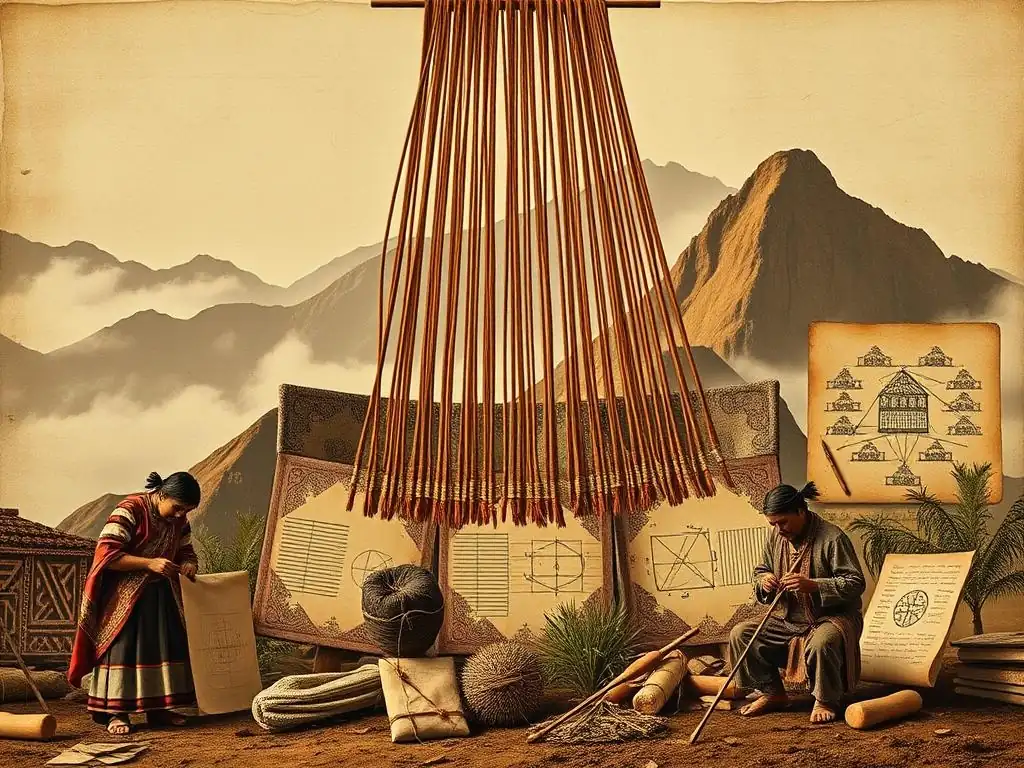
Similarities Between Andean Mathematics and Other Indigenous Practices
Andean indigenous mathematics history exhibits remarkable similarities with mathematical practices found in various indigenous cultures across the globe. One of the most significant traits shared among these cultures is the integration of mathematics with daily life and environmental observation. For instance, both Andean and other indigenous groups, such as the Native American tribes, utilized mathematics to navigate their environments—be it through resource management, agricultural planning, or celestial navigation.
- Holistic Approaches: Many indigenous cultures, including the Andean, adopt a holistic approach to knowledge. Mathematics is often intertwined with astronomy, agriculture, and spirituality. The Inca used complex calendars based on astronomical observations, similar to the Maya, who created intricate systems to track celestial events.
- Use of Physical Tools: Indigenous cultures frequently employed physical tools to aid in mathematical calculations. The Andean civilization utilized the quipu, a sophisticated knot-based system for record-keeping and numerical representation. In contrast, the Northwest Coast tribes employed counting sticks and other tangible methods to manage trade, resources, and community events.
- Cultural Significance: Mathematics in many indigenous cultures serves not only a practical purpose but also a cultural one. For both the Andean and Aboriginal Australians, mathematical concepts are embedded in storytelling, rituals, and social organization, reflecting the deep connection between mathematics and cultural identity.
Differences in Mathematical Approaches Across Cultures
While similarities abound, significant differences also characterize the mathematical approaches of Andean civilizations compared to other indigenous cultures.
- Abstract versus Concrete: Andean mathematics often reflects a more abstract understanding of numbers compared to some other indigenous practices. For example, while the Inca developed sophisticated methods for geometry and measurement, certain tribes in North America may have focused on practical counting systems that emphasized everyday survival rather than abstract mathematical theory.
- Base Systems: The Andean civilization largely employed a base-10 system, which is a hallmark of many global mathematical traditions. However, other cultures, such as the Mesoamerican civilizations, utilized a base-20 system. This distinction highlights how environmental factors and social structures influenced the development of unique mathematical systems.
- Mathematical Documentation: The documentation of mathematical concepts varies widely. The Andean used quipus for record-keeping, which functioned as a multi-dimensional data recording system, while other indigenous cultures, such as the Pacific Islanders, relied more on oral traditions for transmitting mathematical knowledge. This difference in documentation methods reflects broader cultural priorities regarding knowledge preservation and transmission.
Case Studies: Comparative Analysis of Andean and Mesoamerican Mathematics
A detailed comparative analysis of Andean and Mesoamerican mathematics reveals intriguing insights into how these civilizations approached mathematical concepts and practices.
- Quipu vs. Codices: The Andean quipu and Mesoamerican codices serve as prime examples of different mathematical documentation practices. The quipu, composed of colored strings and knots, effectively recorded numerical data and was used for census and resource management. In contrast, Mesoamerican codices often contained pictorial representations of mathematical concepts, intertwining numbers with mythology and history, illustrating a more narrative approach to mathematics.
- Calendrical Systems: Both cultures developed sophisticated calendrical systems, yet their underlying philosophies differed. The Andean calendar was primarily agricultural, focused on the cyclical nature of seasons and crop cycles. Meanwhile, the Mesoamerican calendar, particularly the Maya calendar, incorporated complex interrelations of time, spirituality, and cosmology, showcasing a deeper entanglement of mathematics with religious beliefs.
- Geometric Developments: In terms of geometry, the Inca were skilled in land measurement and construction, employing geometric principles to create their iconic structures. On the other hand, Mesoamerican civilizations, such as the Teotihuacan, demonstrated advanced geometric designs in urban planning and architecture, indicating a different application of geometric knowledge that emphasized city layout and societal organization.
The study of Andean indigenous mathematics history, when viewed alongside other indigenous mathematical traditions, reveals a rich tapestry of similarities and differences. These insights not only deepen our understanding of Andean mathematics but also highlight the broader narrative of indigenous knowledge systems across the Americas.
The Legacy of Andean Indigenous Mathematics Today

The legacy of Andean indigenous mathematics is profound, influencing not only the historical development of mathematical practices in the region but also leaving an indelible mark on contemporary society. The mathematical systems developed by the Andean civilizations, particularly the Inca, were sophisticated and unique, characterized by their use of quipus, a system of knotted strings used for record-keeping and calculation. This legacy continues to resonate today, as modern mathematical practices and cultural identities draw from these ancient traditions.
Influence on Modern Mathematical Practices
Andean indigenous mathematics has contributed significantly to modern mathematical practices, particularly in areas such as:
- Arithmetic and Accounting: The use of quipus for counting and record-keeping laid the groundwork for various accounting methods used today. The principles of organization and categorization seen in quipus can be observed in contemporary data management systems.
- Geometry and Architecture: The Inca were masters of geometry, employing advanced techniques in the construction of their architectural marvels, such as Machu Picchu. Their understanding of spatial relationships and proportions influences modern architectural practices, particularly in sustainable building techniques.
- Agricultural Mathematics: The Andean peoples developed complex agricultural systems that required precise calculations for irrigation and crop rotation. Modern agricultural practices continue to draw from these techniques, emphasizing sustainability and efficiency.
Incorporating these ancient methods into contemporary educational curricula can enhance understanding and appreciation of mathematics, demonstrating the interconnectedness of different mathematical traditions.
Preservation of Andean Mathematical Knowledge in Contemporary Society
Preserving Andean mathematical knowledge in contemporary society involves several strategies:
- Cultural Education Programs: Many indigenous communities are actively working to integrate traditional mathematical knowledge into modern educational frameworks. This includes teaching the history and applications of quipus and other indigenous mathematical practices to younger generations.
- Academic Research: Universities and research institutions are increasingly recognizing the value of indigenous knowledge systems. Collaborative research initiatives often focus on documenting and analyzing Andean mathematical methods, ensuring their preservation for future study.
- Community Workshops: Local organizations frequently host workshops that revive traditional practices, allowing community members to engage with their mathematical heritage. These workshops often include hands-on activities that promote the use of quipus and traditional counting systems.
Through these efforts, the rich heritage of Andean mathematics is kept alive, fostering a sense of identity and continuity among indigenous peoples.
The Role of Andean Mathematics in Indigenous Identity
Andean mathematics plays a crucial role in shaping indigenous identity, serving as a symbol of cultural pride and resilience. The relationship between mathematics and identity can be observed in several ways:
- Cultural Significance of Quipus: For many Andean communities, quipus are not merely tools for counting but are also embodiments of their history, culture, and knowledge. This connection reinforces a sense of belonging and continuity with their ancestors.
- Mathematics in Ceremonial Practices: Mathematical principles are often integrated into traditional ceremonies and rituals, reflecting an understanding of the cosmos and community organization. This integration reinforces the importance of mathematics within the cultural framework.
- Intergenerational Knowledge Transfer: The teaching of Andean mathematical concepts from elders to youth is a vital aspect of cultural preservation. This transfer of knowledge not only sustains mathematical practices but also strengthens community bonds and identity.
In essence, Andean mathematics is more than a historical curiosity; it is a living tradition that continues to shape the identities of indigenous peoples in the Andes. Emphasizing its significance fosters a deeper understanding of the diverse contributions of indigenous cultures to the global tapestry of knowledge.
Conclusion: The Significance of Andean Indigenous Mathematics History
The history of Andean indigenous mathematics represents not just a series of numerical systems and calculations, but a rich tapestry of cultural identity, innovation, and adaptation. This mathematical framework developed by the indigenous peoples of the Andean region—such as the Inca and their predecessors—serves as a testament to their advanced understanding of the world around them. By integrating practical applications with a profound spiritual and societal context, Andean mathematics has made significant contributions to global knowledge.
Reflection on the Contributions of Andean Mathematics to Global Knowledge
Andean indigenous mathematics is characterized by various unique features that distinguish it from other mathematical traditions around the world. Central to this system is the quipu, a sophisticated recording device made from colored strings and knots, which served multiple functions—from accounting to storytelling. The quipu exemplifies a non-written form of mathematical record-keeping, demonstrating that mathematical concepts can be conveyed in diverse ways beyond conventional notation.
Moreover, Andean societies employed advanced techniques in geometry and astronomy, allowing them to construct impressive architectural feats and navigate their mountainous terrain. For instance, the construction of Machu Picchu involved precise measurements and a deep understanding of topography, showcasing the practical applications of their mathematical knowledge. The indigenous peoples of the Andes also demonstrated an understanding of fractals and patterns, observable in their agricultural layouts and textile designs.
These contributions underscore the importance of recognizing and valuing indigenous knowledge systems, which often intersect with and enhance more widely recognized mathematical practices. By acknowledging the sophistication of Andean mathematics, we can foster a more inclusive understanding of global mathematics, which is often skewed towards Western thought.
Future Directions for Research in Indigenous Mathematics
The field of indigenous mathematics, particularly Andean mathematics, is ripe for further exploration. Here are several avenues for future research that could deepen our understanding and appreciation of this rich mathematical heritage:
- Cross-Cultural Comparisons:
- Investigating parallels between Andean mathematics and other indigenous mathematical systems worldwide can yield insights into universal mathematical concepts and practices.
- Exploring differences can also highlight the unique adaptations and innovations of Andean civilizations in response to their environments.
- Interdisciplinary Approaches:
- Collaborating with anthropologists, historians, and linguists can enrich the understanding of how mathematics is interwoven with cultural practices and social structures in Andean societies.
- Utilizing modern technology, such as computational modeling, can provide new perspectives on ancient mathematical techniques and their applications.
- Educational Integration:
- Developing educational programs that incorporate Andean mathematics into broader curricula can promote a greater understanding of indigenous knowledge systems among students.
- Encouraging Indigenous communities to reclaim and teach their mathematical heritage can empower future generations and preserve these vital cultural practices.
- Preservation of Knowledge:
- Efforts should be made to document and preserve traditional mathematical knowledge and practices, especially as modernization threatens to diminish these rich cultural legacies.
- Collaborating with local communities to record oral histories and practices related to mathematics can ensure that this knowledge is not lost.
The study of Andean indigenous mathematics history offers a wealth of knowledge that enhances our understanding of global mathematical traditions. By valuing and promoting further research into these systems, we not only honor the achievements of Andean civilizations but also enrich the broader narrative of mathematics as a pivotal element of human culture and advancement.
Frequently Asked Questions
What are the main achievements of Andean indigenous mathematics?
Andean indigenous mathematics is known for its advanced agricultural techniques, quipu systems for record-keeping, and rich geometric knowledge. These accomplishments illustrate the sophistication of their mathematical understanding.
How does Andean mathematics compare to other indigenous cultures?
While Andean mathematics shares similarities with other indigenous mathematical systems, such as practical applications and community-based knowledge, it also features unique aspects like the quipu and specific counting systems tailored to their environment.
What role did Andean mathematics play in their societies?
In Andean societies, mathematics was crucial for agriculture, trade, and administration. It enabled effective resource management and facilitated the organization of labor, contributing to the stability and growth of these civilizations.
How has the history of Andean mathematics influenced modern studies?
The history of Andean mathematics has influenced modern studies by highlighting the importance of diverse knowledge systems. It challenges the notion that mathematics is solely a product of Western civilization, showcasing the rich heritage of indigenous contributions.
Why is it important to study Andean indigenous mathematics today?
Studying Andean indigenous mathematics is important as it helps us understand the multifaceted nature of human knowledge. It also promotes cultural appreciation and recognition of the lasting impact of indigenous societies on contemporary mathematics.
Final Reflection: Embracing the Legacy of Andean Indigenous Mathematics
The exploration of Andean indigenous mathematics history reveals a profound connection between ancient wisdom and contemporary understanding. As we navigate a world increasingly defined by technological advancements and globalization, it becomes essential to recognize the contributions of indigenous knowledge systems that have persisted through time. The intricate mathematical concepts developed by Andean cultures not only showcase their intellectual prowess but also challenge the prevailing narratives that often overlook these rich histories.
Cultural appreciation and recognition of indigenous mathematics are more crucial than ever in our global society. The parallels and differences highlighted in this article serve as a reminder of the diverse ways in which knowledge is constructed and understood across cultures. As we continue to engage with these ideas, we must remember the words of the Andean philosopher, "To know the past is to understand the present." > This quote encapsulates the essence of our journey into the depths of Andean mathematics, urging us to honor and integrate these perspectives into our modern discourse.
As we reflect on the lessons drawn from Andean indigenous mathematics, I invite you to consider how these insights can inform your own life and understanding of the world. Let us take action by fostering an appreciation for diverse knowledge systems, advocating for their inclusion in educational curricula, and engaging with indigenous communities to learn from their experiences. By doing so, we not only enrich our own perspectives but also contribute to a more inclusive and equitable future that honors the legacy of all cultures.
Unveil the Secrets of Andean Mathematics!
Thank you for joining us on this enlightening journey into the fascinating world of Andean mathematics and its significance within global Indigenous knowledge. We hope you’ve gained a deeper understanding of the rich intellectual heritage and unique contributions of Indigenous cultures. Now, it’s time to take that knowledge and transform it into meaningful action!
Here are a few ways you can deepen your engagement and spread the word:
- Explore more about Indigenous mathematics by reading insightful books or watching documentaries that delve into this captivating subject.
- Share this article with friends, family, or on social media to help raise awareness about the importance of Andean mathematics and its cultural context.
- Join an online forum or local group focusing on Indigenous cultures to discuss and discover further parallels in various mathematical practices.
As you reflect on this, we invite you to consider: Which aspects of Indigenous mathematical traditions resonate most with you, and how can you incorporate these insights into your own learning or teaching practices?