
Future Discoveries: What Modern Archaeology Reveals About Mesoamerican Math

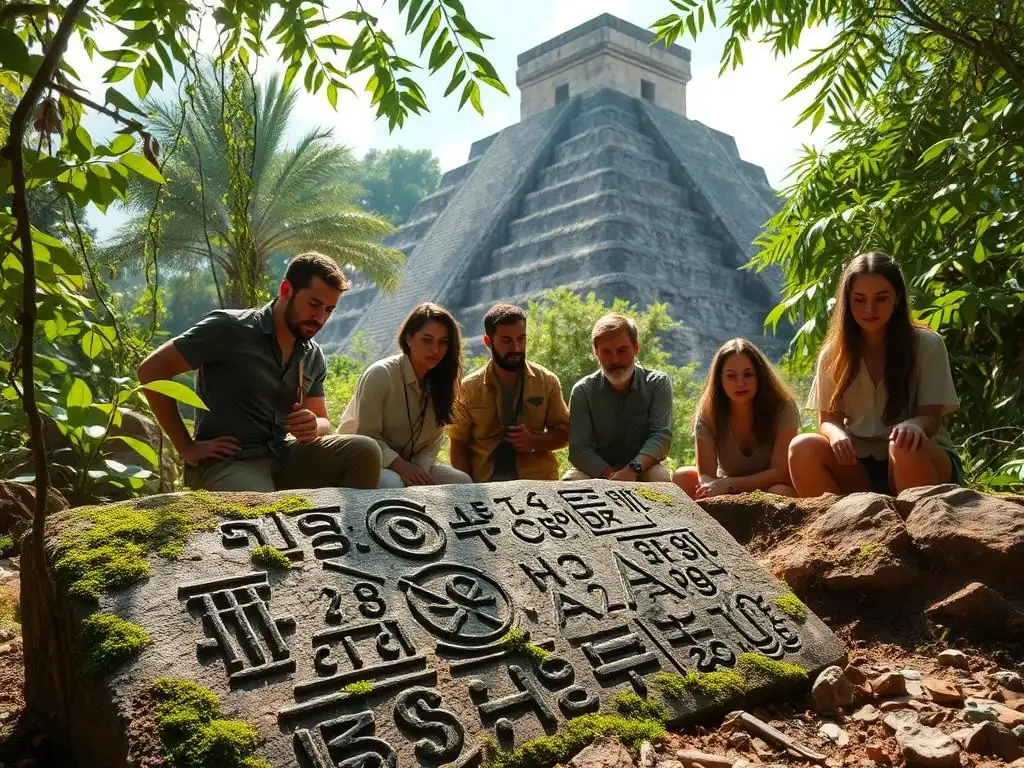
Welcome to Indigenous Civilizations of the Americas, where we invite you to embark on a fascinating journey through the rich tapestry of indigenous cultures that flourished long before European contact. In our featured article, "Future Discoveries: What Modern Archaeology Reveals About Mesoamerican Math," we delve into the groundbreaking archaeological findings that illuminate the sophisticated mathematical systems of the Mesoamerican civilizations.
Prepare to be intrigued by the remarkable achievements of these societies and discover how their innovations continue to influence our understanding of mathematics today. Join us as we unravel the mysteries of the past and celebrate the enduring legacy of indigenous ingenuity!
Introduction to Mesoamerican Math Discoveries
The study of Mesoamerican math is a fascinating journey into the intellectual achievements of ancient civilizations that flourished in what is now Mexico and Central America. Long before European colonization, the indigenous peoples of this region developed sophisticated mathematical systems that were integral to their societies, influencing everything from agricultural practices to astronomical observations.
As modern archaeology uncovers new artifacts and evidence, a deeper understanding of these mathematical systems is emerging, revealing not only their complexity but also their significance in shaping Mesoamerican cultures. This article will explore the latest discoveries in Mesoamerican math through archaeological findings, highlighting how these insights contribute to our understanding of the past.
Overview of Mesoamerican Mathematical Systems
Mesoamerican cultures, particularly the Maya, Aztec, and Olmec, developed unique mathematical systems characterized by the use of a base-20 (vigesimal) counting system, intricate calendars, and a profound understanding of geometry. These cultures utilized math for various practical purposes, including:
- Agricultural planning: Calculating planting and harvest cycles.
- Astronomical observations: Tracking celestial events to create calendars.
- Trade and commerce: Facilitating exchanges and economic activities.
The mathematical knowledge of these civilizations was not merely utilitarian; it was also deeply intertwined with their spiritual beliefs and cosmology, emphasizing the importance of numbers in rituals and societal organization.
Importance of Archaeology in Understanding Ancient Math
Archaeology plays a crucial role in unearthing the mathematical practices of ancient Mesoamerican societies. Through the excavation of sites, analysis of artifacts, and study of ancient texts, archaeologists have been able to piece together how these civilizations understood and utilized mathematics. The findings allow us to:
- Reconstruct historical contexts: Understanding how math was applied in daily life and rituals.
- Reveal cultural significance: Highlighting the relationship between mathematics, religion, and society.
- Challenge misconceptions: Offering evidence that counters outdated views of indigenous knowledge systems.
The collaboration between archaeologists, historians, and mathematicians continues to enhance our comprehension of Mesoamerican mathematical achievements, showcasing their innovative contributions to human knowledge.
Key Discoveries in Mesoamerican Math Through Archaeology
Unearthing Ancient Artifacts Related to Mathematics
Recent archaeological digs have uncovered a wealth of artifacts that provide insight into Mesoamerican mathematical practices. Notable finds include:
- Counting tools: Such as knotted cords, which may have been used for keeping track of numerical data.
- Ceremonial objects: Featuring engravings of numbers and symbols, suggesting their role in rituals.
- Sculptures and monuments: With inscriptions that reflect mathematical concepts, indicating the integration of math into public life.
These artifacts not only illustrate the practical use of mathematics but also indicate its significance in ceremonial and social contexts.
The Role of Hieroglyphs and Codices in Mesoamerican Math
Mesoamerican hieroglyphs and codices are crucial for understanding the mathematical systems of these ancient cultures. The Maya, in particular, developed a complex script that included mathematical symbols and notations. Key aspects include:
- Hieroglyphic writing: Combining logograms and phonetic symbols that represented numerical values and concepts.
- Codices: Folding books made of bark paper that contained mathematical calculations, astronomical data, and calendrical information.
- Mathematical records: Found in codices that reveal how numbers were used to document historical events and rituals.
These written records are invaluable for reconstructing the mathematical knowledge and practices of Mesoamerican civilizations, providing direct evidence of their intellectual heritage.
Discoveries from Major Mesoamerican Archaeological Sites
Several archaeological sites have yielded significant discoveries related to Mesoamerican mathematics, each contributing to our understanding of their mathematical systems:
- Copán: This Maya site has revealed stelae with intricate carvings that include numerical data and calendrical references.
- Teotihuacan: Excavations have uncovered artifacts that suggest a sophisticated understanding of geometry and measurement.
- Tikal: Unearthed codices and inscriptions help illuminate the use of mathematics in urban planning and astronomy.
These sites exemplify how archaeology continues to uncover the rich tapestry of Mesoamerican mathematical thought, offering insights into the cultures that shaped our understanding of numbers and their applications.
Mesoamerican Mathematical Concepts Revealed by Archaeological Findings
Archaeological findings in Mesoamerica have unveiled a rich tapestry of mathematical concepts that were integral to the societies that flourished in the region. These discoveries not only highlight the sophistication of Mesoamerican civilizations but also illustrate their understanding of abstract mathematical principles. From the intricate glyphs found on ancient codices to the monumental architecture that reflects advanced geometrical knowledge, the evidence suggests that mathematics was not merely a tool for trade or agriculture but a fundamental aspect of Mesoamerican culture and worldview.
The study of these mathematical concepts has been greatly enhanced by the work of archaeologists who have meticulously unearthed artifacts, structures, and texts that provide insight into the mathematical practices of these ancient peoples. Key concepts such as the base-20 number system, the use of zero, and complex calendar systems have emerged from these findings, offering a glimpse into the cognitive frameworks that guided Mesoamerican societies.
The Base-20 Number System in Mesoamerican Cultures
One of the most remarkable mathematical achievements of Mesoamerican cultures is the base-20 numbering system, also known as the vigesimal system. This system was utilized by various cultures, including the Maya and the Aztec, and was fundamentally different from the base-10 system commonly used today. The base-20 system allowed for a more complex representation of numbers, which facilitated calculations in trade, astronomy, and agriculture.
Archaeological evidence, such as inscriptions found in ancient ruins and codices, indicates that Mesoamerican mathematicians used this system for various purposes, including recording population data, agricultural cycles, and even celestial events. The flexibility of the base-20 system enabled these societies to develop intricate mathematical relationships, fostering advancements in both practical and theoretical mathematics.
Use of Zero in Mesoamerican Mathematics
The concept of zero is another groundbreaking mathematical discovery attributed to Mesoamerican civilizations, particularly the Maya. Unlike many ancient cultures that lacked a symbol for zero, the Maya developed a sophisticated understanding of this concept, which played a critical role in their numerical system. The glyph for zero, often depicted as a shell, allowed for the representation of large numbers and facilitated complex calculations.
The presence of zero in Mesoamerican mathematics signifies a deep level of abstract thinking and is a testament to the intellectual prowess of these cultures. Archaeological findings, including stelae and codices that feature the zero glyph, demonstrate its use in various mathematical contexts, from accounting to calendrical calculations. The adoption of zero marked a significant advancement in mathematical thought, influencing subsequent generations and contributing to the development of mathematical systems worldwide.
Calendar Systems and Their Mathematical Implications
Mesoamerican civilizations are renowned for their sophisticated calendar systems, which were deeply intertwined with their mathematical concepts. The Maya, in particular, created a complex calendrical system that combined both solar and ritual cycles, reflecting their advanced understanding of timekeeping and astronomy.
The mathematical implications of these calendar systems are profound. They required precise calculations to align agricultural activities with seasonal changes, as well as to plan religious ceremonies aligned with celestial events. Archaeological evidence, including intricate calendar round stones and codices, highlights how the Maya employed their mathematical knowledge to create a cyclical understanding of time that governed their daily lives and societal structures.
Modern Techniques in Archaeological Research of Mesoamerican Math
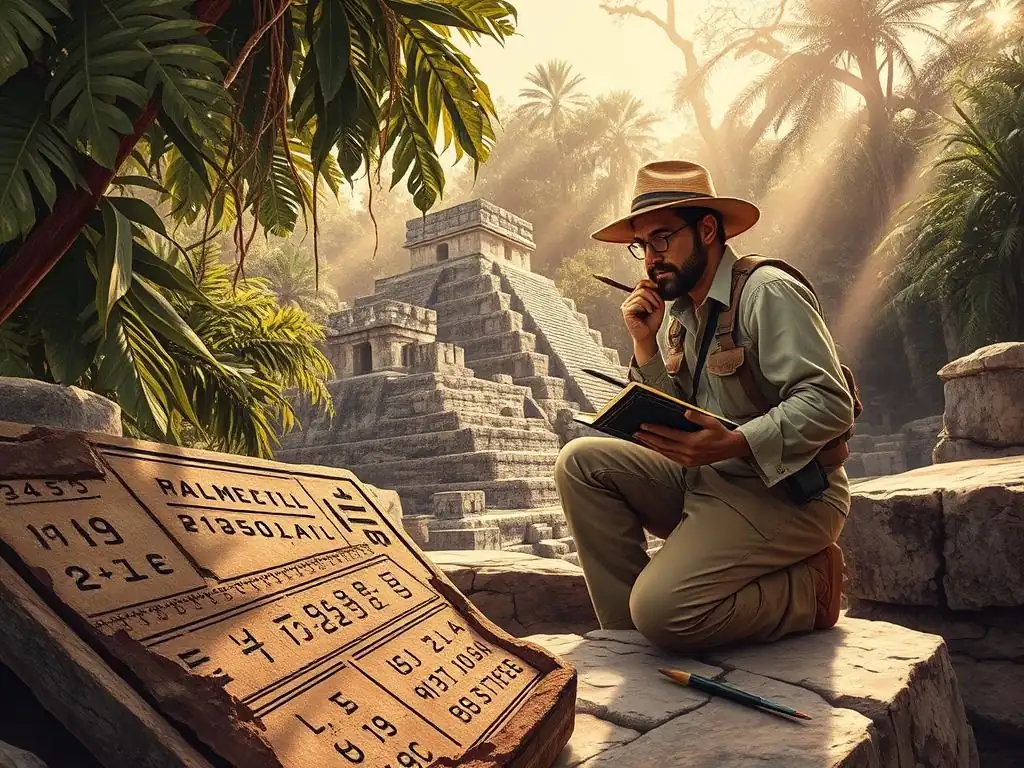
The exploration of Mesoamerican mathematics has been significantly enriched by modern archaeological techniques that allow for more detailed and accurate discoveries. These innovations have transformed our understanding of ancient mathematical systems and their applications within Mesoamerican cultures.
Advanced Technologies Used in Archaeological Discoveries
Recent advancements in technology, such as ground-penetrating radar, LiDAR (Light Detection and Ranging), and 3D scanning, have revolutionized archaeological research in Mesoamerica. These tools enable researchers to uncover hidden structures and artifacts without disturbing the earth, providing a clearer picture of ancient settlements and their mathematical practices.
For example, LiDAR technology has revealed previously unknown architectural features that suggest sophisticated planning and geometric understanding among Mesoamerican peoples. This non-invasive approach allows archaeologists to gather data on the spatial organization of sites, which can be analyzed to uncover the mathematical principles that guided their construction.
Interdisciplinary Approaches: Combining Math and Archaeology
The collaboration between mathematicians, archaeologists, and historians has fostered a deeper understanding of Mesoamerican mathematical systems. Interdisciplinary research initiatives encourage the application of mathematical modeling and statistical analysis to archaeological data, allowing for more robust interpretations of ancient practices.
By integrating mathematical theories with archaeological findings, researchers can reconstruct the mathematical knowledge that underpinned Mesoamerican societies. This collaborative approach has led to significant insights into the complexity of their mathematical systems, further enriching our understanding of the cultural significance of mathematics in these ancient civilizations.
Case Studies of Successful Discoveries in Mesoamerican Math
Numerous case studies illustrate the successful application of modern archaeological techniques to uncover Mesoamerican mathematical concepts. One notable example is the discovery of the "Dresden Codex," one of the few surviving pre-Columbian books that contains extensive astronomical and mathematical data. Analysis of its content has provided valuable insights into the mathematical systems employed by the Maya.
Another case study involves the excavation of the ancient city of Teotihuacan, where researchers have unearthed structures that reflect advanced geometric principles. The alignment of pyramids and plazas suggests a sophisticated understanding of spatial relationships and mathematical calculations, reinforcing the idea that mathematics played a crucial role in urban planning.
These discoveries highlight the ongoing relevance of modern archaeology in revealing the intricate mathematical achievements of Mesoamerican civilizations, paving the way for further research and understanding of their contributions to the field of mathematics.
Implications of Mesoamerican Math Discoveries for Current Understanding
The recent archaeological discoveries concerning Mesoamerican math have profound implications for our understanding of ancient societies in the Americas. These findings reveal that Mesoamerican civilizations, such as the Maya and Aztecs, had highly sophisticated mathematical systems that were integral to their daily lives, governance, and astronomy. This challenges the long-held belief that complex mathematics was predominantly a European invention.
Archaeological evidence suggests that Mesoamericans employed a vigesimal (base-20) numeral system, which was adept at recording large numbers and performing advanced calculations. The discovery of codices and inscriptions that illustrate these mathematical practices underscores the need to reassess the cognitive capabilities of these civilizations. Furthermore, the integration of mathematical concepts into their calendar systems highlights the functional applications of mathematics in ritualistic and agricultural contexts, suggesting a deeply embedded cultural importance placed on numerical understanding.
How Discoveries Challenge Previous Assumptions About Ancient Societies
Modern archaeological findings challenge the assumption that mathematical knowledge was limited to certain advanced cultures. The evidence of mathematics in Mesoamerican societies indicates a widespread understanding and use of mathematical principles across various levels of society. This democratization of knowledge complicates the narrative that only elite classes engaged with mathematics, revealing a society where mathematical literacy may have been more common.
Excavations at sites such as Copán and Tikal have uncovered inscriptions that demonstrate advanced mathematical concepts, including zero and complex calendrical calculations. This indicates that Mesoamerican cultures possessed a unique mathematical framework that was not merely utilitarian but also philosophical. The challenge lies in recognizing these societies not as isolated or simplistic but as complex cultures with rich intellectual traditions.
The Impact of Mesoamerican Math on Modern Mathematical Thought
The contributions of Mesoamerican math extend into modern mathematical thought, influencing various fields such as astronomy, architecture, and even computational methods. The sophistication of Mesoamerican mathematical concepts, particularly the use of zero as a placeholder, has prompted scholars to explore its implications for the development of mathematics as a whole.
Moreover, the principles of geometry and spatial reasoning evident in Mesoamerican architecture have inspired contemporary architectural practices. The understanding of mathematical systems in Mesoamerican cultures encourages a broader appreciation for the diversity of mathematical approaches globally. As modern mathematicians and educators rediscover these indigenous practices, they can incorporate alternative methods of problem-solving and numerical representation into contemporary curricula, enriching the mathematical landscape.
Cultural Significance of Math in Mesoamerican Civilizations
Math in Mesoamerican civilizations was not merely a tool for trade or agriculture; it held significant cultural and spiritual value. The integration of mathematics within their cosmologies reflects a worldview where numbers and patterns were believed to govern the universe. For instance, the Maya calendar, intrinsically linked to their religious beliefs and agricultural cycles, underscores the vital role math played in their societal structure.
Rituals often involved complex mathematical calculations to determine auspicious dates for planting, harvesting, and ceremonial events. This cultural significance of mathematics highlights the interconnectedness of their understanding of the cosmos with daily life. Therefore, the study of Mesoamerican math is essential not only for understanding their intellectual achievements but also for appreciating the broader cultural narratives that shaped their civilizations.
Conclusion: The Future of Mesoamerican Math Discovered Through Archaeology
The future of Mesoamerican math as revealed through archaeology holds exciting prospects for both historical scholarship and contemporary applications. As ongoing excavations and research continue to unveil new findings, our understanding of these ancient mathematical systems will likely expand, offering insights into their complexities and innovations.
The Ongoing Journey of Archaeological Research
Archaeological research is an evolving field, with new methodologies such as ground-penetrating radar and advanced imaging techniques revolutionizing how we uncover and interpret artifacts. Future discoveries in Mesoamerican sites will undoubtedly enhance our comprehension of their mathematical practices and their implications for societal organization, trade, and science. Collaborative efforts between historians, mathematicians, and indigenous communities will be crucial in ensuring that these discoveries are contextualized and appreciated within the broader narrative of human knowledge.
Final Thoughts on the Importance of Preserving Indigenous Mathematical Heritage
Preserving indigenous mathematical heritage is vital for recognizing the intellectual contributions of Mesoamerican civilizations. As these discoveries reshape our understanding of the past, it is essential to honor and protect the legacies of these cultures. Encouraging educational initiatives that highlight Mesoamerican math can foster respect for indigenous knowledge systems and promote a more inclusive view of the history of mathematics. By valuing these contributions, we not only enrich our understanding of mathematics but also celebrate the diversity of human thought and creativity.
- Introduction to Mesoamerican Math Discoveries
- Key Discoveries in Mesoamerican Math Through Archaeology
- Mesoamerican Mathematical Concepts Revealed by Archaeological Findings
- Modern Techniques in Archaeological Research of Mesoamerican Math
- Implications of Mesoamerican Math Discoveries for Current Understanding
- Conclusion: The Future of Mesoamerican Math Discovered Through Archaeology
Frequently Asked Questions
What are Mesoamerican math discoveries?
Mesoamerican math discoveries refer to the numerical systems and calculations developed by ancient civilizations such as the Maya and Aztecs, showcasing their advanced understanding of mathematics and astronomy.
Archaeological findings reveal ancient texts and artifacts that provide insights into the numerical systems, calendar calculations, and the mathematical techniques used by Mesoamerican cultures.
What is the significance of studying Mesoamerican math?
Studying Mesoamerican math helps us understand the intellectual achievements of these civilizations, illustrating their innovative problem-solving abilities and their contributions to mathematics as a whole.
How does modern archaeology impact our understanding of Mesoamerican civilizations?
Modern archaeology employs advanced technologies to uncover new evidence, leading to a richer understanding of Mesoamerican civilizations, including their mathematical practices and how they influenced their societies.
What role did mathematics play in Mesoamerican society?
Mathematics was crucial in Mesoamerican society for agricultural planning, astronomical observations, and religious rituals, reflecting their complex societal structures and cultural significance.
Final Reflection: Embracing the Legacy of Mesoamerican Math
The discoveries in modern archaeology reveal that Mesoamerican math is not just a relic of the past; it is a testament to the ingenuity and complexity of ancient civilizations. As we delve into the mathematical systems of the Maya and other Mesoamerican cultures, we uncover not only their sophisticated numerical frameworks but also the profound ways these systems influenced their understanding of the cosmos, agriculture, and architecture. This exploration reminds us that the pursuit of knowledge is timeless, and the lessons from these ancient mathematicians resonate with our contemporary quest for understanding.
Mesoamerican math has significantly shaped our cultural and intellectual landscape, highlighting the interconnectedness of mathematics, art, and spirituality. The intricate calendars and counting systems developed by these civilizations continue to inspire modern mathematicians and historians alike. As we reflect on their achievements, we are reminded of the words of the renowned mathematician Carl Friedrich Gauss: Mathematics is the queen of the sciences.
This recognition of the importance of mathematics in all aspects of life encourages us to appreciate the depth of knowledge that ancient cultures have contributed to our world.
As we look to the future, let us take a moment to reflect on how the lessons of Mesoamerican math can inspire our own journeys. Consider how you can apply the principles of curiosity, innovation, and interconnectedness in your life. Whether it’s through exploring new ideas, embracing diverse perspectives, or fostering a deeper appreciation for the history that shapes our present, we are all capable of contributing to the ongoing narrative of discovery. Embrace the legacy of Mesoamerican math and allow it to guide you in your quest for knowledge and understanding.
Unlock the Secrets of Mesoamerican Math Today!
Thank you for diving into the fascinating world of modern archaeology and Mesoamerican mathematics! By exploring their remarkable numerical systems and contributions, you've gained insight into a culture that profoundly influenced our understanding of mathematics. Now, it's time to take action and connect further with this incredible heritage.
Here are a few ways you can deepen your engagement:
- Dive deeper into the subject by reading some **recommended literature** to expand your knowledge even further.
- Share your favorite discoveries from this article on social media to inspire others to explore the wonders of Mesoamerican math!
- Join a local or online community focused on indigenous studies, allowing you to connect with like-minded individuals and participate in enriching discussions.
What aspect of Mesoamerican mathematics surprised you the most, and how can you apply that knowledge in your everyday life?