
The Influence of Geography on Indigenous Governance Structures Across the Americas

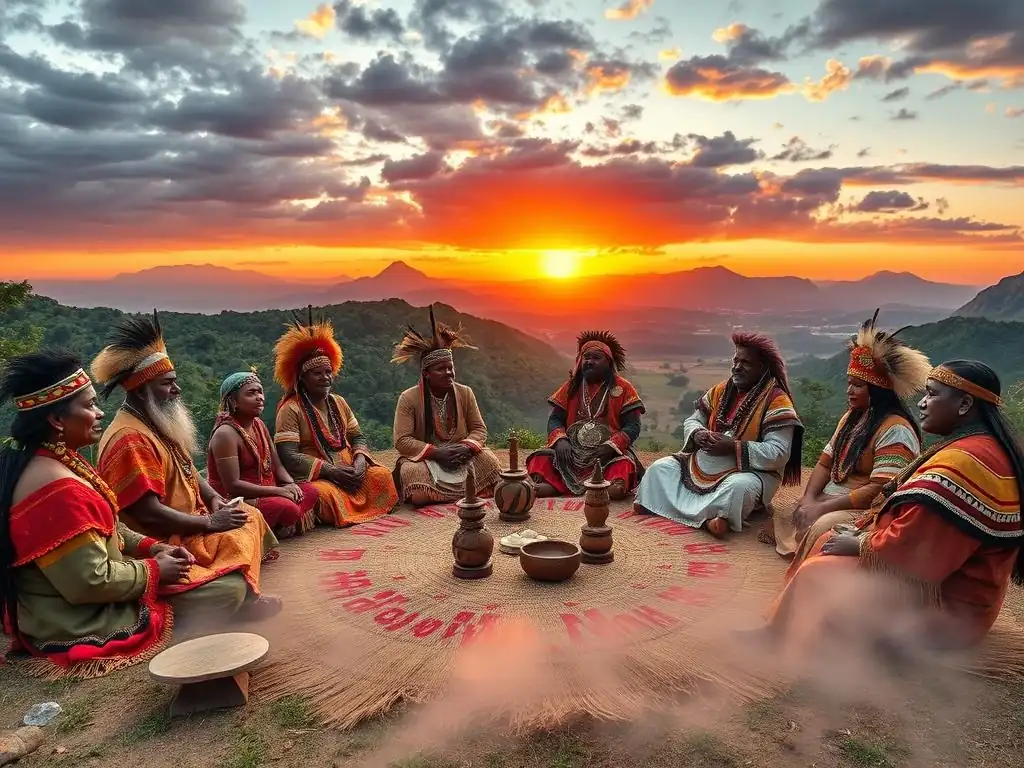
Welcome to Indigenous Civilizations of the Americas, where we invite you to journey through the rich tapestry of cultures that flourished long before European contact. Here, you will uncover the intricacies of indigenous governance structures across the Americas, exploring how diverse landscapes shaped the political and social frameworks of various societies. As we delve into the profound influence of geography on these governance models, prepare to engage with the remarkable achievements and legacies that continue to resonate today. Join us in this exploration and discover the profound connections between the land and the people who called it home.
Introduction to Indigenous Governance Structures in the Americas
Indigenous governance structures in the Americas are a testament to the ingenuity and adaptability of diverse cultures that thrived long before European contact. These systems of governance were not monolithic; instead, they varied greatly, shaped by the distinct environmental, social, and cultural contexts of each region. Understanding these governance structures is crucial for recognizing the complex relationships between indigenous peoples and their environments. The keyword Indigenous governance structures Americas encapsulates the essence of this exploration, revealing how the land itself influenced political organization, decision-making processes, and community engagement among various tribes and nations.
Overview of Indigenous Governance
Indigenous governance in the Americas encompassed a wide array of forms, from centralized chiefdoms to decentralized tribal councils. Each system reflected the values, beliefs, and needs of the communities they served. For instance, the Iroquois Confederacy exemplified a sophisticated form of governance that emphasized unity and collective decision-making among its member nations. In contrast, the Aztec empire showcased a more hierarchical structure, with a central authority exerting control over vast territories. These differences illustrate that governance was deeply interwoven with cultural identity and societal needs.
Importance of Geography in Governance Structures
Geography played a pivotal role in shaping these governance structures. The physical landscape, including mountains, rivers, and plains, influenced not only the resources available to communities but also their social interactions and political frameworks. For example, the nomadic tribes of the Great Plains developed governance systems that fostered mobility and adaptability, while the sedentary agricultural societies of the Mississippi River Valley established more permanent political structures. By examining how geography influenced these governance systems, we can appreciate the resilience and creativity of indigenous peoples in responding to their environments.
Geographic Diversity Across the Americas
The Americas are characterized by an extraordinary diversity of geography, ranging from the Arctic tundra to tropical rainforests. This vast array of landscapes has profoundly impacted the governance structures of indigenous communities, shaping their economies, social hierarchies, and political systems.
Major Geographic Regions Influencing Governance
- The Arctic and Subarctic:
- Communities such as the Inuit relied on cooperative hunting and gathering, leading to flexible governance structures adapted to seasonal changes.
- The Great Plains:
- Nomadic tribes like the Lakota developed governance systems that emphasized consensus and mobility, crucial for survival in a changing environment.
- The Eastern Woodlands:
- The Iroquois Confederacy exemplified a sophisticated political alliance that facilitated collaboration among different nations, showcasing a governance model deeply rooted in the region's resources and social dynamics.
- Mesoamerica:
- The Aztec and Maya civilizations developed complex hierarchical societies with centralized governance, reflecting the agricultural abundance and trade networks of the region.
- The Andes:
- In this mountainous region, the Inca Empire established an extensive bureaucratic system that managed diverse populations and resources, illustrating the impact of geography on governance scale and organization.
By exploring these regions and their governance structures, we gain insights into the intricate ways geography shaped the political landscapes of indigenous societies across the Americas.
Indigenous Governance Structures: A Regional Analysis
The indigenous governance structures across the Americas varied significantly, shaped by the diverse geographical landscapes, climates, and available resources. Each region developed unique political systems that reflected the needs and realities of their environments. This regional analysis highlights key governance structures in North America, Mesoamerica, and South America, demonstrating how geography influenced the political organization of indigenous peoples.
Governance Structures in North American Indigenous Cultures
In North America, indigenous governance structures were often decentralized, with many tribes operating as autonomous units. For instance, the Iroquois Confederacy, comprised of several tribes, established a sophisticated system of governance known as the Great Law of Peace. This system emphasized consensus-building and collective decision-making, reflecting the region's emphasis on community and cooperation.
Contrarily, tribes such as the Lakota and Cheyenne were organized around a more hierarchical structure, with chiefs and councils playing significant roles in governance. The vast plains allowed for nomadic lifestyles, which influenced their governance to be more fluid, adapting to the seasonal movements of buffalo herds. Local governance often included councils of elders or warriors, who made decisions based on communal needs and resource availability.
Governance Structures in Mesoamerican Civilizations
Mesoamerican civilizations, including the Aztec and Maya, exhibited complex and stratified governance structures. The Aztec Empire, for example, was characterized by a centralized authority led by an emperor, supported by a class of nobles. The emperor wielded significant power, but governance was also conducted through a network of city-states, each with its own local rulers and councils. This structure facilitated the management of tribute systems and warfare, critical to the empire’s expansion and economic stability.
Similarly, the Maya civilization featured a collection of city-states, each governed by a king or a council of elites. The geography, dominated by dense jungles and mountainous regions, often led to isolated city-states that developed their own political systems while maintaining cultural ties through trade and alliances. Religion played a crucial role in governance, with leaders often viewed as divine or semi-divine figures who communicated with the gods on behalf of their people.
Governance Structures in South American Indigenous Societies
In South America, indigenous governance structures were profoundly influenced by the Andes' rugged terrain and the Amazon rainforest's biodiversity. The Inca Empire represents a pinnacle of indigenous governance, with a highly centralized administration that extended across vast distances. The emperor, known as the Sapa Inca, held absolute power, supported by a bureaucratic system that managed resources, labor, and trade across diverse ecological zones.
In contrast, smaller groups like the Guarani exhibited more egalitarian governance structures, emphasizing communal decision-making. Their governance was less hierarchical, reflecting their reliance on local resources and social cohesion. The diverse landscapes, from the highlands to the lowlands, necessitated varying governance forms, adapting to local needs and environmental challenges.
The Role of Natural Resources in Shaping Governance
Natural resources played a pivotal role in shaping governance structures across indigenous societies in the Americas. The availability and management of these resources directly influenced political power dynamics, societal organization, and trade relationships.
Resource Availability and Political Power
In regions abundant with resources, such as the fertile valleys of Mesoamerica, governance structures often became more centralized. The Aztec Empire, for instance, controlled vast agricultural lands that produced surplus food, enabling the accumulation of wealth and the establishment of a powerful ruling class. This concentration of resources allowed for the development of complex political hierarchies and extensive trade networks.
In contrast, communities in resource-scarce areas faced different governance challenges. Tribes in the Great Basin, for example, developed decentralized structures that prioritized mobility and adaptability. Their governance relied on cooperative resource management strategies, emphasizing collaboration to survive in a challenging environment.
Geographic Barriers and Trade Relations
Geographic barriers, such as mountains and rivers, significantly influenced trade relations and governance structures among indigenous societies. In the Andes, steep terrains facilitated the rise of isolated communities, which often led to independent governance systems. However, these barriers also created opportunities for trade, as communities sought vital resources unavailable in their local environments.
In regions like the Great Plains, vast open spaces fostered trade networks among tribes, promoting inter-community relationships and alliances. Governance structures adapted to these dynamics, often incorporating elements of diplomacy and negotiation to maintain peace and facilitate trade. Thus, geography not only defined the boundaries of indigenous cultures but also shaped the intricate web of governance that characterized their societies.
Case Studies: Geographic Influence on Specific Indigenous Governance
Geography played a crucial role in shaping the governance structures of various indigenous civilizations across the Americas. By examining case studies of specific groups, we can see how their environmental contexts influenced their societal organization, decision-making processes, and resistance strategies.
The Haudenosaunee Confederacy: Geography and Collective Decision-Making
The Haudenosaunee, also known as the Iroquois Confederacy, comprised several nations, including the Mohawk, Oneida, Onondaga, Cayuga, Seneca, and later the Tuscarora. Their geographic location in the northeastern woodlands of North America provided them with abundant natural resources, such as forests, rivers, and fertile lands, which influenced their governance structures.
The Haudenosaunee developed a sophisticated system of collective decision-making known as the Great Law of Peace. This system emphasized consensus and cooperation among the member nations, reflecting their geographic reality of interdependence in resource management and defense. The governance structure included a council of representatives from each nation who would gather in a central location, symbolizing unity and shared governance. The geographical proximity of the nations facilitated regular communication and collaboration, allowing for effective responses to external threats, such as European colonization.
The Mapuche: Geography and Resistance Governance
The Mapuche people, located in the temperate rainforests and mountainous regions of southern Chile and Argentina, developed a governance structure that was heavily influenced by their rugged geography. The challenging terrain allowed the Mapuche to maintain a degree of autonomy and resist external pressures, particularly from Spanish colonizers during the 16th and 17th centuries.
Their governance system was characterized by a decentralized organization, where local leaders known as "lonkos" held significant authority within their communities. This structure allowed for flexibility and adaptability in decision-making, which was essential for survival in a landscape that posed both challenges and opportunities. The Mapuche's geographic isolation fostered a culture of resistance and resilience, leading to the establishment of alliances and confederations among different communities to coordinate their defense against external threats.
The Taino: Coastal Geography and Societal Organization
The Taino inhabited the islands of the Caribbean, including present-day Cuba, Jamaica, and Hispaniola. Their governance structures were significantly influenced by their coastal geography, which facilitated trade and interaction with other indigenous groups and European explorers. The Taino society was organized around chiefdoms led by caciques, who wielded considerable power within their domains.
The geographic abundance of marine resources allowed the Taino to develop a complex economy based on fishing, agriculture, and trade. Their governance structures were closely linked to their economic activities, with chiefs often overseeing the distribution of resources and managing relationships with neighboring groups. The coastal geography also played a role in the Taino's social organization, as it enabled them to establish vibrant trade networks that enhanced their sociopolitical structures.
The Impact of Geography on Cultural Practices and Governance
The interplay between geography and governance among indigenous cultures in the Americas is evident not only in their political structures but also in their cultural practices. The relationship between the environment and governance has shaped various aspects of life among these communities.
Geographic Influence on Social Structures
Indigenous governance structures often mirrored the social hierarchies and practices that emerged from their geographic contexts. For instance, in regions with abundant resources, societies tended to develop more stratified social systems, with distinct roles and responsibilities. Alternatively, in harsher environments, more egalitarian structures often prevailed, as cooperation was essential for survival.
In the Arctic, for example, the Inuit governance structures were based on kinship ties and communal decision-making, reflecting the necessity of collective action in a challenging environment. In contrast, the more fertile lands of the Mississippi Valley supported complex chiefdoms with hereditary leaders, reflecting the societal stratification that developed in response to resource availability.
Environmental Adaptations and Governance
The governance structures of indigenous peoples were also shaped by their environmental adaptations. Different geographic regions necessitated various survival strategies, which in turn influenced political organization and governance practices.
For example, the Pueblo peoples of the Southwestern United States developed intricate irrigation systems to manage water resources in a desert environment. Their governance structures incorporated communal decision-making processes to ensure equitable water distribution among their members. Similarly, the governance of the Plains tribes, such as the Lakota, was closely tied to their nomadic lifestyle and reliance on bison hunting, requiring effective coordination and mobility.
The influence of geography on indigenous governance structures across the Americas is profound, shaping both the political organization and cultural practices of these diverse societies. Understanding these relationships offers valuable insights into the resilience and adaptability of indigenous civilizations in the face of environmental challenges.
Challenges and Changes in Indigenous Governance Structures
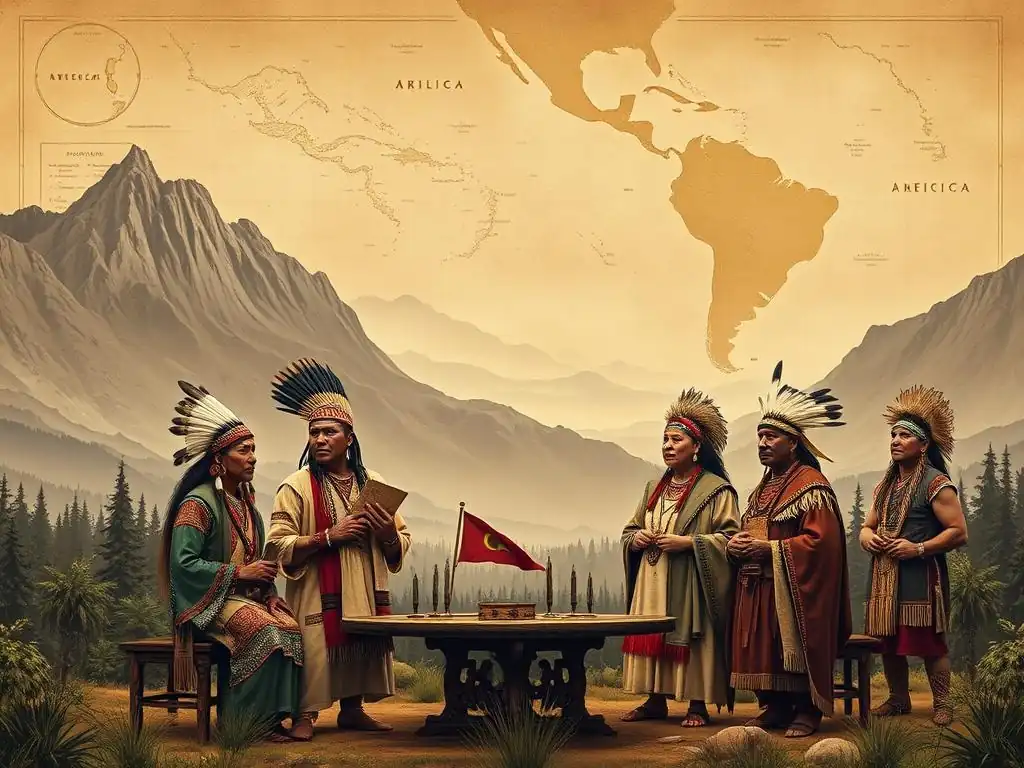
Indigenous governance structures across the Americas were intricately linked to the geographical contexts in which they developed. However, these structures faced significant challenges and underwent profound changes due to various factors, including environmental shifts, social dynamics, and, most notably, European colonization. The influence of geography can be observed in how different cultures adapted their governance systems to suit their physical environments, but these adaptations were often disrupted by external forces.
Many Indigenous societies implemented governance structures that reflected their local ecosystems and resource availability. For example, agrarian societies in fertile river valleys developed complex hierarchies to manage agricultural production, while nomadic tribes in arid regions emphasized communal decision-making. The introduction of European colonial powers, however, challenged these indigenous systems, often rendering them obsolete or forcing them to adapt in ways that compromised their original frameworks.
As a result, many Indigenous communities found themselves navigating a dual governance system: one rooted in traditional customs and another imposed by colonial authorities. This duality created friction within communities, leading to varied responses ranging from resistance to outright assimilation.
The Impact of European Colonization on Governance
European colonization drastically reshaped Indigenous governance structures across the Americas. Colonizers imposed their own systems of authority and governance, often disregarding the established practices of Indigenous peoples. This disruption occurred through various means, including treaties that were frequently broken or manipulated, and the establishment of colonial governments that sought to control land use and resources.
In many cases, European powers categorized Indigenous nations into simplified structures that did not accurately reflect their complex governance systems. For example, the Iroquois Confederacy, which operated on principles of consensus and collective decision-making, was often misrepresented as a single entity rather than a coalition of sovereign nations.
The imposition of European legal and political frameworks led to significant challenges for Indigenous leaders. Many were forced to adapt their governance structures to negotiate with colonial authorities, leading to a hybridization of governance practices. This resulted in a loss of traditional authority and autonomy, as colonial laws often took precedence over Indigenous customs.
Geographic Disruption and Governance Adaptation
Geographic disruption caused by European colonization had a significant impact on Indigenous governance adaptation. The alteration of landscapes due to resource extraction, settlement, and agriculture forced many Indigenous communities to reassess their governance needs and structures.
For instance, the displacement of tribes from their ancestral lands due to European expansion led to the formation of new alliances and governance frameworks. Tribes that had once maintained autonomy found themselves banding together for mutual protection and resource sharing, creating new governance structures that reflected their altered realities.
Furthermore, the introduction of new technologies and trade routes altered economic dependencies, requiring Indigenous leaders to adapt their governance structures to manage these changes effectively. This included establishing new protocols for trade and conflict resolution that were influenced by both Indigenous traditions and European practices.
Conclusion: The Lasting Influence of Geography on Indigenous Governance Structures
The influence of geography on Indigenous governance structures is a multifaceted topic that highlights both the resilience and adaptability of these systems in the face of external challenges. The geographical context of each Indigenous group played a crucial role in shaping its governance practices, from the management of resources to the establishment of societal hierarchies.
While European colonization introduced significant disruptions, it also catalyzed adaptations that reflected a synthesis of Indigenous and colonial governance elements. Understanding these dynamics is essential to appreciating the enduring legacy of Indigenous governance structures in the Americas.
Summary of Key Geographic Influences
The geographical influences on Indigenous governance structures can be summarized as follows:
- Resource Availability: Access to fertile land, water sources, and natural resources dictated the complexity of governance systems.
- Environmental Conditions: Climate and geography shaped the lifestyle and social organization of Indigenous groups, influencing their decision-making processes.
- Trade Routes: The establishment and control of trade routes affected alliances and governance structures, leading to shifts in power dynamics among tribes.
- Colonial Disruption: The imposition of European governance models altered traditional practices, leading to hybrid systems of authority.
The Ongoing Legacy of Indigenous Governance Structures in the Americas
The legacy of Indigenous governance structures continues to resonate today, as many Indigenous communities strive to reclaim their traditional practices and assert their sovereignty. In contemporary contexts, Indigenous leaders often draw on historical governance systems to inform their approaches to self-governance, resource management, and community organization.
Furthermore, the resurgence of interest in Indigenous rights and self-determination has led to a renewed appreciation for these governance structures. Initiatives to incorporate Indigenous knowledge and practices into modern governance frameworks highlight the ongoing relevance of these historical systems, affirming their importance in the broader narrative of governance in the Americas.
As Indigenous communities navigate the complexities of modern governance, the influence of geography remains a foundational element that shapes their identity and resilience.
References and Further Reading
To gain a deeper understanding of the influence of geography on indigenous governance structures across the Americas, consider exploring the following literature and resources. They provide a wealth of information ranging from historical analyses to contemporary studies on the topic.
Suggested Literature on Indigenous Governance
-
"The Governance of Indigenous Peoples in the Americas" by Robert J. Miller
This book examines the evolution of governance structures among various indigenous groups, highlighting how geographical factors shaped their political and societal frameworks.
-
"Indigenous Governance: A Global Perspective" by the United Nations Permanent Forum on Indigenous Issues
This publication explores indigenous governance models worldwide, offering insights into how geography plays a role in shaping these structures.
-
"Land, Culture, and Community: Indigenous Peoples and the Politics of Land in the Americas" by Anne-Marie O’Connor
O’Connor's work delves into the relationship between land, culture, and governance, illustrating how geographical landscapes influenced indigenous governance in different regions.
-
"Indigenous Nations and Modern States: The Political Emergence of Nations" by David E. Wilkins
This book provides a comparative analysis of indigenous governance systems and their adaptation to modern state frameworks, taking geography into account as a critical factor.
-
"The Power of the Sea: Tsunamis, Storm Surges, Rogue Waves, and Our Quest to Predict Disasters" by Bruce Parker
Although primarily focused on maritime geography, Parker's insights into how coastal environments have shaped the governance and survival strategies of coastal indigenous peoples are particularly relevant.
Resources for Understanding Geographic Influences on Governance
-
The National Museum of the American Indian
This museum offers a range of resources, including exhibits and publications that explore the diversity of indigenous governance structures and their geographical contexts.
-
The Indigenous Governance Database
A comprehensive online resource that compiles various indigenous governance models from across the Americas, examining how geographic factors have influenced each system.
-
"Cultural Geography of the Americas" (online course materials)
These educational resources provide insights into the geographic factors that influenced indigenous cultures and governance throughout history.
-
The American Indian Law Review
This journal features articles and case studies focusing on indigenous governance, including discussions on how geography impacts legal frameworks and governance structures.
-
"Indigenous Perspectives on Climate Change" (webinar series)
A series of webinars that discuss the intersection of indigenous governance, environmental stewardship, and geographical influences, particularly in the face of climate change.
By engaging with these texts and resources, readers can broaden their understanding of how geography has shaped indigenous governance structures throughout the Americas, providing a richer context for the achievements and complexities of these civilizations.
- Introduction to Indigenous Governance Structures in the Americas
- Geographic Diversity Across the Americas
- Indigenous Governance Structures: A Regional Analysis
- The Role of Natural Resources in Shaping Governance
- Case Studies: Geographic Influence on Specific Indigenous Governance
- The Impact of Geography on Cultural Practices and Governance
- Challenges and Changes in Indigenous Governance Structures
- Conclusion: The Lasting Influence of Geography on Indigenous Governance Structures
- References and Further Reading
- What are indigenous governance structures in the Americas?
- How did geography influence these governance structures?
- What are some examples of indigenous governance systems?
- What impact did European colonization have on indigenous governance?
- Why is it important to study indigenous governance structures today?
Frequently Asked Questions
What are indigenous governance structures in the Americas?
Indigenous governance structures refer to the systems of leadership and political organization that developed among various indigenous cultures across the Americas, reflecting their unique societal values and traditions.
How did geography influence these governance structures?
Geography shaped indigenous governance by affecting resource availability, settlement patterns, and social organization, leading to diverse systems tailored to specific environmental conditions.
What are some examples of indigenous governance systems?
Examples include the Iroquois Confederacy, which emphasized cooperation among tribes, and the Incan Empire, known for its centralized administration and extensive road network facilitating governance.
What impact did European colonization have on indigenous governance?
European colonization often disrupted traditional governance structures, leading to the imposition of foreign legal systems, loss of authority, and significant changes in social organization among indigenous peoples.
Why is it important to study indigenous governance structures today?
Studying these structures is crucial for understanding the resilience and adaptability of indigenous cultures, as well as recognizing their contributions to contemporary discussions on governance and sustainability.
Final Reflection: The Enduring Legacy of Indigenous Governance Structures in the Americas
The intricate relationship between geography and Indigenous governance structures across the Americas remains profoundly relevant today. As we navigate an increasingly complex world, understanding how diverse landscapes have shaped the political and social frameworks of Indigenous communities is crucial. The resilience and adaptability of these governance systems serve as a testament to the ingenuity of Indigenous peoples, reminding us that their wisdom is not only historical but also a guiding light for contemporary governance challenges.
The influence of geography on Indigenous governance is not merely a relic of the past; it continues to resonate in our cultural and social landscapes. Today, many Indigenous communities are reclaiming their governance systems, drawing from their rich histories to address modern issues such as environmental stewardship and social justice.
As noted by scholar Robin Wall Kimmerer, “In the end, we will conserve only what we love; we will love only what we understand; we will understand only what we are taught.” This quote encapsulates the ongoing journey of learning and appreciation for Indigenous governance, emphasizing the importance of education and understanding in fostering respect for these systems.
As you reflect on the insights shared in this article, consider how the lessons from Indigenous governance structures can inspire your own actions and decisions. Embrace the opportunity to learn from these diverse systems and apply their principles of community, sustainability, and respect in your daily life. Let this knowledge empower you to advocate for Indigenous rights and promote a more inclusive understanding of governance that honors the past while shaping a better future for all.
Explore and Empower Indigenous Governance Today!
Thank you for delving into the fascinating relationship between geography and Indigenous governance structures! You’ve uncovered valuable insights that enhance your understanding of the rich tapestry of Indigenous cultures across the Americas. Now, it's time to put that knowledge into action!
Here’s how you can make a meaningful impact:
- Engage with Your Community: Initiate or participate in discussions within your local community about Indigenous governance and the influence of geography on cultural practices.
- Share Your Knowledge: Raise awareness by sharing this article with friends or on social media to highlight the importance of Indigenous governance systems.
- Learn More: Expand your understanding by exploring books or documentaries that focus on Indigenous histories and governance in your region.
What aspects of Indigenous governance resonate with you the most, and how can you help amplify these voices within your community?