
The Interplay of Art and Mathematics in Mesoamerican Culture

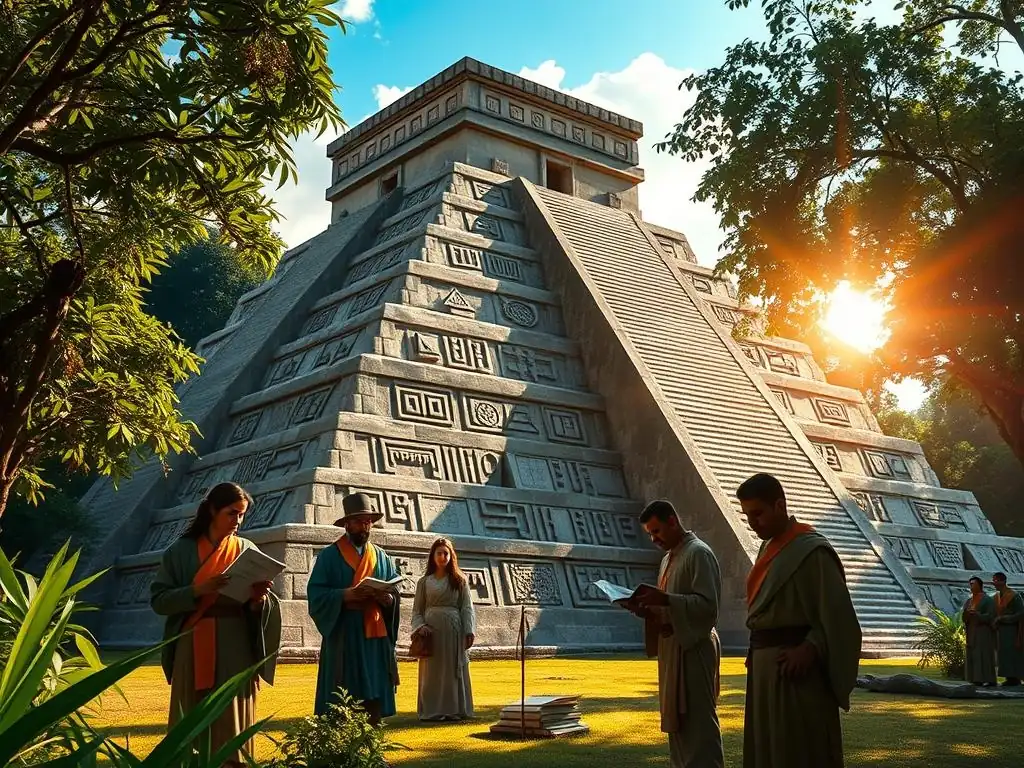
Welcome to Indigenous Civilizations of the Americas, where we invite you to embark on a fascinating journey through the rich tapestry of indigenous cultures that flourished long before European colonization. In our featured article, "The Interplay of Art and Mathematics in Mesoamerican Culture," we delve into the remarkable achievements of Mesoamerican societies, exploring how their artistic expressions and mathematical innovations intertwined to shape their world. Prepare to be captivated by the profound legacy of these civilizations, and let your curiosity lead you deeper into their stories and contributions that continue to resonate today.
In the rich tapestry of Mesoamerican civilizations, the interplay of art and mathematics stands as a testament to the ingenuity and sophistication of these cultures. Mesoamerican art and mathematics were not merely separate disciplines; rather, they were deeply intertwined, reflecting the values, beliefs, and advancements of societies such as the Maya, Aztec, and Olmec.
This article delves into the intricate relationship between these two fields, illustrating how mathematical concepts influenced artistic expression and vice versa. By exploring the historical context, evolution, and significance of Mesoamerican art and mathematics, we aim to shed light on the profound legacy these civilizations left behind, which continues to resonate in contemporary understanding of culture and science.
Introduction to Mesoamerican Art and Mathematics
Overview of Mesoamerican Cultures
Mesoamerican cultures, encompassing a vast region from central Mexico to northern Central America, were home to some of the most advanced civilizations in history. The Maya, Aztec, and Olmec are just a few examples of cultures that flourished in this area, each contributing unique artistic styles and mathematical systems. These societies were characterized by:
- Complex social structures: Hierarchical systems that included nobles, priests, and commoners.
- Rich spiritual beliefs: A deep connection to the cosmos, nature, and a pantheon of deities.
- Innovative agricultural practices: Techniques such as terracing and chinampas that supported large populations.
The art produced by these cultures—ranging from intricate pottery to monumental architecture—was not only a reflection of their aesthetic values but also embedded with mathematical principles that guided their creation.
Importance of Art and Mathematics in Mesoamerican Societies
Art and mathematics played crucial roles in the daily lives and spiritual practices of Mesoamerican peoples. The significance of these disciplines can be summarized as follows:
- Cultural expression: Art served as a medium for storytelling, historical documentation, and religious expression.
- Mathematical precision: Mathematical concepts were essential in the construction of monumental architecture, calendars, and agricultural planning.
- Interconnected knowledge: The blending of artistic creativity with mathematical reasoning fostered advancements in science, astronomy, and engineering.
This synergy between art and mathematics not only showcased the intellectual capabilities of Mesoamerican peoples but also their ability to harmonize beauty with functionality.
Historical Context of Mesoamerican Art and Mathematics
The Evolution of Mesoamerican Art Forms
Mesoamerican art evolved over thousands of years, reflecting the dynamic changes in culture and society. Major periods of artistic development include:
- Preclassic Period (2000 BCE - 250 CE): The emergence of early sites such as La Venta and San Lorenzo, where monumental sculptures and pottery began to take form.
- Classic Period (250 - 900 CE): The zenith of Maya and Teotihuacan art, characterized by intricate stone carvings, murals, and the use of hieroglyphics.
- Postclassic Period (900 - 1521 CE): The rise of the Aztec Empire, which brought new artistic styles, such as the use of vibrant colors and complex iconography.
Throughout these periods, mathematical principles such as symmetry, geometry, and proportion were vital in shaping artistic endeavors, leading to a sophisticated visual language that conveyed complex ideas.
The Development of Mathematical Concepts in Mesoamerica
Mesoamerican civilizations made significant contributions to mathematics, some of which were deeply intertwined with their artistic practices. Key developments included:
- Base-20 numeral system: The Maya developed a vigesimal system that utilized a combination of dots and bars to represent numbers, allowing for advanced calculations and record-keeping.
- Calendar systems: The intricate calendar systems, such as the Tzolk'in and Haab', relied on mathematical cycles that integrated astronomical observations with daily life.
- Architectural geometry: The design of temples and pyramids showcased advanced understanding of geometry, with precise alignments to celestial events.
These mathematical concepts were not merely theoretical; they were applied in art, architecture, and everyday life, illustrating the profound connection between the two fields in Mesoamerican culture.
Key Features of Mesoamerican Art
Mesoamerican art is characterized by its rich symbolism, intricate designs, and deep cultural significance. It reflects the complex social, political, and religious lives of various indigenous groups, such as the Maya, Aztecs, and Olmecs. Key features of Mesoamerican art include:
- Sculpture and Architecture: Grand architectural structures, such as pyramids and temples, were adorned with elaborate stone carvings. These sculptures often depicted deities, historical figures, or mythological scenes, serving both decorative and narrative purposes.
- Ceramics: Pottery was both functional and artistic, featuring vibrant colors and intricate designs. Ceramics often included motifs that reflected daily life, religious beliefs, and social status.
- Textiles: Weaving was a vital craft, resulting in textiles that displayed intricate patterns and vibrant colors. These textiles were not only utilitarian but also carried cultural significance.
- Codices: Mesoamerican civilizations utilized codices, or painted books, to record histories, rituals, and astronomical data. The illustrations within these texts combined artistic expression with mathematical and astronomical information.
Mesoamerican art is a testament to the civilizations' advanced understanding of aesthetics, mathematics, and spirituality, intertwining these elements in a way that continues to captivate researchers and enthusiasts alike.
Symbolism in Mesoamerican Art
Symbolism plays a crucial role in Mesoamerican art, serving as a means of communication and expression of cultural beliefs. Various symbols were employed to convey complex ideas and narratives, often with multiple layers of meaning. Some key aspects of symbolism in Mesoamerican art include:
- Deities and Mythology: Many artworks feature representations of gods and mythological creatures, which were integral to the civilizations' religious practices. For example, the feathered serpent, Quetzalcoatl, symbolizes wisdom and life, appearing in numerous artistic forms.
- Natural Elements: Elements of nature, such as animals, plants, and celestial bodies, were frequently depicted in art. These symbols often represented fertility, agriculture, and the cycles of life, reflecting the civilizations' reliance on and reverence for the natural world.
- Social Hierarchy: Art was used to signify status and power within society. Elite individuals were often portrayed in grand scenes, surrounded by symbols of authority, while commoners were depicted in simpler forms, illustrating the stratified nature of Mesoamerican societies.
- Mathematical Concepts: Many artworks incorporated geometric and mathematical symbols, reflecting the civilizations' understanding of numeric systems and their connection to the cosmos. This integration of art and mathematics highlights the intellectual sophistication of these cultures.
The rich symbolism of Mesoamerican art not only provides insight into the beliefs and values of these civilizations but also reveals their understanding of mathematics as a means of expressing complex ideas.
Geometric Patterns and Their Mathematical Significance
Geometric patterns are a hallmark of Mesoamerican art, showcasing an intricate relationship between artistry and mathematics. These patterns often served both aesthetic and functional purposes in various artworks and architecture. Here are some key points regarding geometric patterns in Mesoamerican culture:
- Repetition and Symmetry: Many Mesoamerican artworks feature repeated geometric shapes, such as triangles, squares, and circles. This repetition creates a sense of order and harmony, reflecting the civilizations' appreciation for balance in their artistic expressions.
- Fractal Designs: Some Mesoamerican art incorporates fractal-like patterns, where smaller shapes repeat to form larger designs. This connection to fractals demonstrates an early understanding of mathematical concepts found in nature.
- Mathematical Relationships: The use of geometric patterns often reflects mathematical relationships, such as ratios and proportions. These relationships can be observed in architectural designs, where the dimensions of structures correspond to specific mathematical principles.
- Cultural Significance: Geometric patterns often held cultural meanings, connecting artworks to religious rituals, societal roles, and cosmic beliefs. For instance, certain patterns may symbolize agricultural cycles or celestial movements, indicating the civilizations' reliance on mathematical understanding for navigating their environment.
Geometric patterns in Mesoamerican art serve as a bridge between artistic expression and mathematical principles, revealing the sophistication of these ancient cultures.
Mathematical Systems in Mesoamerican Cultures
Mesoamerican cultures developed sophisticated mathematical systems that were integral to their societal functioning and cultural practices. These systems facilitated various aspects of life, from agriculture to astronomy, and showcased the civilizations' advanced understanding of mathematics. Key components of Mesoamerican mathematical systems include:
- Numerical Systems: The Mesoamerican civilizations employed unique numerical systems, often based on the number 20 (vigesimal system), which influenced their calculations and cultural practices.
- Calendrical Calculations: Mathematics played a vital role in the development of complex calendar systems, allowing these cultures to track agricultural cycles, religious events, and celestial movements.
- Astronomy and Geometry: Mesoamerican cultures utilized mathematical principles in their astronomical observations, leading to the construction of observatories and the development of accurate astronomical tables.
These mathematical systems were not only practical but also deeply intertwined with the cultural and spiritual beliefs of Mesoamerican civilizations.
The Base-20 Number System in Mesoamerica
The base-20 number system, also known as the vigesimal system, was a significant aspect of Mesoamerican mathematics. This system was utilized by various civilizations, including the Maya and Aztecs, and had several distinctive features:
- Counting and Calculations: In the base-20 system, numbers are represented using combinations of symbols, with the digits ranging from 0 to 19. This system allowed for complex calculations and facilitated trade, record-keeping, and astronomy.
- Symbolic Representation: The Mesoamerican vigesimal system used a combination of dots and bars to represent numbers. For example, a dot represented one unit, while a bar represented five units. This symbolic representation simplified calculations and record-keeping.
- Cultural Significance: The base-20 system was closely tied to Mesoamerican cosmology and rituals. Certain numbers held specific meanings, influencing religious practices and societal structures. For instance, the number 20 was often associated with completion and wholeness, reflecting its significance in their worldview.
The use of the base-20 number system illustrates the mathematical sophistication of Mesoamerican cultures and their ability to integrate mathematics into their daily lives and spiritual practices.
Calendar Systems and Their Mathematical Foundations
Mesoamerican calendar systems were complex and mathematically sophisticated, reflecting the civilizations' advanced understanding of astronomy and timekeeping. These systems served both practical and ceremonial purposes, facilitating agricultural planning and religious observances. Key aspects of Mesoamerican calendar systems include:
- The Tzolk'in and Haab' Calendars: The Maya developed a dual calendar system consisting of the Tzolk'in, a 260-day sacred calendar, and the Haab', a 365-day solar calendar. The interplay of these two calendars allowed for precise tracking of time and astronomical events.
- Mathematical Cycles: Both calendars operated on mathematical principles, with cycles and interlocking systems that reflected the civilizations' understanding of periodicity in nature. The combination of the Tzolk'in and Haab' resulted in a 52-year calendar round, showcasing the intricate relationship between mathematics and time.
- Astronomical Observations: Mesoamerican cultures relied on their calendar systems for agricultural activities, aligning planting and harvesting with celestial events. This reliance on mathematics for timekeeping highlights the civilizations' sophisticated understanding of astronomy.
- Ritual and Ceremony: Calendar systems were deeply embedded in religious rituals, with specific dates designated for ceremonies and festivals. The mathematical calculations involved in determining these dates underscored the importance of mathematics in cultural practices.
Overall, the mathematical foundations of Mesoamerican calendar systems reveal the civilizations' ability to harmonize their understanding of mathematics with their spiritual and agricultural lives.
The Interconnection Between Art and Mathematics
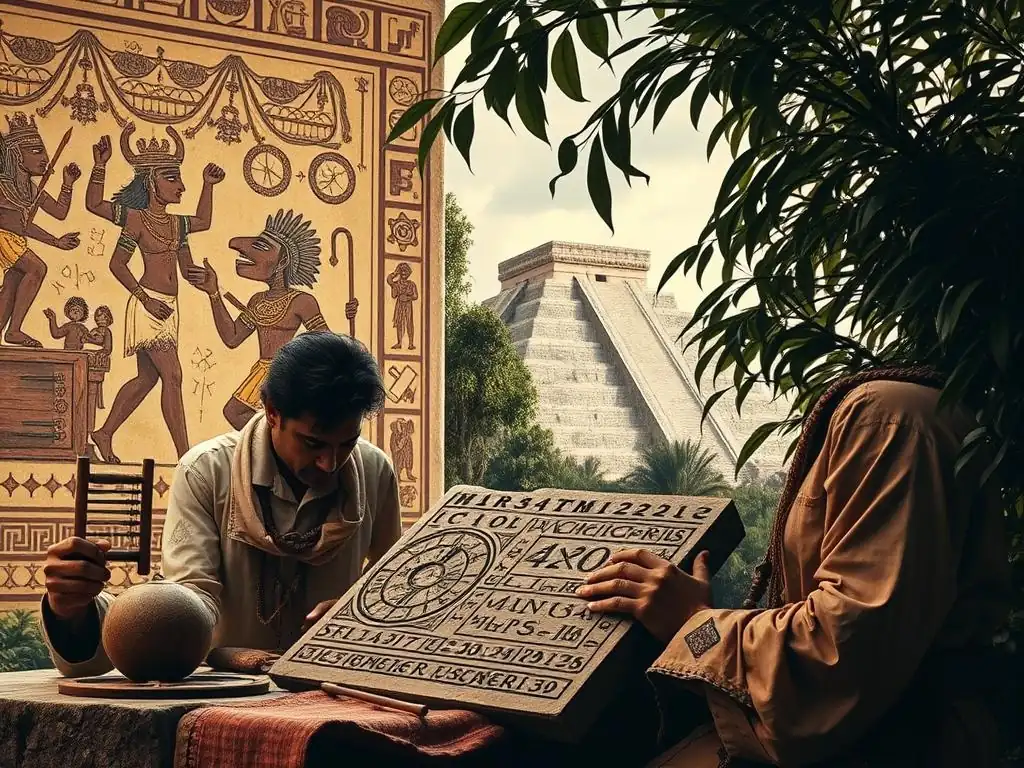
The interplay of art and mathematics in Mesoamerican culture is both intricate and fascinating. Mesoamerican civilizations, such as the Maya, Aztec, and Olmec, seamlessly integrated mathematical concepts into their artistic expressions. This symbiotic relationship is evident in their architectural designs, sculptures, and textiles, where mathematical precision and aesthetic beauty coalesce.
Mathematics served not only as a tool for measuring and constructing but also as a language through which artists communicated complex philosophical and cosmological ideas. For instance, the use of geometry in creating sacred sites and ceremonial spaces reveals a profound understanding of spatial relationships and proportions. The intricate patterns found in Mesoamerican art often embody mathematical sequences, such as the Fibonacci sequence, which suggests that the civilizations had an advanced grasp of mathematical principles that guided their artistic endeavors.
Artistic Techniques Informed by Mathematical Principles
Mesoamerican artists employed various techniques that were deeply rooted in mathematical principles. One prominent technique is the use of symmetry and proportion. Many artworks, including murals and pottery, exhibit bilateral symmetry, which not only enhances their aesthetic appeal but also reflects an underlying mathematical order. This symmetrical balance was crucial in conveying harmony and stability within their visual narratives.
The construction of pyramids and temples further illustrates the application of mathematics in art. The dimensions of these structures often adhered to specific mathematical ratios that aligned with celestial events, emphasizing the civilizations' connection to astronomy. For example, many pyramids were designed with steps that corresponded to astronomical cycles, showcasing a sophisticated understanding of both mathematics and the natural world.
Additionally, the use of tessellation in textiles and pottery demonstrates a keen awareness of geometric patterns. Artists created repeating designs that not only served decorative purposes but also illustrated mathematical concepts such as repetition and transformation. These artistic choices reflect a cultural value placed on order and structure, deeply intertwined with their mathematical knowledge.
Case Studies: Specific Mesoamerican Artworks Reflecting Mathematical Concepts
Examining specific Mesoamerican artworks reveals the profound relationship between mathematics and art. One notable example is the Temple of the Inscriptions in Palenque, Mexico. The temple's architectural design incorporates precise angles and proportions that align with astronomical phenomena, particularly the solstices. This alignment underscores the significance of mathematics in ceremonial architecture and its role in reinforcing cultural beliefs.
Another exemplary case is the Codex Mendoza, an Aztec manuscript that combines pictorial art with numerical representation. This codex features detailed illustrations of tribute lists, demonstrating how the Aztecs used a base-20 counting system. The interplay of visual elements and numerical data exemplifies how mathematics was pivotal in documenting and interpreting socio-economic aspects of Aztec life.
Additionally, the intricate patterns of Maya pottery, often adorned with geometric shapes and symbols, provide insight into their mathematical understanding. These designs not only served aesthetic purposes but also likely conveyed meanings and narratives tied to their cosmology, showcasing a sophisticated blend of art and mathematics.
Impact of Mesoamerican Art and Mathematics on Later Cultures
The legacy of Mesoamerican art and mathematics has had a significant influence on subsequent cultures, particularly in the realms of art and architectural practices. The precision and complexity found in Mesoamerican designs inspired later civilizations, including those in colonial and post-colonial periods. The adoption of Mesoamerican motifs and mathematical principles in contemporary architecture highlights the lasting impact of these ancient cultures.
Influence on Contemporary Art and Mathematics
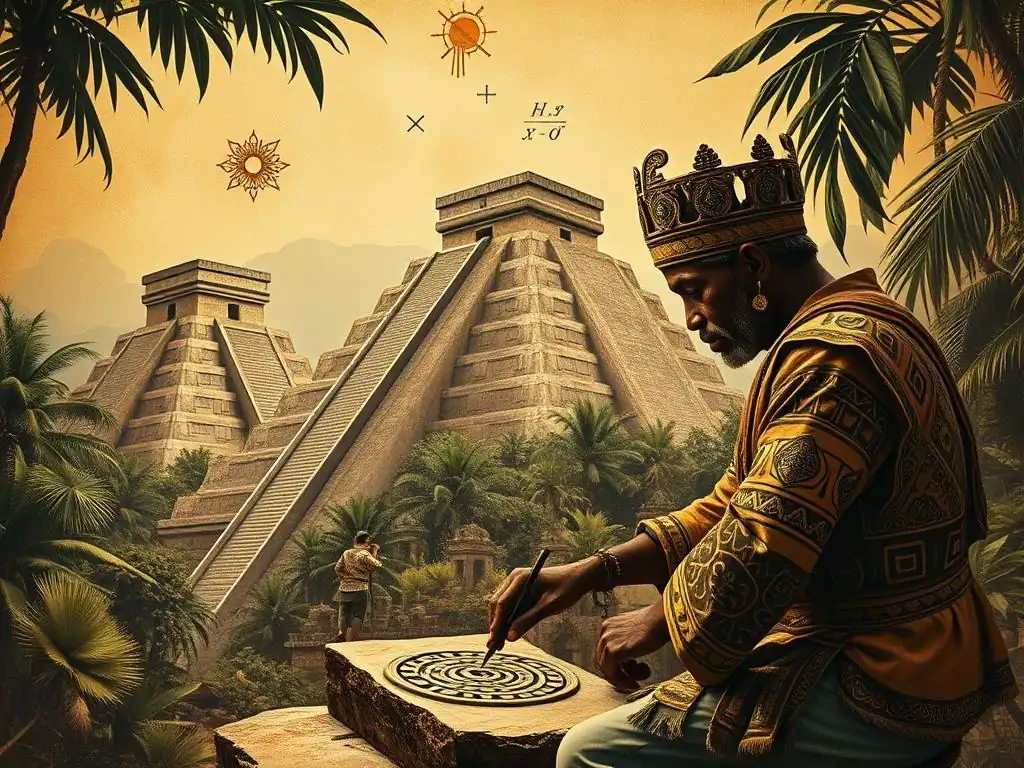
Today, contemporary artists often draw inspiration from Mesoamerican aesthetics, integrating ancient mathematical concepts into modern artistic practices. Artists explore geometric patterns, symmetry, and fractal designs that echo the mathematical sophistication of their ancestors. This revival not only honors Mesoamerican heritage but also encourages a dialogue between past and present, allowing for the exploration of cultural identity through the lens of mathematics.
Additionally, in the field of mathematics education, the study of Mesoamerican mathematical systems has gained traction. Educators are increasingly incorporating traditional mathematical concepts from these civilizations into curricula, fostering a broader understanding of the diverse mathematical heritages that exist globally.
Preservation of Mesoamerican Mathematical Knowledge in Modern Times
Efforts to preserve Mesoamerican mathematical knowledge are vital for maintaining cultural heritage. Various organizations and academic institutions are dedicated to researching and documenting ancient mathematical systems, ensuring that this knowledge is not lost over time. Collaborative projects between indigenous communities and scholars help revive traditional practices and promote the value of indigenous knowledge in contemporary settings.
Moreover, the integration of Mesoamerican mathematical concepts into modern technology, such as computer graphics and architectural design, exemplifies the ongoing relevance of these ancient systems. By recognizing and valuing the mathematical achievements of Mesoamerican cultures, we foster a deeper appreciation for their contributions to both art and science, ensuring that their legacy continues to inspire future generations.
Conclusion: The Legacy of Mesoamerican Art and Mathematics
The intricate relationship between art and mathematics in Mesoamerican cultures illustrates a profound understanding of both disciplines. The civilizations of this region, particularly the Maya and the Aztecs, demonstrated remarkable sophistication in their artistic expressions and mathematical systems. Through the use of geometric patterns, symbolic representations, and astronomical alignments, Mesoamerican art served not only as a medium for aesthetic enjoyment but also as a vehicle for mathematical principles and cosmological beliefs. The legacy of this interplay is evident in the way these cultures viewed their world, integrating scientific inquiry with cultural expression.
Summary of Key Points
- Geometric Patterns: Mesoamerican art is characterized by intricate geometric designs that reveal a deep understanding of mathematical concepts such as symmetry and proportion. These patterns are not merely decorative; they often carry symbolic meanings connected to cosmology and nature.
- Mathematical Systems: The use of a vigesimal (base-20) number system and concepts of zero showcases the advanced mathematical knowledge of Mesoamerican civilizations. This mathematical sophistication is reflected in their architecture, calendar systems, and even in their artistic compositions.
- Integration of Art and Science: The fusion of artistic creativity with mathematical precision exemplifies how Mesoamerican cultures approached knowledge. Their artwork often included calendrical and astronomical motifs that were essential for agricultural and ceremonial practices.
- Cultural Significance: The interplay of art and mathematics was not only a reflection of technical skill but also an embodiment of cultural identity and spiritual beliefs, reinforcing the interconnectedness of community, environment, and celestial bodies.
The Lasting Impact on Indigenous Civilizations of the Americas
The legacy of Mesoamerican art and mathematics extends beyond the historical context of these ancient civilizations. Their innovations influenced subsequent indigenous cultures throughout the Americas, providing a framework for artistic and scientific endeavors. The mathematical concepts and artistic techniques developed by the Maya and Aztecs have resonated through generations, shaping the cultural expressions of later indigenous groups. Additionally, contemporary indigenous artists and mathematicians continue to draw inspiration from these ancient practices, blending traditional knowledge with modern techniques. This ongoing relationship highlights the enduring significance of Mesoamerican contributions to the broader narrative of indigenous civilizations in the Americas.
References for Further Reading on Mesoamerican Art and Mathematics
Recommended Books and Articles
- "Maya Art and Architecture" by Mary Ellen Miller: This book provides an in-depth exploration of the artistic achievements of the Maya civilization, emphasizing the mathematical underpinnings of their artwork.
- "Mathematics in the Americas: A Historical Overview" by Rafael A. Irizarry: This article examines the mathematical traditions of various indigenous cultures, including Mesoamerican societies, and their contributions to mathematics.
- "The Art of Mathematics: A New Perspective" by Anne S. Hargrove: This work delves into the intersection of art and mathematics across different cultures, with specific focus on Mesoamerican examples.
- "The Cosmic Architecture of the Maya" by David Stuart: This resource explores the astronomical significance of Maya architecture and how it reflects their mathematical knowledge.
Online Resources and Museums
- The Getty Research Institute: Offers a collection of digital resources, articles, and exhibitions related to Mesoamerican art and culture, providing insights into their artistic methodologies and mathematical concepts.
- The National Museum of Anthropology (Mexico City): Features extensive collections of Mesoamerican artifacts, including art and mathematical tools, with online exhibits that highlight their significance.
- Maya Exploration Center: A website dedicated to the study and promotion of Maya culture, offering educational resources, articles, and virtual tours of significant archaeological sites.
- The Mesoamerican Studies Program at the University of California, Berkeley: Provides a wealth of academic resources and links to research projects focused on the art and mathematics of Mesoamerican civilizations.
- Introduction to Mesoamerican Art and Mathematics
- Historical Context of Mesoamerican Art and Mathematics
- Key Features of Mesoamerican Art
- Mathematical Systems in Mesoamerican Cultures
- The Interconnection Between Art and Mathematics
- Artistic Techniques Informed by Mathematical Principles
- Case Studies: Specific Mesoamerican Artworks Reflecting Mathematical Concepts
- Impact of Mesoamerican Art and Mathematics on Later Cultures
- Influence on Contemporary Art and Mathematics
- Preservation of Mesoamerican Mathematical Knowledge in Modern Times
- Conclusion: The Legacy of Mesoamerican Art and Mathematics
- References for Further Reading on Mesoamerican Art and Mathematics
- What is the significance of Mesoamerican art and mathematics in indigenous cultures?
- How did Mesoamerican civilizations use mathematics in their art?
- What are some examples of Mesoamerican art influenced by mathematics?
- How did the interplay of art and mathematics impact Mesoamerican societies?
- In what ways did Mesoamerican mathematics differ from European mathematics?
Frequently Asked Questions
What is the significance of Mesoamerican art and mathematics in indigenous cultures?
Mesoamerican art and mathematics were integral to the cultural expression and scientific understanding of societies, reflecting their religious beliefs and social structures.
How did Mesoamerican civilizations use mathematics in their art?
Mesoamerican civilizations utilized mathematical concepts to create complex designs and architectural structures, demonstrating a deep understanding of geometry and proportions in their artistic expressions.
What are some examples of Mesoamerican art influenced by mathematics?
Examples include the pyramids of Teotihuacan and the intricate geometric patterns found in Maya pottery, showcasing the sophisticated integration of mathematical principles in artistic creations.
How did the interplay of art and mathematics impact Mesoamerican societies?
The interplay fostered a unique cultural identity, allowing civilizations to develop advanced knowledge systems that influenced trade, architecture, and ritual practices, enhancing their social cohesion.
In what ways did Mesoamerican mathematics differ from European mathematics?
Mesoamerican mathematics was often based on a vigesimal (base-20) system, contrasting with the decimal (base-10) system predominant in Europe, highlighting distinct cognitive approaches to numerical concepts and applications.
Final Reflection: The Harmonious Fusion of Mesoamerican Art and Mathematics
The intricate relationship between art and mathematics in Mesoamerican culture remains profoundly relevant today, as it reveals the depth of human creativity and intellect. This interplay not only showcases the sophistication of ancient civilizations but also challenges our contemporary understanding of how these two disciplines can coexist and enrich one another. The legacy of Mesoamerican art and mathematics serves as a reminder that creativity is not confined to aesthetics; it is also a powerful tool for problem-solving and innovation.
Mesoamerican art and mathematics have left an indelible mark on the cultural and social landscape, influencing modern artistic expressions and mathematical thought. The geometric precision found in Mesoamerican architecture and the symbolic richness of their art continue to inspire artists, architects, and mathematicians alike. As the renowned mathematician Roger Penrose once said, Mathematics is not about numbers, equations, computations, or algorithms: it is about understanding.
This understanding, deeply rooted in Mesoamerican traditions, invites us to explore the world through a lens that merges beauty and logic.
As you reflect on the lessons drawn from the interplay of art and mathematics in Mesoamerican culture, consider how these insights can be applied in your own life. Embrace the idea that creativity and analytical thinking are not mutually exclusive; rather, they can coexist to foster innovation and deeper understanding. Let the legacy of Mesoamerican art and mathematics inspire you to seek connections in your own pursuits, encouraging you to explore the beauty that arises when disciplines intertwine.
Unveil the Beauty of Art and Mathematics in Mesoamerican Culture!
Thank you for immersing yourself in the fascinating world of Mesoamerican art and mathematics! You’ve discovered how these powerful elements intertwined to shape rich cultural legacies. Now, it's time to take this knowledge further and explore its depths more profoundly.
Here’s how you can continue your journey:
- Dive deeper into an artistic or mathematical concept that intrigued you in this article—research it, create sketches, or even embark on a personal project that reflects your understanding!
- Join a community or forum focused on Mesoamerican studies—share your insights and learn from the diverse perspectives of others.
- Host a discussion or workshop about the interplay of art and mathematics within your local community or online to inspire and engage others.
How do you envision using the connections between art and mathematics to enhance your own creativity or deepen your understanding of various cultures?