
The Social Hierarchy of Mathematics: Who Were the Mesoamerican Mathematicians?

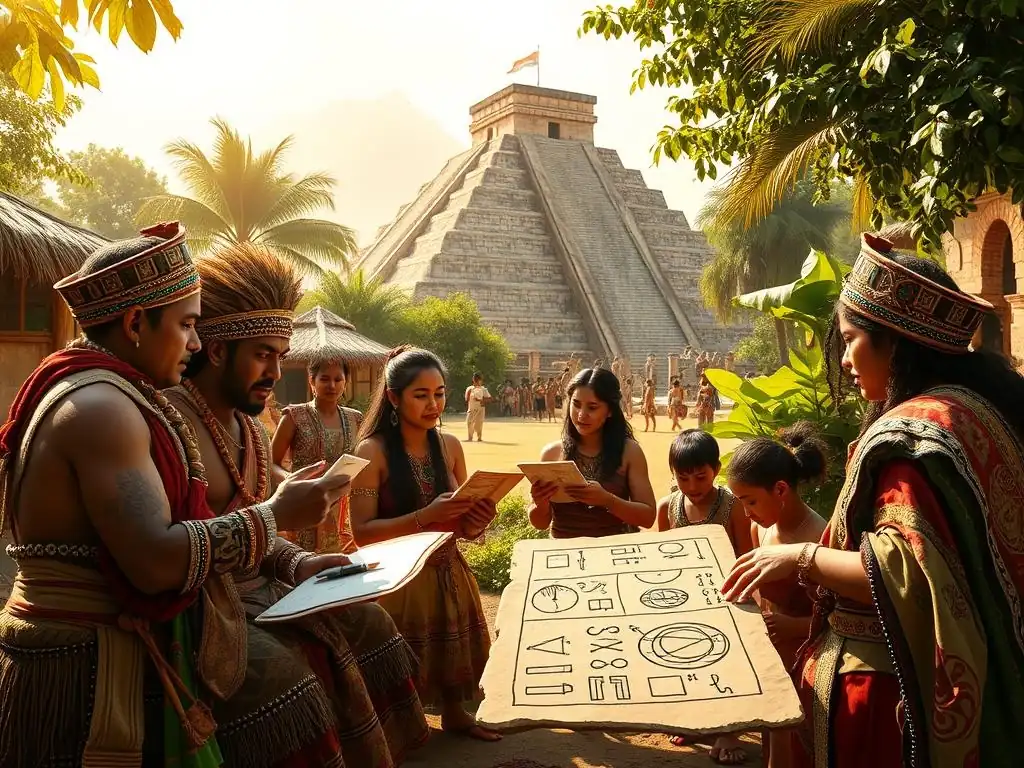
Welcome to Indigenous Civilizations of the Americas, where we embark on a captivating journey through the rich tapestry of indigenous cultures that flourished long before European contact. Discover the intricate social hierarchy of mathematics and delve into the remarkable world of Mesoamerican mathematicians and society. What drove their innovative spirit, and how did their achievements shape the civilizations around them? Prepare to uncover fascinating insights that challenge conventional narratives and celebrate the legacy of these brilliant minds. Join us as we explore the advancements and achievements that continue to resonate in our understanding of history today!
Mathematics played a crucial role in the development and organization of Mesoamerican societies, serving as a key component in their cultural, economic, and religious practices. This article delves into the fascinating world of Mesoamerican mathematicians, exploring their societal status, the systems they developed, and the profound impact their mathematical knowledge had on their civilizations.
From the intricate calendars of the Maya to the sophisticated number systems of the Aztecs, Mesoamerican mathematicians were not only scholars but also influential figures within their communities. By examining the social hierarchy surrounding mathematics, we gain insight into how these mathematicians contributed to the broader tapestry of Mesoamerican culture, illustrating the enduring legacy of their achievements.
Introduction to Mesoamerican Mathematicians and Society
Mesoamerican civilizations, which include the Olmec, Maya, and Aztec, developed complex mathematical systems that were integral to their societal structures. These mathematicians were often revered figures, occupying a unique position within their communities. Their knowledge was not merely theoretical; it was deeply intertwined with the practical aspects of daily life. Mesoamerican mathematicians employed their skills in various fields, including astronomy, agriculture, and trade, reflecting the multifaceted role of mathematics in these ancient cultures.
Overview of Mesoamerican Mathematical Systems
Mesoamerican mathematical systems were characterized by a vigorous understanding of numeration and geometry. The Maya, for example, utilized a base-20 (vigesimal) system that allowed for complex calculations and the creation of intricate calendars. Their ability to track celestial movements and agricultural cycles was largely due to their mathematical prowess. The Aztecs, on the other hand, employed a base-20 system as well, but with unique adaptations that reflected their specific societal needs and practices.
| Civilization | Numerical System | Key Features |
|---|---|---|
| Maya | Base-20 | Complex calendars, astronomy |
| Aztec | Base-20 | Trade calculations, agricultural planning |
| Olmec | Base-20 | Early developments in mathematics and commerce |
Importance of Mathematics in Mesoamerican Cultures
Mathematics was not only a tool for practical applications but also a language through which Mesoamerican cultures expressed their cosmological views and societal organization. It influenced their art, architecture, and even their political systems. The ability to measure land, plan cities, and predict seasonal changes was vital for the prosperity of these civilizations. Moreover, mathematics was often viewed as a divine gift, linking it closely to their religious beliefs and practices.
The Role of Mathematics in Mesoamerican Society
Mathematics permeated various aspects of Mesoamerican society, shaping the way communities functioned and thrived. The achievements of mathematicians were celebrated, and their contributions recognized as foundational to the very fabric of Mesoamerican life.
Everyday Applications of Mathematics in Mesoamerican Life
In daily life, Mesoamerican societies relied heavily on mathematics for agricultural practices, construction, and trade. Farmers used mathematical principles to determine planting cycles and harvest times, ensuring a sustainable food supply. Builders employed geometry to design structures that not only served practical purposes but also held significant cultural value. Trade relied on accurate measurements and calculations, highlighting the integral role of mathematics in economic exchanges.
Mathematics in Religion and Rituals
Mathematics also had profound implications in the realm of religion and rituals. Mesoamerican cultures often integrated mathematical concepts into their religious ceremonies, utilizing calendars to determine auspicious dates for rituals. The precision of their mathematical systems allowed for a deep understanding of celestial events, which were often interpreted as divine messages. This connection between mathematics and spirituality underscores the holistic nature of Mesoamerican societies.
Influence of Mathematics on Trade and Economics
The economic systems of Mesoamerican civilizations were heavily influenced by their mathematical knowledge. Accurate calculations were essential for trade, allowing merchants to quantify goods and establish fair exchanges. The development of a sophisticated marketplace network was facilitated by the mathematicians who designed systems for weighing and measuring. This mathematical foundation not only promoted economic growth but also fostered social interactions and cultural exchanges among diverse communities.
The study of Mesoamerican mathematicians and their societal roles reveals a rich tapestry of knowledge that transcended mere numbers. Their contributions significantly shaped the cultural, religious, and economic landscapes of their civilizations, leaving a lasting impact on the world.
Notable Mesoamerican Mathematicians
Mesoamerican civilizations, such as the Maya, Aztec, and Olmec, produced some of the most sophisticated mathematical systems in the ancient world. These cultures not only utilized mathematics for practical purposes like trade and agriculture but also integrated it into their cosmology and religious practices. Notable mathematicians from these civilizations played crucial roles in the development of their mathematical systems, many of whom are still celebrated today for their contributions.
One of the most renowned figures is Eudoxus, often credited with early contributions to mathematical thought, although his work is more commonly associated with Greek mathematics. In the Mesoamerican context, Mayan mathematicians are particularly noteworthy. They developed a base-20 numeral system, complete with symbols for zero, which was revolutionary for its time. The Maya used this system not only for daily activities but also for complex astronomical calculations, allowing them to create detailed calendars that are still studied by scholars today.
Another key figure is Cuitláhuac, an Aztec mathematician who is believed to have contributed to the understanding of geometric shapes and their applications in architecture and agriculture. His work in calculating land areas and resource management reflected the practical applications of mathematics in sustaining large urban populations.
The social structure of Mesoamerican societies deeply influenced the role and recognition of mathematicians. Mathematics was not merely an academic pursuit; it was embedded within a broader social hierarchy that determined who had access to mathematical knowledge and the status associated with it.
In these societies, mathematicians often held esteemed positions, particularly within the elite class. They served as advisors to rulers, helping in the administration of resources and the planning of agricultural cycles. This connection to power meant that mathematical knowledge was closely guarded and often passed down within specific social classes, reinforcing the existing hierarchies in Mesoamerican societies.
Class Structure and Access to Mathematical Knowledge
Access to mathematical education and knowledge was largely determined by an individual's social class. The elite, including nobility and priesthood, were typically the only ones who could afford extensive education in mathematics. They learned these skills to fulfill their roles in governance, astronomy, and ritual practices.
Commoners, on the other hand, had limited access to formal mathematical education. While practical mathematics was necessary for daily life—such as trade calculations and agricultural measurements—higher mathematical concepts were often reserved for the privileged classes. This created a divide where the elite possessed advanced knowledge, which was crucial for their power and influence over lower classes.
Gender Roles in Mesoamerican Mathematics
In Mesoamerican societies, gender roles also played a significant part in the landscape of mathematics. While men predominantly occupied formal roles in mathematics and astronomy, women contributed in more subtle, yet equally important ways.
Women in Mesoamerican cultures often engaged in household mathematics, which included managing resources, trade, and agricultural planning. Despite their lack of formal recognition, some women were able to rise to prominence, particularly in royal families where they could access elite education. However, these cases were exceptions rather than the norm.
The lack of widespread acknowledgment of female mathematicians illustrates a broader trend in which their contributions were often overlooked. Nonetheless, recent research has begun to uncover the roles women played, highlighting the need for a more inclusive understanding of Mesoamerican mathematics that recognizes both male and female contributions to the field.
Comparison of Mesoamerican Mathematics with Other Ancient Civilizations
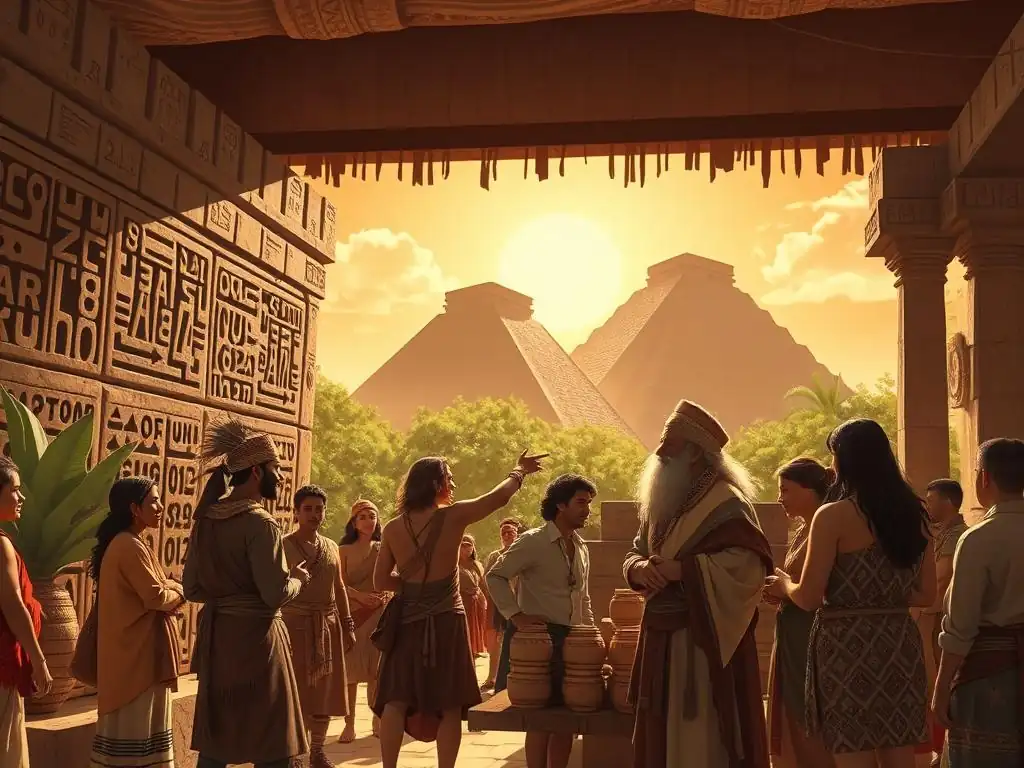
Mesoamerican mathematics presents a fascinating study when compared to the mathematical systems of other ancient civilizations. By examining the similarities and differences with cultures such as Ancient Egypt and Greece, as well as identifying unique aspects of Mesoamerican mathematical systems, we can appreciate the rich tapestry of mathematical thought that emerged in the pre-Columbian Americas.
Similarities with Ancient Egyptian Mathematics
Both Mesoamerican and Ancient Egyptian mathematics showcased advanced numerical systems and practical applications.
- Base Systems: The Egyptians used a base-10 system, similar to the Mesoamerican base-20 (vigesimal) system, which indicates a sophisticated understanding of numerical bases.
- Geometry and Astronomy: Both cultures employed mathematics extensively in their architectural designs and astronomical observations. For example, the Egyptians utilized geometry for constructing pyramids, while the Maya applied it to their calendar systems and astronomical alignments.
- Record Keeping: Ancient Egyptians and Mesoamericans both developed systems for record-keeping that utilized symbols and glyphs. The Egyptians relied on hieroglyphs, whereas the Maya created intricate codices filled with mathematical notations and calendar dates.
These similarities highlight a shared human endeavor to understand and manipulate the world through mathematics, despite the geographic and cultural distances between these civilizations.
Differences from Greek Mathematics
While Mesoamerican mathematics shared some functional aspects with Greek mathematics, significant philosophical and methodological differences exist.
- Philosophical Approach: Greek mathematics was heavily influenced by abstract reasoning and theoretical proofs, as seen in the works of Euclid and Pythagoras. In contrast, Mesoamerican mathematics was more pragmatic, focusing on practical applications such as agriculture, commerce, and astronomy without a strong emphasis on theoretical foundations.
- Numerical Representation: The Greeks utilized an alphabetic numeral system alongside their geometric representations, while Mesoamericans, particularly the Maya, developed a unique vigesimal system that included the concept of zero, which was not fully realized in Greek mathematics until much later.
- Cultural Integration: Mesoamerican mathematics was deeply intertwined with religious and cosmological beliefs, influencing how mathematical concepts were taught and understood, compared to the more secular, philosophical approach of Greek mathematicians.
These differences illustrate how cultural context shapes mathematical thought and practice.
Unique Aspects of Mesoamerican Mathematical Systems
Mesoamerican mathematics possesses distinctive features that set it apart from other ancient systems.
- The Concept of Zero: The Maya were among the first civilizations to use a symbol for zero, a groundbreaking idea that facilitated complex calculations and advanced numerical understanding.
- Long Count Calendar: The intricate Long Count calendar system, used by the Maya, utilized mathematical calculations to track historical dates over thousands of years, showcasing their advanced understanding of timekeeping.
- Symbolic Representation: Mesoamerican mathematicians employed a combination of dots and bars to represent numbers, which not only served practical functions but also had ceremonial significance, reflecting the integration of mathematics with cultural identity.
These unique attributes highlight the ingenuity of Mesoamerican mathematicians and their contributions to the field.
Legacy of Mesoamerican Mathematicians in Modern Society
The legacy of Mesoamerican mathematicians continues to influence various aspects of modern society, from mathematical concepts to cultural preservation.
Influence on Contemporary Mathematics
The impact of Mesoamerican mathematical systems is evident in several contemporary fields.
- Understanding of Zero: The introduction of zero as a numerical concept by Mesoamerican cultures laid the groundwork for modern mathematics, impacting calculations and computational methods globally.
- Calendrical Systems: Modern approaches to astronomy and calendar systems are influenced by Mesoamerican practices, especially in understanding cycles of time and celestial events.
- Cultural Mathematics: The recognition of different mathematical systems, such as those developed by Indigenous cultures, enriches the global mathematical narrative and encourages inclusivity in mathematical education.
These influences underscore the importance of recognizing diverse mathematical traditions in shaping contemporary thought.
Preservation of Mesoamerican Mathematical Knowledge
Efforts to preserve Mesoamerican mathematical knowledge are crucial for understanding and appreciating this rich heritage.
- Research and Documentation: Scholars and researchers continue to study historical texts, codices, and artifacts to uncover and document ancient mathematical practices. This research is essential for ensuring that this knowledge is not lost to time.
- Educational Initiatives: Programs aimed at integrating Mesoamerican mathematical concepts into educational curricula help foster awareness and appreciation of Indigenous contributions to mathematics. This promotes cultural pride and understanding among new generations.
- Cultural Heritage Organizations: Various organizations work to protect and promote Indigenous knowledge systems, ensuring that the achievements of Mesoamerican mathematicians are recognized and celebrated within the broader narrative of human history.
Through these preservation efforts, the legacy of Mesoamerican mathematicians remains a vital part of our collective understanding of mathematics and culture.
Conclusion: The Lasting Impact of Mesoamerican Mathematicians and Society
The legacy of Mesoamerican mathematicians extends far beyond their advanced numerical systems and astronomical observations. Their contributions significantly influenced various aspects of society, including religion, agriculture, and the organization of social structures. By integrating mathematics into daily life, these civilizations showcased a sophisticated understanding of the natural world and its cycles, enhancing their ability to thrive in diverse environments. The impact of their mathematical systems remains evident in contemporary studies of indigenous cultures and advances in mathematics as a whole.
Summary of Key Contributions and Societal Roles
Mesoamerican mathematicians played crucial roles in their societies, serving not only as scholars but also as priests, architects, and leaders. Their key contributions include:
- Development of the Base-20 System: The vigesimal (base-20) numeral system allowed for complex calculations and was integral to their calendar systems, which were fundamental for agricultural and ceremonial purposes.
- Astronomical Calendars: Mesoamerican cultures, particularly the Maya, created precise calendars based on astronomical observations, which guided agricultural planting and harvesting, ceremonial events, and trade.
- Construction of Architectural Marvels: Knowledge of geometry and measurement enabled the construction of impressive structures, such as the pyramids of Teotihuacan and the temples of Tikal, reflecting the society’s mathematical prowess.
- Integration with Religion: Mathematics was interwoven with religious practices, as celestial events were often viewed as divine signs. This connection elevated the status of mathematicians within the priestly hierarchy, reinforcing their societal importance.
The societal roles of these mathematicians were multifaceted, often influencing political decisions and community organization, thus demonstrating their integral position within Mesoamerican civilizations.
Reflection on the Importance of Recognizing Mesoamerican Achievements
Acknowledging the achievements of Mesoamerican mathematicians is vital for a comprehensive understanding of global mathematics and its history. Recognizing their contributions helps to challenge the Eurocentric narrative that has often overshadowed indigenous accomplishments. It underscores the importance of diverse mathematical systems and the rich intellectual heritage that exists outside Western frameworks.
Furthermore, understanding the societal roles of these mathematicians fosters a greater appreciation for the complexity of Mesoamerican cultures. Their achievements in mathematics were not isolated but part of a broader tapestry of knowledge that included astronomy, agriculture, and architecture. By celebrating these contributions, we not only honor the legacy of Mesoamerican civilizations but also inspire future generations to explore and appreciate the depth of indigenous knowledge and its impact on contemporary society.
- Introduction to Mesoamerican Mathematicians and Society
- The Role of Mathematics in Mesoamerican Society
- Notable Mesoamerican Mathematicians
- The Social Hierarchy Among Mesoamerican Mathematicians
- Comparison of Mesoamerican Mathematics with Other Ancient Civilizations
- Legacy of Mesoamerican Mathematicians in Modern Society
- Conclusion: The Lasting Impact of Mesoamerican Mathematicians and Society
Frequently Asked Questions
What were the primary contributions of Mesoamerican mathematicians?
Mesoamerican mathematicians made significant advancements in areas such as calendrical systems, geometry, and numerical notation, which influenced both their society and later civilizations.
How did Mesoamerican society influence mathematics?
Mesoamerican society placed a high value on mathematics for practical applications in agriculture, astronomy, and architecture, integrating it deeply into their cultural practices and social structures.
Who were some notable Mesoamerican mathematicians?
Notable Mesoamerican mathematicians include figures from civilizations like the Maya and Aztecs, who developed sophisticated mathematical concepts and were pivotal in creating detailed calendars.
In Mesoamerican societies, mathematics was often reserved for the elite classes, such as priests and nobility, who used it for ritualistic and administrative purposes, reflecting the social hierarchy of the time.
How did Mesoamerican mathematics impact future cultures?
The mathematical innovations of Mesoamerican civilizations laid the groundwork for future societies, influencing European mathematicians and contributing to the global understanding of mathematics and its applications.
Final Reflection: The Enduring Legacy of Mesoamerican Mathematicians
The intricate social hierarchy of Mesoamerican mathematicians reveals not only their remarkable contributions to mathematics but also underscores the profound impact of their work on contemporary society. Today, as we navigate an increasingly complex world, the mathematical principles developed by these scholars continue to resonate, reminding us that knowledge transcends time and culture. The legacy of Mesoamerican mathematicians serves as a testament to the power of intellectual pursuit in shaping civilizations.
Mesoamerican mathematicians were not merely numbers on a page; they were the architects of a society that valued knowledge, innovation, and collaboration. Their work laid the groundwork for advancements that would influence generations to come. As we reflect on their contributions, we recognize the importance of fostering an environment that celebrates intellectual diversity and encourages the sharing of ideas. Mathematics knows no races or geographic boundaries; for mathematics, the cultural world is one country.
– David Hilbert. This quote encapsulates the essence of how mathematics can unite us, regardless of our backgrounds.
As we conclude this exploration of Mesoamerican mathematicians and their societal roles, I invite you to reflect on your own relationship with mathematics and knowledge. Consider how you can contribute to a culture that values learning and collaboration, just as these ancient scholars did. Whether through education, mentorship, or simply sharing your passion for mathematics, each of us has the power to honor their legacy and inspire future generations. Let us strive to create a world where the pursuit of knowledge knows no bounds, and where every voice is heard in the symphony of discovery.
Unveil the Legacy of Mesoamerican Mathematicians!
Thank you for exploring the rich history of Mesoamerican mathematicians with us! Your curiosity not only enriches your knowledge but also revives the fascinating contributions these civilizations made to mathematics and culture. Now, it’s time to take your passion a step further!
Here are some engaging actions you can take to deepen your understanding and appreciation:
- Explore Mesoamerican Mathematics: Delve into additional resources by researching the numerals and calculations used by mathematicians such as the Maya and Aztecs. Online museums and academic articles serve as excellent starting points!
- Share Your Insights: Discuss your newfound knowledge with friends or in community forums. Writing a blog post or sharing details on social media can inspire others to learn about these remarkable mathematicians.
- Join a Discussion Group: Connect with other enthusiasts or scholars interested in Mesoamerican history. Participating in or forming a study group can offer new perspectives and enhance your understanding.
As you reflect on the incredible mathematicians of the Mesoamerican era, consider this: How do you think modern mathematical practices or concepts have been influenced by these ancient techniques, and in what ways can we apply them today?