
Unraveling the Mathematics Behind Indigenous Land Management Practices

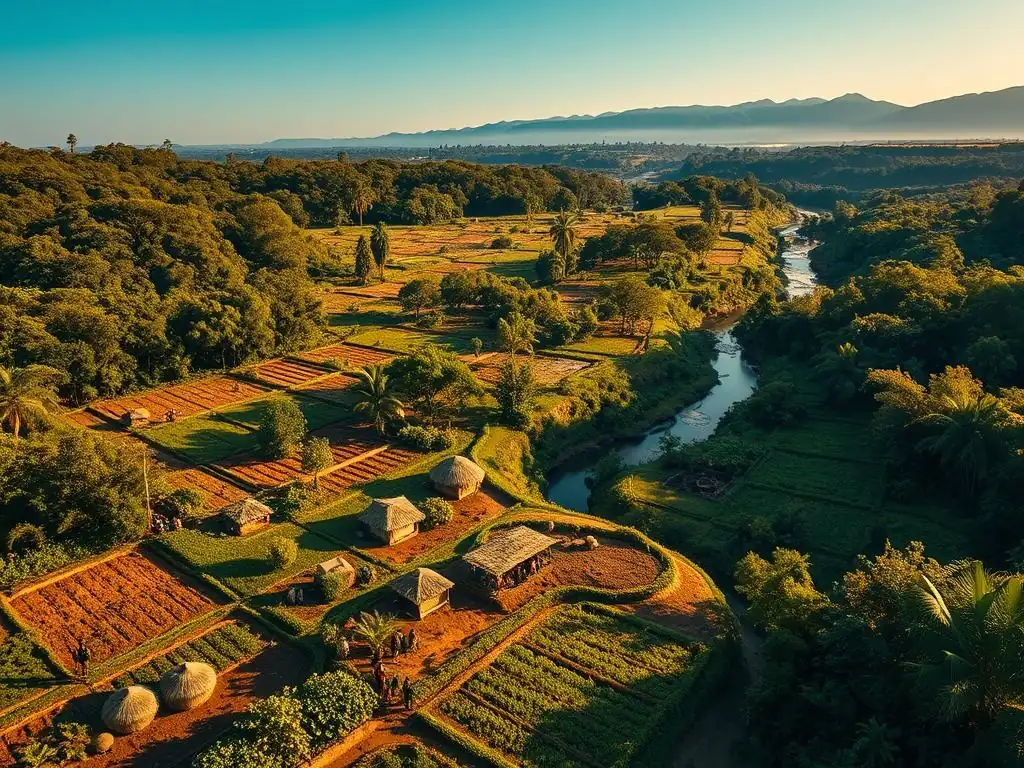
Welcome to Indigenous Civilizations of the Americas! Here, we embark on a fascinating journey through the rich tapestry of indigenous cultures that flourished across the continent long before European colonization. Our exploration begins with a deep dive into Indigenous land management practices, revealing the sophisticated mathematical principles that underpin these age-old techniques. Discover how these practices not only shaped sustainable ecosystems but also stand as a testament to the ingenuity and resilience of indigenous societies. Ready to unravel the wisdom of the past? Join us as we uncover the remarkable achievements and enduring legacy of these vibrant cultures!
Introduction to Indigenous Land Management Practices
Indigenous land management practices have long been recognized as sophisticated systems that reflect deep ecological knowledge and cultural traditions. These practices, developed over millennia, demonstrate a profound understanding of local environments and sustainable resource use. This article aims to explore the intricate mathematics underlying these indigenous techniques, revealing how numerical reasoning and spatial awareness have played crucial roles in governance and environmental stewardship. By examining various indigenous societies before European colonization, we can uncover the remarkable achievements in land management that continue to influence contemporary practices and contribute to global sustainability efforts.
Overview of Indigenous Land Management
Indigenous land management encompasses a wide range of practices used by indigenous peoples to cultivate, harvest, and sustainably manage natural resources. These practices are often rooted in:
- Cultural Beliefs: Many indigenous cultures view land as a living entity, intertwined with their identity, spirituality, and community well-being.
- Traditional Ecological Knowledge (TEK): TEK involves understanding natural processes, species interactions, and seasonal patterns, allowing for effective management of ecosystems.
The integration of these elements has led to the development of various systems, such as controlled burns, crop rotation, and agroforestry, all aimed at maintaining ecological balance and ensuring resource availability for future generations.
Importance of Mathematics in Indigenous Governance
Mathematics has historically played a pivotal role in indigenous governance, particularly in land management. Key mathematical concepts, such as:
- Geometry: Used for mapping territories and understanding spatial relationships within ecosystems.
- Statistics: Employed for tracking population dynamics and resource availability.
- Calculus: Applied in modeling environmental changes and predicting outcomes of land-use decisions.
These mathematical applications not only facilitated effective resource allocation but also reinforced community decision-making processes, ensuring that governance was both inclusive and informed by empirical data.
Historical Context of Indigenous Land Management
The historical context of indigenous land management reveals a rich tapestry of practices influenced by geography, climate, and cultural values. Each community developed unique methods that reflected their specific needs and environmental conditions.
Traditional Techniques in Land Use and Resource Allocation
Indigenous communities utilized an array of traditional techniques, such as:
- Agroecology: Integrating crops and livestock to enhance biodiversity and soil fertility.
- Terracing: Creating flat areas on slopes to optimize agricultural yield and reduce soil erosion.
- Seasonal Migration: Rotating between various territories to allow ecosystems to regenerate.
These methods were often supported by a keen understanding of mathematical principles, ensuring that resource allocation was both sustainable and efficient.
Case Studies of Indigenous Communities Using Mathematics
Several indigenous communities exemplify the successful application of mathematics in land management:
- The Inca Civilization: Known for their advanced agricultural terraces and irrigation systems, the Incas utilized mathematical calculations to maximize crop yields across diverse Andean terrains.
- The Haudenosaunee Confederacy: This community employed statistical methods to manage their forests and waterways, ensuring sustainable harvesting of resources while maintaining ecological balance.
These case studies illustrate the critical role that mathematics has played in shaping indigenous land management practices, highlighting their relevance in contemporary discussions on sustainability and governance.
Mathematical Concepts in Indigenous Land Management
Indigenous land management practices are deeply intertwined with various mathematical concepts that have been developed and refined over centuries. These practices not only reflect a sophisticated understanding of the environment but also demonstrate an innate ability to apply mathematical reasoning to achieve sustainable land use. From geometry to statistics, Indigenous peoples utilized these mathematical principles to optimize resource management, ensure equitable distribution among community members, and maintain ecological balance.
Geometry and Spatial Awareness in Land Use
Geometry plays a crucial role in Indigenous land management, particularly in the planning and organization of agricultural fields, hunting grounds, and communal spaces. Indigenous communities often employed geometric shapes and spatial awareness to maximize land use efficiency. For instance, the layout of fields was frequently designed in circular or rectangular plots, allowing for effective irrigation and crop rotation.
Moreover, Indigenous peoples developed intricate maps that reflected their understanding of the terrain and the resources available within it. These maps were not merely geographical representations; they encoded knowledge about seasonal changes, animal migration patterns, and the location of water sources. This spatial awareness facilitated optimal land use and allowed communities to adapt their practices based on the changing environment.
Algebraic Principles in Resource Distribution
Algebraic principles are evident in the methods Indigenous communities used to manage and distribute resources. The concepts of ratios and proportions were often employed to ensure that resources such as food, water, and materials were allocated fairly among community members. For example, during harvest seasons, the division of crops was calculated to account for the varying contributions of individuals and families, ensuring equitable sharing of the bounty.
Additionally, Indigenous peoples utilized algorithms for resource management, particularly in the context of fishing and hunting. They developed systems for calculating the optimal number of traps or nets needed based on past yields and seasonal variations. This mathematical approach not only enhanced resource efficiency but also fostered communal responsibility in resource stewardship.
Statistical Methods for Assessing Land Productivity
Statistical methods were integral to assessing land productivity and making informed decisions regarding agricultural practices. Indigenous communities collected data on crop yields, soil quality, and weather patterns, allowing them to analyze trends and make predictions about future harvests. This data-driven approach was vital for determining the viability of specific crops in different regions and for planning planting schedules.
Furthermore, Indigenous peoples often employed methods akin to modern sampling techniques to evaluate the health of fish populations or game availability. By systematically monitoring these resources, they ensured sustainable harvesting practices that prevented overexploitation and promoted ecological balance. This use of statistical reasoning reflects a profound understanding of the interconnectedness between land management and environmental stewardship.
Indigenous Knowledge Systems and Their Mathematical Foundations
Indigenous knowledge systems embody a rich tapestry of cultural practices, beliefs, and values, all of which are grounded in mathematical understanding. These systems are not only about land management but also reflect a broader worldview that integrates mathematics with spirituality, ecology, and community life.
Interconnections Between Culture and Mathematics
The interconnections between culture and mathematics in Indigenous societies are evident in their traditional ecological knowledge (TEK). TEK incorporates mathematical concepts in its approach to observing and interacting with the environment. For instance, Indigenous calendars, which track seasonal changes and agricultural cycles, are based on mathematical principles, showcasing how timekeeping and cyclical patterns reflect a mathematical framework.
Moreover, storytelling and oral traditions often contain mathematical elements, such as counting and measurement. Elders would convey important lessons about resource management through narratives that included numerical data, fostering a communal understanding of mathematics in relation to land stewardship.
How Indigenous Practices Reflect Mathematical Understanding
Indigenous practices illustrate a deep-seated mathematical understanding that goes beyond mere calculations. These practices are holistic, embodying a relationship with the land that is informed by observation, experience, and communal knowledge. For instance, the construction of earthworks, such as terraces and mounds, demonstrates an understanding of geometry and physics that was developed to enhance agricultural productivity.
Additionally, traditional fishing and hunting techniques reflect sophisticated methods of tracking and predicting animal behavior, which require a keen understanding of patterns and probabilities. By using these mathematical approaches, Indigenous peoples not only managed their resources effectively but also maintained a balance with the natural world, ensuring the sustainability of their ecosystems for generations to come.
Comparison of Indigenous Land Management Practices Across Cultures

Indigenous land management practices across the Americas showcase a rich tapestry of knowledge and techniques developed over centuries. These practices are deeply rooted in the cultural, environmental, and social contexts of each region, reflecting the unique relationships that indigenous communities have with their land. A comparative analysis reveals both distinct methodologies and shared mathematical principles, demonstrating the ingenuity of these civilizations in managing their resources sustainably.
North American Indigenous Practices
In North America, diverse indigenous groups have developed land management practices that emphasize stewardship and sustainability. For instance, the Iroquois Confederacy utilized a concept known as the "Three Sisters," where corn, beans, and squash were planted together. This method not only maximized crop yields but also maintained soil fertility through complementary planting. The mathematical principles behind this practice involve understanding plant growth cycles and optimizing land use.
Similarly, the Pueblo peoples of the Southwest meticulously managed their water resources through the construction of complex irrigation systems. Their understanding of hydrology and the seasonal variations in water availability highlights a sophisticated grasp of environmental mathematics, enabling them to cultivate crops in arid landscapes effectively.
South American Indigenous Practices
In South America, indigenous cultures such as the Inca and Guarani have exhibited remarkable land management techniques that integrate mathematics with agricultural practices. The Incas, for instance, implemented terracing systems on the Andean mountainsides. This method not only conserved soil and water but also utilized the principles of geometry to create level surfaces for farming. The terraces allowed for efficient drainage and reduced soil erosion, demonstrating a practical application of mathematical concepts in landscape management.
The Guarani people employed agroforestry systems that combined different crops and tree species, which functioned symbiotically. Their methods reflect an understanding of ecological balance, where the spatial arrangement of plants maximizes light exposure and resource sharing. This practice illustrates their advanced knowledge of ecology and mathematics, as they calculated the optimal planting distances and arrangements to enhance productivity.
Shared Mathematical Principles and Unique Approaches
Despite the geographical and cultural differences, many indigenous land management practices across the Americas share common mathematical principles. These include:
- Geometry: Used in agricultural layouts, such as terracing and companion planting.
- Statistics: Applied in tracking crop yields and seasonal patterns to inform planting decisions.
- Algebra: Employed in water management practices, calculating necessary irrigation flows and land measurements.
While these practices exhibit shared principles, the unique approaches taken by different cultures highlight the adaptability of indigenous peoples to their specific environments. The blending of traditional knowledge with mathematical understanding has resulted in sophisticated systems that continue to inform contemporary land management strategies.
Modern Applications of Indigenous Land Management Mathematics
The mathematical principles embedded in indigenous land management practices are increasingly finding relevance in modern applications. As contemporary societies seek sustainable solutions to environmental challenges, these ancient techniques provide valuable insights into effective resource management.
Integrating Traditional Knowledge with Contemporary Techniques
Modern environmental scientists and land managers are beginning to recognize the importance of integrating traditional indigenous knowledge with contemporary agricultural and ecological techniques. This integration fosters a holistic approach to land management that respects cultural heritage while addressing pressing environmental concerns.
For example, the use of GIS (Geographic Information Systems) technology can enhance traditional mapping techniques used by indigenous communities. By combining satellite imagery with local ecological knowledge, practitioners can develop more effective land management plans that reflect both scientific and cultural perspectives. This fusion allows for a more comprehensive understanding of land use patterns and ecological health.
Case Studies of Successful Modern Implementations
Several case studies illustrate the successful implementation of indigenous land management mathematics in contemporary settings. One notable example is the Kichwa community in the Ecuadorian Amazon, which employs agroforestry techniques that have been adapted to modern agricultural practices. By applying mathematical models to optimize crop production while maintaining biodiversity, they successfully enhance food security and environmental sustainability.
Another significant case is the Maori in New Zealand, who have revitalized traditional land management practices through modern environmental governance frameworks. Their approach combines historical land use knowledge with contemporary environmental policy, demonstrating a successful model for integrating indigenous practices into national strategies for sustainable land management.
Through these examples, it becomes evident that the mathematical foundations of indigenous land management practices are not only relevant but essential in crafting solutions for today’s environmental challenges. By respecting and learning from these ancient practices, we can work towards a more sustainable future.
Challenges and Opportunities in Indigenous Land Management
Indigenous land management practices have historically faced numerous challenges, particularly in the context of modern governance and environmental policies. One of the primary challenges is the loss of traditional knowledge, often due to the disruption caused by colonization and the imposition of Western practices. This loss not only affects the ability of indigenous communities to manage their lands effectively but also diminishes the wealth of ecological knowledge accumulated over generations.
Another significant challenge is legal recognition of indigenous land rights. Many indigenous communities struggle to assert their claims over ancestral lands due to bureaucratic hurdles and insufficient legal frameworks. This lack of recognition can lead to conflicts over land use, resource extraction, and environmental degradation, undermining the sustainability of ecosystems.
Despite these challenges, there are also numerous opportunities for revitalizing indigenous land management practices. The growing recognition of the importance of indigenous knowledge in addressing climate change presents a unique opportunity. Collaborative projects that integrate traditional ecological knowledge with modern scientific approaches can lead to innovative solutions for sustainable land management. Additionally, educational initiatives aimed at both indigenous and non-indigenous populations can foster mutual understanding and respect for these practices.
Addressing Misconceptions About Indigenous Mathematics
Misconceptions surrounding indigenous mathematics often stem from a limited understanding of the sophisticated systems that these cultures developed. Many people assume that indigenous societies lacked formal mathematical frameworks, but this could not be further from the truth. Indigenous mathematics is deeply embedded in their daily lives, encompassing everything from land navigation to the intricate management of agricultural systems.
For instance, many indigenous cultures employed sophisticated geometric principles in the construction of agricultural terraces and irrigation systems, demonstrating a profound understanding of spatial relationships and resource allocation. Moreover, indigenous land management practices often involved complex calculations related to seasonal cycles, biodiversity, and ecological balance, all of which required advanced mathematical reasoning.
By addressing these misconceptions, we can gain a deeper appreciation of the rich mathematical heritage of indigenous peoples. Recognizing the validity of their mathematical practices not only honors their contributions but also opens avenues for integrating these methods into contemporary land management strategies.
The Role of Education in Promoting Indigenous Practices
Education plays a critical role in promoting and sustaining indigenous land management practices. By incorporating indigenous knowledge systems into educational curriculums, schools can foster a greater understanding of the cultural significance and ecological wisdom associated with these practices. This approach not only empowers indigenous youth but also enriches the broader community's awareness of sustainable practices.
Moreover, educational programs that focus on intergenerational knowledge transfer are essential for preserving traditional practices. Workshops, community gatherings, and mentorship programs can help younger generations learn from elder community members, ensuring that valuable knowledge is not lost.
In addition, partnerships between indigenous communities and educational institutions can lead to the development of curricula that reflect indigenous perspectives on land stewardship. Such collaborations can enhance respect for indigenous practices and promote a more inclusive approach to governance and environmental management.
Conclusion
Indigenous land management practices represent a profound integration of culture, mathematics, and ecological stewardship. Understanding the challenges and opportunities associated with these practices is essential for fostering sustainable development and respecting indigenous rights.
Summary of Key Insights on Indigenous Land Management Practices
Indigenous land management practices illustrate the sophisticated mathematical approaches developed by indigenous cultures. Key insights include:
- Traditional knowledge serves as a vital resource for sustainable land management.
- Legal recognition of indigenous land rights is essential for effective governance.
- Education plays a crucial role in promoting and preserving these practices.
- Addressing misconceptions about indigenous mathematics can enhance appreciation and integration of these practices in modern contexts.
The Future of Mathematics in Indigenous Governance and Sustainability
Looking ahead, the future of mathematics in indigenous governance and sustainability is promising. As the world grapples with climate change and environmental degradation, the integration of traditional ecological knowledge with modern scientific methods is increasingly recognized as essential for effective land management.
Indigenous communities can lead the way in sustainable practices by employing their mathematical expertise to address contemporary challenges. By fostering collaborations between indigenous mathematicians, environmental scientists, and policymakers, we can develop innovative strategies that honor traditional practices while also ensuring the sustainability of our shared environment. This collaborative approach not only benefits indigenous communities but also contributes to a more holistic understanding of land stewardship for all.
- Introduction to Indigenous Land Management Practices
- Historical Context of Indigenous Land Management
- Mathematical Concepts in Indigenous Land Management
- Indigenous Knowledge Systems and Their Mathematical Foundations
- Comparison of Indigenous Land Management Practices Across Cultures
- Modern Applications of Indigenous Land Management Mathematics
- Challenges and Opportunities in Indigenous Land Management
- Conclusion
Frequently Asked Questions
What are Indigenous land management practices?
Indigenous land management practices refer to traditional methods used by Indigenous peoples to cultivate, conserve, and utilize land and resources sustainably, ensuring ecological balance and cultural preservation.
How do these practices contribute to biodiversity?
These practices enhance biodiversity by promoting diverse ecosystems through techniques like controlled burns and polyculture, which encourage a variety of plant and animal species to thrive.
What role does cultural knowledge play in these practices?
Cultural knowledge is vital as it includes generations of learning about local ecosystems, seasonal changes, and sustainable practices, ensuring that Indigenous land management is both effective and culturally relevant.
How can modern society learn from Indigenous practices?
Modern society can learn from Indigenous land management practices by adopting sustainable techniques that prioritize ecological health and community involvement, which can lead to more resilient environments.
Are there any challenges facing these practices today?
Yes, challenges include climate change, land dispossession, and a lack of recognition of Indigenous rights, which threaten the continuity and effectiveness of traditional land management practices.
Final Reflection: Embracing the Wisdom of Indigenous Land Management Practices
Indigenous land management practices are not just historical artifacts; they are vital frameworks for sustainable living in today's world. As we face unprecedented environmental challenges, the intricate relationship between Indigenous peoples and their lands offers profound insights into ecological stewardship and resilience. The mathematical principles underlying these practices reveal a sophisticated understanding of nature that is both timeless and urgently relevant.
The influence of Indigenous land management practices extends far beyond their immediate communities; they resonate deeply within the broader cultural and social landscape. These practices challenge conventional notions of land use and inspire a more holistic approach to environmental conservation. As we integrate these ancient methodologies into modern frameworks, we acknowledge the wisdom of those who have nurtured the land for generations. The land is not a commodity, but a living entity that deserves respect and care,
a sentiment echoed by many Indigenous leaders, reminds us of our shared responsibility toward the Earth.
As you reflect on the lessons drawn from Indigenous land management practices, consider how you can incorporate these principles into your own life. Take a moment to think about your relationship with the land around you and how you can contribute to its well-being. Whether through supporting local conservation efforts, advocating for Indigenous rights, or simply being more mindful of your environmental impact, every action counts. Let us honor the knowledge of Indigenous peoples and commit to a future where we live in harmony with the land, fostering a sustainable legacy for generations to come.
Embrace the Wisdom of Indigenous Mathematics!
Thank you for exploring the fascinating intersection of mathematics and Indigenous land management practices. You’ve uncovered valuable insights into how these techniques not only sustain ecosystems but also honor cultural heritage. Now, it's time to take action and deepen your connection with these practices!
Here’s how you can participate and make a difference:
- Explore local resources or workshops on Indigenous land management in your area. Engage with practitioners and learn directly from their expertise!
- Share your newfound knowledge with friends or on social media to inspire others. The more people who learn about these practices, the greater the awareness we can foster.
- Get involved in local conservation efforts that implement Indigenous methods. Seek out community events or volunteer opportunities that celebrate this rich heritage.
What step will you take today to connect with Indigenous wisdom in your community?