
Sacred Numbers: The Role of Mathematics in Native American Artistic Expression

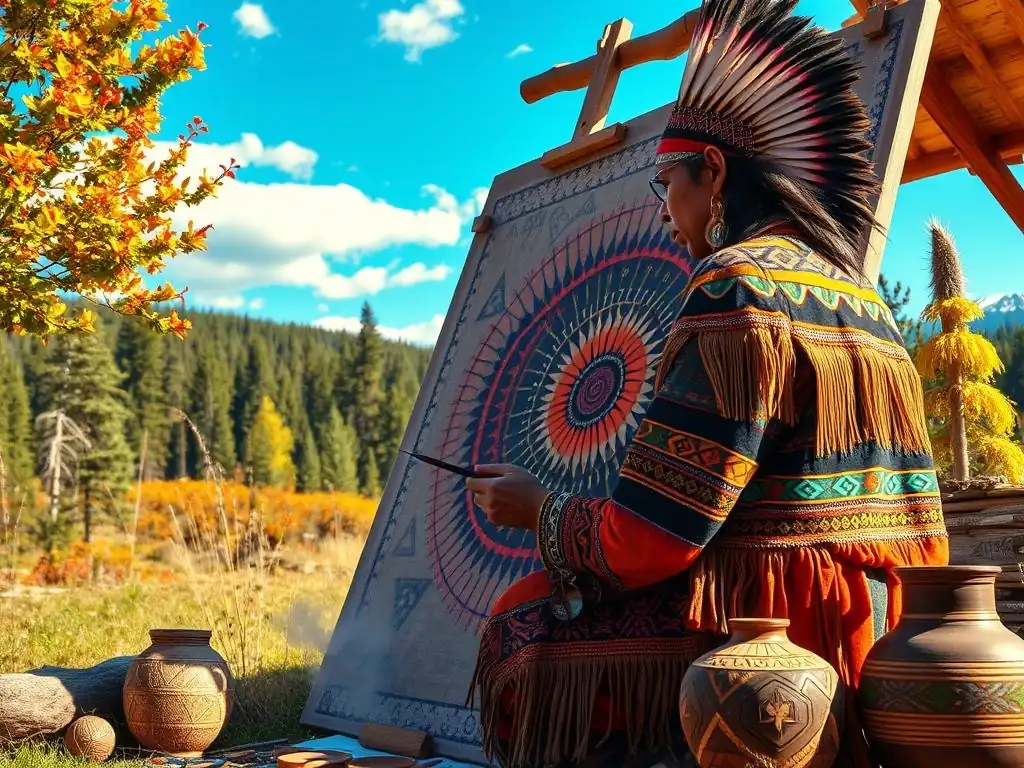
Welcome to Indigenous Civilizations of the Americas, where we embark on a fascinating journey through the vibrant tapestry of indigenous cultures that flourished long before European contact. Dive into our featured article, “Sacred Numbers: The Role of Mathematics in Native American Artistic Expression,” and uncover the profound ways in which Native American mathematics and art intertwined to create stunning works that reflect deep spiritual and cultural significance.
Prepare to be captivated by the ingenuity and rich heritage of these civilizations, as we reveal how their achievements continue to resonate today. Your exploration begins here—let's unlock the secrets of the past together!
- Introduction to Native American Mathematics and Art
- The Significance of Sacred Numbers in Native American Art
- Mathematical Concepts in Native American Artistic Practices
- Case Studies: Indigenous Cultures and Their Artistic Mathematics
- The Influence of Mathematics on Indigenous Narrative Art
- Comparing Native American Mathematics with Other Cultures
- Contemporary Reflections: The Legacy of Native American Mathematics in Art
- Conclusion: The Lasting Impact of Mathematics on Native American Artistic Expression
-
Frequently Asked Questions
- What is the main focus of the article "Sacred Numbers: The Role of Mathematics in Native American Artistic Expression"?
- How did Native Americans use mathematics in their art?
- Can you provide examples of Native American mathematical concepts used in art?
- Why is it important to study Native American mathematics and art?
- How does this article contribute to the understanding of Indigenous cultures?
- Final Reflection: The Timeless Harmony of Native American Mathematics and Art
- Unleash the Power of Sacred Numbers in Your Life!
Introduction to Native American Mathematics and Art
In the rich tapestry of Indigenous cultures across the Americas, the interplay between mathematics and art is a profound aspect that often goes unnoticed. This article delves into the intricate relationship between Native American mathematics and art, highlighting how these two domains converge to create a unique form of expression that reflects the deep spiritual and cultural values of various tribes.
By examining the sacred numbers and geometric patterns that permeate their artwork, we uncover the sophistication of Indigenous mathematical concepts and their significance in artistic practices. Through this exploration, we aim to celebrate the achievements of Native American cultures and their lasting impact on both art and mathematics.
Overview of Native American Artistic Expression
Native American artistic expression encompasses a wide array of forms, including pottery, weaving, beadwork, painting, and sculpture, each deeply rooted in cultural significance. These art forms not only serve aesthetic purposes but also convey stories, beliefs, and historical narratives that are integral to Indigenous identity.
- Cultural Significance: Art in Native American societies is often tied to rituals and spiritual practices. For instance, many artworks are created for ceremonial purposes, symbolizing connections to the land, ancestors, and the cosmos.
- Diversity of Styles: With over 500 distinct tribes, each possessing its unique artistic traditions, the diversity in styles and techniques reflects the rich cultural heritage of Native Americans. From the intricate patterns of Navajo rugs to the vibrant colors of Pueblo pottery, each piece tells a story and carries a meaning.
- Integration of Nature: Nature often inspires Native American art, with motifs drawn from flora, fauna, and celestial bodies. This connection to the natural world is not merely aesthetic; it embodies a worldview where art serves as a bridge between the physical and spiritual realms.
Importance of Mathematics in Indigenous Cultures
Mathematics has played a fundamental role in shaping Indigenous cultures, influencing everything from agricultural practices to architectural designs and artistic expressions. The use of mathematical concepts in art is not just a modern interpretation; rather, it is a testament to the sophisticated understanding of numbers and patterns that existed long before European contact.
- Sacred Geometry: Many Native American tribes employed geometric designs that reflect their cosmology and spiritual beliefs. Sacred geometry, which involves shapes and patterns that convey deeper meanings, is prevalent in their art, linking mathematics to spirituality.
- Counting Systems: Indigenous cultures often utilized unique counting systems that were not only practical for trade and resource management but also embedded in their artistic practices. These systems influenced the way patterns were created and repeated in textiles and pottery.
- Cultural Transmission: The knowledge of mathematics was passed down through generations, often interwoven with storytelling and artistic creation. This transmission ensured that the significance of numbers and patterns remained alive within the community and its artistic expressions.
In understanding the intricate relationship between Native American mathematics and art, we gain valuable insights into how these cultures viewed the world around them and the profound meanings embedded within their artistic creations. This exploration not only enriches our appreciation of their achievements but also highlights the enduring legacy of Indigenous intellectual traditions.
The Significance of Sacred Numbers in Native American Art
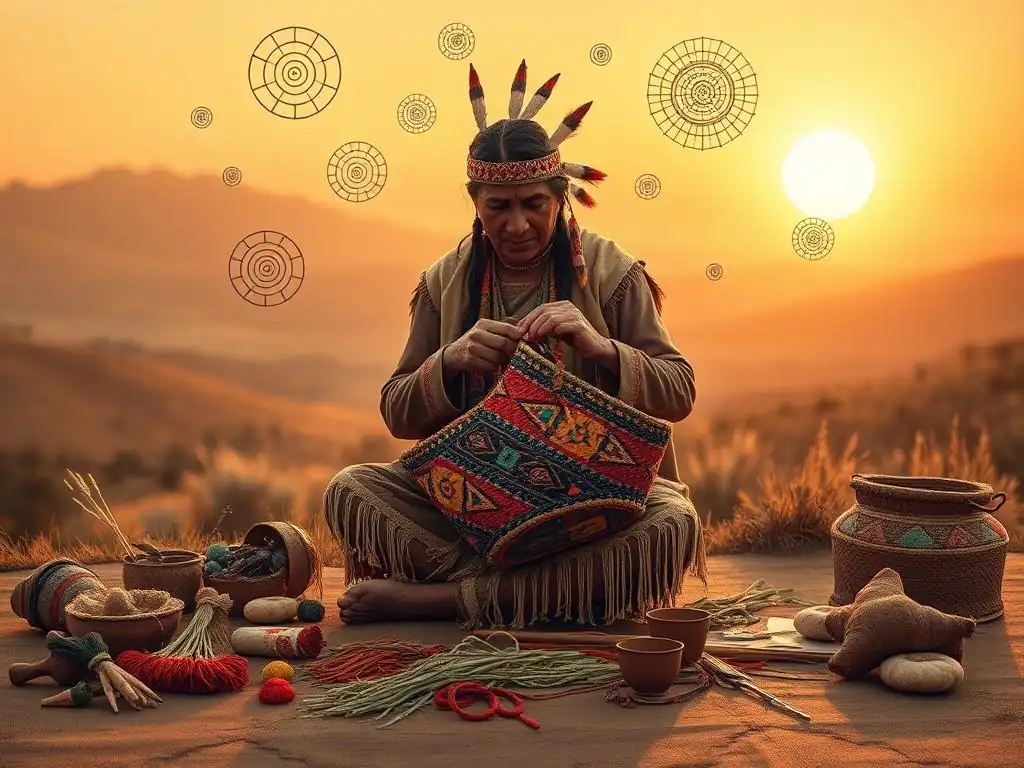
The intersection of mathematics and art in Native American cultures reveals a profound appreciation for sacred numbers, which played a pivotal role in their artistic expressions. These numbers often carried spiritual significance, serving as a means to connect with the universe, nature, and cultural identity. Artists utilized these numbers to create patterns, designs, and structures that not only showcased their mathematical understanding but also conveyed deeper meanings within their communities.
Definition of Sacred Numbers
Sacred numbers in Native American cultures refer to specific numerical values that hold spiritual, cultural, or symbolic significance. These numbers often appear in religious practices, storytelling, and artistic representations. While the exact sacred numbers can vary among different tribes, several numbers frequently recur across various cultures, including:
- 1: Represents unity and the Great Spirit.
- 3: Symbolizes the triad of life: birth, death, and rebirth.
- 4: Associated with the cardinal directions, seasons, and elements.
- 7: Represents completion and the connection to the divine.
- 13: Linked to the lunar cycles and the feminine.
These numbers are not mere quantities; they embody complex philosophical concepts and cultural narratives, influencing how Native American artists create and interpret their works.
Examples of Sacred Numbers in Indigenous Beliefs
Numerous examples illustrate how sacred numbers manifest in Native American art, reflecting the harmony between mathematics and spirituality. Here are a few notable instances:
-
The Medicine Wheel:
The Medicine Wheel is a circular symbol used by various tribes, including the Lakota and Ojibwe. It typically features four quadrants, representing the four cardinal directions and the four seasons. The arrangement of these quadrants reflects the number 4, emphasizing balance and interconnectedness within the cosmos.
-
Patterns in Pottery:
Many Native American pottery designs incorporate geometric patterns based on sacred numbers. For instance, the Hopi pottery often features motifs that repeat in cycles of 3 or 4, symbolizing life stages or the balance of nature. These patterns not only showcase artistic skill but also serve as a narrative device, telling stories of creation and community.
-
The Seven Directions:
In many Native American belief systems, there are seven directions: North, South, East, West, Above, Below, and Within. This concept is often represented in art through the use of 7 distinct elements or motifs, reinforcing the idea that all aspects of existence are interconnected.
-
Ceremonial Rites:
Sacred numbers are integral to various ceremonial practices. For instance, the Navajo perform rituals that involve 13 cycles to honor the lunar phases, illustrating the importance of this number in their cosmology. The choreography and patterns of the dances often align with these numerical values, further intertwining mathematics with cultural expression.
Through these examples, it becomes evident that Native American mathematics and art are deeply intertwined, with sacred numbers serving as a bridge between the two realms. The meticulous application of these numbers reflects not only artistic creativity but also a profound respect for the spiritual significance embedded within their cultural heritage.
Mathematical Concepts in Native American Artistic Practices
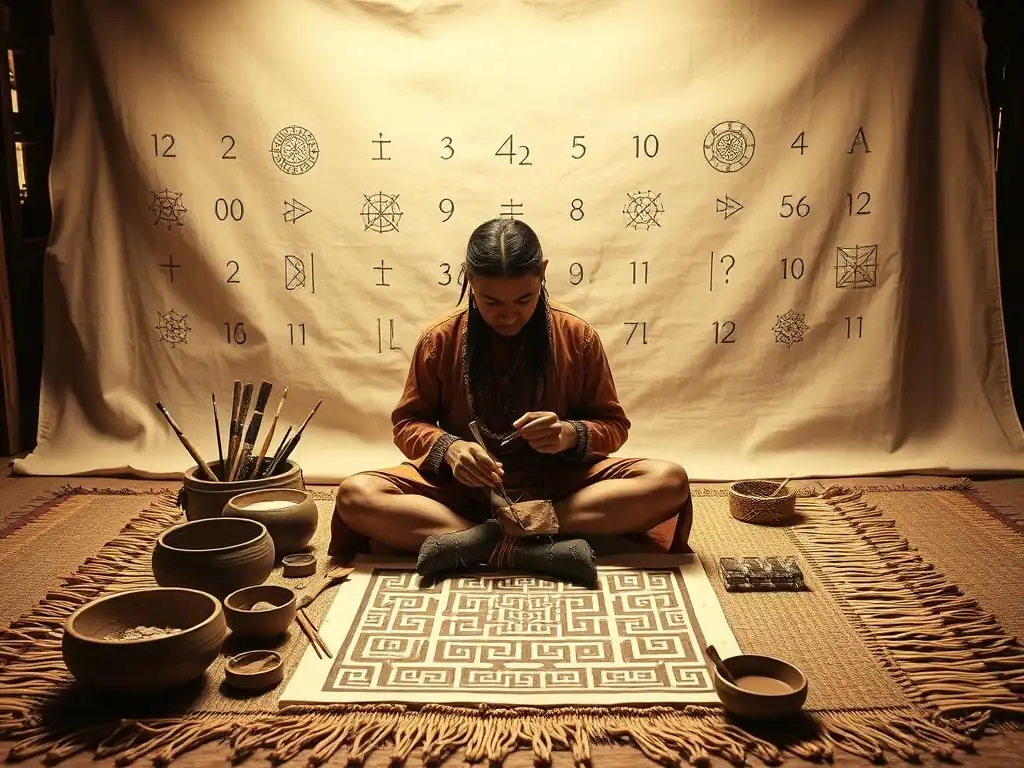
Mathematics has always played a vital role in the artistic expressions of Native American cultures. From geometric designs to intricate patterns, the integration of mathematical concepts has enhanced the aesthetic and functional aspects of their art. Native American mathematics and art are intertwined, showcasing how numbers and shapes contribute to cultural identity, storytelling, and spiritual beliefs. This section explores the mathematical ideas that underpin various artistic practices within diverse indigenous communities across the Americas.
Geometry and Symmetry in Native American Art
Native American art often exhibits a profound understanding of geometry and symmetry. Various tribes, such as the Navajo and Pueblo, incorporate geometric shapes in their pottery, textiles, and architecture.
- Geometric Shapes:
- Triangles: Frequently used in the designs of traditional rugs and blankets, triangles symbolize strength and stability.
- Circles: Representing harmony and unity, circles are commonly found in ceremonial art and represent cycles in nature.
- Symmetrical Designs:
- Symmetry serves not only an aesthetic function but also a symbolic one. For instance:
- Balanced Patterns: Many Native American artworks feature balanced designs that reflect a deep respect for nature and the cosmos.
- Mirrored Images: The use of mirrored patterns in beadwork and carvings emphasizes spiritual balance and duality.
- Symmetry serves not only an aesthetic function but also a symbolic one. For instance:
These geometric principles not only enhance visual appeal but also convey deeper meanings, reflecting the interconnectedness of life and the universe.
Patterns and Repetition: A Mathematical Perspective
Patterns and repetition are fundamental aspects of Native American artistic expression, representing both aesthetic choices and deeper cultural narratives. The recurrence of specific motifs serves various purposes, from storytelling to spiritual representation.
- Repetitive Motifs:
- Commonly seen in textiles, basketry, and beadwork, these motifs often have mathematical significance:
- Fractals in Nature: Many patterns mirror natural fractals, such as the branching of trees or the spiral of shells, demonstrating an intrinsic understanding of mathematical forms.
- Tessellations: Some artworks employ tessellation techniques, where shapes fit together without gaps, echoing patterns found in nature.
- Commonly seen in textiles, basketry, and beadwork, these motifs often have mathematical significance:
- Cultural Significance:
- Each repeating pattern often carries specific meanings, such as:
- Seasonal Cycles: Patterns may represent the cyclical nature of seasons, highlighting the relationship between the community and the environment.
- Spiritual Symbols: Certain designs are used in rituals, embodying spiritual beliefs and serving as a connection to ancestral heritage.
- Each repeating pattern often carries specific meanings, such as:
Understanding these patterns provides a glimpse into how Native American cultures perceive mathematics as a language of art and expression.
The Role of Proportions in Indigenous Craftsmanship
Proportions play a crucial role in the craftsmanship of Native American art, influencing the balance and harmony of various creations. The application of mathematical ratios and scaling reflects a sophisticated approach to design.
- Mathematical Ratios:
- Many Native American artisans utilize specific ratios to achieve aesthetic harmony:
- Golden Ratio: Some studies suggest that the golden ratio is present in the dimensions of traditional pottery and weaving, creating visually pleasing proportions.
- Fibonacci Sequence: The sequence appears in the arrangement of elements within certain artworks, subtly guiding the viewer's perception.
- Many Native American artisans utilize specific ratios to achieve aesthetic harmony:
- Scale and Size:
- The scale of artwork often relates to its intended function or cultural significance:
- Ceremonial vs. Domestic Art: Larger pieces may be created for ceremonial purposes, while smaller items are often crafted for daily use, each adhering to proportional guidelines that reflect their importance.
- The scale of artwork often relates to its intended function or cultural significance:
By examining the role of proportions, we uncover the meticulous thought processes behind Native American craftsmanship, illustrating how mathematics enriches artistic creation and cultural expression.
Case Studies: Indigenous Cultures and Their Artistic Mathematics
The Navajo people, renowned for their intricate textile arts, have long utilized mathematical principles in their weaving practices. The creation of traditional Navajo rugs and blankets involves a deep understanding of geometry, symmetry, and pattern repetition.
Key Mathematical Concepts in Navajo Weaving:
- Symmetry: Many Navajo designs are reflective, exhibiting bilateral symmetry that creates a harmonious visual balance. This symmetry is not only aesthetically pleasing but also conveys spiritual meanings.
- Fibonacci Sequence: Some weavers incorporate elements of the Fibonacci sequence in their patterns, which naturally resonates with the growth patterns found in nature, such as the arrangement of leaves or the branching of trees.
- Grid Systems: The use of grid layouts is fundamental in Navajo weaving. Weavers often draft their designs on a squared paper, allowing them to visualize the final piece and ensure precision in the weaving process.
Through these mathematical techniques, Navajo rugs become more than mere decorative items; they are a blend of artistry and mathematical sophistication, reflecting the weaver's identity and cultural heritage.
The Hopi: Symbolism and Geometry in Pottery
The Hopi tribe is celebrated for its pottery, which showcases a unique fusion of artistic expression and geometric design. Hopi potters employ mathematical concepts to create visually striking pieces that often carry deep cultural significance.
Elements of Mathematics in Hopi Pottery:
- Geometric Shapes: Hopi pottery frequently features geometric motifs, such as triangles, circles, and squares, which are carefully arranged to form intricate patterns. These shapes are not randomly placed; they adhere to specific mathematical proportions that enhance the overall composition.
- Proportional Relationships: The potters utilize proportionality in their designs, ensuring that the elements within a piece maintain a balanced and harmonious relationship. This is essential for creating aesthetically pleasing pottery that resonates with Hopi spiritual beliefs.
- Color Theory and Patterns: The use of color in Hopi pottery is often guided by mathematical relationships. For example, complementary colors may be used in symmetrical patterns to create vibrant contrasts that draw the eye.
The mathematical precision in Hopi pottery underscores the art’s significance, serving as a medium for storytelling and cultural expression while showcasing the artists’ mastery of mathematical concepts.
The Mayans: Advanced Mathematics in Architecture and Art
The Mayans are often recognized for their remarkable achievements in mathematics and astronomy, reflected vividly in their architectural and artistic endeavors. Their use of complex mathematical systems was pivotal in the construction of their iconic structures and the creation of intricate artworks.
Mathematical Innovations in Mayan Culture:
- Base-20 Number System: The Mayans developed a sophisticated base-20 (vigesimal) number system, which allowed them to perform complex calculations related to their astronomical observations and architectural designs.
- Architectural Geometry: The layouts of Mayan cities, such as Tikal and Palenque, demonstrate a profound understanding of geometry. Structures were often aligned with celestial bodies, reflecting the Mayans' advanced knowledge of mathematics and their connection to the cosmos.
- Artistic Symmetry and Fractals: Mayan art frequently incorporates fractal-like patterns, which are both aesthetically pleasing and mathematically significant. The repetition of smaller designs within larger frameworks showcases their mastery of symmetry and proportion.
The Mayans blended mathematics with their artistic and architectural achievements, creating a legacy that highlights their intellectual prowess and cultural richness. The integration of mathematics in their art not only served practical purposes but also held spiritual significance, reinforcing their connection to the universe.
The Influence of Mathematics on Indigenous Narrative Art
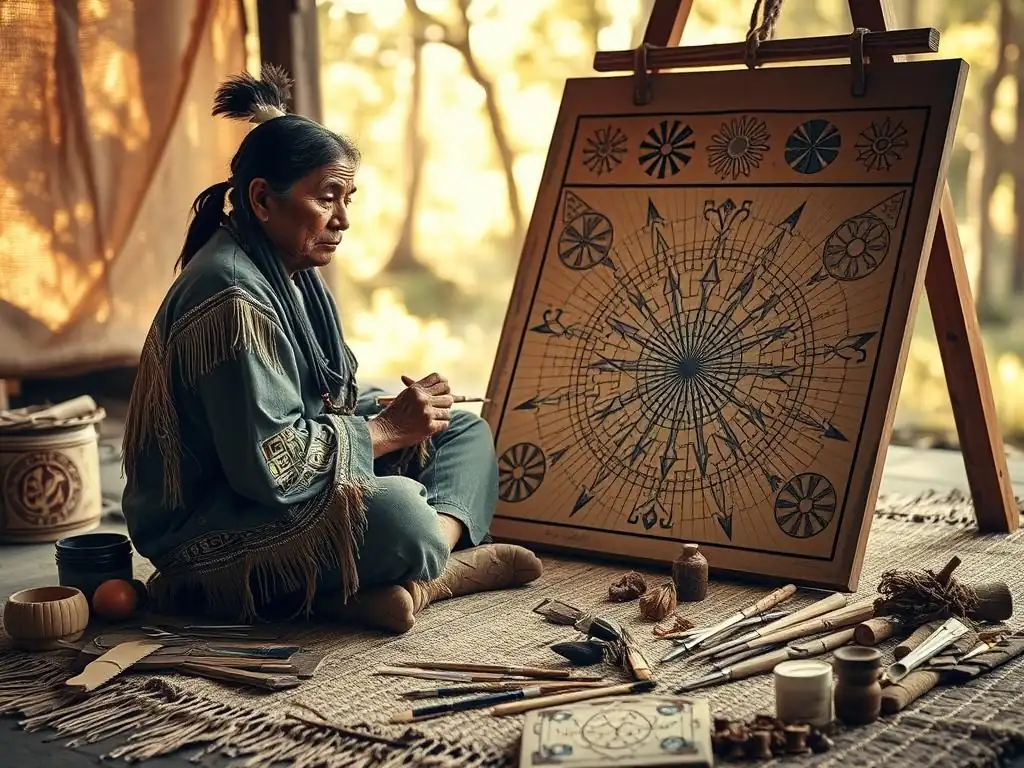
Mathematics has long been an integral part of various indigenous cultures across the Americas, not just in practical applications like agriculture and architecture, but also in the realm of artistic expression. The intricate designs and patterns found in Native American narrative art often reflect mathematical principles, embodying a deeper connection between numbers and storytelling. This relationship is evident in the ways that artists utilize geometric shapes and numerical symbolism to convey cultural narratives, beliefs, and histories.
Storytelling through Mathematical Patterns
Indigenous narrative art serves as a visual storytelling medium that communicates the values and experiences of a community. Many Native American artists employ mathematical patterns, such as symmetry, repetition, and fractal designs, to create compelling narratives. These patterns can symbolize various themes, such as the cyclical nature of life or the interconnectedness of all beings.
For instance, the use of symmetry in art can represent balance and harmony within the universe, reflecting the indigenous worldview that emphasizes equilibrium in nature. Artists often incorporate geometric shapes—triangles, circles, and squares—arranged in specific ways to evoke particular stories or teachings. This approach not only enhances the aesthetic appeal of the artwork but also deepens its narrative significance, inviting viewers to engage with the cultural context behind the pieces.
Moreover, the repetition of motifs connected to mathematical concepts can serve as a mnemonic device, helping to preserve oral traditions and histories. For example, a series of repeating patterns might be used to depict a legend or myth, allowing the audience to trace the storyline visually. This method demonstrates how mathematical principles are not merely aesthetic choices but are rooted in the cultural practices and storytelling traditions of Native American peoples.
The Use of Numbers in Symbolic Representations
Numbers play a crucial role in the symbolic representations found in Native American art. Various indigenous cultures attribute specific meanings to numbers, which often hold spiritual or cultural significance. For example, the number four is commonly associated with the four cardinal directions, the four seasons, and the four elements. This symbolism can be reflected in the composition and design of artwork, where the number four may manifest through the use of four primary colors or four distinct sections in a piece.
Additionally, the incorporation of numerical symbolism into artistic representations can be seen in pottery, weaving, and beadwork. In these crafts, artists often use specific numerical sequences to create patterns that not only beautify the items but also convey deeper meanings. For instance, Navajo weavers may incorporate specific numbers of colors or strands in their textiles to signify connections to their cultural heritage and beliefs.
The significance of numbers extends beyond mere representation; it also serves as a means of preserving knowledge and traditions. For instance, the counting systems employed by various tribes can inform how artists structure their work, ensuring that each piece resonates with the stories and teachings of their ancestors. This intricate interplay between mathematics and art exemplifies the richness of Native American mathematics and art, celebrating the legacy of indigenous cultures through their creative expressions.
The fusion of mathematics with narrative art among Native American cultures reveals a profound depth of understanding and appreciation for both fields. By exploring mathematical patterns and numerical symbolism, indigenous artists not only enhance their artistic expressions but also preserve and promote the cultural narratives intrinsic to their communities. The legacy of these practices continues to inspire contemporary interpretations of Native American art, highlighting the enduring influence of mathematics in the creative process.
Comparing Native American Mathematics with Other Cultures
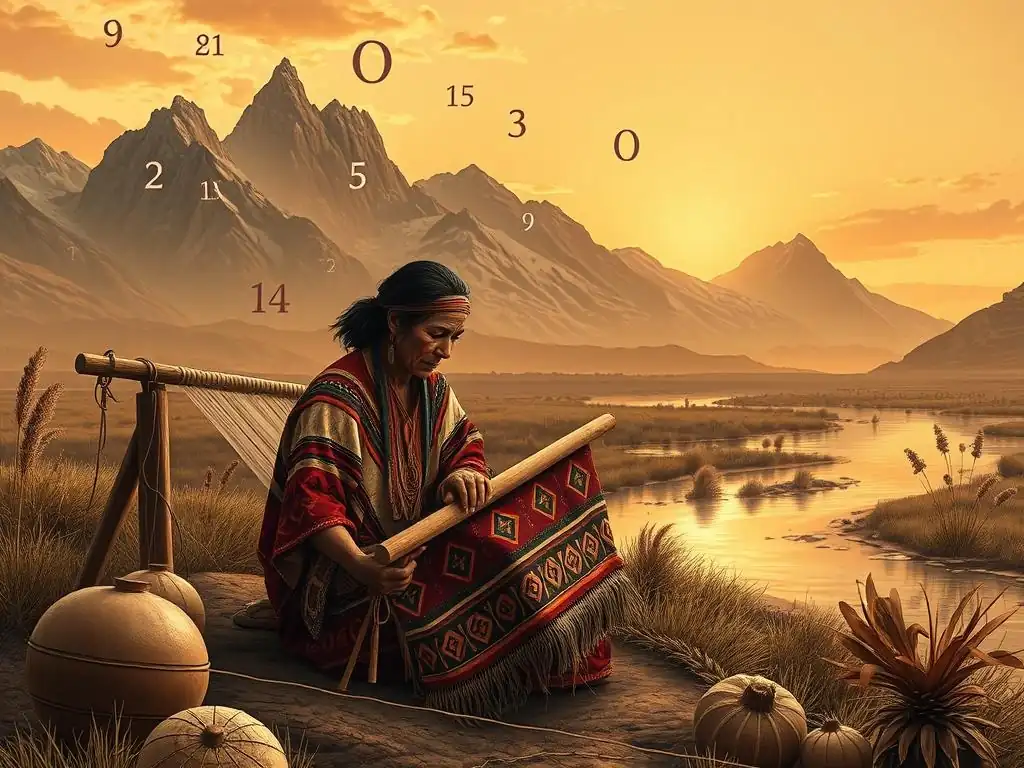
The integration of mathematics into artistic expression is a universal aspect of human creativity. However, each culture has its unique approach to this synthesis, particularly notable in Native American societies. By examining the intersection of mathematics and art across various cultures, we can uncover both shared characteristics and distinctive elements that highlight the richness of Native American mathematics and art.
Similarities in Artistic Expressions using Mathematics
Across different cultures, mathematics has often served as a foundational tool for artistic creation. For instance, many ancient civilizations, such as the Egyptians and Greeks, employed geometric principles in their architectural designs and artwork. Similarly, Native American cultures utilized mathematical concepts to create intricate patterns and designs in their art, including pottery, weaving, and beadwork.
- Geometric Patterns: Many Native American artworks feature geometric designs, such as triangles, circles, and spirals. These shapes are not merely decorative; they often hold symbolic meanings and reflect the spiritual beliefs of the community. For example, the use of a circle can represent the cycle of life or the sun, paralleling the symbolic use of circles in other cultures.
- Symmetry and Proportion: Just as ancient Greek artists used the Golden Ratio to achieve aesthetic harmony, Native American artisans frequently employed principles of symmetry and proportion in their designs. This careful balancing creates visually appealing artworks that resonate with viewers on both aesthetic and emotional levels.
- Mathematical Ratios: The concept of ratios is pivotal in many indigenous art forms. For instance, in some Native American weaving traditions, the ratio of warp to weft threads is meticulously calculated to create specific patterns, much like the practices seen in ancient Peruvian textiles.
These similarities underscore a common human tendency to blend mathematics with artistic expression, revealing a shared appreciation for beauty grounded in mathematical principles.
Unique Aspects of Native American Mathematics and Art
While there are notable similarities in the use of mathematics in artistic expression across cultures, Native American mathematics and art possess distinctive features that set them apart. These unique aspects stem from the deep cultural, spiritual, and environmental contexts of Native American societies.
- Cultural Significance: In Native American cultures, mathematics is often intertwined with spiritual beliefs and cultural narratives. For instance, the Mayan calendar reflects a sophisticated understanding of astronomy and time, influencing artistic expressions that convey cosmological stories. The numbers involved in these calendars are not just mathematical; they narrate the connection between the people and the universe.
- Nature and Environment: Native American art frequently draws inspiration from the natural environment. The mathematical representations of elements such as plants, animals, and landscapes are not only artistic but also serve as a means of understanding ecological relationships. For example, the spiral patterns seen in certain artworks can mirror the growth patterns of shells or plants, integrating mathematics with the observation of nature.
- Storytelling through Numbers: In many Native American traditions, numbers serve as a medium for storytelling. Certain numbers hold specific cultural meanings, and their representation in art can convey complex narratives. For example, the number four often symbolizes the cardinal directions and the four seasons, linking mathematical concepts with the broader cosmological framework of the culture.
- Community and Collaboration: The creation of art in many Native American cultures is often a communal effort, where mathematical concepts are collectively understood and applied. This contrasts with individualistic approaches seen in some Western art traditions, emphasizing the collaborative nature of Native American artistic expression.
While Native American mathematics shares commonalities with other cultural practices regarding artistic expression, it is deeply rooted in unique cultural narratives, spiritual beliefs, and environmental connections. This distinctive integration of mathematics and art not only reflects the creativity of Native American societies but also highlights their intricate understanding of the world around them.
Contemporary Reflections: The Legacy of Native American Mathematics in Art
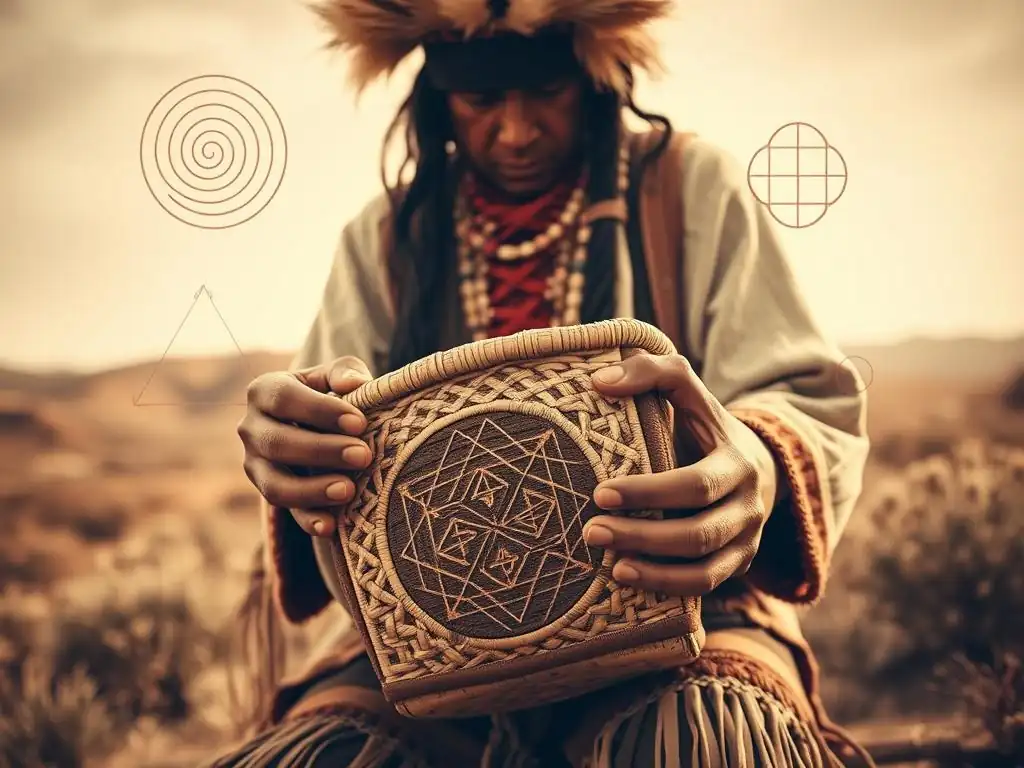
The intersection of mathematics and art within Native American cultures is not merely a historical curiosity; it continues to influence contemporary artistic expressions. The legacy of Native American mathematics is deeply embedded in traditional art forms, and this mathematical heritage is being rediscovered and celebrated in modern contexts. As artists and scholars explore these connections, they highlight the rich tapestry of knowledge that indigenous peoples have contributed to the broader understanding of art and mathematics.
Reviving Traditional Practices in Modern Art
Today, many contemporary Native American artists are drawing inspiration from their ancestral practices, integrating traditional mathematical concepts into their artwork. This revival is not only an artistic endeavor but also a means of cultural preservation.
- Geometric Patterns and Symbolism
- Many Native American art forms, such as weaving, pottery, and beadwork, utilize intricate geometric patterns. These designs often embody mathematical principles, such as symmetry, repetition, and fractals. For instance, the use of the golden ratio can be observed in the layout of certain textiles, reflecting a sophisticated understanding of proportions.
- Artists like Maya Lin and Jaune Quick-to-See Smith incorporate these traditional geometric motifs into their modern works, bridging the past with contemporary themes.
- Cultural Workshops and Collaborations
- Numerous initiatives focus on reviving traditional practices through workshops that teach indigenous mathematical concepts in art-making. These workshops not only impart skills but also foster a deeper appreciation for the mathematical foundations behind traditional arts.
- Collaboration between indigenous artists and mathematicians has led to projects that explore the mathematical principles inherent in indigenous cultures, resulting in innovative works that celebrate both fields.
- Art Exhibitions and Community Engagement
- Exhibitions showcasing the mathematical aspects of Native American art have become increasingly popular. These events often include interactive components, allowing attendees to engage with the mathematical underpinnings of the artworks.
- Community engagement initiatives, where local artists share their techniques and the mathematical significance behind their work, help preserve these traditions and educate new generations.
Education and Preservation of Indigenous Mathematical Knowledge
The education and preservation of indigenous mathematical knowledge are crucial for maintaining the integrity of Native American cultures and their artistic expressions. Various strategies are being employed to ensure that this knowledge continues to thrive.
- Incorporating Indigenous Mathematics into Curricula
- Educational institutions are beginning to recognize the importance of indigenous knowledge systems, including mathematics. By incorporating Native American mathematics into curricula, students gain a broader understanding of mathematical concepts that reflect diverse cultural perspectives.
- Programs designed to teach indigenous mathematical techniques, such as those found in traditional navigation or astronomy, provide students with hands-on experiences that deepen their learning.
- Archiving Traditional Knowledge
- Efforts to document and archive traditional mathematical knowledge are essential for future generations. This includes recording oral histories, creating databases of geometric designs, and preserving artifacts that illustrate mathematical principles.
- Collaborations with museums and cultural organizations are instrumental in ensuring that this knowledge is not lost and is accessible for educational purposes.
- Support for Indigenous Artists and Mathematicians
- Providing support for indigenous artists and mathematicians through grants and funding initiatives helps foster an environment where traditional practices can flourish alongside contemporary innovation.
- Organizations that focus on the intersection of art and mathematics within indigenous communities play a vital role in promoting dialogue and collaboration, ensuring that the legacy of Native American mathematics in art continues to inspire future generations.
The legacy of Native American mathematics in art is a dynamic and evolving narrative. Through the revival of traditional practices, educational initiatives, and community engagement, the intricate relationship between mathematics and artistic expression is being celebrated and preserved for future generations.
Conclusion: The Lasting Impact of Mathematics on Native American Artistic Expression
Summary of Key Points
The interplay between Native American mathematics and art is a profound testament to the sophistication of indigenous cultures prior to European colonization. Throughout various tribes, mathematical principles informed artistic expression in numerous ways:
- Geometric Patterns: Many Native American artworks feature intricate geometric designs that reflect a deep understanding of symmetry, proportion, and balance. For instance, the Navajo sand paintings utilize complex shapes that serve both aesthetic and spiritual functions.
- Cultural Significance: Numbers held specific meanings within different cultures. For example, the number four often represents the cardinal directions, which is foundational in numerous native cosmologies. This symbolic use of numbers is evident in the arrangement of elements in art, such as the placement of symbols in pottery or weaving.
- Mathematical Tools: Indigenous artisans utilized tools that embodied mathematical concepts, such as the compass for creating circular motifs or measuring devices for ensuring precision in their designs.
- Integration of Nature: The observation of natural phenomena (e.g., the cycles of the moon) influenced both mathematical understanding and artistic representation, leading to a harmonious blend of art and mathematics that reflects the environment and cultural beliefs.
These elements highlight not only the aesthetic value of Native American art but also its mathematical underpinnings, revealing an intricate relationship that has shaped the legacy of indigenous cultures.
Future Directions in Research on Native American Mathematics and Art
As interest grows in understanding the mathematical forms in art within Native American cultures, several avenues for future research emerge:
- Interdisciplinary Studies: Collaborations between mathematicians, anthropologists, and artists can yield deeper insights into how mathematical concepts were integrated into various art forms. By pooling expertise, researchers can explore untapped connections and methodologies.
- Digital Humanities: The use of digital tools to analyze and visualize patterns in Native American art offers exciting possibilities. Projects that digitize artworks can allow for quantitative analyses to uncover mathematical relationships that may not be immediately evident through traditional study methods.
- Cultural Revitalization: Research can also focus on contemporary indigenous artists who draw on traditional mathematical concepts. Understanding how these artists reinterpret and incorporate ancestral knowledge into their work can shed light on the ongoing legacy of mathematics in Native American art.
- Educational Frameworks: Developing curricula that integrate Native American mathematics and art into educational systems can enhance cultural awareness and appreciation. This approach not only benefits indigenous communities but also enriches the broader understanding of mathematics as a diverse and culturally rooted discipline.
By pursuing these research directions, scholars can continue to illuminate the integral role of mathematics in the artistic expressions of Native American cultures, ensuring that their legacies are celebrated and preserved for future generations.
Frequently Asked Questions
What is the main focus of the article "Sacred Numbers: The Role of Mathematics in Native American Artistic Expression"?
The article explores the interconnection between mathematics and art in Native American cultures, emphasizing how numerical concepts informed their artistic practices and symbolic meanings.
How did Native Americans use mathematics in their art?
Native American artists employed mathematical principles such as symmetry, geometry, and patterns in their artworks, which were often rooted in spiritual and cultural significance.
Can you provide examples of Native American mathematical concepts used in art?
Yes, many tribes utilized geometric shapes and patterns derived from nature, such as spirals and tessellations, to create intricate designs in pottery, weaving, and pictorial art.
Why is it important to study Native American mathematics and art?
Studying these subjects reveals the sophisticated knowledge systems of Indigenous peoples, highlighting their creativity and intellectual achievements before European colonization.
How does this article contribute to the understanding of Indigenous cultures?
The article enhances our understanding by illustrating the complex relationships between numerical systems and creative expression, showcasing the rich heritage of Native American civilizations.
Final Reflection: The Timeless Harmony of Native American Mathematics and Art
In exploring the intricate relationship between Native American mathematics and art, we uncover a profound connection that resonates powerfully in today's world. The mathematical principles embedded in Native American artistic expression serve not only as a testament to cultural heritage but also as a reminder of the universal language of numbers that transcends time and space. The beauty of this intersection invites us to appreciate how mathematics can be a form of storytelling, revealing the wisdom and values of Indigenous communities.
The influence of this topic extends far beyond the realms of art and mathematics; it shapes our understanding of cultural identity and collective memory. As we delve deeper into the patterns and symbols that define Native American art, we recognize the enduring legacy of these traditions in contemporary society. Art is the most beautiful of all lies.
This quote encapsulates the essence of how art, intertwined with mathematics, can convey truths about existence, spirituality, and community that are often overlooked in modern narratives. The ongoing appreciation for these artistic expressions highlights the importance of recognizing and valuing diverse perspectives in our increasingly homogenized world.
As we conclude this exploration, I invite you to reflect on the lessons embedded in the sacred numbers of Native American art. Consider how these principles can inspire your own creative endeavors and foster a deeper appreciation for the interconnectedness of culture and mathematics. Let this journey encourage you to seek out the stories behind the art you encounter and to recognize the beauty that arises when we honor the wisdom of those who came before us. Embrace the call to celebrate diversity in artistic expression and to carry forward the legacy of Indigenous knowledge in your own life.
Unleash the Power of Sacred Numbers in Your Life!
Thank you for taking the time to delve into the fascinating intersection of mathematics and Native American art! By exploring the significance of sacred numbers, you have gained insights not just about artistic expression but also about cultural heritage and deeper meanings. Now, it’s your turn to embrace this knowledge and apply it to your own creative journey.
Here are some actionable steps you can take to deepen your understanding and appreciation of this rich tradition:
- Create your own art inspired by sacred numbers: Begin by researching the sacred numbers that hold significance in your culture or one that captivates your interest. Use these numbers as the foundation for a piece of art, whether it’s a painting, drawing, or sculpture.
- Share your findings: Write a brief blog post or social media update about what you learned concerning the relationship between mathematics and Native American artistic expression. Connect with communities that celebrate indigenous art and culture to share your insights.
- Join a workshop or event: Seek out local or online workshops that focus on Native American art, the role of mathematics in design, or spiritual and cultural teachings. Engaging with others can significantly enhance your understanding.
Now, take a moment for reflection. How can you incorporate sacred numbers into your daily life or creative practice? We invite you to share your thoughts and ideas in the comments below!