
Exploring the Mysteries of Mound Builders: Recent Archaeological Breakthroughs in North America

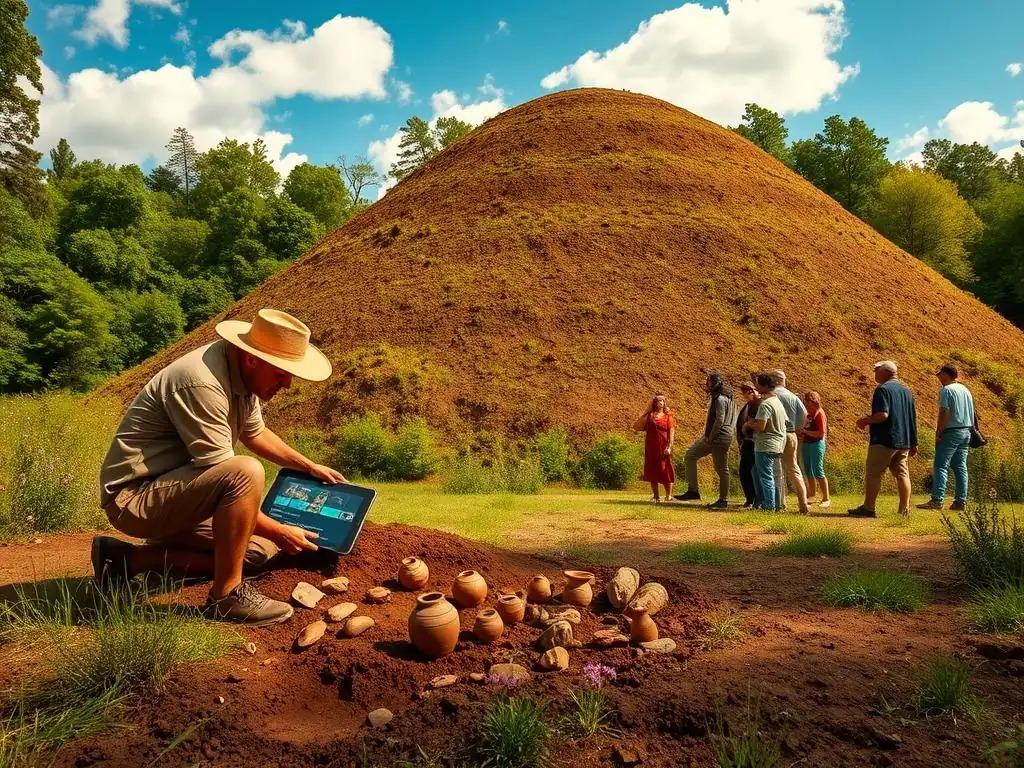
Welcome to Indigenous Civilizations of the Americas, where we embark on a fascinating journey through the rich tapestry of indigenous cultures that flourished long before European contact. Prepare to dive into the mysteries of the Mound Builders, as we unveil recent archaeological discoveries that shed light on their remarkable achievements and societal structures. What secrets lie beneath the earth, waiting to be uncovered? Join us as we explore the profound legacy of these ancient civilizations and their enduring influence on the world today. Your adventure into history starts here!
The Mound Builders of North America represent one of the most fascinating and complex indigenous cultures that flourished long before European contact. From the majestic earthen mounds dotting the landscape to the intricate societies that constructed them, these civilizations have left an indelible mark on the historical narrative of the continent.
This article delves into the recent archaeological breakthroughs that shed light on the lives, practices, and legacies of the Mound Builders, emphasizing the significance of ongoing research efforts in revealing their contributions to human history. As we explore the keyword "Mound Builders archaeological discoveries," we aim to uncover not just the physical remnants of these societies but also the insights they provide into the rich tapestry of indigenous cultures in the Americas.
Introduction to Mound Builders and Their Significance
The term "Mound Builders" refers to various indigenous groups across North America known for their construction of earthen mounds for ceremonial, burial, and residential purposes. These structures vary in size, shape, and function, reflecting the diverse cultural practices of the societies that created them. The Mound Builders' intricate art, social organization, and religious beliefs played a pivotal role in shaping regional cultures and interactions with neighboring communities.
Overview of Mound Builders Archaeological Discoveries
Recent archaeological discoveries have provided significant insights into the lives of the Mound Builders. Excavations in sites such as Cahokia, Serpent Mound, and the Hopewell site have revealed artifacts that illuminate their daily lives, trade networks, and spiritual practices. Findings include:
- Ceremonial artifacts: Items used in rituals, such as pottery, pipes, and effigy objects.
- Burial goods: Grave goods that suggest complex belief systems regarding the afterlife.
- Trade items: Evidence of extensive trade networks that connected Mound Builder societies with distant regions.
These discoveries not only enhance our understanding of the Mound Builders but also challenge previous assumptions about their social structures and interactions with other cultures.
Historical Context of Mound Builders Civilizations
The Mound Builders thrived in various regions of North America, with notable cultures including the Adena, Hopewell, and Mississippian societies. The historical context of these civilizations is marked by:
- Geographic diversity: Mound Builders inhabited areas ranging from the Ohio River Valley to the Mississippi River Delta.
- Cultural evolution: Over time, these societies evolved from small, hunter-gatherer groups to complex chiefdoms, evidenced by the scale and sophistication of their mounds.
- Interactions with neighboring groups: The Mound Builders engaged in trade, warfare, and cultural exchanges with other indigenous peoples, influencing the broader tapestry of North American history.
Recent Archaeological Breakthroughs in Mound Builders Research
Recent advancements in archaeology have revolutionized our understanding of the Mound Builders. Researchers are employing cutting-edge technologies and methodologies to uncover new information about these ancient cultures.
Advances in Technology and Methodologies
Archaeologists today utilize a variety of innovative techniques that have enhanced the study of Mound Builder sites, including:
- Ground-penetrating radar (GPR): This non-invasive method allows researchers to visualize subsurface features without excavation.
- LiDAR (Light Detection and Ranging): Aerial LiDAR technology helps identify mound structures obscured by vegetation, revealing previously unknown sites.
- DNA analysis: Genetic studies of ancient remains provide insights into the population dynamics and health of Mound Builder societies.
These technologies not only facilitate a more comprehensive understanding of Mound Builder sites but also preserve the integrity of these archaeological treasures.
Notable Discoveries in Mound Sites
Several recent discoveries have captured the attention of archaeologists and historians alike, showcasing the richness of Mound Builder heritage:
- Cahokia's Woodhenge: Excavations have uncovered a wooden structure aligned with solar events, indicating advanced astronomical knowledge.
- Hopewell's Exotic Trade Goods: Artifacts made from materials sourced from as far away as the Gulf of Mexico and the Rocky Mountains highlight the extensive trade networks of the Hopewell culture.
- Burial Mounds of the Adena: Findings from these sites have revealed complex burial practices and social hierarchies.
These notable discoveries underscore the significance of Mound Builders in the broader context of indigenous civilizations and their lasting impact on the Americas.
Understanding the Mound Builders' Societal Structures
The Mound Builders, a term encompassing various indigenous cultures across North America, constructed impressive earthworks that serve as a testament to their complex societal structures. These societies, which flourished from approximately 300 BCE to 1600 CE, engaged in sophisticated agricultural practices, established trade networks, and developed intricate social hierarchies. Understanding the societal structures of the Mound Builders provides insight into their daily lives, cultural practices, and the reasons behind their monumental earthworks.
Mound Builders were not a monolithic group; they included diverse cultures such as the Adena, Hopewell, and Mississippian. Each culture exhibited unique characteristics, yet they shared commonalities in their reliance on agriculture, particularly the cultivation of maize, beans, and squash. This agricultural foundation supported population growth and allowed for the establishment of permanent settlements, which became focal points for community organization and cultural exchange.
The construction of mounds, which served various purposes, reflects the organizational capabilities of these societies. Mounds were often built as burial sites, ceremonial centers, or as platforms for the elite. The scale and complexity of these earthworks indicate a hierarchical social structure where leadership played a crucial role in mobilizing labor and resources, showcasing the Mound Builders' advanced societal organization.
Social Organization and Leadership among Mound Builders
Social organization among the Mound Builders varied significantly across different cultures and regions but generally exhibited a tiered structure. Leadership often derived from lineage, with chieftains or elites overseeing communal activities, resource distribution, and construction projects. These leaders were typically seen as both political and spiritual figures, embodying their society's values and beliefs.
In Mississippian societies, for example, the chiefdoms were characterized by a strong centralized authority where the chieftain held significant power, often supported by a council of elders or advisors. This governance structure allowed for coordinated efforts in large-scale mound construction, trade, and defense against external threats. The role of the chief was not just political; it also included responsibilities towards religious and ceremonial practices, highlighting the interconnectedness of governance and spirituality in Mound Builder societies.
Additionally, social stratification can be observed through burial practices. Elite individuals were often interred in elaborate mounds adorned with grave goods, indicating their high status. In contrast, commoners typically had simpler burials, which points to a society with distinct social classes and roles.
Trade Networks and Economic Practices
Trade networks among the Mound Builders were extensive and facilitated the exchange of goods, ideas, and cultural practices across vast distances. These networks connected various Mound Builder cultures, allowing for the flow of materials such as obsidian, copper, shells, and pottery. Such interactions not only enriched local economies but also contributed to cultural diffusion among different groups.
The Hopewell culture, for instance, is well-known for its wide-reaching trade networks that extended as far as the Gulf Coast and the Great Lakes. Artifacts found in burial mounds, including exotic materials not native to the region, suggest that these societies engaged in long-distance trade. The exchange of goods likely involved not only materials but also social and religious ideas, reinforcing connections among disparate communities.
Agriculture was the backbone of the Mound Builders' economic practices. By cultivating staple crops, they were able to support larger populations and engage in surplus production, which in turn fostered trade. The establishment of permanent settlements near fertile land allowed for the development of specialized craft production and a more complex economy.
Theories and Interpretations of Mound Builders' Purposes
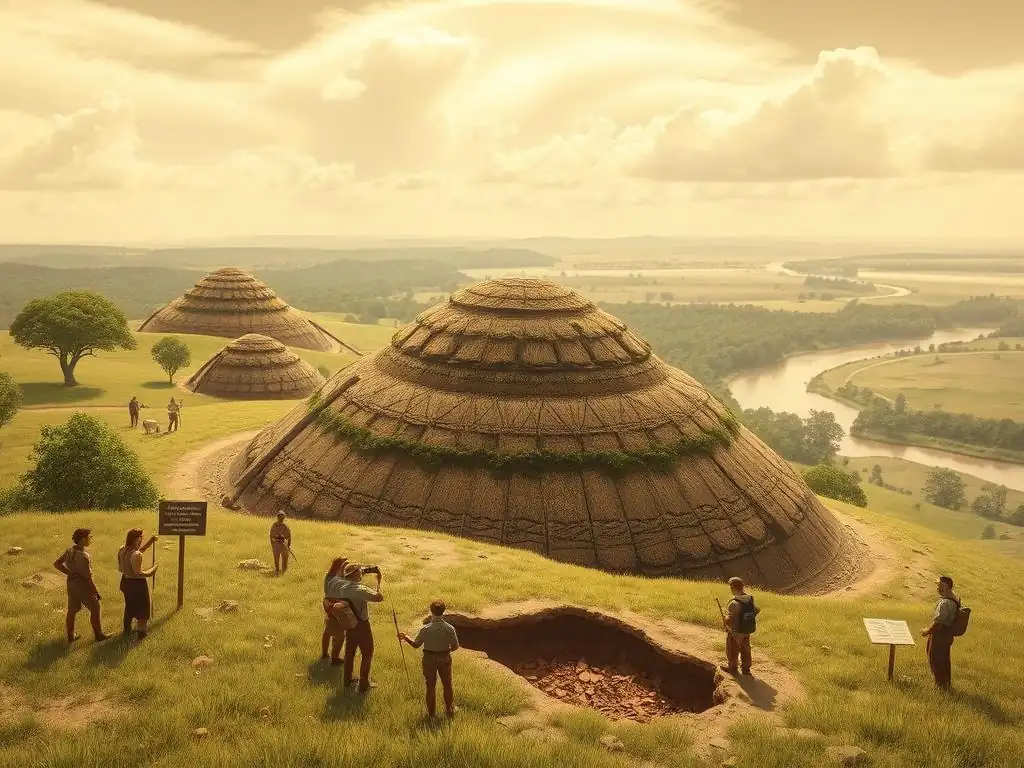
The purposes of the mounds constructed by the Mound Builders have been the subject of extensive research and debate among archaeologists and historians. Various theories suggest that these monumental structures served multiple functions, ranging from ceremonial to practical uses. Understanding the diverse interpretations of these earthworks can provide a deeper appreciation of the Mound Builders' cultural significance.
Religious and Spiritual Significance of Mounds
Many scholars believe that mounds held profound religious and spiritual significance for the Mound Builders. The act of building mounds can be seen as a form of ritual practice, embodying the community's beliefs and reverence for their ancestors. Burial mounds, in particular, are often viewed as sacred spaces where the dead were honored, and the living could connect with the spiritual realm.
Archaeological evidence suggests that some mounds were aligned with celestial events, such as solstices and equinoxes, indicating a sophisticated understanding of astronomy and its integration into their spiritual practices. This alignment may have been intended to facilitate rituals that celebrated agricultural cycles or honored deities, emphasizing the importance of the natural world in their belief systems.
Additionally, the presence of artifacts within these mounds—such as pottery, tools, and ceremonial items—suggests that these structures were not only burial sites but also places for communal gatherings and rituals. This highlights the mounds' role in fostering social cohesion and shared identity among the Mound Builders.
Functions of Mounds in Community and Governance
Beyond their spiritual importance, mounds likely served practical functions within Mound Builder societies. Many mounds functioned as platforms for elite residences or public ceremonies, reinforcing the social hierarchy and governance structures present in these communities. By positioning mounds at the center of settlements, the Mound Builders created focal points for community interaction and decision-making.
Mounds also acted as symbols of power and control. Their construction often required substantial labor, and the ability to organize such efforts suggests a highly coordinated society with established leadership. The visibility of these earthworks could serve to assert dominance over surrounding territories, both in terms of resources and influence.
In some cases, mounds were strategically located to serve as defensive structures, providing vantage points against potential threats. This multifunctionality underscores the complex interplay between community identity, governance, and environmental adaptation in Mound Builder societies. As such, the mounds are not merely remnants of the past but are integral to understanding the rich tapestry of indigenous life in pre-colonial North America.
Challenges and Controversies in Mound Builders Archaeology
The archaeology of the Mound Builders, a term generally used to refer to several Indigenous cultures in North America known for their earthen mounds, is fraught with challenges and controversies. These issues stem from a variety of sources, including the historical context of archaeological practices, differing interpretations of findings, and contemporary implications for Indigenous peoples.
One primary challenge is the interpretation of material culture. Archaeologists often face difficulties in accurately understanding the social, political, and spiritual contexts of the Mound Builders. This arises from the lack of written records and the reliance on artifacts, which can lead to varied interpretations that may not align with the beliefs and narratives of descendant communities. Additionally, the destruction of sites due to urban development and environmental factors poses a significant barrier to ongoing research.
Debates Over Ownership and Cultural Heritage
Debates surrounding ownership and cultural heritage are particularly contentious in the context of Mound Builders archaeology. Indigenous communities have long asserted their rights to the artifacts and ancestral lands of their ancestors, arguing that these items are part of their cultural heritage and identity. This has led to calls for repatriation of artifacts housed in museums and institutions that were excavated without the consent of Indigenous peoples.
The Native American Graves Protection and Repatriation Act (NAGPRA), enacted in 1990, has provided some legal frameworks for this repatriation process, but disagreements persist regarding the interpretation and implementation of the law. Many Indigenous groups advocate for greater involvement in archaeological excavations and the interpretation of findings, emphasizing that their voices must be central in discussions about their ancestors and heritage.
Ethical Considerations in Archaeological Practices
Ethical considerations play a crucial role in the study of Mound Builders archaeology. Traditional archaeological practices have often marginalized Indigenous perspectives, leading to ethical dilemmas about how sites are studied and interpreted. The ethical principle of respecting Indigenous rights and knowledge has prompted a re-evaluation of methodologies.
Collaborative approaches are increasingly being recognized as vital in archaeological research. This involves partnerships between archaeologists and Indigenous communities, where both parties contribute to the research process, from planning to interpretation. Such approaches can foster mutual respect and understanding, ensuring that the cultural significance of Mound Builder sites is honored and preserved.
Conclusion: The Impact of Recent Discoveries on Understanding Mound Builders
Recent archaeological discoveries have significantly enhanced our understanding of the Mound Builders and their complex societies. Advances in technology, such as ground-penetrating radar and LiDAR, have revealed extensive networks of mounds and earthworks that suggest sophisticated social organization and monumental architecture. These findings challenge previous assumptions about the capabilities and cultural practices of Indigenous peoples prior to European contact.
By uncovering new sites and re-evaluating existing ones, archaeologists have begun to piece together the rich tapestry of Mound Builders’ societies, shedding light on their agricultural practices, trade networks, and ritualistic behaviors. Each discovery adds depth to the narrative of Indigenous civilizations, highlighting their resilience and ingenuity.
Future Directions in Mound Builders Archaeological Research
The future of Mound Builders archaeological research is poised for exciting developments. As new technologies continue to emerge, researchers will be able to explore previously inaccessible areas, revealing insights into the extent and complexity of Mound Builder societies.
Additionally, fostering collaborative relationships with Indigenous communities will be crucial in shaping future research agendas. By integrating Indigenous knowledge systems and cultural perspectives into archaeological methodologies, scholars can enhance the accuracy and relevance of their findings. This approach not only honors the legacy of the Mound Builders but also enriches the broader understanding of Indigenous histories.
Lasting Legacy of Mound Builders in Indigenous Civilizations of the Americas
The lasting legacy of the Mound Builders is evident in the cultural practices and identities of contemporary Indigenous nations in North America. Their monumental earthworks are not merely archaeological sites, but are imbued with spiritual significance and historical importance for many Indigenous communities today.
The Mound Builders' achievements in engineering, agriculture, and trade have laid a foundation for understanding the complexity of Indigenous societies in the Americas. As ongoing research continues to unveil the rich history and contributions of these civilizations, the Mound Builders remain a crucial part of the narrative of Indigenous resilience and innovation, influencing present and future generations.
- Introduction to Mound Builders and Their Significance
- Recent Archaeological Breakthroughs in Mound Builders Research
- Understanding the Mound Builders' Societal Structures
- Theories and Interpretations of Mound Builders' Purposes
- Challenges and Controversies in Mound Builders Archaeology
- Conclusion: The Impact of Recent Discoveries on Understanding Mound Builders
Frequently Asked Questions
What are the Mound Builders?
The Mound Builders were a diverse group of indigenous cultures in North America known for constructing large earthen mounds for various purposes, including ceremonial and burial sites.
What recent archaeological discoveries have been made about the Mound Builders?
Recent discoveries have revealed advanced engineering techniques and the sophisticated societal structures of the Mound Builders, shedding light on their cultural significance and daily life.
How did the Mound Builders influence later cultures?
The Mound Builders had a lasting impact on subsequent cultures through their agricultural practices, trade networks, and spiritual beliefs, which influenced many indigenous groups that followed.
What was the purpose of the mounds built by these civilizations?
The mounds served multiple purposes, including religious ceremonies, burial sites, and as platforms for homes, showcasing the complex social and spiritual lives of the Mound Builders.
Why is it important to study Mound Builders archaeological findings?
Studying these findings is crucial for understanding the diversity of indigenous cultures in the Americas and recognizing their achievements prior to European colonization, which continues to shape contemporary society.
Final Reflection: Unveiling the Legacy of the Mound Builders
The exploration of the Mound Builders and their archaeological discoveries remains profoundly relevant today, as it challenges our understanding of ancient civilizations and their intricate societies. The recent breakthroughs in archaeology not only illuminate the past but also remind us of the importance of preserving cultural heritage and recognizing the complexities of indigenous histories that have often been overlooked. As we delve deeper into these mysteries, we uncover not just artifacts, but the stories and legacies that shape our collective identity.
The impact of these archaeological discoveries extends far beyond the academic realm; they resonate within our cultural and social landscapes, prompting us to reevaluate our narratives about history and civilization. The Mound Builders' achievements serve as a testament to human ingenuity and resilience, inspiring contemporary discussions about community, identity, and the interconnectedness of cultures. As historian Charles C. Mann eloquently stated, "> The Americas were not a pristine wilderness; they were a tapestry of human endeavor and achievement." This perspective invites us to appreciate the rich tapestry of history that continues to influence our present.
As we reflect on the lessons learned from the Mound Builders, I invite you to consider how these insights can inform your own understanding of cultural heritage and identity. Let us embrace the responsibility to honor and preserve the stories of those who came before us, ensuring that their legacies are not forgotten. Engage with your local history, support archaeological efforts, and foster conversations that celebrate the diversity of human experience. Together, we can contribute to a more inclusive narrative that honors the past while inspiring future generations.
Unveil the Wonders of Mound Builders!
Thank you for diving into the captivating world of the Mound Builders with us! Your interest in this remarkable aspect of Indigenous history enriches the conversation around their profound legacy. Now, it’s time to take your exploration further and make a difference in understanding and preserving this heritage.
Here’s how you can continue your journey:
- Join a local archaeology group to connect with fellow enthusiasts and engage in hands-on projects. Who knows what mysteries you might uncover!
- Share this article with friends and family to foster awareness about the achievements of the Mound Builders and encourage discussions about Indigenous histories.
- Visit a nearby archaeological site and immerse yourself in the ancient landscapes, witnessing these incredible structures up close.
What insights or discoveries have you made about the Mound Builders, and how do you think their legacy can inspire future generations?