
How Aztec Art Celebrated the Cosmos: Understanding Celestial Themes

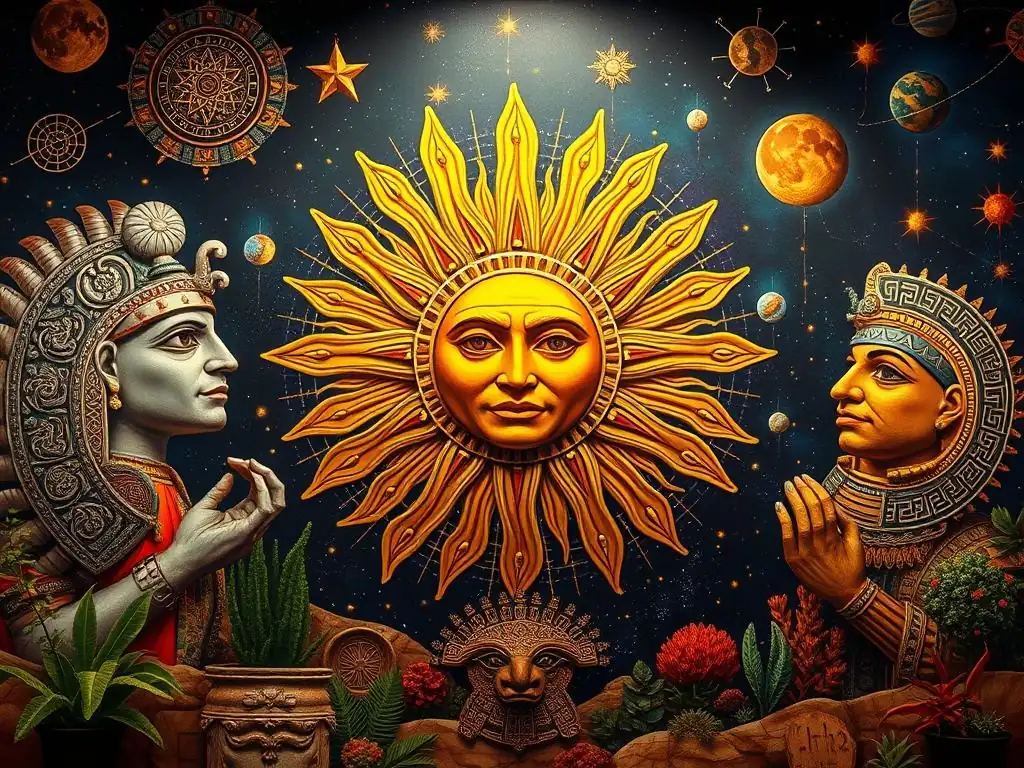
Welcome to Indigenous Civilizations of the Americas, where we invite you to embark on a fascinating journey through the rich tapestry of indigenous cultures that flourished across the Americas long before European contact. Dive into our featured article, "How Aztec Art Celebrated the Cosmos: Understanding Celestial Themes," and uncover the profound connection between art and the universe in Aztec society.
With celestial themes at the heart of their artistic expression, the Aztecs not only depicted the stars and gods but also wove a narrative that reflects their worldview. Curiosity awaits—read on to discover how these ancient masterpieces continue to inspire and resonate today!
- Introduction to Aztec Art and Celestial Themes
- Historical Context of Aztec Art
- Key Celestial Symbols in Aztec Art
- Techniques and Materials Used in Aztec Art
- Major Works of Aztec Art Featuring Celestial Themes
- The Influence of Celestial Themes on Aztec Society
- Conclusion: The Lasting Legacy of Aztec Celestial Art
-
Frequently Asked Questions
- What are celestial themes in Aztec art?
- How did the Aztecs incorporate astronomy into their artwork?
- What materials were commonly used in Aztec art related to celestial themes?
- In what ways did celestial themes influence Aztec society?
- Can you provide examples of celestial themes in specific Aztec artworks?
- Final Reflection: Embracing the Cosmos Through Aztec Art
- Unveil the Cosmos: Explore Aztec Art Today!
Introduction to Aztec Art and Celestial Themes
The rich tapestry of Aztec art serves as a profound reflection of the civilization's complex beliefs, values, and societal structure. From intricate carvings to vibrant murals, Aztec art is deeply interwoven with the cosmos, revealing a unique perspective on the universe that was pivotal to their cultural identity.
This article explores the fascinating intersection of Aztec art and celestial themes, highlighting how the cosmos influenced their artistic expressions and provided a framework for understanding their existence. By delving into the significance of celestial motifs in Aztec society, we can appreciate the sophistication of their worldview and the lasting impact of their artistic achievements on contemporary understanding of indigenous cultures.
Overview of Aztec Art: A Reflection of Culture
Aztec art is characterized by its intricate designs, symbolic representations, and the use of diverse materials. This art form was not merely for aesthetic pleasure but served various functions, including religious, social, and political purposes. Key elements in Aztec art include:
- Materials Used: The Aztecs utilized a wide range of materials such as clay, stone, and textiles, showcasing their skills in sculpture, pottery, and weaving.
- Symbolism: Much of Aztec art is imbued with symbolism, often reflecting their beliefs and practices. Common themes include nature, warfare, and deities, all intertwined with their understanding of the cosmos.
- Techniques: The Aztecs employed various techniques, including carving, painting, and mosaic work. These methods allowed them to create detailed and vibrant representations of their world.
The themes present in Aztec art often mirrored the society's values, including their reverence for the gods and the importance of the natural world. The celestial bodies, particularly the sun, moon, and stars, held significant meaning, influencing not only their artistic expressions but also their daily lives and rituals.
Importance of Celestial Themes in Aztec Society
Celestial themes played a crucial role in the fabric of Aztec society. The Aztecs viewed the cosmos as a dynamic and integral part of their existence, believing that celestial bodies influenced their fate and the natural world. Key aspects of this relationship include:
- Religious Significance: The Aztecs worshipped various deities associated with celestial phenomena, such as Tonatiuh, the sun god, and Tezcatlipoca, the god of the night sky. Artworks often depicted these gods, emphasizing their importance in rituals and ceremonies.
- Agricultural Calendar: The movement of celestial bodies was closely tied to agricultural cycles. The Aztecs relied on astronomical observations to determine planting and harvesting times, which were vital for their survival.
- Cultural Identity: The incorporation of celestial themes in art reinforced a collective identity among the Aztecs. It connected them to their ancestors and the universe, fostering a sense of belonging and continuity through their artistic expressions.
Through their art, the Aztecs communicated profound messages about their understanding of the cosmos, illustrating a civilization that was not only artistically gifted but also deeply attuned to the rhythms of the universe. The exploration of these celestial themes in Aztec art reveals a captivating narrative of a culture that thrived long before European contact, reminding us of the rich heritage of indigenous civilizations in the Americas.
Historical Context of Aztec Art
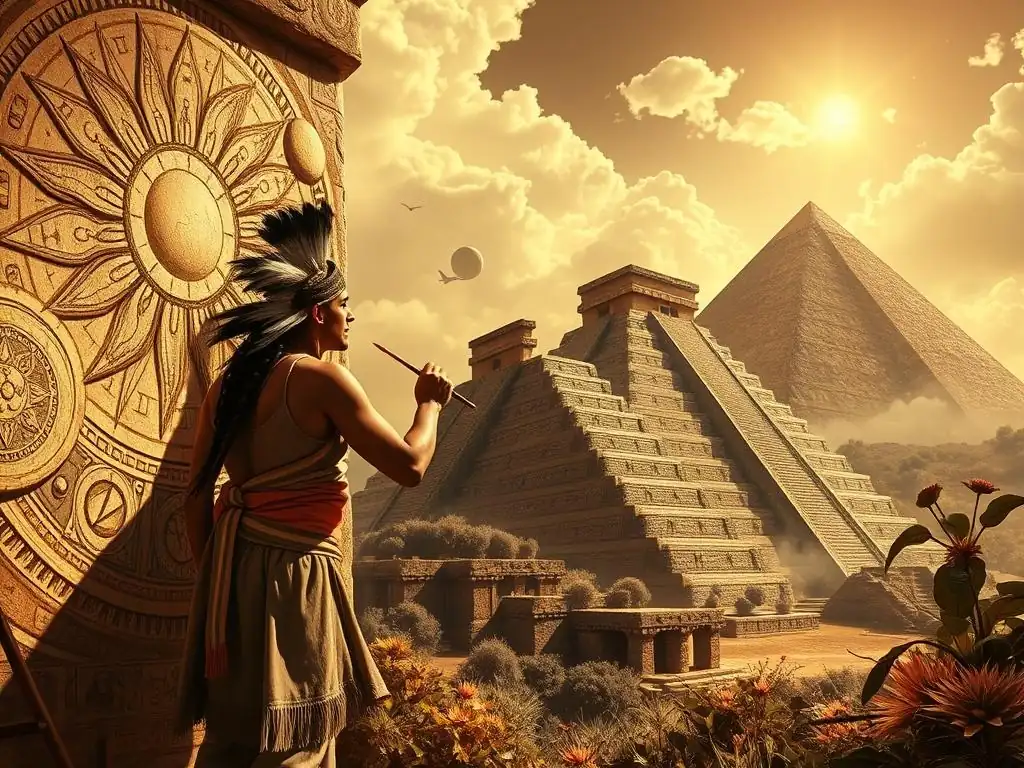
The historical context of Aztec art is deeply intertwined with the civilization's social, political, and religious framework. Emerging in the 14th century, the Aztec Empire was characterized by its complex societal structures and reverence for the cosmos, which played a vital role in their artistic expressions. The Empire thrived in the Valley of Mexico, and its capital, Tenochtitlan, became a bustling hub for trade, culture, and religion.
Aztec art was not merely an aesthetic endeavor; it served as a means to communicate the civilization's beliefs, values, and understanding of the universe. Artisans were often seen as custodians of cultural heritage, and their creations ranged from monumental sculptures to intricate pottery, all imbued with celestial significance. One cannot overlook the influence of earlier Mesoamerican cultures, such as the Olmec and Teotihuacan, which laid the groundwork for the artistic techniques and thematic elements that the Aztecs would adopt and adapt.
Influences on Aztec Art and Culture
The artistic styles and themes present in Aztec art were influenced by a multitude of factors, both internal and external. Key influences include:
- Mesoamerican Traditions: The Aztecs inherited artistic techniques from earlier civilizations. For example, the use of basalt and obsidian was prevalent, as seen in their impressive stone carvings and sculptures.
- Trade and Conquest: The vast reach of the Aztec Empire facilitated cultural exchange. Goods and artistic styles from conquered territories enriched Aztec art. For instance, the incorporation of featherwork and jade from the Gulf Coast reflected this syncretism.
- Social Hierarchy: Art was often commissioned by the elite, and themes frequently celebrated the nobility's connection to the divine. This hierarchical influence ensured that celestial themes were depicted in ways that reinforced the power of the ruling class.
- Cosmology and Calendar Systems: The intricate calendar system utilized by the Aztecs, consisting of the Tonalpohualli (260-day ritual calendar) and the Xiuhpohualli (365-day agricultural calendar), directly impacted their artistic representation of celestial events, showcasing the importance of time and celestial movements.
Aztec art is thus a rich tapestry woven from diverse influences, with celestial themes serving as a central motif that reflects their worldview.
The Role of Religion in Shaping Celestial Themes
Religion was a cornerstone of Aztec society, profoundly influencing their artistic expressions, particularly in relation to celestial themes. The Aztecs viewed the cosmos as a dynamic entity, governed by deities who dictated the rhythms of life and death. This profound connection is vividly illustrated in their artwork through various mediums:
- Deity Representation: Major gods such as Huitzilopochtli (god of war and the sun) and Tlaloc (god of rain) were frequently depicted in art. These representations not only honored the deities but also reinforced their significance in daily life and the cosmos.
- Ritualistic Art: Much of Aztec art was created for ceremonial purposes. Temples, altars, and sculptures often featured celestial motifs, such as the sun, moon, and stars, symbolizing the divine connection between the heavens and the earthly realm.
- Symbolism and Cosmology: The use of symbols, such as the Eagle and Jaguar, illustrated the Aztecs' understanding of the cosmos. The Eagle represented the sun, while the Jaguar was associated with the night and the underworld, showcasing the duality of existence.
- Calendrical Art: The Aztec calendar stone, a remarkable example of celestial-themed art, intricately illustrates the cosmos' cyclical nature and the importance of astronomical events in their religious practices.
The intersection of art and religion in Aztec culture is evident through the myriad ways celestial themes are expressed. The art not only served aesthetic purposes but also acted as a vessel for spiritual beliefs and cultural identity, firmly rooting the Aztecs' understanding of the cosmos in their artistic legacy.
Key Celestial Symbols in Aztec Art
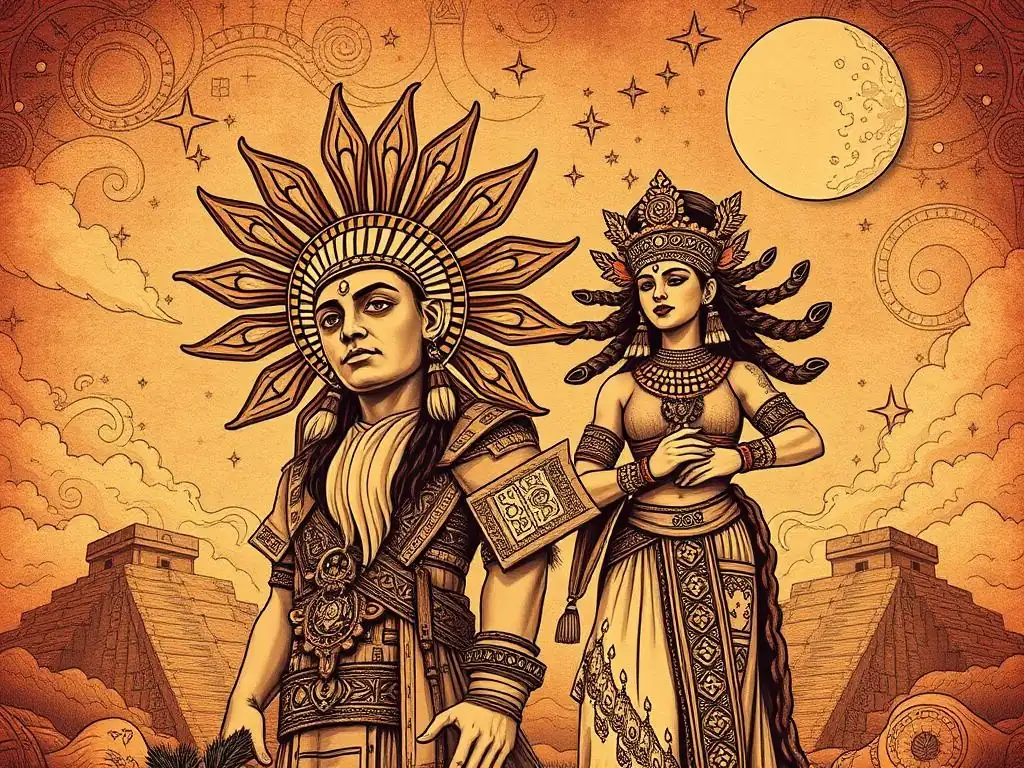
The Aztec civilization, known for its rich tapestry of mythology and symbolism, intricately wove celestial themes into its artistic expressions. These symbols not only reflected the culture's reverence for the cosmos but also played a pivotal role in their religious and social practices. Below, we explore some of the key celestial symbols that adorned Aztec art and their profound meanings.
Sun Symbolism: The Central Role of Huitzilopochtli
The sun held immense significance in Aztec culture, primarily embodied through the deity Huitzilopochtli, the god of war and the sun. His representation in Aztec art is a testament to his central role in their cosmology.
- Symbolic Representations:
- Huitzilopochtli is often depicted with a fiery sun motif, symbolizing his power and vitality. His image is frequently surrounded by rays or flames, emphasizing the sun's life-giving force.
- Artistic depictions of Huitzilopochtli also include elaborate headdresses adorned with feathers that mimic the sun's brightness and color.
- Cultural Importance:
- The Aztecs believed that the sun required nourishment in the form of human sacrifices to rise each day. This belief was reflected in their art through scenes of ritual sacrifice, showcasing the relationships between the celestial and terrestrial realms.
- Temples, such as the Templo Mayor, were dedicated to Huitzilopochtli, and their decorations often featured intricate carvings and murals that celebrated solar events and rituals.
This reverence for the sun highlights how integral it was to the Aztec worldview, influencing not only their art but also their daily lives and spiritual practices.
Moon Imagery: The Significance of Coyolxauhqui
In contrast to the sun, the moon held its own crucial place in Aztec art, primarily represented by Coyolxauhqui, the goddess of the moon and sister to Huitzilopochtli. Her imagery conveys a multifaceted role within their mythology.
- Artistic Depictions:
- Coyolxauhqui is often depicted with a face adorned with bells, symbolizing her connection to the night and the cycles of the moon. Artistic renditions may include elements that reflect the lunar phases, emphasizing her dynamic nature.
- The most notable representation of Coyolxauhqui is found in the stone disk discovered at the Templo Mayor, which illustrates her dismemberment, a powerful narrative of conflict and celestial balance.
- Symbolism and Ritual:
- The moon's cycles were closely tied to agriculture and the timing of rituals, making Coyolxauhqui an essential figure in the agricultural calendar.
- Artistic representations of her in murals and pottery often served to invoke her blessings, reflecting the duality of life and death, growth and decay, associated with the lunar phases.
Coyolxauhqui's significance in Aztec art underscores the complex relationship between the moon and the broader cosmos, illustrating how both celestial bodies were interwoven in the fabric of their cultural identity.
Stars and Constellations: Guiding Forces in Aztec Beliefs
The stars and constellations featured prominently in Aztec cosmology, serving as navigational guides and markers of time. Their representation in art reflects a deep understanding of astronomy and its importance in everyday life.
- Celestial Navigation:
- Aztec art often included star motifs, which were critical for agricultural practices and ceremonial timings. For instance, the Pleiades constellation was particularly significant, symbolizing the start of the agricultural season.
- Murals, codices, and sculptures frequently depicted these celestial bodies, demonstrating the Aztecs' profound connection to the cosmos as a source of guidance.
- Astrological Significance:
- Astronomical events, such as solstices and equinoxes, were celebrated through art and ritual, reinforcing the idea that the cosmos influenced human affairs.
- Specific stars and constellations were associated with various deities, and their depictions in ceremonial contexts served to honor these celestial beings, reinforcing their importance in daily life and governance.
The incorporation of stars and constellations in Aztec art exemplifies the civilization's sophisticated understanding of astronomy and its integral role in shaping their worldview, agricultural practices, and religious observances.
Through the lens of Aztec art, we see a civilization that not only revered celestial bodies but also intricately wove their significance into the very fabric of their cultural identity, guiding their spiritual beliefs and societal structures.
Techniques and Materials Used in Aztec Art
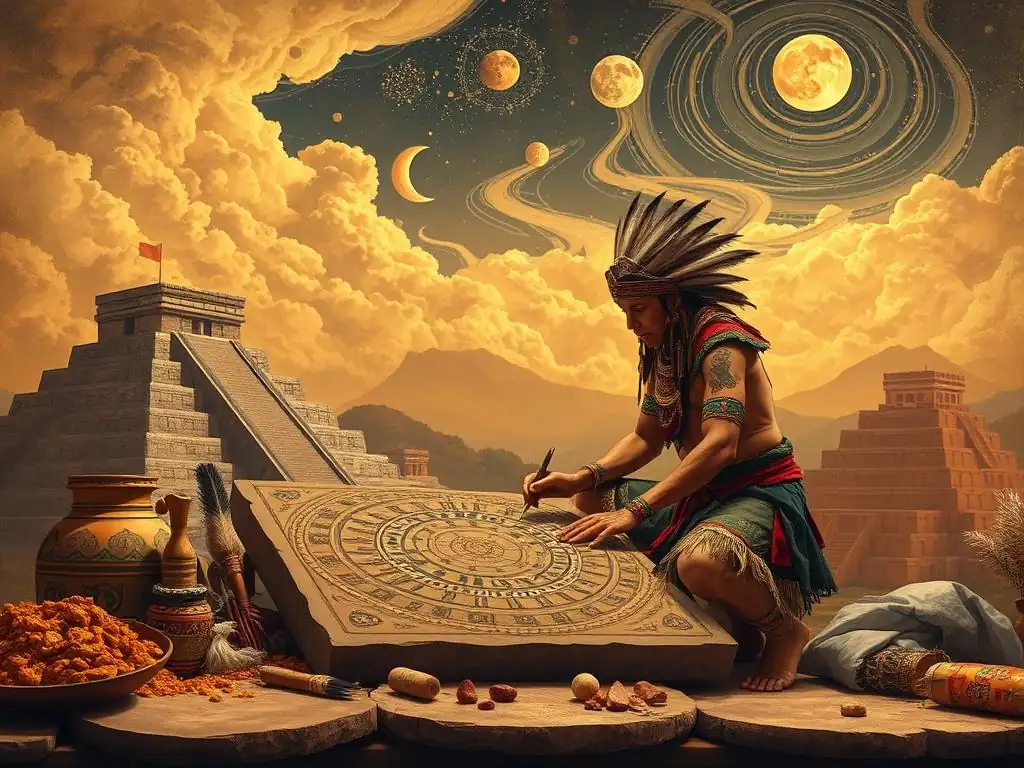
Aztec art is a profound reflection of the civilization's values, beliefs, and connection to the cosmos. The techniques and materials employed by Aztec artists were not only crucial for the aesthetic appeal of their works but also played a significant role in conveying celestial themes. Understanding these aspects provides insight into how the Aztecs celebrated the cosmos through their artistic expressions.
Common Materials in Aztec Artworks
The Aztecs utilized a range of materials sourced from their environment to create intricate artworks that often depicted celestial themes. Some of the most common materials included:
- Obsidian: This volcanic glass was highly valued for its sharpness and reflective qualities. Aztec artists used obsidian to craft tools and ceremonial objects, often depicting celestial bodies and gods.
- Jade: Representing purity and life, jade was a preferred material for crafting jewelry and ceremonial masks. Its green hue symbolized the fertility of the earth and the heavens.
- Clay: Widely used for pottery and figurines, clay was molded into various forms that represented deities and celestial phenomena. The finished products were often painted with natural pigments to enhance their visual impact.
- Feathers: Bird feathers, particularly those from quetzals, were used to create vibrant headdresses and decorative items. The incorporation of feathers symbolized the connection between the earthly realm and the celestial.
- Textiles: The Aztecs wove intricate textiles from cotton and other fibers, often featuring designs that mirrored celestial themes, such as stars and constellations.
Table of Common Materials in Aztec Art
| Material | Description | Celestial Symbolism |
|---|---|---|
| Obsidian | Volcanic glass used for tools and art | Reflects the cosmos and sharpness of vision |
| Jade | Precious stone for jewelry | Symbolizes life, fertility, and heavens |
| Clay | Malleable earth for pottery | Represents creation and fertility |
| Feathers | Ornamental materials from birds | Links the earthly to the celestial |
| Textiles | Woven fabrics with celestial designs | Reflects the beauty of the cosmos |
Artistic Techniques that Highlight Celestial Themes
The techniques employed in Aztec art were as diverse as the materials used. Many artistic methods specifically emphasized celestial themes, allowing artists to convey their reverence for the cosmos. Key techniques included:
- Relief Carving: Aztec sculptors often used relief carving to depict celestial bodies and mythological scenes. This technique created a three-dimensional effect that brought the cosmos to life, allowing viewers to experience the art from different angles.
- Mosaics: Using small pieces of stones, shells, or glass, Aztec artisans created intricate mosaics that portrayed celestial motifs, such as the sun, moon, and stars. These mosaics were often used in temples and public spaces, reinforcing the importance of celestial themes in their culture.
- Painting: Aztec painters utilized natural pigments to create vibrant murals and codices that depicted celestial narratives. These artworks often illustrated the movements of celestial bodies and their significance in Aztec mythology.
- Ceremonial Practices: Art was closely tied to ritualistic practices. Ceremonial objects, adorned with celestial imagery, were used in religious rites to honor the gods associated with the cosmos, such as Tonatiuh, the sun god.
- Symbolism and Iconography: The use of specific symbols and icons in Aztec art conveyed deeper meanings related to the cosmos. For example, the spiral often represented the cyclical nature of time and the universe, reflecting the Aztec understanding of celestial movements.
The artistic techniques employed by the Aztecs were integral to their cultural identity, allowing them to express their profound connection to the cosmos. By exploring these techniques and materials, we gain a deeper appreciation for how Aztec art and celestial themes intertwined to reflect the civilization's worldview.
Major Works of Aztec Art Featuring Celestial Themes
Detailed Analysis of the Sun Stone
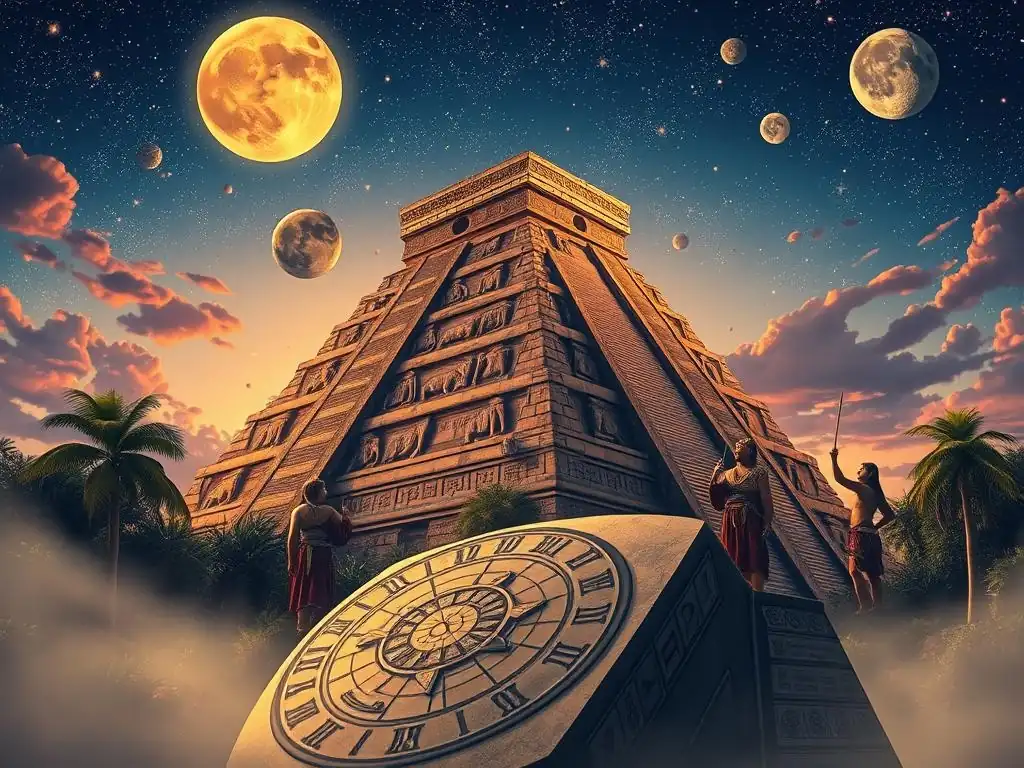
The Sun Stone, also known as the Calendar Stone, is one of the most iconic pieces of Aztec art that encapsulates the civilization's celestial themes. This massive monolithic sculpture, measuring approximately 3.6 meters in diameter, serves not only as a monumental artwork but also as a complex cosmological representation.
Central Imagery and Symbolism
At the heart of the Sun Stone is a depiction of Tonatiuh, the sun god, who is illustrated with a prominent face surrounded by a series of symbols representing various celestial aspects. Each of these symbols corresponds to the four previous suns in Aztec mythology, each of which was associated with a specific era of creation and destruction. The stone is intricately carved with glyphs and other celestial motifs that convey the movement of celestial bodies and the cyclical nature of time.
- Key Elements:
- Tonatiuh: Represents the current sun and the Aztec belief in the necessity of human sacrifice to sustain its energy.
- Four Suns: The representations of the epochs preceding the current one, highlighting the Aztec understanding of cosmic cycles.
- Surrounding Symbols: Various markers around the edge indicate the days and months in the Aztec calendar, linking the cosmic and terrestrial realms.
Exploration of the Calendar Stone
While commonly referred to as the Sun Stone, the Calendar Stone expands on the theme of time and celestial navigation in Aztec culture. This stone functions as a sophisticated calendar system, showcasing the Aztecs' advanced understanding of astronomy.
Calendar Structure and Function
The Calendar Stone is divided into intricate segments, each representing different time cycles, including the tonalpohualli (the 260-day ritual calendar) and the xiuhpohualli (the 365-day solar calendar). The dual structure reflects the Aztec belief in the interplay between the sacred and the solar year.
- Components:
- Central Circle: Marks the current era, emphasizing the continuity of time and the importance of celestial bodies in their agricultural practices.
- Outer Rings: Feature symbols representing days, deities, and significant cosmic events, demonstrating the connection between celestial occurrences and daily life.
Cultural Impact
The Calendar Stone not only serves as an art piece but also embodies the spiritual and practical aspects of Aztec life. Its carvings remind the viewer of the importance of celestial cycles in agriculture, ritual practices, and social organization.
Significance of the Templo Mayor in Understanding Cosmos
The Templo Mayor, or Great Temple, was the central religious structure of the Aztec capital, Tenochtitlan, and plays a crucial role in understanding the cosmological beliefs of the Aztecs. This temple was dedicated to both Huitzilopochtli, the god of war and the sun, and Tlaloc, the rain god, symbolizing the duality of life and death, war and fertility.
Architectural Alignment and Symbolism
The Templo Mayor's construction was not merely a display of architectural prowess; it was designed with astronomical alignment in mind. The orientation of the temple was aligned with key celestial events, such as solstices and equinoxes, allowing priests to perform rituals in accordance with cosmic cycles.
- Key Features:
- Dual Temples: The structure incorporates two main temples, representing the balance between opposing forces and the harmony of the cosmos.
- Ritual Significance: The temple served as the site for numerous ceremonies that reinforced the Aztecs' relationship with the cosmos, including the New Fire Ceremony, which marked the end of a cycle and the beginning of a new one.
Cultural Context
The Templo Mayor is not only an architectural marvel but also a testament to the Aztec worldview, where the celestial realm was intricately linked to their daily existence. The rituals performed here were essential for ensuring cosmic balance and agricultural prosperity, reflecting the profound significance of celestial themes in Aztec art and culture.
These major works of Aztec art—ranging from the Sun Stone to the Calendar Stone and Templo Mayor—underscore the sophistication of Aztec civilization in its celebration of celestial themes. Each piece reflects a deep understanding of astronomy, spirituality, and the interconnection between the cosmos and earthly life.
The Influence of Celestial Themes on Aztec Society
Celestial Events and Their Impact on Daily Life
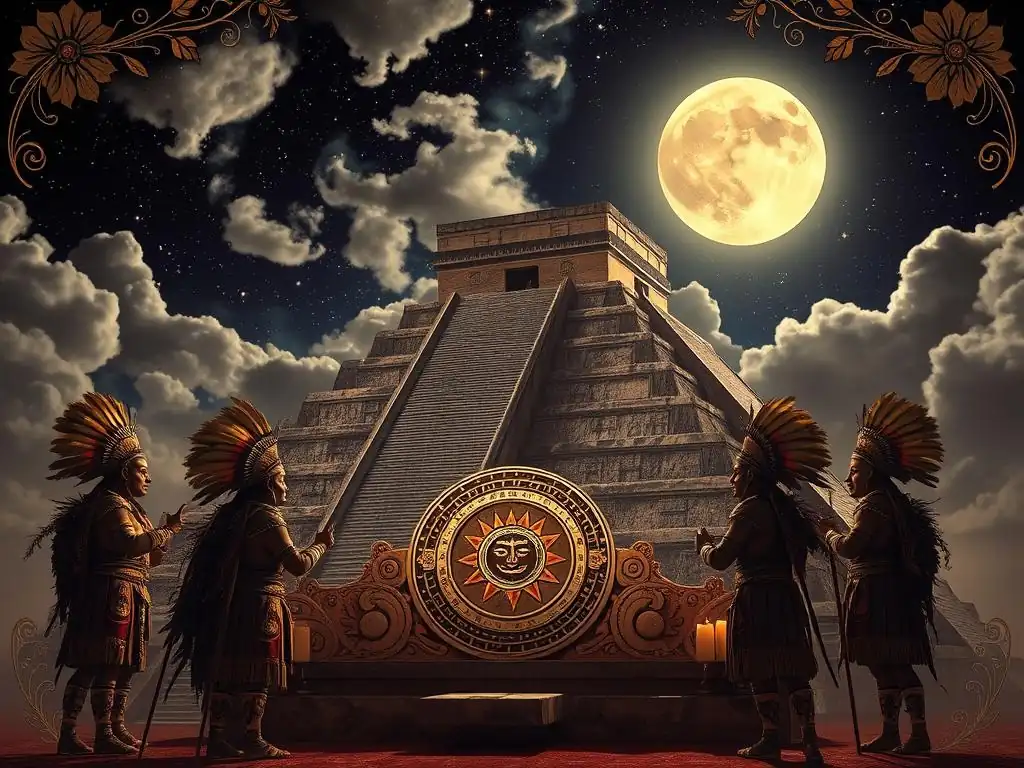
Celestial events played a crucial role in the daily lives of the Aztecs, influencing their agricultural practices, religious observances, and social organization. The movement of the sun, moon, and stars was closely monitored as these cosmic phenomena were believed to dictate the rhythm of life.
The Aztecs developed a sophisticated calendar system, known as the Tonalpohualli, which consisted of 260 days divided into 20 periods of 13 days each. This calendar not only tracked time but also linked specific days to celestial events and deities. The solar calendar, or Xiuhpohualli, with its 365-day cycle, was essential for agricultural planning. Farmers relied on these celestial indicators to determine the best times for planting and harvesting crops, such as maize, beans, and squash.
Furthermore, the Aztecs believed that celestial occurrences, such as solar eclipses or the appearance of certain stars, were omens that could significantly impact their society. For instance, an eclipse might be interpreted as a sign of impending doom or a need for ritual sacrifice to appease the gods. Such beliefs were deeply ingrained in the Aztec psyche, influencing everything from politics to personal decisions.
Celebrations and Rituals Connected to Solar and Lunar Events
The Aztecs celebrated various rituals and festivals that were intricately tied to solar and lunar events, reflecting their reverence for celestial bodies. These celebrations were not only religious in nature but also served to reinforce social cohesion and cultural identity.
One of the most significant solar festivals was the Tlacaxipehualiztli, dedicated to the god Xipe Totec, which marked the arrival of spring. During this event, the Aztecs performed elaborate ceremonies that included ritual sacrifices, music, and dance. The symbolism of death and rebirth was essential, as the Aztecs believed that the sun needed nourishment from human blood to continue its journey across the sky. This festival illustrated how Aztec art and culture celebrated celestial themes by intertwining the natural world with spiritual beliefs.
Another essential event was the Panquetzaliztli, a festival in honor of Huitzilopochtli, the sun god. Taking place during the winter solstice, this celebration symbolized the sun's rebirth and included the lighting of fires, offerings, and the creation of intricate artworks that depicted celestial motifs. The use of vibrant colors and elaborate designs in Aztec art during these festivities showcased their strong connection to the cosmos.
In addition to these grand celebrations, everyday rituals were often aligned with lunar phases. The Lunar Calendar guided various agricultural and ceremonial activities, ensuring that the community remained in harmony with the celestial cycle. For example, planting was typically done in accordance with the lunar phases, believing that the moon's position would influence crop growth.
Celestial themes in Aztec art were not merely aesthetic; they were deeply intertwined with the society's daily life, rituals, and worldview. The celebration of celestial events through art and culture reflects the profound respect the Aztecs held for the cosmos and its influence on their existence.
Conclusion: The Lasting Legacy of Aztec Celestial Art
The legacy of Aztec art, particularly in relation to celestial themes, continues to resonate in contemporary discourse and artistic expression. The intricate ways in which the Aztecs represented the cosmos through their art are not merely historical artifacts; they are reflections of a worldview that integrated spirituality, nature, and the universe itself. This art encapsulated their profound understanding of celestial bodies, which were believed to influence both the natural world and human affairs.
Through vibrant murals, intricate stone carvings, and ceremonial artifacts, the Aztecs expressed their reverence for the cosmos, depicting deities associated with celestial phenomena and illustrating the cycles of life, death, and rebirth. The duality of existence portrayed in these works—life and death, earth and sky—invites modern viewers to reflect on their own relationships with the universe and the natural world.
As we explore these artistic representations today, we gain insights not only into Aztec civilization but also into broader themes of humanity's quest for meaning within the cosmos. The legacy of Aztec celestial art encourages us to appreciate the spiritual dimensions of art and its role in shaping cultural identity, making it a vital area of study for both historians and artists alike.
Reflection on the Importance of Celestial Themes in Modern Understanding
Celestial themes in Aztec art serve as a bridge connecting ancient beliefs with modern understandings of the universe. The Aztecs viewed celestial bodies as living entities, integral to their cosmology and daily life. This perspective is crucial for contemporary scholars and enthusiasts, as it opens discussions on how ancient cultures interpreted their environment and existence.
Modern interpretations of Aztec celestial art reveal fascinating parallels with present-day astronomical discoveries and theories. For instance, the Aztec calendar, intricately designed with celestial motifs, signifies their advanced understanding of astronomical cycles. This not only highlights their scientific acumen but also their ability to intertwine art, spirituality, and science, a synthesis that modern society often strives for but frequently overlooks.
Moreover, the continued interest in celestial themes in art today reflects humanity's ongoing fascination with the cosmos. Artists and thinkers draw inspiration from the celestial motifs of the Aztecs, embedding these ancient symbols into contemporary works that explore identity, existence, and our place in the universe. This dialogue between past and present emphasizes the importance of preserving and studying Aztec celestial art, as it enriches our understanding of both history and modern artistic expression.
Future Research Directions on Aztec Art and Cosmos
The study of Aztec art and its celestial themes remains an evolving field with numerous avenues for future research. Scholars can delve deeper into the following areas:
- Comparative Analysis:
- Investigating the similarities and differences between Aztec celestial motifs and those found in other Mesoamerican cultures, such as the Maya and Olmec. This could reveal shared beliefs and unique interpretations of the cosmos.
- Symbolism and Interpretation:
- Analyzing the specific symbols and motifs used in Aztec celestial art to uncover deeper meanings and connections to other aspects of Aztec society, such as agriculture, warfare, and mythology.
- Technological Advancements:
- Utilizing modern technologies, such as 3D modeling and digital archiving, to reconstruct and visualize Aztec art in its original context. This could provide new insights into their artistic techniques and cultural significance.
- Interdisciplinary Approaches:
- Engaging in interdisciplinary studies that combine anthropology, astronomy, art history, and cultural studies to create a holistic understanding of how the Aztecs viewed their universe and expressed this through art.
- Public Engagement:
- Fostering public interest and understanding of Aztec celestial art through educational programs, exhibitions, and community engagement initiatives that highlight the relevance of these ancient themes in today's world.
By pursuing these directions, researchers can further illuminate the complexities of Aztec art and its celestial dimensions, ensuring that the legacy of this vibrant civilization continues to inspire and inform future generations.
Frequently Asked Questions
What are celestial themes in Aztec art?
Celestial themes in Aztec art refer to the depictions of celestial bodies such as the sun, moon, and stars, which were significant in their religious beliefs and cosmology.
How did the Aztecs incorporate astronomy into their artwork?
The Aztecs used astronomy to create art that reflected their understanding of the universe, often depicting celestial events in their murals, sculptures, and ceramics.
Aztec artists typically used natural materials such as stone, clay, and plant fibers to create their artworks, which often showcased intricate designs highlighting celestial motifs.
In what ways did celestial themes influence Aztec society?
Celestial themes played a crucial role in Aztec rituals and ceremonies, influencing their agricultural practices, calendar systems, and overall worldview regarding the connection between the heavens and their earthly existence.
Can you provide examples of celestial themes in specific Aztec artworks?
Notable examples include the Sun Stone, which represents the solar calendar, and various codices that illustrate celestial events, showcasing the integration of art and astronomy in Aztec culture.
Final Reflection: Embracing the Cosmos Through Aztec Art
The profound connection between Aztec art and celestial themes remains strikingly relevant today, as we continue to explore our place in the universe. The intricate depictions of the cosmos in Aztec art not only reveal the civilization’s advanced understanding of astronomy but also highlight the importance of celestial bodies in shaping their cultural identity. In an age where we grapple with existential questions about our own existence and the universe, the Aztecs remind us of the timeless quest for meaning beyond our earthly experiences.
Celestial themes in Aztec art have left an indelible mark on our cultural landscape, inspiring contemporary artists and thinkers alike. The way the Aztecs intertwined their artistic expression with their understanding of the cosmos serves as a powerful reminder of the interconnectedness of art, science, and spirituality.
As the renowned artist and scholar Octavio Paz once said, “Art is the most beautiful of all lies; it is the truth that reveals itself.” > This quote encapsulates the essence of how Aztec art transcends mere aesthetics, inviting us to delve deeper into the truths of our existence and our relationship with the universe.
As we reflect on the lessons from Aztec art, let us embrace the invitation to look beyond the surface of our daily lives and seek a deeper connection with the cosmos. Consider how you can incorporate the appreciation of celestial themes into your own life, whether through art, nature, or personal reflection. By doing so, we honor the legacy of the Aztecs and their celebration of the universe, allowing their wisdom to guide us as we navigate our own journeys through the stars.
Unveil the Cosmos: Explore Aztec Art Today!
Thank you for diving into the fascinating world of Aztec art and its celestial themes! Your interest in how these ancient cultures celebrated the cosmos enriches your understanding of their rich heritage. Now, it’s time to put that knowledge into action!
Here’s how you can continue your journey of exploration:
- Visit a local museum or an online gallery dedicated to indigenous art to experience these celestial themes firsthand.
- Share your newfound insights with friends and family; consider organizing a discussion or an art night inspired by Aztec motifs.
- Create your own celestial art piece using traditional Aztec patterns to express your personal connection with the cosmos!
What celestial themes resonate with you the most in your daily life, and how do you believe they influence modern art today?