Metallurgy and Materials: The Ingenious Craftsmanship of Indigenous American Civilizations
When we think of pre-Columbian achievements, metallurgy and materials science often take a backseat to monumental architecture or astronomical calendars. Yet, indigenous civilizations across the Americas developed sophisticated techniques for working with gold, silver, copper, alloys, and natural fibers—techniques that rivaled and sometimes surpassed those of contemporary Eurasian societies. This subcategory explores how cultures from the Andes to Mesoamerica and the Eastern Woodlands transformed raw materials into tools, ceremonial objects, and trade goods that underpinned their social, religious, and economic life. Here, you will uncover not simply artifacts, but the deep knowledge systems and innovative processes that defined their material world.
🔨 Lost-Wax Casting and Precious Metal Mastery in the Andes
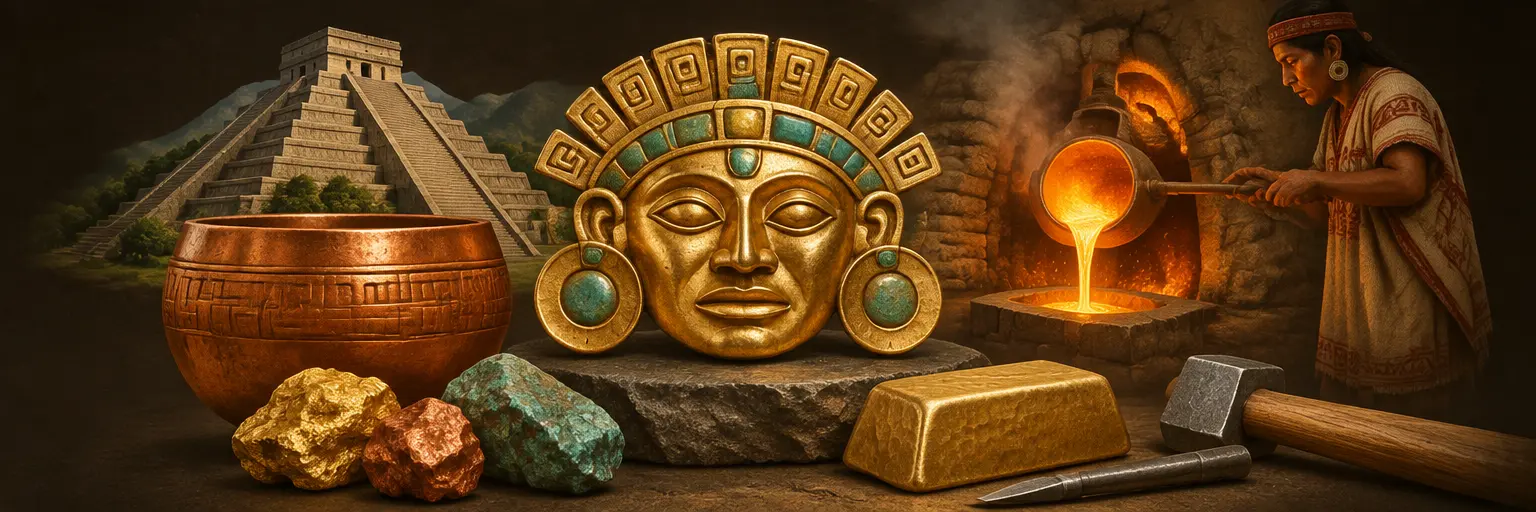
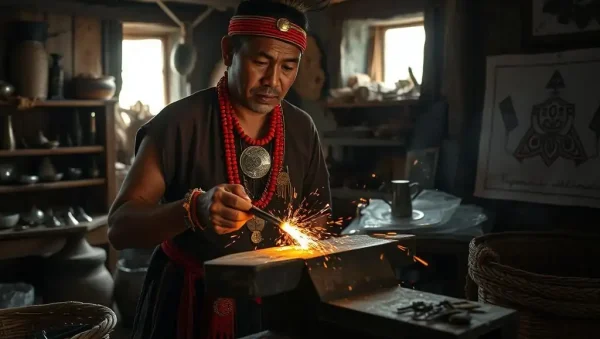
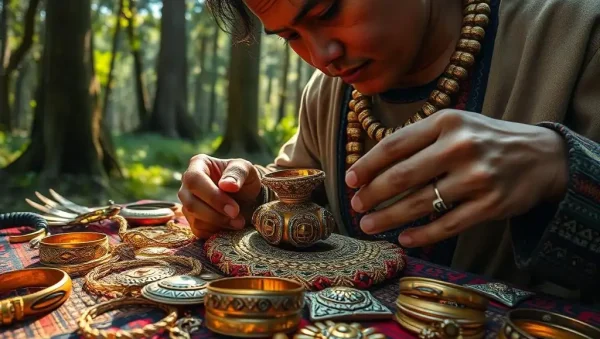
The Andean civilizations, particularly the Moche, Chimú, and Inca, perfected lost-wax casting, a technique that allowed them to create intricate gold and silver ornaments with remarkable precision. They did not mine ore for its glamour alone; they used metallurgy to express political power, religious devotion, and cosmological order. The famous tumi knives and ceremonial masks demonstrate a fusion of artistic vision and metallurgical skill that required controlled temperatures, alloying expertise, and deep knowledge of oxidation states.
What truly sets Andean metallurgy apart is their focus on surface treatment—gilding copper by electrochemical displacement and using arsenic bronze for functional tools. Unlike European emphasis on purity, Andean smiths valued the visual and acoustic properties of metals, often using them in ritual contexts where sound and reflection mattered. This section offers a window into their workshops, trade networks, and the symbolic meanings embedded in every hammered or cast piece.
🏺 Mesoamerican Ceramics and Alloys: From Obsidian to Gold
Mesoamerican cultures like the Aztec and Maya achieved extraordinary advances in obsidian and ceramic technologies, creating razor-sharp blades that were harder than steel and pottery that served both utilitarian and ceremonial roles. Obsidian tools, crafted through controlled conchoidal fracturing, were so precise that they were used for delicate surgery and ritual bloodletting. Meanwhile, their ceramic traditions produced polychrome vessels with complex firing techniques, including oxidation and reduction atmospheres that yielded distinctive reds, blacks, and oranges.
Interestingly, Mesoamerica had limited gold working compared to South America, but they excelled in copper-tin and copper-arsenic alloys in the western regions, especially among the Tarascan people. These alloys were used for bells, tweezers, and needles, often as status markers. This H3 section reveals how geography and resource availability shaped divergent metallurgical paths, and how materials were integrated into calendars, codices, and burial offerings—each object a testament to their advanced understanding of chemistry and craftsmanship.
🪓 Eastern Woodlands and the Rise of Copper Culture
Long before European contact, indigenous peoples of the Great Lakes region, particularly the Old Copper Complex, were cold-hammering native copper into spearheads, axes, and jewelry—a tradition dating back over 7,000 years. This was not smelting but skillful manipulation of natural copper nodules, requiring annealing (heating and cooling) to prevent brittleness. Their work predated Andean metallurgy and shows that innovation was not monopoly of tropical highlands but flourished in temperate forests too.
By the Mississippian period (800–1600 CE), copper had become a prestige material for elites. Materials like shell, mica, and galena were also crafted into elaborate ornaments found at sites like Cahokia. The production of these goods demanded specialized knowledge of material properties, including elasticity, flaking, and luster. This section explores how the Eastern Woodlands created a vibrant materials culture that connected communities through long-distance trade and ceremonial exchange, demonstrating that “advanced metallurgy” is not solely about smelting but about resourcefulness and cultural sophistication.
🧵 Textiles and Natural Materials: Weaving Knowledge into Everyday Life
While metals dominate discussions, indigenous American ingenuity in textiles and plant-based materials is equally profound. Andean weavers produced the finest cotton and camelid-fiber textiles in the world, using backstrap looms and complex techniques like warp-faced weaving and ikat dyeing. They achieved over 200 distinct hues from natural dyes like cochineal (carmine red) and indigo, and their textiles were more valuable than gold in many sociedades. These fabrics carried tocapu symbols that encoded genealogies and territorial claims.
From Amazonian barkcloth to Mexican amate paper, materials were not passive resources but active conveyors of knowledge. The Maya used rubber from the Castilla elastica tree to create balls for their ritual ballgame, while the Northwest Coast peoples shaped cedar to build monumental totem poles. Each material had its own theology, seasonality, and craft specialization. This H3 highlights how material science in the Americas was deeply interwoven with ecological intelligence, spiritual beliefs, and social organization, challenging modern divisions between “art” and “engineering.”
⚒️ Engineering and Tool Innovation: Beyond the Golden Gloss
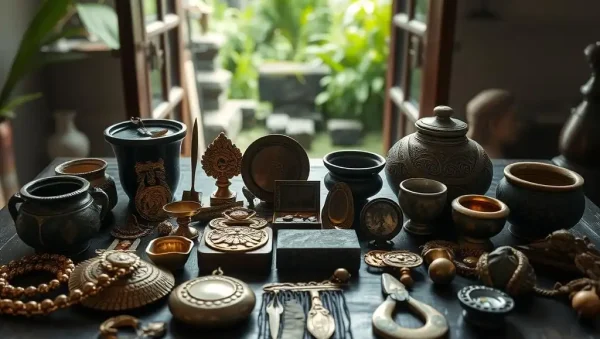
Beneath the glitter of gold and silver lay a pragmatic world of utilitarian metallurgy. The Inca perfected bronze alloys for agricultural implements like the chaquitaclla (foot plow) and for war clubs, while smiths in Colombia’s Muisca region created tumbaga—a gold-copper alloy with a lower melting point—to simplify casting. These innovations improved agricultural productivity, military effectiveness, and craft output. They also developed specialized tools like copper chisels for carving stone and drills for bead perforation, many of which have been recovered from archaeological sites.
Equally important were non-metallic tools: the Maya and Aztec used obsidian macuahuitl (wooden swords edged with obsidian blades) that could sever a horse’s head, according to Spanish chronicles. The use of impact-resistant materials like hickory and stone hammer heads shows a pragmatic understanding of mechanics. This section presents a comparative look at how different regions solved engineering problems—from drainage systems to seaworthy canoes—using locally available materials, proving that indigenous innovation was not accidental but systematic and experimental.
Frequently Asked Questions
Did indigenous Americans independently develop metallurgy before European contact?
Yes. Andean civilizations independently developed smelting and alloying around 2000 BCE, including copper, gold, silver, and later bronze, long before Spanish arrival. Mesoamerican cultures like the Tarascans also mastered copper metallurgy, while others used native metals. The Old Copper Complex in North America cold-worked copper even earlier. These were autonomous inventions, not transmissions from the Old World.
What was the primary function of gold in pre-Columbian societies—economic or ceremonial?
Primarily ceremonial and symbolic. Gold was not used as currency but as a material for elite adornments, religious offerings, and status displays. Its shimmering color was associated with the sun, life, and divine power. For example, Inca emperors wore gold regalia to embody the sun god Inti. Some Andean cultures did use gold in trade, but its main value was ideological.
How did indigenous metallurgists achieve such precise casting without modern tools?
They used lost-wax casting, where a wax model is surrounded by clay, heated to melt the wax, and then metal is poured into the hollow mold. They controlled furnace temperatures through blowpipe and bellows and manipulated alloys to adjust melting points. Their familiarity with mineral ores such as malachite (copper) and silver sulfides came from generations of trial-and-error and oral knowledge passed down through artisan guilds.
Were textiles more important than metals in any specific indigenous culture?
Yes, in the Andes, textiles were valued higher than gold in many contexts. They served as currency, tax payment, military rewards, and even burial shrouds. For the Inca, the qompi cloth (finest-grade textile) was restricted to royalty. Textiles were lighter, more portable, and more expressive of cultural identity than metal objects, making them a paramount material achievement.
Are any indigenous metallurgy techniques still used or preserved today?
Many techniques persist among artisan communities, such as Marta’s weaving traditions in the Andes and Filigree goldsmithing in Colombia’s Pacific coast. Museums and cultural centers have revived lost-wax casting for replicas, and indigenous scholars are documenting ancient processes. However, some chemical recipes (like specific dyes or gilding acids) were lost during colonial suppression. Modern archaeologists and metalworkers collaborate to reconstruct these methods for education and craft revival.