Mastery in Materials: How Ancient Cultures Created Durable Tools
🌍 Ancient indigenous toolmaking techniques reveal the remarkable ingenuity of pre-colonial cultures. This article delves into how these societies mastered materials to…
Read article
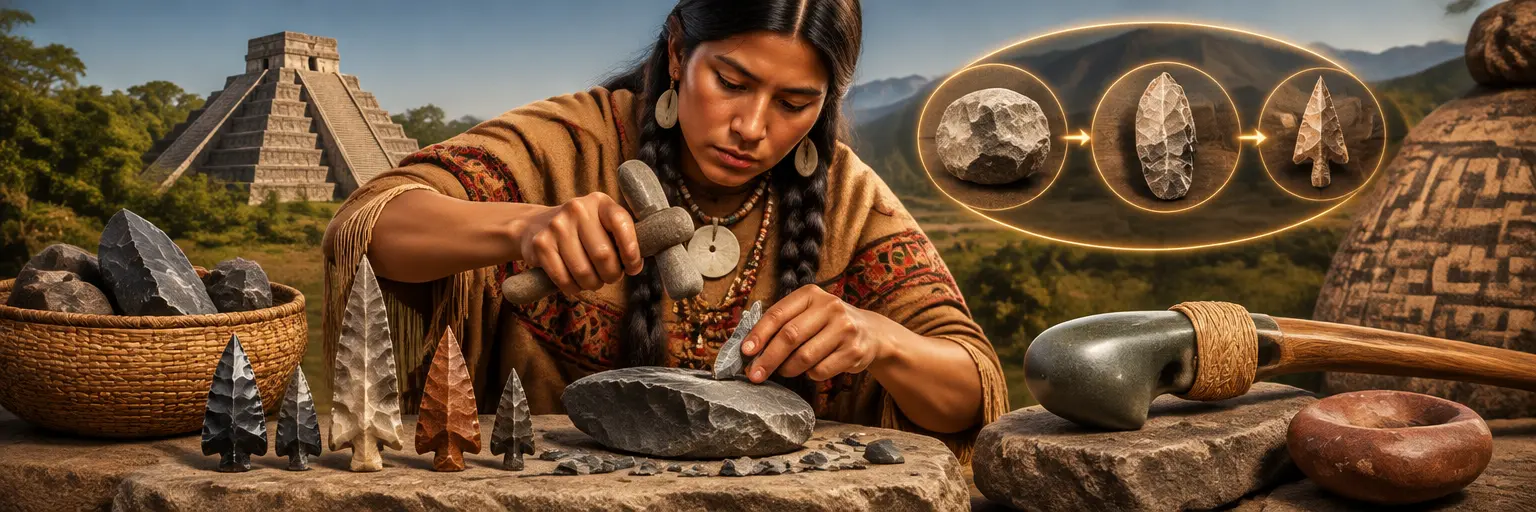
Discover the ingenuity of ancient American tool manufacturing technologies, where innovation met necessity to shape thriving civilizations. From meticulously crafted obsidian blades sharper than modern steel to sophisticated stone projectile points designed for hunting and warfare, these technologies reveal a deep understanding of materials science. Indigenous peoples perfected techniques like pressure flaking and heat treatment to transform raw stone, bone, and wood into precision instruments—including agricultural implements like the digging stick and ceremonial tools that fused function with artistry. This achievement highlights not just survival, but advanced engineering and cultural expression that predates European contact. Explore how these sustainable, locally-sourced innovations supported complex economies, trade networks, and daily life. Ideal for history enthusiasts, educators, and curious minds, this content underscores the lasting legacy of Native American craftsmanship and its influence on modern archaeological understanding. Uncover the skill and precision behind every chipped edge and polished surface, a testament to human creativity.
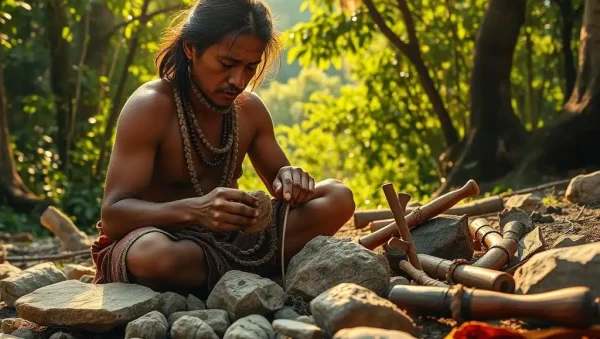
🌍 Ancient indigenous toolmaking techniques reveal the remarkable ingenuity of pre-colonial cultures. This article delves into how these societies mastered materials to…
Read article
🌍 Explore the indigenous tools evolution history, showcasing how diverse civilizations transitioned from rudimentary stone instruments to advanced steel tools, reflecting their…
Read article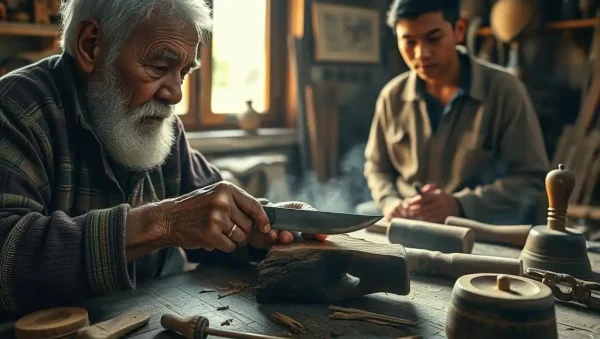
🌍 Indigenous toolmaking skills transmission is a vital part of cultural heritage, showcasing how generations have preserved vital techniques and knowledge. This…
Read article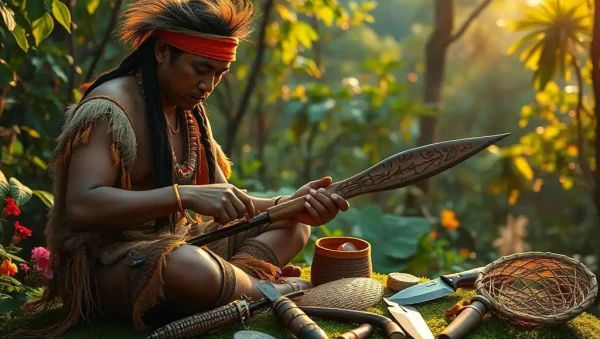
🌿 Indigenous hunting and gathering tools showcase the remarkable ingenuity of pre-colonial cultures in the Americas. This article delves into innovative techniques…
Read articleExplore how Indigenous civilizations of the Americas transformed raw stone, bone, wood, and metals into precision tools that enabled agriculture, construction, warfare, and daily survival. Far from primitive, these technologies reveal deep scientific knowledge, regional innovation, and sustainable practices that rivaled Old World metallurgy. This subcategory highlights the hidden genius behind every arrowhead, grinding stone, and copper axe—a legacy of adaptive engineering that shaped entire continents for millennia.
Indigenous toolmakers perfected flintknapping—the art of chipping stone into razor-sharp edges—over 12,000 years ago. Using antler hammers, copper billets, and pressure flakers, they produced projectile points, scrapers, and knives with remarkable consistency. Obsidian, sourced from volcanic regions like central Mexico, could be fractured to edges only a few nanometers thick, outperforming surgical steel in cutting experiments. These technologies allowed efficient hunting, hide processing, and woodworking, while regional variations—such as Clovis, Folsom, and later arrowhead styles—demonstrate rapid cultural adaptation to changing climates and prey.
Beyond simple sharpness, lithic toolmakers understood fracture mechanics, using heat treatment to alter the crystalline structure of chert or flint for easier flaking. They also mastered bifacial reduction techniques, producing symmetrical blades that could be hafted onto spears or handles with natural adhesives like pine pitch and sinew. Recent experiments show these tools remained functional for repeated use, and ancient quarries like Texas’s Alibates flint were traded over 1,000-mile networks—proving a sophisticated economy built around tool production.
Long before European contact, Indigenous peoples of the Andes and western Mexico developed cold-hammering and smelting techniques for copper, gold, silver, and even platinum. The Moche civilization (100–800 CE) crafted intricate copper tools, ornaments, and weapons using lost-wax casting and arsenic bronze, which increased hardness for agricultural implements. In West Mexico, the Tarascan peoples produced copper bells and axes, while Andean smiths used blowpipes and shaft furnaces to achieve temperatures near 1,100°C—sufficient to melt copper. These metallurgies were not merely decorative; they enabled efficient fishing hooks, needles, and ceremonial regalia.
Unlike Eurasian metallurgy, many Indigenous traditions viewed metal as sacred and transformative, linking toolmaking to ritual power. For example, Inca metalworkers used tumbaga (gold-copper alloy) for both decorative and utilitarian objects, often combining casting with annealing to increase flexibility. Recent archaeometallurgy studies reveal that Andean smiths controlled oxygen levels to produce different copper oxides, showing advanced thermodynamic knowledge. While bronze was less common than in the Old World, its selective use for cutting edges (like Tumaco axes) proves that experimentation was continuous and regionally specialized.
Agricultural revolutions across the Americas relied on digging sticks, coa hoes, and wooden rakes, often hardened by fire or reinforced with stone blades. The Maya and Aztec used coas—flat, curved digging tools—to plant maize and beans in raised fields, while the Inca developed the chakitaklla, a foot-plow with a bronze tip. Bone tools, such as awls and needles made from deer or bird bones, enabled fine leatherwork and weaving, especially among Plains nations. Shell scrapers and fishhooks, crafted from mussels or conch, were essential along coastal regions, and given their sharpness, they were often exchanged inland for obsidian or chert.
These perishable tools are rarely preserved, but experimental archaeology shows they were highly effective—a fire-hardened wooden digging stick can penetrate clay soils 30% faster than a steel trowel in optimal moisture. Masterful joinery with sinew, resin, and lashings held composite tools together, such as the Inuit harpoon with a detachable toggling head. Moreover, the choice of specific wood types (e.g., oak for handles, dogwood for hardpoints) reflects empirical knowledge of density, flexibility, and rot resistance. Such tools enabled surplus production, which in turn funded monumental architecture and centralized polities.
Beyond cutting, Indigenous toolmakers excelled in abrasive and percussive techniques. Stone drills, often powered by a bow (similar to a fire drill), produced consistent holes in shell, bone, and even jade—a material harder than steel. The Maya and Olmec created bead perforations less than 1mm diameter using hollow reed drills with sand abrasives, a process requiring days of patient work. Grinding stones, like the metate and mano, processed maize, nuts, and ochre into flours and paints, while hammerstones of hematite or quartz were used to shape stone vessels and quarry blocks.
Recent studies of Mesoamerican lapidary arts reveal that artisans used a progression of abrasives—from coarse basalt to fine quartz sand—to polish jadeite and turquoise to a mirror finish. The prehistoric drilling of hard stones like porphyry suggests the use of tubular drills with rotating motion, possibly driven by a cord or shaft. This technology was not merely functional; it underpinned status goods that legitimized rulers and bonded elites, as seen in the elaborate stone ear spools and pectorals found in tombs. The persistence of grinding technology for over 7,000 years indicates its central role in food security and ceremonial life.
The Americas were not monolithic—each region adapted materials to local needs. The Inuit crafted kayaks, sleds, and harpoons from driftwood, bone, and seal skin, with ivory blades for hunting walrus. In the Northwest Coast, the Haida and Tlingit produced adzes with ground nephrite blades, capable of felling cedar logs for plank houses and totems. The Amazonian tribes used bamboo knives and piranha teeth as cutting edges, while the Great Lakes peoples developed copper spears and axes through annealing, not casting—a unique path of cold-sheet metallurgy. Each mastery demonstrates a deep, intimate understanding of local resources.
These regional techniques were often highly specialized: the Pomo of California used obsidian microblades to remove poison oak rash, while the Zuni created pressure-flaked points with microscopic serration. In the Andes, the batis (clod breaker) was a multifunctional tool used in irrigation farming, while in the Caribbean, the Taino crafted stone zemis that doubled as ceremonial idols and practical grinding platforms. This diversity required trade of exotic materials—like marine shells from Florida reaching Ontario—proving that tool manufacturing was a driver of cross-cultural exchange and technological diffusion. The resilience of these traditions—some surviving to this day—underscores their sustainable, low-energy design.
Indigenous technologies were not primitive; they employed principles of fracture mechanics, thermodynamics, and material science. For instance, heat-treating chert reduces its internal stress, making it easier to shape, while Andean smelting controlled oxygen levels to produce specific copper alloys. These methods required empirical observation and transmission over generations, yielding tools that were often sharper, more durable, and more sustainable than their European counterparts in local contexts.
Yes, especially in South America. The Moche and Chimú of Peru smelted copper and gold, while the Inca used bronze for tools like tupu pins and chakitaklla plow tips. In North America, ancient copper cultures around the Great Lakes cold-hammered native copper into tools and ornaments. However, metalworking was less widespread than stone or bone, partly due to regional availability and the ceremonial value placed on precious metals.
Obsidian is a volcanic glass that fractures conchoidally, producing edges that can be just a few nanometers thick—thinner than a human hair. When flaked by skilled hands, these edges are sharper than steel scalpels used in modern surgery. This sharpness enabled effective hunting and cutting with less force, but also made the blades more brittle, so Indigenous toolmakers often retouched edges frequently or used composite hafting to preserve them.
The digging stick was universal, often fire-hardened or tipped with stone or bone. More specialized tools include the Maya coa (a flat, wooden spade), the Inca chakitaklla (a foot-plow), and the Plains nations’ bison scapula hoes. These tools were designed to break soil, plant seeds, and harvest roots efficiently, supporting large-scale agriculture like raised-field systems in Mesoamerica and terraced farming in the Andes.
Yes, many Indigenous communities continue traditional toolmaking for cultural, subsistence, and artistic purposes. For example, Inuit still craft ivory harpoon heads, and Southwest tribes use pressure flaking for ceremonial arrowheads. Modern flintknappers, both Indigenous and non-Indigenous, also replicate ancient techniques to study them. These practices not only preserve heritage but also offer sustainable, low-carbon alternatives to industrial manufacturing in certain niches.