Exploring Textile Technologies: Mastery of the Loom and Fiber
Among the greatest achievements of Indigenous civilizations in the Americas was their sophisticated mastery of textile technologies, transforming raw plant and animal fibers into intricate, functional, and symbolic art forms. From the high Andes to the arid Southwest, weaving was not merely a craft but a profound expression of identity, cosmology, and technological genius. This subcategory of Achievements and Advances reveals how these societies developed unique tools, dyes, and patterning techniques, creating textiles that were often superior in durability and complexity to their Old World counterparts. Here, you will discover how cotton, camelid wool, and agave fibers were spun, dyed, and woven using backstrap looms, vertical looms, and even sophisticated tapestry methods, all of which played central roles in trade, ceremony, and daily life.
🪡 Pre-Columbian Looms and Weaving Tools: Engineering Without Wheels
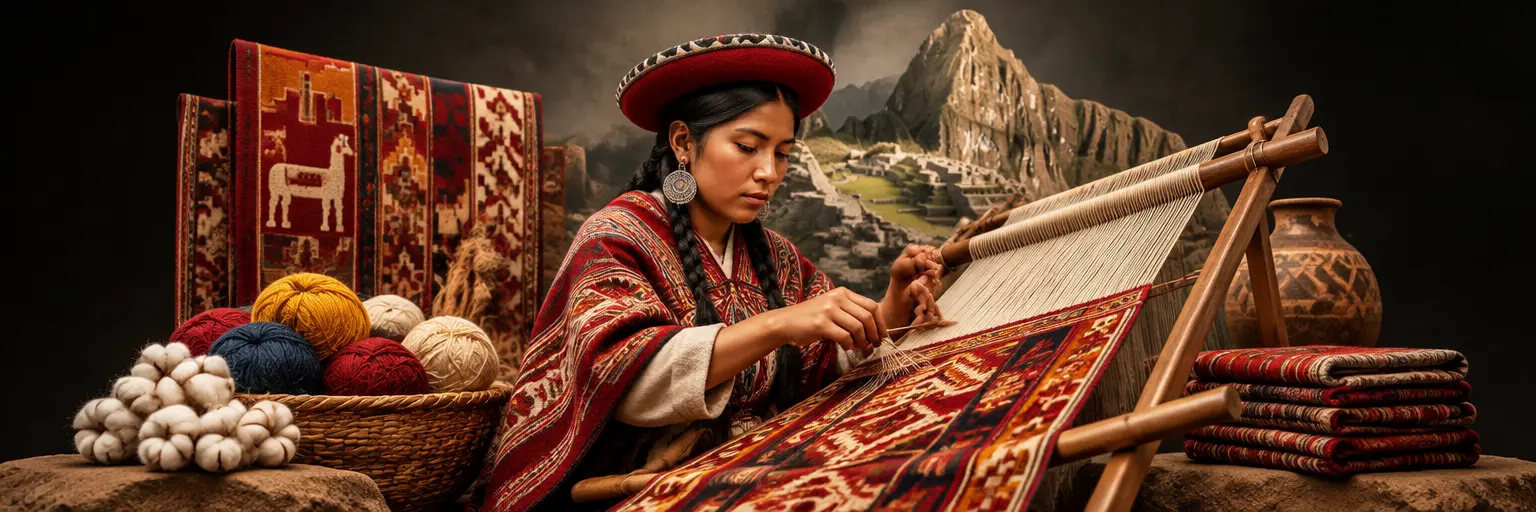
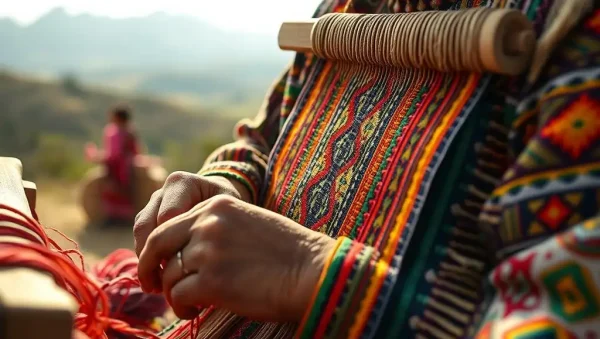
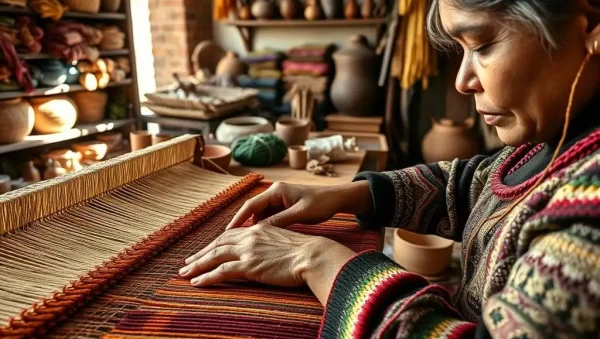
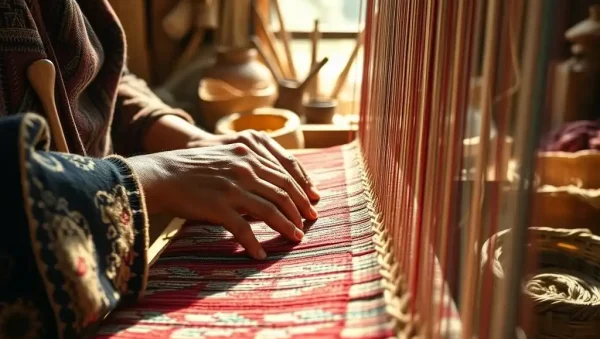
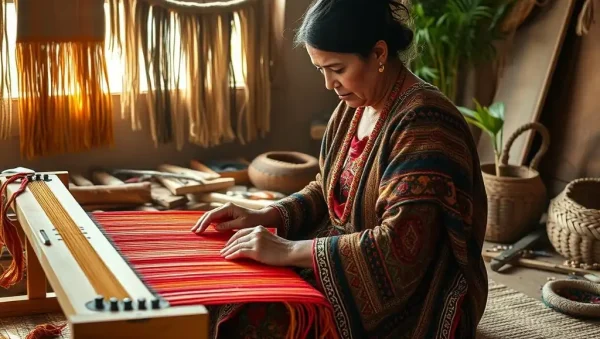
Indigenous weavers across the Americas pioneered diverse loom technologies that required no metal needles or foot pedals but achieved remarkable precision. The backstrap loom, used from Mesoamerica to the Andes, allowed weavers to adjust tension with their own bodies, producing fine, intricate patterns for clothing and ritual cloth. In contrast, the vertical loom was employed along the Peruvian coast for large tapestry pieces, while the Andean ground loom enabled wide, long cloths. Each tool, from bone picks to wooden battens, was crafted to maximize control over warp and weft, enabling complex designs like warp-faced textiles and supplementary weft patterning.
These tools were not static inventions but evolved over millennia, with evidence of camelid fiber spinning dating back over 5,000 years. The lack of a potter’s wheel did not limit their engineering; instead, they developed a drop spindle with a whorl that allowed precise control of twist, creating threads of exceptional uniformity. This technical expertise supported the production of textiles that served as currency, tribute, and status markers, demonstrating that innovation was not dependent on external mechanisms but on deep, hands-on understanding of materials and mechanics.
🧶 Natural Fibers and Dyes: Colors from the Landscape
The raw materials for indigenous textiles were as diverse as the ecosystems they inhabited, and their processing methods were equally advanced. Cotton, particularly the naturally brown and white varieties grown in Peru and Mesoamerica, was spun into fine, soft threads, while the Andean camelids—alpaca, llama, and vicuña—yielded wool with unique thermal and strength properties. In Mesoamerica, agave fibers from maguey plants were processed into rough, durable cloth used for sacks, sandals, and ceremonial garb. Beyond natural colors, weavers created an astonishing array of dyes using cochineal insects for vivid reds, indigo plants for deep blues, and mollusk shells for purples, all requiring complex chemical knowledge to fix them onto fibers.
These dyeing techniques were closely guarded knowledge, passed down within skilled families, and used to imbue cloth with spiritual and social meaning. For instance, the bright red of cochineal was associated with warrior elites and sacrificial rituals, while specific geometric patterns in the Andes encoded community origins and ecological connections. The sheer variety of natural resources and the technological know-how to transform them into permanent, vibrant colors demonstrate an advanced understanding of organic chemistry, seasonal harvesting, and conservation, making these textiles among the most prized trade goods in the pre-Columbian world.
🏺 Iconography and Symbolism: Woven Narratives of the Cosmos
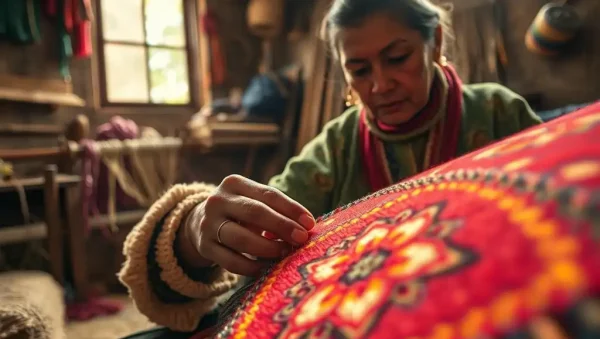
Textile technologies were also a medium for recording history, mythology, and social structure, with each weave acting as a readable document. In the Andean tocapu tradition, small rectangular motifs placed on tunics or mantles served as a form of communication, possibly encoding dynastic histories or ritual genealogies. Similarly, the Paracas and Nazca cultures of Peru produced masterful embroidered textiles depicting shamanistic transformations, trophy heads, and cosmic creatures, using over 100 distinct hues to narrate creation stories. Among the Maya, weaving was seen as a creation act, with the Goddess Ixchel associated with the loom, and cloth was used to dress idols, line tombs, and present heirlooms.
These symbolic textiles often served as diplomatic gifts and markers of political alliances, where the complexity of the weave mirrored the weaver’s prestige and the owner’s authority. The Inca administrative system maintained a class of professional weavers, the aclla, or “chosen women,” who produced vast quantities of finely woven cloth for imperial distribution. This practice integrated textile production into religious, political, and economic life, proving that technological advance was inseparable from cultural memory and identity. contemporary indigenous communities still replicate these symbols, preserving a living connection to this heritage.
🌾 Regional Specializations: From the Andean Highlands to Amazonian Lowlands
Textile technologies flourished differently across the Americas, adapting to local materials and needs. In the Central Andes, the creation of tapestry-woven tunics by the Huari and later Inca became a pinnacle of artistry, using high-quality camelid fiber and intricate interlocking wefts with no slits. In the Southwest United States, ancestral Puebloans used a horizontal loom to weave cotton and yucca fibers into sandals, blankets, and ritual sashes, often using a distinctive tight diagonal twining technique. Meanwhile, in the Amazon basin, indigenous groups like the Tukano developed barkcloth beaters to create soft, patterned textiles from tree bark, which were then painted with geometric designs using natural pigments.
The differences in these regional technologies highlight the adaptability and ingenuity of indigenous peoples. For example, the Yucatán Maya used a backstrap loom to produce the iconic huipil, a loose-fitting tunic still worn today, with patterns varying by village. The Chimú culture on the north coast of Peru perfected featherwork, attaching thousands of bright tropical bird feathers to woven cotton backing, producing shimmering, enormous mantles for elites. Each regional approach was a solution to a distinct environmental and social context, but all shared a high level of kinetic intelligence and aesthetic sophistication, demonstrating that textile technology was one of the most successful and widespread innovations in the Americas.
📜 Legacy and Influence: Preserving Tradition and Inspiring Modern Art
The impact of pre-Columbian textile technologies extends far beyond museum displays, influencing modern fashion, art, and scientific research. Contemporary indigenous weavers in Peru, Guatemala, and Mexico continue to use the same backstrap looms and natural dye processes, preserving techniques that are now recognized as Intangible Cultural Heritage of Humanity by UNESCO. These practices have become a source of economic empowerment and cultural resistance, as communities produce textiles for global markets while maintaining ancestral patterns. Moreover, modern textile engineers study ancient Andean weaves, which have survived centuries in dry climates, to learn about fiber stability and dye fastness, informing current sustainable textile research.
The appreciation of these technologies has also spurred a revival in ethical fashion and traditional crafts, with international designers collaborating with indigenous cooperatives. Educational programs and community museums now highlight the scientific and artistic genius of these weavers, refuting colonial narratives that dismissed indigenous achievements. By understanding the depth of textile innovation, visitors to this subcategory can see that the Amerindian mastery of fiber, color, and structure was not just an “advance” but a foundational pillar of human creativity, demonstrating that technological excellence can flourish within worldviews deeply connected to nature and spirit.
Frequently Asked Questions
What is the most significant indigenous textile technique from the Americas?
The Andean tapestry technique, especially the interlocking warp and weft used by the Inca, is considered one of the most significant. It allowed for extremely durable, seamless, and intricately detailed images without slits, making it superior to many contemporary European tapestries. This method’s precision and durability are still admired today.
Which natural dyes were most commonly used in pre-Columbian textiles?
Common dyes included cochineal from insects for reds, indigo from plants for blues, and purple from sea snails. Additionally, yellow came from mountain lichens and black from iron-rich mud. These were fixed with mordants like alum or urine, showing advanced chemical knowledge.
How did indigenous weavers learn these complex skills?
Skills were passed orally and through hands-on apprenticeship, typically within families or specialized guilds. In Inca society, selected women were trained from young age in dedicated houses. Community knowledge was also reinforced through ritual observation, ensuring each pattern and color had cultural meaning.
Why were textiles considered a form of currency in the Andes?
Textiles were valued for their labor intensity, portability, and ceremonial significance. The Inca used them as payment for tribute, gifts to nobles, and offerings to gods, since they symbolized life, fertility, and social order. Their durability made them a reliable store of wealth.
Are there any ongoing projects to preserve these textile technologies?
Yes, many cooperatives, museums, and NGOs actively support revival efforts. For example, the Centre for Traditional Textiles of Cusco works with Quechua weavers to revive ancient dyes. UNESCO also recognizes the Maya huipil and Andean weaving as intangible heritage, funding documentation and transmission programs.