Explore the Living Legacy of Indigenous Histories Through Essential Reading
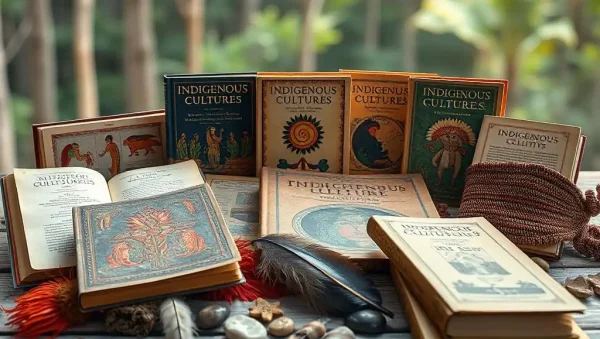
Welcome to our curated collection of books that dive into the rich, complex, and often untold histories of Indigenous peoples across the Americas. From the mighty Aztec and Inca empires to the resilient nations of North America, these works illuminate the pre-colonial achievements, spiritual traditions, and contemporary struggles of Native communities. Each title is selected to deepen your understanding of the original stewards of this land, making this the ideal starting point for students, educators, and lifelong learners seeking authentic perspectives and scholarly rigor.
📚 Foundational Narratives: Pre-Columbian Civilizations Uncovered
This section focuses on the grand civilizations that flourished before 1492—the Maya, Aztec, Inca, and Mississippian cultures. You’ll find authoritative works on monumental architecture, astronomical systems, and sophisticated governance. Books like 1491 by Charles C. Mann challenge conventional views, presenting a New World that was densely populated and highly advanced. Expect deep dives into codices, oral histories, and recent archaeological findings that rewrite the story of human achievement.
Beyond dates and dynasties, these narratives reveal the intellectual and philosophical underpinnings of these societies. Readers will encounter the intricate calendar systems of the Maya, the terraced agriculture of the Andes, and the urban planning of Cahokia. The emphasis is on agency and innovation, showing how Indigenous peoples engineered solutions to environmental and social challenges that still inspire modern sustainability. Each page brings you closer to a world of vibrant city-states and trade networks that connected continents long before globalism.
🌾 Resistance and Resilience: Stories of Survival and Adaptation
Here, we explore books that chronicle the period of European contact, conquest, and the centuries of resistance that followed. Titles such as The Other Slavery by Andrés Reséndez and An Indigenous Peoples’ History of the United States by Roxanne Dunbar-Ortiz offer unflinching looks at systemic oppression while celebrating acts of defiance. These works are essential for understanding how Indigenous nations negotiated treaties, waged wars, and maintained cultural practices against overwhelming odds.
The power of this subcategory lies in its refusal to reduce Native peoples to victims. You’ll read about the Pueblo Revolt, the Maya rebellion of 1847, and the Inuit adaptation to Arctic colonization, each story showcasing tactical brilliance and cultural tenacity. By centering Indigenous voices through personal letters, court records, and oral traditions, these books provide a counter-narrative to colonial archives, making them indispensable for any serious study of American history.
🌿 Indigenous Knowledge Systems: Science, Medicine, and Ecology
This collection highlights books that reveal the profound environmental and medical wisdom embedded in Indigenous traditions. From ethnobotanical studies of the Amazon rainforest to the fire management practices of California’s tribes, these works demonstrate that Native science is rigorous, empirical, and increasingly vital in our era of climate change. For instance, Braiding Sweetgrass by Robin Wall Kimmerer merges scientific observation with Anishinaabe philosophy, offering a new model for ecological stewardship.
Readers will learn about the origins of maize, quinoa, and potatoes—crops that now feed the world—and the sophisticated breeding techniques that produced them. Other texts explore Indigenous astronomy, hydrology, and sustainable forestry, correcting the myth that pre-contact societies were primitive. By valuing these knowledge systems, we not only honor the past but also unlock practical solutions for biodiversity loss, soil degradation, and water scarcity. This is a must-read list for environmentalists, biologists, and policy makers alike.
🎨 Voices and Visions: Memoirs, Biographies, and Contemporary Perspectives
Here, we showcase personal narratives and modern reflections from Indigenous authors, offering a bridge between ancient histories and present-day realities. Works like The Heartbeat of Wounded Knee by David Treuer and There There by Tommy Orange examine identity, trauma, and cultural renaissance in urban and reservation communities. These books are crucial for understanding that Indigenous histories are not confined to the past but are living, evolving forces shaping contemporary art, politics, and spirituality.
Expect gripping biographies of figures like Pocahontas, Crazy Horse, and Rigoberta Menchú, alongside lesser-known leaders who fought for land rights and language preservation. The memoirs stand out for their lyrical prose and unflinching honesty, detailing family histories of boarding schools, activism, and the rediscovery of traditional practices. For educators, these titles provide relatable entry points for students, while for general readers, they offer a profound sense of connection and empathy. Every page challenges stereotypes and invites a deeper, more respectful conversation.
🗺️ Regional Deep Dives: The Americas from Arctic to Andes
This section organizes books by geography, from the Inuit of the Arctic to the Mapuche of Patagonia. You’ll find specialized studies on the Iroquois Confederacy’s influence on democratic thought, the Amazonian cosmologies of the Yanomami, and the missions of California’s missions. Titles like The Inconvenient Indian by Thomas King provide a cross-border perspective, weaving Canadian and U.S. histories with wit and insight.
Each regional focus reveals distinct cultural logics—Inuit sea-ice navigation, Pueblo katsina religion, and Nahua flower wars. The books also address contemporary issues such as resource extraction on Native lands, legal battles over fishing rights, and the revival of endangered languages like Hawaiian and Quechua. By traversing these diverse landscapes, readers gain a holistic understanding of the Americas that national borders cannot contain. This curated list is perfect for travelers, researchers, and anyone planning to visit Indigenous-owned cultural centers or historical sites.
Frequently Asked Questions
Are these books scholarly or accessible to general readers?
Our selection balances academic rigor with readability. Many titles are written by university professors but avoid dense jargon, making them suitable for high school students and casual readers. For deeper research, we also include peer-reviewed monographs and award-winning non-fiction that engage a broader audience without sacrificing factual accuracy.
Do these books represent Indigenous voices directly, or are they written by outsiders?
We prioritize works by Indigenous authors, such as Robin Wall Kimmerer (Anishinaabe) and David Treuer (Ojibwe), but we also include classics by non-Native scholars who collaborated closely with tribal communities. Every book is vetted to ensure it avoids colonial biases and centers Indigenous agency, cultural context, and oral traditions.
How do these books address the diversity among Indigenous peoples?
The collection spans hundreds of distinct nations, each with unique languages, governance, and belief systems. The books emphasize regional and cultural particularities, correcting pan-Indian generalizations. You’ll find specific chapters on the Cherokee Trail of Tears, the Aztec Flower Wars, and the Inuit’s adaptation to climate change, ensuring a nuanced understanding.
Can I use these books for academic research or classroom instruction?
Absolutely. Each title includes extensive bibliographies, primary source appendices, and maps. Many are standard texts in university courses on Native American studies, anthropology, and colonial history. We also recommend companion websites, archival databases, and documentary films referenced within the books for further study.
Are there any books focusing on contemporary Indigenous issues, not just pre-contact history?
Yes, a large portion of our list covers modern struggles for sovereignty, land repatriation, and cultural revitalization. For instance, works on the Dakota Access Pipeline, missing and murdered Indigenous women, and language immersion schools provide urgent, timely perspectives that connect past oppression to current activism and legislative victories.