Essential Academic Reads on Pre-Columbian Cultures
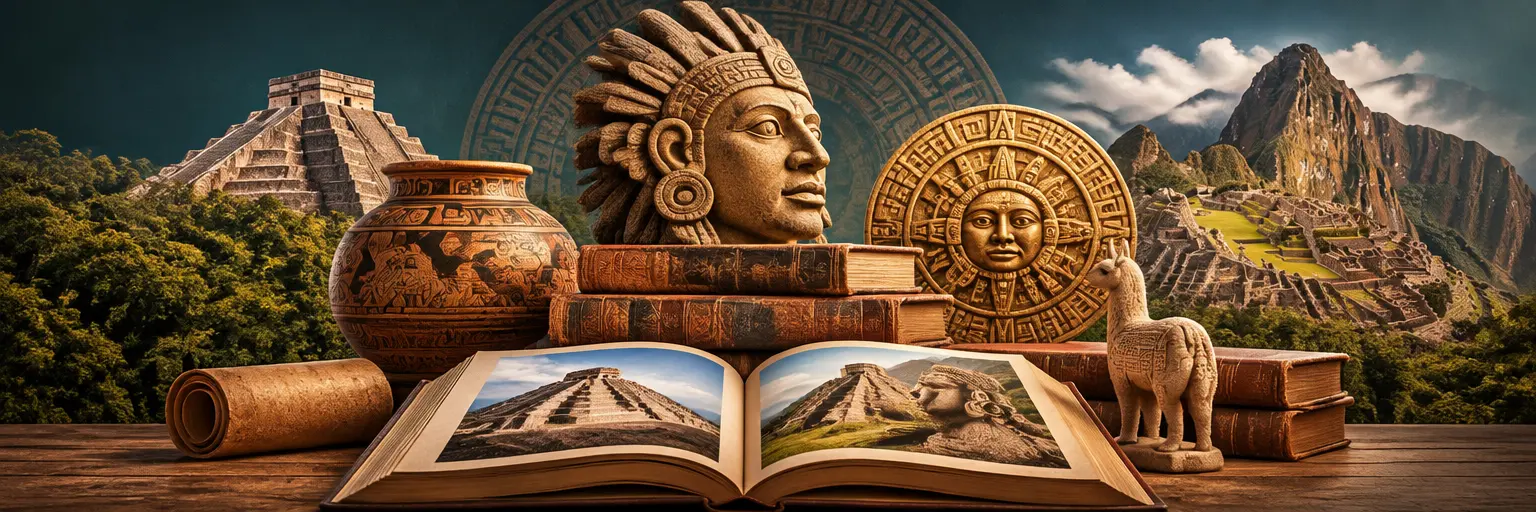
Dive into the scholarly foundations of Mesoamerican, Andean, and Amazonian societies with our curated collection of essential academic reads. This subcategory is your gateway to peer-reviewed monographs, archeological syntheses, and ethnohistorical analyses that illuminate the complexity of indigenous civilizations before 1492. Whether you are a student, researcher, or lifelong learner, these titles offer rigorous, evidence-based perspectives on everything from Maya hieroglyphs to Inca statecraft, ensuring your knowledge is both deep and accurate.
📘 Foundational Textbooks and Comprehensive Surveys
Begin with landmark overviews that synthesize decades of archaeological and historical research. Works like The Ancient Civilizations of Mesoamerica and Andean Worlds provide regional frameworks, covering chronologies, material culture, and social organization. These texts are ideal for building a structured mental map of the pre-Columbian world, from the Olmec heartland to the Chimú coast.
Expect clear explanations of theoretical debates—such as state formation vs. chiefly societies—and rich illustrations of artifacts, site plans, and settlement patterns. These surveys also include extensive bibliographies, pointing you toward specialized studies on climate, diet, and craft production. For newcomers, they serve as both a primer and a reference, making complex topics accessible without sacrificing academic rigor.
🏛️ Deep Dives into Maya Epigraphy and Calendar Systems
Unlock the literate world of the Classic Maya through specialized academic texts on hieroglyphic writing and calendrics. Titles such as Breaking the Maya Code (Michael Coe) and Maya Hieroglyphic Writing (David Stuart) offer step-by-step explanations of phonetic and logographic readings, plus the ritual and political contexts of stelae and codices.
You will learn to interpret dynastic histories, alliance records, and astronomical tables, appreciating how the Maya conceptualized time, kingship, and cosmic order. These reads also address the latest epigraphic breakthroughs, including the decipherment of titles and place signs, and they critically evaluate contentious readings. Perfect for those wanting a hands-on intellectual challenge, each chapter builds toward a nuanced understanding of how writing shaped political legitimacy and historical memory.
🏜️ Andean Statecraft, Roads, and Quechua Cosmologies
Explore the Inca Empire and its predecessors through scholarly lenses on political economy, infrastructure, and worldview. Recommended works cover the Qhapaq Ñan road system, mit’a labor taxation, and the symbolic meanings of Cusco’s ceque lines. Authors like María Rostworowski and Gary Urton integrate ethnohistorical documents (chronicles, quipus) with archaeological data to reconstruct imperial strategies.
Readers will discover how Andean societies integrated vertical ecological zones, managed storage facilities, and deployed ritual warfare. These texts also examine pre-Inca cultures such as the Wari and Tiwanaku, showing continuities in ancestor worship and hydroengineering. The discussions emphasize agency—how local communities negotiated with imperial power—correcting older top-down narratives. This is essential reading for grasping the complexities of statecraft beyond Old World models.
🌽 Ethnoarchaeology of Food, Agriculture, and Daily Life
Unearth the subsistence foundations of pre-Columbian societies through ethnoarchaeological and paleoethnobotanical studies. Academic works analyze maize, potatoes, quinoa, and cacao cultivation, revealing how agricultural calendars, storage pits, and terrace systems sustained dense populations. Titles like Feeding the Empire (Christine Hastorf) combine soil chemistry, phytoliths, and modern farmer interviews.
Expect insights into gendered division of labor, food processing (nixtamalization), and ceremonial feasting. These reads also tackle the environmental impacts of intensification—soil erosion, deforestation—and resilience strategies. By connecting ancient practices to surviving indigenous cuisines, they illustrate cultural continuity. This subcategory is perfect for readers interested in food systems, social inequality, and human–environment interactions over the long durée.
⚖️ Post-Colonial and Decolonial Critiques in Pre-Columbian Studies
Engage with scholarly works that reframe pre-Columbian history through indigenous voices and critical theory. Texts by Enrique Salmón and Kevin Terraciano deconstruct Eurocentric chronologies, exposing how colonial documents distorted native histories. They advocate for using indigenous maps, songs, and the Badger’s Breath oral traditions as legitimate sources.
These readings challenge readers to question museum curation, repatriation debates, and the politics of archaeological authority. They also highlight contemporary indigenous scholars’ contributions, such as Maya-led glyph workshops and Quechua ecological knowledge. By integrating decolonial frameworks, the subcategory helps you understand not just ancient societies, but how modern power structures shape our knowledge of them. Expect a reflective, ethically engaged perspective.
Frequently Asked Questions
Are these academic reads suitable for beginners with no prior knowledge of pre-Columbian cultures?
Yes, many foundational surveys are written for a lay audience while maintaining scholarly accuracy. Look for texts marked as “introductory” or “overview,” which assume no special background. Start with a general survey like Ancient Mexico by Michael Coe before advancing to specialized monographs.
Do these books include up-to-date archaeological discoveries, such as lidar findings?
Absolutely. Recent titles incorporate lidar-mapped settlements, radiocarbon redatings, and DNA evidence. Publishers release revised editions; check publication dates and prefaces for mentions of new fieldwork. Additionally, many authors maintain companion websites with supplementary data from current projects.
Can I use these academic works for university-level research papers?
Yes, these are selected from university presses and peer-reviewed journals. They include full citations, glossaries, and appendices with original data. To stay current, pair them with recent articles in journals like Latin American Antiquity or Ethnohistory for the most cited scholarship.
Are there any works that specifically address gender and women’s roles in pre-Columbian societies?
Definitely. Recent ethnohistorical and bioarchaeological studies, such as Women in Pre-Columbian America, examine female rulers, weavers, and healers. They analyze skeletal markers, burial goods, and colonial records to reconstruct women’s status, challenging earlier male-centric narratives.
How do these books handle the connection between pre-Columbian cultures and modern indigenous communities?
Many contemporary authors include collaborative research methods, citing living indigenous elders and community-based projects. They discuss cultural survival, land rights, and the revival of languages like Nahuatl and K’iche’. This approach respects continuity and situates archaeology within present-day social justice efforts.