The Intriguing Origins of Indigenous Writing Systems in the Americas
🌍 The exploration of Indigenous writing systems in the Americas reveals a rich tapestry of communication and culture. These systems, often overlooked,…
Read article
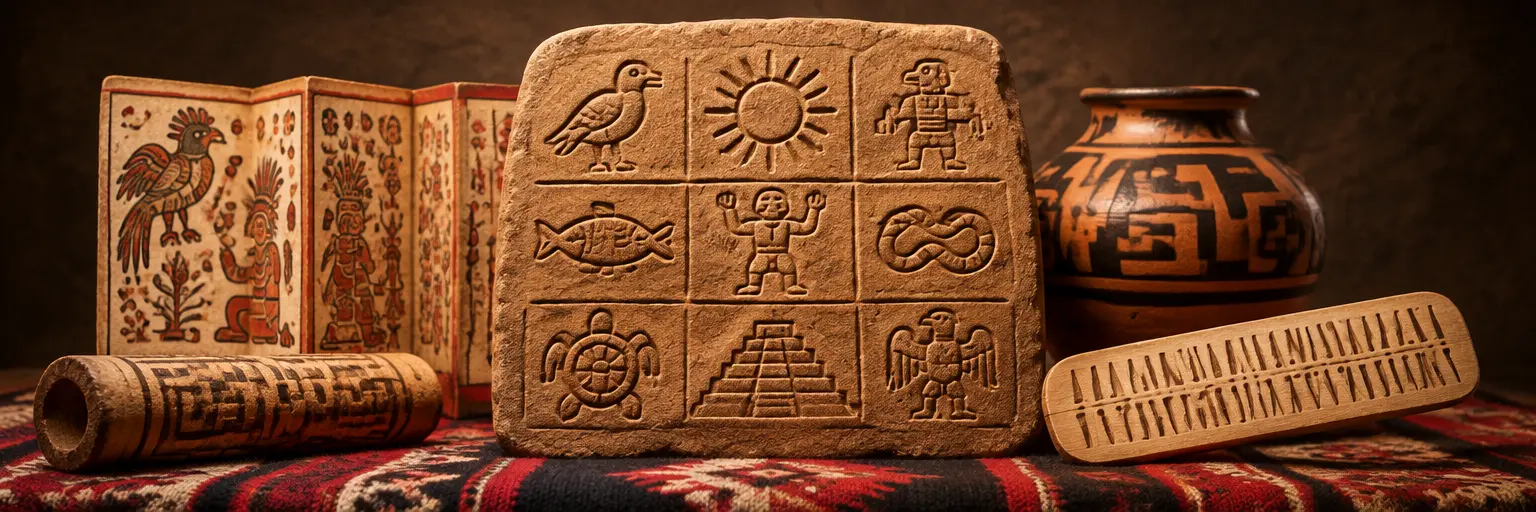
Discover the ingenious writing systems developed by indigenous civilizations of the Americas—from the intricate Maya glyphs and Aztec pictographs to the quipu knot records of the Andes. These were not mere symbols but sophisticated tools for recording history, astronomy, tribute, and sacred knowledge. Explore how these unique scripts encoded complex languages, calendars, and cosmologies, revealing advanced literacy and intellectual achievement long before contact. Uncover the resilience of these communication systems and their enduring influence on cultural identity and modern scholarship. Dive into the origins of American writing and see how these ancient voices still speak today.
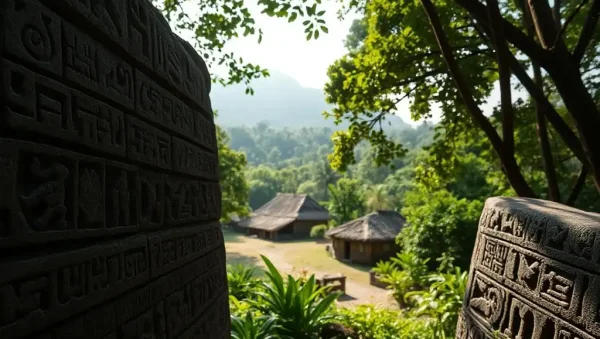
🌍 The exploration of Indigenous writing systems in the Americas reveals a rich tapestry of communication and culture. These systems, often overlooked,…
Read article
🌍 European colonization profoundly altered Indigenous writing and communication, disrupting rich traditions and oral histories. This article delves into how these changes…
Read article
🌍 Indigenous writing systems impact cultural identity and heritage by preserving histories, traditions, and worldviews. These unique scripts not only reflect the…
Read article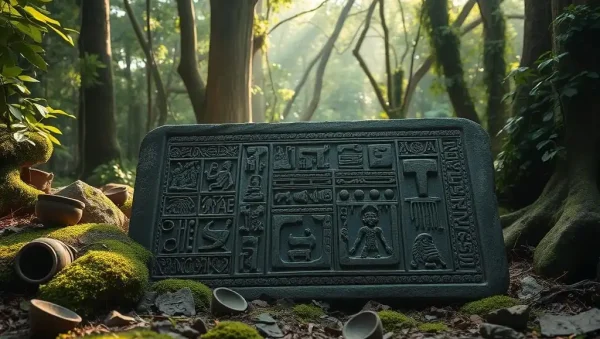
🌍 The exploration of indigenous civilizations lost scripts reveals a profound narrative of cultural richness and intellectual achievement. While some texts have…
Read articleBefore European contact, Indigenous civilizations across the Americas developed remarkably sophisticated writing and notation systems—far beyond simple pictographs. These systems recorded history, astronomy, ritual calendars, tribute, and poetry, revealing complex intellectual traditions. Understanding these writing systems is key to appreciating the depth of Indigenous knowledge, from Maya hieroglyphs to Inca khipu cords. This subcategory unpacks each major system, its decipherment, and its cultural significance, offering a rich resource for students, educators, and history enthusiasts. Dive in to discover how these ancient peoples encoded their world in symbols, knots, and signs that still speak to us today.
The Maya developed the most advanced writing system in the pre-Columbian Americas, combining logograms (whole words) and syllabograms (syllables) into a flexible script. Used from around 300 BCE to the Spanish conquest, it appears on stelae, ceramics, codices, and murals. Today, over 60% of Maya glyphs are readable, thanks to breakthroughs in the 1950s–1980s, revealing dynastic histories, mythological narratives, and astronomical records.
Readers will learn how Maya scribes recorded royal lineages and warfare with stunning precision, and why the script was not purely phonetic but also deeply artistic. You’ll explore the three surviving pre-Columbian Maya codices—the Dresden, Madrid, and Paris—and how their content (eclipses, Venus cycles, rituals) shaped modern understanding of Maya cosmology. This section also highlights the ongoing collaborative work with modern Maya communities to preserve and revitalize this script.
The khipu (or quipu) was a system of knotted cords used by the Inca and earlier Andean cultures, primarily for numerical data—census, tribute, and agricultural yields—but likely also for narrative records. A khipu consists of a main cord with pendant cords of varied colors, knot types, and positions, encoding values in a decimal system. While many khipus are clearly numerical, some researchers argue that they also encode non-numeric information, like narratives or calendars.
In this section, you’ll understand the structural grammar of khipu production and how color, spacing, and knot direction create meaning. You’ll also explore debates about whether khipus represent a full writing system or a specialized mnemonic tool. Recent digital imaging projects are helping reposition khipus in museums and decode their data, connecting contemporary Andean communities with their ancestors’ administrative genius.
Central Mexican cultures, especially the Aztecs (Mexica) and the Mixtecs, used pictographic writing: stylized drawings of people, places, and events arranged in a reading order (often boustrophedon or in grids). These codices were painted on deerskin or amatl paper, and they recorded tribute lists, land boundaries, genealogies, and ritual calendars (tonalpohualli). Unlike phonetic scripts, these signs require oral interpretation by trained scribes, making them semi-writing or logographic with phonetic rebuses.
Appreciate the beauty of codices like the Codex Mendoza and Codex Borgia, which mix glyphs for names and places with symbolic iconography. You’ll learn how the Spanish initially preserved these works as evidence for lawsuits and administration, inadvertently saving invaluable records of indigenous history. This section also examines how Mixtec genealogical codices, such as the Codex Zouche-Nuttall, trace royal lineages for centuries, providing a chronological backbone for understanding pre-colonial politics.
Long before the Maya, the Zapotec civilization of Oaxaca produced monumental inscriptions (circa 500 BCE) often considered the earliest true writing in Mesoamerica. Found on stone monuments at San José Mogote and Monte Albán, these glyphs record calendrical dates, names, and possibly warfare events. Similarly, the Olmec culture (around 900 BCE) left a small number of symbols on artifacts like the Cascajal Block, which may represent a very early script, though its interpretation remains controversial.
Explore the challenges of deciphering these older systems with very limited corpora. You’ll learn how epigraphers use contextual clues—calendar cycles, iconographic parallels—to propose tentative readings. The section also clarifies the difference between writing, proto-writing, and symbolic notation, helping you evaluate archaeological claims critically. This nuanced view shows that writing emerged gradually across multiple Mesoamerican regions, not in a single “cradle.”
After European colonization, many Indigenous writing systems disappeared or were forcibly suppressed. Yet, some adapted: the Maya used Latin script to write their languages in books like the Popol Vuh and the Chilam Balam, preserving mythology and history. Similarly, the Aztec nobility learned Spanish script and produced alphabetic documents, such as the Florentine Codex, which provides a bilingual bilingual (Nahuatl-Spanish) encyclopedia of pre-contact life. These records are invaluable for reconstructing lost traditions.
This section discusses how colonial documents blend indigenous knowledge with European frameworks, and how modern linguists work with descendant communities to revive these writing systems, including the recent revival of Maya hieroglyphic education in Guatemala. You’ll also see examples of khipu-inspired digital tools and pictographic storytelling in contemporary Indigenous art, showing that these writing traditions are not extinct but evolving.
No. Writing was concentrated in Mesoamerica and parts of the Andes, e.g., Maya, Aztec, Mixtec, and Zapotec systems, plus Andean khipu. Many North American and Amazonian cultures used oral traditions, petroglyphs, and mnemonic devices (like winter counts) rather than formal scripts. Writing emerged independently in only a few global regions; the Americas were one such independent origin, but not universal.
The Cascajal Block (Olmec, ~900 BCE) and Zapotec inscriptions at San José Mogote (~600–500 BCE) are candidates. The Zapotec calendar glyphs at Monte Albán clearly represent writing. However, the Maya script is the best-documented and earliest fully deciphered system, with texts from around 300 BCE onward. The exact “first” depends on definitions and future discoveries.
For numerical khipus, yes—the decimal coding is understood. For narrative content, no full decipherment exists yet. Some researchers propose that certain non-numeric khipus encode syllables or stories, but no consensus has been reached. Most scholars treat them as a specialized statistical and calendrical record system, not a phonetic script.
Spanish friars, like Diego de Landa, believed Maya codices contained idolatrous and superstitious content that hindered conversion. In 1562, Landa oversaw the burning of many books, calling them “works of the devil.” Ironically, he also left a detailed account of Maya alphabet, which later helped decipher the script, aiding modern reconstructions of the very knowledge he tried to destroy.
Yes, in revived forms. Modern Maya communities are learning hieroglyphic writing in schools and cultural centers, while Nahuatl speakers use adapted Latin scripts. Artists and intellectuals in Peru incorporate khipu motifs into contemporary textile art. These traditions are not static but are being reimagined, ensuring that ancient graphic legacies remain living cultural heritage.