The Power of Storytelling: How Oral Traditions Shaped Indigenous Cultures
The power of storytelling through oral traditions in indigenous cultures has been pivotal in preserving history, values, and identity. These narratives not…
Read article
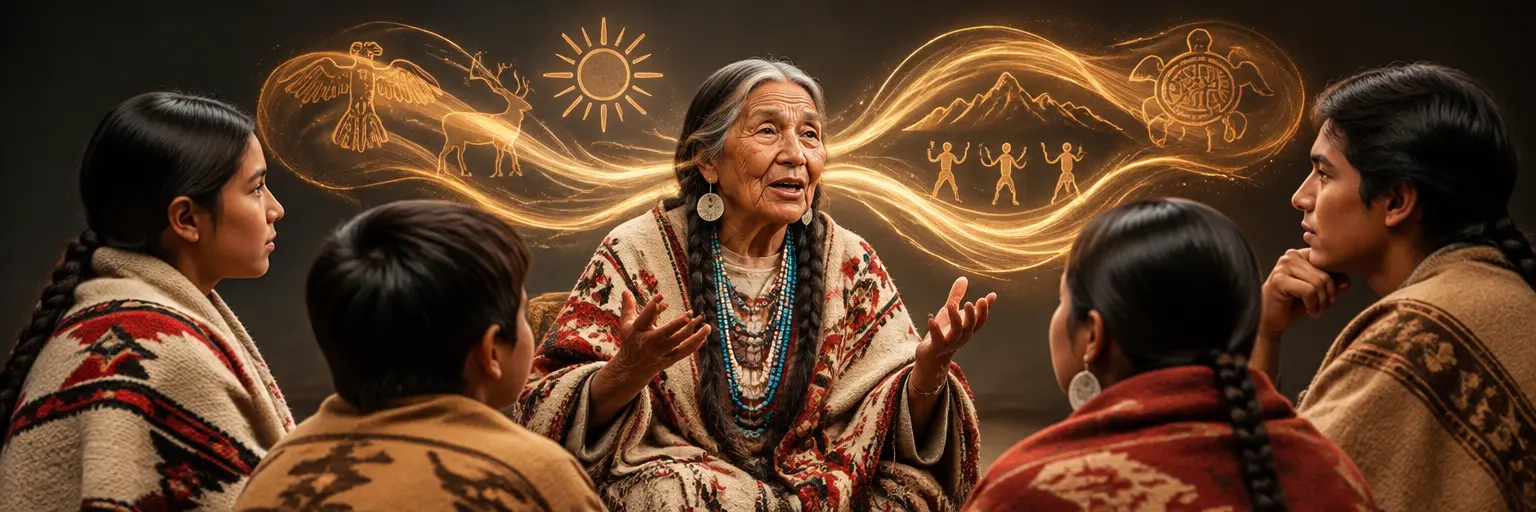
Dive into the vibrant world of Oral Traditions, the living heartbeat of Indigenous civilizations across the Americas. For centuries, before written records, these cultures wove their histories, spiritual beliefs, and moral codes through powerful storytelling, chants, and ceremonial speeches. More than mere tales, these spoken words were the lifeline of knowledge, preserving everything from creation myths and ancestral genealogies to advanced agricultural techniques and astronomical observations. By mastering the art of memory and performance, Indigenous peoples ensured that resilience, identity, and wisdom were passed down through generations, adapting and thriving despite immense change. Explore how the spoken word remains a living testimony of cultural survival and intellectual richness, connecting modern listeners to ancient voices that continue to resonate.
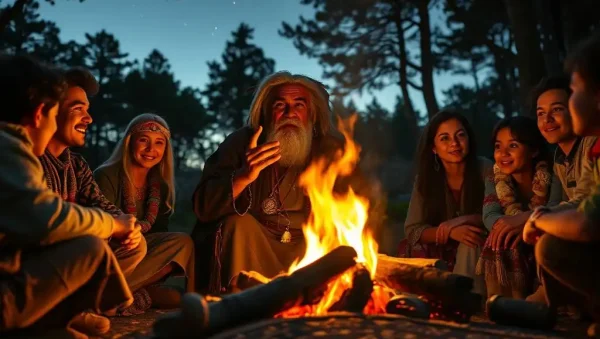
The power of storytelling through oral traditions in indigenous cultures has been pivotal in preserving history, values, and identity. These narratives not…
Read article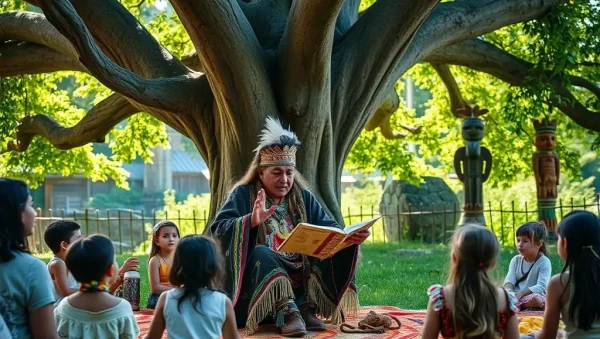
The influence of Indigenous oral traditions impacts language revitalization efforts by preserving cultural narratives and fostering community identity. These rich storytelling practices…
Read article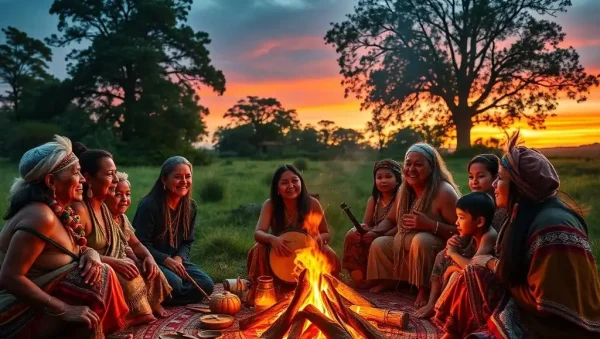
🎶 Indigenous oral traditions music serves as a vital link to the past, weaving stories, spirituality, and history into captivating melodies. This…
Read article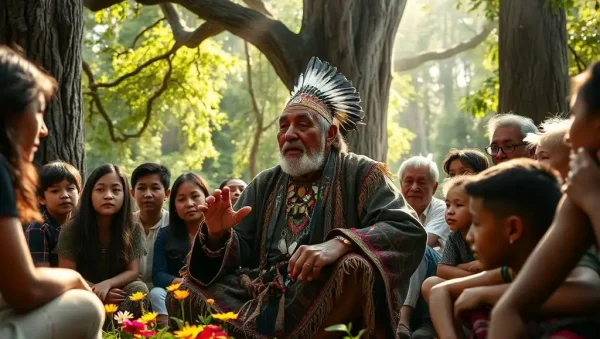
🌍 Indigenous oral narratives myths serve as a vibrant window into the rich tapestry of pre-colonial cultures in the Americas, revealing their…
Read article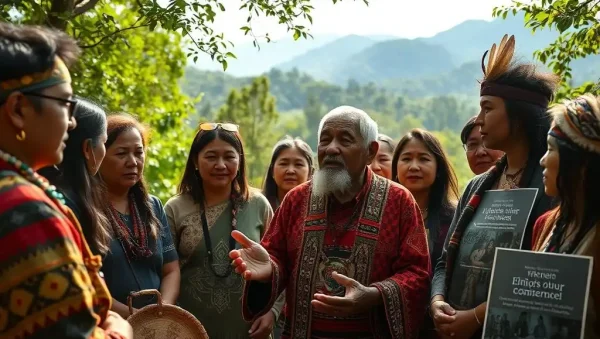
Unlocking the power of oral traditions, modern indigenous activism thrives on the wisdom passed down through generations. These narratives not only preserve…
Read articleOral traditions are the beating heart of Indigenous civilizations across the Americas, carrying history, law, spirituality, and identity through generations without a single written word. For the “Indigenous Civilizations of the Americas” website, this subcategory dives deep into how stories, songs, chants, and ceremonial speeches functioned as living archives—preserving creation myths, genealogies, ecological knowledge, and diplomatic protocols. Here, you’ll discover not just what was told, but how the act of telling shaped power, memory, and community bonds from the Arctic to the Andes.
In every Indigenous society, oral traditions relied on specialized individuals—tlamatini (Nahuatl sages), amauta (Inca wise men), and hózhǫ́jí (Navajo singers)—who underwent rigorous training to memorize vast epics. These memory keepers were not passive recorders; they were performers who used rhythm, repetition, and mnemonic cues to recall hundreds of hours of narrative. Their social standing often rivaled that of warriors or priests, as they held the collective “database” of the clan, including land boundaries, medicinal recipes, and ancestral laws.
This section explains how apprenticeship systems worked, the use of quipu knots in Andean storytelling, and the sacred obligations that came with the role. Readers will learn why distortion or forgetting was considered a cosmic rupture, not just a personal lapse. Expect deep dives into specific figures like the Mayan aj k’in priests or the Plains Indian winter count keepers, revealing how oral memory was both an art and a science.
Creation stories were the foundational layer of Indigenous oral traditions, explaining the origins of the world, humans, animals, and natural phenomena. For example, the Popol Vuh of the K’iche’ Maya recounts the Hero Twins’ journey through the underworld, while the Inca Purunpacha describes the emergence of the first people from caves. These myths were not just entertainment—they encoded seasonal cycles, agricultural calendars, and moral codes that guided daily life.
This subcategory analyzes recurring motifs like the earth-diver tale (a common North American creation motif), the cosmic tree, and the trickster figure (Coyote, Raven, or Iktomi). You’ll see how these narratives varied by region yet shared deep structural similarities, suggesting ancient contact or universal human psychology. By studying these myths, you gain a window into Indigenous metaphysics—how they perceived time as cyclical, space as animate, and humanity’s role as steward rather than master.
Oral traditions served as the constitutional backbone of Indigenous polities. The Iroquois Great Law of Peace, delivered by the Peacemaker Hiawatha, was memorized on wampum belts that symbolized every clause of the confederacy’s agreements. Similarly, Aztec court speeches used fixed rhetorical formulas to establish legal precedent, while the Inca used oral quipu readings in administrative tribunals. These recitations were legally binding, with witnesses trained to repeat them verbatim.
This section illuminates how councils validated treaties, resolved disputes, and maintained inter-tribal alliances through oral proclamation. It also covers the role of oratory in leadership selection—where eloquence equated to wisdom and fitness to rule. You’ll encounter transcripts of huehuetlatolli (ancient Aztec exhortations) and cautionary tales about how a speaker’s mispronunciation could invalidate a land claim, showing that precision was not pedantry but survival.
Ceremonial language was a distinct genre of oral tradition, often using archaic vocabulary, esoteric metaphors, and controlled prosody to separate sacred speech from everyday talk. For example, the Maya tsolk’in chants invoked deities with specific breath patterns, while the Maguey (Agave) singers of Central Mexico performed to ensure fertility. Songs accompanied rituals of healing, war, harvest, and rites of passage, often lasting hours without pause.
Here, readers will explore how music and narrative intertwined—how drum rhythms structured the telling, and how call-and-response patterns fostered communal participation. You’ll learn about the oral poetry of the Inca’s harawi (mournful songs) and the war cries of the Tupinambá that doubled as historical recounting. This section also addresses the performative context: clothing, masks, and spatial arrangement of the audience, proving that oral tradition was a multi-sensory event, not mere recitation.
Oral traditions were the primary repository for ethnobotany, meteorology, and navigation. The Inuit passed on 300+ words for snow to encode safe travel routes; the Amazonian Tukanoans memorized layered chants mapping river currents and fish migration. These were not “folklore” but empirical science transmitted through narrative, with each generation adding observations. For instance, the Hopi “Snake Dance” songs recorded drought cycles over centuries.
This section showcases how oral records preserved paleoecological data—like the Cree accounts of glacial retreat—that modern scientists now use to corroborate climate models. You’ll discover the concept of storied landscapes, where landmarks hold embedded warnings (e.g., “the place where the earth shook”), acting as decentralized libraries. The subcategory emphasizes that losing these traditions is not just cultural loss but a direct loss of scientific heritage, making digitization and community-led revitalization urgent.
European contact violently disrupted oral traditions through forced assimilation, disease, and prohibition of native languages. Yet many communities engaged in guerrilla preservation: encoding secrets into Christian hymns, exporting children’s stories as allegories, or hiding ceremonial calendars in basket designs. Scholars now work with elders to record and archive these traditions, but ethical questions arise about ownership, transcription, and the sacred versus the public domain.
This final section examines contemporary efforts—like the Living Tongues Institute and digital storytelling projects—that support intergenerational transmission via apps and archives. It also tackles contentious debates: should only initiated persons access certain chants? How do we honor intellectual property rights in an oral context? Readers will leave with a nuanced understanding that the future of oral traditions lies in adaptation, not museumification, and that every new telling is a living continuation.
Oral history refers to eyewitness accounts of recent events, like a grandmother’s memory of a flood. Oral tradition, however, spans multiple generations, often centuries, and is transmitted through formalized methods with strict rules of memorization. It includes myths, laws, and genealogies that encode cultural identity. While oral history is personal and fragmented, oral tradition is collective and structural, designed to survive intact.
Many did—the Maya, Zapotec, and Mixtec had full writing systems. Yet others chose oral transmission because it was performance-based and adaptable. Writing froze knowledge, while oral traditions allowed contextual tweaks (e.g., changing a clan’s success story). Additionally, some cultures like the Inca used quipu as a mnemonic device, not a full script, because their oral system was highly efficient for governance and memory.
Yes, with caveats. They often contain verifiable place names, astronomical data, and geological events (e.g., the Great Cascadia earthquake of 1700 documented in native stories). However, they are not chronological timelines; they prioritize moral truth over factual sequence. Modern historians use cross-referencing with archaeology and written records to validate episodes. Accuracy lies in the symbolic, not the literal, sense.
Communities use audio/video recording, transcription with Indigenous collaboration, and immersive apprenticeship programs. Legal frameworks like the UN Declaration on the Rights of Indigenous Peoples protect access. To avoid distortion, elders review all materials, and some stories are kept closed until initiated. Crucially, preservation now includes teaching children through songs and games, ensuring the tradition lives in practice, not just in archives.
Because they offer alternative models of sustainability, conflict resolution, and cosmology that mainstream knowledge often ignores. They provide mental wellness frameworks (e.g., trauma healing through narrative), deep environmental intelligence, and linguistic diversity. Studying them also counters colonial erasure and supports Indigenous sovereignty. For researchers, they are a living laboratory of human memory and creativity—one that still holds untapped answers to modern challenges.