The Warrior Chiefs: Unveiling the Military Leadership of Indigenous Nations
The Warrior Chiefs highlights the rich Indigenous military leadership history of the Americas, showcasing the strategies and valor of Indigenous nations. This…
Read article
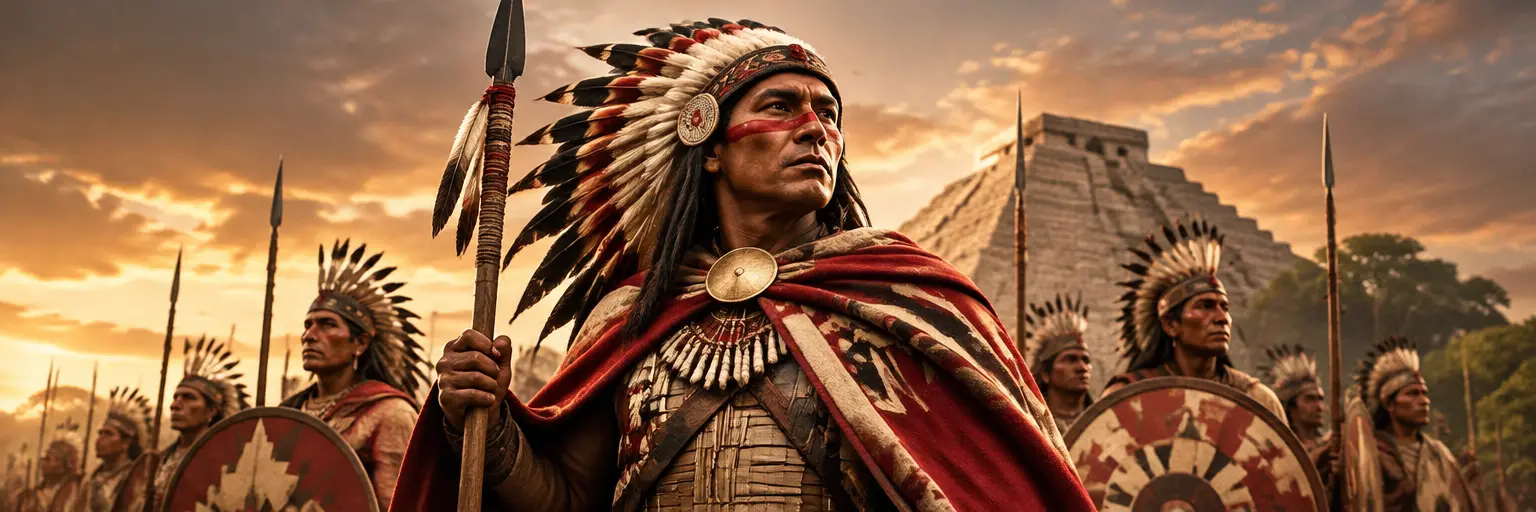
Military leadership among the indigenous civilizations of the Americas was a cornerstone of their resilience, strategy, and territorial expansion. From the Aztectlatoani commanding vast tribute networks to the Incaapu orchestrating mountain campaigns, these leaders blended tactical brilliance with spiritual authority. War chiefs like Tecumseh or the Mapuchetoqui inspired warriors through ritual, discipline, and adaptive guerrilla tactics against overwhelming odds. Their decisions shaped alliances, fortified cities, and preserved cultural sovereignty for centuries. Explore how these indigenous commanders used terrain, intelligence, and ceremonial warfare to outmaneuver foes—and how their legacies still inform modern strategic thinking. Delve into the forgotten art of pre-Columbian command and the enduring power of leadership forged in the Americas’ heartlands.
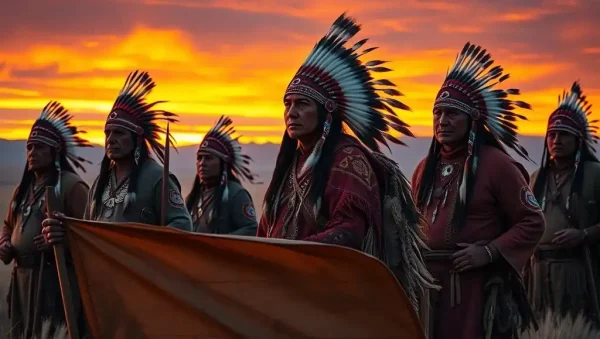
The Warrior Chiefs highlights the rich Indigenous military leadership history of the Americas, showcasing the strategies and valor of Indigenous nations. This…
Read article
🌍 Indigenous military leadership lessons reveal strategies rooted in unity, resilience, and respect for nature. By examining the tactics of pre-colonial civilizations,…
Read article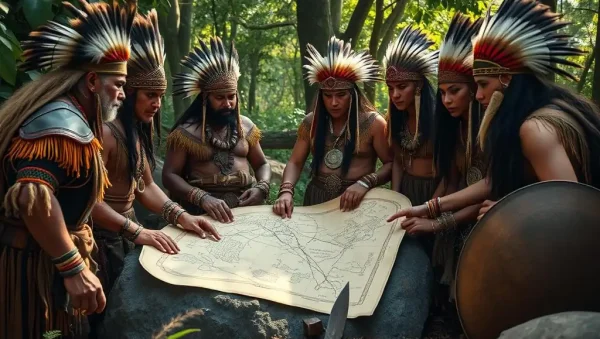
🌍 Indigenous military tactics history reveals the ingenious methods employed by pre-colonial civilizations in the Americas. From guerrilla warfare to strategic alliances,…
Read article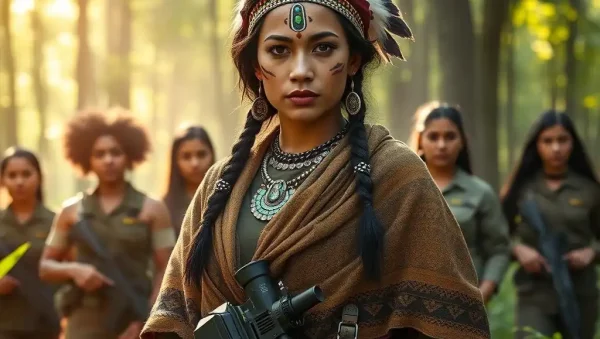
🌟 Indigenous women's military leadership played a vital role in the defense and governance of their communities. This article delves into the…
Read articleMilitary leadership among Indigenous civilizations of the Americas was a sophisticated blend of strategic acumen, spiritual authority, and communal responsibility. Unlike modern hierarchical armies, indigenous commanders often earned their status through demonstrated bravery, wisdom, and the ability to inspire kinship-based warriors. This subcategory delves into the unique command structures, battlefield tactics, and ceremonial roles of leaders from the Aztec, Inca, Maya, Iroquois, and Plains nations, offering a nuanced view of how warfare shaped governance, diplomacy, and cultural identity before European contact.
In Mesoamerica, military leadership was fused with religious and political power. Aztec tlatoani (speakers) and Maya halach uinic (true men) led armies composed of elite knight orders like the Jaguar and Eagle warriors. Their leadership was not merely tactical—it was ceremonial, with captives taken for ritual sacrifice seen as offerings to sustain cosmic order. Success in battle elevated individuals to noble ranks, while failure could lead to demotion or even death. This dual role of commander-priest ensured that military decisions were intertwined with calendar cycles, omens, and divine mandates, making every campaign a sacred endeavor.
For site visitors, this section reveals how leadership was a holistic practice: a leader had to master astronomy, ritual chants, and battlefield logistics simultaneously. The tactical use of terrain—like the causeways of Tenochtitlan or jungle ambushes in the Petén—demonstrates an adaptive intelligence often overlooked in Eurocentric military history. Understanding these leaders helps contextualize why Spanish conquistadors, despite technological advantages, initially struggled to comprehend indigenous command protocols that valued spiritual symbolism over territorial conquest alone.
The Inca Empire boasted the most centralized military leadership in the pre-Columbian Americas. The Sapa Inca (supreme ruler) was both commander-in-chief and divine descendant of the sun god Inti. Below him, regional apu (governors) managed armies of conscripted mitmaqkuna (resettled colonists) and elite orejones (ear-lobed nobles). What set Inca leadership apart was their infrastructure: the Qhapaq Ñan (royal road system) allowed rapid troop movements and coordinated logistics across 40,000 kilometers of rugged Andes terrain. Leaders used quipus (knotted cords) for censuses and supply calculations, a novel administrative tool for military planning.
This subsection highlights how Inca leaders excelled at psychological warfare and assimilation. Rather than annihilating foes, they often offered generous terms of submission—including land, food, and local autonomy—to avoid costly sieges. This “soft power” approach, combined with fortress complexes like Sacsayhuamán, shows a pragmatic leadership style that balanced force with diplomacy. Readers will gain insight into how imperial logistics, not just battlefield bravery, defined effective command, challenging the stereotype of indigenous warfare as purely guerrilla-based.
The Haudenosaunee (Iroquois) Confederacy offers a radically different model of military leadership, one rooted in democratic consent rather than autocratic decree. War chiefs, called hodiyahnehsonh, were selected by clan mothers and could be removed if they acted against the Great Law of Peace. Unlike European generals, they had no permanent standing army; instead, they mobilized ad hoc alliances of warriors from their member nations (Mohawk, Oneida, Onondaga, Cayuga, Seneca, and later Tuscarora). Decisions to declare war required agreement from all nations, a system that prevented unilateral aggression and fostered collective discipline.
This section explains how leadership was gendered and age-based: experienced elders guided strategy, while younger warriors executed raids. The famous “mourning wars” were not about conquest but about replacing deceased clan members through captive adoption—a logistic and spiritual goal that redefined victory. For modern readers, this case study provides an early example of participatory governance applied to military affairs, showing that effective command can thrive without rigid hierarchy. It also clarifies why the Confederacy resisted European fragmentation tactics for centuries, as their leadership structure was intrinsically tied to clan kinship.
On the Great Plains, military leadership among nations like the Lakota, Cheyenne, and Comanche was earned through individual acts of valor in battle, known as “counting coup.” Warriors gained prestige not by killing enemies but by touching them with a coup stick or hand—a display of fearless proximity. Societies like the Kit Foxes and Dog Soldiers operated as semi-autonomous fraternities, each with its own leaders who coordinated buffalo hunts and defensive maneuvers. The akicita (police/soldiers) enforced camp discipline, proving that leadership was multifaceted, encompassing both martial prowess and social order.
This subsection emphasizes the spiritual foundation of Plains leadership. Vision quests, conducted through fasting and isolation, often revealed personal spirit guides that shaped a warrior’s battle tactics and leadership style. A chief like Sitting Bull was as much a holy man as a strategist, using dreams to time attacks. This integration of the sacred and tactical provides a rich counterpoint to modern secular military doctrine, illustrating how Indigenous leaders viewed warfare as a psychic and moral endeavor. Pages here explore how environmental knowledge—reading weather, tracking buffalo—was as critical as swordplay or archery.
Indigenous nations along the Pacific Northwest coast, such as the Haida, Tlingit, and Chinook, developed military leadership tailored to maritime raiding and trade control. Commanders—often hereditary chiefs—led large fleets of cedar canoes, some carrying up to 40 warriors. Their naval strategy centered on swift amphibious assaults on rival villages, capturing slaves, copper shields, and exotic goods like dentalium shells. Leadership demanded expertise in tides, currents, and fog navigation, plus the ability to orchestrate synchronized paddling and boarding actions. The potlatch ceremony, while often seen as a social feast, also served as a war council where alliances and forthcoming expeditions were publicly ratified.
This section clarifies how resource scarcity and wealth accumulation drove conflict, making leaders akin to merchant-admirals rather than feudal lords. For example, Haida chiefs maintained elaborate clan crests and war songs that both intimidated foes and unified their crews. Unlike inland leaders, these commanders had to balance raiding with seasonal fishing, requiring precise scheduling. Exploring this subcategory helps visitors appreciate the diversity of Indigenous military leadership—not a monolithic “warrior” archetype, but a mosaic of adaptations to coasts, forests, deserts, and mountains, each with unique constraints and creative solutions.
Authority varied by culture: Aztec and Inca leaders inherited power through noble bloodlines, while Plains and Iroquois leaders earned it through demonstrated bravery and consensus. Clan mothers in the Iroquois Confederacy could veto decisions, and vision quests validated Plains chiefs. Thus, legitimacy combined heredity, merit, and spiritual approval, ensuring leaders had both practical skills and communal trust.
Leaders used drums, conch shells, smoke signals, and carved staffs to relay commands. Inca generals employed quipus for logistics, while Plains leaders used hand signals and horse-mounted couriers. In canoe warfare, paddlers followed rhythmic chants and paddle strikes. These tools enabled real-time coordination without written orders, highlighting advanced auditory and visual signaling systems.
Yes, though roles were often auxiliary. Among the Iroquois, clan mothers held veto power over war councils. Some Plains women, like the Crow’s Woman Chief, earned warrior status. Aztec records mention women like the poet-queen Xochitl as battle leaders. Leadership was not exclusively male, but female authority was frequently expressed through political influence rather than direct combat.
Europeans adopted indigenous guerrilla tactics, tree-bark camouflage, and night raids. Leaders like Pontiac and Tecumseh later allied with British and French forces, adapting traditional coalition-building to imperial conflicts. The Iroquois’ consensus model informed Enlightenment thinkers like Benjamin Franklin, who saw it as a model for colonial unity. Thus, indigenous command innovations significantly shaped both frontier warfare and political thought.
Many sovereignty movements and contemporary Native governance structures echo traditional leadership principles, emphasizing consensus, kinship, and environmental stewardship. Modern tribal police and military units, such as the Navajo Code Talkers, draw on ancestral communication skills. Educational programs now highlight these leaders’ strategic genius, correcting historical erasure and inspiring Indigenous youth to reclaim their martial heritage.