Famous Battles: Decisive Moments in Indigenous American History
Explore the pivotal Famous Battles that shaped the destiny of Indigenous Civilizations of the Americas. From the Aztec empire’s last stand to the Inca resistance in the Andes, these conflicts reveal military strategy, cultural resilience, and the profound consequences of European contact. This subcategory dives deep into the engagements that defined eras, offering a nuanced look at tactics, leadership, and the human cost of war.
⚔️ The Fall of Tenochtitlan: The Siege That Ended an Empire
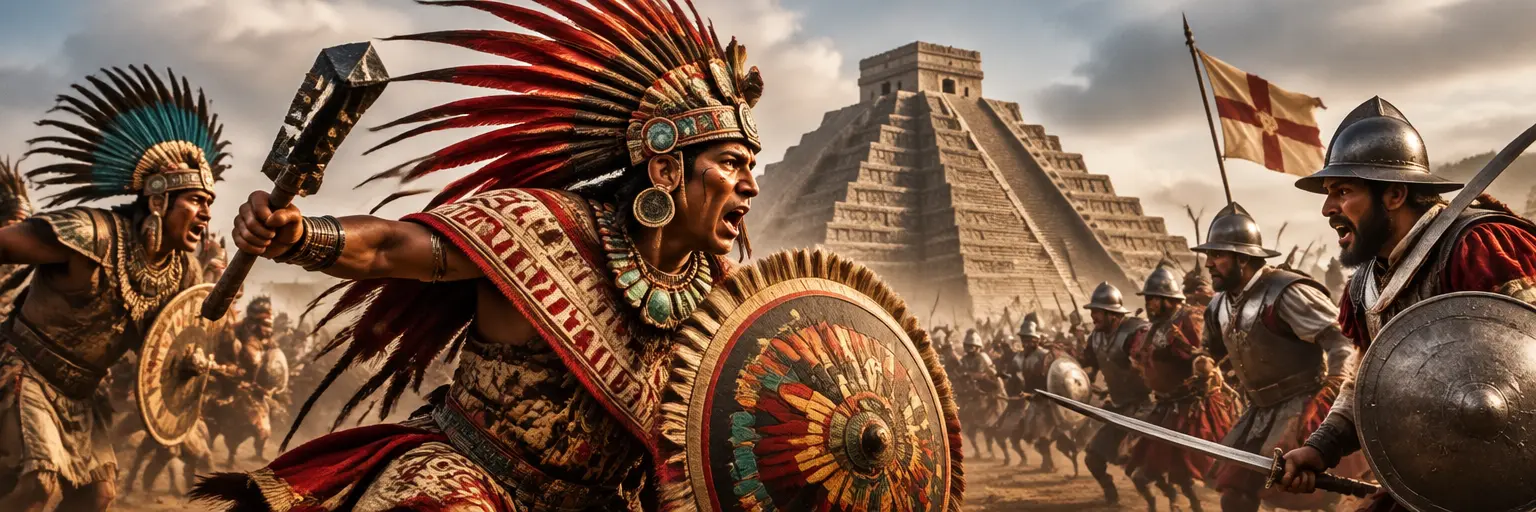
In 1521, the Spanish conquistadors, led by Hernán Cortés, alongside tens of thousands of indigenous allies, laid siege to the Aztec capital, Tenochtitlan. This battle was not a simple conquest but a brutal, months-long campaign marked by disease, famine, and fierce resistance from the Mexica under Cuauhtémoc. The city’s eventual fall signaled the collapse of the Aztec Triple Alliance and the beginning of Spanish colonial rule in Mesoamerica.
Readers will understand how technological advantages (steel, gunpowder, and horses) combined with political fragmentation among indigenous groups enabled the Spanish victory. More importantly, this section highlights the tactical brilliance of Aztec defenders, the role of Lake Texcoco in the fighting, and how the battle’s aftermath reshaped a continent. Expect detailed maps, casualty estimates, and first-hand accounts from Nahua chronicles.
🏹 The Battle of Cajamarca: Capturing an Emperor
On November 16, 1532, Francisco Pizarro’s small force of about 168 men ambushed the Inca emperor Atahualpa at Cajamarca, in modern-day Peru. The Incas, numbering in the thousands, were caught off guard during a peaceful meeting, and Atahualpa was captured. This single engagement is often cited as one of the most decisive military victories in history, as it decapitated the Inca leadership and led to the swift collapse of the largest empire in pre-Columbian America.
Here, you’ll explore the psychological warfare employed by the Spanish, the impact of guns and cavalry on Inca formations, and the role of civil war between Atahualpa and his brother Huáscar, which had weakened the empire. The section also discusses the ransom of gold and silver paid by the Incas, and why this battle remains a symbol of betrayal and imperial conquest.
🛡️ The Battle of Mabila: The Choctaw and De Soto’s Brutal March
In October 1540, Spanish explorer Hernando de Soto encountered a fortified town called Mabila, controlled by the Choctaw chief Tuskaloosa. What began as a tense negotiation erupted into a full-scale battle, lasting over eight hours. De Soto’s forces, with cavalry and crossbows, fought against thousands of Choctaw warriors, resulting in a pyrrhic victory: the Spanish lost many men and horses, while the Choctaw suffered devastating casualties, with some chronicles claiming 2,500 to 3,000 killed.
This battle is critical for understanding indigenous resistance in the Southeast United States before permanent European settlement. Readers will learn about the fortifications built by the Choctaw, the tactical use of fire and ambushes, and how the conflict devastated local populations and resources, forcing De Soto’s expedition to retreat. It also underscores the demographic catastrophe caused by European-introduced diseases during such encounters.
⚡ The Battle of Otumba: A Near-Miracle for Cortés
After the disastrous “Noche Triste” (July 1520), where the Spanish fled Tenochtitlan with heavy losses, Cortés regrouped with his allies and faced a massive Aztec army at Otumba on July 7, 1520. Despite being vastly outnumbered, the Spanish cavalry and allied Tlaxcalan warriors managed to kill the Aztec commander, sending the enemy into disarray. This unexpected victory saved the Spanish expedition from total annihilation.
This section examines the decisive role of mounted knights and how the capture of the enemy’s standard-bearer turned the tide. It also highlights the crucial support of the Tlaxcalans, who were military allies, not mere subjugates. Readers will appreciate how this battle bought Cortés time to regroup, forge alliances, and launch the final siege of Tenochtitlan, framing Otumba as a hinge point in the conquest of Mexico.
🌿 The Battle of the Little Bighorn (Greasy Grass): Native Victory
On June 25, 1876, combining Lakota, Cheyenne, and Arapaho forces under Sitting Bull and Crazy Horse defeated the U.S. Army’s 7th Cavalry under Lt. Colonel George Custer near the Little Bighorn River. This is one of the most famous Native American victories in history, where Custer’s entire command was wiped out. The battle is remembered as both a triumph of indigenous coalition warfare and a catalyst for intensified U.S. military campaigns.
Here, readers will explore the strategic use of terrain and the importance of intelligence gathering by Native scouts. The section discusses how tribal unity, despite internal rivalries, proved effective against a disciplined but overconfident cavalry. It also contextualizes the battle within the broader resistance to encroachment on the Black Hills, offering a balanced view of the aftermath and its mythologization in American culture.
📍 The Siege of Cusco: The Inca Rebellion of 1536
Following the Spanish conquest, the Inca ruler Manco Inca Yupanqui led a massive rebellion in 1536, besieging the former capital Cusco for ten months. With up to 100,000 warriors, the Inca employed sophisticated siege tactics, including burning the city’s thatched roofs, but Spanish defenders, backed by firearms and mounted cavalry, held out. The siege ultimately failed due to internal divisions among native allies and Spanish reinforcements from Lima.
This battle showcases indigenous adaptation to European warfare, including the use of captured Spanish weaponry. Readers will learn about the strategic retreat of Manco Inca to Vilcabamba, where he established a neo-Inca state that resisted for decades. It underscores the resilience of Andean military organization and the deep political fissures between different indigenous factions, which the Spanish exploited relentlessly.
Frequently Asked Questions
What was the largest indigenous army ever assembled in the Americas?
The Aztec empire and their allies could field forces exceeding 100,000 soldiers for major campaigns, as seen during the initial resistance against Cortés. The Inca empire similarly mobilized tens of thousands of troops, but the largest recorded single concentration was likely at the Siege of Cusco in 1536, where Manco Inca reportedly gathered over 100,000 warriors.
Why did indigenous armies often lose to smaller Spanish forces?
Key factors included the introduction of Old World diseases that devastated populations, superior Spanish steel armor, firearms, and cavalry. Additionally, deep political divisions among indigenous groups led to alliances with the Spanish, who exploited tribal rivalries. The element of surprise and psychological shock also played a critical role in early encounters like Cajamarca.
Did any Native American battle change the course of colonization?
Yes, the Battle of Otumba (1520) prevented the total destruction of Cortés’ forces, allowing the Spanish to regroup and later conquer Tenochtitlan. Conversely, the Battle of the Little Bighorn (1876) temporarily halted U.S. expansion but provoked overwhelming retaliation that led to the end of the Plains Wars.
How did indigenous peoples adapt to European military technology?
Many groups quickly learned to use captured guns, swords, and horses. The Inca under Manco Inca adapted siege tactics, while the Choctaw built fortified towns. Some groups, like the Tlaxcalans, adopted Spanish-style warfare, including cavalry units, and became key allies in subsequent campaigns.
Were there any famous battles where indigenous forces defeated Europeans decisively?
Yes, the Battle of the Little Bighorn is the most famous, but also the Siege of Cusco (though a strategic failure) inflicted heavy losses on the Spanish. Earlier, the Mapuche people in Chile defeated the Spanish in the Battle of Curalaba (1598), leading to the destruction of several Spanish cities and the temporary retreat of colonization south of the Bío-Bío River.