Explore Indigenous Military Practices: Strategy, Honor, and Resistance
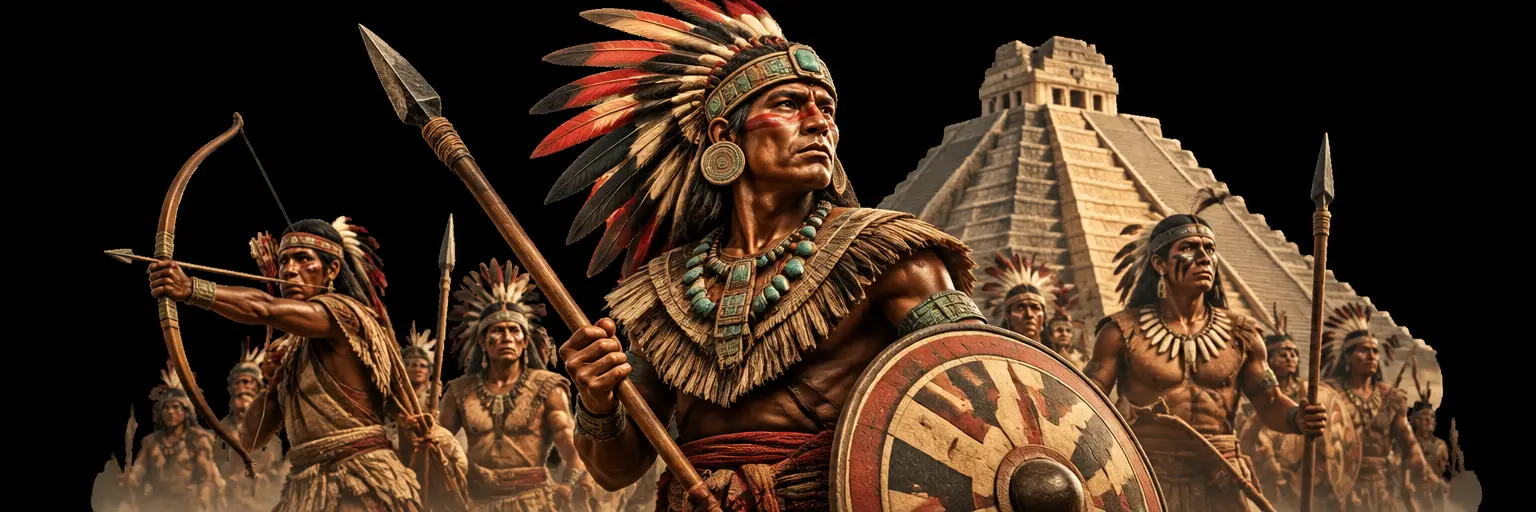
Before European contact, the indigenous civilizations of the Americas developed highly sophisticated military systems that were not merely about conquest but were deeply intertwined with religion, politics, and social structure. From the eagle-and-jaguar warrior orders of the Aztec Empire to the stealthy forest tactics of the Iroquois Confederacy and the defensive earthworks of the Mississippian mound builders, military practices were a cornerstone of cultural identity and survival. This subcategory delves into the training, weaponry, tactics, and ceremonial protocols that defined how Native American societies waged war, defended their territories, and negotiated power. Here, you will uncover how these practices shaped alliances, trade networks, and the dramatic resistance against invading forces, offering a nuanced view of pre-Columbian martial culture that goes far beyond Hollywood stereotypes.
🛡️ Warrior Training and Social Hierarchy
In most indigenous military systems, becoming a warrior was a lifelong vocation that required spiritual and physical discipline, not just brute strength. Among the Aztecs, noble youths entered the Calmecac (elite school) at a young age to learn the art of war, while commoners attended the Telpochcalli for basic combat training. Success in battle was the primary pathway to upward social mobility, allowing commoners to earn titles, land, and prestigious ranks like cuauhtemoc (descending eagle). Similarly, among the Plains nations, such as the Lakota, warrior societies like the Kit Fox and Crazy Dogs enforced strict codes of bravery and counted coups—touching an enemy in battle without killing them—as a higher honor than taking a life. This section explains how military service determined one’s social standing, marriage prospects, and political influence, making the battlefield an extension of the community’s value system.
The training regimen often combined physical endurance tests, such as running long distances with heavy packs, with ritual fasting and vision quests to seek spiritual guidance. For the Maya, warfare was highly ritualized, and capturing prisoners for sacrifice was often more desirable than killing them outright, leading to the development of non-lethal weaponry like the macana club. Meanwhile, the Inca Empire conscripted soldiers from conquered provinces, integrating them into a highly organized army with standardized weapons and logistics, yet reserved elite units like the Ollantaytambo for the nobility. Understanding this hierarchy reveals how military practices reinforced the broader societal order, creating a cycle where martial prowess and religious duty were inseparable.
⚔️ Weapons, Armor, and Tactical Innovation
The arsenal of indigenous warriors was remarkably diverse and adapted to diverse environments, from the dense Amazon rainforest to the arid deserts of the Southwest. The atlatl (spear-thrower) was a revolutionary invention that doubled the range and force of a spear, used widely by early civilizations like the Olmec and later refined by the Aztecs. The obsidian-edged macuahuitl was a wooden club embedded with razor-sharp blades that could decapitate a horse, while the sling was a favored weapon among Andean and Mesoamerican forces for its silent, long-range capability. For armor, the Aztecs used quilted cotton (ichcahuipilli) that was surprisingly effective against arrows, while the Inca used wooden helmets and shields made of palm fiber. In North America, the Iroquois developed stealth tactics and ambushes that exploited the cover of forests, while the Comanche mastered mounted warfare after the introduction of horses in the 16th century, becoming legendary for their mobility and hit-and-run raids.
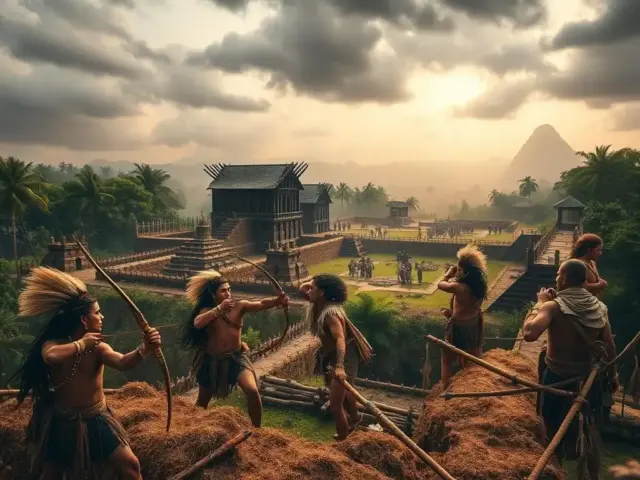
Tactical innovation was not limited to weaponry. Fortifications, such as the hilltop citadels of the Moche and the palisaded villages of the Mississippians, demonstrate advanced engineering and strategic planning. The Aztec military used a dual-combat system: lesser soldiers would engage in skirmishes to tire the enemy, followed by elite shock troops in jaguar and eagle costumes delivering the decisive blow. The Inca built an extensive network of roads and storehouses to rapidly move troops and supplies, enabling them to maintain control over a 2,500-mile empire. This section provides concrete examples of how these technologies and tactics were developed, tested, and passed down through generations, highlighting the intellectual and logistical sophistication behind indigenous warfare.
🏹 Ritual Warfare, Captives, and Human Sacrifice
For many indigenous cultures, war was not just about territorial expansion but also a sacred obligation to feed the gods and maintain cosmic order. The Aztec practice of Flower Wars (Xochiyaoyotl) was a formalized conflict between allied enemies, designed specifically to capture prisoners for sacrificial rituals rather than to destroy the opponent. These engagements were highly stylized, with rules of engagement and a focus on individual combat, followed by elaborate ceremonies where captives were honored before ritual sacrifice. The Maya similarly engaged in "star wars" and naabal raids, targeting elites for capture and the eventual display of severed heads on tzompantli racks. This ritualistic aspect of warfare is often misunderstood as merely brutal, but it was a complex system of diplomacy, religious devotion, and social control that ensured a steady flow of sacrificial victims while allowing for political alliances.
The role of captives varied widely. Among the Iroquois, captives were often adopted into clans to replace deceased members, a practice that served both to replenish population and to assimilate foreign knowledge. The Inca, however, preferred to incorporate conquered peoples through forced resettlement and the worship of their gods, using military force primarily to suppress rebellion rather than for slave-taking. This section dispels myths about indiscriminate violence, showing instead that military engagements were frequently governed by strict codes of honor, with consequences for cowardice or misconduct. By understanding the ritual dimensions, readers gain a deeper appreciation of how warfare was a means of communication with the supernatural, a performance of societal strength, and a driver of inter-regional exchange.
🏰 Fortifications, Defense, and Resistance
Indigenous military practices also excelled in defensive architecture and strategic defense systems. The Hohokam of the Southwest built massive platform mounds and stone walls that protected against both raiders and environmental threats. The Pueblo peoples constructed multi-story adobe villages, like those at Mesa Verde and Taos, that functioned as natural fortresses, with narrow entryways and elevated positions for archers. In the Andes, the Pukara hilltop fortresses used by the Inca and pre-Inca cultures featured terraced slopes and moats to impede attackers. The Mississippian city of Cahokia was surrounded by a two-mile-long wooden palisade with bastions, evidence of a sophisticated response to intertribal conflict. These structures were not only military but also religious and administrative centers, showing how defense was integrated into daily life.
Resistance against European conquerors later became a testament to these existing military practices. Despite the advantages of gunpowder and horses, many indigenous groups used their knowledge of terrain and guerrilla tactics to prolong resistance. The Mapuche of South America successfully fought the Spanish for over three centuries, using fortified malones and hit-and-run cavalry raids. The Navajo employed desert warfare and evasion, while the Sioux used the environment to launch devastating counterattacks. This section traces the evolution of military practices from pre-contact traditions to their adaptation in the face of colonization, underscoring how indigenous military expertise was a critical factor in the brutal conflicts that shaped the Americas. It also highlights how these defensive systems have left lasting archaeological sites that offer insight into the strategic minds of ancient engineers.
🌎 Comparative Analysis Across Regions
While each civilization developed its own military culture, comparative analysis reveals shared patterns and regional variations. Mesoamerican warfare emphasized capture and ritual sacrifice, centered around city-states and elite warrior orders. Andean warfare was more impersonal, focused on conquest and tribute extraction, with the Inca using a massive standing army and administrative control. In North America, tribal warfare was often more about coup-counting, territorial raids, and revenge, with small skirmishes rather than large-scale battles. In the Amazon Basin, tribes like the Yanomami engaged in frequent, low-intensity raids for women and prestige, using blowguns and bows. This comparative lens helps students understand how environmental factors—such as the availability of large game, agricultural surplus, or geographic barriers—shaped military strategy. It also shows how trade routes, such as those of the Iroquois or the Aztec, were protected by military might, making warfare a key enabler of economic exchange.
Moreover, the study of military practices allows for cross-cultural connections, such as the use of the war club and shield across both continents, or the parallel development of military chiefdoms in the Southeastern United States and the cacique systems of the Caribbean. This section provides side-by-side comparisons that reveal both diffusion and independent innovation, showing that indigenous warfare was not primitive but highly adaptive and context-specific. By examining the similarities and differences, readers can appreciate the diversity of human conflict resolution strategies and the sophisticated political logic behind them, enriching their understanding of indigenous civilizations as whole nations with complex international relations.
Frequently Asked Questions
What was the primary purpose of indigenous military practices?
Across most civilizations, military practices served dual purposes: territorial defense and expansion, as well as religious and social functions. For example, Aztec warfare aimed to capture sacrificial victims to sustain the sun, while Inca campaigns sought to expand tribute networks. In North America, raids often avenged wrongs or secured hunting grounds. Thus, war was never purely destructive—it was a tool for political negotiation, spiritual appeasement, and cultural preservation.
Did indigenous warriors use horses and guns before Europeans arrived?
No. Horses were introduced to the Americas by Spanish explorers in the 16th century. However, after their introduction, many plains groups, like the Comanche and Lakota, rapidly adopted horsemanship, transforming their military tactics. Similarly, firearms were initially unavailable, but some tribes acquired them through trade. Before European contact, warfare relied on stone, wood, and copper weapons, such as the atlatl, bow, and macuahuitl.
Were there any women warriors in indigenous military societies?
Yes, though rare, women did participate in combat. Among the Iroquois, women held significant political power and could influence war decisions, and some, like the famous Molly Brant, later played military roles. In the Cheyenne and Blackfoot nations, there are records of women warriors earning honor and joining men in battle. The Inca had selected elite women called Aclla who, though primarily weavers, were also trained in defense.
How did indigenous military tactics differ from European tactics during colonization?
Indigenous tactics emphasized mobility, camouflage, and individual valor, often avoiding pitched battles. They used the landscape to their advantage—ambushes, hit-and-run raids, and guerrilla warfare. Europeans favored linear formations, heavy armor, and siege warfare. This mismatch initially caused European forces to struggle, as seen in the early Spanish defeats by the Mapuche, until they adapted by using native allies and disease.
Are any indigenous military sites still visible today?
Yes, many fortifications and battlefields remain. Examples include the Palisade at Cahokia in Illinois, the Pukara de La Compañia in Chile, and the cliff dwellings of Mesa Verde in Colorado. Additionally, the Aztec ruins at Tenochtitlan (now Mexico City) show defensive structures, and the Inca site of Sacsayhuamán features massive walls designed as defensive works. These places are preserved as national parks and UNESCO sites.