Explore Military Technologies of Indigenous Civilizations
Dive into the ingenious warfare innovations developed by native peoples across the Americas, from the Aztec macuahuitl to Inca fortress engineering. This subcategory reveals how indigenous military technologies were not merely tools of combat but sophisticated systems reflecting deep ecological knowledge, metallurgical skill, and strategic brilliance. Uncover the materials, designs, and battlefield tactics that allowed these civilizations to defend vast empires and resist foreign invaders for centuries.
🛡️ Weaponry: Blades, Clubs, and Ranged Arms
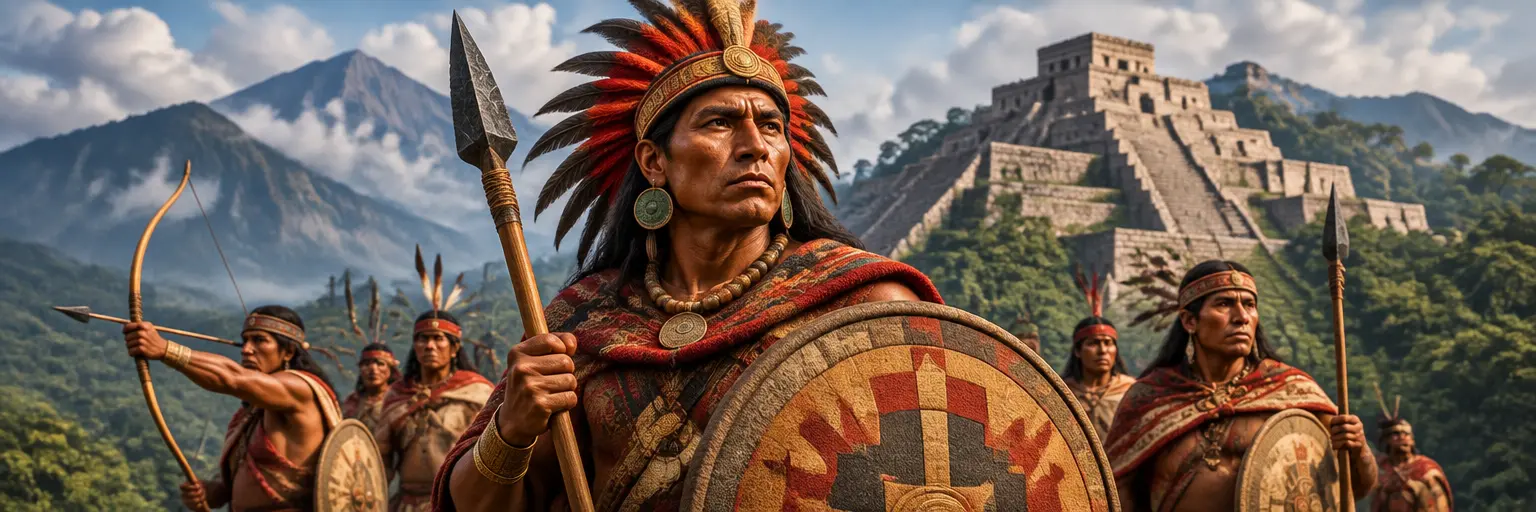
Indigenous warriors wielded an arsenal tailored to their environments and combat styles. The macuahuitl, a wooden sword edged with obsidian blades, could sever a horse’s head in a single swing—a fearsome testament to volcanic glass technology. South American cultures crafted bolas (throwing weights) and atlatls (spear-throwers) that increased projectile velocity and range up to 150 meters, ideal for open-field skirmishes or hunting. Meanwhile, the Maya and Aztec used spear-throwers with fire-hardened tips and composite bows reinforced with sinew and bone, enabling piercing of cotton armor. Each weapon was engineered for portability, maintenance, and devastating effect in close quarters or ambush scenarios.
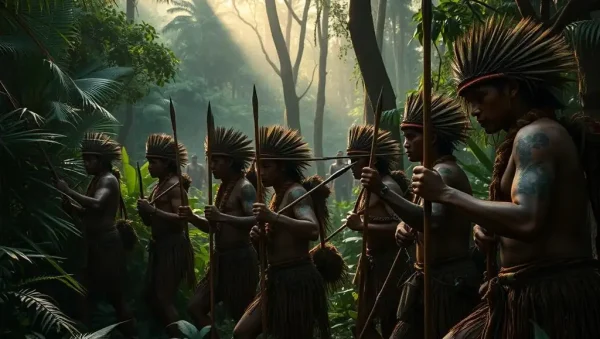
Beyond the obvious, these tools carried symbolic and ritual importance. Obsidian blades were often associated with deities, and the crafting process was a sacred art passed down through generations. In the Amazon, tribes used poisoned darts from blowguns, derived from curare and frog toxins, which acted on the nervous system within minutes. This biological warfare underscored a profound understanding of pharmacology. For SEO, keywords like “pre-Columbian weaponry,” “obsidian sword,” and “indigenous projectile technology” will attract enthusiasts and researchers alike to this rich field.
🏰 Defensive Architecture: Fortresses and City Walls
Indigenous military technology extended far beyond handheld arms into monumental defensive systems. The Inca built Sacsayhuamán near Cusco with massive polygonal stones fitted so precisely that no mortar was needed—an earthquake-resistant design still studied today. These walls featured angled terraces and hidden gates, creating kill zones for defenders. Similarly, the Puebloan cliff dwellings in the American Southwest used natural rock overhangs and narrow entrances, making sieges impractical. Aztec Tenochtitlán relied on causeways with removable bridges, turning the city into an island fortress. Watchtowers and signal fires provided early warning, while moats and spike-lined trenches slowed cavalry and infantry assaults.
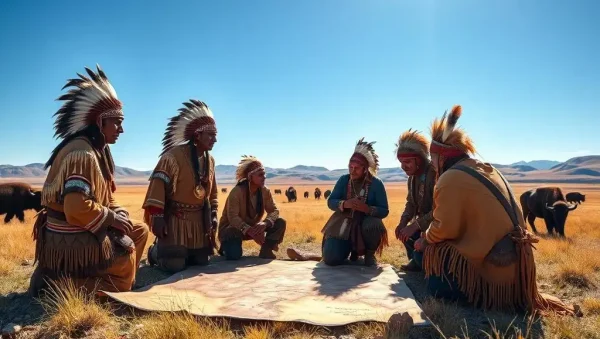
Defensive technology also included camouflage and deception, such as false trails, pit traps with sharpened stakes, and tunnel networks for surprise sorties. The Mississippian culture’s earthen mound complexes served as elevated command posts and refuges during floods or raids. These structures were not static but adapted to local threats—coastal tribes built palisades facing the sea, while plains groups designed mobile barricades for nomadic warfare. Keywords such as “indigenous fortifications,” “Inca stonework,” and “pre-Columbian siege defense” will guide SEO discovery for those interested in ancient engineering marvels.
⚔️ Tactical Innovations: Formation and Psychological Warfare
Tactics were as refined as the hardware, integrating unit formations, flanking maneuvers, and psychological intimidation. The Aztec eagle and jaguar warriors operated in elite squads, using feigned retreats to draw enemies into ambushes within narrow canyons or swamps. The Inca employed massed slingers and spear regiments in coordinated waves, supported by drum signals for synchronization. Many tribes used war cries, painted bodies, and animal masks to terrify opponents, a technique that often caused routes before direct contact—saving lives and resources. Communication via smoke signals, drum beats, and knotted quipu strings enabled real-time battlefield commands across vast distances.
Naval tactics also shone: the Carib and Taino used swift war canoes for boarding actions, while the Chumash of California developed plank canoes with enhanced stability for coastal raids. In the Andes, the Inca built rope bridges that could be cut to halt pursuers, effectively weaponizing geography. Combined arms—integrating archers, melee fighters, and skirmishers—demonstrated a grasp of combined operations rivaling Old World armies. For SEO, “indigenous battle formations,” “Aztec warrior tactics,” and “psychological warfare in ancient Americas” will capture high-intent queries from military history buffs.
🧪 Materials Science: Metallurgy and Natural Polymers
While many cultures lacked iron, they innovated with available materials to achieve remarkable performance. Obsidian blades are sharper than surgical steel, boasting a cutting edge of just 3 nanometers—ideal for slashing weapons and surgical tools. The Inca and Muisca alloyed gold, silver, and copper to create tumbaga, a durable metal for ceremonial armor and status items. Rubber, harvested from the sap of Hevea trees, was processed by the Maya and Aztec to produce elastic bands for slingshots and solid balls for ceremonial games—an early polymer engineering feat. Organic materials like curare, hemlock, and snake venom were formulated into potent toxins with shelf-stable properties, enabling long-range assassination via blowgun darts.
Composite construction was key: laminated bows using wood, sinew, and glue achieved draw weights far exceeding simple bows, improving penetration of quilted cotton armor. Shields were made of hardened leather, woven reeds, or layered wood, often with central bosses to deflect blows. Textile armor—layered cotton quilted with salt and plant fibers—stopped arrows yet remained lightweight for tropical climates. These innovations highlight a materials science tradition that prioritized functionality, availability, and cultural symbolism. SEO keywords like “obsidian metallurgy,” “indigenous rubber technology,” and “pre-Columbian composite materials” will draw material scientists and historians alike.
🌍 Case Studies: Aztec, Inca, and Maya Military Complexes
Examining three great empires reveals distinct technological priorities. The Aztec focused on shock warfare—obsidian-edged weapons and ritualized combat aimed at capturing prisoners for sacrifice, which shaped their military as a tool of religious and political dominance. The Inca emphasized logistics and engineering, building 24,000 km of roads, suspension bridges, and fortified garrisons (pukaras) that allowed rapid troop movement and supply lines across the Andes. Their slingshots and staff-slings could hurl rocks with lethal force, and their khipu record systems tracked troop numbers and equipment inventories. The Maya developed multi-century defensive alliances and used the atlatl and macana (a wooden sword) for extended sieges, as evidenced by the fortified city of Tikal, which featured walls and moats around its core temples.
These case studies show how military technology was inseparable from governance, environment, and belief systems. Aztec warfare relied on dense urban logistics and tribute networks, while Inca warfare used mountain-specific adaptations like altitude conditioning and llama caravans. Maya conflicts were often limited to elites, using shock troops and ritual emblems to legitimize power. This diversity offers endless content opportunities—whether you’re researching siege techniques or comparing weaponry. SEO terms like “Aztec military history,” “Inca fortress system,” and “Maya warfare technologies” will connect to niche audiences seeking deep insights.
Frequently Asked Questions
What was the most effective indigenous weapon?
The macuahuitl stands out due to its obsidian edges, which are sharper than modern steel and caused deep, infection-prone wounds. In close combat, it could cleave through limbs, and its lightweight construction allowed rapid swings. However, the atlatl provided greater range and penetration, making it arguably more versatile in open battles and hunting scenarios.
Did indigenous civilizations use metal armor?
No, but they used layered cotton quilted armor, often soaked in salt and plant fibers, which effectively stopped arrows and reduced blunt force. Some elites wore gold or copper breastplates for ceremonial status, but these were not used in combat due to weight and rarity. Leather and woven reed shields were also standard.
How did they build fortress walls without iron tools?
They used stone hammers, hardwood wedges, and water expansion techniques to split and shape massive boulders. For Inca walls, stones were abraded with sand and harder rocks, then fitted using trial-and-error with a leveling technique. The result was interlocking joints that survived earthquakes better than mortar-based walls.
Were there any naval military technologies?
Yes, especially in coastal and riverine regions. The war canoe was central, with reinforced hulls and paddlers trained for rapid boarding. The Chumash used plank canoes for speed, while Amazonian tribes developed dugouts with archer platforms. Nets, harpoons, and fishing hooks were also repurposed for combat.
How did indigenous armies communicate during battle?
They used drum rhythms, conch shell trumpets, and smoke signals to relay commands and coordinate movements. The Inca employed khipu (knotted cords) for logistical communication, while Aztec runners used a relay system along roads to transmit messages across the empire in hours. Battlefield hand signals and color-coded banners further enhanced coordination.