
The Decline of the Maya: Political Factors Behind the Civilization's Fall

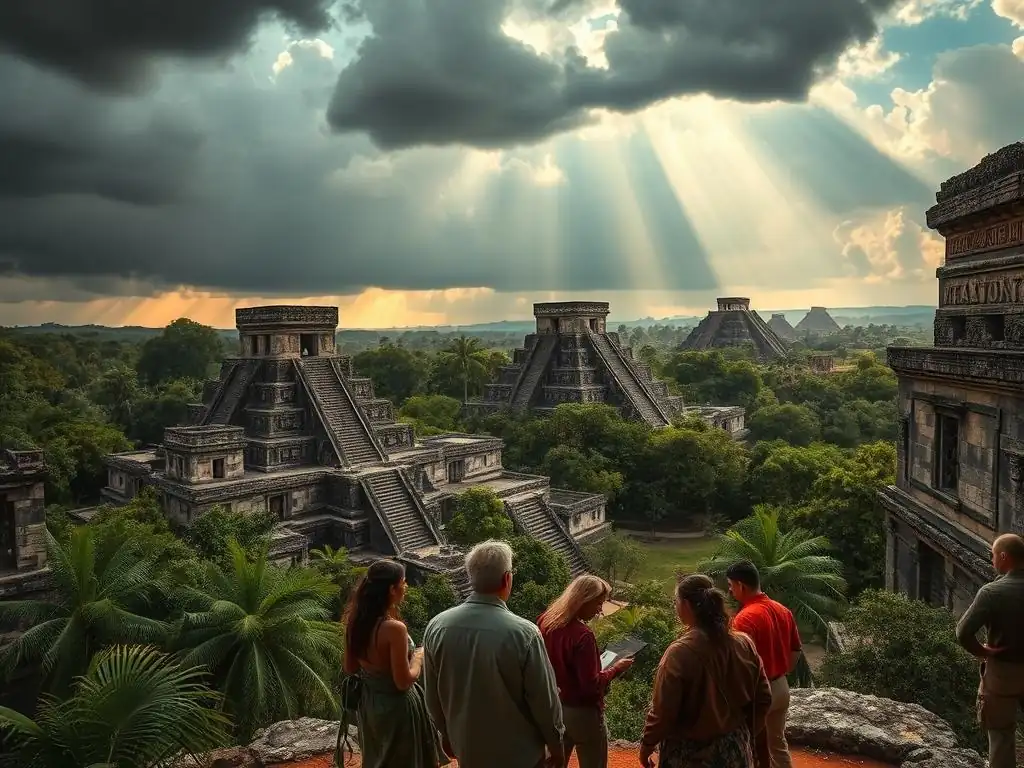
Welcome to Indigenous Civilizations of the Americas, where we delve into the magnificent tapestry of indigenous cultures that flourished long before European contact. In our featured article, “The Decline of the Maya: Political Factors Behind the Civilization's Fall,” we unravel the complex web of political dynamics that contributed to the unraveling of one of history's most captivating civilizations. What led to the Maya's remarkable ascent and eventual decline?
Join us on this journey of discovery as we explore the intricate factors that shaped their society and left an indelible mark on the world. Prepare to be intrigued and informed as you uncover the rich narratives of resilience and transformation.
Introduction to the Maya Civilization Political Decline
The Maya civilization stands as one of the most sophisticated and influential cultures in pre-Columbian America. Renowned for their remarkable achievements in writing, mathematics, astronomy, and architecture, the Maya flourished in regions that now encompass southern Mexico, Guatemala, Belize, and parts of Honduras and El Salvador.
However, despite their grandeur, the civilization experienced a significant decline beginning around the 9th century AD, leading to the abandonment of major cities and a profound transformation of their society. This article delves into the political factors that played a crucial role in the Maya civilization's political decline, examining how internal conflicts, environmental challenges, and warfare contributed to the overall disintegration of their once-thriving society.
Overview of the Maya Civilization
The Maya civilization was characterized by a complex social structure, with city-states ruled by kings who wielded significant power. The integration of religion and governance was critical, as rulers were often seen as divine figures who maintained the favor of the gods through rituals and ceremonies. Major cities, such as Tikal, Calakmul, and Palenque, showcased impressive hieroglyphic inscriptions and monumental architecture, reflecting the civilization's advanced cultural and artistic achievements.
The period known as the Classic Maya (approximately 250 to 900 AD) marked the height of their civilization, during which trade networks expanded, population growth surged, and monumental construction flourished. However, the intricate political landscape, influenced by alliances and rivalries between city-states, also sowed the seeds for future turmoil.
Importance of Political Structure in Maya Society
The political structure of the Maya civilization was fundamental to its functionality and stability. It was organized into a series of city-states, each governed by a noble class that exercised authority over the common populace. This hierarchical structure allowed for the organization of labor, resource management, and military defense.
However, the reliance on a decentralized system also meant that local leaders had significant autonomy, often leading to power struggles and conflicts. As city-states vied for dominance, the political landscape became increasingly fragmented, initiating a cycle of internal strife that would contribute to the civilization's eventual decline.
Key Political Factors Contributing to the Decline of the Maya Civilization
Internal Political Strife
One of the most significant factors contributing to the decline of the Maya civilization was internal political strife. As city-states grew in power, competition intensified, leading to conflicts over resources, territory, and influence. This rivalry often manifested in warfare, which drained resources and destabilized communities.
The emergence of competing factions within city-states also weakened centralized authority. Discontent among the populace, driven by heavy taxation and demands for labor, led to uprisings against ruling elites. Such internal discord eroded the political cohesion necessary for sustaining the civilization's achievements, ultimately paving the way for its decline.
Environmental Challenges and Political Responses
The Maya civilization was not only challenged by political issues but also faced significant environmental challenges. Deforestation, soil depletion, and prolonged droughts had a profound impact on agricultural productivity, which was the backbone of their economy.
In response, Maya leaders attempted to implement political measures to mitigate these challenges, such as reorganizing agricultural practices and redistributing resources. However, these efforts often fell short, leading to food shortages and increasing dissatisfaction among the populace. The failure to effectively manage environmental crises compounded existing political tensions and contributed to the civilization's decline.
Warfare and Political Instability
Warfare played a crucial role in the political instability that characterized the decline of the Maya civilization. As city-states engaged in constant conflict, the toll on human and material resources became unsustainable. The need for military campaigns diverted attention from governance and social welfare, leading to further unrest.
The shifting alliances and betrayals between city-states created a volatile political environment, marked by uncertainty and fear. The inability to maintain stability amidst ongoing warfare ultimately weakened the social fabric of Maya society, hastening the decline of their once-mighty civilization.
The political decline of the Maya civilization was a multifaceted process influenced by internal strife, environmental challenges, and the devastating effects of warfare. Understanding these factors provides valuable insights into the complexities of Maya society and the lessons that can be drawn from their historical trajectory.
The Role of Leadership in the Maya Civilization's Decline
The political decline of the Maya civilization can be closely tied to the effectiveness and characteristics of its leadership. The Maya were organized into city-states, each ruled by a king or "Ajaw," who wielded significant political, religious, and military power. As these leaders went through cycles of success and failure, the ramifications were felt throughout their city-states.
In the later periods of the Maya civilization, particularly during the Terminal Classic period (around 800-900 CE), there was a noticeable shift in leadership styles and capabilities. Many leaders became entrenched in conflict rather than diplomacy, often prioritizing personal glory over the collective well-being of their city-states. The resulting internal strife weakened political cohesion and effectiveness, making it difficult for the Maya to respond to external pressures and challenges.
Moreover, the emergence of rival factions within these city-states further compounded the political instability. As resources became scarce and competition for power intensified, leaders faced increasing challenges to their authority, leading to civil discord. This internal fragmentation ultimately contributed to the gradual political decline, as unity was essential for the survival of the civilization in the face of external threats.
Characteristics of Maya Leadership
Maya leadership was characterized by several distinct features that influenced the political landscape. Firstly, leaders were often viewed as semi-divine figures, possessing both political authority and spiritual significance. This dual role granted them considerable influence over their subjects but also imposed high expectations for their actions and decisions.
Another characteristic was the emphasis on lineage and heredity, where power was frequently passed down within noble families. This system could lead to stagnation, as some rulers may have lacked the necessary skills or vision to address the changing political and environmental conditions. As a result, ineffective leadership could accelerate the decline of their respective city-states.
Additionally, leaders were responsible for public works and rituals that reinforced their status and legitimacy. When leaders failed to deliver on these fronts—be it through unsuccessful military campaigns or inadequate resource management—their authority faced serious challenges. The diminishing trust in leadership played a crucial role in the disintegration of social and political structures, further pushing the civilization toward decline.
Social Hierarchies and Their Political Implications
The social hierarchy of the Maya civilization was complex, consisting of nobles, priests, merchants, commoners, and slaves. This stratification had significant political implications, particularly during times of crisis. Nobles and elites often held considerable power and influence, but their interests did not always align with those of the common populace.
As political instability increased, dissatisfaction among the lower classes grew. Economic pressures, such as food shortages or heavy taxation, could lead to uprisings or shifts in allegiance. The disconnect between the elite and the masses weakened the political fabric of Maya society, as leaders struggled to maintain control over a discontented population.
Moreover, warfare played a vital role in the social and political dynamics of the Maya. Victorious leaders could elevate their status and consolidate power, while defeats could lead to significant losses in credibility and authority. The cyclical nature of conflict and power struggles further complicated the political landscape, resulting in a fragmented society that struggled to maintain cohesion amid external threats.
Conclusion: Lessons from the Political Decline of the Maya Civilization
The decline of the Maya civilization serves as a poignant reminder of the complex interplay between leadership, social structures, and political stability. The challenges faced by the Maya highlight the critical importance of effective governance and the need for leaders to adapt to changing circumstances.
Reflections on Governance and Sustainability
The political decline of the Maya civilization underscores the necessity for sustainable governance practices. Leaders must prioritize the well-being of their populace and engage in inclusive decision-making to foster social cohesion. The failure to address the needs of the community can result in fractures that lead to broader societal collapse, as was seen in the Maya case.
Additionally, the importance of resource management cannot be overstated. Ensuring that environmental and economic conditions are conducive to societal growth is vital for long-term stability. The Maya civilization's decline serves as a cautionary tale about the consequences of overexploitation and mismanagement of resources.
The Legacy of the Maya Political System in Contemporary Context
The legacy of the Maya political system continues to resonate in contemporary discussions about governance and social structures. Modern societies can learn from the Maya's experiences, particularly in understanding the significance of strong leadership, community engagement, and equitable resource distribution.
Furthermore, the intricate social hierarchies established by the Maya remind us of the ongoing challenges regarding inequality and representation in political systems worldwide. By examining the historical context of the Maya civilization, contemporary leaders can glean insights into the importance of adaptability, inclusivity, and sustainability in governance. The lessons drawn from the political decline of the Maya civilization remain relevant, emphasizing the need for thoughtful, responsive leadership in the face of challenges.
References and Further Reading on Maya Political Decline
Understanding the political decline of the Maya civilization involves delving into a wealth of scholarly resources. Below are some suggested readings and online resources that provide deeper insights and analyses of the political structures, governance, and the factors contributing to the decline of this remarkable civilization.
Suggested Books and Articles
- "The Maya Civilization: A History" by Matthew Restall
- This book offers a comprehensive overview of Maya history, with a focus on political structures and the implications of governance on their societal stability. It provides a critical examination of the factors leading to their decline.
- "The Collapse of Ancient States and Civilizations" edited by Norman Yoffee and George L. Cowgill
- This anthology discusses the broader context of state collapse, including a detailed case study of the Maya civilization. It explores political, economic, and environmental factors that may have contributed to the decline.
- "The Ancient Maya" by Arthur Demarest
- Demarest's work provides an in-depth look at the political organization of the Maya and discusses the dynamics of power that influenced their eventual downfall. The book also addresses the role of warfare and alliances in Maya politics.
- "Maya Political Science: Time, Astronomy, and the Cosmos" by David E. Stuart
- This article investigates how Maya political authority was intertwined with their understanding of time and celestial events, which played a crucial role in governance and societal organization.
- "The Maya: Ancient Peoples and Places" by Charles Gallenkamp
- This accessible introduction to the Maya culture includes discussions on the political systems and the eventual factors that led to their decline, making it a great starting point for readers new to the topic.
Online Resources for Further Exploration
- The Maya Exploration Center
- This website offers a variety of resources, including articles, videos, and research updates on Maya archaeology and political history. It provides insights into ongoing research about the political decline of the Maya.
- Maya Archaeology and Research
- A platform dedicated to the latest discoveries in Maya archaeology, including studies focused on political structures and their impacts on societal collapse. It serves as a hub for academic publications and fieldwork reports.
- National Geographic: The Maya
- National Geographic features articles and multimedia content about the Maya civilization, including discussions on their political systems and the reasons for their decline. The site often includes interviews with experts in the field.
- JSTOR
- A digital library that provides access to academic journal articles, books, and primary sources on the Maya civilization. Searching for terms related to "Maya political decline" can yield valuable insights into scholarly discussions on the topic.
- The Ancient Maya Archaeological Project
- This project focuses on excavations and research in Maya regions. Their website includes findings that relate to the governance structures and political factors that influenced the civilization’s decline.
These resources collectively offer a multifaceted view of the Maya civilization's political decline, enriching our understanding of this complex and historically significant culture.
- Introduction to the Maya Civilization Political Decline
- Key Political Factors Contributing to the Decline of the Maya Civilization
- The Role of Leadership in the Maya Civilization's Decline
- Conclusion: Lessons from the Political Decline of the Maya Civilization
- References and Further Reading on Maya Political Decline
- What were the primary causes of the political decline of the Maya civilization?
- How did internal conflict contribute to the Maya's downfall?
- What role did environmental factors play in the Maya civilization's decline?
- Were there any social structures that hindered the Maya civilization's resilience?
- How did the Maya civilization's decline affect their cultural legacy?
Frequently Asked Questions
What were the primary causes of the political decline of the Maya civilization?
The political decline of the Maya civilization was influenced by factors such as internal conflict, drought, and resource depletion, which weakened their city-states.
How did internal conflict contribute to the Maya's downfall?
Internal conflict among rival city-states often led to warfare, which drained resources and destabilized political structures, ultimately contributing to their decline.
What role did environmental factors play in the Maya civilization's decline?
Environmental factors, including severe droughts, significantly impacted agricultural productivity, leading to food shortages and social unrest, which fueled the political decline.
Yes, the hierarchical social structure of the Maya, dominated by elite classes, may have limited their ability to adapt to crises, exacerbating their political decline.
How did the Maya civilization's decline affect their cultural legacy?
Despite their political decline, the Maya civilization left a lasting cultural legacy, influencing later societies through their art, architecture, and mathematical achievements.
Final Reflection: Understanding the Political Decline of the Maya Civilization
The exploration of the political decline of the Maya civilization reveals not only the complexities of their societal structures but also the profound lessons that resonate in our contemporary world. As we examine the intricate interplay of power, governance, and societal stability that led to the Maya's downfall, we uncover a striking reminder: the fragility of civilization is often rooted in its political foundations. Today, as we witness political unrest and the challenges of governance in various regions, the lessons from the Maya serve as a crucial warning about the consequences of political mismanagement and societal division.
The decline of the Maya civilization has left an indelible mark on our cultural and social landscape, prompting ongoing discussions about the importance of effective leadership and community cohesion. This historical narrative encourages us to reflect on our own political systems and the responsibilities that come with power. The Maya's experience teaches us that neglecting the needs of the populace can lead to catastrophic outcomes. As historian David Webster aptly noted, The Maya collapse serves as a cautionary tale about the potential for societal disintegration when political structures fail to adapt to changing circumstances.
As we conclude this exploration, I invite you to reflect on the lessons learned from the Maya civilization's political decline. Consider how these insights can be applied to your own life and community. Are there ways in which you can advocate for better governance, foster unity, or contribute to the resilience of your society? By engaging with these themes, we can honor the legacy of the Maya and work towards a future where political stability and community well-being are prioritized, ensuring that history does not repeat itself.
Unveil the Lessons of History - Take Action Today!
Thank you for diving into the intriguing world of the Maya civilization and exploring the political factors that contributed to its decline. Your interest illuminates the importance of understanding history, not just for knowledge, but as a guide for our future. Now, it’s time to transform that curiosity into meaningful action!
Here are a few steps you can take to deepen your connection with this topic and share your newfound knowledge:
- Join a local history group or online community focused on indigenous civilizations to exchange ideas and learn from others' experiences.
- Share this article with friends and family to spark engaging discussions about the valuable lessons we can learn from the past.
- Explore further resources: Consider reading a comprehensive book or watching a documentary about the Maya to delve into their rich history and cultural significance beyond their decline.
How can the insights gained from the rise and fall of the Maya civilization help us understand and address modern societal challenges?