
Advanced Mathematics in Mayan Civilization: A Study of Their Numerical System

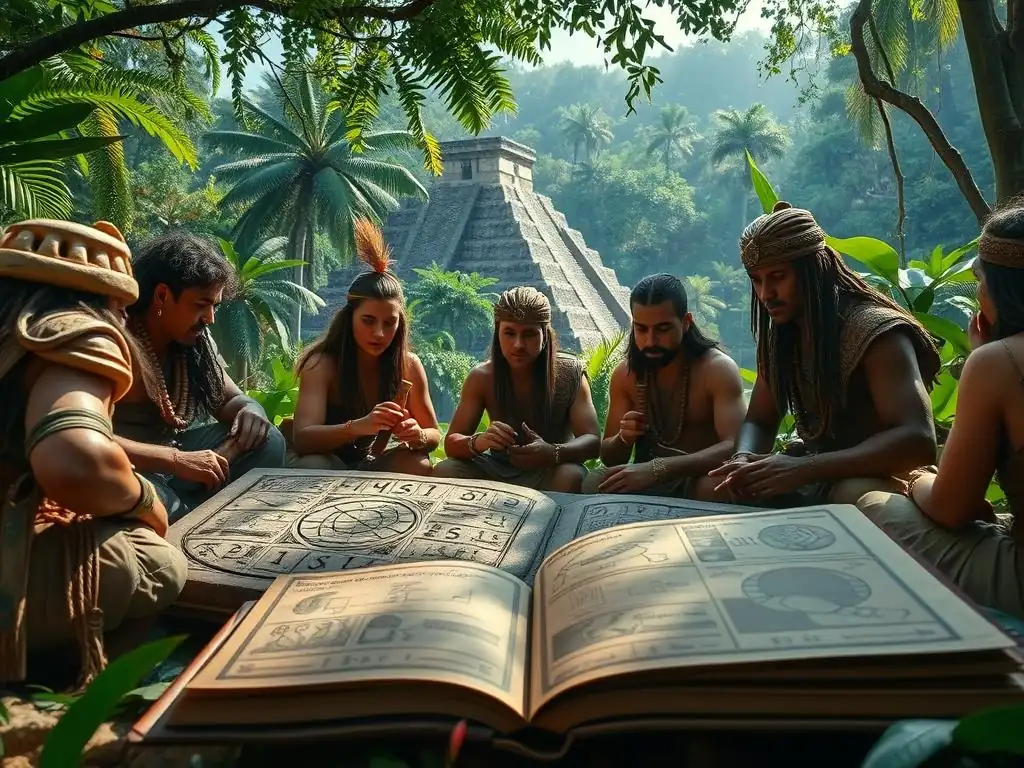
Welcome to Indigenous Civilizations of the Americas, where we embark on a fascinating journey through the rich tapestry of cultures that flourished long before European footprints graced these lands. Here, you will uncover the astonishing achievements and sophisticated societies of indigenous peoples, with a spotlight on the Mayan civilization and their remarkable contributions to advanced mathematics. How did these ancient mathematicians shape our understanding of numbers and time?
Dive into our featured article, Advanced Mathematics in Mayan Civilization: A Study of Their Numerical System, to unravel the secrets of their intricate numerical system and discover the enduring legacy of their intellectual prowess. Your exploration awaits!
- Introduction to Advanced Mathematics in Mayan Civilization
- Historical Context of Mayan Mathematics
- The Mayan Numerical System
- Mathematical Concepts in Mayan Civilization
- Applications of Mathematics in Mayan Society
- Comparison of Mayan Mathematics with Other Ancient Civilizations
- Legacy of Mayan Advanced Mathematics
- Conclusion: The Significance of Mayan Civilization's Advanced Mathematics
-
Frequently Asked Questions
- What was the significance of advanced mathematics in the Mayan civilization?
- How did the Mayan numerical system differ from other ancient systems?
- What were some of the achievements of the Mayan civilization in mathematics?
- How did the Mayan civilization's math influence modern studies?
- Where can I learn more about the Mayan civilization and their contributions to mathematics?
- Final Reflection: The Enduring Legacy of Mayan Civilization's Advanced Mathematics
- Unveil the Wonders of Mayan Mathematics!
Introduction to Advanced Mathematics in Mayan Civilization
The Mayan civilization, one of the most remarkable cultures of pre-Columbian America, is renowned not only for its architectural marvels and intricate belief systems but also for its profound contributions to mathematics. This article delves into the sophisticated mathematical concepts developed by the Mayans, highlighting their unique numerical system, which included the concept of zero—a groundbreaking achievement in the history of mathematics.
By examining the advanced mathematics of the Mayan civilization, we can gain insight into how this ancient culture utilized mathematical principles in various aspects of their daily lives, including astronomy, agriculture, and trade. Understanding their mathematical prowess opens a window into the complexity and sophistication of Mayan society and emphasizes the lasting impact their achievements have had on the world.
Overview of Mayan Civilization and Its Scientific Achievements
The Mayan civilization flourished in Mesoamerica from approximately 2000 BCE to the arrival of Europeans in the 16th century CE. Spanning present-day Mexico, Guatemala, Belize, Honduras, and El Salvador, the Maya developed a rich tapestry of culture characterized by impressive city-states, monumental architecture, and a deep understanding of their environment.
Key Features of Mayan Civilization:
- City-States: Major centers like Tikal, Calakmul, and Palenque were hubs of political and economic activity.
- Architecture: The Maya are famed for their pyramids, temples, and observatories, showcasing advanced engineering skills.
- Writing System: They developed a complex hieroglyphic script, one of the few fully developed writing systems in pre-Columbian America.
- Astronomy and Calendar Systems: The Maya excelled in astronomy, creating accurate calendars that guided agricultural and ceremonial events.
Mayan society was deeply intertwined with religion and governance, where rulers often acted as intermediaries between the gods and the people. Their scientific achievements in mathematics and astronomy played a crucial role in their agricultural practices, allowing them to optimize crop cycles and predict celestial events.
Importance of Mathematics in Ancient Cultures
Mathematics served as a foundational element in many ancient civilizations, enabling them to solve practical problems and advance their understanding of the world. In the case of the Mayans, mathematics was not merely an abstract concept; it was an essential tool that influenced various aspects of life.
Key Roles of Mathematics in the Mayan Civilization:
- Agriculture: Mathematical calculations were vital for determining planting and harvesting times, ensuring food security.
- Astronomy: Their advanced understanding of mathematics allowed the Maya to create precise astronomical models, which were crucial for religious ceremonies and agricultural practices.
- Trade and Commerce: Mathematics facilitated complex trade networks, enabling the calculation of goods and resource management.
The Mayans exemplified how advanced mathematics can shape a civilization's development, influencing everything from daily life to monumental achievements that have left a lasting legacy on the world stage. Understanding these mathematical foundations allows us to appreciate the richness and depth of Mayan culture and its profound impact on human history.
Historical Context of Mayan Mathematics
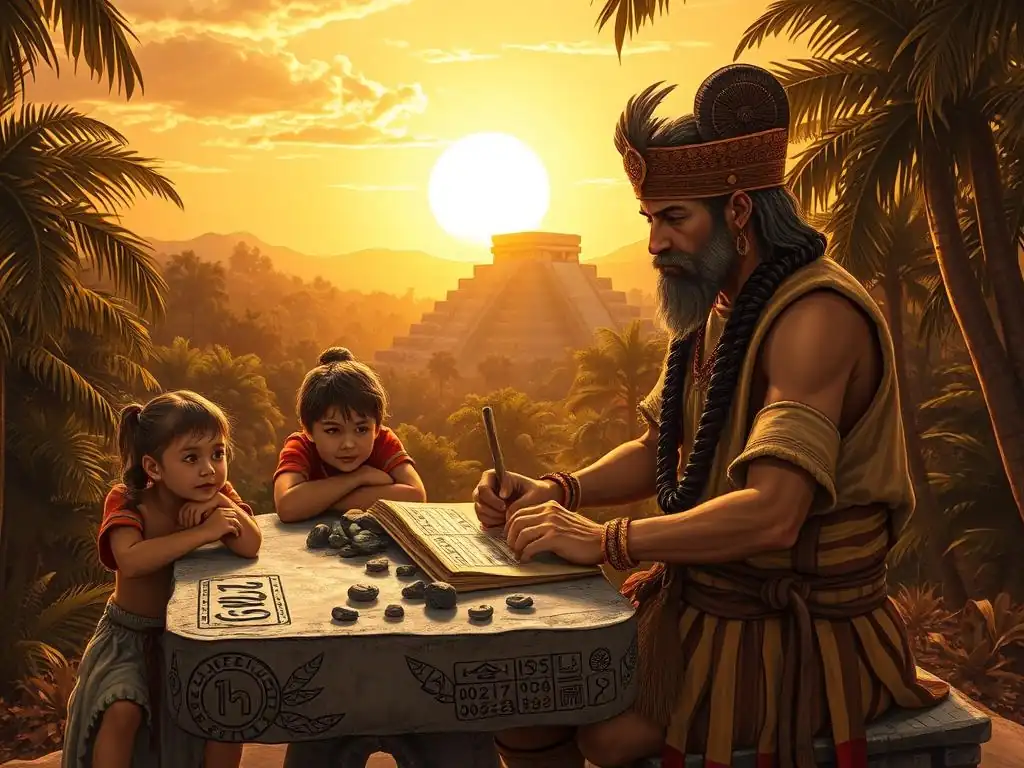
The Development of the Mayan Civilization and Its Intellectual Pursuits
The Mayan civilization, which flourished in Mesoamerica from approximately 2000 BCE to the Spanish conquest in the 16th century, is renowned for its sophisticated culture that encompassed various domains, including architecture, astronomy, and mathematics. The development of Mayan mathematics was not an isolated phenomenon but rather a product of the civilization's broader intellectual pursuits.
At the heart of Mayan society was a complex social structure that included priests, scholars, and artisans, all of whom contributed to the advancement of knowledge. The Mayans established city-states with monumental architecture, which often served as centers for learning and ritual. The construction of vast observatories, such as those found in Uxmal and Copán, indicates the importance of astronomy in Mayan culture, which was closely tied to their mathematical practices.
Mayan mathematics was primarily based on a vigesimal (base-20) numeral system, which was distinct from the decimal system commonly used today. This system allowed for the representation of large numbers and complex calculations, crucial for agricultural planning, trade, and astronomical observations. The glyphs used in their writing system reflected mathematical concepts, indicating that the Mayans integrated mathematics deeply into their daily lives and religious practices.
Influences on Mayan Mathematical Concepts from Other Cultures
While the Mayans developed a unique mathematical system, they were not entirely isolated from outside influences. The interactions with neighboring cultures, such as the Olmec and Teotihuacan, contributed to the evolution of their mathematical concepts.
- Olmec Influence: The Olmecs, often considered the "mother culture" of Mesoamerica, laid the groundwork for later civilizations, including the Mayans. They had a rudimentary counting system that likely influenced the Mayan vigesimal system. The Olmecs’ use of symbols and possibly zero as a placeholder may have provided a foundational understanding for the Mayans to build upon.
- Teotihuacan Connections: The city of Teotihuacan, which reached its peak around 500 CE, had widespread influence across Mesoamerica. The Mayans adopted various cultural and scientific practices from Teotihuacan, including architectural styles and possibly mathematical concepts. The trade networks established between these civilizations facilitated the exchange of ideas, further enriching Mayan mathematics.
- Astronomical Observations: The shared interest in astronomy among Mesoamerican cultures also played a significant role in shaping Mayan mathematics. The need to track celestial movements for agricultural cycles led to the development of complex calendars, which were inherently mathematical. The Mayans used their mathematical knowledge to create the Tzolk'in and Haab' calendars, showcasing their advanced understanding of time and cycles.
The Mayan civilization's advanced mathematics emerged from a combination of internal intellectual pursuits and external influences from neighboring cultures. This rich historical context not only highlights the sophistication of Mayan mathematics but also underscores its significance in the broader narrative of indigenous scientific achievements.
The Mayan Numerical System
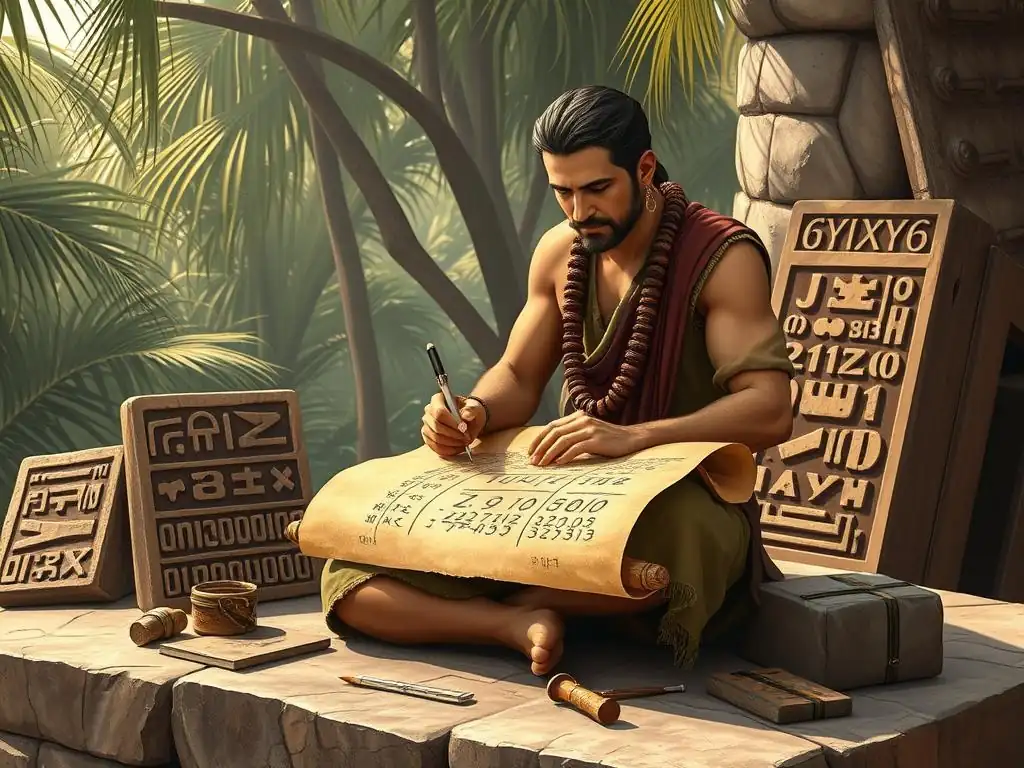
The Mayan civilization advanced mathematics is intricately tied to their unique numerical system, which was a crucial component of their cultural and scientific achievements. The Mayan numerical system was not only sophisticated but also played a vital role in various aspects of Mayan life, including astronomy, agriculture, and commerce.
Structure of the Mayan Numerical System
The structure of the Mayan numerical system is both fascinating and complex, characterized by its use of a vigesimal (base-20) counting system. This system differed significantly from the base-10 system commonly used today and allowed the Maya to perform advanced calculations with remarkable precision.
Base-20 (Vigesimal) System Explained
The vigesimal system is based on the number 20, which influenced the way the Maya counted and calculated. Here are some key points about this system:
- Numerical Representation: The Mayans used a combination of dots and bars to represent numbers. Each dot represented one unit, while each bar represented five units. For example, the number 7 would be depicted as two bars and two dots (i.e., two bars for 10 and two dots for 2).
- Positional Values: The Mayan numerical system had positional values similar to the decimal system, where the position of a numeral affects its value. The base-20 system meant that the first position represented units (1-19), the second position represented 20s (20-399), and so on.
- Zero Concept: One of the most remarkable features of the Mayan numerical system was the use of a symbol for zero, represented by a shell glyph. This concept of zero was revolutionary for its time and allowed the Maya to perform complex calculations and record astronomical data more accurately.
Use of Dots and Bars in Numerical Representation
The visual representation of numbers through dots and bars is a distinctive feature of the Mayan numerical system. This method not only facilitated calculation but also provided a clear and systematic way to communicate numerical information.
- Example of Representation:
- The number 3 is represented as three dots: ● ● ●
- The number 10 is represented as two bars: ══
- The number 16 would be depicted as three bars and one dot: ══ ══ ══ ●
- Complex Calculations: The use of this system allowed the Maya to conduct complex calculations needed for their calendar and astronomical observations.
Significance of the Mayan Calendar in Mathematics
The Mayan calendar is a testament to the advanced mathematics of the Mayan civilization, demonstrating their profound understanding of cycles and time.
- Multiple Calendars: The Maya utilized several calendars, including the Tzolk'in (a 260-day ritual calendar) and the Haab' (a 365-day solar calendar). The interlocking of these calendars necessitated complex calculations to track time accurately.
- Astronomical Observations: Mathematics was essential for the Mayan astronomers who calculated celestial events, eclipses, and the movements of planets. Their ability to predict these phenomena was remarkable for their era and showcases their advanced mathematical capabilities.
- Cultural Impact: The mathematical precision reflected in the Mayan calendar influenced various aspects of their society, from agriculture to religious ceremonies, emphasizing the integral role of mathematics in their civilization.
The Mayan civilization advanced mathematics through their unique vigesimal numerical system and the sophisticated use of their calendars. These achievements not only highlight their mathematical prowess but also their deep connection to the natural world and its rhythms.
Mathematical Concepts in Mayan Civilization
The Mayan civilization is renowned for its sophisticated understanding of mathematics, which played a crucial role in various aspects of their society, including astronomy, agriculture, and architecture. The Mayans developed a unique numerical system that allowed them to perform complex calculations, reflecting their advanced analytical skills and deep comprehension of mathematical concepts. This section explores the arithmetic operations and advanced mathematical concepts utilized by the Mayans, highlighting their significance in the civilization's achievements.
Arithmetic Operations in Mayan Mathematics
The Mayan numerical system was vigesimal (base-20), allowing them to express numbers and perform arithmetic operations beyond simple calculations. Their system included symbols for numerical values, which facilitated various operations such as addition, subtraction, multiplication, and division.
Addition and Subtraction Techniques
In the Mayan numerical system, addition and subtraction were carried out using a combination of symbols representing different values. The basic symbols included:
- Dot (•): Represents the value of 1.
- Horizontal bar (—): Represents the value of 5.
- Shell symbol: Represents the value of 0.
To perform addition, the Mayans would combine dots and bars, stacking them vertically to represent the total value. For example:
- 3 + 2 is represented as three dots (•••) plus two dots (••), resulting in five (—).
For subtraction, they would simply remove the appropriate number of dots or bars from the total. This operational method allowed for efficient calculations, particularly in agricultural planning and trade.
Multiplication and Division Methods
Multiplication in the Mayan civilization was often approached as repeated addition. For instance, to multiply 4 by 3, they would add the number 4, three times:
- 4 x 3 can be visualized as:4 + 4 + 4 = 12.
In terms of notation, they utilized the same symbols for this process, carefully stacking them to maintain clarity.
Division was similarly executed by determining how many times a number could fit into another. They would express the quotient and remainder using their numerical symbols. This method indicates a significant understanding of both operations, allowing the Mayans to solve complex problems related to trade, resource allocation, and timekeeping.
Advanced Mathematical Concepts
Beyond basic arithmetic, the Mayans engaged with advanced mathematical ideas that underscored their intellectual achievements. Their grasp of zero and geometry significantly influenced their cultural and scientific practices.
Understanding Zero and Its Role in Mayan Mathematics
The concept of zero was revolutionary in the context of mathematics, and the Mayans were among the first cultures to utilize it effectively. The shell symbol in their numeral system represented zero, allowing them to express large numbers and perform calculations without confusion.
Zero served multiple purposes in the Mayan mathematical framework:
- Place Value: It allowed for the distinction between numbers like 10 and 100, which would otherwise be ambiguous without a placeholder.
- Calculations: It enabled more complex operations, as calculations involving large numbers could be conducted effectively.
The recognition of zero marked a significant milestone in the evolution of mathematics, showcasing the advanced capabilities of the Mayan civilization.
Geometry and Spatial Awareness in Mayan Architecture
Mayan architecture reflects an advanced understanding of geometry, evident in their pyramids, temples, and urban layouts. The Mayans utilized geometric principles to create structures that were not only aesthetically pleasing but also functionally sound. For instance:
- Pyramids: The construction of pyramids, such as those at Tikal and Chichen Itza, demonstrated precise angular measurements and an understanding of symmetry.
- Astronomical Alignments: Many Mayan buildings were oriented to celestial events, indicating a sophisticated use of geometry to align structures with the sun, moon, and stars.
The spatial awareness exhibited in Mayan architecture underscores their mathematical prowess, revealing how deeply intertwined mathematics was with their cultural identity and societal functions.
The Mayan civilization's advanced mathematics encompassed a rich array of concepts and practices that not only facilitated everyday calculations but also contributed to their monumental achievements in architecture and astronomy. Their legacy in mathematics continues to inspire and inform contemporary understanding of these ancient cultures.
Applications of Mathematics in Mayan Society
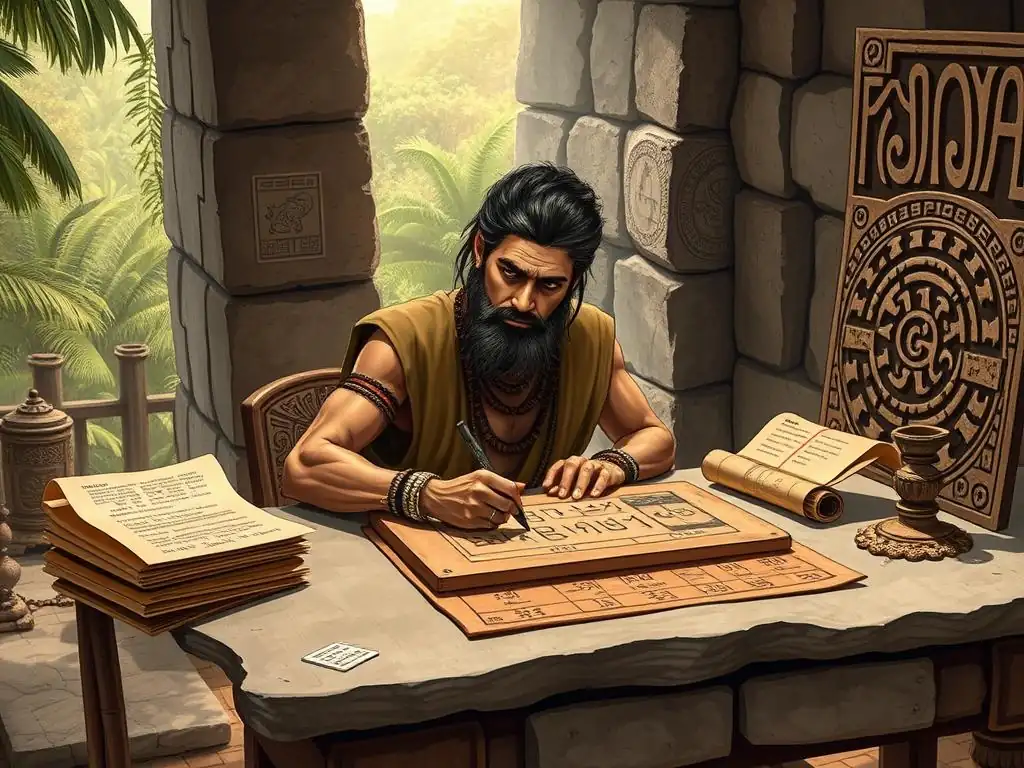
The Mayan civilization exhibited a sophisticated understanding of mathematics that permeated various aspects of their society. Their advancements in mathematics were not merely theoretical; they were practical applications that influenced astronomy, agriculture, trade, architecture, and urban planning. This section will delve into how mathematics was integral to the Mayan way of life, showcasing its pivotal role in shaping their civilization.
Mathematics in Astronomy and Calendar Systems
The Mayans are renowned for their exceptional astronomical knowledge, which was deeply intertwined with their mathematical prowess. They developed an intricate calendar system that included the Tzolk'in, a 260-day ritual calendar, and the Haab', a 365-day solar calendar.
- Calendar Calculation: The Mayans utilized a vigesimal (base-20) numerical system, which allowed them to perform complex calculations necessary for tracking celestial movements. They calculated the synodic periods of Venus, which they recorded meticulously, leading to the creation of the Dresden Codex, a pre-Columbian Mayan book containing astronomical tables.
- Ecliptic and Zenithal Events: Their mathematical skills enabled them to predict astronomical occurrences, such as eclipses and zenithal passages. For instance, in cities like Tikal and Copán, the orientation of buildings and temples was aligned with celestial events, showcasing their understanding of geometry and spatial reasoning.
The following table illustrates the significance of Mayan astronomical observations:
| Astronomical Event | Mathematical Application | Cultural Significance |
|---|---|---|
| Eclipses | Calculated using cycles | Ritual timing |
| Venus cycles | 584-day cycle calculation | Agricultural planning |
| Solstices | 365-day solar calendar | Festival scheduling |
Contributions of Mathematics to Agriculture and Trade
Mathematics played a vital role in enhancing agricultural productivity and facilitating trade within the Mayan civilization. Their understanding of mathematical principles allowed them to optimize farming practices and manage resources effectively.
- Agricultural Planning: The Mayans employed a variety of mathematical techniques to determine the best planting and harvesting times. They used their calendar systems to predict seasonal changes, which was crucial for crop rotation and land management.
- Trade and Commerce: The emergence of a complex trade network necessitated accurate measurements and calculations. Mayans developed systems for weighing goods, which involved standardized units and ratios. This mathematical approach enabled fair trade practices and efficient market exchanges.
Consider the following task list for agricultural and trade practices:
- [ ] Establish planting cycles using calendar calculations.
- [ ] Calculate resource needs based on crop yields.
- [ ] Utilize mathematical ratios for trade agreements.
- [ ] Implement standardized weights for goods.
Role of Mathematics in Architecture and Urban Planning
The architectural achievements of the Mayan civilization reflect their advanced mathematical understanding. Their cities, adorned with grand pyramids and temples, were meticulously planned and constructed using precise calculations.
- Geometric Principles: The Mayans employed geometric principles to design their structures. The layout of cities like Palenque and Uxmal demonstrates their ability to use symmetry and proportion in architecture.
- Urban Design: The alignment of structures within Mayan cities often reflected mathematical calculations based on astronomical observations. For example, the pyramids were often oriented to align with the cardinal points, showcasing their application of trigonometry.
The following details highlight key architectural aspects influenced by mathematics:
| Architectural Feature | Mathematical Principle | Impact |
|---|---|---|
| Pyramid construction | Use of geometry | Structural integrity |
| City planning | Spatial organization | Efficient movement |
| Temple alignment | Astronomical calculations | Cultural significance |
The applications of mathematics in Mayan society were extensive and multifaceted, influencing their achievements in astronomy, agriculture, trade, architecture, and urban planning. The Mayans not only developed advanced mathematical concepts but also integrated them into their daily lives, leaving a lasting legacy that continues to be studied and admired today.
Comparison of Mayan Mathematics with Other Ancient Civilizations
Similarities with Egyptian and Mesopotamian Mathematical Systems
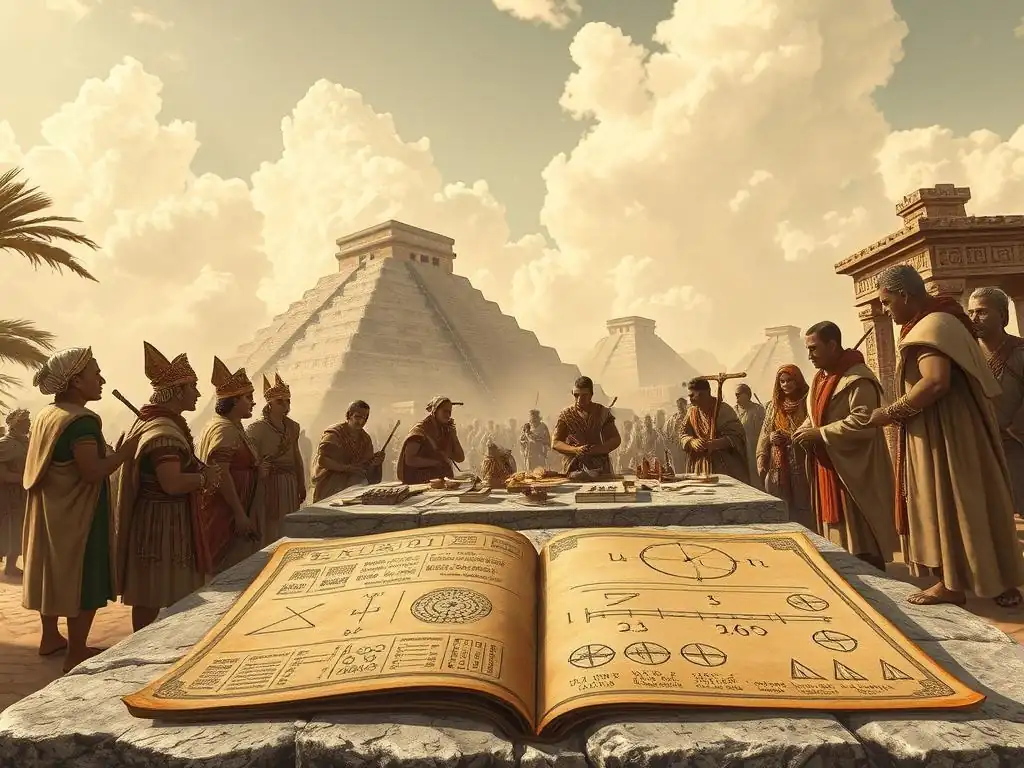
The mathematical systems of the Mayan civilization share notable similarities with those of other ancient cultures such as the Egyptians and Mesopotamians. These commonalities can be observed in several key areas:
- Base Systems:
- The Mayans utilized a vigesimal (base-20) system, while the Egyptians employed a decimal (base-10) system. In contrast, the Mesopotamians developed a sexagesimal (base-60) system. Despite these differences, the notion of using a base system for calculations is a shared characteristic.
- Use of Symbols:
- Each civilization created a set of symbols to represent numbers. The Mayans used dots and bars to denote numbers, similar to the Egyptian hieroglyphs and the cuneiform script of the Mesopotamians. For example, a single dot represented one, while a horizontal bar represented five.
- Practical Applications:
- All three civilizations utilized mathematics for practical purposes, including astronomy, agriculture, and trade. The Mayans, like the Egyptians and Mesopotamians, conducted complex calculations for calendar systems, agricultural cycles, and construction projects.
- Record Keeping:
- The need for record keeping necessitated the development of mathematical systems. The Mayans, similar to their counterparts, maintained records of trade, taxation, and celestial events, showcasing the integral role of mathematics in their societies.
These shared elements highlight the interconnectedness of ancient civilizations and their approaches to mathematics, emphasizing that while systems may differ, the foundational concepts often align.
Unique Features of Mayan Mathematics
Mayan mathematics stands out due to its distinctive features that reflect the culture's advanced understanding of numerical concepts. Some of these unique aspects include:
- Vigesimal System:
- The Mayan numerical system is primarily vigesimal, meaning it is based on the number 20. This system allowed for larger numbers to be represented more efficiently, as seen in their ability to express numbers up to 8,000 and beyond using just three symbols.
- Concept of Zero:
- The Mayans were one of the earliest civilizations to recognize and utilize the concept of zero as a placeholder in their mathematical calculations. This innovation was crucial for more advanced calculations and is a significant milestone in the history of mathematics.
- Hierarchical Structure:
- Mayan numbers were arranged in a vertical format, with the lowest values at the bottom and the highest at the top. This structure not only facilitated calculations but also reflected their cosmological beliefs, where higher numbers were associated with the heavens.
- Astronomical Calculations:
- The Mayans made precise astronomical observations and calculations, which were intricately linked to their numerical system. For instance, the Mayan calendar, which consisted of the Tzolk'in and Haab' cycles, relied heavily on mathematical concepts for tracking time and celestial events.
- Cultural Symbolism:
- Numbers held significant cultural and religious meanings within Mayan society. For example, certain numbers were considered sacred, influencing everything from architecture to ritual practices. This cultural integration of mathematics made it a unique feature of the Mayan civilization.
While Mayan mathematics shares some similarities with other ancient mathematical systems, its unique attributes, such as the vigesimal system, the concept of zero, and its cultural significance, underscore the sophistication and advanced nature of the Mayan civilization's approach to mathematics.
Legacy of Mayan Advanced Mathematics
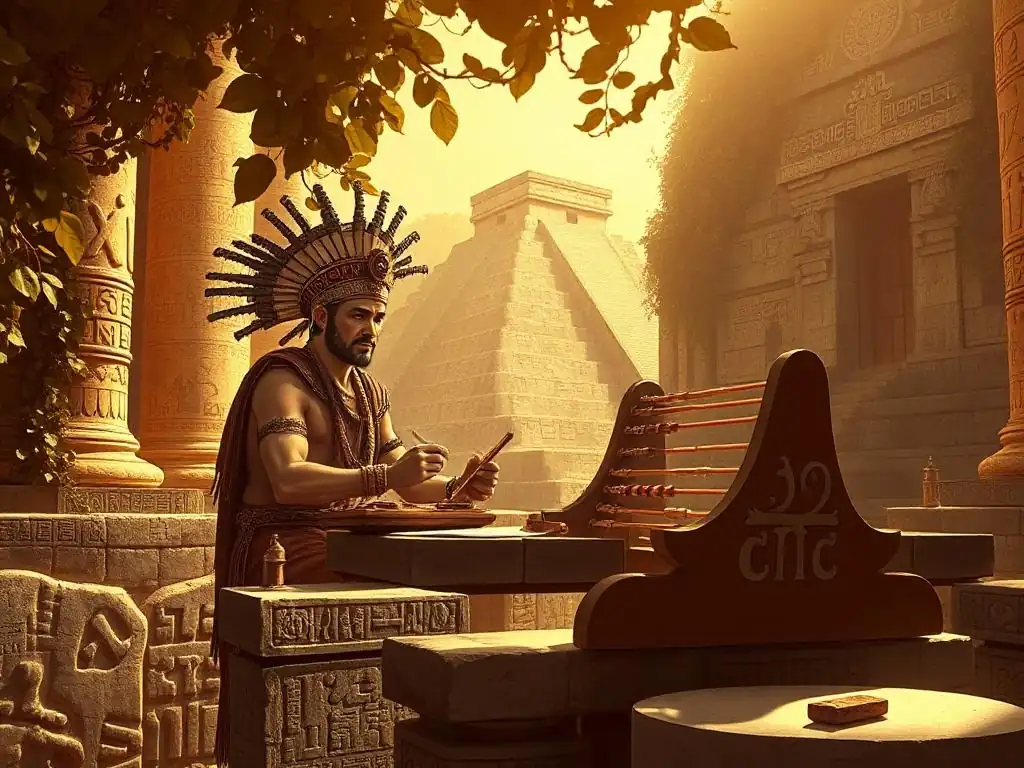
The legacy of advanced mathematics in the Mayan civilization extends far beyond the confines of their historical timeline; it has influenced a variety of indigenous cultures and continues to be recognized in modern mathematical studies. The Mayans developed a sophisticated numerical system that included concepts such as zero, which was a revolutionary idea at the time. This section delves into the impact of Mayan mathematics on subsequent indigenous cultures and its modern recognition.
Impact on Subsequent Indigenous Cultures
The sophisticated mathematical principles established by the Mayan civilization had a profound influence on other indigenous cultures throughout the Americas. Their numerical system, which utilized a vigesimal (base-20) system, provided a framework that facilitated trade, astronomical calculations, and agricultural planning.
- Cultural Transmission:
- The spread of Mayan mathematical concepts can be seen in neighboring cultures, particularly among the Aztecs and other Mesoamerican societies. These cultures adopted and adapted Mayan counting methods, integrating them into their own systems for commerce and astronomy.
- The use of a calendar system, heavily influenced by Mayan mathematics, became a vital component for timekeeping in various indigenous groups.
- Architectural and Agricultural Advancements:
- The principles of geometry and measurement used in Mayan architecture were foundational for later civilizations. For example, the precision in the construction of pyramids and temples reflects advanced understanding of angles and areas.
- Agricultural practices, such as the planning of irrigation systems and crop rotation, were enhanced by Mayan mathematical techniques, showcasing an early understanding of systems thinking.
- Symbolic Representation:
- The Mayan numeral system, which included hieroglyphic symbols for numbers, influenced the development of symbolic representation in other cultures. This allowed for more complex record-keeping and communication.
Modern Recognition of Mayan Mathematical Innovations
In contemporary times, the mathematical innovations of the Mayan civilization have garnered increasing recognition within both academic and popular contexts. Research has illuminated the complexity and accuracy of their numerical system, leading to a reevaluation of their contributions to mathematics.
- Scholarly Research:
- Numerous studies have been conducted to analyze Mayan mathematics, focusing on their calendar systems, astronomical calculations, and the use of zero. Scholars such as David Stuart and Linda Schele have played pivotal roles in uncovering the intricacies of Mayan numerology and its applications.
- Academic journals now feature articles highlighting the significance of Mayan mathematics in the broader context of global mathematical history, demonstrating its advancements akin to those found in other ancient civilizations.
- Educational Initiatives:
- Increasingly, educational programs are incorporating the study of Mayan mathematics into curricula, emphasizing its role in shaping mathematical thought. Workshops and courses aim to teach these concepts through hands-on activities, fostering appreciation for indigenous contributions to science and mathematics.
- Cultural Heritage:
- The recognition of Mayan mathematics is also a vital part of cultural heritage preservation. Museums and cultural institutions are showcasing exhibits that highlight mathematical artifacts, such as codices and monuments, that reflect the Mayans' advanced understanding of mathematics.
The legacy of advanced mathematics in Mayan civilization is not only a testament to their intellectual achievements but also serves as a foundation for future generations. Its impact on subsequent indigenous cultures and the ongoing modern recognition underscore the importance of preserving and studying these remarkable contributions to human knowledge.
Conclusion: The Significance of Mayan Civilization's Advanced Mathematics
Summary of Key Findings
The study of advanced mathematics within the Mayan civilization reveals a sophisticated numerical system that significantly contributed to their cultural and scientific achievements. The Mayans utilized a vigesimal system (base-20), which distinguished them from other contemporary civilizations. Key findings include:
- Numerical Symbols: The Mayans developed a unique set of symbols for representing numbers, including dots (for units), bars (for fives), and a shell symbol for zero. This was one of the earliest known uses of zero in mathematics, enabling complex calculations and abstractions.
- Calendar Systems: Their mathematical prowess was integral to the development of advanced calendar systems, such as the Tzolk'in (260-day) and the Haab' (365-day), which were used for agricultural, ceremonial, and astrological purposes. The interrelation of these calendars showcased their understanding of cycles and time calculations.
- Astronomical Calculations: Mayan mathematicians made precise astronomical observations, allowing them to predict celestial events, such as eclipses and planetary movements, which were vital for agricultural planning and religious ceremonies.
- Architecture and Art: Advanced mathematics were also employed in the construction of monumental architecture, such as pyramids and temples, reflecting their understanding of geometry and spatial relationships.
The comprehensive approach to mathematics in Mayan civilization underscores a remarkable intellectual tradition that laid the groundwork for various fields of study.
The Lasting Influence of Mayan Mathematics on Contemporary Society
The legacy of Mayan civilization's advanced mathematics persists in various aspects of contemporary society. Its influence can be observed in several domains:
- Mathematical Concepts: The Mayan use of zero and positional notation has influenced modern number systems, highlighting the importance of these concepts in arithmetic and calculus. The understanding of place value systems is foundational to mathematics as we know it today.
- Calendrical Systems: Modern calendar systems still reflect the complexities of time measurement that the Mayans mastered. While contemporary calendars are predominantly solar-based, the principles of cyclical time and intercalation echo Mayan practices.
- Astronomy: The precision in their astronomical calculations laid the groundwork for future astronomical studies. Many of their methods of observation and calculation are considered precursors to modern astronomical techniques.
- Cultural Heritage: The interest in Mayan mathematics has sparked greater appreciation for indigenous knowledge systems, influencing educational curricula and promoting the integration of traditional mathematical concepts into modern teachings.
- Mathematical Education: The exploration of ancient mathematical systems, such as that of the Mayans, has enriched the field of mathematics education, providing diverse perspectives that engage students with different cultural backgrounds.
The advanced mathematics of the Mayan civilization not only showcases their intellectual achievements but also continues to inspire and shape contemporary mathematical thought and practice. Through a deeper understanding of their contributions, we appreciate the richness of indigenous knowledge and its relevance in today's world.
Frequently Asked Questions
What was the significance of advanced mathematics in the Mayan civilization?
The Mayan civilization utilized advanced mathematics for various purposes, including astronomy, architecture, and calendar systems, showcasing their sophisticated understanding of numbers.
How did the Mayan numerical system differ from other ancient systems?
The Mayan numerical system was vigesimal, based on twenty, and included a concept of zero, which was uncommon in many ancient societies, allowing for complex calculations.
What were some of the achievements of the Mayan civilization in mathematics?
The Mayan civilization excelled in creating intricate calendar systems, performing astronomical calculations, and developing unique mathematical concepts that influenced later cultures.
How did the Mayan civilization's math influence modern studies?
The advanced mathematics of the Mayan civilization laid the groundwork for modern mathematics and astronomy, influencing scholars seeking to understand ancient techniques and knowledge.
Where can I learn more about the Mayan civilization and their contributions to mathematics?
You can explore detailed resources on the Mayan civilization and their numerical achievements on websites dedicated to indigenous cultures, including the one titled "Indigenous Civilizations of the Americas."
Final Reflection: The Enduring Legacy of Mayan Civilization's Advanced Mathematics
The exploration of the Mayan civilization's advanced mathematics reveals a profound connection between ancient knowledge and contemporary understanding. As we delve into the intricacies of their numerical system, we uncover not only the sophistication of their mathematical concepts but also their relevance in today's world. The Mayans were pioneers in mathematics, and their legacy continues to inspire modern mathematical thought and practices.
The influence of Mayan mathematics extends beyond mere numbers; it shapes our cultural and social landscapes by reminding us of the ingenuity of ancient civilizations. Their ability to conceptualize zero and develop a vigesimal (base-20) system showcases a remarkable understanding of mathematics that was far ahead of their time. Mathematics is the language with which God has written the universe.
– Galileo Galilei. This quote resonates deeply as it underscores the timeless nature of mathematical principles that transcend cultures and eras, reminding us of the shared human pursuit of knowledge.
As we reflect on the lessons learned from the Mayan civilization's advanced mathematics, I invite you to consider how this ancient wisdom can inform your own understanding of the world. Take a moment to appreciate the beauty of mathematics in your daily life and recognize its role in shaping our past, present, and future. Embrace the challenge of learning and applying mathematical concepts, and let the legacy of the Mayans inspire you to explore the depths of knowledge that lie within both ancient and modern frameworks.
Unveil the Wonders of Mayan Mathematics!
Thank you for exploring the fascinating world of advanced mathematics in the Mayan civilization. You've uncovered how their unique numerical system reflects their incredible intellectual legacy! Now, it's time to take action and delve even deeper into this rich history.
Here are some specific steps you can take next:
- Dive into more resources on Mayan culture by checking out related articles on our website.
- Engage with our community by sharing your thoughts or experiences with indigenous mathematical systems in the comments below.
- Try your hand at recreating a Mayan numeral using simple objects around you—it’s a fun way to connect with their innovations!
How do you believe the advanced mathematical concepts of the Mayans can inspire current educational practices?