
Astronomy and Art: Celestial Themes in Mesoamerican Artifacts

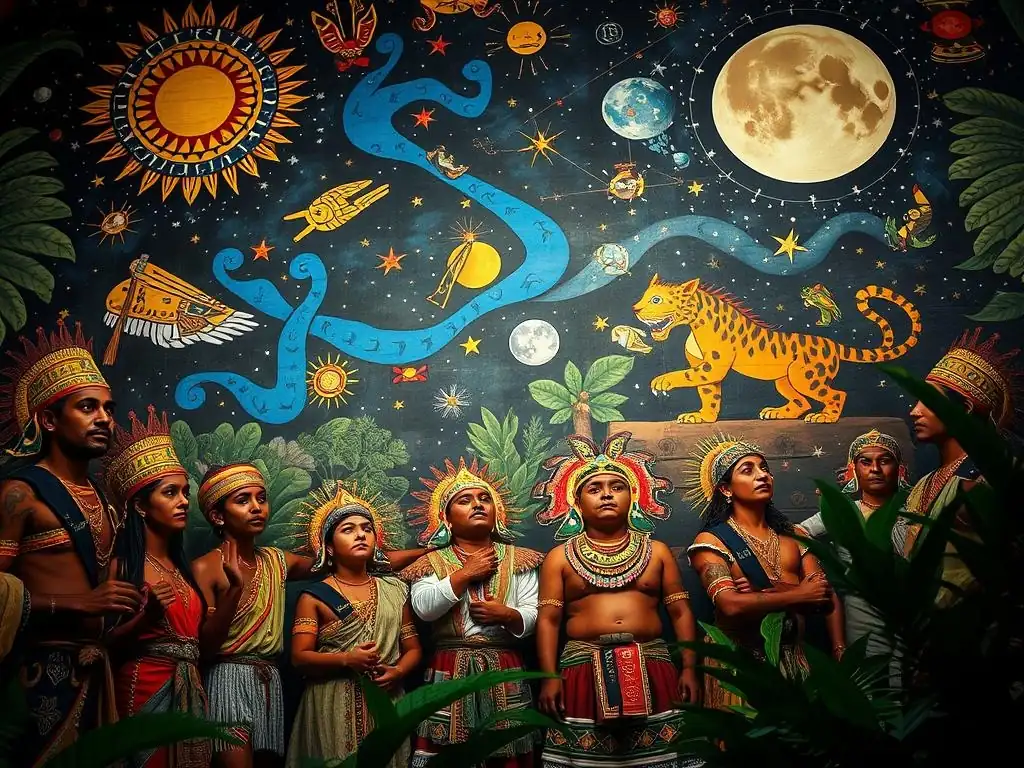
Welcome to Indigenous Civilizations of the Americas, where we invite you to embark on a captivating journey through the rich tapestry of indigenous cultures that flourished long before European contact. Delve into our featured article, "Astronomy and Art: Celestial Themes in Mesoamerican Artifacts," where we unravel the profound connection between the cosmos and artistic expression in Mesoamerica. Discover how celestial art themes not only reflect the advanced understanding of astronomy by these civilizations but also reveal their spiritual beliefs and societal values. Join us as we explore these remarkable achievements that continue to inspire and resonate in today's world!
- Introduction to Mesoamerican Celestial Art Themes
- Historical Context of Mesoamerican Celestial Art
- Key Mesoamerican Celestial Art Themes
- Artistic Techniques and Materials Used in Mesoamerican Celestial Art
- Case Studies of Notable Mesoamerican Artifacts
- The Influence of Mesoamerican Celestial Art on Contemporary Culture
- Conclusion: The Lasting Impact of Mesoamerican Celestial Art Themes
- Frequently Asked Questions
- Final Reflection: The Cosmic Connection of Mesoamerican Celestial Art
- Explore the Stars Through Art!
Introduction to Mesoamerican Celestial Art Themes
Mesoamerican civilizations, including the Maya, Aztec, and Olmec, possessed intricate knowledge of astronomy that deeply influenced their cultural practices and artistic expressions. This article delves into the fascinating realm of Mesoamerican celestial art themes, exploring how these indigenous cultures reflected their astronomical understanding through various artifacts. The correlation between the cosmos and their art provides insight into their worldviews, religious beliefs, and societal structures. By examining the celestial motifs present in their artifacts, we can uncover the significance of the heavens in shaping their identities and cultural legacies.
Overview of Astronomy in Mesoamerican Cultures
Mesoamerican cultures made remarkable advancements in astronomy, marked by their ability to track celestial bodies and predict astronomical events with remarkable precision. Notably:
- Calendar Systems: The Maya developed the Tzolk'in and Haab' calendars, which integrated astronomical observations to govern agricultural practices and religious ceremonies.
- Observatories: Structures like the Caracol at Chichen Itza served as observatories, allowing ancient astronomers to monitor celestial movements and alignments.
- Celestial Bodies: The sun, moon, and planets, particularly Venus, held immense significance. The appearance of these bodies often heralded important events or rituals.
These elements reveal how celestial phenomena were woven into the fabric of daily life, influencing everything from agricultural cycles to religious ceremonies.
Importance of Celestial Themes in Indigenous Art
The representation of celestial themes in Mesoamerican art is not merely decorative; it carries profound cultural significance. Some key aspects include:
- Symbolism: Celestial motifs often symbolize gods, creation stories, and the duality of life and death, reflecting the interconnectedness of the universe and human existence.
- Rituals and Ceremonies: Artifacts adorned with celestial themes were frequently used in rituals, serving as conduits between the earthly realm and the divine.
- Cultural Identity: Artistic representations of celestial bodies reinforced cultural identity and heritage, showcasing the civilizations’ sophisticated understanding of the cosmos.
Through this lens, Mesoamerican celestial art themes emerge as a vital aspect of their cultural heritage, encapsulating their advanced knowledge, beliefs, and the significant role the cosmos played in their civilizations.
Historical Context of Mesoamerican Celestial Art
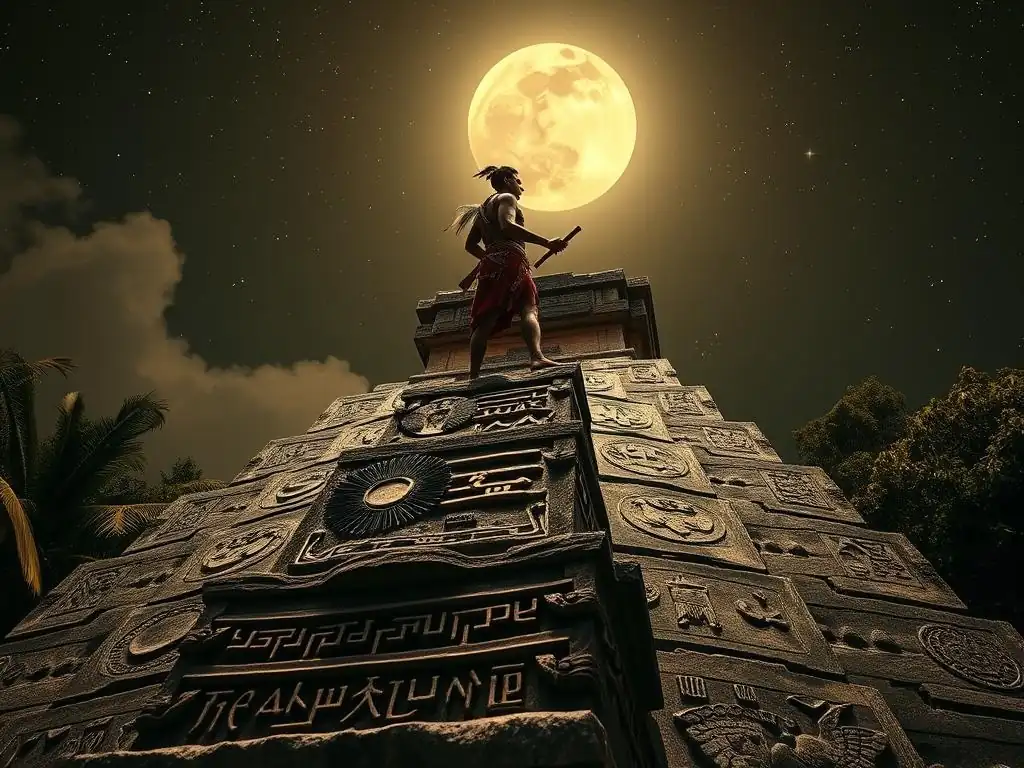
Mesoamerican celestial art themes have long captivated historians and archaeologists, revealing the profound ways in which ancient civilizations understood and depicted the cosmos. The integration of astronomical motifs into art is not merely decorative; it reflects the intricate relationship between these societies and their environment, as well as their religious beliefs and societal structures. From the Olmecs to the Maya, celestial phenomena were intricately woven into the fabric of daily life, rituals, and governance, illustrating a sophisticated grasp of astronomy.
Ancient Civilizations and Their Astronomical Knowledge
The Mesoamerican cultures, particularly the Maya and the Aztecs, displayed an exceptional understanding of celestial movements. They meticulously observed the cycles of the sun, moon, and planets, which informed their agricultural practices and religious ceremonies. The Maya, for instance, developed a complex calendar system based on a 260-day ritual cycle and a 365-day solar year, allowing them to align their agricultural activities with seasonal changes.
- Olmec Civilization: The Olmecs, often regarded as the "mother culture" of Mesoamerica, created colossal head sculptures that may reflect their leaders' celestial connections. Evidence suggests they had a basic understanding of celestial events, as seen in their early calendar systems.
- Maya Civilization: The Maya were particularly advanced in astronomy. They not only tracked celestial events with remarkable accuracy but also integrated these observations into their art. The famous Dresden Codex, a pre-Columbian book, includes detailed astronomical tables and glyphs that illustrate their celestial knowledge.
- Aztec Civilization: The Aztecs built grand temples aligned with celestial bodies. They celebrated rituals that corresponded with the solar year, emphasizing the importance of the sun in their mythology. Artifacts such as the Calendar Stone showcase their intricate understanding of time and astronomy.
The art produced by these civilizations often features symbols and motifs that represent celestial bodies, reinforcing the intimate connection between their beliefs and the cosmos. For instance, the sun god Tonatiuh in Aztec art is depicted radiating light, symbolizing life and energy, while the Maya often represented the moon goddess in various forms, highlighting her significance in agricultural cycles.
The Role of Astronomy in Mesoamerican Society
Astronomy played a multifaceted role in Mesoamerican societies, influencing religious practices, agricultural cycles, and even political power. The alignment of buildings and ceremonial sites with celestial bodies was a common practice, underscoring the belief that the heavens were a source of divine guidance.
- Religious Significance: Celestial events were often interpreted as omens or messages from the gods. For example, eclipses were seen as significant occurrences that required specific rituals to appease the deities. The art created during these times often depicted the gods in relation to celestial phenomena, reinforcing their power and influence.
- Agricultural Practices: The agricultural calendar was dependent on celestial observations. The timing of planting and harvesting was often dictated by the position of the sun and moon. Artwork depicting agricultural scenes frequently included celestial symbols, illustrating the connection between farming and astronomy.
- Political Power: Rulers often claimed divine legitimacy linked to celestial events. They would align their reigns with significant astronomical occurrences, using art to depict their relationship with the cosmos. This connection served to reinforce their authority and justify their rule.
Mesoamerican celestial art themes serve as a testament to the profound astronomical knowledge possessed by these ancient civilizations. Through their art, they expressed their understanding of the universe, reflecting the significant role that astronomy played in shaping their societies, religions, and cultural identities. The legacy of this celestial art continues to influence modern interpretations of Mesoamerican achievements, revealing the depth of their connection to the cosmos.
Key Mesoamerican Celestial Art Themes
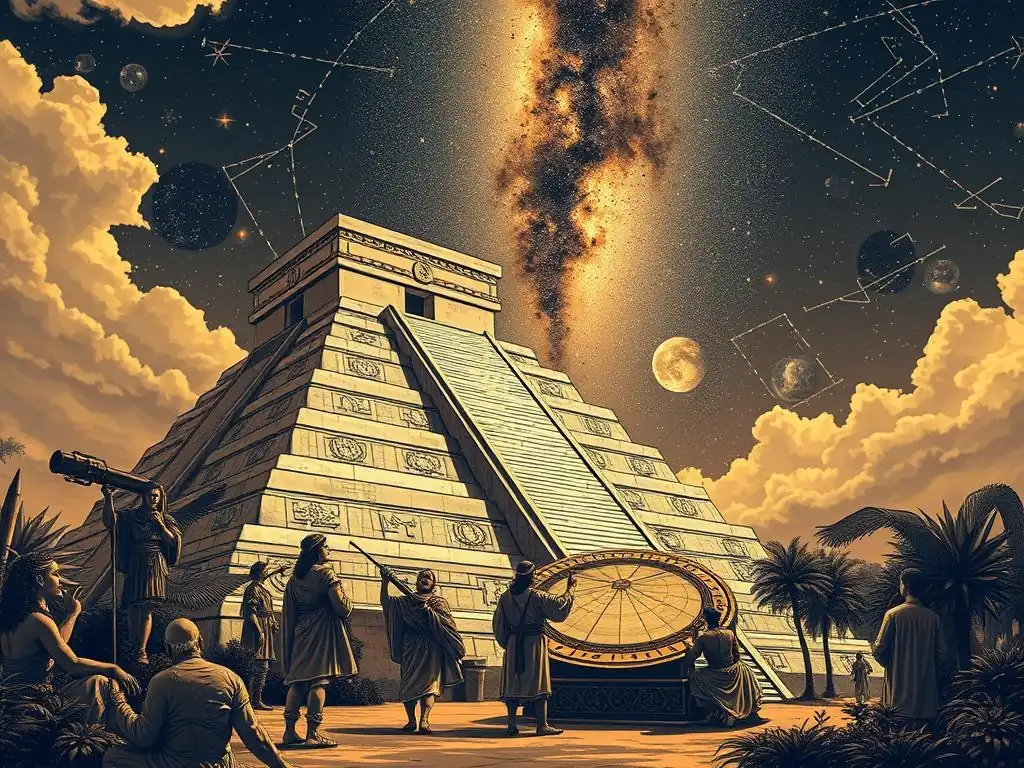
Mesoamerican civilizations, renowned for their sophisticated understanding of astronomy, utilized celestial themes extensively in their art. This section delves into the various motifs that reflect their astronomical knowledge and spiritual beliefs, showcasing how these themes are intricately woven into their artifacts and iconography.
Depictions of Celestial Bodies in Artifacts
Mesoamerican celestial art themes prominently feature various celestial bodies, particularly the sun, moon, and stars. The civilizations of this region viewed these celestial elements as vital aspects of their cosmology, influencing not only their daily lives but also their religious practices.
The Sun and Its Symbolism in Mesoamerican Art
The sun held immense significance in Mesoamerican cultures, symbolizing life, fertility, and regeneration. Artifacts often depict the sun with vibrant colors and intricate designs. For instance, the Aztec sun stone, or Tonatiuh, illustrates the sun deity surrounded by calendar symbols, emphasizing its role in timekeeping and agricultural cycles.
| Artifact | Culture | Symbolism |
|---|---|---|
| Sun Stone | Aztec | Represents the sun god and the cycles of time |
| Temple of the Inscriptions | Maya | Features sun motifs indicative of solar worship |
| Solar Ceramics | Mixtec | Utilizes sun imagery to represent fertility and life |
The Moon's Influence on Mesoamerican Art and Culture
The moon, often associated with femininity and night, played a critical role in Mesoamerican art. It was viewed as a counterpart to the sun, governing tides and agricultural rhythms. The Maya, for example, included lunar motifs in their pottery, utilizing the moon's phases to guide agricultural practices.
- Goddess of the Moon: The moon goddess, often depicted as a beautiful woman, highlights the feminine aspects of lunar influence.
- Ceremonial Calendars: Artifacts often feature moon phases, illustrating the integration of lunar cycles into their ceremonial calendars.
Stars and Constellations in Mesoamerican Iconography
Stars and constellations also permeate Mesoamerican celestial art themes. These civilizations meticulously mapped the night sky, using constellations for navigation and agricultural planning.
- Important Constellations: The Pleiades and Orion were significant for their seasonal implications, often depicted in murals and codices.
- Star Motifs in Art: Artifacts often include star patterns, indicating their importance in mythology and daily life.
Mythological Representations of Celestial Themes
Mesoamerican cultures deeply intertwined mythology with their celestial observations, leading to a rich tapestry of stories that explain the cosmos and humanity's place within it.
Deities Associated with Celestial Elements
Numerous deities in Mesoamerican mythology are associated with celestial elements, embodying the sun, moon, and stars.
- Tonatiuh (Sun): The Aztec sun god represents warmth and sustenance, often depicted in ceremonial art.
- Coyolxauhqui (Moon): The goddess of the moon, whose story symbolizes the battle between night and day, is frequently represented in stone carvings and pottery.
- Venus: The morning star was personified in various cultures and held significance in rituals related to warfare and agriculture.
Creation Myths and Astronomical Events
Mesoamerican creation myths often reflect astronomical events, linking the cosmos with terrestrial existence.
- The Popol Vuh: The Maya creation narrative incorporates celestial events, describing the creation of the sun and moon as pivotal moments in the formation of the world.
- Eclipses and Their Significance: Eclipses were seen as powerful omens, often depicted in art as significant events signaling change or divine intervention.
The exploration of Mesoamerican celestial art themes reveals a profound connection between astronomy and cultural expression. The artifacts and iconography not only reflect their astronomical knowledge but also serve as a testament to the civilizations' rich spiritual and mythological traditions.
Artistic Techniques and Materials Used in Mesoamerican Celestial Art
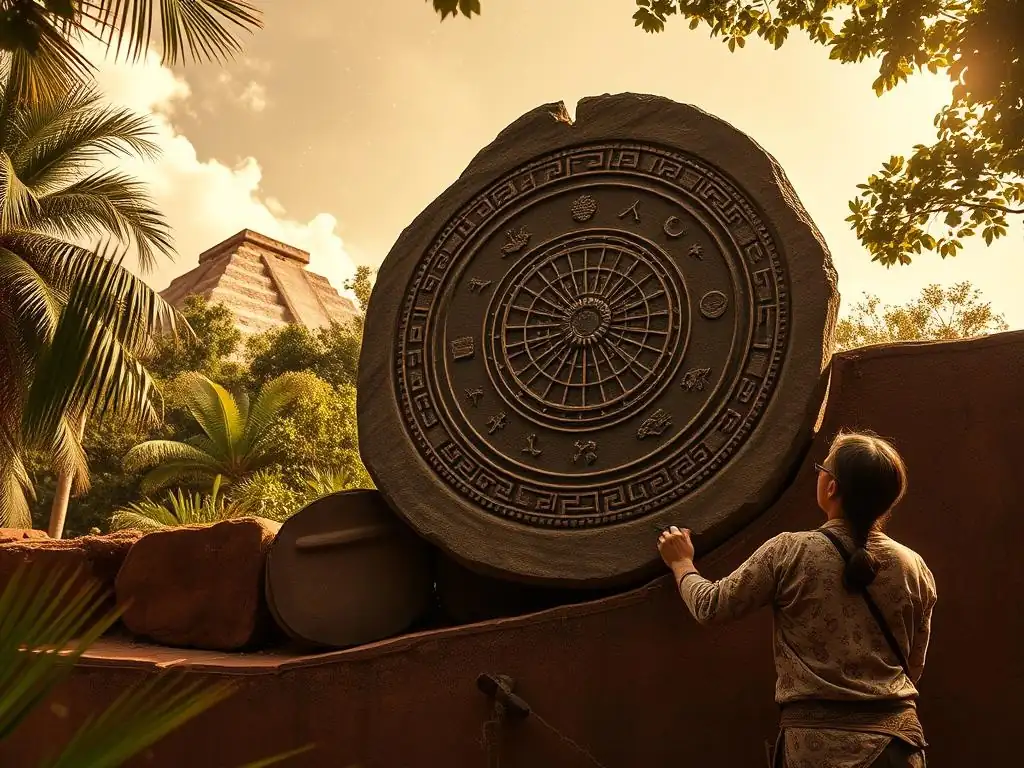
Common Materials in Mesoamerican Artifacts
Mesoamerican civilizations, including the Maya, Aztec, and Olmec, utilized a diverse range of materials in their artistic expressions, particularly for celestial-themed artifacts. These materials were not only chosen for their availability but also for their symbolic significance in the culture. Below are some of the most common materials used:
- Stone:
- Basalt: Often used for monumental sculptures and altars, basalt was prized for its durability. The famous Olmec colossal heads are a testament to the skill with which this material was carved.
- Limestone: This softer stone allowed for intricate carvings and was widely used in temples and ceremonial structures.
- Ceramics:
- Mesoamerican potters created beautifully painted vessels that depicted celestial bodies and mythological narratives. The use of slip painting techniques allowed for vibrant colors and detailed imagery.
- Metals:
- Gold and Silver: These metals were often used in small decorative pieces and jewelry, symbolizing wealth and divine association. They were sometimes engraved with celestial motifs, reflecting the importance of these themes in the culture.
- Textiles:
- While textiles are less preserved than stone or ceramics, evidence suggests that Mesoamerican peoples wove intricate patterns that included celestial and cosmological themes, employing natural dyes from local plants.
- Feathers:
- Feathers from vibrant birds like the quetzal were used in headdresses and ceremonial attire, often symbolizing the connection between the heavens and the earth.
The choice of these materials reflects not only the aesthetic values of Mesoamerican cultures but also their deep spiritual connection with the cosmos, as many celestial themes are intertwined with their religious beliefs and daily lives.
Techniques Employed in Creating Celestial Themes
The artistic techniques employed by Mesoamerican cultures to depict celestial themes were as varied as the materials they used. Here are some notable techniques:
- Carving and Sculpting:
- Artists employed advanced stone carving techniques to create intricate reliefs and sculptures. These often depicted celestial bodies, such as the sun, moon, and stars, as well as mythological figures associated with these elements. The precision of tools like obsidian allowed for detailed work.
- Painting:
- The use of natural pigments for painting on pottery and murals was prevalent. Techniques included:
- Slip Painting: A method that involved applying a liquid clay mixture to create designs before firing the object.
- Mural Painting: Large-scale murals often adorned temple walls, depicting cosmological events and deities, offering insights into how these cultures interpreted their celestial environment.
- The use of natural pigments for painting on pottery and murals was prevalent. Techniques included:
- Relief Work:
- Many artifacts featured bas-relief designs that conveyed dynamic celestial narratives. These techniques allowed for a three-dimensional representation of celestial themes, enhancing visual storytelling.
- Weaving:
- Textile artists utilized complex weaving patterns to represent celestial motifs, integrating cosmological themes through geometry and color. The use of backstrap looms was common, allowing for detailed designs.
- Metallurgy:
- The techniques used in metalworking included casting and inlaying. Artisans would often engrave celestial symbols on gold and silver pieces, capturing the significance of celestial bodies in their culture.
The combination of these techniques and materials not only showcases the artistic prowess of Mesoamerican civilizations but also highlights the integral role that celestial themes played in their cultural narratives, beliefs, and daily life. Through their art, they expressed a profound understanding of the cosmos, connecting their earthly existence with the celestial realm.
Case Studies of Notable Mesoamerican Artifacts
The Aztec Calendar Stone and Its Astronomical Significance
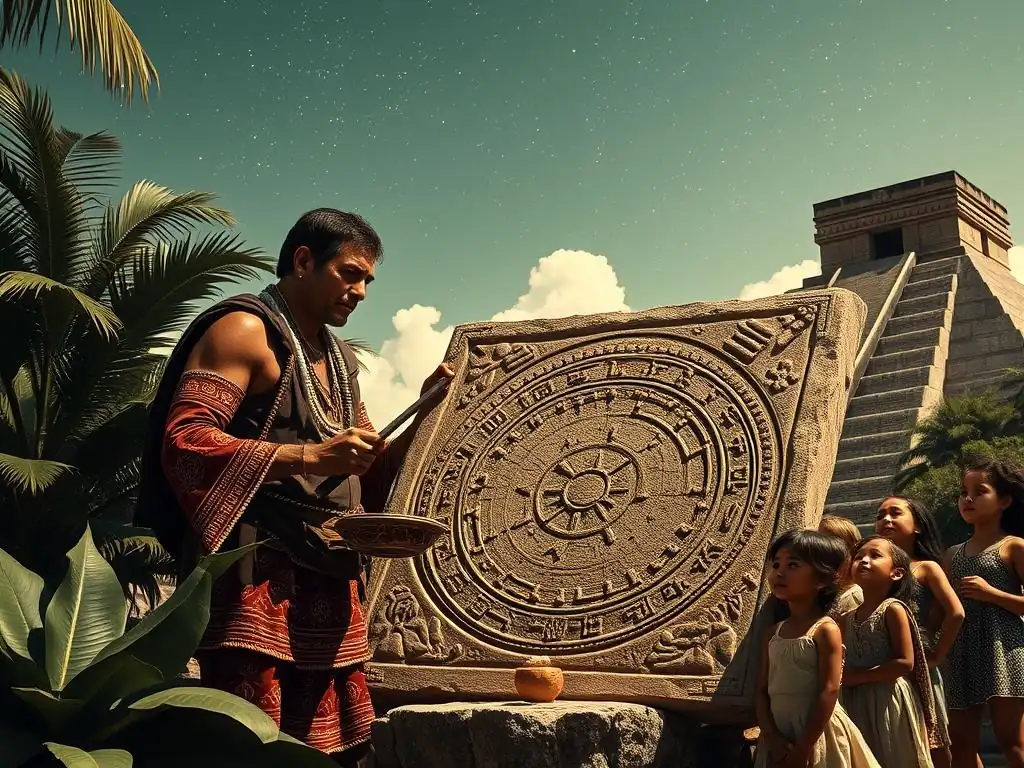
The Aztec Calendar Stone, also known as the Sun Stone, is one of the most iconic artifacts of Mesoamerican celestial art themes. This massive monolithic sculpture, measuring approximately 3.6 meters (12 feet) in diameter and weighing around 25 tons, was carved from basalt and showcases the Aztec civilization's intricate understanding of astronomy and time.
The stone features a central representation of Tonatiuh, the sun god, surrounded by a series of intricate carvings that depict various aspects of the Aztec cosmology. The calendar is divided into several segments, with the most prominent being the five famous "suns" representing different epochs in Aztec mythology. Each sun corresponds to a different cosmic cycle, reflecting the belief that the universe underwent several creations and destructions.
Astronomical Features
- Solar Cycles: The Aztec Calendar Stone illustrates a deep understanding of solar cycles, particularly the 365-day solar year. The outer ring of the stone denotes 18 months of 20 days each, plus an additional 5 "unlucky" days, known as nameless days.
- Lunar Representations: Besides solar cycles, the stone also incorporates lunar elements, indicating the significance of the moon in the Aztec calendar. This reflects a duality in their astronomical understanding, where both celestial bodies played essential roles in timekeeping.
- Equinox and Solstice Indicators: The stone likely served as an astronomical observatory, marking important events such as equinoxes and solstices, crucial for agricultural practices.
The Aztec Calendar Stone is not merely a calendar but a profound expression of the Aztec worldview, emphasizing their beliefs in time, cosmology, and the connection between the celestial and terrestrial realms.
Mayan Stelae and Their Celestial Representations
Mayan stelae are another outstanding example of Mesoamerican celestial art themes, showcasing the civilization's sophisticated understanding of astronomy and its integration into their art and culture. These tall stone monuments are often intricately carved with hieroglyphics and imagery, detailing the lives of rulers, significant events, and celestial phenomena.
Celestial Themes in Stelae
- Celestial Bodies: Many Mayan stelae feature depictions of celestial bodies, including the sun, moon, and planets, often accompanied by glyphs that reference specific astronomical events. For example, stelae from Tikal and Palenque often highlight solar eclipses or the appearance of Venus, which was significant in Mayan mythology.
- Alignment with Astronomical Events: The positioning of stelae within the landscape often reflects astronomical alignments, suggesting that the Maya designed their monuments to mark celestial events. This alignment underscores the importance of astronomy in their ritual practices and agricultural cycles.
- Symbolism of Time and Power: The celestial representations on stelae not only denote time but also symbolize the divine right of rulers. The imagery often associates the rulers with celestial deities, emphasizing their role as intermediaries between the heavens and the earth.
Mayan stelae serve as a testament to the civilization's advanced understanding of astronomy and its influence on their daily lives, governance, and religious practices. Through these artifacts, we can appreciate how celestial art themes were intricately woven into the fabric of Mayan society, reflecting their reverence for the cosmos.
The Influence of Mesoamerican Celestial Art on Contemporary Culture
Modern Interpretations of Mesoamerican Celestial Themes
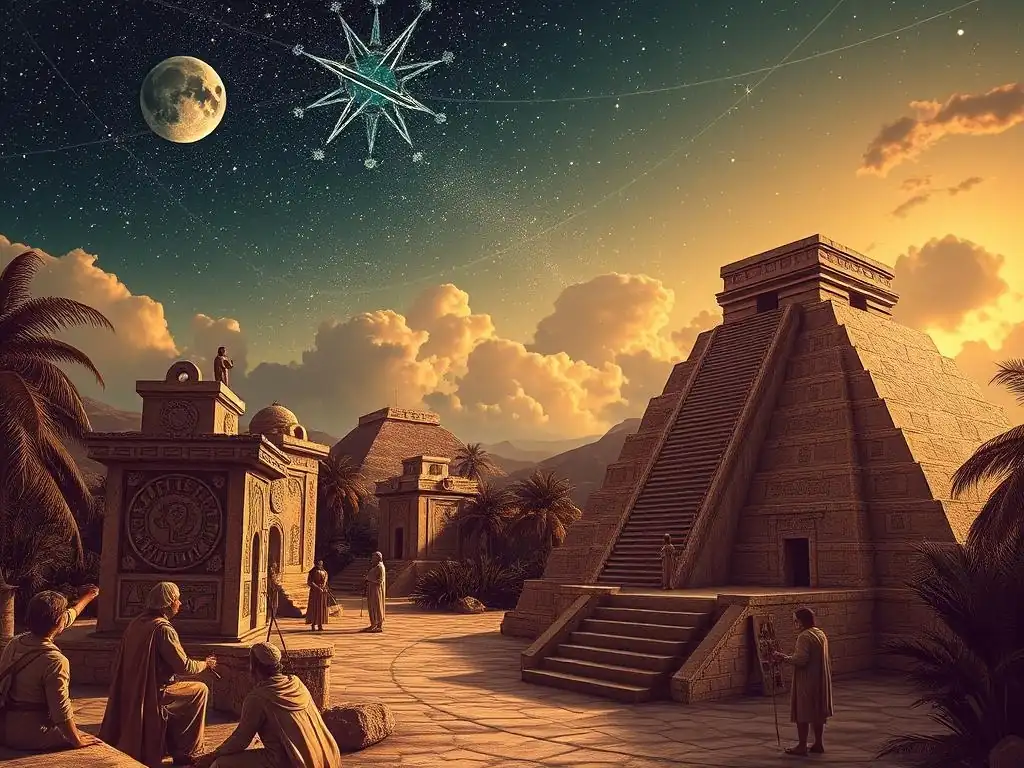
Mesoamerican celestial art themes continue to resonate strongly in contemporary culture, influencing various creative expressions from visual arts to fashion and architecture. Artists today draw upon the rich symbolism found in ancient artifacts, interpreting celestial motifs in ways that reflect modern perspectives while honoring traditional meanings.
One prominent example is the use of cosmic imagery in contemporary murals, where artists incorporate motifs like the Mayan sun god Kinich Ahau or the Pleiades constellation, known as "Tzab Ek" to the Maya. These interpretations often serve as a way to reconnect urban communities with their indigenous heritage, creating a dialogue between the past and present.
In fashion, designers have embraced Mesoamerican celestial themes through textiles and patterns that echo the intricate designs of ancient civilizations. Clothing lines featuring embroidered celestial symbols not only celebrate cultural heritage but also promote awareness of indigenous practices and beliefs related to astronomy.
Moreover, contemporary literature and poetry often weave celestial themes inspired by Mesoamerican cosmology. Writers explore the connection between the heavens and the earth, reflecting on how celestial bodies were once perceived as deities influencing daily life and agricultural cycles.
The Legacy of Mesoamerican Astronomy in Art Today
The legacy of Mesoamerican astronomy is deeply embedded in the artistic traditions that persist today. From the intricate carvings of the Maya to the vibrant murals of the Aztec, these ancient expressions of celestial art continue to inspire and inform modern artistic practices.
In the realm of visual arts, many contemporary artists are revisiting and reinterpreting ancient astronomical knowledge. For instance, exhibitions featuring Mesoamerican celestial art have gained popularity in galleries worldwide, showcasing works that blend traditional techniques with modern materials. Artists often utilize natural pigments to replicate the vivid colors found in ancient murals, emphasizing the connection to their cultural roots.
Additionally, the principles of Mesoamerican astronomy, such as the Mayan calendar, have found a place in contemporary installations. These works not only reflect the sophistication of ancient astronomical knowledge but also provoke discussions about time, cycles, and the universe's interconnectedness.
In architecture, some modern buildings incorporate celestial alignments similar to those found in ancient pyramids and observatories. Architects design spaces that align with solar and lunar events, creating a dialogue between the structure and the cosmos, reminiscent of the ancient observatories like El Caracol in Chichen Itza.
Ultimately, the exploration of Mesoamerican celestial art themes serves as a bridge between past and present, enabling contemporary culture to honor and celebrate the extraordinary achievements of ancestral civilizations. As artists and scholars continue to delve into this rich legacy, they ensure that the celestial wonders of Mesoamerican cultures remain a vibrant part of our collective consciousness.
Conclusion: The Lasting Impact of Mesoamerican Celestial Art Themes
The intricate relationship between Mesoamerican celestial art themes and the cultures that produced them has left an indelible mark on the understanding of indigenous achievements in astronomy and artistic expression. These themes not only served functional purposes in the societies that created them but also reflected a deep spiritual connection to the cosmos, showcasing the sophisticated worldview of Mesoamerican civilizations. The representations of celestial bodies in art—whether through sculpture, pottery, or murals—illustrate how these societies perceived their place in the universe, influencing their calendars, rituals, and social structures.
The legacy of Mesoamerican celestial art themes continues to resonate today, offering valuable insights into the intellectual and cultural accomplishments of these civilizations. As researchers and enthusiasts delve deeper into these artifacts, they uncover the rich narratives embedded within, revealing a complex interplay between art, science, and spirituality that defined the Mesoamerican experience.
Reflection on the Importance of Celestial Themes in Indigenous Cultures
The celestial themes present in Mesoamerican art serve as a testament to the advanced understanding of astronomy possessed by these indigenous cultures. Not merely decorative, these representations often communicated critical information regarding agricultural cycles, navigation, and seasonal changes.
- Cultural Significance: Celestial bodies were not only observed but revered. The sun, moon, and stars were often personified in the pantheon of deities, influencing mythology and religious practices. For instance, the Maya civilization viewed the planet Venus as a powerful harbinger of war and fertility, leading to the creation of elaborate calendars that tracked its cycles.
- Artistic Expression: The incorporation of celestial elements into art demonstrates a unique synthesis of scientific observation and artistic innovation. For example, the intricate designs found on Maya pottery often depict celestial events, illustrating how these themes permeated various aspects of life from politics to daily activities.
- Historical Context: Understanding these celestial themes also provides context for the broader historical narrative of Mesoamerican societies. The alignment of structures with celestial events, such as the equinoxes and solstices, showcases a sophisticated architectural understanding that harmonized human activities with natural phenomena.
These elements underscore the importance of celestial themes not just as artistic expressions but as foundational components of Mesoamerican identity and heritage.
Future Research Directions in Mesoamerican Astronomy and Art
As the field of Mesoamerican studies continues to evolve, several promising research directions can enhance our understanding of celestial art themes:
- Interdisciplinary Approaches: Combining archaeology, astronomy, art history, and anthropology can yield deeper insights. For instance, the application of digital technologies to analyze artifacts may uncover new patterns and connections previously overlooked.
- Comparative Studies: Analyzing celestial art themes across different Mesoamerican cultures, such as the Aztecs, Maya, and Olmecs, can reveal both unique and shared cosmological perspectives. This could help illustrate how art functioned as a medium for cultural exchange and adaptation.
- Modern Interpretations: Engaging contemporary indigenous artists in the reinterpretation of ancient themes can provide fresh perspectives and foster a dialogue between past and present. This not only enriches cultural heritage but also ensures that these themes remain relevant in today's context.
- Fieldwork and Preservation: Ongoing archaeological excavations and preservation efforts are vital for protecting Mesoamerican artifacts. Future research should prioritize documenting celestial motifs in a variety of mediums and contexts to ensure their stories are not lost to time.
By pursuing these directions, scholars can illuminate the profound connections between Mesoamerican celestial art themes and the broader narrative of indigenous civilizations, ensuring these legacies continue to inspire future generations.
Frequently Asked Questions
What are Mesoamerican celestial art themes?
Mesoamerican celestial art themes refer to artistic representations that highlight astronomical events, celestial bodies, and their significance in the cultures of ancient Mesoamerican civilizations.
How did astronomy influence Mesoamerican art?
Astronomy played a crucial role in Mesoamerican art, as many artifacts depict astronomical phenomena such as eclipses and planetary alignments, signifying their importance in religious and agricultural practices.
What are some examples of celestial motifs in Mesoamerican artifacts?
Examples of celestial motifs include depictions of the sun, moon, and stars, often integrated into pottery, sculptures, and architectural designs, reflecting the spiritual beliefs and cosmic order of these civilizations.
How did indigenous peoples use celestial knowledge?
Indigenous peoples used their celestial knowledge for various purposes, including agricultural planning, navigation, and guiding ritual ceremonies, showcasing their profound connection to the cosmos.
Why is it important to study Mesoamerican celestial art?
Studying Mesoamerican celestial art helps us understand the cultural significance of astronomy in these societies, revealing how they interpreted the universe and its influence on their daily lives and belief systems.
Final Reflection: The Cosmic Connection of Mesoamerican Celestial Art
Astronomy and art have always been intertwined, and the exploration of Mesoamerican celestial art themes reveals a profound connection between the cosmos and cultural expression. Today, as we look to the stars, we are reminded of how ancient civilizations interpreted the universe around them, infusing their art with celestial significance. This relationship not only enriches our understanding of Mesoamerican cultures but also highlights the timeless human fascination with the heavens.
Celestial themes in Mesoamerican artifacts continue to resonate in our contemporary society, influencing not only artists but also scientists and historians who seek to understand the intricate relationship between humanity and the cosmos. The way these ancient cultures depicted celestial bodies speaks volumes about their worldview and their desire to connect with something greater than themselves. Art is the most beautiful of all lies.
– Pablo Picasso. This quote encapsulates the essence of how art can transcend time and space, allowing us to glimpse the beliefs and aspirations of those who came before us.
As we reflect on the significance of Mesoamerican celestial art themes, I invite you to consider how the stars and the universe inspire your own creativity and understanding of the world. What stories do you see in the night sky? How can you incorporate the lessons of these ancient cultures into your own artistic or personal journey? Embrace the cosmic connection that binds us all and let it guide your exploration of art, culture, and the universe.
Explore the Stars Through Art!
Thank you for diving into the fascinating intersection of astronomy and Mesoamerican art! You've uncovered the rich celestial themes that have shaped indigenous creativity and storytelling. Now, it's time to take that inspiration and transform it into action.
Here are some engaging ways to continue your exploration of this captivating subject:
- Visit a local museum or gallery featuring indigenous art to experience celestial themes firsthand. Bring your journal to capture your thoughts and impressions!
- Share your newfound knowledge with friends and family—host a discussion about how art reflects cultural interpretations of the cosmos.
- Create your own celestial artwork inspired by Mesoamerican cultures! Utilize traditional motifs or incorporate your understanding of star patterns to add a modern twist.
What celestial story would your art tell? We invite you to share your ideas in the comments below!