
Art as Calculation: Exploring the Mathematical Techniques of PreColumbian Artists

Welcome to Indigenous Civilizations of the Americas, where we embark on a journey through the vibrant tapestry of indigenous cultures that flourished long before European contact. Here, you'll discover the remarkable achievements and societal complexities of these diverse civilizations.
In our featured article, “Art as Calculation: Exploring the Mathematical Techniques of PreColumbian Artists,” we delve into the fascinating world of PreColumbian mathematical art techniques—a captivating intersection of artistry and mathematics that reveals the ingenuity of ancient creators. Prepare to be inspired and intrigued as we uncover the deep connections between art and calculation, inviting you to explore further into the legacy of these extraordinary cultures.
- Introduction to PreColumbian Mathematical Art Techniques
- Historical Context of PreColumbian Art
- Key PreColumbian Mathematical Art Techniques
- Examples of Mathematical Techniques in PreColumbian Art
- The Influence of Mathematics on Cultural Expression
- Legacy of PreColumbian Mathematical Art Techniques
- Conclusion
-
Frequently Asked Questions
- What are PreColumbian mathematical art techniques?
- How did indigenous cultures utilize mathematical techniques in art?
- Why is it important to study PreColumbian art in relation to mathematics?
- What impact did European colonization have on indigenous mathematical art techniques?
- How can we preserve the knowledge of PreColumbian mathematical art techniques today?
- Final Reflection: The Enduring Legacy of PreColumbian Mathematical Art Techniques
- Unleash Your Creativity: Explore the Intersection of Art and Math!
Introduction to PreColumbian Mathematical Art Techniques
The rich tapestry of indigenous cultures in the Americas before European colonization is marked not only by their diverse traditions and beliefs but also by sophisticated systems of knowledge that intertwined art and mathematics. This article delves into the fascinating realm of PreColumbian mathematical art techniques, highlighting how ancient artists employed mathematical principles to create some of the most remarkable works of art in history. By exploring the intricate relationship between these two fields, we uncover how indigenous civilizations utilized geometry, symmetry, and spatial reasoning to express their worldview, enhance their cultural narratives, and convey complex ideas.
As we journey through this exploration, we will examine the unique methodologies employed by PreColumbian artists, the significance of mathematical techniques in their artistic expressions, and the lasting impact these practices have had on contemporary understandings of art and mathematics.
Understanding the Intersection of Art and Mathematics
In many indigenous cultures across the Americas, art was not merely a form of aesthetic expression; it was deeply embedded in the social, religious, and economic fabrics of their societies. This intersection of art and mathematics can be seen in various forms, from the architectural designs of monumental structures to intricate textile patterns.
- Geometry in Architecture: PreColumbian architects often used geometric principles in the construction of temples and pyramids, exemplified by the precise alignment of structures with astronomical events. For instance, the pyramids of Teotihuacan in Mexico showcase a perfect understanding of geometry, where each angle and proportion served not only a functional purpose but also a symbolic one.
- Symmetry in Art: Many indigenous artworks exhibit a high degree of symmetry, which is a fundamental mathematical concept. This symmetry was not just for visual appeal; it also carried cultural significance, embodying balance and harmony in the universe.
- Patterns and Sequences: The use of repeating patterns and sequences in textiles, pottery, and other art forms highlights the mathematical techniques employed by artists. These patterns often reflect complex mathematical ideas, such as fractals, which resonate with the natural world and its rhythms.
Importance of Mathematical Techniques in PreColumbian Art
The mathematical techniques utilized by PreColumbian artists played a crucial role in the development and transmission of their cultural identities. By incorporating mathematical principles into their art, these civilizations were able to convey intricate narratives and beliefs.
- Cultural Expression: Mathematical art techniques allowed for the expression of spiritual and cosmological beliefs. For example, the use of specific numerical systems in artwork often reflected religious significance, such as the sacred number of 4 in many Native American cultures, symbolizing the cardinal directions and the cycles of life.
- Social Organization: The ability to represent complex ideas through art facilitated communication and social cohesion within communities. Mathematical art served as a language of sorts, offering a means to share knowledge and values across generations.
- Legacy and Influence: Understanding these techniques not only sheds light on the ingenuity of PreColumbian societies but also influences contemporary art and design. Modern artists and mathematicians alike draw inspiration from these ancient practices, demonstrating the timeless nature of the relationship between art and mathematics.
Through this exploration of PreColumbian mathematical art techniques, we can appreciate the depth of knowledge and creativity that existed in these cultures, reaffirming their significant contributions to the global narrative of art and mathematics.
Historical Context of PreColumbian Art
Overview of Indigenous Civilizations in the Americas
Before delving into the mathematical art techniques employed by PreColumbian artists, it is essential to understand the rich tapestry of indigenous civilizations that flourished across the Americas. From the sophisticated urban centers of the Aztecs and Maya to the intricate mound-building cultures of the Mississippian societies, these civilizations showcased a remarkable diversity in culture, language, and artistic expression.
- Geographical Diversity
- Mesoamerica: Home to advanced societies like the Maya and Aztecs, known for their monumental architecture and calendar systems.
- North America: Featuring varied cultures such as the Ancestral Puebloans and the Inuit, each with unique artistic traditions.
- South America: Notable civilizations like the Inca, renowned for their engineering prowess and artistic techniques.
- Cultural Achievements
- Architecture: Structures such as the pyramids of Teotihuacan and the temples of Tikal illustrate complex engineering skills.
- Agriculture: Advanced farming methods, including terracing and irrigation, supported large populations and contributed to societal stability.
- Artistic Expression: Art forms ranged from pottery and textiles to elaborate stone carvings, often infused with symbolic meanings.
Indigenous artists utilized their environment and available resources to create works that reflected their cultural identity, cosmology, and societal values. This foundation not only laid the groundwork for artistic innovation but also intertwined with mathematical concepts that were integral to their creative processes.
The Role of Mathematics in PreColumbian Societies
Mathematics played a crucial role in various aspects of PreColumbian life, influencing everything from architecture to astronomy and, importantly, art. Indigenous peoples developed sophisticated mathematical techniques that informed their artistic practices, leading to a unique blend of creativity and calculation.
- Calendrical Systems
- Many PreColumbian civilizations, especially the Maya, devised complex calendrical systems that required precise mathematical calculations. Their ability to track celestial movements and seasonal changes was critical for agriculture and ritual life.
- Geometry in Architecture
- The design of monumental structures often incorporated geometric principles. For example, the layout of cities like Tenochtitlan displayed a keen understanding of symmetry and proportion, which were essential in both urban planning and artistic representations.
- Pattern and Proportion in Art
- Artists employed mathematical ratios to create aesthetically pleasing designs in textiles, pottery, and mural paintings. The use of grids and repetitive patterns not only enhanced visual appeal but also reflected a deeper understanding of balance and harmony in their work.
- Symbolism and Numerical Significance
- Certain numbers held symbolic meanings within indigenous cultures, influencing the themes and motifs used in art. For instance, the number three was often associated with key elements of life and the cosmos, leading to its frequent representation in various artistic forms.
By integrating mathematical techniques into their artistic expressions, PreColumbian artists produced works that were not only visually captivating but also imbued with complex cultural and mathematical significance. This synergy of art and mathematics is a testament to the ingenuity and sophistication of indigenous civilizations, revealing a legacy that continues to inspire and inform contemporary understanding of their achievements.
Key PreColumbian Mathematical Art Techniques
PreColumbian art is a fascinating intersection of creativity and mathematical precision. Indigenous artists utilized various mathematical techniques to create intricate designs, establish harmony, and convey cultural narratives. Here, we explore some of the key mathematical art techniques employed by PreColumbian civilizations, shedding light on their significance and the advanced understanding of mathematics that underpinned their artistic endeavors.
Geometric Patterns and Their Significance
Geometric patterns were a fundamental aspect of PreColumbian art, reflecting both aesthetic preferences and deeper cultural meanings. These patterns often included shapes such as triangles, circles, and squares, arranged in complex configurations.
- Cultural Symbolism: Many geometric designs were imbued with symbolic meanings. For instance, the use of the circle often represented the cosmos or the cycle of life, while triangles could denote mountains or the connection between earth and sky.
- Mathematical Precision: Artists displayed a remarkable understanding of geometry. Techniques like tessellation, where shapes fit together without gaps, were common in pottery and textiles. The Nazca Lines in Peru exemplify this, with their large-scale geometric designs visible from the air.
- Materials and Mediums: Geometric patterns appeared across various mediums, including pottery, textiles, and architecture. Each medium allowed for different expressions of these mathematical techniques, showcasing the versatility and creativity of PreColumbian artists.
Symmetry and Proportion in PreColumbian Art
Symmetry and proportion were crucial in achieving balance and harmony in PreColumbian artworks. Artists employed these principles to enhance the visual appeal and convey meaning.
- Mirror Symmetry: Many artworks exhibited mirror symmetry, where one half is a reflection of the other. This technique was often used in ceremonial masks and sculptures, creating a sense of unity and balance that resonated with spiritual beliefs.
- Golden Ratio: Some researchers suggest that PreColumbian artists may have intuitively used principles akin to the Golden Ratio, a mathematical ratio commonly found in nature. This can be observed in the proportions of architectural structures, which seem to follow aesthetically pleasing ratios.
- Civic and Religious Structures: The layout of urban centers, such as Teotihuacan, demonstrates an understanding of proportion and symmetry. The alignment of temples and plazas was not only functional but also reflected cosmic order, reinforcing the cultural and religious significance of these spaces.
The Use of Fractals and Repetition
Fractal patterns and repetition were integral to the artistic practices of many PreColumbian cultures, emphasizing continuity and connection within their art forms.
- Natural Inspirations: Fractals are patterns that repeat at different scales, often found in nature, such as in plants and geological formations. PreColumbian artists drew from these natural forms, incorporating them into their designs, which can be seen in textiles and pottery.
- Repetitive Designs: Repetition of motifs created rhythm and unity in artworks. Patterns might consist of repeated geometric shapes, animal figures, or symbols, serving both decorative and narrative purposes. This technique not only enhanced the visual impact but also contributed to the storytelling aspects of the art.
- Cultural Continuity: The recurrence of specific motifs across different regions and time periods illustrates the shared cultural heritage and mathematical understanding among various PreColumbian civilizations. This interconnectedness is a testament to the enduring impact of these artistic traditions.
The exploration of PreColumbian mathematical art techniques reveals a sophisticated integration of art and mathematics that characterized the creative expressions of indigenous cultures. Their innovative use of geometric patterns, symmetry, and fractals not only enhanced the beauty of their artworks but also conveyed deeper cultural meanings, reflecting their advanced understanding of the world around them.
Examples of Mathematical Techniques in PreColumbian Art
PreColumbian art is not merely a reflection of aesthetic preferences; it also embodies sophisticated mathematical concepts that were deeply woven into the cultural fabric of various indigenous civilizations. This section explores specific examples of mathematical techniques employed by these cultures, illustrating how they harnessed mathematical principles to create art that communicates both beauty and complexity.
Case Study: The Nazca Lines and Their Mathematical Precision
The Nazca Lines, located in the arid plains of southern Peru, are one of the most iconic examples of PreColumbian mathematical art techniques. Created between 500 BCE and 500 CE, these massive geoglyphs depict a variety of figures, including animals, plants, and geometric shapes. The construction of these lines demonstrates a profound understanding of geometry and measurement.
- Geometric Accuracy: The Nazca Lines exhibit remarkable precision. For instance, the gigantic hummingbird geoglyph measures about 110 meters in length. The creation of such large-scale designs required advanced knowledge in geometry, including the use of angles and proportion to maintain accuracy over vast distances.
- Alignment with Celestial Events: Many researchers theorize that the Nazca Lines are aligned with celestial bodies and events, such as solstices and equinoxes. This alignment suggests that the Nazca culture possessed not only mathematical skills but also an astrological understanding that influenced their artistic expression.
- Surveying Techniques: Evidence indicates that the Nazcas employed surveying techniques, such as the use of ropes and stakes, to achieve symmetry in their designs. This method allowed for the creation of straight lines and perfect proportions, showcasing an integration of mathematics into their artistic practices.
Analysis of Mayan Glyphs and Mathematical Patterns
The Mayan civilization, flourishing in Mesoamerica from 250 to 900 CE, is renowned for its intricate glyphs and iconography. These glyphs are rich with mathematical patterns and numerical symbolism that reflect the Mayans’ advanced understanding of mathematics.
- Numerical System: The Maya developed a vigesimal (base-20) numerical system, which is evident in their glyphs. Each glyph can represent numbers, and the combination of these numbers often relates to significant cultural and historical events. The use of this system in art demonstrates how mathematics was integral to their storytelling and communication.
- Fractal Patterns: The Mayans also incorporated fractal patterns in their art. Fractals, which exhibit self-similarity at different scales, can be observed in the designs of textiles and pottery. This technique not only showcases aesthetic beauty but also indicates an advanced understanding of mathematical principles that govern natural forms.
- Calendrical Mathematics: The Mayan calendar systems, particularly the Tzolk'in and Haab', were expressed through artistic representations in their glyphs. These calendars required complex calculations to synchronize agricultural and ceremonial events, illustrating the fusion of art and mathematics in their culture.
The Inca's Use of Geometry in Architecture
The Inca Empire, which thrived from the early 15th century until the Spanish conquest in the 16th century, is renowned for its architectural achievements that reveal sophisticated geometric concepts.
- Stonemasonry Techniques: Inca architecture is characterized by its precise stone-cutting techniques, which involved fitting stones together without mortar. This method required an understanding of geometry and structural integrity, allowing for the construction of resilient structures like Machu Picchu and Sacsayhuamán.
- Geometric Layouts: The layout of Inca cities often followed geometric principles. For example, the city of Cusco was designed in the shape of a puma, with its main square serving as the animal’s heart. This symbolic representation illustrates how geometry was used not just for practicality but also for cultural expression.
- Astronomical Alignments: The Incas also aligned many of their structures with celestial events. Temples and ceremonial sites were often oriented to capture the sun’s rays during solstices, indicating an integration of mathematics, astronomy, and spirituality in their architectural practices.
By examining these examples, it becomes evident that PreColumbian cultures employed mathematical art techniques that went beyond mere decoration, reflecting a deep connection between their artistic expression and mathematical understanding. The legacy of these civilizations continues to influence contemporary discussions on the intersection of art and mathematics.
The Influence of Mathematics on Cultural Expression
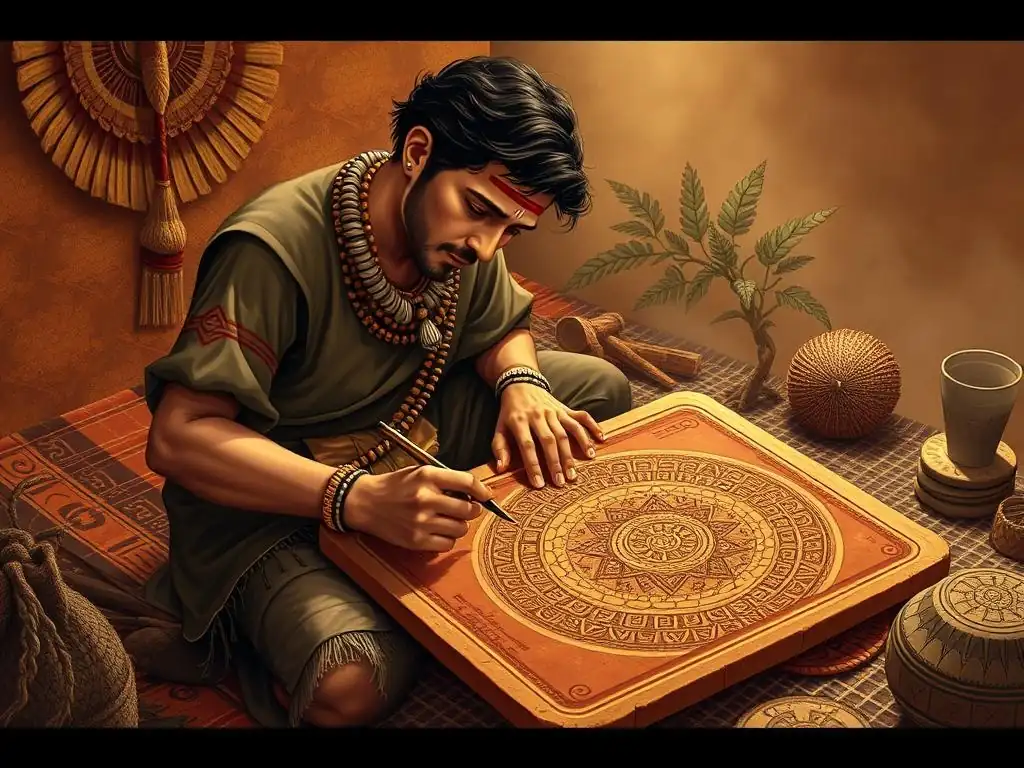
Mathematics played a pivotal role in the cultural expression of PreColumbian societies, influencing not only artistic endeavors but also the ways in which communities perceived and interacted with their world. Various indigenous cultures utilized mathematical principles to create intricate artworks that served both aesthetic and functional purposes. From architectural designs to textiles, the integration of mathematical techniques into art reflects a sophisticated understanding of geometry, symmetry, and proportion.
One of the most notable examples of this influence can be seen in the geometric patterns prevalent in textiles and pottery across various PreColumbian cultures. The Nazca and Moche civilizations, for instance, employed complex geometric motifs that demonstrated a mastery of symmetry and repetition. Such designs were not merely decorative; they often conveyed deeper meanings related to social status, identity, and cosmology.
Furthermore, the use of mathematics in agricultural practices is another testament to its influence on cultural expression. The Incas, for example, developed terraces and irrigation systems that required precise calculations to optimize land use. This practical application of mathematics directly impacted their artistic representations of the landscape, as seen in the alignment of ceremonial structures with astronomical events.
How Mathematical Art Techniques Reflect Indigenous Worldviews
The mathematical art techniques employed by PreColumbian artists often mirrored the worldviews of their respective cultures. Indigenous peoples viewed the universe as an interconnected system where mathematics, nature, and spirituality merged. This holistic perspective is evident in their artistic expressions, which often incorporated geometric designs inspired by natural forms, celestial bodies, and mythological narratives.
For example, the use of fractal patterns in the art of the Maya reflects their understanding of the cyclical nature of life and time. These patterns can be observed in their textiles, murals, and even architecture, showcasing how mathematics served as a language through which they articulated their beliefs and experiences. The repetition of shapes and forms in their art symbolizes the continuity and repetition inherent in their cosmology.
Moreover, the incorporation of mathematical principles into ceremonial art illustrates the significance of rituals in indigenous societies. The careful arrangement of symbols and motifs in ceremonial objects, such as masks and altars, demonstrates a profound understanding of geometry and proportion. These artworks were not only visually striking but also functioned as tools for communication with the spiritual realm, reinforcing the belief that art and mathematics were integral to their identity.
The Relationship Between Math and Spirituality in PreColumbian Cultures
In PreColumbian cultures, the relationship between mathematics and spirituality was deeply intertwined, as many artistic expressions were imbued with religious significance. Mathematical concepts were often employed to create artworks that facilitated a connection to the divine, reflecting the belief that order and structure in the universe could be expressed through art.
The concept of sacred geometry was prevalent among various indigenous cultures, where specific shapes and patterns held spiritual meanings. For instance, the circle represented wholeness and eternity, while the spiral was seen as a symbol of growth and expansion. These geometric forms were frequently incorporated into ceremonial art, such as the intricate designs found in the pottery of the Pueblo peoples, which served as both functional objects and spiritual artifacts.
Additionally, the alignment of architectural structures with celestial events further exemplifies the fusion of mathematics and spirituality. Many PreColumbian civilizations, including the Incas and the Maya, constructed temples and observatories that were precisely oriented to celestial bodies, reflecting their astronomical knowledge and religious beliefs. This alignment was not merely for aesthetic purposes; it was a way to harmonize human existence with the cosmos, reinforcing the idea that mathematics was a pathway to understanding the divine.
The exploration of mathematical techniques in PreColumbian art reveals a rich tapestry of cultural expression that intertwines mathematical concepts with worldviews and spiritual beliefs. By examining these connections, we gain a deeper appreciation for the sophistication and significance of indigenous artistic practices and their enduring legacy.
Legacy of PreColumbian Mathematical Art Techniques
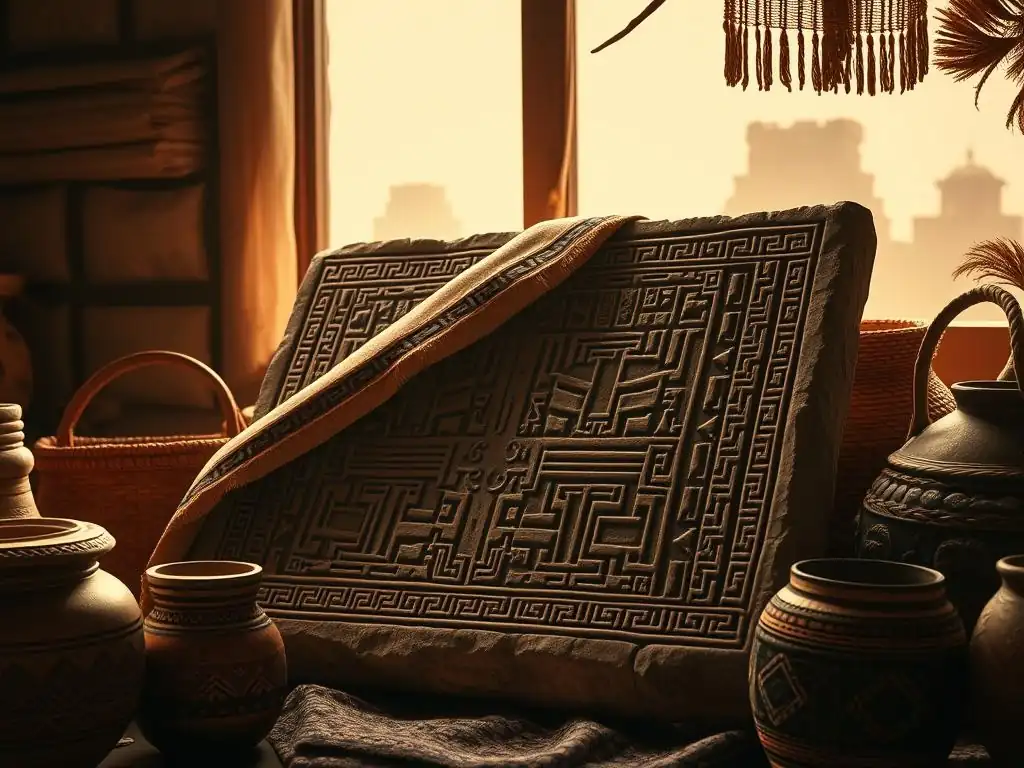
PreColumbian civilizations were not just adept at creating beautiful art; they also employed sophisticated mathematical techniques that reveal a deep understanding of geometry, symmetry, and proportion. These techniques have left a lasting legacy that continues to influence artistic expressions today.
Impact on Contemporary Indigenous Art
The impact of PreColumbian mathematical art techniques on contemporary indigenous art is profound. Artists today often draw inspiration from the geometric patterns, fractal designs, and intricate forms that characterized their ancestors' work. This resurgence of interest not only honors traditional practices but also revitalizes them, blending ancient methods with modern materials and themes.
- Geometric Patterns: Many contemporary indigenous artists utilize geometric designs reminiscent of those found in PreColumbian artifacts, such as pottery, textiles, and murals. For instance, artists may incorporate the zigzag patterns commonly seen in Nazca lines or the spiral motifs from Moche ceramics.
- Cultural Symbolism: The mathematical precision in PreColumbian art often conveyed deeper cultural meanings. Modern artists recognize this, embedding their work with symbolism that reflects their heritage while utilizing mathematical principles. For example, the concept of symmetry is often employed to represent balance and harmony in nature, resonating with indigenous worldviews.
- Collaborative Projects: Contemporary initiatives often involve collaboration between indigenous artists and mathematicians, exploring the intersections of art and mathematics. Workshops and community projects focus on teaching traditional techniques that embody mathematical concepts, fostering a deeper appreciation for both disciplines.
Relevance of PreColumbian Mathematical Techniques in Modern Art
The mathematical techniques used by PreColumbian artists remain relevant in the context of modern art, not only as a source of inspiration but also as a framework for exploring contemporary artistic practices.
- Patterns in Nature: Artists today often find mathematical patterns in nature, such as the Fibonacci sequence and fractal geometry, which echo the designs seen in PreColumbian art. This connection encourages a dialogue between ancient practices and modern scientific understanding.
- Digital Art and Algorithms: As art increasingly incorporates technology, many modern artists experiment with algorithms and computational techniques that reflect the geometric principles inherent in PreColumbian art. This fusion of ancient and contemporary methods expands the possibilities of artistic expression.
- Cross-Disciplinary Studies: The study of PreColumbian mathematical art techniques fosters interdisciplinary collaborations. Art historians, mathematicians, and anthropologists work together to analyze the mathematical foundations of indigenous art, leading to a richer understanding of both fields.
The legacy of PreColumbian mathematical art techniques is not merely historical; it is a living tradition that continues to shape contemporary indigenous art and modern artistic practices. By celebrating and studying these techniques, we can appreciate the intricate relationship between art and mathematics, emphasizing the brilliance of ancient civilizations and their enduring influence on today’s creative landscape.
Conclusion
Summary of PreColumbian Mathematical Art Techniques
PreColumbian mathematical art techniques represent a remarkable intersection of creativity and analytical thinking, showcasing the sophisticated understanding of geometry, symmetry, and proportion among indigenous artists. These techniques were not merely aesthetic choices; they served as essential tools for communication, astronomy, and social organization within various cultures.
- Geometric Patterns: Many indigenous groups utilized intricate geometric designs in textiles, pottery, and architecture. For instance, the Nazca Lines in Peru demonstrate an impressive grasp of geometry, with large-scale figures that can only be fully appreciated from the air. These patterns were often imbued with cultural significance, reflecting cosmological beliefs.
- Symmetry and Proportion: The use of symmetry can be seen in the art of the Maya, where temples and ceremonial structures were meticulously designed to align with celestial events. This alignment required advanced knowledge of the solar and lunar cycles, illustrating the mathematical prowess of these civilizations.
- Mathematical Notation: The Inca employed a form of accounting known as quipu, which utilized knotted strings to convey numerical information. This system reflects a mathematical understanding that extended beyond mere counting, enabling complex record-keeping and communication of data.
By analyzing artifacts such as pottery, textiles, and architectural designs, researchers have uncovered the mathematical principles embedded within these artistic expressions, revealing a rich tapestry of knowledge that challenges preconceived notions about pre-Columbian societies.
The Lasting Influence of Indigenous Mathematical Art on Future Generations
The mathematical art techniques of pre-Columbian civilizations have left an indelible mark on contemporary art and culture, influencing a broad spectrum of artistic practices and academic disciplines. The appreciation for symmetry, geometry, and proportion found in indigenous art continues to resonate today.
- Art and Design: Modern artists draw inspiration from pre-Columbian designs, reinterpreting ancient motifs while incorporating contemporary techniques. This fusion creates a dialogue between past and present, allowing for a deeper understanding of cultural heritage.
- Mathematics Education: The exploration of indigenous mathematical art techniques has found its way into educational curricula, particularly in mathematics and art classes. By engaging students with the artistic expressions of pre-Columbian civilizations, educators illustrate how mathematics is not only a tool for analysis but also a medium for creative expression.
- Cultural Revitalization: Indigenous communities are increasingly reclaiming their artistic traditions, weaving mathematical principles back into their cultural practices. This revitalization serves to strengthen community identity and educate future generations about their rich heritage.
- Interdisciplinary Studies: The intersection of mathematics, art, and culture has inspired scholars to pursue interdisciplinary research, broadening the understanding of how indigenous peoples approached both art and science. This perspective encourages collaboration between mathematicians, artists, and historians, fostering a holistic appreciation of indigenous knowledge systems.
The mathematical art techniques of pre-Columbian civilizations not only reflect their advanced understanding of mathematical concepts but also continue to influence contemporary artistic practices and educational methods, ensuring that their legacy endures in the fabric of modern society.
Frequently Asked Questions
What are PreColumbian mathematical art techniques?
PreColumbian mathematical art techniques refer to the complex methods used by indigenous artists in the Americas to integrate mathematical principles into their artwork, showcasing their advanced understanding of geometry and symmetry.
How did indigenous cultures utilize mathematical techniques in art?
Indigenous cultures utilized mathematical techniques to create intricate designs and patterns, reflecting their cosmological beliefs and social structures, which often included elements of numerology and sacred geometry.
Why is it important to study PreColumbian art in relation to mathematics?
Studying PreColumbian art in relation to mathematics highlights the intellectual achievements of indigenous civilizations, emphasizing their contributions to art, culture, and the scientific understanding of their time.
What impact did European colonization have on indigenous mathematical art techniques?
European colonization led to the suppression of indigenous practices, resulting in the loss of many traditional mathematical art techniques and a decline in the appreciation of these cultural legacies.
How can we preserve the knowledge of PreColumbian mathematical art techniques today?
To preserve this knowledge, it is crucial to document and study existing artifacts, promote educational initiatives, and support indigenous communities in revitalizing their artistic traditions and mathematical practices.
Final Reflection: The Enduring Legacy of PreColumbian Mathematical Art Techniques
Art and mathematics are often seen as distinct realms, yet the exploration of PreColumbian mathematical art techniques reveals a profound connection that resonates in today's world. The intricate designs and calculations employed by ancient artists not only showcase their advanced understanding of geometry and symmetry but also challenge our modern perceptions of creativity and intellect. As we delve into this rich history, we uncover a narrative that emphasizes the importance of interdisciplinary thinking—an idea that is more relevant than ever in our increasingly complex society.
Culture is shaped by the ideas and innovations of those who came before us, and the mathematical artistry of PreColumbian civilizations continues to influence contemporary art and design. The precision and thoughtfulness behind these techniques remind us that creativity is not merely an emotional endeavor but also a disciplined practice grounded in logic and structure. Art is the most beautiful of all lies.
This quote encapsulates the essence of how these ancient artists blended mathematical principles with aesthetic beauty, creating works that transcend time and speak to the universal human experience.
As we reflect on the lessons from PreColumbian mathematical art techniques, I invite you to consider how you can incorporate this understanding into your own life. Embrace the idea that creativity and logic can coexist harmoniously, and challenge yourself to explore new ways of thinking. Whether through art, science, or everyday problem-solving, let the legacy of these ancient artists inspire you to find beauty in calculation and innovation in tradition. The future is bright for those who dare to blend the analytical with the artistic, and your journey starts now.
Unleash Your Creativity: Explore the Intersection of Art and Math!
Thank you for diving into the fascinating world of Pre-Columbian artists and their mathematical techniques! You’ve uncovered the rich relationship between art and calculation, igniting your imagination. Now, let’s take that inspiration further and bring math into your creative pursuits.
Here are a few actions you can take to embrace this unique blend of art and mathematics:
- Start a personal project that incorporates geometric patterns and mathematical principles in your artwork. Utilize tools like graph paper or digital design software to experiment with new ideas!
- Share your discoveries with friends or in an online community. Post your work and insights on social media to inspire others and foster a dialogue about the integration of math and art!
- Join a local or virtual workshop that focuses on combining art and math. Seek out classes that emphasize the historical techniques you’ve learned about.
How will you express the beauty of mathematics in your next artistic endeavor? We’d love to hear your thoughts and ideas below!