
Counting and Culture: The Mathematical Systems that Shaped Governance in the Americas


Welcome to Indigenous Civilizations of the Americas, where we embark on a fascinating journey through the vibrant cultures that flourished long before European contact. Here, you'll delve into the intricate tapestry of achievements that shaped societies, including the remarkable indigenous mathematical systems in the Americas. Discover how these mathematical frameworks influenced governance, trade, and daily life, revealing a legacy that continues to resonate today. Prepare to be captivated as we unlock the profound connections between culture and counting, inviting you to explore further into the rich history that awaits!
- Introduction to Indigenous Mathematical Systems in the Americas
- Historical Context of Indigenous Mathematical Systems
- Types of Indigenous Mathematical Systems
- Case Studies of Indigenous Mathematical Applications in Governance
- Cultural Significance of Mathematical Systems
- Modern Implications of Indigenous Mathematical Systems
- Conclusion: The Lasting Impact of Indigenous Mathematical Systems in Governance
-
Frequently Asked Questions
- What are indigenous mathematical systems in the Americas?
- How did indigenous mathematical systems influence governance?
- What are some examples of indigenous cultures that developed mathematical systems?
- How did these systems differ from European mathematical systems?
- What lasting impacts do indigenous mathematical systems have today?
- Final Reflection: The Enduring Legacy of Indigenous Mathematical Systems in the Americas
- Unleash Your Curiosity: Explore the Rich Mathematical Tapestry of Indigenous Cultures!
Introduction to Indigenous Mathematical Systems in the Americas
The indigenous peoples of the Americas developed rich and diverse mathematical systems that were integral to their governance, cultural practices, and societal organization. Long before European colonization, these systems were not only tools for trade and agriculture but also crucial in shaping the political landscapes and decision-making processes of various civilizations.
From the sophisticated calendrical systems of the Maya to the intricate accounting methods of the Inca, indigenous mathematical systems reflected the unique philosophies and worldviews of their creators. This article delves into the various indigenous mathematical systems in the Americas, highlighting their achievements and the pivotal role they played in governance.
Overview of Indigenous Cultures and Their Mathematical Achievements
The Americas were home to a multitude of indigenous cultures, each with its own unique approach to mathematics. Here are some notable examples:
- Maya Civilization:
- Developed a vigintal (base-20) numeral system.
- Created a complex calendar system, including the Tzolk'in (260-day sacred calendar) and the Haab' (365-day solar calendar).
- Used mathematical concepts to predict astronomical events and facilitate agricultural planning.
- Inca Empire:
- Employed a system known as quipu, which used knotted strings for record-keeping and accounting.
- Used decimal notation for trade and taxation, ensuring an efficient administration of their vast empire.
- Aztec Civilization:
- Utilized a base-20 system as well, which was critical in their calendar and in keeping track of tributes and trade goods.
- Incorporated mathematical principles in their architectural designs and urban planning.
These indigenous mathematical systems were not mere academic exercises; they were practical, deeply embedded in the daily lives of the people, and essential for the survival and flourishing of their societies.
Importance of Mathematical Systems in Governance
Mathematical systems played a crucial role in the governance of indigenous cultures by providing the tools necessary for effective administration and societal organization. Here are some key functions:
- Record Keeping:
- Accurate accounting of goods, resources, and population statistics was vital for managing complex societies. For example, the Inca utilized quipus to maintain detailed records of agricultural yields and labor contributions.
- Resource Management:
- Mathematical calculations allowed for effective distribution of resources, ensuring that communities could sustain themselves. The Maya's calendar system helped in agricultural planning, aligning planting and harvesting with seasonal changes.
- Political Structure:
- Many indigenous cultures used mathematics to reinforce social hierarchies and political power. The ability to measure land and manage tribute systems demonstrated authority and governance over territory and people.
- Cultural Identity:
- Mathematical systems also served as a means of cultural expression and identity. Through their unique approaches to mathematics, these civilizations conveyed their values, beliefs, and connection to the cosmos.
The indigenous mathematical systems in the Americas were foundational not only for their cultural achievements but also for the governance structures that supported their societies. Understanding these systems provides valuable insights into the complexities of indigenous life prior to European contact and highlights their sophisticated approaches to mathematics and administration.
Historical Context of Indigenous Mathematical Systems
Pre-Columbian Civilizations and Their Numerical Concepts
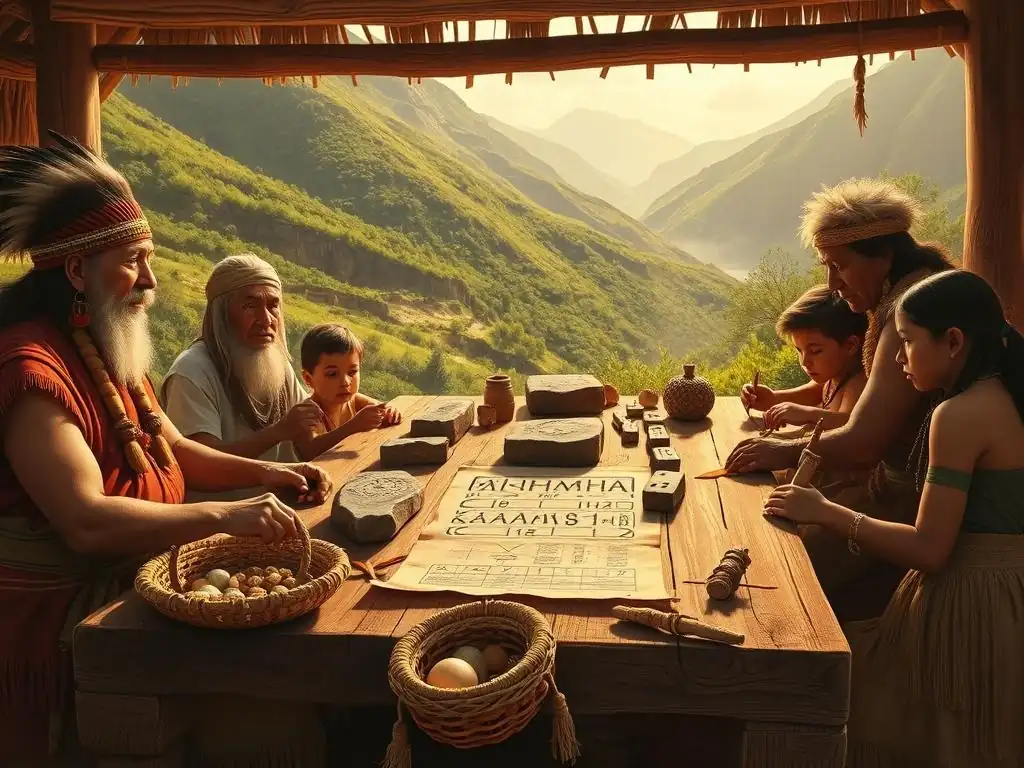
Before European colonization, the Americas were home to numerous advanced civilizations, each developing unique mathematical systems that were intricately linked to their governance, agriculture, and trade. Among the most notable were the Maya, Aztec, Inca, and various North American tribes, each contributing to the rich tapestry of indigenous mathematical systems in the Americas.
- Maya Civilization: The Maya developed a sophisticated mathematical system based on the vigesimal (base-20) numeral system. They utilized a combination of dots (representing units), bars (representing fives), and a shell symbol (representing zero) to create complex calculations. This system was crucial for their astronomical observations, calendar systems, and governance. The Maya calendar, which included a 365-day solar calendar and a 260-day ritual calendar, demonstrates their advanced understanding of time and cycles.
- Aztec Mathematics: The Aztecs implemented a base-20 system as well, although their numerical representation was less formalized than that of the Maya. They utilized their mathematical skills for taxation and tribute collection, which were essential components of their governance. The codices of the Aztecs often included pictorial representations that indicated quantities, showcasing their ability to integrate mathematics into societal functions.
- Inca Numerical System: The Inca civilization employed a quipu, a sophisticated system of knotted strings, to record numerical data and manage resources. Quipus served as a means of communication and record-keeping, facilitating administration over vast territories. The Incas calculated agricultural yields, tax obligations, and census data through this ingenious method, highlighting their reliance on mathematical systems for governance.
- North American Tribes: Various tribes across North America also developed their own numerical systems, often linked to their cultural practices and trade. For instance, the Iroquois and Algonquin peoples utilized counting based on natural phenomena, such as seasons and animal behaviors, demonstrating the integration of mathematics with their environmental context.
The diversity of indigenous mathematical systems in the Americas reflects the unique cultural and environmental contexts of each civilization, contributing significantly to their governance and societal organization.
Influence of Environment on Mathematical Development
The development of indigenous mathematical systems in the Americas was profoundly influenced by environmental factors, which shaped the ways societies interacted with their surroundings and organized their communities.
- Agricultural Practices:
- Maya and Aztec Agriculture: The agricultural calendar was essential for both the Maya and Aztec civilizations, dictating planting and harvesting seasons. The Maya's mathematical system enabled them to create accurate calendars that aligned with their agricultural needs, ensuring food security and societal stability.
- Inca Terracing Techniques: The Inca adapted to the mountainous terrain of the Andes through innovative agricultural techniques, including terracing. Their mathematical skills allowed them to calculate land area and optimize irrigation systems, which were vital for sustaining their large population.
- Trade and Resource Management:
- North American Trade Networks: Many tribes developed extensive trade networks that relied on mathematical principles for fair exchanges and resource allocation. For instance, the Powhatan people used tally sticks to keep track of goods traded, demonstrating how environmental resources influenced their counting methods.
- Resource Allocation in Governance: Societies like the Inca used mathematics to manage resources efficiently across their vast empire. The quipu system exemplified how environmental demands provided a context for developing complex record-keeping and resource management strategies.
- Astronomy and Navigation:
- Maya Astronomy: The Maya's deep understanding of astronomy was a direct result of their environmental observations. Their mathematical calculations enabled them to predict celestial events, which were crucial for religious ceremonies and agricultural planning.
- Navigational Skills of Coastal Tribes: Coastal indigenous tribes developed navigation techniques based on their understanding of tides, currents, and celestial navigation. Their mathematical systems incorporated these environmental factors, facilitating long-distance travel and trade.
The indigenous mathematical systems in the Americas were not only a reflection of cultural identity but also a necessary adaptation to environmental challenges. The interplay between society and environment fostered innovative mathematical thinking, which played a crucial role in governance and sustainability.
Types of Indigenous Mathematical Systems
Counting Systems Used by Indigenous Peoples
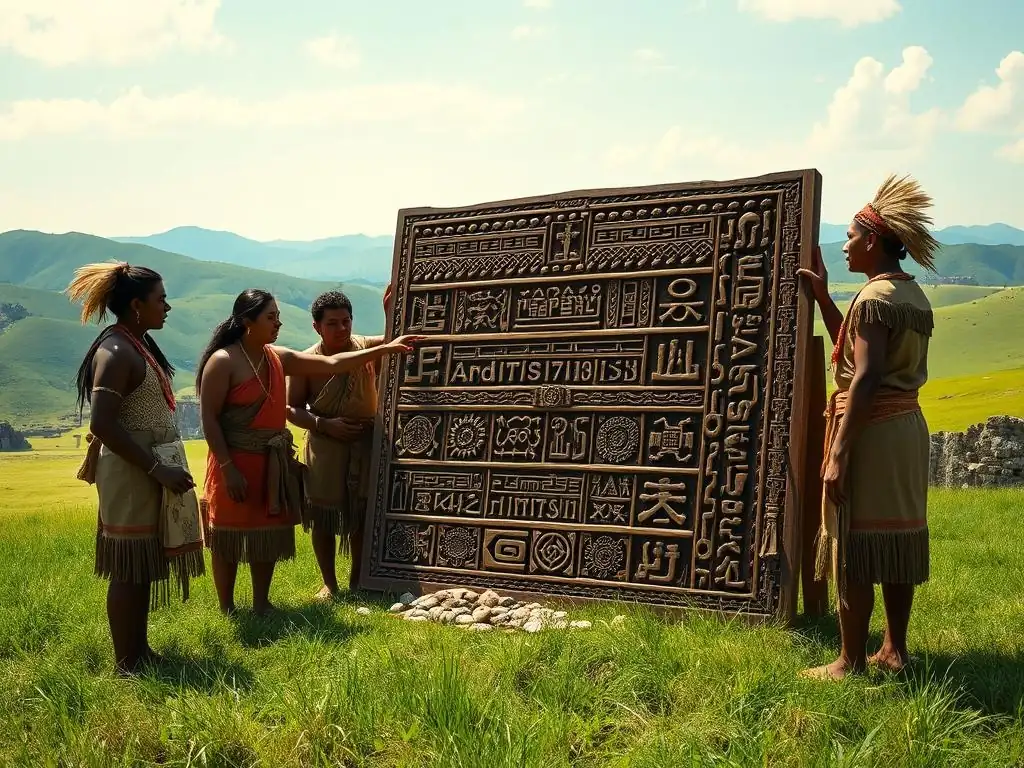
Indigenous mathematical systems in the Americas exhibit remarkable diversity, reflecting the unique cultural contexts and practical needs of various communities. Many indigenous peoples developed intricate counting systems that were closely tied to their social structures, economic activities, and governance needs.
Base Systems and Their Variations
One notable aspect of indigenous counting systems is the use of base systems, which vary significantly among cultures. For instance:
- Base 10 Systems: Some indigenous groups, like the Uto-Aztecan peoples, utilized a base 10 system, influenced by the ten fingers of human hands. This system facilitated trade and everyday counting.
- Base 20 Systems: In contrast, the Maya civilization employed a base 20 (vigesimal) system, likely due to their counting of both fingers and toes. This system allowed for complex calculations and was integral to their calendrical systems.
- Base 5 Systems: Certain cultures, such as the Inuit, demonstrated base 5 systems, which were often used in conjunction with physical objects like stones or sticks to represent quantities.
These systems were not merely numerical but served as essential tools for governance, trade, and social organization.
Unique Numerical Symbols and Representations
Indigenous mathematical systems also featured unique numerical symbols and representations that conveyed complex information. For instance:
- The Maya used a combination of dots and bars to represent numbers, with dots indicating single units and bars representing fives. This visual representation allowed for efficient communication of mathematical concepts.
- The Inca utilized a quipu, a sophisticated system of knotted cords, to encode numerical data. Each knot, its placement, and the type of cord used conveyed different numerical values, facilitating record-keeping and administrative tasks.
These unique representations illustrate how indigenous peoples creatively adapted their mathematical systems to suit their needs, enhancing governance and societal function.
Geometric and Spatial Reasoning in Governance
Indigenous mathematical systems also encompassed geometric and spatial reasoning, which played a crucial role in governance, land management, and architecture.
Applications in Land Measurement and Allocation
Many indigenous cultures developed advanced techniques for land measurement and allocation, which were critical for resource management. For example:
- The Navajo used geometric principles to establish boundaries and allocate communal land. Their understanding of space allowed them to maintain harmony with nature while effectively managing resources.
- The Maya employed sophisticated geometry in their agricultural practices, utilizing concepts such as contour farming that required precise measurement and spatial awareness to optimize crop yields.
These practices demonstrate the importance of indigenous mathematical systems in governance, enabling communities to sustain themselves and thrive.
Architectural Innovations Based on Mathematical Principles
Indigenous peoples also integrated mathematical principles into their architectural designs, creating structures that reflected their understanding of geometry and spatial relationships.
- The Maya constructed impressive pyramids and temples, using mathematical calculations to achieve structural stability and alignments with celestial events. Their architectural innovations showcased their advanced knowledge of geometry and its application in governance and religious practices.
- Similarly, the Inca utilized precise stone-cutting techniques that relied on geometric principles, allowing them to build resilient structures that have withstood the test of time. This architectural prowess was often linked to their governance systems, as these structures served as administrative and ceremonial centers.
Indigenous mathematical systems in the Americas were vital for governance and cultural expression, demonstrating a profound understanding of both numerical concepts and spatial reasoning that shaped their societies.
Case Studies of Indigenous Mathematical Applications in Governance
The Inca Empire: The Quipu System
Structure and Function of Quipu in Administrative Control
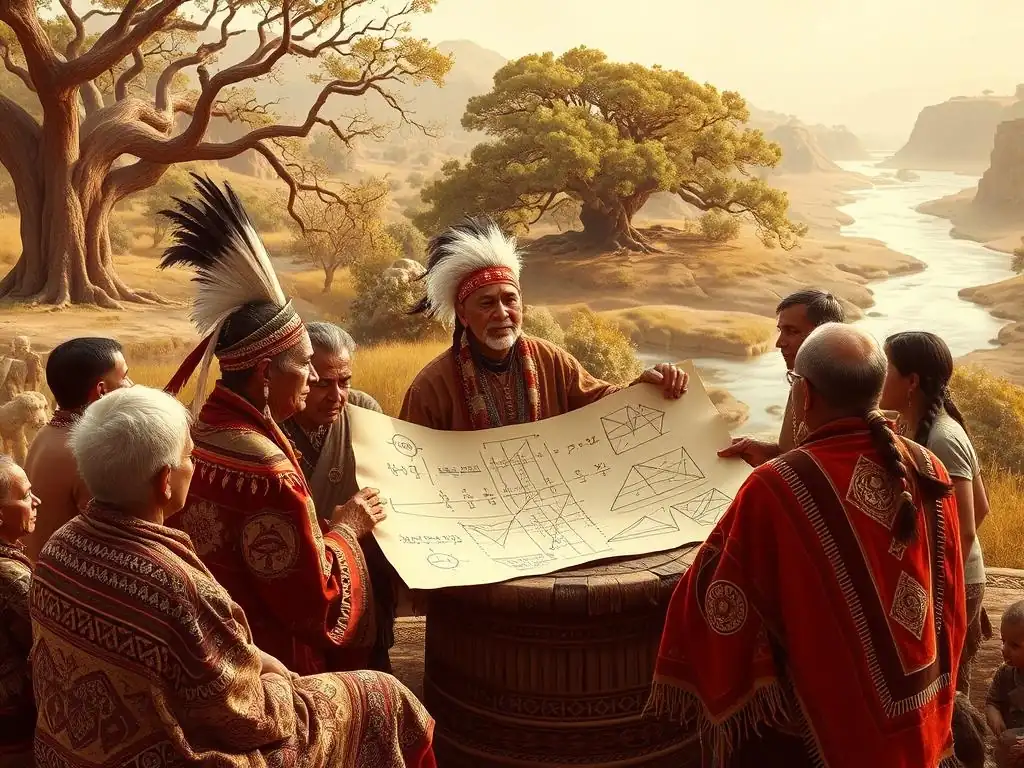
The Inca Empire, known for its sophisticated administrative structure, utilized a unique mathematical system known as Quipu for record-keeping and communication. Quipu consisted of colored strings and knots, each representing different numerical values and information. The arrangement of knots and the colors of the strings were crucial, as they encoded various data points such as census information, agricultural production, and tribute obligations.
The structure of the Quipu allowed for a complex form of accounting that transcended mere numerical representation. Each type of knot (e.g., single knots, long knots) indicated different values, and their position along the string had significance as well. For example:
- Single knots: Represented units (1, 2, 3, etc.)
- Long knots: Indicated tens, hundreds, or thousands depending on their placement
- Color coding: Different colors signified various categories of information, such as different types of resources or geographical regions.
The Inca administrators were trained as "Quipucamayocs," specialized individuals responsible for interpreting and maintaining these records, which were crucial for governance and resource distribution.
Impact on Inca Governance and Record-Keeping
The impact of the Quipu system on Inca governance was profound. It enabled the centralized administration to efficiently manage vast territories and populations without a written language. The use of Quipu allowed the Inca rulers to gather and analyze data crucial for decision-making, such as the allocation of labor for agricultural projects or military campaigns.
Moreover, the Quipu facilitated effective communication across the empire's extensive road networks. Messages encoded in Quipu could be transported by runners known as "chasquis," who delivered vital information quickly to different regions. This system of communication not only supported administrative control but also reinforced the cohesion of the empire, ensuring that the central authority could monitor and respond to local conditions effectively.
The Maya Civilization: Calendar Systems and Political Organization
The Role of Astronomy and Mathematics in Governance
The Maya civilization is renowned for its advanced understanding of astronomy and mathematics, which played a critical role in their governance. The Maya developed intricate calendar systems, primarily the Tzolk'in (a 260-day calendar) and the Haab' (a 365-day solar calendar). These calendars were crucial for planning agricultural activities, religious ceremonies, and political events.
The mathematical sophistication of the Maya included a vigesimal (base-20) number system, which allowed them to perform complex calculations and keep precise records. Their knowledge of celestial movements enabled them to create accurate astronomical tables, which were essential for predicting seasonal changes and planning agricultural cycles.
The integration of mathematical concepts in their calendars allowed the Maya rulers to establish legitimacy and authority. By aligning their political activities with celestial events, they could enhance their status as intermediaries between the gods and the people, thus reinforcing their power.
Integration of Calendar Systems in Political Decision-Making
The integration of calendar systems into political decision-making was a hallmark of Maya governance. Rulers relied on the Tzolk'in and Haab' to determine auspicious dates for events such as warfare, state ceremonies, and even the selection of leaders. This reliance on mathematical calendars ensured that decisions were made in harmony with the cosmos, reflecting the Maya belief in the interconnection between the divine and the earthly realms.
Furthermore, the Maya employed the Long Count calendar for historical record-keeping, which allowed them to document significant events over millennia. This system of timekeeping not only supported governance but also facilitated the transmission of cultural knowledge and historical narratives.
The indigenous mathematical systems in the Americas, exemplified by the Inca Quipu and Maya calendars, played a fundamental role in shaping governance, resource management, and societal cohesion. These systems illustrate the advanced understanding and application of mathematics in the political landscapes of these civilizations, highlighting their lasting impact on history.
Cultural Significance of Mathematical Systems
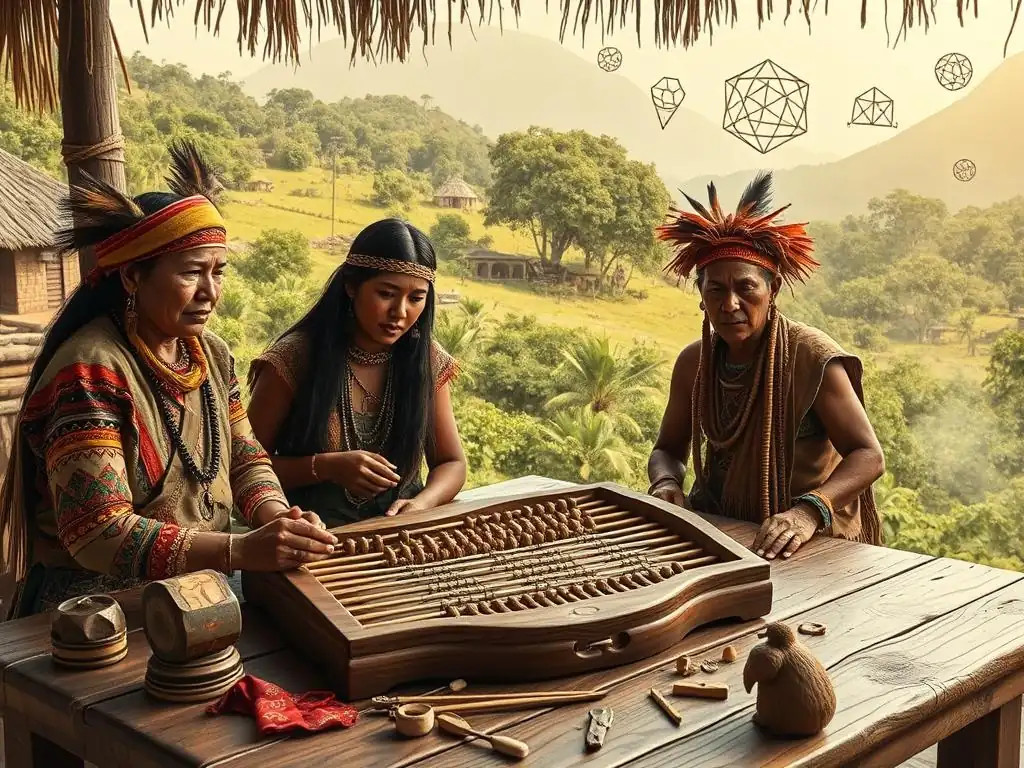
Mathematical systems in indigenous cultures of the Americas were not just tools for counting and trade; they were deeply intertwined with cultural identity and societal organization. These systems reflected the values, beliefs, and traditions of various communities, influencing everything from governance to spiritual practices.
The Relationship Between Counting and Cultural Identity
Counting systems served as fundamental elements in establishing a cultural identity among indigenous peoples. For many communities, numbers were not merely abstract concepts but represented a connection to their environment and social structures.
- Symbolism in Counting:
- Many indigenous groups assigned symbolic meanings to numbers. For instance, the number four often represented the cardinal directions, which were sacred and essential for navigation and orientation in their cultural landscapes.
- Cultural Practices:
- Counting was integral to rituals and ceremonies. The Maya civilization, for example, employed a vigesimal (base-20) system that influenced their calendar, which was central to agricultural practices and religious ceremonies.
- Governance and Social Structure:
- Indigenous mathematical systems were crucial in maintaining governance structures. They facilitated record-keeping, resource allocation, and population assessments, allowing societies to function effectively. For example, the Inca used a quipu system—a series of knotted strings—to record numerical data related to taxation, military organization, and census information.
Storytelling and Oral Traditions in Mathematical Education
Oral traditions played a pivotal role in the transmission of mathematical knowledge among indigenous cultures. Storytelling was not merely an entertainment medium; it was a vital educational tool that encapsulated mathematical concepts within narratives that conveyed cultural values and practical knowledge.
- Integration of Mathematics in Stories:
- Mathematical principles were embedded in stories told by elders. These narratives often included counting, measurements, and geometric concepts, allowing listeners to grasp mathematical ideas organically. For instance, tales of the construction of communal structures would naturally incorporate spatial reasoning and measurement.
- Community Engagement:
- Storytelling sessions often involved community participation, fostering a collective understanding of mathematics. Children learned through engaging with these stories, making the learning process communal and culturally relevant.
- Cultural Preservation:
- By weaving mathematical concepts into oral traditions, indigenous groups preserved their cultural heritage while simultaneously educating younger generations. This method ensured that knowledge was not only passed down but also adapted to the needs of contemporary society.
Indigenous mathematical systems in the Americas were not isolated from the cultures that created them. Instead, they were embedded in the cultural fabric, shaping identities, governance, and education through counting and storytelling. These systems reflect a rich heritage that continues to influence modern understandings of mathematics and culture.
Modern Implications of Indigenous Mathematical Systems
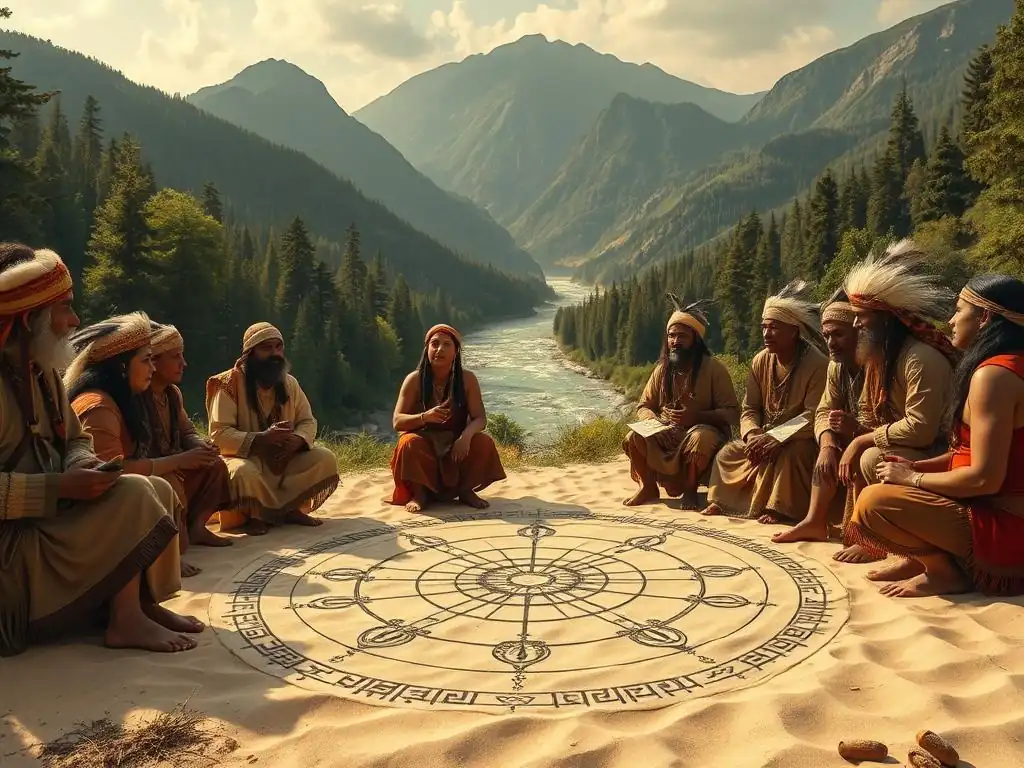
Revitalization of Indigenous Knowledge in Contemporary Governance
The resurgence of indigenous mathematical systems in the Americas has sparked a significant movement towards incorporating traditional knowledge into contemporary governance. This revival is not merely about recognizing the historical achievements of these systems; it is about actively integrating them into modern decision-making processes.
Indigenous communities are increasingly advocating for the inclusion of their mathematical practices, which often emphasize holistic approaches to problem-solving and community well-being. For instance, the concept of time in many indigenous cultures is cyclical rather than linear, influencing how communities approach planning and resource management. This perspective can lead to more sustainable practices in governance, as decisions are made with a long-term view rather than a short-term focus.
Moreover, educational initiatives that teach indigenous mathematical concepts are gaining traction. Programs that blend traditional knowledge with contemporary curricula are fostering a new generation of leaders who understand the value of both systems. This integration can enhance cultural pride and identity among indigenous youth, allowing them to see the relevance of their heritage in today's world.
Lessons from Indigenous Mathematical Practices for Modern Societies
Indigenous mathematical systems offer several valuable lessons for modern societies, particularly in governance and community engagement. Here are some key insights:
- Holistic Problem-Solving: Indigenous mathematical approaches often involve a comprehensive view of issues, considering ecological, social, and economic factors simultaneously. This contrasts with conventional methods that may prioritize quantitative analysis over qualitative impacts.
- Community Involvement: Decision-making processes in many indigenous cultures heavily involve community participation, ensuring that diverse perspectives are considered. This method fosters a sense of belonging and accountability, which can enhance civic engagement in modern governance.
- Sustainability and Reciprocity: Many indigenous mathematical systems are grounded in principles of sustainability and reciprocity. For example, practices such as the Three Sisters agriculture (corn, beans, and squash) demonstrate a deep understanding of ecological balance, which modern governments can learn from to address environmental challenges.
- Ethical Frameworks: Indigenous mathematical practices often incorporate ethical considerations into their frameworks. This perspective can guide modern societies in creating governance structures that prioritize justice, equity, and respect for all community members.
The study of indigenous mathematical systems in the Americas not only highlights the rich cultural heritage of these communities but also provides contemporary societies with innovative tools and frameworks for effective governance. As we move forward, recognizing and integrating these systems can lead to more inclusive and sustainable governance practices.
Conclusion: The Lasting Impact of Indigenous Mathematical Systems in Governance
The indigenous mathematical systems in the Americas played a vital role in governance and societal organization, influencing not only local communities but also the broader cultural heritage of the continent. These systems, which were intricately linked to the unique environmental and social contexts of each civilization, facilitated the management of resources, trade, and population, thereby establishing a framework for sustainable development.
One of the most significant impacts of these mathematical systems was their ability to enhance decision-making processes. For instance, the Inca civilization employed a sophisticated system of quipu, or knotted strings, to record numerical data related to their vast empire's resources, tribute, and population. This method allowed for efficient administration and communication across long distances, ultimately contributing to the stability and expansion of their governance.
Similarly, the Mayans utilized a complex vigesimal (base-20) counting system that was not only employed in trade and agriculture but also in their astronomical observations. Their mathematical achievements, including the development of the concept of zero, reflect a deep understanding of mathematics that influenced their governance through accurate record-keeping and calendrical systems.
In recognizing the importance of indigenous mathematical systems, we acknowledge the contributions these cultures made to global mathematics. Their practices have laid the groundwork for future generations in various fields, including economics, engineering, and environmental science.
Reflection on the Importance of Cultural Heritage in Mathematics
Cultural heritage plays a crucial role in shaping mathematical systems, as it reflects the values, beliefs, and practices of a society. The indigenous mathematical systems in the Americas are a testament to the rich intellectual traditions of these communities. By examining these systems, we can better understand how mathematics was used not merely as an abstract concept but as a practical tool for governance and community well-being.
Furthermore, the preservation and promotion of these mathematical traditions are essential for fostering cultural pride and identity among indigenous peoples. It highlights the significance of their contributions to the world, challenging the dominant narratives that often overlook their achievements. By integrating indigenous mathematical practices into contemporary education and research, we can create a more inclusive and diverse understanding of mathematics.
Future Research Directions in Indigenous Mathematical Studies
The field of indigenous mathematical studies is ripe for exploration, with numerous avenues for future research. Scholars can investigate the following areas:
- Comparative Studies: Analyzing indigenous mathematical systems across different cultures in the Americas to identify similarities and differences in their applications and methodologies.
- Interdisciplinary Approaches: Collaborating with anthropologists, historians, and educators to develop a holistic understanding of how indigenous mathematical systems influenced governance and society.
- Cultural Revitalization: Engaging with indigenous communities to document and preserve traditional mathematical practices, ensuring that this knowledge is passed down to future generations.
- Applications in Modern Contexts: Exploring how indigenous mathematical principles can inform contemporary issues such as sustainable development, resource management, and environmental stewardship.
By pursuing these research directions, we can deepen our appreciation of the rich mathematical heritage of indigenous cultures in the Americas and its enduring influence on governance and society. The exploration of these systems not only enriches our understanding of mathematics but also honors the legacy of the civilizations that shaped our world long before European contact.
Frequently Asked Questions
What are indigenous mathematical systems in the Americas?
Indigenous mathematical systems refer to the numerical and geometric systems developed by various cultures in the Americas. These systems were essential for trade, governance, and understanding the natural world.
How did indigenous mathematical systems influence governance?
These mathematical systems played a crucial role in establishing trade networks, taxation, and resource management, thus shaping the political structure and governance of indigenous societies.
What are some examples of indigenous cultures that developed mathematical systems?
Notable cultures include the Maya, who used a vigesimal (base-20) system, and the Inca, who utilized the quipu, a unique method of record-keeping involving knotted strings for counting and data organization.
How did these systems differ from European mathematical systems?
Indigenous mathematical systems often emphasized practical applications and were closely tied to cultural practices, while European systems were more abstract and based on Euclidean principles.
What lasting impacts do indigenous mathematical systems have today?
These systems contribute to our understanding of cultural heritage and provide insights into the intellectual achievements of indigenous peoples, influencing modern fields such as ethnomathematics and cultural studies.
Final Reflection: The Enduring Legacy of Indigenous Mathematical Systems in the Americas
The exploration of indigenous mathematical systems in the Americas reveals their profound influence on governance and cultural identity, demonstrating that numbers are not merely tools for calculation but are deeply intertwined with the fabric of society. Today, as we navigate a world increasingly driven by data and analytics, understanding these historical systems offers invaluable insights into how we can shape equitable and inclusive governance structures. The legacy of these indigenous systems is a testament to the power of knowledge and its ability to transcend time and space.
Cultural landscapes are continuously shaped by the mathematical systems that underpin them, and the indigenous practices of the Americas are no exception. These systems not only facilitated trade and resource management but also fostered a sense of community and identity among diverse groups. As we reflect on their impact, we recognize that "the true measure of a culture lies in its ability to adapt and innovate while honoring its roots." > This quote encapsulates the essence of how indigenous mathematical systems have not only survived but thrived, influencing contemporary approaches to governance and community organization.
As we move forward, I invite you to reflect on the lessons embedded within these indigenous mathematical systems. Consider how the principles of balance, sustainability, and community that they embody can inform your own decision-making and governance practices. By embracing these lessons, we can contribute to a future that honors the wisdom of the past while fostering a more equitable and just society for all. Let us carry forward the legacy of these mathematical systems, ensuring they continue to inspire and guide us in our collective journey.
Unleash Your Curiosity: Explore the Rich Mathematical Tapestry of Indigenous Cultures!
Thank you for taking the time to delve into the fascinating world of mathematical systems in Indigenous governance. Your exploration of how numbers intersect with culture not only broadens your understanding but also honors the legacies of diverse civilizations. Now, let’s take that knowledge a step further!
Here are some exciting actions you can take to deepen your connection with this topic:
- Engage with a local Indigenous community: Attend workshops or discussions that highlight their mathematical traditions and governance systems.
- Start a group exploration: Invite friends or colleagues to read more about Indigenous mathematics and discuss its implications for contemporary governance.
- Share your insights: Write a blog post or create a social media update discussing what you learned and sparking a conversation about the significance of cultural mathematics in today’s society.
As you reflect on the interconnectedness of mathematics and culture, consider this: How can we apply the innovative mathematical concepts of Indigenous civilizations to enhance modern governance?
We would love to hear your thoughts!