
Mesoamerican Mathematics in Trade: The Economic Calculations that Shaped Civilizations

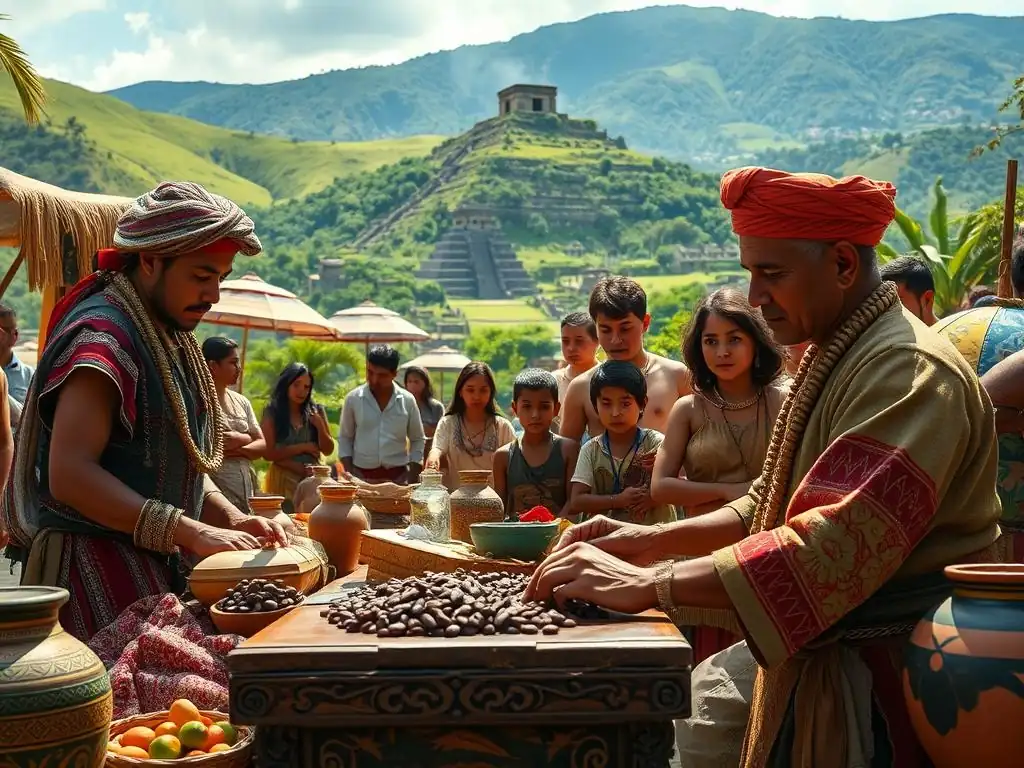
Welcome to Indigenous Civilizations of the Americas, where we invite you to embark on a journey through the rich tapestry of indigenous cultures that flourished long before European contact. Here, we delve into the fascinating world of Mesoamerican trade mathematics history, uncovering the economic calculations that not only facilitated trade but also shaped entire civilizations. Discover how these advanced mathematical systems reflect the ingenuity and sophistication of societies that thrived through innovation and commerce. Prepare to be captivated as we explore the profound achievements and enduring legacy of these remarkable cultures—your adventure starts now!
- Mesoamerican Trade Mathematics History: An Overview
- The Role of Mathematics in Mesoamerican Economies
- Key Mathematical Concepts Used in Trade
- Historical Context of Mesoamerican Trade Mathematics
- Mesoamerican Trade Mathematics in Practice
- The Impact of Mesoamerican Trade Mathematics on Later Civilizations
- Conclusion
-
Frequently Asked Questions
- What role did mathematics play in Mesoamerican trade?
- How did Mesoamerican civilizations develop their mathematical systems?
- What were some key achievements of Mesoamerican mathematics?
- How did trade influence the evolution of mathematical practices in Mesoamerica?
- What is the lasting impact of Mesoamerican mathematics on modern society?
- Final Reflection: The Enduring Legacy of Mesoamerican Trade Mathematics
- Unveil the Power of Historical Trade Strategies!
Mesoamerican Trade Mathematics History: An Overview
Mesoamerican trade mathematics holds a vital place in the history of indigenous civilizations, illuminating how these societies utilized mathematical systems to facilitate trade and manage economic interactions. Before the arrival of Europeans, Mesoamerican cultures such as the Maya, Aztec, and Olmec developed sophisticated mathematical concepts that were integral to their commerce, agriculture, and societal organization. This article delves into the historical significance of these mathematical practices, illustrating how they not only supported trade but also contributed to the rich tapestry of Mesoamerican achievements and advancements.
Introduction to Mesoamerican Mathematics
Mesoamerican mathematics was characterized by a unique base-20 (vigesimal) system that diverged significantly from the base-10 (decimal) systems commonly used today. This system allowed for complex calculations that facilitated trade and economic planning.
Key features of Mesoamerican mathematics include:
- Zero as a Placeholder: The concept of zero was an essential part of their number system, enabling more advanced calculations.
- Hieroglyphic Numerals: Mesoamerican cultures used a combination of dots and bars to represent numbers, allowing for sophisticated record-keeping.
- Calendar Systems: The intricate calendars developed by these civilizations were not only important for agricultural cycles but also for trade timing and rituals.
The mathematical systems developed by Mesoamerican cultures were not merely academic; they were practical tools that supported the day-to-day functioning of their economies.
Significance of Mathematics in Mesoamerican Trade
The role of mathematics in Mesoamerican trade cannot be overstated. It was a cornerstone that enabled these civilizations to engage in extensive commerce, both internally and with neighboring regions.
Here are some key aspects of how mathematics shaped trade in Mesoamerica:
- Measurement and Valuation:
- Standard Units: Mesoamerican traders used standardized units of measurement to assess the value of goods, which helped maintain fairness and efficiency in transactions.
- Currency Systems: Different forms of currency, including cacao beans and textiles, were quantified using mathematical principles to ensure equitable trade.
- Record-Keeping:
- Codices and Glyphs: Traders documented transactions and inventories using codices, which relied on mathematical notations to track quantities and values.
- Accounting: Advanced accounting techniques were utilized to maintain records, allowing for transparency and accountability in trade practices.
- Economic Planning:
- Resource Management: Mathematics enabled the calculation of resource availability and demand, crucial for planning agricultural output and trade routes.
- Market Predictions: By analyzing past trade data, Mesoamerican civilizations were able to forecast market trends, aiding in decision-making for future trade endeavors.
The mathematical systems integral to Mesoamerican trade not only facilitated economic transactions but also reflected the deep understanding these civilizations had of numbers and their applications. The legacy of Mesoamerican trade mathematics continues to influence our understanding of indigenous economic practices and their enduring impact on modern economic systems.
The Role of Mathematics in Mesoamerican Economies
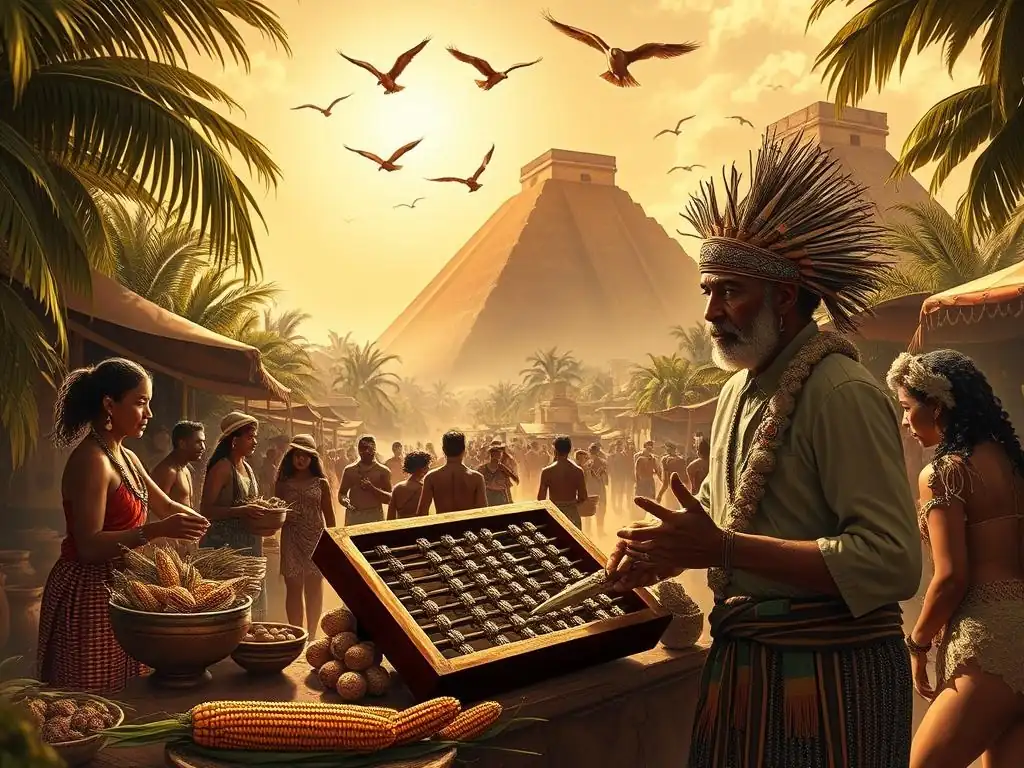
Mathematics played a crucial role in the economic systems of Mesoamerican civilizations, serving as a fundamental tool for trade, agricultural planning, and resource management. The indigenous peoples of this region, including the Maya and Aztec, developed sophisticated mathematical concepts that were integral to their daily lives and economic transactions.
Mesoamerican trade mathematics history reveals that these civilizations utilized a base-20 (vigesimal) number system, which differed significantly from the base-10 system commonly used today. This unique approach allowed them to perform complex calculations required for trade and taxation. The use of mathematics was not limited to mere counting; it extended to sophisticated accounting practices that facilitated the management of goods, resources, and labor.
Economic Systems of Mesoamerican Civilizations
The economic systems of Mesoamerican civilizations were characterized by a combination of agriculture, trade, and tribute systems.
- Agricultural practices:
- The Mesoamericans cultivated a variety of crops, including maize, beans, and squash, often referred to as the "Mesoamerican triad." The planning of these agricultural activities required precise calculations regarding planting cycles, yield estimations, and resource allocation.
- Market systems:
- Markets served as crucial hubs for trade, where goods were exchanged locally and regionally. The Mesoamerican economy was largely barter-based, necessitating the use of mathematics to determine the value of goods exchanged.
- Tribute systems:
- Civilizations like the Aztec imposed tribute on conquered regions, which required systematic record-keeping and calculations to ensure compliance and to evaluate the wealth transferred from various territories.
The integration of mathematics into these economic frameworks not only facilitated trade but also promoted social cohesion and stability within these advanced societies.
Trade Networks and Their Mathematical Foundations
Mesoamerican trade networks were extensive, linking various cities and regions across vast distances. The mathematical foundations of these networks were essential for their operation and growth.
- Distance and navigation:
- Traders utilized mathematical principles to calculate distances and optimize routes for transporting goods. This included understanding geography, as well as using cardinal directions and landmarks as references.
- Goods exchange:
- The calculation of trade goods' value was a complex process. Traders needed to assess the worth of items based on demand, rarity, and quality. For example, cacao beans were not only a popular commodity but also served as currency in many transactions.
- Standardization of measures:
- Mesoamerican civilizations established standardized measurements for trade, which required mathematical understanding. This included volume measures for goods like textiles, grains, and liquids, ensuring fairness and consistency in transactions.
- Cultural exchanges:
- Trade networks facilitated cultural exchanges, leading to the sharing of mathematical knowledge. Different regions contributed to the evolution of mathematical concepts, demonstrating a collaborative aspect of Mesoamerican trade.
The mathematical systems developed in Mesoamerican civilizations were foundational to their economic structures, enhancing trade efficiency and enabling the rise of complex societies that thrived for centuries prior to European contact. The legacy of these mathematical practices continues to influence our understanding of the region's historical significance in the broader context of global trade and economics.
Key Mathematical Concepts Used in Trade
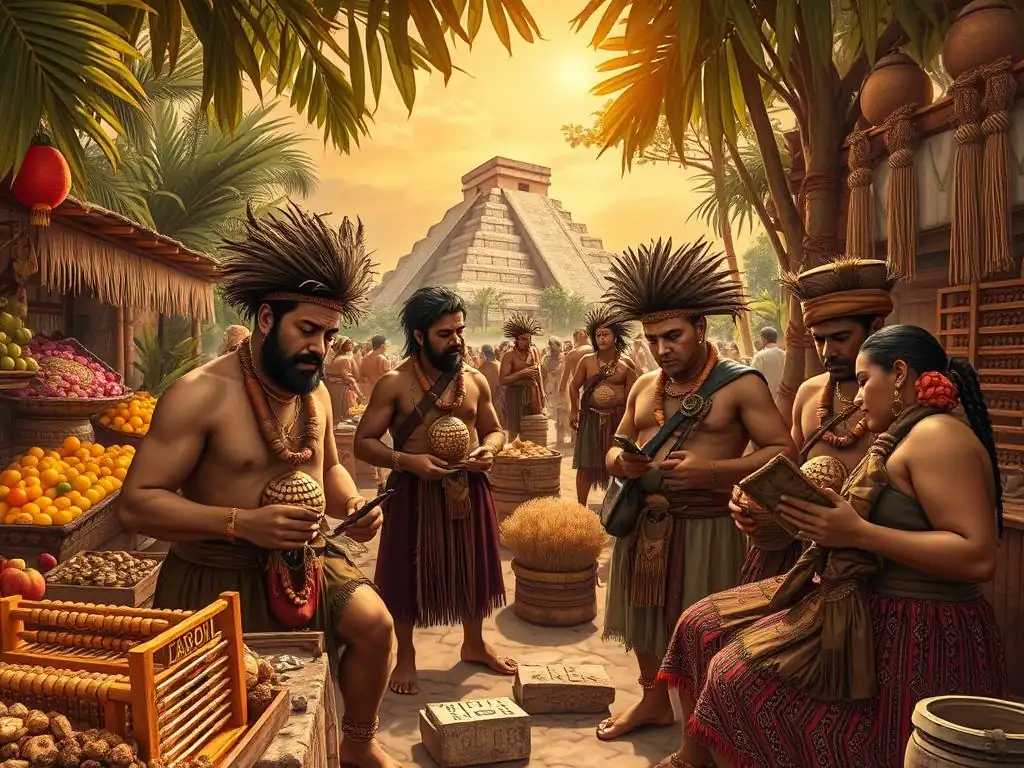
Mesoamerican trade mathematics history reveals a rich tapestry of numerical systems and practices that were integral to the economic activities of ancient civilizations. The mathematical concepts developed by Mesoamerican cultures, such as the Maya and the Aztec, were not only practical but also deeply intertwined with their worldview and societal organization. This section delves into the key mathematical concepts that facilitated trade and economic transactions in these ancient societies.
Base-20 Number System in Mesoamerican Trade Mathematics
The Mesoamericans employed a base-20 number system (also known as a vigesimal system), which was distinct from the base-10 system commonly used today. This system was pivotal in trade, allowing merchants to perform complex calculations with relative ease.
- Structure of the System:
- The Mesoamerican base-20 system was structured around groups of 20, which were often represented using dots and bars. For instance, one dot represented one unit, while a bar represented five units.
- Trade Applications:
- In trade contexts, this number system was utilized for counting goods, calculating prices, and determining quantities during exchanges. For example, a merchant might use a series of dots and bars to represent the total number of goods being traded, thus streamlining transactions.
- Historical Examples:
- The Maya civilization is particularly noted for its sophisticated use of this system, as seen in their codices where they recorded trade agreements and inventories. This efficiency in calculations not only facilitated local trade but also long-distance exchanges with other cultures.
Measurement Units for Trade: Length, Weight, and Volume
In Mesoamerican trade, precise measurement units were essential for ensuring fair exchanges and maintaining economic stability. The following measurement units were commonly utilized:
- Length:
- The Mesoamericans had specific units for measuring length, often based on body parts or standardized items. For instance, a "cubit" was derived from the forearm length and was used for measuring textiles and construction materials.
- Weight:
- Cacao beans served as a form of currency and were also used to measure weight in trade. A standard measure, known as a "cacao load," was established, allowing merchants to weigh goods accurately. This practice was crucial when dealing with luxury items such as textiles and jewelry.
- Volume:
- Volume measurements were typically based on containers, like the "taza" (a type of bowl) used for measuring liquids and grains. The consistency in volume measurements prevented disputes and ensured that both parties in a trade received fair quantities.
These measurement units not only facilitated trade within Mesoamerican societies but also allowed them to engage in complex transactions with neighboring cultures, thereby expanding their economic networks.
The Importance of Calendrical Calculations in Trade Timing
Calendrical calculations played a vital role in Mesoamerican trade mathematics, as timing was essential for maximizing profits and ensuring the prosperity of trade routes.
- Agricultural Cycles:
- The Mesoamericans relied heavily on agriculture, and their trading activities were often aligned with planting and harvest times. By using their sophisticated calendrical systems, such as the Maya Long Count, traders could determine the optimal times for trading seasonal goods.
- Market Days:
- Specific days were designated for markets, and the Mesoamerican calendar helped synchronize these events across different regions. For instance, the Aztec calendar featured a 260-day ritual calendar (Tonalpohualli) and a 365-day solar calendar (Xiuhpohualli), which determined trade events and ceremonial exchanges.
- Cultural Significance:
- Beyond mere commerce, the timing of trades often aligned with cultural and religious events, adding another layer of significance to the economic exchanges. Merchants would calculate auspicious days for trading, reflecting the interconnectedness of their spiritual beliefs and economic activities.
The mathematical systems and concepts developed by Mesoamerican civilizations were foundational to their trade practices. The base-20 number system, standardized measurement units, and calendrical calculations all contributed to the efficiency and effectiveness of their economic transactions, shaping the historical landscape of Mesoamerican trade mathematics.
Historical Context of Mesoamerican Trade Mathematics
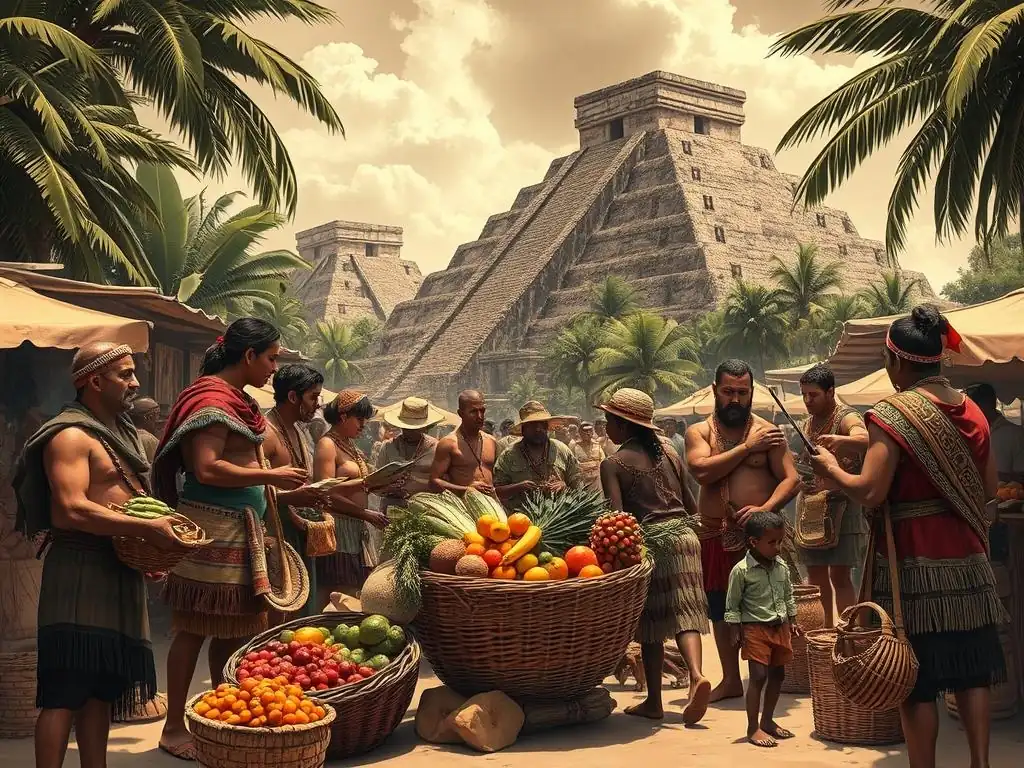
Pre-Columbian Civilizations and Their Economic Calculations
Before European colonization, Mesoamerican civilizations developed complex systems of mathematics that were intricately tied to trade and economic activities. These systems were not merely abstract concepts but practical tools that facilitated commerce, resource management, and the overall functioning of society.
Mesoamerican trade mathematics history reveals that societies like the Aztecs, Maya, and Olmecs utilized counting systems, geometry, and an understanding of ratios in their trade practices. They implemented base-20 (vigesimal) counting systems, which were well-suited for their needs in calculations related to trade goods, land measurement, and population assessments. For instance, the Maya developed a sophisticated numeral system that included the concept of zero, enabling more complex calculations and record-keeping.
The economic calculations of these civilizations were closely linked with their calendars. The Maya, in particular, employed their Long Count calendar to track agricultural cycles, which directly influenced trade activities. By understanding seasonal patterns, traders could optimize their exchanges, ensuring the availability of goods when demand was highest.
In addition to numerical systems, the use of codices and pictorial representations allowed these civilizations to document trade transactions. The depiction of goods, weights, and measures in these records illustrates the advanced understanding of mathematics that was prevalent in Mesoamerican societies. This historical context underscores the significance of mathematics in facilitating trade and economic growth across the region.
Case Studies of Major Mesoamerican Trade Centers
Teotihuacan: A Hub of Economic Activity
Teotihuacan, one of the largest urban centers in ancient Mesoamerica, thrived between the 1st and 7th centuries CE. Its role as a trade hub was pivotal, with a unique blend of mathematics and commerce driving its economic success. The city was strategically located near abundant resources, facilitating the exchange of goods such as obsidian, textiles, and agricultural products.
Mathematics played a crucial role in the organization of trade within Teotihuacan. The inhabitants implemented standardized weights and measures, allowing for fair trade practices. Archaeological evidence suggests that merchants used calibrated scales to ensure that transactions were equitable, enhancing trust between traders. This practice not only streamlined commerce but also fostered a thriving market environment.
Furthermore, Teotihuacan's influence extended beyond its borders, as it established trade networks with other Mesoamerican cultures. The city's mathematical systems allowed for efficient communication of trade agreements and the calculation of long-distance trade routes. The economic strategies developed in Teotihuacan can be seen as foundational to the trade practices that would later characterize the region.
The Maya Civilization: Advanced Trade Techniques
The Maya civilization, flourishing from approximately 250 to 900 CE, is renowned for its sophisticated understanding of mathematics and its application in trade. The Maya were adept at using their unique numeral system for various economic activities, including calculating the value of goods and understanding trade dynamics.
Maya traders utilized intricate bartering systems, employing mathematics to assess the worth of different commodities. They developed a deep understanding of ratios, which helped them determine the optimal exchange rates between various goods. This mathematical approach was particularly important in regions where resources varied significantly, allowing traders to maximize their profits.
Additionally, the Maya's use of calendars for agricultural planning directly influenced their trade. By calculating planting and harvesting cycles, they could predict the availability of surplus goods, which were essential for trade. This foresight enabled the Maya to engage in long-distance trade, exchanging their surplus corn and cacao for luxury items such as jade and textiles.
The advanced trade techniques of the Maya civilization underscore the importance of Mesoamerican trade mathematics history as a foundation for economic interaction and cultural exchange in the pre-Columbian Americas. Through their innovative use of mathematics, the Maya established a robust trade network that contributed to their cultural and economic prosperity.
Mesoamerican Trade Mathematics in Practice
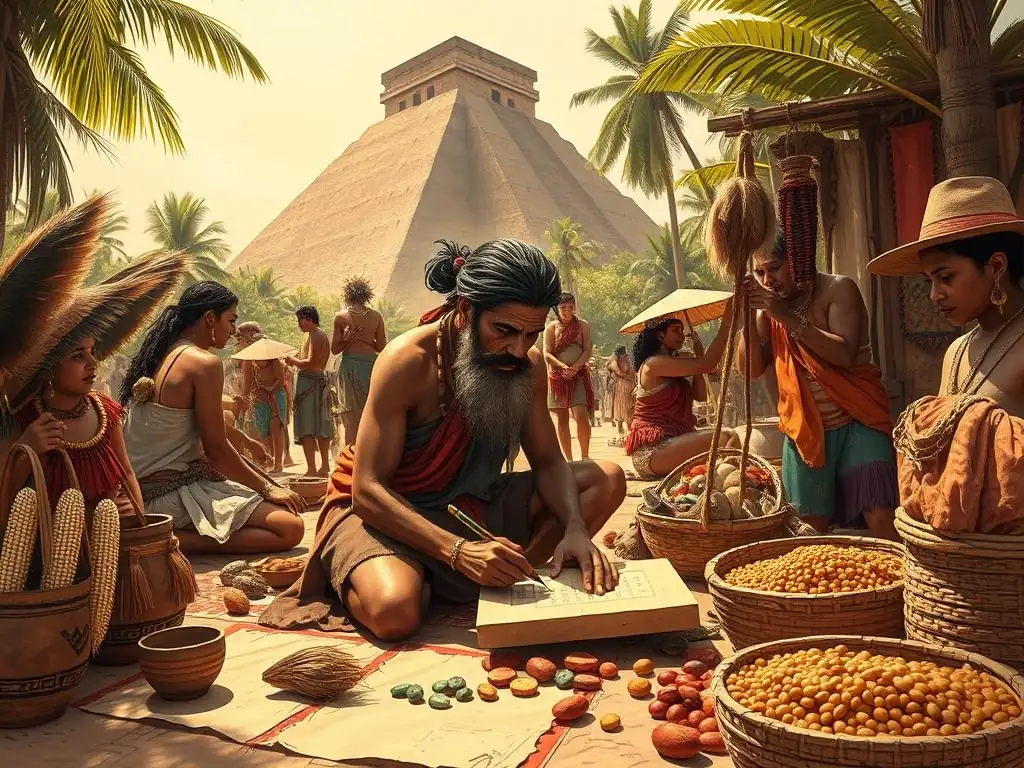
Mesoamerican civilizations, particularly the Maya and Aztec, developed sophisticated mathematical systems that were integral to their trade practices. These systems not only facilitated economic transactions but also reflected their advanced understanding of mathematics. The use of numerical systems, alongside physical goods, enabled these societies to engage in complex trade networks that spanned vast distances.
Calculating Trade Values and Exchanges
Mesoamerican trade mathematics was predominantly based on a vigesimal (base-20) numerical system, which was essential for calculating trade values. This system allowed traders to perform calculations involving large quantities of goods, such as textiles, jade, cacao, and obsidian.
-
Units of Measure:
- Mesoamericans employed specific units of measure for various commodities. For instance:
- Cacao beans were often used as currency.
- Cotton cloth could be quantified in lengths, with specific markings denoting units.
- Mesoamericans employed specific units of measure for various commodities. For instance:
-
Trade Calculations:
- Traders used simple arithmetic to determine the value of goods exchanged. For example:
- If 10 bags of maize were traded for 2 bags of cacao, the calculation would involve determining the ratio of goods, often expressed in terms of how many units of one commodity equated to another.
- Multiplication and division were common practices, as traders needed to calculate total values quickly. For instance:
-
If one bag of cacao was worth 50 cacao beans, a trader exchanging 5 bags would need to calculate:
\[
5 \text{ bags} \times 50 \text{ beans/bag} = 250 \text{ beans}
\]
-
- Traders used simple arithmetic to determine the value of goods exchanged. For example:
-
Barter and Value Assessment:
- The assessment of value in barter systems was often based on availability and demand. Traders had to utilize their arithmetic skills to establish fair exchanges, ensuring mutual benefits in transactions.
Record Keeping and Accounting Practices
Effective record-keeping was crucial for managing trade transactions and understanding economic relationships. Mesoamerican societies excelled in maintaining detailed accounts of their trade activities, which was facilitated by their mathematical capabilities.
- Codices and Hieroglyphs:
- The Maya, in particular, utilized codices—foldable books made from bark paper—to document trade transactions. These codices included:
- Hieroglyphic symbols representing numbers and commodities.
- Illustrations that depicted the goods being traded, assisting in visual record-keeping.
- The Maya, in particular, utilized codices—foldable books made from bark paper—to document trade transactions. These codices included:
- Accounting Systems:
- Complex accounting methods were in place, enabling traders to track debts, credits, and the flow of goods. Some practices included:
- Tally sticks or notched sticks were used to record transactions and quantities.
- Knotting systems, akin to the Inca quipu, helped in keeping numerical records, although direct evidence of such practices in Mesoamerica is limited.
- Complex accounting methods were in place, enabling traders to track debts, credits, and the flow of goods. Some practices included:
- Economic Forecasting:
- By keeping detailed records, traders could analyze past transactions to make predictions about future trade dynamics. This was essential for:
- Managing supply and demand.
- Anticipating seasonal changes affecting trade routes and markets.
- By keeping detailed records, traders could analyze past transactions to make predictions about future trade dynamics. This was essential for:
The integration of mathematics in Mesoamerican trade practices was pivotal in shaping their economic landscapes. The ability to calculate, record, and analyze trade values not only facilitated daily transactions but also contributed to the overall prosperity and complexity of Mesoamerican civilizations. The legacy of these practices can still be observed in contemporary accounting and trade systems around the world.
The Impact of Mesoamerican Trade Mathematics on Later Civilizations
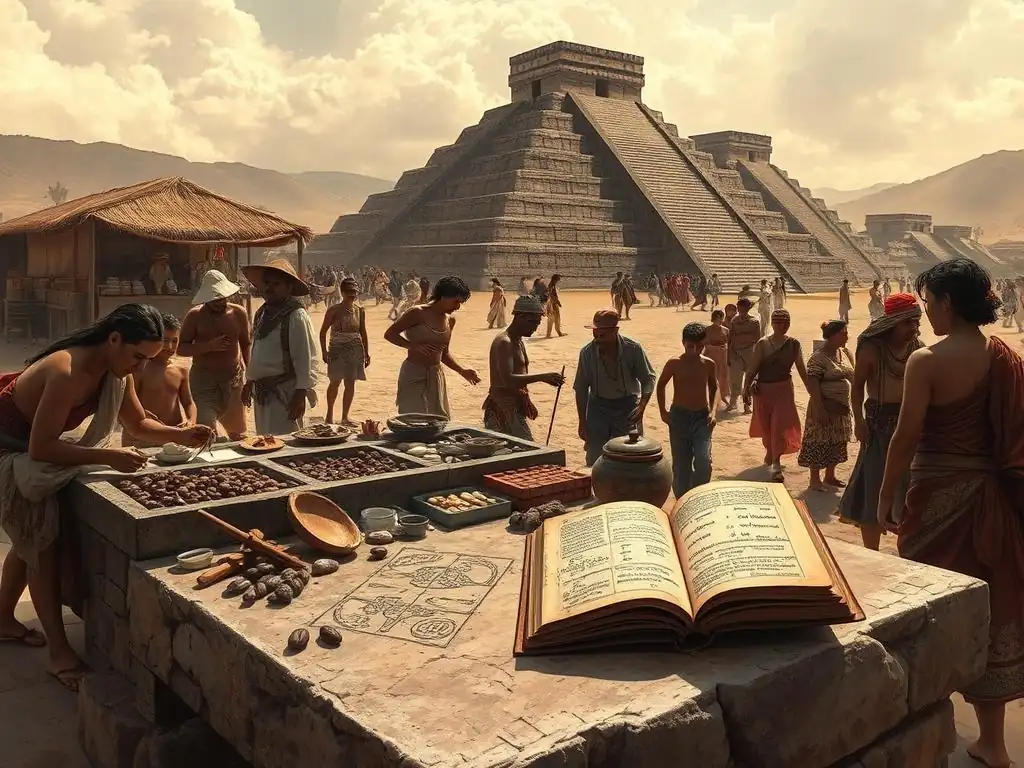
Influence on Post-Colonial Economic Systems
Mesoamerican trade mathematics played a pivotal role in shaping the economic systems that emerged in the post-colonial era. The advanced numerical and accounting methods developed by civilizations such as the Maya and the Aztecs laid the groundwork for understanding economic transactions, resource allocation, and trade logistics. These civilizations employed a base-20 counting system, which was not only sophisticated but also practical for their extensive trade networks.
One of the most significant contributions was the use of codices, which documented trade agreements, inventory management, and taxation. These codices used pictographs and symbols that represented various goods, quantities, and their respective values. For example, the Maya codices included detailed accounts of cacao, textiles, and other commodities critical to their economy. This method of record-keeping allowed for a more organized and systematic approach to trade, which influenced later economic practices in the region.
- Key Features of Mesoamerican Trade Mathematics:
- Base-20 numeral system: Facilitated complex calculations.
- Codices: Recorded trade transactions and agreements.
- Pictographic symbols: Represented goods and quantities.
The transition from these indigenous practices to colonial systems involved a complex interplay of adaptation and resistance. As European powers established their dominance, they integrated local mathematical methodologies into their own economic frameworks. This fusion resulted in hybrid systems that retained elements of Mesoamerican trade mathematics, evidenced in the way colonial economies tracked resources and managed trade routes.
Lasting Legacy of Mesoamerican Trade Mathematics
The legacy of Mesoamerican trade mathematics extends far beyond the immediate economic systems of the post-colonial period. Its influence can be seen in various aspects of modern economic practices in the Americas. The foundational principles of accounting, record-keeping, and trade calculations established by Mesoamerican cultures continue to resonate today.
- Modern Applications:
- Accounting systems: Many contemporary accounting methods can trace their origins back to the systematic approaches used in Mesoamerican trade.
- Mathematical education: The emphasis on practical applications of mathematics in trade laid the groundwork for educational systems that prioritize real-world problem-solving.
- Cultural heritage: The mathematical achievements of these civilizations are celebrated as part of the cultural identity of many indigenous communities today.
The integration of Mesoamerican trade mathematics into global practices illustrates the resilience and adaptability of these ancient systems. They not only provided immediate benefits to trade and economics but also contributed to a broader understanding of mathematics as a tool for societal development. This enduring legacy serves as a reminder of the rich intellectual traditions that existed in the Americas long before European contact, highlighting the importance of recognizing and incorporating indigenous knowledge in contemporary discussions of mathematics and economics.
Conclusion
Summary of Mesoamerican Trade Mathematics History
The history of Mesoamerican trade mathematics is a fascinating exploration of how indigenous civilizations like the Maya and Aztec utilized sophisticated mathematical systems to facilitate commerce and economic transactions. These societies developed a unique system of numerical representation that included the use of base-20 (vigesimal) counting, which allowed for complex calculations essential for trade.
Key components of Mesoamerican trade mathematics included:
- Codices and Glyphs: The use of pictorial codices and glyphs for recording transactions and trade agreements.
- Counting Systems: Adoption of counting systems that enabled merchants to quantify goods, track inventory, and manage resources effectively.
- Calendrical Calculations: Integration of calendars for timing agricultural cycles, which directly influenced trade seasons and market activities.
The mathematics employed in trade not only facilitated economic exchanges but also reflected the cultural and social structures of Mesoamerican societies. By analyzing artifacts and historical records, researchers have uncovered evidence of advanced mathematical knowledge that underscores the significance of these indigenous cultures in shaping early economic practices in the Americas.
The Importance of Understanding Indigenous Mathematical Systems in Trade
Understanding indigenous mathematical systems, particularly in the context of Mesoamerican trade, is crucial for several reasons:
- Cultural Appreciation: Recognizing the complexity of Mesoamerican mathematics fosters a deeper appreciation for the intellectual achievements of these civilizations. It challenges the perception of pre-Columbian societies as primitive and highlights their advanced understanding of mathematics and commerce.
- Economic Insights: Studying trade mathematics provides insight into the economic structures of ancient societies. By examining how they calculated value, managed resources, and conducted trade, we gain valuable knowledge about their priorities, social organization, and interactions with neighboring cultures.
- Modern Implications: The mathematical principles developed by Mesoamerican cultures can inform contemporary discussions about economics and trade. Understanding these indigenous systems may inspire innovative approaches to modern economic challenges, particularly in resource management and sustainability.
- Preservation of Knowledge: Engaging with the history of Mesoamerican trade mathematics is essential for the preservation of indigenous knowledge systems. It ensures that the contributions of these cultures are recognized and valued in the broader narrative of human history.
The examination of Mesoamerican trade mathematics history reveals a rich tapestry of economic ingenuity that shaped the civilizations of the Americas. This understanding not only honors the legacy of indigenous cultures but also enriches our contemporary perspectives on mathematics and trade.
Frequently Asked Questions
What role did mathematics play in Mesoamerican trade?
Mathematics was essential for trade in Mesoamerica, enabling merchants to calculate values, quantities, and distances, which enhanced their ability to conduct complex transactions effectively.
How did Mesoamerican civilizations develop their mathematical systems?
Mesoamerican civilizations, such as the Maya and Aztecs, developed sophisticated mathematical systems based on the base-20 and base-5 numerical systems, which were crucial for trade and astronomy.
What were some key achievements of Mesoamerican mathematics?
Key achievements included the development of the concept of zero, advanced calendar systems, and the creation of hieroglyphic writing that integrated mathematics for both economic and astronomical purposes.
How did trade influence the evolution of mathematical practices in Mesoamerica?
The demands of trade necessitated accurate mathematical practices, leading to innovations in measurement, record-keeping, and economic calculations that supported the growth of urban centers.
What is the lasting impact of Mesoamerican mathematics on modern society?
The lasting impact includes contributions to numerical systems, astronomy, and calendrical calculations, which have influenced contemporary mathematics and our understanding of economic systems.
Final Reflection: The Enduring Legacy of Mesoamerican Trade Mathematics
Mesoamerican trade mathematics history is not just a relic of the past; it is a testament to the ingenuity and sophistication of ancient civilizations that shaped economic practices still relevant today. The intricate calculations and systems developed by these cultures laid the groundwork for modern trade and commerce, illustrating how mathematics can transcend time and influence economic structures. The precision and complexity of their methods remind us that the foundations of our current economic systems are deeply rooted in the innovative spirit of our ancestors.
Mesoamerican mathematics has profoundly influenced our understanding of trade, commerce, and economic interactions. The legacy of these ancient calculations continues to resonate in contemporary society, where the principles of trade and value assessment are pivotal in our global economy. As we navigate an increasingly interconnected world, it is essential to recognize the contributions of these civilizations. Mathematics is the language with which God has written the universe.
– Galileo Galilei. This quote encapsulates the idea that the mathematical frameworks established by Mesoamerican cultures were not merely practical tools but also a means of understanding and interpreting the world around them.
As we reflect on the lessons of Mesoamerican trade mathematics, let us consider how we can apply these insights to our own lives and communities. How can we harness the power of mathematics and trade to foster collaboration and innovation in our modern economy? I invite you to explore the ways in which these ancient practices can inspire your own economic endeavors, encouraging a deeper appreciation for the interconnectedness of history, culture, and mathematics. Embrace the legacy of Mesoamerican trade mathematics and let it guide you in shaping a more equitable and prosperous future.
Unveil the Power of Historical Trade Strategies!
Thank you for taking the time to explore the fascinating world of Mesoamerican mathematics and its profound impact on trade and civilization. By understanding these ancient calculations, you’ve gained insights into how economic practices shaped societies and influenced cultures. Now, it’s time to take that knowledge and put it into action!
Here are a few ways you can dive deeper and share this incredible history:
- Engage with local history: Visit a nearby museum or cultural center that showcases indigenous mathematics or trade practices, and learn more about their relevance today.
- Share your insights: Discuss what you've learned with friends or on social media— how can the wisdom of the past inform our modern economic decisions?
- Explore further: Read additional literature about indigenous contributions to mathematics and trade; you may discover surprising connections to contemporary practices!
What aspect of Mesoamerican trade calculations intrigues you the most, and how do you think these ancient strategies could inspire modern economic practices?