
Sacred Geometry: The Mathematic Systems Embedded in Indigenous Astronomical Practices

Welcome to Indigenous Civilizations of the Americas, where we invite you to journey through the rich tapestry of cultures that flourished long before European shores were reached. In our featured article, "Sacred Geometry: The Mathematic Systems Embedded in Indigenous Astronomical Practices," we delve into the fascinating world of indigenous astronomical practices systems. Discover how ancient civilizations harnessed the cosmos, intertwining mathematics with spirituality and leaving an indelible mark on our understanding of the universe. Prepare to be enlightened and inspired as you explore the achievements that shaped the very foundation of these remarkable societies.
- Introduction to Sacred Geometry in Indigenous Astronomical Practices
- Historical Context of Indigenous Astronomical Practices
- Core Concepts of Sacred Geometry in Indigenous Practices
- Mathematical Systems Embedded in Indigenous Astronomy
- Comparative Analysis of Indigenous Astronomical Practices Systems
- Contemporary Relevance of Sacred Geometry in Indigenous Astronomy
- Conclusion: The Legacy of Indigenous Astronomical Practices and Sacred Geometry
-
Frequently Asked Questions
- What are indigenous astronomical practices?
- How did sacred geometry influence indigenous cultures?
- What role did mathematics play in indigenous societies?
- Can you explain the connection between astronomy and spirituality in indigenous cultures?
- What is the significance of studying indigenous astronomical systems today?
- Final Reflection: Embracing the Wisdom of Indigenous Astronomical Practices
- Embrace the Wisdom of Sacred Geometry!
Introduction to Sacred Geometry in Indigenous Astronomical Practices
The concept of sacred geometry encompasses a profound mathematical system that intertwines with the spiritual and cultural fabric of many indigenous civilizations throughout the Americas. This intricate relationship between mathematics and astronomy reflects a deep understanding of the cosmos, which was pivotal to the survival, navigation, and agricultural practices of these societies long before European colonization.
In this article, we will delve into the remarkable systems of sacred geometry that underpinned indigenous astronomical practices, highlighting their significance and the lasting impact they have had on contemporary understanding of both mathematics and astronomy. By exploring these sophisticated mathematical frameworks, we aim to illuminate the brilliance of these cultures and acknowledge their contributions to the broader field of science.
Definition of Sacred Geometry
Sacred geometry refers to the geometric principles and patterns that are believed to have spiritual significance and are often found in the architecture, art, and cosmological understanding of various cultures. In the context of indigenous civilizations, sacred geometry is characterized by:
- Symbolic representations: Geometric shapes such as circles, triangles, and spirals are often imbued with meaning and are used to connect physical and spiritual realms.
- Mathematical precision: Many indigenous societies employed advanced mathematical concepts to create structures and maps that align with celestial bodies.
- Cultural significance: Sacred geometric designs often embody the beliefs, mythology, and cosmology of a culture, serving as a medium for storytelling and spiritual connection.
Importance of Sacred Geometry in Indigenous Cultures
The importance of sacred geometry in indigenous cultures cannot be overstated. It served multiple vital roles, including:
- Navigation: Many indigenous groups used geometric patterns to guide their travels and hunting expeditions, aligning their paths with celestial bodies like the sun and stars.
- Agricultural planning: The planning of agricultural fields was often based on astronomical observations, which relied on geometric alignments to maximize crop yield.
- Ceremonial practices: Rituals and ceremonies frequently incorporated sacred geometric designs, creating a physical representation of the cultural and spiritual beliefs of the people.
These systems of sacred geometry not only facilitated practical applications but also fostered a deeper connection between the indigenous peoples and their environment, emphasizing the harmony between nature and human existence.
Overview of Indigenous Astronomical Practices Systems
Indigenous astronomical practices systems are a testament to the advanced understanding of the cosmos that indigenous cultures possessed. These systems typically involved:
- Celestial observations: Indigenous astronomers meticulously observed the movements of celestial bodies, recording their patterns and cycles.
- Calendrical systems: Many cultures developed complex calendars based on lunar and solar cycles, which were essential for agricultural and ceremonial activities.
- Architectural alignment: Structures such as temples and observatories were often aligned with astronomical events, allowing for precise observation of solstices, equinoxes, and other celestial phenomena.
These practices illustrate the remarkable achievements of indigenous civilizations in mathematics and astronomy, showcasing their ability to integrate sacred geometry into their understanding of the universe. By recognizing the sophistication of these systems, we can better appreciate the depth of indigenous knowledge and its enduring impact on modern scientific thought.
Historical Context of Indigenous Astronomical Practices
Ancient Civilizations and Their Understanding of the Cosmos
Indigenous civilizations across the Americas developed intricate astronomical practices that were deeply intertwined with their cultural, spiritual, and agricultural lives. These societies viewed the cosmos not merely as a backdrop to their existence but as an active participant in their daily lives. For instance, the Maya and the Inca meticulously observed celestial bodies, allowing them to create complex calendars that guided agricultural activities, religious ceremonies, and social events.
The Maya civilization, flourishing in Mesoamerica, constructed observatories such as the one at Uxmal, where they could track the movements of celestial objects. Their understanding of the cosmos was sophisticated, revealing a deep engagement with astronomical phenomena. They documented solar cycles, lunar phases, and the movements of planets, particularly Venus, which held significant cultural importance.
Similarly, the Inca, who thrived in the Andes, revered the sun as a deity and developed the Intihuatana stone, a ritual stone associated with astronomy. This stone served as an astronomical observatory, aligning with the sun during solstices and equinoxes, demonstrating the Inca's advanced understanding of celestial events.
The Role of Mathematics in Indigenous Astronomy
Mathematics played a crucial role in indigenous astronomical practices, serving as a tool for understanding and predicting celestial events. Indigenous cultures utilized various mathematical systems, often involving geometry and numerical symbolism, to interpret the cosmos.
For example, the Maya employed a vigesimal (base-20) numeral system, which was instrumental in their calendrical computations. Their mathematical prowess allowed them to create the Long Count calendar, which tracked long periods of time, showcasing their ability to conceptualize vast temporal scales.
In addition to numerical systems, geometry was a fundamental aspect of these cultures' astronomical practices. Many indigenous societies created sacred geometrical patterns reflected in their architecture and ceremonial sites, which were often aligned with celestial events. These alignments facilitated their understanding of seasonal changes, agricultural cycles, and ritual timing.
Key Indigenous Cultures and Their Astronomical Systems
Several indigenous cultures across the Americas developed unique astronomical systems that highlight their achievements in understanding the cosmos:
- Maya Civilization:
- Developed a sophisticated calendar system, including the Tzolk'in (260-day ritual calendar) and Haab' (365-day solar calendar).
- Created the Codex of Dresden, which contains detailed astronomical tables and predictions.
- Inca Empire:
- Utilized solar observations for agricultural planning, with the Intihuatana stone serving as a significant astronomical tool.
- Employed a calendar that divided the year into agricultural and ceremonial periods based on celestial events.
- Navajo Culture:
- Integrated astronomy into their traditional stories and myths, with the stars playing a significant role in their worldview.
- Developed a lunar calendar that guided agricultural practices and community rituals.
- Mississippian Culture:
- Constructed mound complexes, such as Cahokia, that were oriented to solar events, showcasing their understanding of celestial cycles.
- Used astronomical alignments to mark planting seasons and community events.
These cultures exemplify the rich tapestry of indigenous astronomical practices systems, demonstrating a profound connection between mathematics, the cosmos, and daily life. Through their observations and calculations, these civilizations not only advanced their understanding of the universe but also laid the groundwork for future generations' astronomical exploration.
Core Concepts of Sacred Geometry in Indigenous Practices
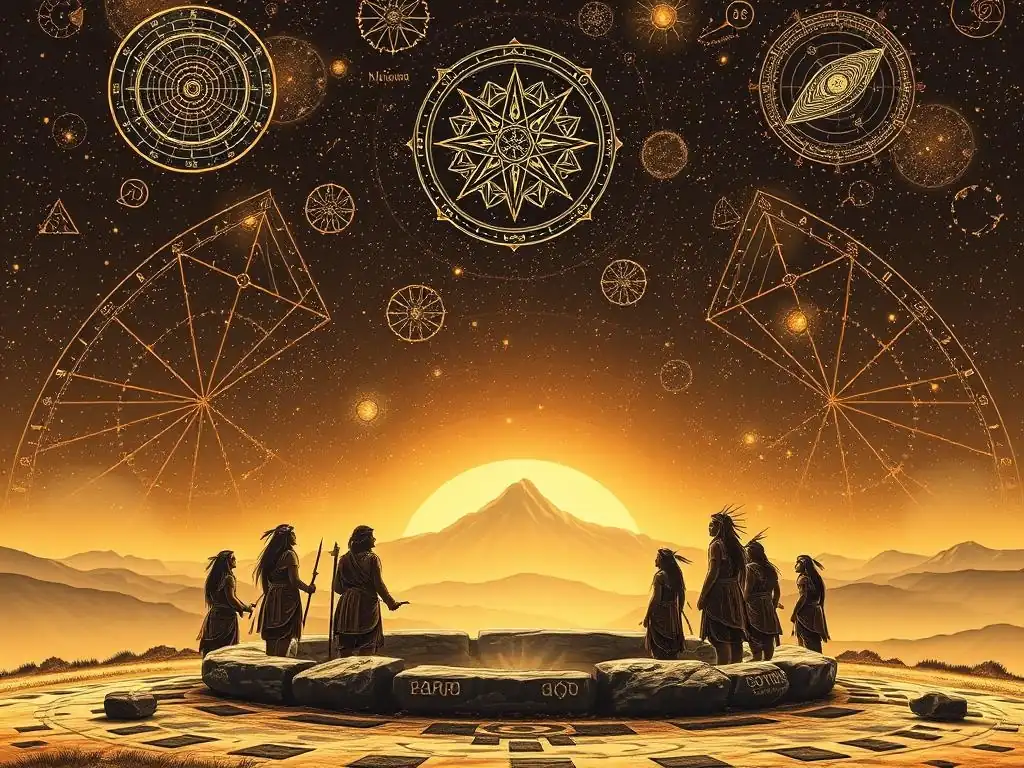
Sacred geometry plays a fundamental role in the indigenous astronomical practices systems of the Americas. This ancient mathematical framework embodies the belief that geometric shapes and ratios are not merely abstract constructs, but rather reflections of the natural world and its underlying cosmic order. Indigenous cultures utilized these geometric principles to interpret celestial phenomena, guide agricultural cycles, and structure their societies. By understanding the core concepts of sacred geometry, we gain insight into how these civilizations viewed their relationship with the universe.
Geometric Shapes and Their Symbolism in Astronomy
Geometric shapes hold profound significance in indigenous astronomical practices systems, serving as tools for understanding celestial events and phenomena. The most prominent shapes include:
- Circles: Often representing the cyclical nature of life and time, circles are frequently associated with celestial bodies such as the sun and moon. They symbolize unity and eternity, reflecting the indigenous belief in the interconnectedness of all things.
- Triangles: These shapes often signify stability and strength. In astronomy, triangles can represent the alignment of stars or the triangular paths of celestial bodies in the sky, reflecting the dynamic relationships between different astronomical entities.
- Squares and Rectangles: These shapes are commonly linked to the earth and terrestrial structures. They represent the physical world and are often used in the design of sacred spaces, such as temples and ceremonial grounds, where astronomical observations take place.
- Spirals: Symbolizing growth, evolution, and the unfolding of life, spirals appear in various indigenous artworks and architectural designs. In astronomical contexts, spirals can represent the trajectory of celestial movements or the cyclical patterns observed in nature.
Understanding these shapes allows us to appreciate how indigenous cultures integrated their mathematical systems with their spiritual beliefs, fostering a deep connection between their astronomical observations and their worldview.
The Significance of Patterns and Ratios
Patterns and ratios are essential components of sacred geometry, providing a framework for interpreting the cosmos within indigenous cultures. The significance of these mathematical concepts can be seen in several key areas:
- Alignment and Orientation: Many indigenous cultures designed their structures and ceremonial practices in alignment with celestial events, such as solstices and equinoxes. The ratios derived from celestial observations helped determine the optimal positioning of buildings and sacred sites.
- Calendrical Systems: Indigenous astronomical practices systems often employed intricate patterns and ratios to develop calendars. These calendars were based on the cycles of the sun, moon, and stars, allowing communities to track seasonal changes and agricultural timelines effectively.
- Symbolic Representations: Patterns are not only functional but also carry symbolic meanings. For instance, the Fibonacci sequence, which appears in nature, is mirrored in indigenous art and architecture, illustrating the belief that mathematical ratios are a reflection of the natural order.
- Cultural Narratives: The use of patterns often intertwines with storytelling, where geometric forms serve as visual representations of cultural myths and legends. This reinforces the connection between astronomy, culture, and identity within indigenous communities.
By grasping the importance of patterns and ratios, we can see how indigenous peoples employed mathematical systems to navigate their world, ensuring harmony between their cultural practices and the cosmos.
Examples of Sacred Geometric Patterns in Indigenous Art
Indigenous art is rich with sacred geometric patterns that reflect the astronomical knowledge and beliefs of various cultures. Some notable examples include:
- Mayan Glyphs: The ancient Maya incorporated complex geometric patterns into their hieroglyphs and codices, often depicting celestial events such as eclipses and planetary alignments. These patterns served to record astronomical observations and convey their significance within the context of Mayan cosmology.
- Navajo Sand Paintings: In Navajo culture, sand paintings used in healing ceremonies illustrate sacred geometric designs that represent the universe's harmony. The arrangements of shapes and colors are carefully calculated, reflecting the balance between earth and sky.
- Inca Textiles: The Inca civilization employed geometric motifs in their textiles, which often symbolized astronomical events. Patterns such as stepped designs can represent the Andean mountain landscape and its celestial associations, linking the earth to the heavens above.
- Northwest Coast Indigenous Art: The indigenous peoples of the Pacific Northwest often utilized geometric patterns in their totem poles and carvings. These designs may symbolize animals or celestial beings, showcasing the interconnectedness of the natural and spiritual realms.
These examples illustrate how sacred geometric patterns are not only aesthetic but also serve as a vital means of expressing and preserving indigenous astronomical practices systems. Through art, these cultures convey their understanding of the cosmos and their place within it, ensuring that this knowledge is transmitted across generations.
Mathematical Systems Embedded in Indigenous Astronomy
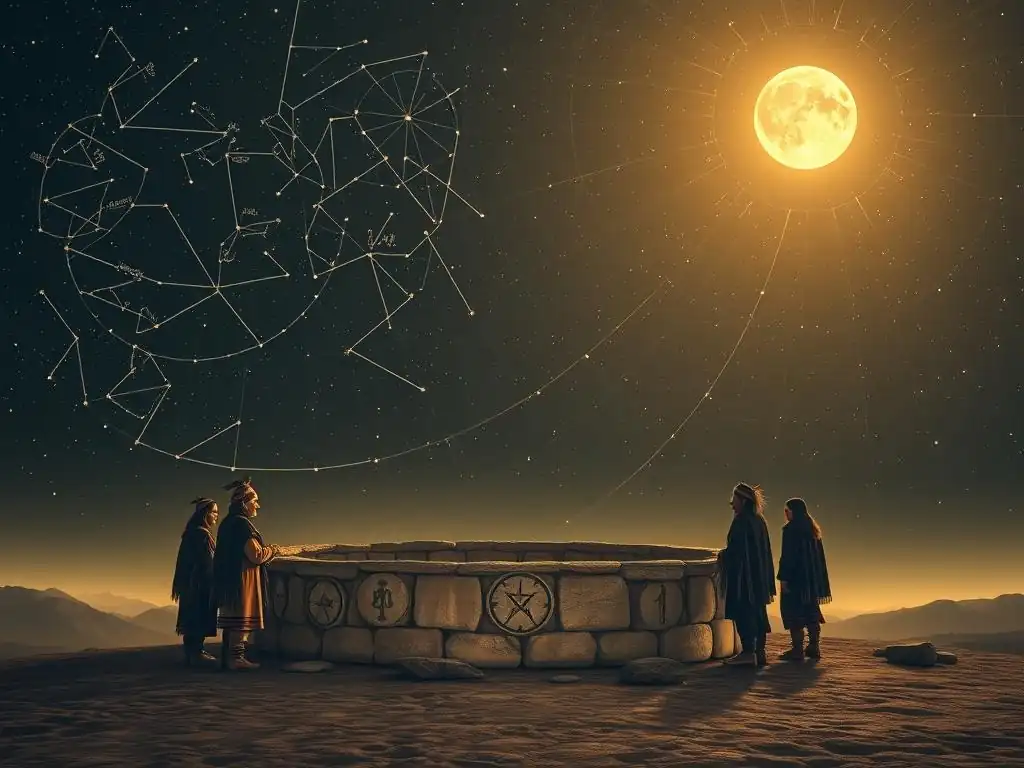
Indigenous civilizations across the Americas developed sophisticated mathematical systems that were deeply interwoven with their astronomical practices. These systems were not merely tools for measurement; they embodied spiritual beliefs and cultural narratives that expressed their relationship with the cosmos. The indigenous astronomical practices systems utilized geometric forms to interpret celestial movements and their implications for earthly life. Geometry became a language through which these societies communicated their understanding of the universe, reflected in their architecture, ceremonial sites, and daily activities.
Geometry played a crucial role in the celestial navigation techniques employed by various indigenous cultures. By observing the stars and celestial bodies, they created intricate geometric patterns that guided their movements across vast landscapes. For example:
- Star Maps: Indigenous navigators created star maps, often using geometric shapes such as triangles and circles to represent constellations and their relative positions. These maps allowed them to identify seasonal changes and navigate effectively during migrations.
- Landmarks and Celestial Alignments: Many indigenous peoples aligned significant landmarks like mountains and rivers with celestial bodies. This alignment often involved geometric principles, where the angles and distances were calculated to ensure accuracy in navigation.
- Sacred Geometry: The concept of sacred geometry was prevalent among many indigenous cultures. They believed that certain geometric shapes, such as the spiral or the pentagon, held spiritual significance and were manifestations of cosmic order. This understanding influenced their navigation and orientation in both physical and metaphysical realms.
Calculating Time and Seasons: Calendrical Systems
Calendrical systems among indigenous cultures were sophisticated mathematical constructs that integrated astronomy, agriculture, and spirituality. The precision with which these societies calculated time and seasons is a testament to their advanced understanding of geometry and astronomical cycles. Key aspects include:
- Solar and Lunar Cycles: Many indigenous civilizations, such as the Maya, developed complex calendars based on the solar year and lunar cycles. They utilized geometric calculations to determine the length of these cycles, which were then represented in their calendrical systems.
- Equinoxes and Solstices: The alignment of structures, such as the famous Stonehenge-like sites across the Americas, indicates that indigenous peoples had a deep understanding of solstices and equinoxes. They used geometric markers to track these critical astronomical events, which were integral to their agricultural practices.
- Intercalation Techniques: To maintain the accuracy of their calendars, some indigenous cultures employed intercalation—adding days or months to their calendars based on geometric calculations of celestial events. This ensured that their agricultural cycles remained synchronized with the seasons.
Alignments of Structures with Astronomical Events
The architectural achievements of indigenous civilizations often exhibited precise alignments with astronomical events, showcasing their mathematical prowess and understanding of geometry. Notable examples include:
- Pyramids and Temples: Structures like the Pyramid of the Sun in Teotihuacan and the temples of the Maya were constructed with careful geometric precision, aligned with the movements of the sun, moon, and stars. These alignments were not only for observation but also served ceremonial purposes during significant astronomical events.
- Cairns and Stone Circles: Various indigenous groups constructed cairns and stone circles that functioned as astronomical observatories. These structures were designed with specific geometric shapes to mark the rising and setting of celestial bodies, facilitating the tracking of time and seasonal changes.
- Cultural Significance: The alignment of buildings and monuments with celestial events was imbued with cultural significance, reflecting the beliefs and practices of indigenous societies. The geometric patterns inherent in these designs illustrated their worldview, emphasizing the interconnectedness of the earth and the cosmos.
The mathematical systems embedded in indigenous astronomical practices reveal a profound understanding of geometry and its applications in navigating, measuring time, and constructing significant structures. These intricate systems not only facilitated survival but also reinforced cultural identities and spiritual beliefs, leaving a lasting legacy that continues to resonate in contemporary discussions of indigenous knowledge and achievements.
Comparative Analysis of Indigenous Astronomical Practices Systems
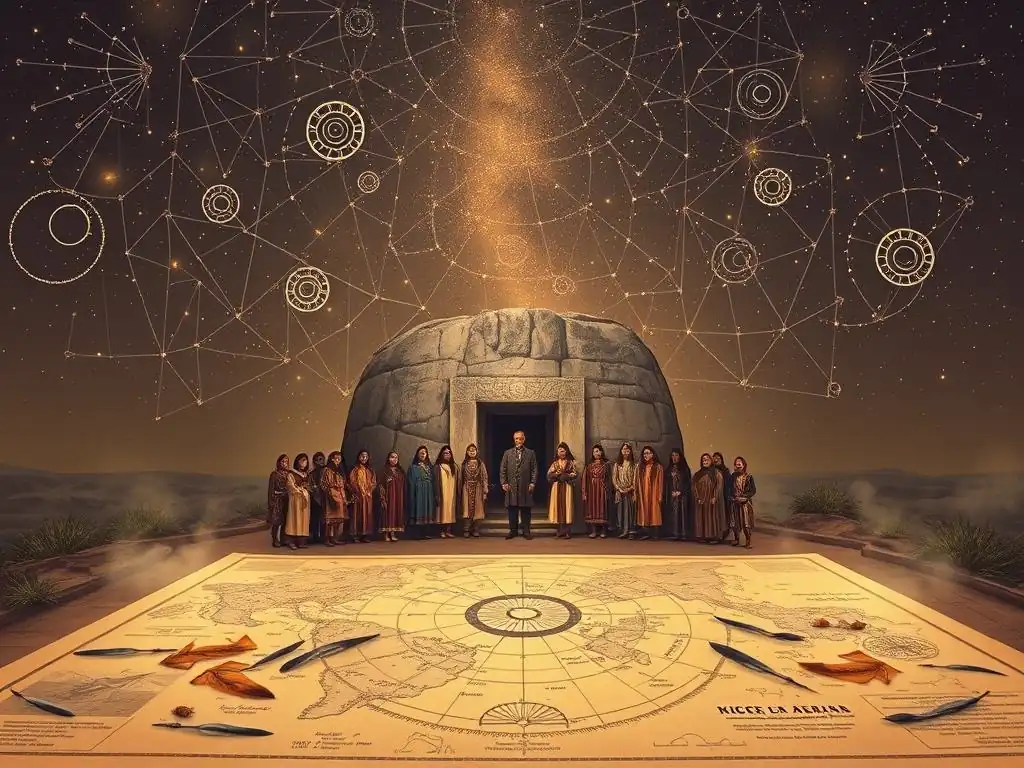
Similarities Across Different Indigenous Cultures
Across various indigenous cultures in the Americas, astronomical practices reveal a fascinating array of similarities that reflect a profound understanding of celestial phenomena. Many indigenous peoples, from the Maya to the Inca, integrated their observations of the heavens into their daily lives, agricultural cycles, and spiritual beliefs.
- Celestial Alignments:
- Numerous cultures constructed ceremonial structures aligned with celestial events, such as solstices and equinoxes. For example:
- The Maya built pyramids like El Castillo at Chichen Itza, which casts a serpent shadow during the equinox.
- The Inca used the Coricancha temple, aligned with the sun's movements, to mark the Inti Raymi festival.
- Numerous cultures constructed ceremonial structures aligned with celestial events, such as solstices and equinoxes. For example:
- Calendrical Systems:
- Indigenous civilizations developed intricate calendrical systems based on celestial movements.
- The Maya utilized a complex calendar system comprising the Tzolk'in (260-day calendar) and the Haab' (365-day calendar), which together created a 52-year cycle known as the Calendar Round.
- The Pueblo peoples of the Southwest created calendars that guided agricultural planting based on the lunar cycle and solar positions.
- Indigenous civilizations developed intricate calendrical systems based on celestial movements.
- Symbolism and Mythology:
- Many indigenous cultures imbued their astronomical observations with rich mythological narratives. For instance:
- The Navajo view the stars as representations of their ancestors, influencing their spiritual practices.
- The Maya associated specific constellations with gods, which played a vital role in their rituals and agricultural practices.
- Many indigenous cultures imbued their astronomical observations with rich mythological narratives. For instance:
Distinct Features of Specific Indigenous Astronomical Systems
While there are notable similarities, each indigenous culture also exhibited unique characteristics in their astronomical systems that reflect their specific environments and societal needs.
- The Maya:
- Renowned for their advanced understanding of mathematics and astronomy, the Maya developed a base-20 numeral system and precise astronomical calculations:
- They could predict solar and lunar eclipses with remarkable accuracy.
- Their codices, such as the Dresden Codex, contain detailed astronomical tables and calculations.
- Renowned for their advanced understanding of mathematics and astronomy, the Maya developed a base-20 numeral system and precise astronomical calculations:
- The Inca:
- The Inca's astronomical practices were deeply intertwined with their agricultural economy:
- They utilized a simpler decimal system and created the Intihuatana stone as a ritualistic astronomical observatory, believed to connect the earth with celestial bodies.
- Their calendar was oriented primarily around the sun, emphasizing solar cycles crucial for agriculture in the Andean highlands.
- The Inca's astronomical practices were deeply intertwined with their agricultural economy:
- The North American Indigenous Tribes:
- Diverse tribes such as the Anishinaabe and Lakota employed a variety of celestial observations:
- The Anishinaabe used the lunar calendar to guide fishing and hunting seasons, while the Lakota tracked star constellations for their spiritual ceremonies.
- Their oral traditions preserved astronomical knowledge, passed down through generations.
- Diverse tribes such as the Anishinaabe and Lakota employed a variety of celestial observations:
The Influence of Environment on Astronomical Practices
The environments in which these indigenous cultures thrived played a crucial role in shaping their astronomical practices systems.
- Geographical Location:
- The unique landscapes influenced celestial observations. For instance:
- The Andean region's high altitudes provided clear skies, allowing the Inca to observe celestial bodies with minimal atmospheric distortion.
- The Mesoamerican lowlands, characterized by dense forests, required the Maya to create openings in their settlements for celestial observations.
- The unique landscapes influenced celestial observations. For instance:
- Climatic Conditions:
- Climatic variations also impacted the timing and methods of astronomical observations:
- In the arid Southwest, communities like the Hopi relied on the sun's position to determine seasons, essential for their agriculture.
- The coastal tribes of the Pacific Northwest utilized tidal movements, which correlated with lunar cycles, to inform fishing practices.
- Climatic variations also impacted the timing and methods of astronomical observations:
- Cultural Adaptations:
- Indigenous peoples adapted their practices based on both environmental challenges and resources:
- Cultures in harsher climates, such as the Inuit, developed navigation techniques using the stars to traverse vast icy landscapes.
- Conversely, those in fertile regions created elaborate agricultural calendars based on seasonal changes signaled by celestial events.
- Indigenous peoples adapted their practices based on both environmental challenges and resources:
The indigenous astronomical practices systems reflect a rich tapestry of knowledge that intertwines their understanding of the cosmos with their cultural and environmental contexts. Recognizing both the similarities and distinct features among these systems provides a deeper appreciation of the sophisticated ways indigenous cultures engaged with the universe around them.
Contemporary Relevance of Sacred Geometry in Indigenous Astronomy

Reviving Ancient Practices in Modern Contexts
In recent years, there has been a growing interest in the revival of ancient indigenous astronomical practices, particularly those involving sacred geometry. These practices not only reveal sophisticated mathematical systems used by indigenous cultures but also serve as a means of reconnecting contemporary communities with their ancestral heritage.
For example, many indigenous groups are rediscovering the significance of celestial alignments in their traditional ceremonies. The use of sacred geometry, such as the geometry of circles and triangles, plays a crucial role in these practices. Through workshops and community gatherings, elders share knowledge of how sacred shapes were used to navigate the skies, create calendars, and align structures with celestial bodies. This revival fosters a sense of identity and belonging, as participants engage with their cultural heritage.
Moreover, integrating these ancient practices into modern contexts has led to innovative applications in education, art, and community planning. For instance, local schools are beginning to include indigenous astronomical knowledge in their curricula, allowing students to explore both the mathematical principles and the cultural significance behind them. This not only enriches the educational experience but also helps solidify community ties to ancestral knowledge.
Educational Approaches to Indigenous Mathematics and Astronomy
Education plays a pivotal role in preserving and promoting indigenous astronomical practices. By incorporating sacred geometry into educational frameworks, students can gain a deeper understanding of both indigenous mathematics and the cultural narratives that accompany these systems.
Curriculum Development
Educators are increasingly designing curricula that reflect indigenous perspectives in mathematics and astronomy. This involves:
- Collaborating with Indigenous Elders: Engaging local indigenous leaders to provide authentic insights into sacred geometry and its applications.
- Hands-On Learning Activities: Facilitating projects that allow students to create their own sacred geometric designs and relate them to astronomical observations.
- Field Studies: Organizing visits to ancient sites where sacred geometry was applied, allowing students to experience the connection between geometry, culture, and astronomy firsthand.
These approaches not only enhance students' mathematical skills but also foster respect for indigenous knowledge systems. By framing indigenous astronomical practices within a mathematical context, students are encouraged to appreciate the sophistication of these ancient systems.
The Impact of Sacred Geometry on Indigenous Identity
Sacred geometry significantly influences the identity of indigenous communities by offering a profound connection to their ancestors and the cosmos. It embodies a worldview that sees mathematics, nature, and spirituality as interconnected.
Cultural Empowerment
The study and practice of sacred geometry empower indigenous people by:
- Reinforcing Cultural Values: The principles of sacred geometry often align with indigenous philosophies that emphasize harmony and balance in nature. This reinforcement helps maintain cultural traditions in a modern world.
- Promoting Community Engagement: As communities gather to explore and celebrate their mathematical heritage, they strengthen bonds and foster a collective identity rooted in shared knowledge.
- Encouraging Intergenerational Knowledge Transfer: The transmission of sacred geometric knowledge from elders to younger generations ensures the survival of these practices, preserving their cultural significance.
The contemporary relevance of sacred geometry in indigenous astronomical practices systems highlights the importance of these mathematical frameworks as vital cultural expressions. As indigenous communities continue to revive and educate others about their astronomical practices, they not only contribute to cultural resilience but also enrich the broader understanding of mathematics and astronomy in human history.
Conclusion: The Legacy of Indigenous Astronomical Practices and Sacred Geometry
Summary of Key Points
Indigenous astronomical practices systems across the Americas showcase a profound understanding of celestial phenomena, deeply interwoven with cultural and spiritual beliefs. These practices were not merely observational but were often governed by intricate mathematical systems, reflected in sacred geometry. Key points include:
- Celestial Alignments: Many indigenous cultures, including the Maya and the Inca, developed precise astronomical calendars based on the movements of celestial bodies, utilizing sacred geometry to align their architectural structures with the cosmos.
- Symbolic Representations: Sacred geometry served as a tool for encoding astronomical knowledge. For instance, the use of geometric patterns in pottery and textiles often conveyed complex astronomical information and cosmological beliefs.
- Community Engagement: Indigenous astronomical practices were communal activities, involving rituals and storytelling that reinforced social cohesion and cultural identity. These practices were vital for agricultural cycles, navigation, and seasonal events.
- Enduring Legacy: The mathematical systems embedded in these practices have influenced contemporary understandings of astronomy and mathematics, highlighting the sophisticated knowledge systems that existed long before European contact.
The Importance of Preserving Indigenous Knowledge Systems
Preserving indigenous knowledge systems, particularly those related to astronomy, is crucial for several reasons:
- Cultural Identity: Indigenous astronomical practices are integral to the cultural identity of many communities. They provide a sense of belonging and continuity, linking present generations with their ancestors.
- Ecological Insights: Many indigenous astronomers maintained a deep relationship with their environment, observing celestial events to inform agricultural practices. This ecological wisdom is invaluable in today’s context of climate change and environmental degradation.
- Interdisciplinary Learning: Engaging with indigenous knowledge systems can enrich modern scientific fields. By integrating traditional astronomical practices with contemporary science, researchers can foster a more holistic understanding of the universe.
- Advocacy and Rights: Acknowledging and preserving these systems supports indigenous rights and self-determination, providing communities with the tools to advocate for their cultural heritage and environmental stewardship.
Future Directions for Research in Indigenous Astronomy
The field of indigenous astronomy is ripe for further exploration, with several avenues for future research:
- Collaborative Projects: Establishing partnerships between indigenous communities and academic institutions can facilitate the documentation and study of traditional astronomical knowledge, ensuring that these practices are preserved and respected.
- Technological Integration: Employing modern technology, such as GIS and 3D modeling, can help visualize and analyze ancient astronomical sites and alignments, providing new insights into their significance.
- Cross-Cultural Comparisons: Researching the similarities and differences in indigenous astronomical practices across various cultures can illuminate broader patterns of human understanding of the cosmos, revealing universal themes in sacred geometry and mathematics.
- Public Education and Outreach: Increasing awareness of indigenous astronomical practices through educational programs and exhibitions can promote appreciation and respect for these knowledge systems, fostering a greater understanding of their relevance in today's world.
The legacy of indigenous astronomical practices and sacred geometry not only enriches our understanding of mathematics and astronomy but also underscores the importance of valuing and preserving these ancient knowledge systems for future generations.
Frequently Asked Questions
What are indigenous astronomical practices?
Indigenous astronomical practices refer to the systems of knowledge and techniques developed by various indigenous cultures in the Americas to observe and interpret celestial events, often tied to their spiritual beliefs and agricultural cycles.
How did sacred geometry influence indigenous cultures?
Sacred geometry served as a foundational element in the art and architecture of indigenous cultures, reflecting their understanding of the universe and integrating their astronomical practices into daily life and ceremonial structures.
What role did mathematics play in indigenous societies?
Mathematics was essential for indigenous societies in their astronomical practices, enabling them to construct calendars, navigate, and make agricultural decisions based on celestial cycles.
Can you explain the connection between astronomy and spirituality in indigenous cultures?
In many indigenous cultures, astronomy was deeply intertwined with spirituality, where celestial bodies were often seen as deities or symbols, guiding their rituals and belief systems.
What is the significance of studying indigenous astronomical systems today?
Studying indigenous astronomical systems provides insight into the sophisticated knowledge and cultural heritage of these communities, emphasizing their contributions to science and mathematics while promoting a better understanding of diverse worldviews.
Final Reflection: Embracing the Wisdom of Indigenous Astronomical Practices
The intricate relationship between sacred geometry and indigenous astronomical practices systems remains profoundly relevant today, as we seek to reconnect with the natural world and understand our place within it. In an age dominated by technology and rapid advancement, the wisdom embedded in these ancient practices serves as a reminder of the balance and harmony that can be achieved through a deeper understanding of the cosmos. The mathematical systems that indigenous cultures have developed not only reveal their sophisticated knowledge of astronomy but also highlight the importance of integrating this wisdom into our modern lives.
The influence of indigenous astronomical practices continues to resonate within our cultural and social landscapes, inspiring a growing movement towards sustainability and respect for nature. These practices remind us that the universe is not merely a backdrop to our existence but a living entity that we are intricately connected to. As noted by cultural anthropologist David Lewis, Indigenous knowledge systems are not just a collection of facts; they are a way of knowing that encompasses the relationship between people, the land, and the cosmos.
This perspective encourages us to honor and learn from these systems, fostering a sense of responsibility towards our environment and each other.
As we reflect on the lessons drawn from sacred geometry and indigenous astronomical practices, let us embrace the call to action: to honor the wisdom of our ancestors and integrate their teachings into our daily lives. Consider how you can apply these insights to foster a deeper connection with the world around you, whether through mindfulness, sustainable practices, or a renewed appreciation for the stars above. By doing so, we not only pay homage to these rich traditions but also pave the way for a more harmonious future, where knowledge and nature coexist in balance.
Embrace the Wisdom of Sacred Geometry!
Thank you for diving into the fascinating world of Sacred Geometry and its profound connection with Indigenous astronomical practices! You’ve uncovered the mathematical beauty that has guided civilizations throughout history. Now, it's time to harness this knowledge in your own life and community.
Here are some actionable steps you can take:
- Explore your local culture and history: Visit museums or cultural centers to learn more about Indigenous practices in your area. Consider volunteering or participating in workshops that celebrate these traditions.
- Engage with community members: Share what you’ve learned about Sacred Geometry with your friends and family. Host a discussion or a creative night where you can craft geometric designs together.
- Reflect on your surroundings: Take a moment to observe the patterns in nature around you. Keep a journal of your findings and thoughts on how these designs can inspire your daily life.
What new insights or perspectives have you gained about the intersection of mathematics and cultural practices, and how will you share this knowledge with others?