
The Impact of European Colonization on Indigenous Writing and Communication Methods


Welcome to Indigenous Civilizations of the Americas, where we invite you to embark on a fascinating journey through the rich tapestry of cultures that flourished before European contact. In this exploration, we delve into the profound topic of Indigenous writing and communication, uncovering the innovative methods and systems that these civilizations developed to convey their stories, knowledge, and traditions.
As we examine "The Impact of European Colonization on Indigenous Writing and Communication Methods," prepare to discover how these profound legacies shaped the very fabric of history. Join us as we unravel the complexities and resilience of indigenous voices that continue to resonate today!
Introduction to Indigenous Writing and Communication
The rich tapestry of indigenous writing and communication methods in the Americas reflects the profound complexity and diversity of cultures that existed long before European contact. Indigenous civilizations developed their own unique systems of expression, utilizing various forms of writing, oral traditions, and symbolic communication to convey knowledge, history, and spirituality. This article delves into the effects of European colonization on these indigenous writing systems and communication methods, exploring how colonization disrupted and transformed these practices, leading to significant cultural shifts.
Overview of Indigenous Writing Systems
Indigenous writing systems in the Americas were as varied as the cultures that created them. For example, the Maya civilization developed a sophisticated hieroglyphic script that combined ideographic and phonetic elements, allowing for the recording of historical events, rituals, and astronomical data. Similarly, the Inca Empire relied on quipu, a system of knotted strings that conveyed information through color, length, and knot placement, functioning as a form of record-keeping and communication.
In regions where writing systems were not prevalent, oral traditions played a crucial role in preserving knowledge and culture. Storytelling, songs, and ceremonies served as vital means of transmitting history and values across generations. This emphasis on oral communication highlights the adaptability and resilience of indigenous cultures in maintaining their identities and heritage.
Importance of Communication Methods in Indigenous Cultures
Communication methods among indigenous peoples were not merely functional; they were deeply intertwined with cultural identity and community cohesion. For instance, the use of specific languages, dialects, and storytelling techniques fostered a sense of belonging and continuity within communities. Moreover, indigenous communication was often holistic, encompassing not only verbal language but also visual arts, body language, and ritualistic practices.
The significance of these communication methods extends beyond daily interactions; they were instrumental in shaping social structures, governance, and spiritual beliefs. Understanding the role of communication in indigenous cultures is essential for appreciating the complexities of their societies and the profound impact of external forces, such as colonization.
Historical Context of European Colonization
The arrival of Europeans in the Americas marked a turning point in the history of indigenous writing and communication methods. This section provides an overview of the timeline of significant events during the colonization period and their implications for indigenous societies.
Timeline of European Colonization in the Americas
- 1492: Christopher Columbus arrives in the Caribbean, initiating widespread European exploration and colonization.
- 1519: Hernán Cortés begins the conquest of the Aztec Empire in present-day Mexico.
- 1532: Francisco Pizarro conquers the Inca Empire in Peru.
- 1607: Establishment of the Jamestown settlement in Virginia, marking the beginning of permanent English colonization.
- 19th Century: Expansion of the United States leads to the forced removal and displacement of numerous indigenous tribes.
This timeline highlights key moments that contributed to the disruption of indigenous cultures, including their writing and communication practices.
Effects of Colonization on Indigenous Societies
The effects of European colonization on indigenous societies were profound and far-reaching. One of the most significant impacts was the introduction of new languages, which began to replace or diminish indigenous languages and, consequently, their associated communication methods. The imposition of European educational systems often disregarded indigenous knowledge and languages, leading to a decline in traditional practices.
Additionally, the colonizers' focus on conversion to Christianity further marginalized indigenous belief systems and their associated forms of communication. Many indigenous writing systems were lost, suppressed, or transformed to fit colonial narratives. The resilience of indigenous cultures is evident, however, as many communities have worked tirelessly to revive and preserve their languages and writing systems in the face of historical oppression.
The impact of European colonization on indigenous writing and communication methods serves as a poignant reminder of the resilience and adaptability of indigenous cultures. Understanding this historical context is crucial for appreciating the ongoing efforts to reclaim and revitalize indigenous knowledge and communication practices in contemporary society.
Changes in Indigenous Writing Due to Colonization
The arrival of European colonizers in the Americas profoundly altered the landscape of indigenous writing and communication. This transformation was not merely a matter of the imposition of new languages but involved complex interactions that reshaped existing indigenous systems. With the introduction of European languages and scripts, many indigenous writing systems faced significant challenges, leading to adaptations, transformations, and, in some cases, the loss of traditional practices. Understanding these changes provides insight into how colonization affected the rich tapestry of indigenous cultures.
Introduction of European Languages and Scripts
The colonization process brought European languages, such as Spanish, English, French, and Portuguese, to the Americas. These languages, along with their respective alphabets and writing systems, began to replace indigenous languages in many areas. For instance, Spanish quickly became the dominant language in regions such as Mesoamerica, where numerous indigenous communities had their own languages and writing systems, like Nahuatl and Maya hieroglyphs.
As a result, many indigenous peoples were compelled to learn European languages for trade, administration, and religious purposes. This led to a gradual decline in the use of traditional languages, as younger generations often prioritized European languages over their ancestral tongues. The dominance of European scripts also meant that indigenous writing systems, which were often pictographic or syllabic, faced immense pressure to conform to the linear, alphabetic forms introduced by Europeans, leading to a significant cultural shift.
Transformation of Indigenous Writing Systems
The introduction of European languages not only displaced indigenous languages but also led to the transformation of native writing systems. Some indigenous groups began to adapt their traditional scripts to incorporate European elements. For instance, the Cherokee syllabary, developed by Sequoyah in the early 19th century, was influenced by the need for a written form that could be used alongside English.
Moreover, in regions where indigenous languages had no written forms, European colonizers sometimes encouraged the development of new scripts. This process often involved a mix of indigenous phonetics and European orthographic conventions, resulting in hybrid systems that represented both indigenous and colonial influences. Such transformations reflect the resilience of indigenous cultures, as they sought to maintain their identities amid colonization while also adapting to new realities.
Loss of Traditional Communication Practices
With the spread of European languages and scripts, many traditional forms of communication began to fade. Oral traditions, which had been the primary means of passing down knowledge, history, and culture, faced challenges as literacy in European languages became more widespread. Storytelling, ceremonies, and other forms of oral expression were often undermined by the prioritization of written forms dictated by colonial powers.
In addition, traditional symbols and pictographs used in indigenous writing systems were gradually replaced or disregarded. The loss of these communication methods led to a disconnection from cultural practices, beliefs, and histories that had been transmitted through generations. The overall impact was a diminished capacity for indigenous peoples to communicate their identity and worldview in ways that resonated with their historical practices.
The Role of Missionaries in Indigenous Communication
Missionaries played a significant role in shaping indigenous communication methods during the colonial period. Often acting as intermediaries between European powers and indigenous communities, missionaries sought to convert indigenous peoples to Christianity. This process not only involved the introduction of religious texts but also the documentation and preservation of indigenous languages.
Missionary Contributions to Indigenous Language Documentation
Many missionaries recognized the importance of learning indigenous languages to effectively communicate their religious teachings. They often compiled dictionaries and grammars to facilitate the translation of religious texts into indigenous languages. For example, Jesuit missionaries in Paraguay documented the Guarani language, which helped preserve aspects of indigenous culture while also promoting literacy.
By recording indigenous languages, missionaries inadvertently contributed to the preservation of linguistic diversity in the Americas. These documents served as vital resources for understanding and revitalizing indigenous languages today. However, it is essential to acknowledge that this documentation was often conducted within a colonial framework, which could distort the languages’ meanings and cultural contexts.
Impact of Religious Texts on Indigenous Writing
The introduction of religious texts had a profound impact on indigenous writing practices. Many indigenous communities began to adopt European writing systems to create their own versions of religious texts. This led to the emergence of new genres of indigenous literature, blending traditional narratives with Christian themes.
Religious texts facilitated the spread of literacy among indigenous populations, as they sought to engage with these writings. However, this engagement often came at the cost of traditional narratives and storytelling practices, as the focus shifted towards the written word and the teachings of the church. The dual influence of European literature and indigenous oral traditions created a complex literary landscape, one where indigenous voices were both incorporated and, at times, overshadowed by colonial narratives.
The impact of European colonization on indigenous writing and communication methods was both profound and multifaceted, resulting in a legacy that continues to influence indigenous cultures today.
Resistance and Adaptation of Indigenous Writing
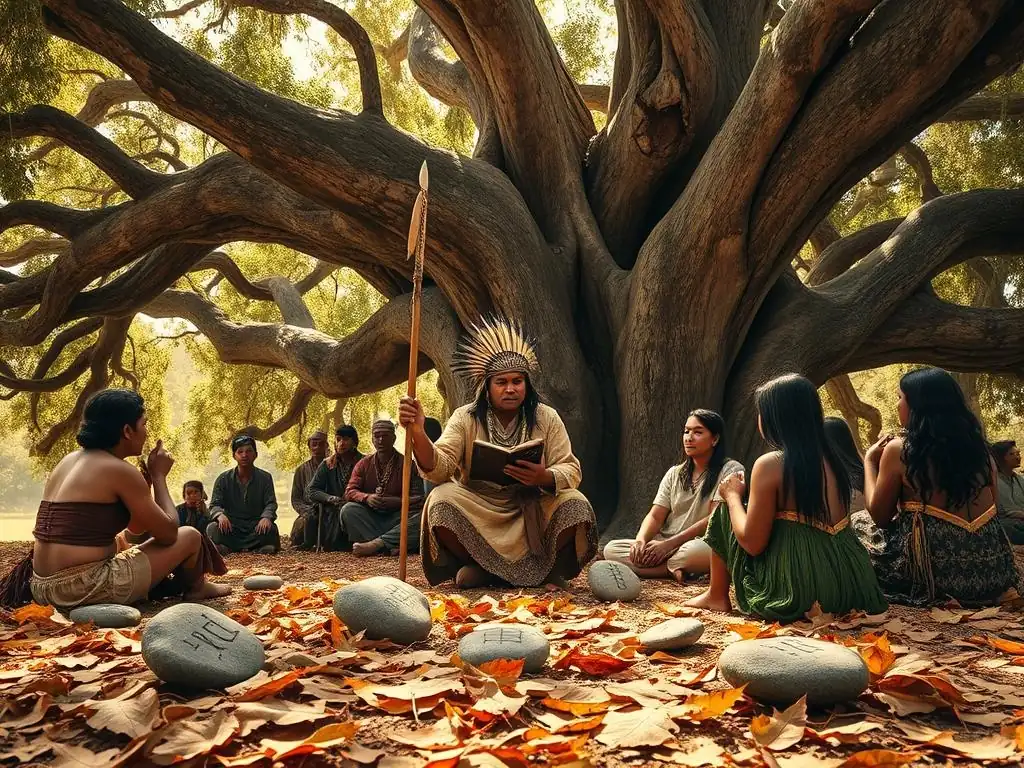
The impact of European colonization on Indigenous writing and communication methods has been profound and multifaceted. Many Indigenous communities demonstrated remarkable resilience in the face of colonial pressures, often adapting their writing systems and communication practices to preserve their cultural identities.
The introduction of European languages and writing systems prompted Indigenous peoples to innovate, leading to the development of hybrid forms of communication that incorporated elements from both Indigenous and European traditions. This blending of systems not only allowed for the survival of Indigenous languages but also facilitated new forms of expression that reflected the unique experiences of these communities during and after colonization.
Indigenous people frequently utilized symbols and imagery from their own cultures while integrating European script and concepts. This resistance to complete assimilation highlights a strong commitment to maintaining their cultural narratives and knowledge systems. Many communities took it upon themselves to document their histories and traditions through writing, ensuring that their legacies would endure despite colonial efforts to erase them. This dynamic interplay between resistance and adaptation has led to the emergence of diverse writing practices that continue to evolve today.
Preservation of Oral Traditions Amidst Colonization
Oral traditions have long been a cornerstone of Indigenous cultures, serving as vital conduits for the transmission of knowledge, history, and cultural identity. With the advent of European colonization, many Indigenous groups faced significant challenges in preserving these oral traditions, as they were often viewed as inferior or primitive by colonizers. However, despite these pressures, many communities successfully maintained their storytelling practices, which adapted to incorporate new contexts and audiences.
The oral tradition became a form of resistance in itself, allowing Indigenous peoples to keep their histories alive while also critiquing colonial narratives. Elders and storytellers played crucial roles in this process, ensuring that younger generations were educated about their heritage through storytelling, songs, and rituals. In some cases, oral traditions were even adapted into written forms, bridging the gap between oral and written communication and providing a means of documentation that could withstand colonial scrutiny.
Innovations in Indigenous Writing Systems Post-Colonization
The aftermath of European colonization saw a remarkable wave of innovation in Indigenous writing systems. Faced with the need to communicate with colonial powers and record their own histories, many Indigenous communities began to develop or adapt writing systems that reflected their unique linguistic and cultural characteristics. This period marked a significant transformation, as Indigenous peoples sought to assert their identities through new forms of written expression.
For example, some tribes developed phonetic alphabets that closely mirrored the sounds of their languages, allowing for greater accuracy in representation and communication. Others created pictorial and ideographic systems that drew inspiration from traditional art forms. These innovations were not merely reactionary; they represented a proactive effort to reclaim narrative authority and adapt to the changing landscape of communication in a colonial context. As a result, many Indigenous writing systems today reflect a rich tapestry of historical experiences, blending traditional motifs with contemporary needs for literacy and representation.
Case Studies of Indigenous Communities and Their Writing Systems
Cherokee Nation: Adaptations in Writing and Communication
The Cherokee Nation serves as a notable example of adaptation in writing and communication following European colonization. In the early 19th century, Sequoyah, a Cherokee silversmith, developed a unique syllabary, a system of writing that represented the sounds of the Cherokee language. This remarkable innovation allowed for widespread literacy among the Cherokee people and facilitated the preservation of their cultural narratives in written form.
The introduction of the syllabary had profound implications for Cherokee society, enabling the publication of newspapers, books, and other written materials in their language. Despite the challenges posed by colonization, including forced removal from their lands, the Cherokee Nation's commitment to literacy and education has continued to thrive. Today, efforts to revitalize the Cherokee language and promote its use in modern contexts reflect a deep-seated resilience and adaptability within the community.
Mapuche Community: Resilience of Traditional Practices
The Mapuche community in present-day Chile and Argentina exemplifies the resilience of traditional communication practices amidst the challenges of colonization. The Mapuche have a rich oral tradition, with storytelling, songs, and ceremonies serving as essential means of preserving their history and culture. Despite attempts by colonial powers to suppress their language and practices, the Mapuche have maintained their oral traditions, adapting them to contemporary contexts.
In recent years, there has been a resurgence of interest in Mapuche language and culture, with community members actively promoting their traditional practices alongside modern communication methods. The integration of traditional storytelling with digital platforms has allowed the Mapuche to reach broader audiences, ensuring that their narratives continue to resonate and educate others about their rich heritage. This blend of old and new exemplifies the ongoing evolution of Indigenous writing and communication methods in the face of colonial legacies.
Conclusion: The Legacy of Indigenous Writing and Communication
The legacy of indigenous writing and communication methods is a testament to the resilience and creativity of native cultures across the Americas. Before European colonization, these systems were not merely utilitarian; they served as vital means of preserving history, spirituality, and social organization. Despite the extensive disruptions caused by colonization, many indigenous communities have retained elements of their original writing systems and communication methods, adapting them in response to contemporary challenges. This legacy is crucial for understanding the depth of indigenous cultures and their ongoing contributions to society.
As we reflect on the impact of colonization, it becomes evident that the erasure of indigenous writing was not merely an act of cultural suppression but an attempt to dismantle the very identities of these communities. Yet, the persistence of indigenous languages and forms of communication today illustrates a powerful narrative of survival and resurgence. It emphasizes that indigenous writing systems are not just historical artifacts but living traditions that continue to evolve and thrive in modern contexts.
Lasting Impacts of Colonization on Indigenous Cultures
The impacts of colonization on indigenous writing and communication were profound and multifaceted. Many indigenous languages faced near extinction as European powers imposed their languages and scripts, often viewing indigenous systems as primitive or inferior. This led to a significant loss of linguistic diversity and the erosion of cultural narratives that were traditionally conveyed through oral and written forms.
Moreover, traditional methods of communication, such as the use of pictographs, petroglyphs, and mnemonic devices, were largely disregarded or replaced by European methods. The suppression of these practices not only diminished the richness of cultural expression but also severed the link between generations, as knowledge and wisdom that had been passed down through written and oral traditions were lost.
In contemporary society, the repercussions of these historical actions continue to resonate. Many indigenous communities grapple with issues of identity and cultural reclamation as they strive to revive and maintain their languages and communication methods. This ongoing struggle highlights the importance of recognizing the historical context of colonization while fostering a future where indigenous cultures can thrive.
Revitalizing Indigenous Writing in Contemporary Society
Revitalizing indigenous writing in today's world involves both recognizing the historical injustices faced by these cultures and actively supporting their resurgence. Efforts are underway across the Americas to document and teach indigenous languages, often utilizing modern technology to create accessible resources. This includes the development of digital dictionaries, apps for language learning, and online platforms that facilitate the sharing of indigenous narratives.
Community-led initiatives play a critical role in this revival. Many indigenous groups have established language immersion programs and workshops that encourage younger generations to engage with their cultural heritage. These initiatives not only aim to teach traditional writing systems but also integrate contemporary methods of communication, bridging the gap between past and present.
Furthermore, collaboration with educational institutions can enhance the visibility and appreciation of indigenous writing. By including indigenous literature and communication methods in school curriculums, a broader audience can gain insight into the richness of these cultures, fostering respect and understanding.
Call to Action: Supporting Indigenous Writing and Communication Today
To support indigenous writing and communication today, it is essential to recognize the value of these practices and actively participate in their preservation. Individuals can contribute by seeking out indigenous literature, attending cultural events, and promoting awareness of the importance of indigenous languages.
Importance of Preserving Indigenous Languages
Preserving indigenous languages is not only crucial for cultural identity but also for maintaining the ecological knowledge embedded within these languages. Many indigenous languages contain unique perspectives on the environment, which can inform sustainable practices and conservation efforts. As such, supporting indigenous languages contributes to broader efforts to combat climate change and promote biodiversity.
Moreover, the revitalization of indigenous languages enhances the cultural richness of society as a whole. Linguistic diversity fosters creativity and innovation, allowing for a range of voices and perspectives that can lead to more inclusive and effective solutions to contemporary issues.
Initiatives for Reviving Indigenous Communication Methods
Various initiatives are currently in place to revive indigenous communication methods, ranging from grassroots movements to formal educational programs. Organizations dedicated to indigenous rights and cultural preservation are at the forefront of these efforts, often collaborating with indigenous leaders to ensure that the programs are respectful and effective.
For example, many communities are implementing storytelling circles, where elders pass down traditional narratives that incorporate indigenous writing and communication methods. Additionally, digital storytelling projects allow indigenous peoples to share their stories and cultural practices through modern mediums, connecting with younger audiences and fostering a renewed interest in their heritage.
By participating in and supporting these initiatives, individuals can help ensure that indigenous writing and communication methods continue to thrive, contributing to the rich tapestry of human culture and knowledge.
- Introduction to Indigenous Writing and Communication
- Historical Context of European Colonization
- Changes in Indigenous Writing Due to Colonization
- The Role of Missionaries in Indigenous Communication
- Resistance and Adaptation of Indigenous Writing
- Case Studies of Indigenous Communities and Their Writing Systems
- Conclusion: The Legacy of Indigenous Writing and Communication
- Call to Action: Supporting Indigenous Writing and Communication Today
- What was the primary focus of the article "The Impact of European Colonization on Indigenous Writing and Communication Methods"?
- How did indigenous cultures communicate before European contact?
- What role did writing play in indigenous societies before colonization?
- How did European colonization change indigenous communication?
- What is the lasting impact of these changes on indigenous writing today?
Frequently Asked Questions
What was the primary focus of the article "The Impact of European Colonization on Indigenous Writing and Communication Methods"?
The article primarily explores how European colonization affected indigenous writing and communication methods, highlighting the disruption of traditional practices and the adaptation of new forms of communication.
How did indigenous cultures communicate before European contact?
Indigenous cultures utilized a variety of oral traditions, symbolic art, and pictographs to convey stories, histories, and knowledge, emphasizing the richness of their communication methods.
What role did writing play in indigenous societies before colonization?
Writing was integral for many indigenous societies, serving as a tool for record-keeping, ceremonial purposes, and the transmission of knowledge, showcasing their sophisticated communication systems.
How did European colonization change indigenous communication?
European colonization imposed new languages and writing systems, which often led to the loss of indigenous languages and a shift in traditional communication practices, impacting cultural identity.
What is the lasting impact of these changes on indigenous writing today?
The changes initiated by colonization have resulted in a revival of interest in indigenous writing and communication, with many communities working to reclaim and preserve their linguistic heritage and traditional practices.
Final Reflection: The Enduring Legacy of Indigenous Writing and Communication
The impact of European colonization on Indigenous writing and communication methods is not merely a historical footnote; it is a living narrative that shapes contemporary discourse. Today, as we navigate a world increasingly aware of cultural diversity and the importance of representation, the stories and methods of Indigenous peoples resonate more than ever. The struggle for recognition and preservation of Indigenous languages and communication forms is a testament to resilience and a call for justice in a world still grappling with the consequences of colonization.
The influence of Indigenous writing and communication methods extends far beyond the past; it continues to enrich our cultural landscape and challenge dominant narratives. As we witness a resurgence of interest in Indigenous literature and storytelling, we are reminded of the profound wisdom embedded in these traditions. The stories we tell ourselves shape our reality.
This quote encapsulates the power of narrative in shaping identity and understanding, emphasizing the need to honor and uplift Indigenous voices in our collective storytelling.
As you reflect on the themes presented in this article, consider how you can contribute to the preservation and celebration of Indigenous writing and communication. Engage with Indigenous literature, support Indigenous authors, and advocate for the inclusion of diverse narratives in educational curricula. By doing so, you not only enrich your own understanding but also participate in a broader movement towards healing and reconciliation. Let us commit to amplifying these voices and ensuring that the legacy of Indigenous communication continues to thrive for generations to come.
Embrace the Legacy: Take Action for Indigenous Voices!
Thank you for taking the time to explore the profound impact of European colonization on indigenous writing and communication methods. Your interest in this vital topic helps shine a light on the resilience and creativity of indigenous cultures. Now, let’s maintain that momentum with some meaningful steps you can take today!
- Explore indigenous literature and writing—choose a book or article that highlights these voices and share your thoughts with others!
- Engage in discussions about indigenous communication methods with friends or online communities to raise awareness.
- Support indigenous authors and artists by following them on social media or purchasing their works, helping to amplify their unique experiences and narratives.
What unique insights or experiences do you have that connect you to indigenous writing and communication today?