
Cortés and Moctezuma: A Clash of Cultures and Leadership Styles

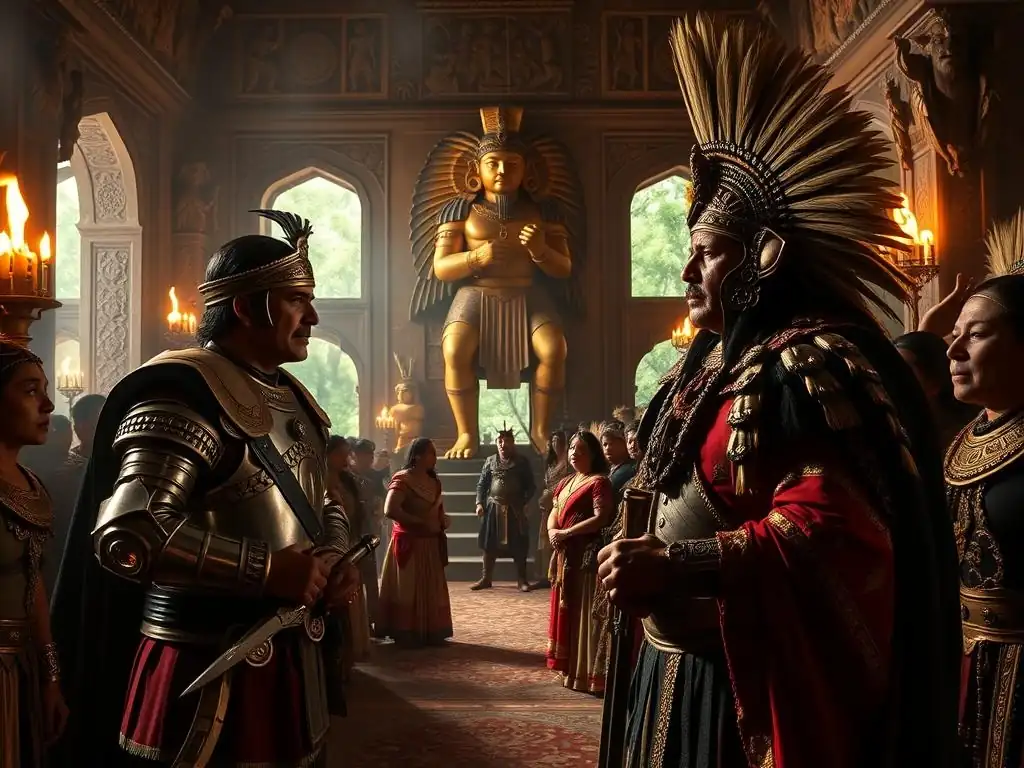
Welcome to Indigenous Civilizations of the Americas, where we invite you to embark on a fascinating journey through the rich tapestry of indigenous cultures that flourished in the Americas long before European contact. In our featured article, “Cortés and Moctezuma: A Clash of Cultures and Leadership Styles,” we delve into the dramatic encounter between these two iconic figures, exploring how their distinct cultural legacies shaped their fateful meeting.
What led to this historic confrontation, and what can it teach us about the complex interplay of power and identity? Join us as we uncover the stories, achievements, and enduring influence of these remarkable civilizations, and prepare to be captivated by the depth and diversity of their histories.
- Introduction to Cortés and Moctezuma: A Cultural Clash
- Context of the Aztec Civilization
- Hernán Cortés: The Conquistador
- Moctezuma II: The Aztec Emperor
- The Cultural Clash between Cortés and Moctezuma
- Impact of the Cortés-Moctezuma Encounter
- Conclusion: Legacy of the Cortés and Moctezuma Encounter
- References
- Frequently Asked Questions
- Final Reflection: The Enduring Legacy of the Cortés-Moctezuma Cultural Clash
- Unveil the Lessons of History—Transform Your Perspective!
Introduction to Cortés and Moctezuma: A Cultural Clash
The encounter between Hernán Cortés and Moctezuma II stands as one of the most pivotal moments in history, symbolizing not only a significant power shift but also a profound clash of cultures. This meeting, which occurred in the early 16th century, was marked by contrasting leadership styles, worldviews, and societal structures. Cortés, a Spanish conquistador driven by ambition and a desire for wealth, confronted Moctezuma, the ruler of the powerful Aztec Empire, whose society was rich in tradition, spirituality, and complex governance.
This cultural clash was not merely a confrontation of military might, but rather an intricate interplay of diplomacy, misunderstandings, and the consequences of European colonization. Understanding this encounter provides invaluable insights into the broader narrative of indigenous civilizations and their interactions with European powers, emphasizing the lasting impact of these historical events on the Americas.
Overview of the Encounter
The meeting between Cortés and Moctezuma in November 1519 was characterized by a mix of awe, fear, and miscommunication. Upon Cortés’ arrival on the shores of Mexico, he was initially perceived by Moctezuma as a potential deity, a belief rooted in Aztec prophecies. This perception led to a series of diplomatic exchanges that were laden with cultural misunderstandings. While Moctezuma sought to maintain peace and uphold his authority, Cortés viewed this as an opportunity to assert dominance and secure resources.
- Key Events of the Encounter:
- Cortés' Arrival: The reception of Cortés by Aztec emissaries and the gifts exchanged.
- Initial Meetings: The first interactions between Cortés and Moctezuma, including discussions of power and religion.
- The Tensions Rise: The gradual escalation of conflict as Cortés' intentions became clearer.
The dynamics of this encounter highlight the contrasting approaches to leadership, where Cortés’ aggressive tactics clashed dramatically with Moctezuma’s more diplomatic, yet ultimately vulnerable, strategy.
Significance of the Meeting in History
The significance of the Cortés and Moctezuma meeting extends far beyond their immediate interactions; it marks a crucial turning point in the history of the Americas. This cultural clash set the stage for the eventual fall of the Aztec Empire and the broader implications of European colonization.
- Impact on the Aztec Civilization:
- The introduction of European diseases, which devastated indigenous populations, severely weakened the Aztec society.
- The strategic alliances formed by Cortés with rival indigenous groups, which undermined Moctezuma’s power.
- Broader Historical Context:
- This encounter illustrates the complex interplay between indigenous and European cultures, laying the groundwork for subsequent conquests and colonization efforts across the continent.
- The clash of ideologies regarding governance, spirituality, and societal organization fundamentally reshaped the Americas.
The meeting between Cortés and Moctezuma serves as a powerful reminder of the profound transformations that occurred due to European contact, and it continues to resonate in discussions about colonization, cultural exchange, and the legacies of indigenous civilizations in the Americas.
Context of the Aztec Civilization
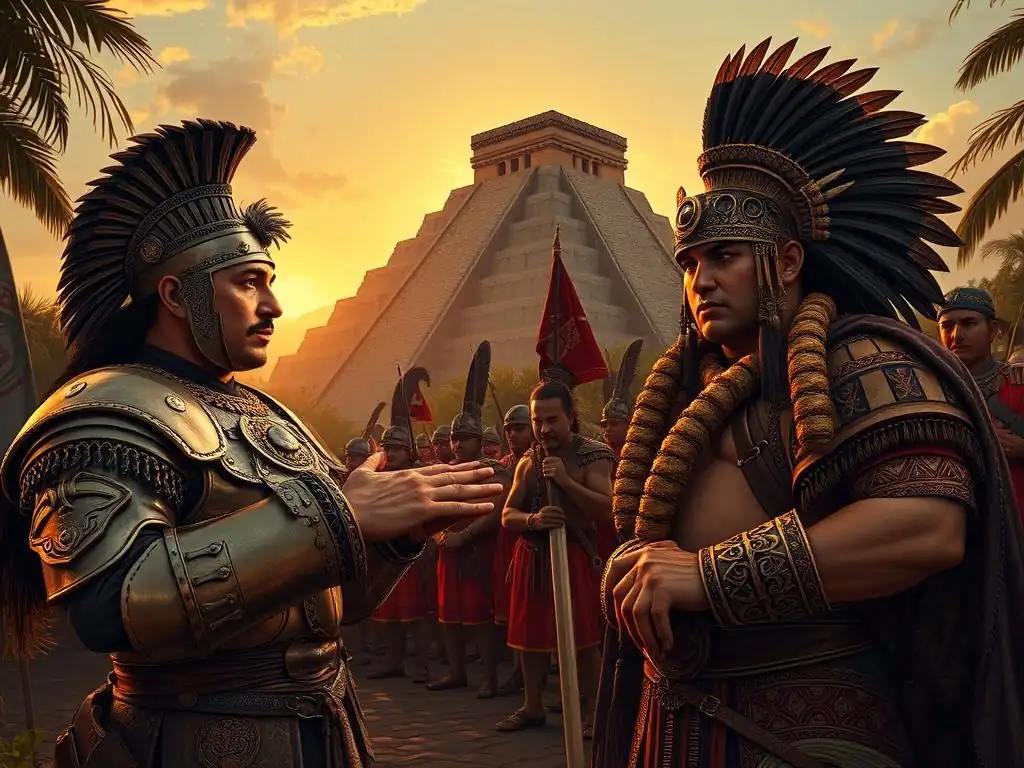
The Aztec Civilization, known for its rich cultural heritage, was one of the most advanced societies in Mesoamerica prior to European contact. Centered in what is now central Mexico, the Aztecs established a complex and vibrant civilization characterized by intricate social hierarchies, extensive trade networks, and profound religious beliefs. Their capital, Tenochtitlan, was a marvel of engineering and urban planning, boasting impressive temples, canals, and marketplaces. The arrival of Hernán Cortés in 1519 marked a pivotal moment in history, leading to significant cultural clashes that would forever alter the trajectory of both Aztec and European societies.
The social structure of the Aztec civilization was hierarchical and stratified, consisting of various classes that played distinct roles in society. At the top of the hierarchy was the Emperor, who was seen as a semi-divine figure and held absolute power. Below the emperor were the nobility, including priests, military leaders, and high-ranking officials, who were responsible for governance and religious ceremonies.
- Commoners: The majority of the population fell into this category, including farmers, artisans, and merchants. They were vital to the economy, providing agricultural produce and crafted goods.
- Slaves: At the bottom of the social structure were slaves, who were often prisoners of war or individuals who had fallen into debt. They could be used for labor or sacrificial rituals.
This social stratification influenced every aspect of Aztec life, from politics to religion, and played a significant role in the cultural clash with Cortés and his forces.
Economic and Political Systems
The economic system of the Aztecs was primarily agrarian, with corn (maize) being the staple crop that supported the population. The Aztecs practiced chinampas, a unique agricultural technique involving floating gardens that allowed them to maximize crop yields in the swampy areas around Tenochtitlan. Their economy was also bolstered by extensive trade networks, allowing for the exchange of luxury goods, textiles, and food products across Mesoamerica.
- Tributary System: The Aztecs operated a tributary system where conquered territories were required to pay tribute in goods and resources. This system reinforced their political power and allowed for the accumulation of wealth.
- Political Organization: The Aztec Empire was a confederation of city-states, each ruled by a local leader who owed allegiance to the emperor. This decentralized political structure allowed for a degree of autonomy but required loyalty and tribute to the central authority.
Cortés’s conquest of the Aztec Empire disrupted this intricate political and economic system, resulting in significant changes to both Aztec governance and trade practices.
Religious Practices and Beliefs
Religion was integral to Aztec life, influencing their culture, society, and even politics. The Aztecs practiced polytheism, worshipping a pantheon of gods associated with various aspects of life, including agriculture, war, and fertility. The most prominent deities included:
- Huitzilopochtli: The god of sun and war, central to Aztec identity and military endeavors.
- Quetzalcoatl: The feathered serpent god, associated with creation and wind, representing wisdom and learning.
Religious rituals often involved sacrifices, which the Aztecs believed were necessary to appease the gods and ensure the continuation of the world. These practices shocked the Spanish conquistadors, who viewed them as barbaric and in stark contrast to their own beliefs.
The cultural clash between Cortés and Moctezuma was not just a confrontation of military might but a profound clash of ideologies, values, and worldviews that would shape the future of the Americas. The Aztec civilization's intricate social structure, robust economic systems, and deep religious convictions played critical roles in this historic encounter, leaving a lasting impact on both indigenous and European societies.
Hernán Cortés: The Conquistador
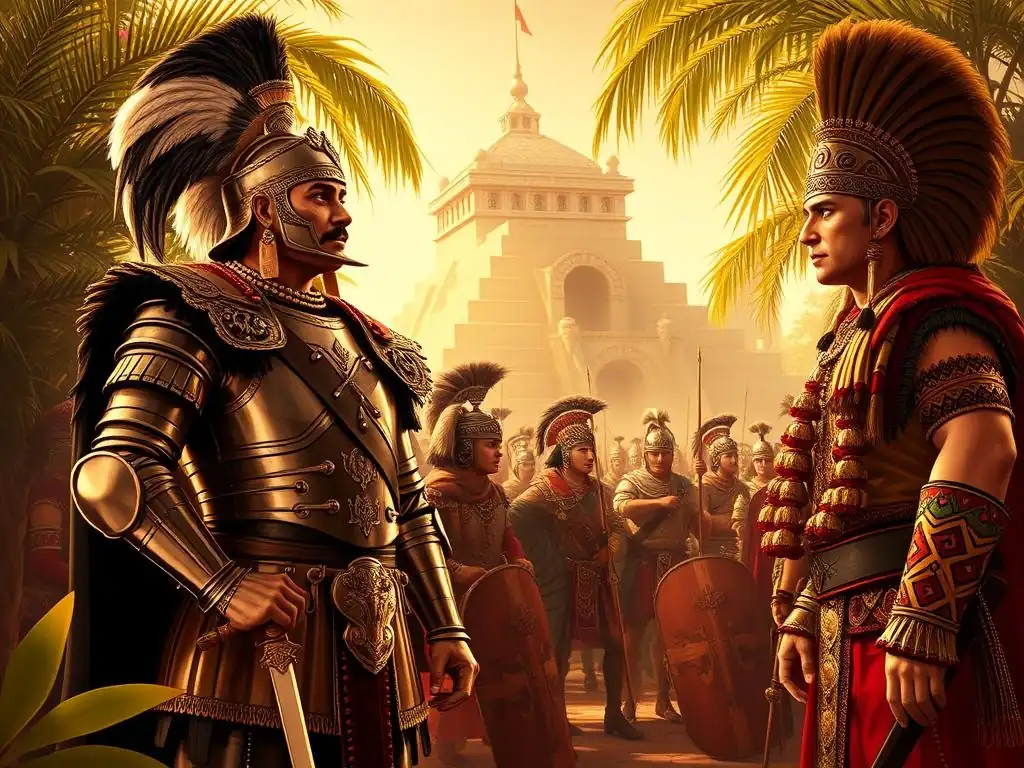
Hernán Cortés stands as a pivotal figure in the history of European contact with the indigenous peoples of the Americas. His actions marked the beginning of a profound cultural clash, particularly with the Aztec Empire, which was epitomized in his encounters with Moctezuma II. Cortés’s ambitions, leadership style, and military tactics not only led to the fall of the Aztec Empire but also drastically altered the landscape of Mesoamerica.
Early Life and Background of Cortés
Cortés was born in 1485 in Medellín, Spain, to a family of lesser nobility. His early education included studies in law, but he soon became enamored with the tales of exploration and conquest. At the age of 19, he left for the New World, initially settling in Hispaniola. His experiences there, along with later adventures in Cuba, laid the groundwork for his eventual expedition to Mexico.
- Key Influences:
- Family Background: Cortés was not born into wealth but rather a family of modest nobility, which instilled in him a desire for fame and fortune.
- Early Ventures: His early experiences in the Caribbean colonies exposed him to the potential for wealth in the Americas, particularly in gold.
Cortés was known for his ambition and charisma, traits that would serve him well in rallying support and forming alliances. His ability to navigate and manipulate social dynamics among both Spaniards and indigenous peoples would become a hallmark of his leadership.
Motivations for Conquest in the Americas
Cortés was driven by a combination of personal ambition, the quest for wealth, and the desire for glory. The lure of gold and resources was a significant motivating factor, especially with reports of the wealth of the Aztecs reaching Spain.
- Primary Motivations:
- Wealth: The prospect of acquiring gold and silver was a primary motivator for Cortés. Upon hearing about the riches of the Aztecs, he was determined to seize this opportunity.
- Fame: Cortés sought to establish his legacy as a great conqueror, akin to figures like Christopher Columbus.
- Religious Zeal: Like many conquistadors, Cortés felt a sense of duty to convert indigenous peoples to Christianity, viewing this as a justification for his conquests.
The combination of these motivations fueled Cortés’s determination and strategic planning as he prepared to invade the Aztec Empire, setting the stage for the eventual cultural clash that would unfold.
Leadership Style and Military Tactics
Cortés’s leadership style was marked by a blend of ruthlessness, strategic acumen, and adaptability. His ability to forge alliances with various indigenous groups played a crucial role in his campaign against the Aztecs.
- Leadership Characteristics:
- Charismatic Leadership: Cortés was adept at inspiring loyalty among his men and forming alliances with local tribes, such as the Tlaxcalans, who harbored grievances against the Aztecs.
- Decisiveness: He was known for making quick, bold decisions, exemplified by his choice to burn his ships upon arriving in Mexico, thereby eliminating any possibility of retreat.
- Military Strategies:
- Use of Technology: Cortés employed advanced weaponry, including firearms and cannons, which were unfamiliar to the Aztecs and provided a significant tactical advantage.
- Psychological Warfare: He exploited the religious beliefs of the Aztecs, portraying himself and his men as divine agents, which instilled fear and confusion among their ranks.
Cortés’s combination of personal ambition, military innovation, and strategic alliances culminated in a dramatic and tragic clash with Moctezuma and the Aztec Empire, highlighting the complexities of leadership during one of history’s most significant cultural confrontations.
Moctezuma II: The Aztec Emperor
Moctezuma II, often referred to as Montezuma, was the ninth ruler of the Aztec Empire, reigning from 1502 to 1520. His leadership coincided with a period of significant expansion and consolidation of the empire, which at its peak encompassed much of modern-day Mexico. Moctezuma was not just a political leader; he was also seen as a divine figure, embodying the spiritual and cultural values of the Aztec civilization.
Early Life and Rise to Power
Moctezuma was born into the noble class, likely around 1466, in Tenochtitlán, the bustling capital of the Aztec Empire. His lineage was significant; he was the son of a high-ranking noble and was educated in the ways of warfare, politics, and religion. As a young man, he distinguished himself as a skilled military leader, participating in numerous campaigns that expanded the empire's territory and influence.
- Key Events in His Rise:
- Military Campaigns: Moctezuma's early military successes against rival city-states helped him gain recognition and respect among the nobility and the commoners alike.
- Accession to the Throne: He ascended to the throne after the death of his uncle, succeeding as a leader who was both feared and revered.
His reign marked a transformation in the Aztec Empire, characterized by increased tribute collection and a more centralized form of governance. Moctezuma's vision was to enhance the empire's wealth and prestige, which often led to aggressive expansions and deeper political alliances.
Moctezuma’s Leadership Approach
Moctezuma's leadership style was multifaceted, blending traditional Aztec practices with innovative strategies that reflected his understanding of power dynamics.
- Authoritarian Rule: He was known for his strong, sometimes tyrannical, approach to governance. His authority was absolute, and he demanded loyalty from his subjects.
- Religious Devotion: As a high priest, Moctezuma integrated religious rites into governance, believing that the favor of the gods was crucial for the empire's stability and success. He often consulted religious oracles and conducted elaborate ceremonies to appease the deities.
- Diplomatic Engagement: Moctezuma was adept at using diplomacy to manage relationships with neighboring tribes. He often employed marriage alliances and trade agreements to secure peace and loyalty.
Despite his strong leadership, the arrival of Hernán Cortés and the Spanish conquistadors tested Moctezuma's strategies. His initial approach towards the Spanish was one of hospitality and diplomacy, which ultimately contributed to the cultural clash that ensued.
Cultural Values and Diplomacy in Aztec Society
Aztec culture was rich in traditions and values that shaped their interactions both internally and externally. Moctezuma's reign highlighted these cultural aspects, which played a pivotal role in the encounter with the Spanish.
- Core Cultural Values:
- Religion: The Aztecs practiced a polytheistic belief system, with rituals that were integral to their society. Human sacrifice was a significant aspect of their religious practices, meant to appease the gods and ensure cosmic order.
- Social Hierarchy: Aztec society was highly stratified, with a strong emphasis on class distinctions. Nobility held significant power, while commoners were largely tasked with labor and tribute.
- Diplomatic Practices:
- Tribute System: Moctezuma's empire relied heavily on tributes from conquered peoples, which fostered a complex network of alliances and dependencies.
- Cultural Exchange: The Aztecs engaged in trade and cultural exchanges with neighboring tribes and regions, facilitating the flow of goods, ideas, and practices.
Moctezuma's diplomatic strategies were rooted in a profound understanding of Aztec cultural values, which ultimately influenced his interactions with Cortés. His tragic miscalculations in assessing the threat posed by the Spanish reflect the complexities of cultural clashes and the challenges of leadership during a time of unprecedented change.
The clash between Cortés and Moctezuma was not merely a battle of arms but a profound conflict of cultures, values, and leadership styles. This pivotal moment in history serves as a reminder of the intricate tapestry of indigenous civilizations and the impact of European contact.
The Cultural Clash between Cortés and Moctezuma
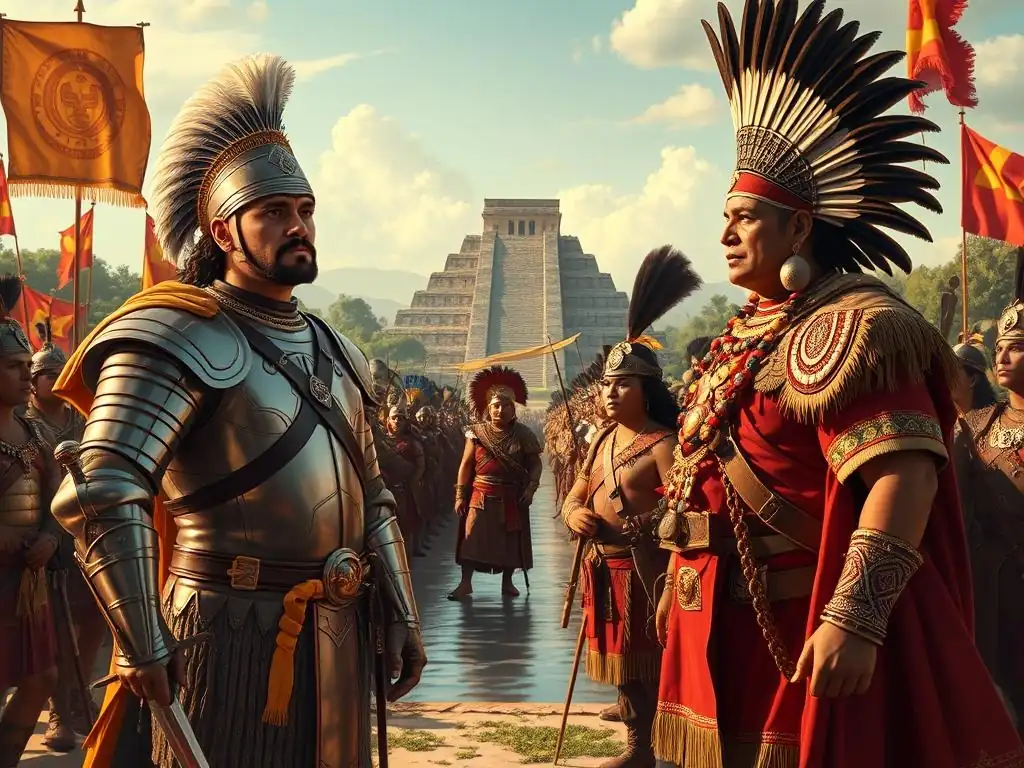
The encounter between Hernán Cortés and Moctezuma II in the early 16th century epitomizes a significant cultural clash that would forever alter the landscape of the Americas. This clash was not merely a confrontation between two powerful leaders but a profound intersection of worldviews, beliefs, and societal structures. Cortés, representing the Spanish Empire, embodied a European vision of conquest, while Moctezuma, the Aztec emperor, epitomized the complex political and religious fabric of Mesoamerican civilization.
As these two leaders met, their differing perspectives on power, authority, and civilization set the stage for a dramatic confrontation that would have lasting repercussions on the indigenous peoples of the Americas.
Initial Encounters: First Impressions and Misunderstandings
The initial encounters between Cortés and Moctezuma were marked by a series of impressions that fueled misunderstandings. Cortés arrived in Tenochtitlán in 1519 with a small contingent of soldiers and was greeted with a mix of awe and trepidation. The Aztecs had heard of the Spaniards through tales of their ferocity and military prowess, leading Moctezuma to view them as potential deities or harbingers of doom.
- Cortés’s Initial Impressions:
- Cortés was astounded by the grandeur of Tenochtitlán, which he described as a city of great wealth and sophistication.
- He perceived Moctezuma's hospitality as a sign of weakness, interpreting the Aztec custom of offering gifts and tributes as an opportunity to manipulate the situation.
- Moctezuma’s Perceptions:
- Moctezuma, influenced by existing prophecies, believed that Cortés might be the returned god Quetzalcoatl.
- This belief led him to treat Cortés with extraordinary respect, offering gifts and an invitation to stay in the palace, which Cortés interpreted as a sign of submission.
The differing interpretations of these initial interactions laid the groundwork for a series of miscalculations that would culminate in conflict.
Communication Barriers and Cultural Differences
The communication barriers between Cortés and Moctezuma were not solely linguistic but also cultural. Their worldviews were shaped by fundamentally different experiences, leading to challenges in mutual understanding.
- Language Differences:
- Although Cortés had a translator, La Malinche (Malintzin), who spoke both Nahuatl and Spanish, subtleties were often lost in translation.
- Nuances in the Aztec language could convey meanings that were misinterpreted by Cortés and his men, complicating negotiations.
- Cultural Norms and Values:
- The Aztec society was centered around a complex hierarchy and religious rituals, prioritizing honor, reverence for the gods, and the importance of warfare as a means to appease deities.
- In contrast, Cortés came from a culture that emphasized individualism, conquest for wealth, and a more direct approach to diplomacy.
This divergence in cultural norms meant that both leaders often misread each other's intentions, fueling suspicion and conflict.
The Role of Religion in the Cultural Clash
Religion was a pivotal factor in the cultural clash between Cortés and Moctezuma. The differing religious beliefs not only influenced the actions of both leaders but also shaped the perceptions of their followers.
- Aztec Religion:
- The Aztecs practiced a polytheistic religion, with rituals that involved human sacrifice to appease gods like Huitzilopochtli, the god of war.
- Moctezuma's role as a religious leader was intertwined with his political authority, and he believed that the arrival of the Spaniards had divine implications.
- Spanish Catholicism:
- Cortés and his men were driven by a desire to spread Christianity, viewing the conquest as a means of converting the indigenous population.
- The Spanish perception of their religious mission often dismissed Aztec beliefs as idolatry, leading to further alienation.
The clash of these religious ideologies not only fueled hostilities but also justified the brutal treatment of the indigenous peoples by the Spaniards. The intertwining of faith and power in both cultures ultimately set the stage for an inevitable conflict that would reshape the Americas.
The cultural clash between Cortés and Moctezuma was a complex interplay of initial encounters, communication barriers, and religious differences. Understanding these elements is crucial to grasping the broader implications of European colonization on indigenous civilizations and the lasting legacy of these pivotal historical events.
Impact of the Cortés-Moctezuma Encounter
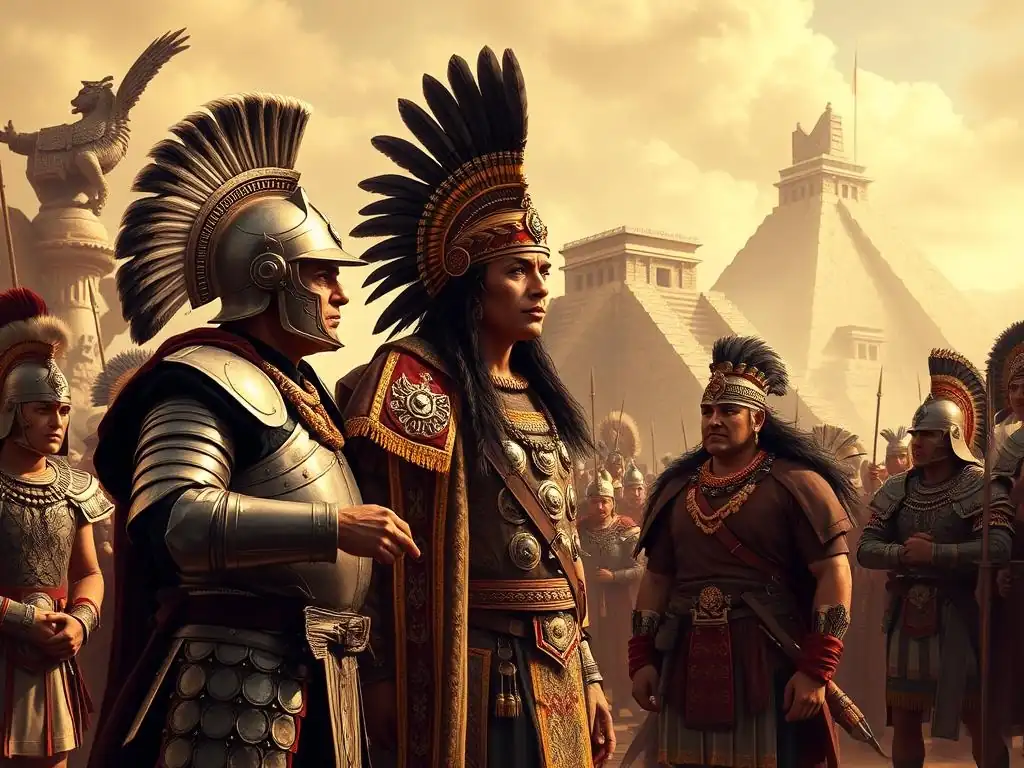
The encounter between Hernán Cortés and Moctezuma II marked a pivotal moment in history, characterized by a profound cultural clash that had lasting implications for the Aztec Empire and indigenous civilizations across the Americas. This section delves into the immediate repercussions of this encounter, as well as its enduring consequences and the nature of cultural exchange that transpired during this period.
Short-term Effects on the Aztec Empire
The initial meeting between Cortés and Moctezuma in 1519 had immediate and profound effects on the Aztec Empire.
- Political Disruption:
- The arrival of Cortés disrupted the established power dynamics within the Aztec Empire. Moctezuma, believing Cortés to be the god Quetzalcoatl, initially welcomed the Spanish. This misinterpretation of intentions led to a significant shift in leadership, as Moctezuma's trust in Cortés ultimately weakened his authority among the Aztecs.
- Military Engagements:
- Following the initial encounter, Cortés and his men engaged in various military confrontations with the Aztec forces. The Spanish, equipped with superior weaponry and tactics, were able to capture Tenochtitlán, leading to significant casualties among the Aztec warriors and a collapse in morale.
- Societal Upheaval:
- The invasion instigated societal turmoil. Many indigenous allies, such as the Tlaxcalans, initially supported the Spanish against the Aztecs, leading to factionalism and instability within the empire. The repercussions of these alliances would ripple through the region, altering traditional relationships among indigenous groups.
Long-term Consequences for Indigenous Civilizations
The Cortés-Moctezuma encounter set in motion a series of long-term consequences that reshaped the landscape of indigenous civilizations in the Americas.
-
Collapse of the Aztec Empire:
The fall of Tenochtitlán in 1521 marked the end of the Aztec Empire, which had significant implications for indigenous governance and cultural practices. The dismantling of this centralized power led to the fragmentation of indigenous societies, as local leaders struggled to fill the vacuum left by Aztec authority.
-
Colonial Rule and Cultural Suppression:
The establishment of Spanish colonial rule brought about the imposition of foreign governance structures, leading to the suppression of indigenous cultures and traditions. The influence of Catholicism, enforced through missions and conversions, altered traditional belief systems and practices.
-
Demographic Changes:
The introduction of diseases such as smallpox decimated indigenous populations, resulting in profound demographic shifts. Estimates suggest that the indigenous population in Mexico alone declined by as much as 90% in the decades following European contact, drastically altering the social fabric of the region.
Cultural Exchange and Transformation
Despite the conflict and upheaval, the encounter between Cortés and Moctezuma also facilitated a complex cultural exchange that would transform both Spanish and indigenous societies.
-
Introduction of New Goods:
The Columbian Exchange initiated by this encounter introduced a variety of goods and technologies between the Old and New Worlds. The Aztecs encountered new agricultural products such as wheat, cattle, and horses, while the Spanish were introduced to maize, tomatoes, and chocolate, which would later become staples in European diets.
-
Blending of Cultures:
The forced interactions led to a blending of cultural practices, art, and language. As Spanish colonizers settled in the region, indigenous customs began to intertwine with European traditions, resulting in unique syncretic practices evident in religion, art, and daily life. This blending is particularly notable in regions where indigenous peoples maintained some level of autonomy and continued to practice their traditions alongside European influences.
-
Language and Literature:
The encounter also impacted language, as Nahuatl (the language of the Aztecs) infused Spanish with numerous words and phrases. This linguistic exchange contributed to the rich tapestry of cultural identity in Mexico and other parts of Latin America, reflecting the ongoing dialogue between indigenous and colonial cultures.
The encounter between Cortés and Moctezuma not only initiated a dramatic clash of cultures but also laid the groundwork for a complex interplay of conflict, transformation, and exchange that would define the trajectory of indigenous civilizations in the Americas for centuries to come.
Conclusion: Legacy of the Cortés and Moctezuma Encounter
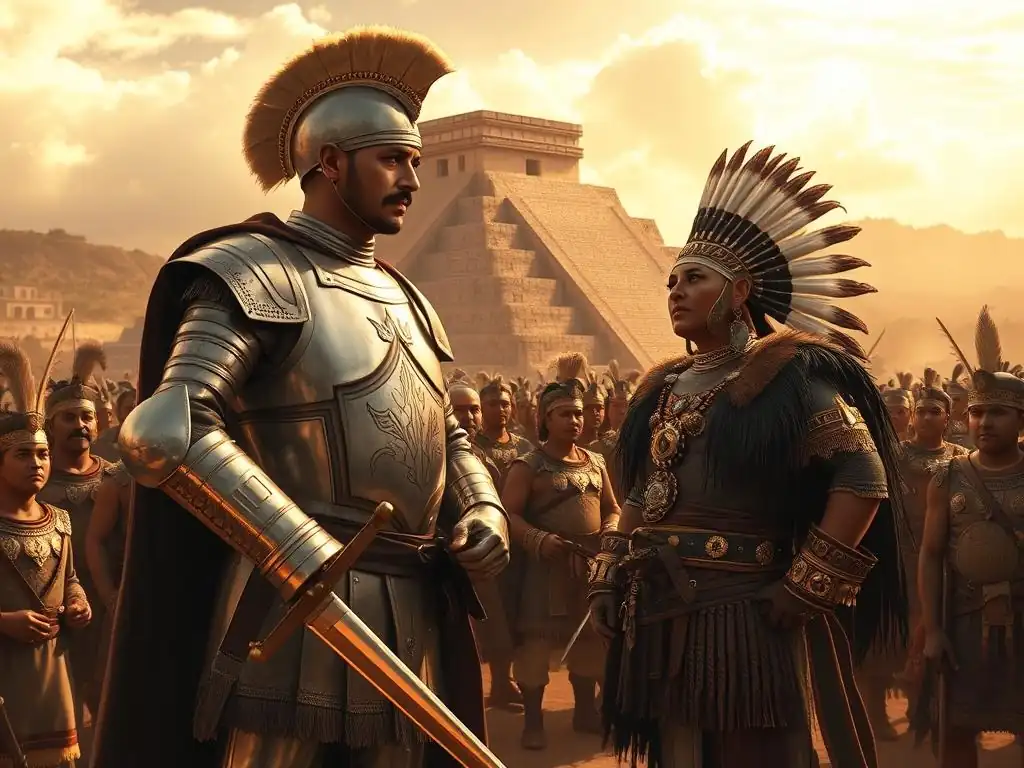
Reflections on Leadership Styles and Cultural Understanding
The encounter between Hernán Cortés and Moctezuma II represents not only a pivotal moment in history but also a profound study in contrasting leadership styles and cultural paradigms. Cortés, with his European military training and strategic acumen, embodied a direct and aggressive approach to leadership. He relied heavily on deception, manipulation, and force to achieve his aims. His ability to exploit divisions among indigenous groups and his relentless pursuit of conquest exemplify a leadership style driven by ambition and the pursuit of power.
In contrast, Moctezuma's leadership was characterized by a more diplomatic and ceremonial approach, reflective of Aztec values. As a ruler, he prioritized stability, tribute collection, and the maintenance of complex societal structures. Moctezuma’s initial hospitality towards Cortés, stemming from a combination of cultural reverence and a misunderstanding of the Spaniards' intentions, illustrates his inclination toward diplomacy over aggression. This divergence in leadership styles not only set the stage for their eventual conflict but also highlighted the cultural misunderstandings that would shape their interactions.
The Lasting Impact of the Cultural Clash on History
The cultural clash between Cortés and Moctezuma reverberated through history, leading to transformations that reshaped the Americas. The Spanish conquest resulted in the collapse of the Aztec Empire, which was not merely a military victory but a profound cultural invasion. The imposition of Spanish culture, religion, and governance had lasting effects on the indigenous populations.
One of the most significant consequences was the introduction of a colonial system that marginalized many indigenous cultures. The loss of autonomy and the forced conversion to Christianity led to the erosion of traditional practices and beliefs. Moreover, the encounter initiated a cycle of colonization that spread throughout the Americas, resulting in demographic shifts due to disease, warfare, and forced labor. This cultural clash established a precedent for European powers to engage with indigenous civilizations, often leading to similar outcomes across different regions.
Lessons Learned from the Encounter
The encounter between Cortés and Moctezuma offers critical lessons that resonate even today. Understanding the importance of cultural awareness and respect in international relations can help prevent conflicts rooted in misunderstandings. The consequences of ignoring cultural contexts, as demonstrated by Cortés’ aggressive tactics, emphasize the need for diplomacy and negotiation over force.
Furthermore, this historical episode underscores the resilience of indigenous cultures. Despite the devastating impacts of colonization, many indigenous communities have retained aspects of their cultural identity and continue to influence contemporary society. This resilience serves as a reminder of the importance of preserving cultural heritage and acknowledging the complexity of histories that intersect.
The Cortés-Moctezuma cultural clash illustrates a profound moment of intersection between vastly different worlds. By analyzing their leadership styles, the enduring consequences of their encounter, and the lessons it imparts, we gain a deeper appreciation for the intricate tapestry of history shaped by these two leaders.
References
Key Historical Sources
The clash between Cortés and Moctezuma is well documented through various historical sources that provide insight into their leadership styles and the cultural dynamics at play. Some of the most significant sources include:
- Bernal Díaz del Castillo: A Spanish soldier who accompanied Cortés, his work "The True History of the Conquest of New Spain" offers a firsthand account of the events, including interactions with Moctezuma and the Aztec people. His narrative is crucial for understanding the Spanish perspective of the conquest.
- Hernán Cortés: Cortés himself wrote letters to King Charles V of Spain detailing his experiences and the riches of the Aztec empire. These letters are invaluable for examining his motivations and justifications for the conquest.
- Francisco López de Gómara: His work "History of the Conquest of Mexico" provides a somewhat hagiographic account of Cortés, portraying him as a heroic figure. This source is critical for understanding the Spanish colonial narrative.
- Indigenous Accounts: The writings of indigenous historians, such as Antonio de Benavides and the Codex Mendoza, offer perspectives on Aztec society and the impacts of Spanish conquest, highlighting the cultural clash from the viewpoint of the conquered.
- Ethnographic Studies: More contemporary analyses, such as those by Matthew Restall and David Carrasco, delve into the implications of Cortés and Moctezuma's encounters, shedding light on their leadership styles and the resulting cultural transformations.
Suggested Further Reading on Aztec Civilization and European Conquest
To deepen your understanding of the cultural clash between Cortés and Moctezuma and its implications for Aztec civilization, the following publications are recommended:
-
"The Aztecs: A Very Short Introduction" by David Carrasco
This concise book offers an overview of Aztec culture, society, and the effects of European contact, ideal for those new to the subject.
-
"Cortés: An Epic of the New World" by John A. Crow
An engaging narrative that explores Cortés's life, motivations, and the broader context of the Spanish conquest.
-
"The Broken Spears: The Aztec Account of the Conquest of Mexico" edited by Miguel León-Portilla
This collection compiles Nahuatl accounts of the conquest, providing a crucial indigenous perspective on the events.
-
"Conquest: Cortés, Montezuma, and the Fall of Old Mexico" by Hugh Thomas
A comprehensive history that examines the complexities of the encounter between the two leaders and the resulting societal changes.
-
"The Conquest of New Spain" by Bernal Díaz del Castillo
A classic primary source, this work remains one of the most important accounts of the conquest, offering detailed descriptions of Aztec society and the Spanish invasion.
By exploring these sources, readers can gain a more nuanced understanding of the intricate dynamics of the Cortés-Moctezuma encounter and the resulting cultural clash that reshaped the Americas.
Frequently Asked Questions
What was the Cortés Moctezuma cultural clash about?
The Cortés Moctezuma cultural clash refers to the conflict between Spanish conquistador Hernán Cortés and the Aztec emperor Moctezuma II, highlighting their differing values, beliefs, and leadership styles.
How did Hernán Cortés approach the Aztec Empire?
Cortés utilized strategic alliances and military tactics, intending to overthrow Moctezuma and seize control over the Aztec Empire, which contrasted sharply with the diplomatic approach of Moctezuma.
What were some achievements of the Aztec civilization before the clash?
The Aztecs were known for their advanced agricultural practices, impressive architecture, and a complex societal structure, which included a unique religious system and a rich tradition of art and education.
How did the clash impact indigenous cultures in the Americas?
The clash marked the beginning of significant disruption, leading to the decline of indigenous civilizations and the imposition of European cultures, resulting in lasting changes to the social, economic, and political landscapes.
Why is the Cortés Moctezuma encounter significant in history?
This encounter is significant as it symbolizes the broader consequences of European colonization, demonstrating the cultural misunderstandings and devastating impacts on indigenous populations that followed.
Final Reflection: The Enduring Legacy of the Cortés-Moctezuma Cultural Clash
The clash between Cortés and Moctezuma serves as a powerful reminder of how cultural encounters can shape the course of history. Today, as we navigate a world increasingly defined by globalization and cultural exchange, the lessons from this historical confrontation resonate more than ever. The complexities of leadership, identity, and power dynamics that emerged from their interactions continue to inform our understanding of contemporary conflicts and collaborations across cultures.
The cultural clash between Cortés and Moctezuma not only altered the fate of empires but also laid the groundwork for ongoing dialogues about identity and power. This historical moment invites us to reflect on how leadership styles can either bridge divides or exacerbate tensions. As historian Matthew Restall noted, “The encounter between Cortés and Moctezuma was not merely a battle of arms, but a profound meeting of worldviews.” This observation underscores the importance of recognizing and respecting diverse perspectives in our modern society, where cultural interactions are inevitable and often fraught with misunderstanding.
As we consider the implications of the Cortés-Moctezuma narrative, I invite you to reflect on your own interactions with different cultures. How can you embrace the lessons of this historical clash to foster understanding and collaboration in your own life? Whether through engaging with diverse communities, challenging your own biases, or advocating for inclusive dialogue, each of us has the power to contribute to a more harmonious world. Let the legacy of Cortés and Moctezuma inspire you to be a catalyst for positive change in your own cultural encounters.
Unveil the Lessons of History—Transform Your Perspective!
Thank you for diving into the fascinating clash between Cortés and Moctezuma. Your exploration of their cultures and leadership styles sheds light on profound lessons that resonate today. Now, let’s take those insights and turn them into action!
- Engage with history: Visit a local museum or explore online exhibits that focus on Indigenous civilizations. **Immerse yourself in their stories** and understand their enduring legacy.
- Share your thoughts: Discuss your reflections with friends or on social media. **Initiate a conversation about leadership styles in today's context**—how do they influence modern governance?
- Contribute to the community: Participate in local Indigenous events or support Indigenous artists and businesses. **Help preserve and celebrate this rich heritage**.
What leadership traits do you believe are essential for today’s world based on your understanding of Cortés and Moctezuma?